Brand Trudeau

"And let's face it, Justin has had a difficult few months"

"And let's face it, Justin has had a difficult few months"

(Volume 24-01)

By Michael Nickerson

Marketing. It’s all about marketing. Get yourself a name, a catch phrase, and a charismatic spokesman to put some life into the campaign. Pick a basic message, and repeat it as you would prayer. Keep it slick, keep it light, keep it positive, and make sure your sales team reads the company handbook before hitting the road.

Welcome to politics. More to the point, welcome to Team Justin™, a sensational brand when it first hit the market. But it’s starting to fall on hard times, something that would have been difficult to imagine just a year ago. It had good hair, a nice smile, the proper lineage; a bit like a thoroughbred racehorse bequeathed The Triple Crown™ before ever exiting the gate. An advertisers’ dream! Throw in a catch phrase (Sunny Ways™) and a message (Help to Canada’s Middle Class and All Those Working Hard to Join It™) and break out the Champagne! Job well done all around. Let’s go find the next Hula Hoop™.

Well hold on there a minute, hombre. Hula Hoops™ and Ho Hos™ are not normally elected to run governments, though there have been some recent exceptions to the rule. Be that as it may, sooner or later the customer wants to see what’s inside the wrapper and make sure they haven’t been fed something toxic, or at the very least a metaphorical Twinkie™. And that’s where Team Justin™ has been unraveling of late.

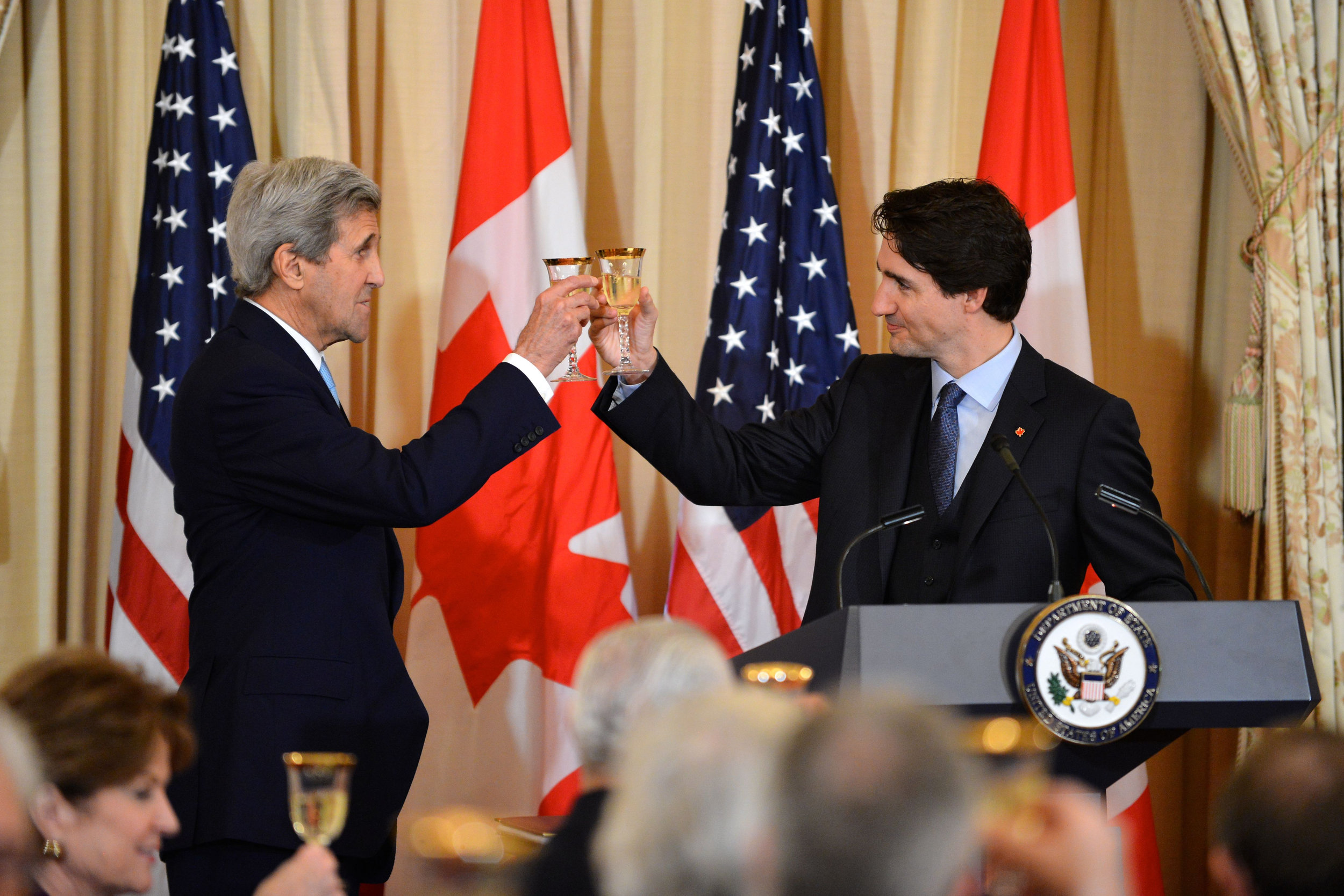
The brand is tied to Justin Trudeau, much as Corinthian Leather™ and the Chrysler Cordoba™ was tied to Ricardo Montalbán. And let’s face it, Justin has had a difficult few months. Whether it’s conflict of interest allegations with regards to party fundraising and inappropriate travel favours, or choking badly on the world stage waxing eloquent about Fidel Castro, the shine is off, and the ways not so sunny. Losing his BFF bromance with Barack Obama hasn’t helped.

But just as people were making plans to kiss goodbye a rather loathsome 2016, Mike Blanchfield of The Canadian Press outlined why 2017 may not be much better. Specifically, he reported how senior federal bureaucrats have been trying to use Justin Trudeau’s “brand” to help with “framing the Canadian engagement” with regards to UN-Canadian peacekeeping operations in Africa. These discussions, found through a pesky Access to Information request, were held early last year, while the shine was bright, and the leather soft.

Since that time, Team Justin™ has made a commitment to a comprehensive defence policy review, a definitive commitment to those very same UN-Canadian peacekeeping operations, and just recently a pledge to at least debate any deployment in Parliament. It should come as no surprise that those first two are nice ideas written on the back of Team Justin™ packaging paper that got lost in a dumpster.

It’s the third that should be really scary, for just about everyone involved. For during an end-of-year roundtable with The Canadian Press, Trudeau opined that while there will be some parliamentary debate, “If it ends up being a whole bunch of little missions instead of one big mission, maybe we wouldn’t want to bog down the calendar with different little votes on different missions.”

So what can we glean from that? Perhaps one interpretation is that if you keep things small enough, they won’t require scrutiny, which sounds like an argument that might come from the Canadian Senate. The other is that Team Justin™ doesn’t have the foggiest idea what it plans to do in Africa. The marketing plan started last January, the product design started last spring, and there’s no new model for this coming year.

Which is all well and good when you’re talking about a Chrysler Cordoba™ (with Corinthian Leather™ mind you), but quite another when you’re talking peacekeeping missions in Africa. It’s obvious that there has been no real plan to these theoretical missions. They will require extensive retraining and re-equipping a military trained for an entirely different mission since Canadians last wore Blue Helmets in significant numbers. And there will be many casualties regardless of that training.

That Team Justin™ has been more absorbed in its brand than those life and death decisions is telling. But here, have a Twinkie™.

How To Spend $80 Billion

"Canada simply needs to put on its big-boy pants"

"Canada simply needs to put on its big-boy pants"

(24-01)

Vincent J. Curtis

A decade ago, NATO alliance members, Canada included, pledged to spend two per cent of the country’s gross domestic product on defence. Only the UK and USA have consistently met that goal. President Donald J. Trump has said that, unless other NATO members start pulling their weight in respect of defence spending, the United States may not come to the defence of an attacked NATO country that failed to pull its weight.

It does Canada no good to pull out of NATO as a means of avoiding U.S. pressure to spend more money on defence. In the first place, Canada cannot pull out of NORAD, which is a bilateral continental defence alliance with the United States. In the second, the purpose of a defensive alliance is to reduce defence spending across the board. Leaving NATO would require Canada to look after all its defence needs outside of NORAD, such as sovereignty in Arctic waters. Departure would entail an increase of defence spending anyhow.

Canada simply needs to put on its big-boy pants and start acting like the important nation she has become. Canada’s contribution to world peace will come about partially by becoming militarily stronger. Defence spending is cheap insurance, and if it keeps Trump off our backs in respect of trade, then it will be doubly worth the money.

The difference between what Canada spends annually on defence and two per cent of our gross domestic product (GDP) is roughly $20-billion. Over the four years of a Trump administration, Canada needs to find a home for $80-billion in defence dollars. These are not hard to find.

The Royal Canadian Navy needs to be completely recapitalized, and $40-billion could easily be spent on that. Canada should be aiming for a 25-ship surface combatant fleet consisting principally of frigates; a couple of battlecruisers (or missile cruisers if a battle-cruiser seems too warlike), supply ships and icebreakers for the far north would round out a blue water navy. Beneath the waves, the four submarines of the Lemon class — I mean the Victoria class — could also absorb a few billion to get them finally operational.

That leaves $35- to $40-billion to spend on capital equipment for the Royal Canadian Air Force and the Army in years three and four. Placing an order now for 120 to 150 F-35s would absorb the best part of $20-billion, and the purchasing war stocks of expendables and capital upgrades of bases would consume the rest of year three’s capital expenditure.

In year four, it would be the turn of the Army. What capital upgrades could the Canadian Army use? Let’s start with rifle sights. New, digital rifle sights would enable Recruit Bloggins to hit small targets out to a thousand meters with 90 per cent plus probability of a hit with minimum training. The system, called Tracking Point PGF, is presently being sold already mounted on rifles and is expensive, but a precision marksman per section should have one immediately. As the system matures it will be affordable to replace Elcan sights with them.

Compared with other armies, Canada’s army is utterly deficient in rotary aviation. And I don’t just mean AH-64E Apache Guardian helicopters — you know, the ones that can kill tanks from multiple kilometres away, and terrorists as well? I mean drones that kids across the street play with. How hard can it be to equip ground units — infantry, armour, and especially artillery — with small drones that enable spotters to find the enemy at great distances and quickly without exposing themselves? Even body cameras can be acquired and used to look around corners to provide a picture of what’s waiting for the lead man.

Canada has a terrific facility in its Mechanized Training Centre at CFB Wainwright. The army has also employed SAT (small arms training) ranges as a means of simulating combat for soldiers. What about virtual reality? How hard can it be to equip a company or a battalion or even the entire reserve system with virtual reality trainers as successors to the now old and mostly non-functioning SAT trainers?

The tactical ground communications system is centred on the Tactical Command and Control Communications System (TCCCS), a radio system that was essentially obsolete the moment it was fielded. Cell phones in urban areas provided parallel lines of communications for guerrilla forces, whereas the TCCCS allows only one channel of communication, to be used serially. Given all the new cell phone and satellite technology, surely some communication system can be developed that empowers every soldier on the battlefield to communicate with any other soldier other than by shouting. The aural system by which the soldier receives tactical instructions from his commander can be one of those that not only amplifies quiet sounds around him but also electronically dampens sounds above 85 decibels, protecting the soldier’s natural hearing.

We are deficient beyond imagining in artillery as compared with Russia and the United States. Realistically, we could triple the number of M777 guns in inventory and still be below our proportionate needs.

These ideas barely scratch the surface, and none of them involve increasing the operating costs of the CAF over the four years. All of these expenditures are capital. To that extent they are temporary. Expansion of the operating cost of the CAF, if necessary, can await a second Trump term.

FACING REALITY: The nature of Canada's Defence Crisis

"the reality is that human nature has not changed"

"the reality is that human nature has not changed"

(Volume 24-01)

By Colonel (ret'd) Sean Henry

In his article Bringing Military Culture into the 21st Century (Volume 23 Issue 12), Sean Bruyea overlooks several key factors while analyzing the state of the military in Canada. The same could be said for articles by Messrs. Curtis, Webb and Drapeau/Juneau in Volume 23 Issue 11 (December 2016).

Among considerations omitted, the most important would be the failure to recognize that societies in decline inevitably lose the will to defend themselves and instead pass the responsibility to others in exchange for training and other benefits. The best historical example of this is described in Edward Gibbon’s Decline and Fall of the Roman Empire.

Next in importance would be the failure to accept the fact that members of professional armed forces occupy a unique place in their societies, due to the fact that killing and being killed are fundamental descriptors of the job — and source of the vital concept of service before self. Failure to recognize and accept this may be termed demilitarization of the military (i.e., making members of the armed forces civil servants in uniform).

The origin of demilitarization in Canada occurred in 1943 when all three ministers of defence (representing Army, Navy and Air Force) were authorized to invoke special measures related to defence production and the armed forces to win the war. Senior bureaucrats were scandalized and vowed to restore the status quo. They succeeded in 1973 in the wake of several reports on government reorganization, the chaos of unification and the pacifist/anti-military outlook of Pierre Elliott Trudeau. The reinstated policy of “no special status for armed forces” was entrenched in a number of Treasury Board directives and similar regulations, and these remain in force today.

Historically, the military is a “culture that demands placing all else before one’s needs.” (cpl geneviève lapointe, gagetown)

Historically, the military is a “culture that demands placing all else before one’s needs.” (cpl geneviève lapointe, gagetown)

The negative aspects of this condition are portrayed accurately by Bruyea, but he does not explain why they occur. In particular, he does not comment on the fact the military deals with action and results, whereas bureaucrats focus on process. This is the real source of the dysfunction found in defence affairs in Canada today. The civil service mindset was first implanted in the minds of the senior leadership, but today it has descended to those in the junior ranks. That explains recent examples of lapses of personnel management at the lowest levels.

Overall, demilitarization is at the heart of most serious problems within DND and the CAF, ranging from the breakdown of the procurement system (until 1969 there was a Department of Defence Production) through to the disgraceful treatment of veterans. Reinforcing the problem is that the federal public service is itself in a crisis mode resulting in overwhelming problems and no plan or method to resolve them.

Demilitarization has been justified by mistakenly stressing the need for civilian control and the myth of peacekeeping. The reality is that human nature has not changed and it is still necessary to defend one’s freedom and interests by military force, even in the midst of a progressive globalized and digitized milieu. Failure to do so leads to the disappearance of empires, nations and societies as typified by Rome.

The sensitive issue of “Caucasian male parochialism” is a further example of avoiding reality; in this case, the fact that DNA guides our behaviour. General Tom Lawson was correct when he referred to “hardwiring” in matters of male-female relations. There are numerous examples in other nations where mixing males and females in the combat arms of the armed forces did not work. The Russians solved the problem by fielding female units, and the Israelis have assigned women to training roles. In Canada, facts of this sort have been buried in layers of emotionally driven disinformation and political correctness. Women and men are different. To accept this in no way belittles one or the other in terms of capabilities. However, the signal attributes of both genders will remain until genetic engineering is applied to the human genome, and that will happen later rather than sooner. Similarly, only genetic engineering can bring peace to the world by neutralizing the strongest force in the domain of all living beings — survival!

Regarding a “culture that demands placing all else before one’s needs” (the military), it is necessary to recognize the evolution of the expectations of people in recent generations that they will never need to face and overcome challenges. They have been protected by a system that removes challenges. To place these individuals into the cauldron of combat operations will not surprisingly raise the rates of post-traumatic stress disorder (PTSD) and suicide. A response would be to identify people with these tendencies in the recruiting process and deny their suitability for military service. If that is not possible, then adequate resources must certainly be available to treat them later for their disabilities. Again, constrained resources within a bureaucratic system undermines this solution.

The bottom line is that a military establishment that has been made into a branch of the civil service will find it difficult to recognize and succeed in dealing with these types of problems. It will become impossible if the government as well does not provide the resources to succeed. Curtis, in his article, gets it right when he says, “national defence … is among the most fundamental of priorities of any national government.” This concept has been in free-fall in Canada since the days of Pierre Trudeau, and so far his son does not seem inclined to change that.

Drapeau/Juneau reinforce the demilitarization curse when they advocate that military justice should be one with civilian justice. As well as ignoring the special nature of military service, they do not admit that in Canada the system of justice itself is dysfunctional as a result of a flawed Charter of Rights, and associated weaknesses resulting in an unending appeal process in which “justice delayed is justice denied.” Moreover, allowing lawyers and unlimited appeals into the military summary trial process at unit level would paralyze regular training and even threaten operations (see examples from Afghanistan).

Finally, Webb does not mention that Canadians’ love of peacekeeping is an example ofliving in a dream world regarding defence policy. It has seldom been effective and, as he notes, it often creates more problems. Moreover, allies have accused us of using it to avoid combat. This could also be applied to a focus on Provincial Reconstruction Teams, and wouldreinforce the demilitarization trend.

 Reference to “peace enforcement” rings hollow as the United Nations and contributing nations seldom have the stomach to initiate the combat operations that Chapter VII of the UN Charter authorizes. Walter Dorn’s concept of providing training and equipment is another version of travelling on the Roman road towards defeat. Perhaps that is what the current prime minister has in mind via his “sunny ways” — avoidance of combat operations and cutting the defence budget.

It is therefore hoped that U.S. President Donald Trump will apply enough gentle persuasion (backed up with a “big stick”) to cause the Canadian government to allocate more resources to the CAF and to assign them to conventional national security missions — which will be needed sooner rather than later when one surveys the possible threats emanating from the likes of Russia, China, Iran, North Korea and Islamist jihadists. None of these see the world in utopian terms when it comes to national interests and security. In their world, armed force still counts.

A cure for demilitarization in Canada will remain elusive until a strong political leader emerges and is able to overcome the challenge of changing the culture spawned by the federal bureaucracy. Until then, the CAF will continue to operate in a new “decade of darkness” and rundown its combat capabilities, allowing it to make only token contributions to Canadian defence and security. These remarks do not seek creation of a militarized state, but rather to raise and maintain “reasonably sufficient” Canadian armed forces to defend the country and its critical national interests.

TERRY FOX's HEROISM is worthy of RECOGNITION

(Volume 23-12)

By Bob McRae

Though retired, like many people, keeping active with meaningful volunteer activities brings me considerable fulfillment. Sometimes there are things important enough to one’s beliefs, principles that they require more effort to get anywhere.

Most major organizations with a run or event respect and honour Terry Fox by planning their event on a day different than the Terry Fox Run held on the second Sunday after Labour Day each year. Perhaps most incredibly, one that does not is our great Canadian Armed Forces.

It is inconceivable and shameful to me, and I am sure it is to many Canadians as well as current and veteran armed forces personnel, that there should be any need to make a case for this.

Terry Fox, arguably for some, is the most recognized name and greatest inspirational figure and hero to Canadians. Terry has been a source of inspiration and motivation to millions, and that continues. In September 1981, shortly after his death due to the return of cancer, the Government of Canada through the Ministry of Fitness and Amateur Sport initiated the first Terry Fox Run in memory of Terry in support of cancer research. For anyone old enough, they will never forget that event, Terry and his amazing story and courage.

Never before or since has a nation responded with such an outpouring of love, admiration and generosity. Over 300,000 Canadians participated and over $3-million was raised. Ever since, in September, on the second Sunday after Labour Day in Canada, Terry Fox Runs are held across Canada.

Since that first Terry Fox Run in 1981 there have been 35 other annual events. Terry and his story continue to capture the hearts of people in Canada and around the world. He is also celebrated every year by many Canadian schools, which hold their own Terry Fox Runs in the month of September, and other organizations, including our own Canadian Armed Forces.

Is Terry Fox important to Canada and Canadians?

In a 1999 Dominion Institute survey he was voted Canada’s Greatest Canadian. In a 2004 CBC television program, The Greatest Canadian, he placed second behind Tommy Douglas. Terry also won many prestigious awards before his death and posthumously. He received the Order of Canada and the Lou Marsh Trophy, the Canadian Press voted him 1980 Canadian of the Year, and Canada’s Sports Hall of Fame inducted him, to name a few. Streets, schools, shopping centres, trails, mountain tops, parks and more have been named after him. Monuments honour Terry in St. John’s, Newfoundland, in front of Parliament Hill, outside Thunder Bay and elsewhere in Canada. Every prime minister has spoken to Canadians of Terry’s courage and inspiration and the importance of paying tribute to him each September.

Thanks in large part to Terry Fox and the Terry Fox Foundation tremendous progress has been made against cancer. Over $650-million has been raised since 1981 and people diagnosed with cancer today often survive and live much longer. This progress continues; cancer may one day be beaten and no more Terry Fox or similar events would be needed. However, one thing is for sure: the legend of Terry Fox will continue and will be told by parents, grandparents, educators and countless others to inspire and motivate children and many others, forevermore.

The Canadian Armed Forces do an admirable job supporting and raising funds for the Terry Fox Foundation and the Canada Army Run is a wonderful event for a great cause. However, the Army Run should honour and respect Terry Fox by scheduling its event on a different day than the Terry Fox Run. He deserves this honour and respect!

Like Remembrance Day on November 11, let us not allow this to diminish, ever. The active support of current and retired armed forces personnel is important and would be appreciated.

Bringing Military Culture into the 21st Century

(Volume 23-12)

By Sean Bruyea

“Got your six” also means “I’ve got your back.” It is the cultural bedrock of how military members look after each other. Canadian Armed Forces members, veterans, and other Canadians increasingly perceive senior military ranks and the federal bureaucracy as defending the institution and their own careers rather than caring for military members and veterans in need of assistance and protection. This deteriorating situation can change.

Former chief of the defence staff General Tom Lawson stated in 2015, “Frankly, our operational effectiveness depends on the unwavering trust and cohesion amongst all of our members, regardless of their gender or their background.” Trust and cohesion are sacred to military operations. However, “regardless of their gender or their background” is more aspirational if not tragically farcical for many who have needed the military to protect and care for them. Instead, too many have been abandoned or worse, abused by the military.

Canada’s post-World War II military has long been a bastion of white-male testosterone culture in spite of the growing recruitment of minorities and women. The CAF has been the repository for Caucasian male parochialism disproportionately recruited from economically marginalized regions of Canada. Consequently, most Canadians see the military as a last choice for a career.

CAF culture has spawned more than three decades of sexual harassment and abuse scandals culminating in the 2015 report by retired Supreme Court Justice Marie Deschamps. She found not only a widespread “underlying sexualized culture” with sex used to enforce the power dynamics and ostracize members, but a culture that intimidates victims and onlookers into silence while ironically stigmatizing as weak those who would speak out.

Abusive CF culture should not come as a surprise to the public or senior military leadership. Maclean’s magazine published four cover stories in 1998 chronicling the sexual violence in the CAF, including Canada’s first female infantry officer being bound to a tree and subjected to a mock execution. In 1980, the CAF promised the first women entering Kingston’s Royal Military College (RMC) that harassment and discrimination would not be tolerated. They were given a sexual harassment hotline. Yet the 1983 graduating class prominently declared itself, including a bedsheet-sized banner draped on the college headquarters, as LCWB or “Last Class With Balls.”

Thirty years and countless CAF sexual abuse cases of women and men later, current Chief of Defence Staff General Jonathan Vance declared, “This stops now.” He established a harassment reporting hotline. In 2016 thus far, complaints of sexual misconduct have risen 22 per cent over 2015. CAF culture appears incapable of change over three decades.

In contrast, CAF understanding of the injured has changed, albeit slowly and begrudgingly since seminal reports on quality of life were released in the late 1990s. However, the 24 Joint Personnel and Support Units (JPSU) that help the injured are underfunded and understaffed with a host of other problems identified by retired warrant officer Barry Westholm. Equally reflective of CAF ambivalence for the injured, JPSU staff is predominantly not trained in social work or rehabilitation let alone the unmilitary skills of compassion and care.

Care at the very least requires that individual needs are addressed in a manner largely defined by the individual. This creates a two-fold problem. First, military institutions have difficulty placing lower ranks first in anything other than rhetoric. The CAF is a command culture that places the institution and highest ranks above all else. Second, if you are not a senior officer or general, articulating one’s needs becomes nearly impossible in a culture that demands placing all else before one’s needs.

Both the institution at large and individual members require coaching on how to identify, express and accept an individual’s needs and limits. This is the basis of successful resilience training. Resilience is unlikely to get a successful foothold if institutional culture is not flexible, responsive and refuses to place the individual first. An institution that resists change, protects itself, attacks critics and rejects outside input is not a resilient institution. It is a weak institution with a strong façade. Ultimately, it is institutionally self-serving to place responsibility upon individuals to be resilient to the demands of an abusive culture.

The recent spate of suicides at or connected with RMC in Kingston exposes much weakness in the CAF. The military’s approach has been sadly predictable. Recommendations, such as those from lawyer and retired CAF Colonel Michel Drapeau, calling for outside independent oversight including a coroner’s inquest have been flatly rejected by the CAF. Instead, the military has called for a secretive and restrictive internal investigation that sidelines family members. Meanwhile, cadets will receive resilience training.

Putting the onus on the cadets to change whereas the institution itself remains squeaky and inflexibly clean while draping itself in self-congratulatory rhetoric has always been the military’s weakness and shame. When needs remain unmet, military members know they are not being cared for. No amount of bombast changes that. Labelling much needed-mental health units “centres of excellence,” while refusing to establish in-patient centres, is alienating. If the military member does not seek help, or fails to improve, then the message is clear: the military remains untainted and the member or veteran is clearly defective. By whose standard are these centres excellent? Such terms do not serve the needs of the injured and suffering but instead can drive them away from the help they need.

In 2014, Governor General Award-winning educator Julie Lalonde of the Ontario Coalition of Rape Crises Centres was invited to speak to cadets at RMC on the issue of sexual harassment and violence. She was met with an environment of hostility. One cadet dismissed her outright: “I might have listened to you if you weren’t a civilian and a woman.”

This is the military’s disease. Military culture disdains first and foremost civilian culture, particularly aspects that show or imply weakness. The worst insult to a military member is the accusation of doing something like a civilian or being anything related to females: walking like a civilian, lazy like a civilian, thinking like a civilian, being a girl or a weak [insert female genitalia]. The most powerful threat: conform or be exiled as a contemptible civilian once again.

Those inside and outside the military who call for help or provide much-needed criticism of the institution are universally sidelined, or worse persecuted. Military members are intensely trained to notice, report and act upon life and death situations whether they be aircraft safety, fire on a ship, or enemy threats. Having one’s safety, security and care needs neglected is a life or death situation. Yet the military is surprised and angered when someone has the audacity to identify the institution’s failure to care for its members.

Changing a culture from without is extremely difficult. Modifying military culture from within with its deep mistrust and disdain of those outside the military can be dauntingly futile. The military has been unwilling to listen to the very outside ideas it needs to adapt to the changing society around it. The military insulates itself in a paradox to resist criticism and therefore avoids real change. Those inside who call for help or change are whiners who have an overdeveloped sense of entitlement. Outside critics are dismissed as wannabees, irrational and, since they are not part of the military, have no credibility to recommend change.

The military has long blamed the victims for the faults of the institution. One need only look at the CF’s callous handling of suicides and the abusive treatment of the suffering families over the past decades. Stuart Langridge, Charles Matiru, Shaun Collins, and the RMC suicides all demonstrate a military institution obsessed with protecting its image and persecuting those that need help the most. Military inquiries are often staffed by military insiders without medical training, passing medical judgement on military members and their families thereby avoiding accountability for the CAF and safeguarding the institution and its leadership.

We must never forget that no other institution, including mainstream religions, subjects individuals to such powerful indoctrination with lifelong effects. Those in the midst of a potent culture are incapable of seeing the full power that culture has upon its members. The military needs independent outsiders who have either meaningfully experienced and successfully transitioned out of that culture, or those who are willing to study or have studied the effects of military culture upon individuals.

A person will be willing to sacrifice for Canada and his or her comrades only if each and every soldier thoroughly and profoundly believes that the military and the nation will be there to care for and protect them, especially in times of vulnerability, injury and need.

Ultimately, politicians and the public must force change. The removal of incompetent and inept leaders perpetuating a culture of persecution, impunity and intransigence is a start. Then, Prime Minister Justin Trudeau’s promised openness and transparency can begin. Without transparency and openness, the military and Canada will fail to keep faith with those who have got our six.

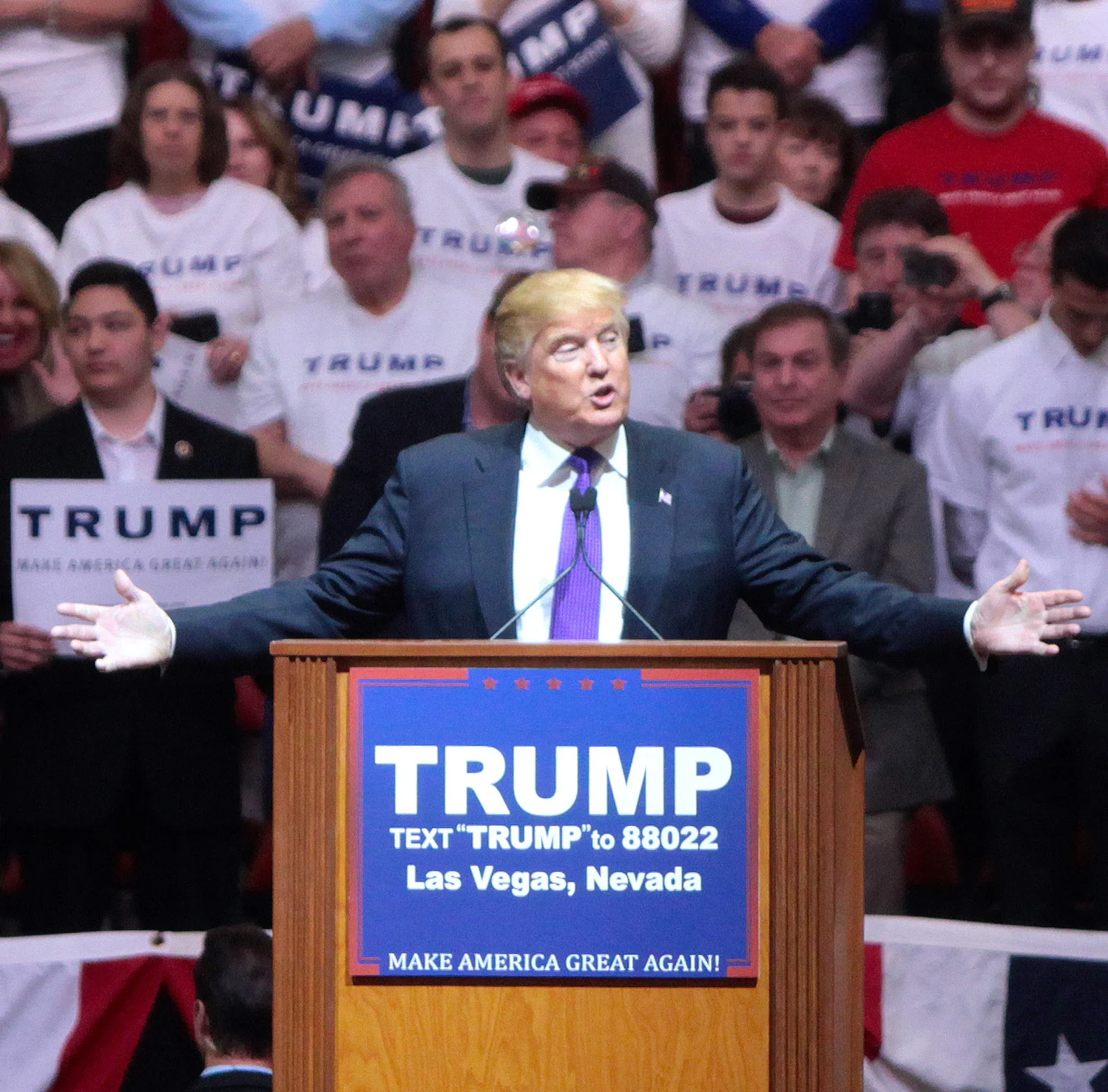
I AGREE WITH TRUMP

By Michael Nickerson

(volume 23-11)

I agree with Donald Trump. Bet that got your attention. It’s a bit like saying you agree with the reasoning of a crazed weasel hopped up on methamphetamine with a dash of hot sauce. And to be clear, I have nothing against weasels, methamphetamine, or hot sauce when taken in moderation. If nothing else, weasels are cute and quite entertaining, at least on television.

Donald Trump can also be quite entertaining on television; ratings don’t lie. He can also be a misogynistic, homophobic, xenophobic frat boy with the instincts of a privileged child and the world view to match. Vainglorious and all the insecurity that entails, he lashes out at the slightest provocation and will stoop to just about any level for public approval. An embarrassment, a cad, a clown. You might go to one of his parties but would never invite him to one of yours.

Of course, he’s also been elected President of the United States of America.

It was a shocking result to be sure. I still haven’t heard from some family and friends since that night, and I’m quite concerned … they might have choked on their “Hillary for Prez!” party dip. But not being Muslim, Latino, black, gay, female or anything other than a white privileged male, I’m okay. I’m good. And not being an American citizen, I’m even hopeful.

And no, I have not invested in Trump the walking trademark, nor drank from a bottle of Ivanka Energy Plus™ (I made that up, but this being the era of post-truth, I’m happy to accept some royalties if it goes anywhere). What I have seen is not so much the end, but the beginning of a proper shakeup of an institution that has long outlived its welcome.

Yes, NATO. The North Atlantic Treaty Organization, established in 1949 to save the Free World from the Communist Menace. Also entirely obsolete and without purpose for the last 25 years, a rebel without a cause, but with a lot of fire power and a need for acceptance; a bit like the U.S. president-elect when you think of it. Hmm.

Nope, let’s stay hopeful! Right. So the soon-to-be leader of the free world has NATO leaders and generals alike shaking in their gender-neutral footwear, scared he’ll call their tab or just close the bar and head home. Pay up or I’m out of here, you out-dated freeloaders! You’ve been riding on America’s coattails too long! That America has been wearing the coat and charting the course the whole time is neither here nor there. Just pay your 2 per cent GDP or you’re fired! And leave my friend Vlad alone … just a fabulous, fabulous guy.

Now remember: weasel on meth. No one said this would actually make sense. Stronger NATO, allied with Russia, pass the pipe. The whole idea of asking 23 of 28 member nations to pony up and, in most cases, double their defence spending while nodding politely to Vladimir Putin as he bombs Syria to dust does indeed seem nuts. It certainly had delegates at the recent international security conference in Halifax abuzz waiting for the new king-elect to clear things up on Twitter.

Conversely, letting a dinosaur of an organization lay waste to parts of the Middle East and Eastern Europe for reasons of existential angst and industrial greed seems a tad nuttier in many people’s books. But that has been the status quo for more than two decades, up to and including Team Justin™ committing troops and equipment this past summer to help flex NATO muscle in Latvia. Whether that commitment was for ideological reasons on Trudeau’s part or political expediency during the bromance that was Trudeaubama no one is quite sure, and that really is the point.

So I’m indeed with Trump in the sense that the whole NATO relationship is in need of a rethink. I’m also of the opinion that the whole U.S. Electoral College is in need of a rethink, and that people really need to get their news from somewhere outside of Facebook. Nonetheless, this would never have been an issue without such an election. So, NATO, Trump, Putin: discuss … and pass the pipe.

THE REALITY OF 21ST CENTURY UN PEACEKEEPING

By Stewart Webb

(Volume 23-11)

The Trudeau government affirmed that Canada will once again engage in United Nations peacekeeping operations. For years, Canada’s commitment to UN peacekeeping missions has waned. Our country has slid to the global rank position of 63rd. It is not known where Canadian troops will be deployed, but an African deployment is likely. The political and security situations in the Democratic Republic of Congo (DRC), Mali, South Sudan, or the Central African Republic, each provide unique challenges for a possible deployment. The harsh reality is that peacekeeping missions have changed and we must be prepared for the challenges ahead.

The fact of the matter is that peacekeeping missions have moved away from traditional, neutral peacekeeping; they are now more about peace enforcement. Peacekeepers are now engaged with insurgents, terrorists and criminal elements and not ethnic groups that want some form of self-determination. This trend was already becoming apparent in Somalia, Rwanda and Yugoslavia in the 1990s. But since the advent of 9/11 and the spread of militant groups across the globe, this is the new reality.

Now, the UN combats rebel groups with mineral interests in the DRC and Islamic insurgents that were aligned with an ethnic Tuareg uprising in Mali. French peacekeepers are leaving the Central African Republic and declaring their mission a success even as new violence erupts in the region.

Deploying a Canadian peacekeeping contingent has been seen as an attempt to regain national pride in something that our nation was once emblematic of. These are troubled times and UN peacekeeping missions are becoming more robust and are more about peace enforcement than peacekeeping. The UN has deployed surveillance drones in the mission in the DRC and peacekeeping missions are now putting a greater emphasis on integrating intelligence assets. Our re-engagement with UN peacekeeping should not be about looking back upon our past, but looking towards the future.

This will require leadership and determination. UN peacekeeping missions have changed since the 1990s and they will probably change again by 2030. If the Trudeau government wants to truly make its mark in the history books and reclaim a past notion of leadership in peacekeeping, Canada must provide the decisive leadership for innovation and advancement.

There are two ways that Canada can improve upon UN peacekeeping missions. One avenue was proposed by Dr. Walter Dorn, of the Canadian Forces College, and was recently published by the International Peace Institute in a report entitled Smart Peacekeeping: Toward Tech-enabled UN Operations. The premise of Dorn’s report is that, aside from troop-contributing nations, there should be tech-contributing nations. Tech-contributing nations will provide equipment, and the training, for UN peacekeepers.

It has been well-documented that troops from some developing nations are sent on missions with little to no kit. Moreover, troops from developing nations are not as well-equipped as Western troops and the UN has created a minimum standard of kit so it would be inclusive for all nations. This minimum standard does not include items such as night-vision googles and so, as a consequence, there has been a ban on night missions. Other items that can help bolster UN operations are items as simple as bullet-proof accommodations and GPS trackers for UN vehicles. 

The other possible improvement for UN peacekeeping missions is to bring in the concept of the Provincial Reconstruction Team (PRT) model. This has been controversial as this has been described as the ‘militarization of aid’. However, there are some things to consider. Firstly, many of these insurgent groups are assisting in local development. Al-Shabaab in Somalia created an agricultural development program that greatly assisted local farmers. A UN PRT could make an immense impact. Before the last revolt in Mali, the average poverty rate in the Timbuktu, Gao and Kidal regions ranged from 77 to 92 per cent.

Although PRTs were once described as the militarization of aid, some of these areas are just too dangerous for aid workers. In South Sudan, peacekeepers ignored the rape and assault of aid workers in the country. The adoption of a UN PRT model would allow aid workers to operate more freely in the country. It would also allow more positive interaction between the indigenous population and UN peacekeepers. The interaction with aid organizations and the local population will foster trust and, in turn, hopefully, generate useful, operational intelligence.

PRTs involved a level of Civil-Military Co-Operation (CIMIC) and that level and overall approach can vary depending on the model. There are four generic PRT models: American, German, British(-Nordic) and Turkish. These four generic models can be then divided into many sub categories that vary depending on which nation implemented the model in Afghanistan. A PRT model can be adapted to suit the requirements of a UN peacekeeping mission. Moreover, a UN PRT model in Mali may not work for South Sudan or Somalia and therefore a PRT model will need to be drafted to meet the requirements of each individual theatre.

The Trudeau government is weighing its options and conducting fact-finding missions to pinpoint the one mission that has the least of political consequences. The last thing the Trudeau government and the Canadian Armed Forces need is another Somalia incident. Since our withdrawal, UN peacekeeping missions have been blighted with accusations of rape and the solicitation of sexual relations with prostitutes and even trading weapons for gold.

Canada’s re-engagement with peacekeeping will offer its own unique challenges. Peacekeepers are regularly fired upon and that alone will create a political fervor in Canada. Our re-engagement will take political fortitude, but if the Trudeau government really desires for Canada to take international leadership, we must drive the evolution of UN peacekeeping missions.

Trump's Triumph and Canadian Defence

(Volume 23-11)

By Vincent J. Curtis

With the election of Donald Trump as the next president of the United States, the world can expect a large recapitalization of the U.S. military over the next four to eight years. We can also expect the Trump administration to pressure NATO allies to increase their defence expenditures to two per cent of their GDP (gross domestic product).

Trump famously campaigned on the theme that the United States was not going to carry a heavier share of the defence burden of the western world than was justified by economics. If NATO allies expected the assistance of the United States, then they needed to do their part. Some of that pressure will undoubtedly be applied to Canada, for Canada is one of those not spending up to the agreed level of two per cent of our GDP.

What does this mean for Canadian defence?

In the first place, it would mean that the Canadian defence budget would have to increase to be in the range of CDN $48-billion. The budget track released by the Trudeau government in its maiden budget forecast revealed a decrease in defence expenditures — the amount projected for 2016 was $29.4-billion with a decrease to $14.4-billion by 2020–2021. In the eyes of Trump, we are moving in the wrong direction.

Yes, defence is one of many competing priorities for federal tax expenditures, but national defence and maintaining good relations with allies is among the most fundamental of priorities of any national government. Those priorities have a higher call for money than new spending to make life more comfortable for a minority of Canadians. The needs of all take priority over the needs of the few.

What use could be made of additional defence expenditures?

There is no question that the Canadian Armed Forces are in need of recapitalization. The Royal Canadian Navy needs to be completely rebuilt, and soon. The fighting capacity of the Royal Canadian Air Force is aging rapidly, and the replacement for the CF-18 fleet is late and nowhere in sight. The Canadian Army could also use a new store of capital equipment for general-purpose combat operations.

The government is dithering over whether it should acquire 10 or 12 frigates to refight the Battle of the Atlantic, should it ever come back. The naval brass is still in the grip of the old-school small ship navy mentality that has dominated Canadian naval thinking since the days of the Niobe and the Rainbow. The RCN brass need to have in their top drawer a plan for a real battle fleet — a fleet consisting not just of frigates but of one or more battlecruisers as well. And if battlecruisers seem to be too war-like for political tastes, then missile-cruisers in the 10,000-ton range can be had off-the-shelf from the United States at $2-billion apiece, less than the cost of a 5,000-ton custom-built frigate. Anyhow, a capitalization project for the Navy in the range of $40-billion should be ready to go.

The RCAF is caught between the failure of Lockheed Martin to deliver a viable F-35 Joint Strike Fighter in a timely and cost-efficient manner, and a new government that wants to start the bidding process for a CF-18 replacement aircraft from scratch. The solutions are easy: buy off-the-shelf F-16s, or the updated F/A-18E/F Super Hornet off the shelf, both of which are also still in production. These are Gen 4.5 fighters, not Gen 5 fighters, but they can be had soon; they are still current and viable for modern combat air operations, and should be seen as an interim purchase until the Gen 5 fighters are finally available.

The Army could also use a store of useful equipment, in particular modern artillery. The M-777 proved spectacular in Afghanistan, and no army has been able to succeed in modern combat operations in the absence of dominant artillery since the 17th century’s Thirty Years’ War.

The problem of joint operations between air and surface has and will continue to bedevil CAF combat operations. If it flies, it is said to belong to the RCAF. But what about rotary aviation? What about a naval aircraft carrier? The United Timbuktu, Gao and Kidal regions ranged from 77 to 92 per cent.

Although PRTs were once described as the militarization of aid, some of these areas are just too dangerous for aid workers. In South Sudan, peacekeepers ignored the rape and assault of aid workers in the country. The adoption of a UN PRT model would allow aid workers to operate more freely in the country. It would also allow more positive interaction between the indigenous population and UN peacekeepers. The interaction with aid organizations and the local population will foster trust and, in turn, hopefully, generate useful, operational intelligence.

PRTs involved a level of Civil-Military Co-Operation (CIMIC) and that level and overall approach can vary depending on the model. There are four generic PRT models: American, German, British(-Nordic) and Turkish. These four generic models can be then divided into many sub categories that vary depending on which nation implemented the model in Afghanistan. A PRT model can be adapted to suit the requirements of a UN peacekeeping mission. Moreover, a UN PRT model in Mali may not work for South Sudan or Somalia and therefore a PRT model will need to be drafted to meet the requirements of each individual theatre.

The Trudeau government is weighing its options and conducting fact-finding missions to pinpoint the one mission that has the least of political consequences. The last thing the Trudeau government and the Canadian Armed Forces need is another Somalia incident. Since our withdrawal, UN peacekeeping missions have been blighted with accusations of rape and the solicitation of sexual relations with prostitutes and even trading weapons for gold.

Canada’s re-engagement with peacekeeping will offer its own unique challenges. Peacekeepers are regularly fired upon and that alone will create a political fervor in Canada. Our re-engagement will take political fortitude, but if the Trudeau government really desires for Canada to take international leadership, we must drive the evolution of UN peacekeeping