The Khadr Decision

“Regardless of what the Bush haters say, Khadr was not tortured ...”

“Regardless of what the Bush haters say, Khadr was not tortured ...”

(Volume 24-08)

By Vincent J. Curtis

I am long familiar with the Khadr case and the matter of Gitmo (aka the U.S. prison camp at Guantanamo, Cuba), having written about both beginning in 2008. My piece entitled “The Most Famous Canadian in Cuba,” for example, appeared in the June 2008 edition (Volume 15 Issue 5) of Esprit de Corps.

Permit me to shed some unwelcome light on the Omar Khadr matter, as none of the opinions published that I have seen appear to have taken into account the laws of armed conflict and, in particular, the third and fourth Geneva Conventions.

The purpose of the Geneva Conventions is to minimize destruction, death and suffering in war by placing legal boundaries. One of the boundaries is meant to clearly identify who is a combatant and who is not, and therefore who are attackable and who are not. Monte Cassino in Italy, for example, would not have been destroyed by the Allies during the Second World War but for the (erroneous) impression that the Germans were using it as a defensive post. Being a defensive position made Monte Cassino attackable, despite its being otherwise protected by the Convention. Chiselling with the Convention on the margins is no small matter.

Even by the generous standards of the fourth Geneva Convention, Omar Khadr was not a lawful combatant, though combatant he was. This does not make him a “child soldier” because he was not a soldier in the first place. Khadr in Afghanistan was a foreign national, and a civilian at the time he threw the grenade that killed Sgt Chris Speer on the battlefield. Khadr’s violating the Convention endangered the lives of lawful non-combatants.

By rights, Khadr could have been summarily executed on the battlefield, as some Germans were in WWII. He was not, because of the intelligence value he might have possessed. His intelligence value was all his life was worth until he was transported to Gitmo, where he fell under a different legal regime.

The detainees at Gitmo were called “detainees” and not “prisoners of war” because they did not qualify as POWs under the Geneva Convention. They were all either unlawful combatants or war criminals of some sort, but that they were all alive is due to the decisions of President George W. Bush. There were no legal precedents for fighting this kind of conflict.

Because of lack of precedents, the U.S. Congress enacted The Detainee Treatment Act (in 2005) and the Military Commissions Act (in 2006), which established military tribunals as a means of disposing of the cases of some of the Gitmo detainees. These Acts were consistent with the Eisentrager decision of 1950, which held that U.S. Courts had no jurisdiction over the handling of German POWs.

The price of Khadr’s release to Canada was that he admit he killed Chris Speer; we ask for nothing less from murderers under Canadian law before parole. Khadr admitted his guilt, and so was released to Canadian custody to serve out the sentence he received from the legally competent tribunal. That Khadr now recants his admission while safe in Canada impresses me not at all.

Regardless of what the Bush haters say, Khadr was not tortured — if that word is to have real meaning. He was not waterboarded, the most extreme practice, which was retrospectively determined by the Obama Administration to be torture. Khadr says he was heavily interrogated and frightened in order to deliver what intelligence he might possess, but that intelligence was why he was still alive. (The Manchester Document makes me skeptical of his claims.) That strong measures were employed during his interrogation is a sign to me that he resisted answering questions. His treatment would have been different had he been forthcoming with answers.

The business of Khadr’s receiving $10-million from Canadian taxpayers is connected to the Supreme Court of Canada’s distaste for Gitmo and that Khadr was interrogated there by CSIS agents.

The Supreme Court of Canada weighed in on the Khadr matter in a way that demonstrated fatuousness in my eyes. It opined that Khadr’s rights under the Canadian Charter of Rights and Freedoms were violated. I’m sorry, but Khadr was in the custody of Uncle Sam, who is under no obligation to uphold Canadian rights. One reason for using Gitmo was to prevent the American legal system from meddling in these military matters per Eisentrager, and as the U.S. Supreme Court largely upheld in its Hamdi v. Rumsfeld decision of 2004. (Hamdi was a U.S. citizen, which gave U.S. courts some jurisdiction, and a condition of his Habeas release was that he renounce his citizenship and accept deportation to Saudi Arabia. Hamdi departed without money or apology.)

As for Khadr’s interrogation by CSIS agents, under what conditions could the Canadian government ascertain for itself Khadr’s condition in Gitmo? Khadr, a Canadian citizen who committed an act of war against America, represented a delicate diplomatic matter between the Bush administration and the Chrétien government, and demanding he be visited by a Canadian diplomat would have been unproductive. The CSIS route was workable because it did not impugn the Bush administration. Khadr’s prior treatment at American hands immediately before he was questioned by CSIS does not make Canada complicit.

The Nuremburg trials gave the legal profession the idea that war ought to be brought under the jurisdiction of the legal profession. We saw in Yugoslavia and the Kosovo campaign how disastrous meddling lawyers can be in war.

In his Boumediene dissent, Supreme Court Justice Antonin Scalia complained of “an inflated notion of judicial supremacy” and mocked the majority’s worry about “areas in which the legal determination of the other branches will be (shudder!) supreme.”

Inflated notions of its importance is what led our Supreme Court to favour Khadr. That meddling, and our political branch’s apology and payout in the face of it, is leading to diplomatic issues because Canada is seen as officially unmindful of Khadr’s illegal act of war.

Liberals Must Pull The Plug On Sordid Saudi Arms Deal

“... the Liberal government has cycled through an array of excuses ...”

“... the Liberal government has cycled through an array of excuses ...”

(Volume 24-8)

By Peggy Mason

With videos emerging on social media of Canadian armoured vehicles being used in a violent crackdown against the Shia minority in Eastern Saudi Arabia, the controversy over our $15-billion arms deal with one of the world’s most repressive regimes has resurfaced with a vengeance.

This sordid saga has featured prominently in Canadian media since at least January 2015, when the Saudis carried out a brutal public flogging of a young blogger, Rauf Badawi, whose family had sought refuge in Quebec, after his imprisonment for proposing an online dialogue on religious matters. The new journalistic focus on the terrible human rights record of Saudi Arabia stood in sharp contrast to the relative lack of media critique when the mammoth deal was actually concluded by the Harper government in early 2014. This was despite an outcry from human rights groups like Amnesty International Canada, Project Ploughshares and the Rideau Institute.

Canadian and international media attention was further heightened when the richest Arab nation — Saudi Arabia — invaded the poorest — Yemen — in early 2015, followed almost immediately by credible allegations of war crimes being committed. Reports came from organizations like Oxfam, Human Rights Watch and Amnesty International that the Saudis were deliberately, even wantonly, targeting civilians in schools, markets, hospitals, funerals and wedding parties. The Netherlands and Sweden halted their arms deals with Saudi Arabia amid calls by the European Parliament for a total embargo. By October of 2016 the United Nations was condemning Saudi war crimes in Yemen.

The sale of heavily weaponized armoured vehicles (LAVs) to Saudi Arabia blatantly contradicts Canadian export policy guidelines which came into force in 1986. Those guidelines restrict the export of military equipment to “countries whose governments have a persistent record of serious violations of the human rights of their citizens, unless it can be demonstrated that there is no reasonable risk that the goods might be used against the civilian population.” [Emphasis added]

It is also worth noting that the broader context of this controversy includes a Liberal campaign promise to accede to the Arms Trade Treaty, which enshrines international standards for arms exports, and a stated intention to play a bigger role in support of the UN — including seeking a term on the Security Council in 2021–2022) and championing human rights and multilateral diplomacy.

Since the intense scrutiny over the deal began, the Liberal government has cycled through an array of excuses, beginning with “It‘s a done deal; we are bound by it or our reputation as a reliable partner will suffer.” Then disclosure of documents in a legal challenge to the sale revealed that it was not the Harper government but Liberal Foreign Minister Stéphane Dion who, in April 2016, had approved six export permits, covering more than 70 per cent of the total transaction. Suddenly the main public rationale became the lack of hard evidence of actual human rights violations by Saudi Arabia using Canadian equipment, backed up by the profoundly immoral catch-all — ‘if we don’t sell to them, others will.’

Even more troubling was the private rationale — that is, the departmental justification for its recommendation to the minister that he approve the export permits. In what can only be described as Orwellian logic, the memo stated that a new generation of Canadian-made LAVs would “help Saudi Arabia counter instability in Yemen.” If anyone wants proof of the impact of 10 years of Harper depredations on the capacity of the Canadian foreign service to promote human rights and international law, surely they need look no further than this!

Dion, after repeated grillings in the House of Commons and in press scrums, did finally concede that he would rescind the permits if actual evidence emerged that the Canadian LAVs were being used to violate human rights.

The legal challenge foundered on Government of Canada assurances that no hard evidence of misuse of Canadian equipment existed. Mere days later, while that decision was being appealed, the social media images of Canadian armoured vehicles appeared.

Neither the Canadian company in question nor the government sought to deny that the equipment was Canadian, and Foreign Minister Chrystia Freeland announced an immediate investigation. Subsequent statements by the Saudi government seeking to justify its actions confirmed the use of Canadian equipment including LAVs.

Polling conducted in early 2017 — before the revelations of actual use of Canadian military equipment against Saudi civilians — found that a majority of Canadians oppose this arms deal, and believe it should be cancelled, despite potential job losses. It would seem they agree with the very sensible proposition that Canadian jobs should not depend on the maiming and killing of innocent civilians.

To argue otherwise is to invite the question, Where will we draw the line? If potential complicity in war crimes is not a step too far, then what is?

And let us not forget that there are a number of practical steps the Liberal government can take to mitigate the economic impact of cancelling the deal, not least of which is to speed up the purchase by National Defence of this new generation of LAVs.

Even the architects of the original deal, the Conservatives, are now calling for the cancellation of the export permits.

It seems painfully clear, however, that the Liberal government is hoping to ride out the storm.

But a wide range of Canadian civil society organizations, aided by superb investigative journalism, are unwilling to let that happen. There will need to be Committee hearings on Bill C-47, the draft legislation amending Canada’s Export and Import Permits Act, to prepare for Canada’s accession to the Arms Trade Treaty. Those hearings will allow opposition parties and civil society experts alike to keep the Saudi arms deal in the public eye. And so will the growing international media focus on the Canadian deal including several Al Jazeera reports and an upcoming BBC documentary

The Liberal government still has time to turn this debacle around and make the right decision. That means cancelling all further deliveries of LAVs and related armoured vehicles and other such equipment to Saudi Arabia and any other country where similar risks arise. With the moral vacuum in the Trump White House now impossible to ignore, it is all the more important that human rights and international law are at the forefront of Canadian international policy.

When It's Just A Game

“It’s also safe to say Foster Hewitt would have been a little tongue-tied calling the ‘play’ given the messy aftermath.”

“It’s also safe to say Foster Hewitt would have been a little tongue-tied calling the ‘play’ given the messy aftermath.”

(Volume 24-7)

By Michael Nickerson

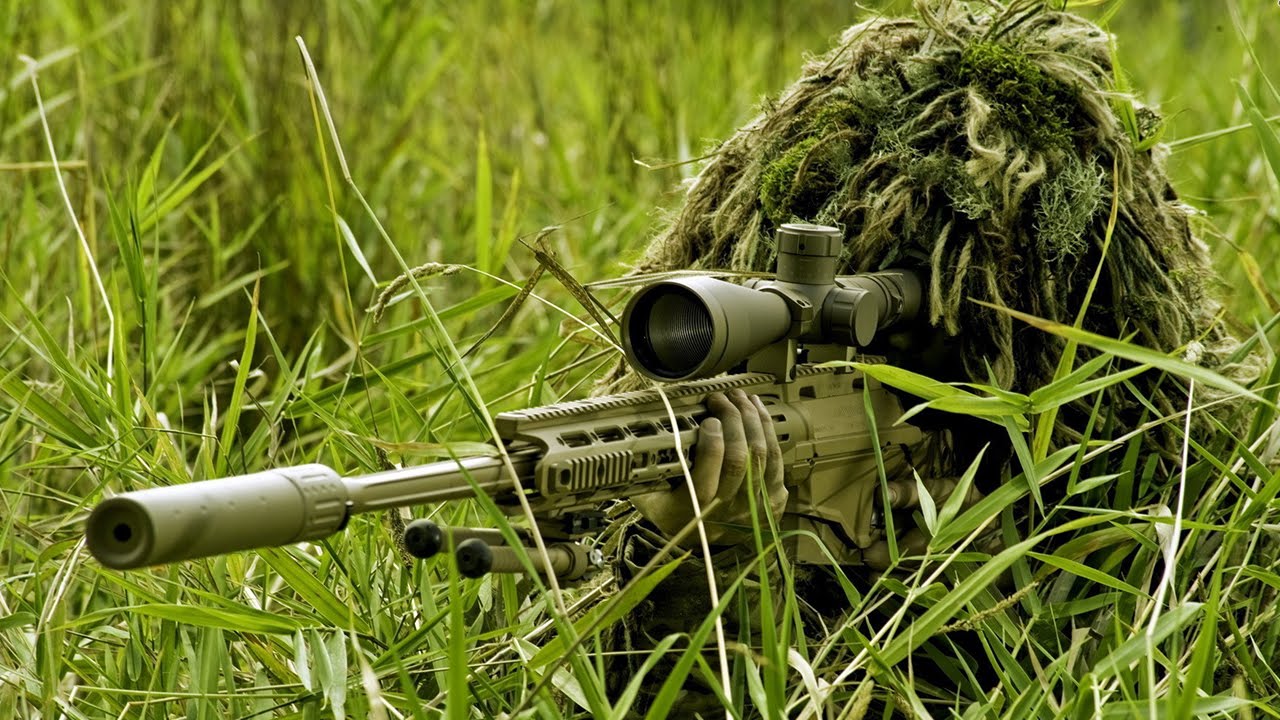
He shoots, he scores! No, I’m not trying to conjure images of Sidney Crosby and the Golden Goal from the 2010 Olympics. Nor, with all due respect to the memory of Foster Hewitt, am I referring to hockey at all. I’m referring to the recent world record-breaking shot by an unnamed member of Canada’s JTF2. Put the biscuit in the basket as the saying goes, though from a lot farther away than your NHL-mandated blue line.

How far, might you ask? Around 3,540 metres give or take, which as many are saying, is quite a shot … eat your heart out Bobby Hull. Of course, the biscuit in this case is not a six-ounce puck of vulcanized rubber but a .50 caliber BMG round. And the basket was not a four-by-six hockey net but a purported member of ISIL of indeterminate size, though it’s safe to assume taller than four feet, and a lot skinnier than six. It’s also safe to say Foster Hewitt would have been a little tongue-tied calling the “play” given the messy aftermath.

Now to be clear, from a military and professional soldier’s point of view, this was indeed an accomplishment of the highest order. To hit a target from that distance given the variables involved is a testament to not just the skill, but the physical and mental training put in by the sniper who achieved it. That the target was a living, breathing human being makes it, again from a soldier’s perceptive, all the more impressive. This wasn’t a great shot on some shooting range, but a life-taking shot under combat conditions, taken under the direction of the Canadian government; by definition Canadian citizens. That’s one hell of a thing to ask someone to do, and our soldiers do it very well and without fanfare. It deserves our deepest respect.

That we had a sniper in that place at that time, taking that shot and that life, should make every citizen of this country feel very ashamed. The target should never have been there, ISIL should never have existed in the first place. These situations have resulted from one stupid decision after another, by our government and others; an ongoing string of incompetence for which year after year, decade after decade, and century after century our soldiers have had to pay the price. It is not something to be celebrated like a Stanley Cup parade or an extra big haul of medals from the last Olympics. Our soldiers deal with the messes we cause. There’s nothing for Canadian civilians to feel remotely proud about.

Not that you would know it. Media outlets were falling over themselves talking about the achievement, lauding it, deconstructing it, listing the top five long-distance kills in the world and squealing with glee that Canada has three of them! Firearm enthusiasts in chat rooms and ranges across the land parsed the whole thing like an exceptional Tiger Woods golf shot while pondering the merits of various rifles and rounds like they were new offerings from Nike™ and Titleist™. Even the prime minister chimed in with kudos and pompoms, covering his political bases and ass if not necessarily his elected duties or responsibilities.

Yet why should he if the general electorate treats the whole thing as one big, jingoistic game? I don’t know how many times I’ve heard coaches and athletes in hockey and other sports use military and war metaphors to refer to a play, a game, a series, or a season. Similarly, there are far too many people in this country who live vicariously and salve their insecurities not just through the distraction of organized sport, but through the bloody conflicts around the world, and the true bravery of soldiers forced to deal with them.

And deal with them they will until people understand that it is no game. These aren’t just scores and records from some benign, entertaining competition. It’s not the Olympics; it’s not the Stanley Cup. It’s somebody’s child killing someone else’s child, for real, never to be taken back on appeal. Game over.

The JTF2 Heard you, Scott

“The top Canadian sniper of the war was Cpl Francis Pegahmagabow, 1st Battalion Canadian Expeditionary Force, with 378 kills with his Ross.”

“The top Canadian sniper of the war was Cpl Francis Pegahmagabow, 1st Battalion Canadian Expeditionary Force, with 378 kills with his Ross.”

(Volume 24-07)

By Vincent J. Curtis

For some time now, publisher Scott Taylor has criticized the Canadian government for allowing Canadian soldiers to fight in the front lines in Iraq against ISIS forces. One example of front-line fighting was of a Canadian soldier taking out a vehicle-borne improvised explosive device (VBIED) with a relatively short-range Carl Gustav rocket launcher. The Canadian troops deployed in Iraq are on a training mission, and fighting in the front lines runs contrary to that agreed-upon mandate, he argues.

It appears that Canadian Special Operations Forces in Iraq were paying attention. In June, a Canadian JTF2 sniper made a record-breaking kill shot in Iraq from a twice-confirmed range of 3,540 metres. You can’t get much further behind the front lines than that. Any further back, and you’d bump into the Iraqi Officer’s Mess.

Canadian snipers now hold three of the top five confirmed sniper shots. Dropped into second place, with a range of 2,475 metres, is British sniper Corporal of Horse Craig Harrison of the Blues and Royals, followed by Canadians Cpl Rob Furlong at 2,430, and MCpl Arron Perry at 2,310, both of 3 PPCLI. Fifth place, at 2,300 meters, is held by Sgt Bryan Kremer, 2nd Battalion, 75th Ranger Regiment of the United States Army. The famous Gunnery Sergeant Carlos Hathcock III, U.S. Marine Corps, falls into sixth place at a mere 2,286 metres, albeit made with a scope-mounted M2 Browning machine gun — not ordinarily considered to be a sniping weapon, until he made it into one.

The first Canadian experience of sniping occurred during the Boer War. The Boers were armed with the Mauser Model 1895 that fired the 7mm Mauser spitzer cartridge. This combination completely outclassed and out-ranged the British Magazine Lee Enfield rifle, which fired the Mark II .303 cartridge — hard-hitting but ballistically wanting. The Boers were largely an army of snipers, and it was this experience that gave Sir Charles Ross and Sir Sam Hughes the idea of an army of marksmen equipped with a rifle superior in accuracy and range to the Mauser — the Ross rifle in .280 Ross calibre — and with the Colt M1895 machine gun included for additional firepower.

The British learned some lessons too from the Boer War, and they entered World War I with the Mark VII .303 cartridge and the Short Magazine Lee Enfield rifle. Under Sam Hughes’ tutelage, Canadians stayed with the Ross, adapted for the improved British cartridge. Major H. Hesketh-Prichard, author of Sniping in France, gives his account of “How the British Army Won the Sniping War in the Trenches.”

He writes: “The Canadian Division and, later, the Canadian Corps was full of officers who understood how to deal with the German sniper, and early in the war there were Canadian snipers who were told off to this duty [i.e. counter-sniping], and some of them were extraordinarily successful. Corporal, afterwards, Lieutenant, Christie, of the PPCLI, was one of the individual pioneers of sniping.”

In his book A Rifleman Went to War, W.H. McBride wrote of pre-war Canadian training. “Here, in Canada, the program, which was certainly laid out by an officer who knew his business (I suspect it was Colonel Hughes himself) was one calculated to do just two things: to put the men in physical condition to endure long marches and to thoroughly train them in the use of weapons … In the Battalion were many of the best riflemen in Canada, including Major Elmitt (member of the Canadian Palma team of 1907) … I just mention these things to show how it was that this particular battalion developed into a real aggregation of riflemen … We were using the Ross rifle, a splendid target weapon …”

The top Canadian sniper of the war was Cpl Francis Pegahmagabow, 1st Battalion Canadian Expeditionary Force, with 378 kills with his Ross.

In World War II, Canadian snipers were equipped with a scope-mounted Lee-Enfield No. 4 Mk 1 (T) and organized into scout-sniper platoons. Perhaps the most famous picture of a sniper, then or now, is of Sgt Harold A. Marshall of the Calgary Highlanders, wearing a Denison smock and a Hollywood-handsome look.

In 1972, the Canadian army adopted the C3 Parker Hale, which was based upon a modern target-competition rifle with all the latest improvements for consistent, long-range accuracy. This excellent rifle was in combat service as late as Operation APOLLO, and MCpl Graham Ragsdale of 3 PPCLI recorded over 20 kills with a C3A1 in Afghanistan in March 2002.

The 7.62 NATO calibre C3A1 is being phased out and replaced with the C14 Timberwolf, in .338 Lapua Magnum. The problem with all the classic rifle calibres for sniping nowadays is lack of range. They are limited in effectiveness to the distance at which the bullet falls below the speed of sound, and this typically occurs about 900 metres downrange. Better ballistics dramatically improves range. The Lapua Magnum cartridge is good to 1,500 metres, and the .50 calibre BMG, to over 1,800 metres; and the extraordinary multi-kilometres kills were done with these.

The problem for accurate, long-range sniping becomes accounting for such esoteric factors as atmospheric pressure, and the curvature and speed of rotation of the earth. For this, the sniper’s spotter and his ballistic computer become an absolutely essential part of the team.

The idea of Sam Hughes and Charles Ross of an army of marksmen proved to be impractical, and precise, long-range shooting is now delegated to platoons of snipers with special equipment. Beginning with Hughes, the Canadian Army developed a culture, and now has a reputation for excellence in sniping. Sniping is a skill that is inexpensive to develop. It is a craft that smaller armies like Canada’s, lacking in money and men, can cultivate, and snipers can deliver tactically important results.

With modern tools, Canadian soldiers don’t have to be in no man’s land to be able to dispatch the enemy.

Not Even Worth The Papers It's Printed On

“Vote Team Justin™ and get your money! Sound familiar?”

“Vote Team Justin™ and get your money! Sound familiar?”

(Volume 24-06)

By Michael Nickerson

It’s finally here! The new Canadian defence policy paper has arrived. Huzzah! Sure it’s six months late, but oh my, what a document: 113 pages of vision, inspiration, and no end of sidebars, tables, and appendices to wow the reader into a state of optimistic bliss. It’s got a catchy title too: Strong, Secure, Engaged. And hey, it also has a great photo of a military family with their dog, and who doesn’t like dogs?

As a body of rhetoric goes, it is quite impressive, touching on all the right talking points, from supporting military personnel and their families, and investing in capability and capacity, to “Fixing Defence Funding” as the third chapter is titled. The first two at the very least indicate that Defence Minister Harjit Sajjan and the rest of Team Justin™ have indeed been listening to Canadians, be it through consultation, focus groups, or a daily summary of press clippings. And it’s fairly safe to say that, after many years, the Canadian public wants us to look after our troops and families better, and knows that our military is in need of a serious financial infusion.

And so, should one view Strong, Secure, Engaged as a contractual agreement, then the military community has a lot to be happy about. Aside from expanding regular force and reserve numbers by 3,500 and 1,500 respectively, those personnel will receive more money for family support resource centres ($145-million), and more for health and wellness, both physical and mental ($200-million). Twenty-eight initiatives in all that should have military members thinking that, yes, they really like us.

Similarly, should you be part of the Royal Canadian Air Force or Navy, looking to join the Special Operation Forces, or are just a tech geek who likes to play cyber spy, then put those shades on because the future is going to be blazingly bright. We’ve been promised 88 jet fighters, 15 “Surface Combatant ships” (and to quote Sajjan: “Fifteen. Not ‘up to’ 15 and not 12. And definitely not six”), two supply ships, 605 Special Operation Force members and the requisite capital support, along with drones, radar, equipment upgrades across the board, and cyber warfare tech to boot.

Unfortunately given all its inspirational eloquence, Strong, Secure, Engaged is not a contractual agreement but is at best a promissory note backed by a history of broken promises and misleading numbers. Of course, the broken promises need no introduction, with a succession of governments having promised one thing and done effectively the opposite for decades. And it should come as no surprise that the spending promises in Strong, Secure, Engaged are heavily back-loaded to well after the next election. Vote Team Justin™ and get your money! Sound familiar?

Which brings us to the numbers, and to paraphrase the old saying, they aren’t what they’re cracked up to be. To quote the great document itself, the government promises (assuming they’re re-elected at least twice) to increase annual defence spending “from $18.9 billion in 2016-17 to $32.7 billion in 2026-27, an increase of over 70 percent.” Seventy per cent! Wow!! Who could quibble with that?

Well, what if I told you that the government, to great fanfare, has come forward and promised to spend the equivalent of no more annually in ten years than it does now? See, there’s this little thing called inflation and, unfortunately, when it comes to equipping and maintaining a modern, cutting-edge military force worthy of working with our current high-tech allies, the expected inflation rate runs a little higher than the annual increase in the price of kumquats at the local grocer. Put simply, using the government’s numbers, their promise amounts to an annual increase of 5.65 per cent (compounded annually, which is charitable), and while the inflation of defence costs can be quite variable, dependent on tech levels and operational status amongst other things, 5.65 per cent yearly in cost inflation is well within the accepted norms for modern militaries.

In short, Strong, Secure, Engaged isn’t even worth the paper it’s printed on. A work of fiction, smoke and mirrors … choose whatever analogy, but the result is the same, and so is Canadian military spending for many years to come.

Peacekeeping In Europe

“Maintaining the peace in Europe is by far Canada’s higher priority ...”

“Maintaining the peace in Europe is by far Canada’s higher priority ...”

(Volume 24-06)

By Vincent J Curtis

The election of the Justin Trudeau government in 2015 brought with it hopes in some for a return to international peacekeeping as a prestigious feature of Canadian foreign policy. Attention was focussed on a mission in Africa, and the West African nation of Mali in particular. None of the peacekeeping opportunities were, on second look, particularly appealing. Despite pressure from the United Nations, the Trudeau government has not committed itself to any large-scale peacekeeping intervention in Mali, or anywhere else in Africa.

With good reason. In the first place, it is not in Canada’s national interest to have Canadian soldiers keeping peace among the warring tribes of Africa. Whereas it is in Canada’s national interests to keeping the peace among the warring tribes … of Europe.

To say nothing of national interest, the obvious racialism involved in having Canadian soldiers patrolling the African bush to keep the tribesmen from killing each other presents no winning visuals and a real danger of a loss of prestige as a result of some incident.

Even at two per cent of gross domestic product (GDP) spent on defence, Canada lacks the military strength to supply a peacekeeping mission in Africa and a mission of deterrence in Europe. In Afghanistan, we were stretched to maintain a full-strength battalion and a brigade headquarters in Kandahar indefinitely; subtract an additional battalion from the reserves for a mission elsewhere, and something would have had to give in short order.

Maintaining the peace in Europe is by far Canada’s higher priority, and we have to husband what military strength we have in order to keep that peace.

One of the threats to the peace of Europe comes from the Putin regime of Russia. Russia is an interesting socio-political case. For 70 years, as the heart and soul of the Soviet Union, Russia represented the sacred flame of communism and official atheism to the world. When the fraud of communism could no longer be maintained, the Soviet empire collapsed, leaving Russia shorn even of her Czarist imperial lands. There must be a huge emptiness in the psychological core of the Russian people right now.

The country went into serious demographic decline. The population of ethnic Russians shrank. Of a total population of now less than 150 million, only 120 million are ethnic Russians. The average lifespan of a Russian is falling, and alcoholism and corruption are said to be rampant. Russia’s GDP is smaller than Canada’s. She relies heavily on exports of oil and gas for foreign exchange, and with depressed prices for both those commodities, her capacity to import foreign goods is not what it was a decade ago, when oil and gas prices were more than double what they are now.

Putin faces a huge challenge in getting a demoralized Russian people turned around, and he turned instinctively to the prestige game. He believes that the fall of the Soviet Union was a great geopolitical disaster. The role he is playing to the Russian people is that of the Strong Czar, which is distinct from the Good Czar. Putin is exercising Russia’s military strength to regain lands which once comprised the Czarist empire: in Georgia, Crimea, and in eastern Ukraine. He is menacing the Baltic states. In addition, he is propping up the Assad regime in Syria, and is supplying Iran with missile defences. Russian air forces are testing the NORAD defences again, and are buzzing NATO warships in the Baltic and the Black Seas.

Putin is doing the things that dictators typically do in order to distract attention from internal domestic problems: create international problems that justify internal oppression and distract attention from the internal issues. The Good Czar would undertake the thankless and personally dangerous task of a spiritual revival in Russia; the Strong Czar creates and carefully manages external problems.

Publisher Scott Taylor has observed that Russia is in no position to attack and conquer Europe. Russia has recently cut military expenditures even as NATO countries are being encouraged to increase theirs. By comparison, Germany has a population of 82 million and a GDP nearly triple that of Russia. True, Russia still has a large nuclear force that could reduce Western Europe to a nuclear wasteland; but what’s the point of trying to rule a nuclear wasteland?

The threat that Russia represents under the Putin regime is the nibbling at the edges of NATO, and a consequent loss of prestige of that organization that would follow should he succeed. The seizure and forced incorporation of all the Ukraine would create diplomatic tidal waves that NATO could do nothing about. Such a move, if successful, could cement Putin’s standing in Russian history while diminishing NATO’s prestige at the same time.

On the other hand, an attempt at seizing one of the Baltic states would create a far more ticklish problem for both Putin and NATO. If, say, NATO member Latvia were seized in a lightning invasion, NATO would be faced with a fait accompli and NATO countries would have to ask themselves how much they were prepared to risk for the sake of a country of less than two million people and territory not vital to the security of the rest of NATO.

That is why deterrence in Europe is central to Canadian foreign policy. We don’t want to have to answer that question in respect of the Baltic states, and would greatly prefer a stabilization of the Ukraine/Crimea problem. Only military deterrence can inhibit a seizure of Latvia, and military measures that can make a seizure less than lightning fast contribute to the stability of Europe. Putin is not going to risk all his prestige on a less than sure thing.

A force of 450 troops in the Baltic states is a start. Providing those troops with real defensive power with plentiful machine guns and anti-tank weapons will be the next step. Diplomatically, Canada can encourage a spiritual revival of the Russian people through engagement with the Russian Orthodox Church and encouragement of the spread of the Western enlightenment through cultural exchanges, rendering the prestige game moot. We can’t do this if we are busy putting out brush fires in Africa.

Moore's Law Of Terrorism

“The main objective of a terrorist group is to propagate its message”

“The main objective of a terrorist group is to propagate its message”

(Volume 24-6)

By Stewart Webb

The recent string of lone wolf attacks in Britain cannot be fully explained away because they occurred during the month of Ramadan. One of the Ramadan-related inspirations is that Abu Bakr al-Baghdadi decreed the formation of the ISIS caliphate during that month. There has been a correlation between an increase of ISIS-related attacks worldwide and the month of Ramadan for a couple of years so far. Nor should the London attack be dismissed as being solely inspired because of the Manchester attack.

Lone wolf attacks have occurred in the United Kingdom, Canada, the United States, Germany, France, Belgium and the list could go on. So could the list of attackers and their victims.

The true threat of lone wolf attacks stems from the proselytizing of Islamic extremism over the Internet and in any public sphere. On the Internet, extremist preachers connect to individuals who might be sympathetic. The Manchester bomber, Salman Abedi, may have had links to a former Ottawa extremist preacher, Abdul Baset Ghwela, who now resides in Libya. This only echoes the Fort Hood incident where Major Nidal Hasan was influenced by al-Qaeda in Arabian Peninsula cleric Anwar al-Awlaki.

Extremist clerics and preachers will not stop trying to sway these disillusioned citizens who do not fit in with society and their peers as they seek for an accepting community and/or adventure. Of course, we could crack down on extremist preachers, but this would also place our freedom of expression at risk.

Unfortunately, extremist preachers are not the only threat online. There is a myriad of al-Qaeda and ISIS magazines that espouse their positions, and offer do-it-yourself guides to bombs or suggestions such as rent a van and drive it into a crowd. Then there is YouTube, Twitter and any other social media platforms where their propaganda can be still sought out. We have to also remember that the first six ISIS magazines of Dabiq were available for purchase on Amazon.

As technology has advanced so has terrorism, and it seems that we are still trying to catch up. The main objective of a terrorist group is to propagate its message, and embracing the Internet has proven to be fruitful. Welcome to Moore’s Law of Terrorism. For those who are not familiar with it, Intel co-founder Gordon Moore has predicted that transistor power will continue to double and markedly increase and thus pave the way for technological advancements. Terrorism has embraced the Internet, social media and public relations — from the Bora Bora to the PR room.

Facebook, Google, YouTube and Twitter have attempted to crack down on terrorist propaganda, but they have not been able to be successful. In fact, when many ISIS sympathizer Twitter users are blocked, they see it as a badge of honour, create a new account and reach out to their old contacts and re-form the connection. And the measures undertaken by the digital super-giants can be overcome by downloading a new browser, adopting a VPN or even just installing an advanced ad blocker. The United Kingdom created its own unit that will use psychological operations and social media.

It would be easy to blame the digital shift of inspiring western citizens solely on ISIS, but it would be wrong. Since the inception of al-Qaeda, even in the days of dial-up modem connections, there has been an Internet following. The first jihadist sympathetic website,
www.azzam.com, was launched by a London Kings College student. It rose in global notoriety and provided English-language updates on international jihadist activities. It was eventually shut down shortly after the 9/11 attacks. But this did not stop the ringleader of the July 7 attack in London in having copies of some of Azzam’s texts on martyrdom.

Of course the proselytizing message does not only land on ears of those willing to lay down their lives. The message is also heard by those who will only offer material support. For many, the first example that will pop in their minds is the DC transit cop that was trying to send prepaid credit cards to ISIS only to find himself in an FBI sting operation.

Then there is Jubair Ahmed, a Pakistani-American who was sentenced to 12 years in prison for offering material support to Lashkar-e-Taiba. For those who aren’t familiar with the Pakistani group, they were responsible for the Mumbai attacks and the Indian Parliament bombing in 2001. Ahmed starting providing recruitment and propaganda videos to the group from raw footage that was sent to him.

Imagine a world where ISIS and other groups outsource their propaganda films through the dark web. Or hackers find solutions on the battlefield. A U.S. Predator drone over Iraq was hacked in 2009 and the insurgents on the ground only used software available on the Internet for $26.

Sometimes it does seem we are falling behind. This is not the new age of terror, but just a minor step forward. We have to remember that, in this fight, they will adapt and so will we and it is going to be a long slog.

Owls On Acid

“Canada will have the relative military might of Genghis Khan”

“Canada will have the relative military might of Genghis Khan”

(Volume 24-05)

By Michael Nickerson

Some would blame Don Meredith. That would be former Senator Don Meredith, the ethics- and scripture-challenged Pentecostal minister appointed by Stephen Harper, who managed to miss the memo when it came to age of consent. Or perhaps it was current Senator Mike Duffy, another Stephen Harper appointee who missed the memo on geography. Or Senator Pamela Wallin, yet another gift from good old Steve, missing the one on expense accounting. We won’t bother with Senator Patrick Brazeau, who likely never saw any memos at all.

Regardless of whom you’d like to blame, the fact remains that Canada’s senators are very busy looking very busy for the simple reason that they have a severe public relations problem. One suspects that they’d like nothing better than to have the spotlight turned off the upper chamber so they could all take a breather, and in many ways you can feel for them on that score. Watching a bunch of moths bashing into a porch light can get rather depressing after a while.

Of course, we aren’t talking about moths. No sir, the upper chamber is populated by owls. Wise owls mind you, at least if one of the new Senate make-work projects is to be believed. As part of a campaign to re-instill confidence (or perhaps just instill), the Senate has published a new children’s book! Yes, The Wise Owls, a cracking tale of sober second thought and Canadian democracy to help children across the land understand that, indeed, senators matter. Sure to be plentiful at a discount bin near you, age of consent not required. And seriously, the Senate really did publish this thing.

But have no fear, for when it comes to spinning fiction for the entertainment of adults, the Red Chamber has things covered. They’ve also recently penned Reinvesting in the Canadian Armed Forces: A Plan For The Future … admittedly not the pithiest of titles. Yet it stands as a testament to creativity, hubris, hilarity, and likely the biggest acid trip put to print since the 1960s. Thirty recommendations in all that will have you convinced that senators are indeed busy and possibly even wise, though most definitely in an alternate universe.

Mind you, it’s a damned inspiring and entertaining one, a place where money is no object, and Canada will have the relative military might of Genghis Khan with little more than a swish of the legislative pen. The shopping list is breathtaking: 120 jet fighters, 21 heavy-lift helicopters, 24 attack helicopters, an unspecified number of refuelling aircraft, 60 upgraded LAV IIIs, 18 new frigates, an unspecified number of minesweepers and destroyers, and 12 new diesel electric submarines to complement our current and oh-so-effective fleet of four. If you’d like a moment to take a hit of oxygen, please do.

There was no mention of actual costs, such as those for training the people who will use all that equipment, or the associated legacy costs involving those who may die or be injured using the equipment, much less the investments required just to get what Canada already has back to battle fitness. But hey man, it’s cool. We’re like busy, right?

Back on planet Earth, or the part called Canada at any rate, things aren’t quite so excitingly psychedelic. You have a cash-strapped government balancing multiple agendas and committing money to as few as possible. One of those agendas is how to balance trade issues with foreign and defence policy commitments, most notably with our closest neighbour. If anyone doubted trade is the priority, consider that the ministers for both Global Affairs and National Defence recently paid a trip to Washington D.C., and gave the current U.S. administration a sneak peak of our planned polices before anyone else, be it NATO or the people Harjit Sajjan promised would see it first, Canadians.

Given that these policies have been in flux while Team Justin™ chases the whims of a man-child made president, it should be obvious that those policies will need to be held to account. They will need to be in line with the wishes of Canadians. And that will require oversight and, yes, wisdom. Whether that comes from sober and realistic Canadian senators or a bunch of stoned nocturnal birds of prey is at best even money.

The Ross Rifle Paradigm

“The chronic problem of the Ross was jamming”

“The chronic problem of the Ross was jamming”

(Volume 24-5)

By Vincent J. Curtis

The story of the Ross rifle is of a great Canadian idea that turned into failure because of a lack of experience.

The Ross rifle was the brainchild of Sir Charles Ross and Sir Sam Hughes, who would serve as Minister of Militia and Defence from 1911 to 1916. Both men had served in the Boer War, and came away impressed with the long-range accuracy of the Mauser Model 1895. The Boers’ Mauser outclassed the British long Lee Enfield, which sported a 30-inch barrel. Ross and Hughes had come away from South Africa with the impression that, in the next war, long-range rifle marksmanship would play a crucial role in the control of the battlefield.

Ross was an excellent marksman, and he had an amateur engineer’s interest in rifle design. A wealthy Scottish nobleman, Ross had the money to be able to build a manufacturing plant that could put his engineering ideas into practice. His big idea was to mate a straight-pull bolt action to a long, heavy barrel. Add a sweet trigger, and Kumbaya!

Ross, however, lacked the practical experience and single-mindedness of a John Moses Browning.

At the time of the Boer War, the Canadian militia was armed with the single shot .303 calibre Martini-Henry. The Canadian government determined to re-arm the militia with bolt-action, magazine-fed repeaters. Inexplicably, the British government refused to provide a license to manufacture the Lee Enfield in Canada, and this gave Ross and Hughes their opportunity. Ross was awarded, in 1903, a contract to supply 12,000 rifles to the Canadian government.

The Ross was always an excellent target rifle. But like all really new systems, it had teething problems, some of which were not discovered before its first use in combat. Outside experts had already labelled the Ross as a target rifle masquerading as a military one; but Hughes disagreed and was influential enough to prevent a serious review of the Ross, one that would endanger its quality as a marksman’s rifle. Because of Canada’s meagre defence budget, military exercises were never large or serious enough to test the Ross in realistic battlefield conditions, tests that might have forced attention to the Ross’s shortcomings.

The chronic problem of the Ross was jamming. The Ross was chambered for match-grade Canadian ammunition, made on the small end of the .303-inch cartridge’s specifications. A close-fitting chamber improved accuracy. Hence, when the Ross was fed trooper-grade British ammunition made in a new war factory, hard extractions became inevitable. Reaming out the chambers and drilling out the rear aperture sight for the non-marksman did not solve the other problems of the Ross. Engineering and metallurgical problems led to more jamming issues. The soft steel of the interrupted thread bolt head allowed the left rear thread to bend when struck hard against the bolt stop. Thus, one hard extraction kicked open led to more hard extractions, or a failure to close into battery.

When these were fixed, the Ross, with a 30.5-inch heavy barrel, was heavier, unbalanced, and longer than the British SMLE Mk III, with its shorter 25-inch barrel. But after shortening the heavy barrel by five inches, the Ross became balanced, and lighter, and handier than the Lee Enfield. By this time, however, the damage was done; the Ross’s battlefield reputation was in ruins. Only the snipers stuck with the Ross.

If the Ross of mid-1916 had been the Ross of mid-1914, Canadian infanteers would have carried the Ross rifle all through the First World War, Second World War, and Korea. But because of lack of experience, numerous little problems became showstoppers, until the damage was done.

America’s experience with the revolutionary M-16 was not unlike Canada’s with the Ross. What was fine in America turned out to be problematic in Vietnam. But America stuck with the M-16 and overcame its problems; and now an M-16 design has served as the American infantry rifle for longer than anything else since the revolution.

Canada is preparing to spend $26-billion or more on a new Navy. The plan is to build the ships in Canada. Whatever experience and institutional memory Canada had in building warships disappeared decades ago, through lack of work. Canada is in the same position with respect to warships that she was with the Ross infantry rifle.

Canadian draftsmen can draw anything you ask for, and workmen can build anything drawn for them. But is a combination of great ideas going to work in actual war? What are the hidden pitfalls that have to be looked out for? Lacking experience, neither our shipbuilders nor our naval architects can know.

Australia And Canada Deserve Much More Recognition

“In one incredible day, the AIF and CEF punched through 16 kilometres of German lines”

“In one incredible day, the AIF and CEF punched through 16 kilometres of German lines”

(Volume 24-5)

By Tim Fischer

The month of April 1917 was historically relevant for both Anzac and Canadian soldiers, and now is the time to correct the decades of British and American historians overlooking the heavy lifting that was done by Australia and Canada on the Western Front in the First World War.

Field Marshal (Honorary) Prince Charles made it to Vimy Ridge in France for the centenary of Canada’s Gallipoli, namely the extraordinary Battle of Vimy Ridge, when four Canadian divisions captured the high ground of Vimy Ridge. Prince Charles was right to be there.

It was the leader of the First Division of the Canadian Expeditionary Force (CEF), Sir Arthur Currie, who helped greatly in the holistic and meticulous planning that delivered success at Vimy Ridge.

Currie had studied what went right and wrong at Verdun with the French and also believed in the protection of the soldier as much as possible, not using them as cannon fodder.

In many ways, ultimate CEF commander Currie was like Australian Imperial Force (AIF) commander Sir John Monash. Both were in businesses before the war that at times almost went broke, both were citizen soldiers in the militia and rose through the ranks — entirely on merit — to command national armies in the First World War.

Again both were outsiders as “colonials,” challenged orders from higher authorities, were knighted by King George V in France and believed in meticulous, holistic and detailed planning.

In April 1917, the Canadians at Vimy Ridge proved that against the odds the Germans could be beaten, as long as the immediate objectives were defined and achievable with an eye to withstanding counter-attacks.

Then, in April 1918, the Australians blunted the huge lunge of the German Army under Operation MICHAEL, stopping them at Villers-Bretonneux in action described as some of the most valiant fighting of the war. Brigadier Harold ‘Pompey’ Elliott, General John Gellibrand, General Thomas Glasgow, Monash and the AIF soldiers stemmed the breakout and saved Amiens’ key railway junction from being captured. Had it fallen then most historians concede the Germans would have gone on to capture Paris and most of Continental Europe.

In July 1918, when Monash was finally given command of the Australian Corps, he meticulously conducted the Battle of Hamel, a victory planned to be obtained in 90 minutes and delivered in 93 minutes by 7,000 Aussies and 1,000 Yanks of the 33rd Infantry Division (Illinois).

Alas, the headlines in the papers back home read: “British Success, Hamel captured!” This was due to the British headquarters of Field Marshal Douglas Haig controlling all despatches on that section of the Western Front.


Australia and Canada

It was on August 8, 1918 that the Battle of Amiens was launched by Australia with Canada on the right flank as sought by Monash, the first big push by the Allies after months of stalemate.

In one incredible day, the AIF and CEF punched through 16 kilometres of German lines, capturing German guns large and small, also thousands of POWs and reaching all objectives before sunset. It caused German General Erich Ludendorff to write: “This is the black day of the German Army.”

Finally the Allies had a major morale-boosting victory, delivered by Australia and Canada and of such significance that it led to the big final push and Armistice and victory outright on November 11, 1918.

Now go today to the Imperial War Museum (IWM) at Bedlam in London and see the small amount of mention (after representations) of Monash and Currie, the AIF and CEF in the new First World War Gallery. Whereas note British commander Field Marshal Sir Douglas Haig has a panel in the Australian War Museum.

Cambridge University just a couple of years ago produced their three-volume comprehensive official history of the First World War, in which there was a small mention of Currie and zero mention of Monash — none at all.

Finally, go to Pershing Park in sight of the White House and look at the panel allocated to July 1918 — zero mention of the exemplar Battle of Hamel involving Americans in their first biggish stunt.

As Canadian citizen Donald MacLeod points out, there are many proper reasons why Australia and Canada should posthumously promote both Currie and Monash to the rank of field marshal this year, noting the Frenchman Ferdinand Foch was so promoted symbolically in July 1919, but also I have an improper reason:

It will bring a long-overdue focus to both Currie and Monash, to the victorious workload of the CEF and AIF at last, and it will sure as hell get up the nostrils of many a current British general or field marshal — let us just do it.

A More Palatable Way To Die

(Volume 24-04)

By Michael Nickerson

Let’s talk death. Oh relax. It’s just you and me. I promise to keep it off the record. Mum’s the word, so to speak. For it’s a touchy subject at the best of times, and these aren’t particularly the best of times. Mind you, other than nodding off with scotch in hand on a warm beach facing a beautiful sunset, it’s hard to think what times would actually be best for such a thing. But that’s neither here nor there, because death is in the news and we need to talk about it. Our very lives may be at stake!

Well actually not ours (though we should both probably go for a check-up just to be sure), but others most definitely. Men, women, and, gosh darn, children as well. Dying in droves they are, though more to the point, dying on the morning news. And let’s be candid, that doesn’t help those pancakes digest properly on the commute to work, now does it?

Specifically, I’m referring to Syrians. Now we both know they’ve been dying for years now, yet some bugger saw fit to make things a little more interesting and break out the sarin. Lovely stuff that sarin — a neurotoxin developed by the Germans in the late 1930s initially as a pesticide, then weaponized and stockpiled by NATO and the USSR as one of the many arrows in their lethal quiver of calamities. It causes convulsions, incontinence, and asphyxiation. Not the stuff generally recommended by the ‘right to die’ contingent, but certainly enough to kill some 80 plus people and injure 500 more in the town of Khan Sheikhoun last month, as well as play havoc with Donald Trump’s morning rituals.

As we know, the U.S. president likes to start his day with some aggressive early morning tweeting, followed by intensive study of Fox & Friends. But the poor devil saw footage of dead children and before you can say flip-flop, took America deeper into the fray by way of 59 Tomahawk cruise missiles and a stern warning that the United States will not tolerate Syrians being killed in such a manner. “No child of God should ever suffer such horror,” The Donald proclaimed; something hard to argue, children of God or no.

And certainly no one is arguing that point, in public at least, for it would be a bit like discussing the merits of puppy incineration during afternoon tea. Neither politic nor particularly palatable. Instead, the arguments rage over the timing of the attack, who actually perpetrated it, who might benefit, and how to make the problem go away before indigestion becomes the norm of Western civilization.

And that brings us back to death. See, I don’t know about you, but I’m having a hard time buying into the idea that death by sarin somehow is worse than death by bombing, shelling, rifle fire, flame, concussion, fragmentation, dismemberment, or just good old starvation and infection. The civil war in Syria has gone on for six years now, has claimed some half million lives, displaced more than ten times that, destroyed a country and region that may never be rebuilt, and destabilized the world with its repercussions.

Yet that war and those forms of death have become background noise, accepted and abstract. Only when a small Syrian child washes up on a Mediterranean shore do we take in refugees. Only when another Syrian child chokes to death from sarin do the missiles fly and the diplomatic rhetoric shifts gear. Stick a cattle prod up our collective butts and we do indeed go moo, at least briefly.

But bet the farm and that tender side of prodded beef it won’t last. We’ll get used to it. Add it to the list of things that just happen in life. Accept it. But our lives really are at stake, perhaps not our physical ones just yet, but certainly our ethical ones. The second we consider conventional weapons a palatable way of killing people we really should pack it in. And in some ways I think we already have. The sun is setting after all. Please pass the scotch.

The Two Percent Problem

Trump is working the Russian problem from both ends

Trump is working the Russian problem from both ends

(Volume 24-4)

By Vincent J. Curtis

When NATO foreign ministers gather around the conference table to grouse about their problem with two per cent, they aren’t talking about American beer. They are talking about the sober promises their countries made to each other several years ago. At the NATO meeting in Brussels on March 31, new U.S. Secretary of State Rex Tillerson told members that he wanted to see each country’s plan to raise their defence expenditures to two per cent of gross domestic product (GDP) at the next meeting, scheduled for the end of April.

Presently, only five NATO countries are fulfilling that commitment: the U.S., UK, Greece, Poland, and Latvia. Canadian defence expenditure presently hovers around one per cent of GDP.

All this is taking place in an atmosphere of confusion and consternation at the new Trump administration. During the election campaign, Donald Trump criticized the usefulness of a NATO that paid no attention to the problem of international terrorism and terrorist states, while at the same time he appeared to cozy up to Russian President Vladimir Putin. Trump’s appearing to cozy up to Putin gave legs to the story that Trump was in Putin’s pocket somehow. Even now, the Democrats in Washington are pushing the line that the Trump campaign colluded with the Russian regime to steal the presidency from Hillary Clinton.

Because most of the media are suffering from Trump Derangement Syndrome, they are missing the fact that Trump is working the Russian problem from both ends.

Trump is giving Vladimir Putin every reason to relax tensions between Russia and the NATO countries that became acute after Russia annexed the Crimea, and then sent proxies into eastern Ukraine to end the sovereignty Kiev de facto and de jure exercised over that region. Russian control over eastern Ukraine gives Russia a land bridge to the Crimea, with its famous port and the home of the Russian Black Sea fleet, Sevastopol.

Czarist Russia seized the Crimea from the Ottoman Empire in the 1783 and held it after the Crimean War of 1854–56. In 1954, Soviet leader Nikita Khrushchev transferred ownership of Crimea to the Ukrainian Soviet Socialist Republic. Ukraine kept it after it declared independence from the Soviet Union in 1991.

Near the end of the Obama administration, Russia began to exert pressure on NATO members Latvia, Estonia, and Lithuania, the so-called Baltic states. These are geographically small countries with small populations; they lie on the extremity of the NATO region but are adjacent to Russia. These countries were once part of the Czarist Russian Empire, and were incorporated into the Soviet Union after 1945. These countries gained their independence from Russia after the communist revolution of 1917, and again after the collapse of the Soviet Empire in 1989.

At the same time that Trump is giving Putin the chance to relax tensions without embarrassment to either side, he is demanding that NATO countries step up their defence expenditures to the levels that they promised when east-west tensions were not as great. Thus, if Putin finally concludes that he is wasting his time with Trump, he will be confronted by a stronger NATO. Not just a NATO strong in virtue of the military power of the United States, but of every other NATO member as well.

Not only will the Baltic states themselves be harder nuts to crack, but Germany, an old Russian antagonist, will be better positioned to step in and hold the line without requiring the full commitment of the United States military, which may take a few weeks before it gets fully deployed in Europe. If Germany stands as a guarantor of NATO security in the short run, a Russian intervention into the Baltic states may be solvable by diplomacy before the situation escalates out of control.

If the United States pulls out of NATO, these European countries are going to have to dramatically increase the defence expenditures anyhow, in order to deal with the Russian threat on their own. So, spending more on defence is in the cards.

Luckily for Canadian diplomacy, it has the resources of Esprit de Corps magazine behind it. In the February edition (Volume 24 Issue 1), the Canadian plan for meeting the two per cent threshold was laid out. The plan calls for capital expenditures over four years that will require 10 years to fully implement, but meets the criterion of two per cent for the duration of the first Trump term. Essentially, the plan calls for the recapitalization of the Canadian Armed Forces with the equipment it is going to need anyhow for the next 20 to 40 years. Not one thin dime needs to be spent from the operating budget of DND to pay for one new soldier, sailor, or airman over four years.

If the Canadian government follows the Esprit de Corps defence plan, it will not only find itself in the good graces of the Trump administration, but also leave a legacy of military preparedness.

Doubling Down On Defence

“Set a budget and a timeline and fire the first person who fails”

“Set a budget and a timeline and fire the first person who fails”

(Volume 24-4)

By James G. Scott

Critics of U.S. President Donald Trump offer several examples of rash demands issuing from his mouth (or Twitter account), but perhaps none cause more discomfort in Europe and Canada than the suggestion NATO countries adhere to their “two per cent of GDP” military spending guideline.

Since 2008, most countries have struggled with attempts at austerity budgets; or simply loaded on more debt, and military budgets are prime targets in peacetime. The defence community lacks an identifiable ‘consumer’ base and its issues rise and fall in the public consciousness as events appear and disappear from headlines. Typically, Canadians feel great pride (or unease) as the Canadian Armed Forces participate in foreign battles, maritime interdictions, international exercises or humanitarian missions, but spare little thought for the logistics tail of equipping and supplying our personnel on a daily basis. Few taxpayers are aware we spend nearly $20-billion on defence and fewer still would be aware of the details.

Occasionally, debates surrounding structure, procurement and strategic requirements come to civilian attention. The unification battles of the late 1960s, the nuclear submarine debate of the 1980s, helicopter procurement, F-35 purchase, etc., offered great heat but no light. Competing interests within the military community drive the narrative while the “ploughshares” crowd vie with political opponents to provide more obscurity than observation. Absent a clear military objective, peaceable Canada can apparently afford to spend years arguing over trucks, tanks, supply ships and “fifth generation” fighter aircraft, but it makes it damn hard to make sensible decisions lasting more than a few months.

In the past decade the Conservative Party of Canada (CPC) managed to break the Liberal stranglehold on power long enough to push through a few military procurement issues. With thousands of troops rotating through war-torn Afghanistan, the acquisition of Leopard C-2 main battle tanks and Chinook heavy-lift helicopters seemed a tactical necessity and only the churlish complained publicly. For a brief, shining moment (after winning a coveted majority), it even seemed the Conservatives had laid solid ground for fleet renewal including combat, Coast Guard and supply ships that would spread thousands of jobs across Canada and give the Royal Canadian Navy new life.

Alas, expanded budgets and tactical procurements would not survive the withdrawal from Afghanistan. The defence budget, supposedly ravaged by inflation, settled back to “one per cent of GDP” territory while procurement slipped into political mayhem, and spending initiatives — booked but unspent — fell victim to finance department knives. The F-35 fighter jet remains, like its radar cross-section, a shimmering, slippery non-commitment for a future administration.

Canada is not unique in wasting billions of dollars and unnecessary years buying (or, ultimately, not buying) equipment that some other country is already flying, sailing or driving. We are not unique in having a top-heavy military loaded down with bureaucracy and politically sensitive contracts and infrastructure. For a country of our population and economy, we may lead in some of these categories but it is not unknown for politics and special interests to make their unwelcome mark on military plans.

In democracies, civilian oversight is a desired feature. However, like our endless, useless and obscurantist pipeline debates, there comes a time for political backbone. Decide on a direction and let the pros get on with it. Set a budget and a timeline and fire the first person who fails. That the Conservatives recently, and the Liberals before them, could not display this level of fortitude gives little hope anything will change in the future. Yet, as President Trump has proved, things can change in unexpected ways.

In May of this year the CPC will choose only its second national leader. The field is crowded with 14 candidates of which only a few can be considered serious. Amongst them is a television personality and a dozen with political experience up to and including Cabinet minister. Two gentlemen have served in the CAF. For reasons of self-preservation, candidate policy platforms are even more platitudinous and vacuous than election platforms so speculating as to whether any of them would offer a better defence programme than present is a fool’s game. Coupled with the fact that a wily band of Liberals is determined to re-elect the current PM makes it even more moot. Yet, political landscapes have proved shifty in recent years.

As we await the most recent defence policy review some may hold out hope that the way forward will be more efficient and productive. Given that the process will include “gender impact analysis” and set-asides for aboriginal business, and that the review panel includes the usual Liberal suspects, change doesn’t appear to be on the menu.

Minister of National Defence Harjit Sajjan has hinted that “investments” will follow the review’s release, but will that include a submarine fleet? Expansion of the militia? Supply ships? As we have for the last several decades, Canadian taxpayers will read an article or two, then lapse back into indifference … until the next billion-dollar boondoggle.  

A Prayer For Those Who Did Not Come Back

“this centurion has stood not simply to herald triumphs won on earthly battlegrounds, but as a reminder of the hope of the Resurrection”

“this centurion has stood not simply to herald triumphs won on earthly battlegrounds, but as a reminder of the hope of the Resurrection”

(Volume 24-4)

My parents took me there when I was a young lad. I recall going into City Park in Kingston, to the corner of Wellington and West Streets, and walking around the Great War memorial reading the names of the battles where Kingston’s 21st Battalion fought — the Somme, Vimy Ridge, Ypres, Passchendaele, Hill 70. I had no clue as to where those places were or what they echoed. What I do remember is being puzzled by the statue. A sculpted infantryman stands high on a plinth, gazing upwards. I remember wondering, Shouldn’t a fighting man be looking forward, toward the enemy’s trenches? I can’t say I liked this statue, not then. It simply wasn’t martial enough for a boy.

Years later, I found myself researching the life of a Great War soldier, Corporal Filip Konowal. He served in the ranks of the 49th Battalion, at the Somme, on Vimy Ridge and then at Hill 70 — his valour in that battle earning him a Victoria Cross, the only Ukrainian Canadian ever so distinguished.

It seems my interest in Konowal eventually caught the notice of a remarkable group of Kingstonians who had come together determined to recover the memory of the Battle of Hill 70. Under the able leadership of Colonel (ret’d) Mark Hutchings, and with the patronage of His Excellency David Johnston, the Governor General of Canada, these men and women have already raised several million dollars for a Hill 70 memorial at Loos-en-Gohell, in France. It was unveiled on Saturday, April 8 and I was there.

I have been to Lens before, on August 22, 2005, unveiling a trilingual plaque and bas-relief honouring Corporal Konowal. Thanks to the generosity of some proud Canadian Ukrainians his valour will be further commemorated as the central pathway at the Hill 70 memorial is being named the Konowal Walk. I am honoured to have done my bit to make that happen. But I am also a proud Kingstonian. And so, as I stand atop Hill 70, I will be thinking not only about Konowal but about those whose came to this very place some 100 years ago, but never left.

While it is true that we don’t know if any Kingstonians died at Hill 70, what is certain is that at least seven soldiers from our city were killed as that battle raged between August 15–25, 1917. Lieutenant Frederick Gooch died in action on August 15, as did Portsmouth’s Private Harold Langsford and Private Henry Vivian, who enlisted on November 11, 1915 and whose wife Sarah once lived at 236 Wellington Street. Private Thomas McFern, 18, from Amherst Island, was killed “near Lens” on August 17; his military will, dated March 14, 1917, left his estate to his mother, Rose. Private Marshal Polmateer, from Arden, died in the field on August 18; Private Charles Bremner, originally from Battersea, on August 21; and Private Joseph Boyd, a KCVI graduate, on August 24.

From nearby Napanee, Corporal Frank Davern was definitely in the fight. Even though he lied about his age (17) when he enlisted in the 21st Battalion, he proved a resourceful signaller, winning a Military Medal for bravery at the Somme. In his last letter home, dated May 1, 1917, he observed his unit had been “very busy lately” at Vimy Ridge, adding that while the enemy “occasionally … reaches out with long range guns that does not trouble us as long as he does not have our name and number on it.” On August 16, 1917 the enemy did. Davern suffered a serious shrapnel wound to his left leg, dying three days later at a casualty clearing station. He now lies buried in the Bruay Communal Cemetery, forever aged 19, one of the 8,677 casualties the Canadian Expeditionary Force took at Hill 70.

As for Kingston’s 21st Battalion, of the 1,013 volunteers who left the city in May 1915 and moved into the trenches of the Western Front on September 18, 1915, only 103 were still with the battalion when it marched into Germany in 1918.

When I come home in a few days I will go to City Park and stand by the war memorial again. I finally realize what its creator intended. On the monument’s front, facing east, are carved the poppies of Flanders Fields adorned with a cross, sacred symbols of the sacrificed surrounded by the upward-flowing rays of a stylized sunrise. I shall pause, face east, and offer up a prayer for those who never returned from France.

I now understand that, for many more years than I have been alive, this centurion has stood not simply to herald triumphs won on earthly battlegrounds, but as a reminder of the hope of the Resurrection, the very message of Easter. Often it takes the passage of much time before you see truly.  

THE COST OF WAR AND PEACE

(Volume 24-03)

By Michael Nickerson

You have to wonder if he really knew what he was getting into. Justin Trudeau that is, while on the campaign trail in 2015 promising a return to Canadian peacekeeping. It was certainly music to the ears for many a Canadian weary of the tub-thumping bombast of the Harper years and arguably helped push Team Justin™ over the top and into power. But did he really think it would be just a case of slapping on a blue helmet and getting everyone to shake hands? You’d have to be a complete idiot to think that.

So scratch that one. The prime minster is not a complete idiot. By all accounts he can walk and chew gum at the same time, speak in full sentences (in two languages no less), and possibly balance a chequebook (the jury is still out on that one). In fact, the man is a visionary, always inspiring, be it about the environment, peacekeeping, or even reconciliation with Canada’s First Nations. Worthy of a toast with clean drinking water, that.

So let’s give the man his due and assume that when he promised Canada would get back to peacekeeping he knew what that meant: we’d likely be involved in killing children. Child soldiers, to be specific.

Now, no one can blame him for not saying so at the time as the headlines would have been a little problematic. But “supporting international peace operations with the United Nations” as he promised to do in 2015, has increasingly involved engaging those not just armed with assault rifles, but also still dealing with the onset of puberty. General decency requires that you’ve thought things through before you ask your soldiers to join the fun.

According to the recent “Joint Doctrine Note (JDN) 2017-01 Child Soldiers” issued by the Canadian Armed Forces, “Encounters with child soldiers during operations can have significant psychological impacts for the personnel involved, particularly if those encounters involve engaging armed children.” Who da thunk?

And while this JDN outlines, for the first time, how CAF members should deal with child soldiers, it also speaks to the anticipated poop storm. For every engagement “not well-handled, and communicated effectively, there is strong potential for significant negative impact on the mission, locally, in Canada, and at the international level.” Makes you wonder where the priorities really lie. But hey, at least they’re thinking.

Which is not something that can be said about the last major mission involving the CAF, namely Afghanistan. From top to bottom it was a rushed, poorly reasoned screw up, full of political and military compromises, with the brunt of all that incompetence borne by the soldiers we sent and the people we sent them to help. There seemed no thought given to the aftermath of mental health issues, broken families and suicides, nor any plan to deal with it or pay for it.

Well surprise! War costs more than just the equipment and ordnance involved, as the CAF and federal government have belatedly learned, and to some degree acknowledged, if not adequately addressed. It’s so far involved solutions more focused on counting pennies and saving face than anything else, and that doesn’t bode well for budding new Canadian peacekeepers soon to deploy.

And deploy they will — some 600 soldiers and 150 police officers, if the promises of Team Justin™ are to be believed; likely in Mali, most certainly in Africa, where you can finally bet the farm, the house, and perhaps your firstborn that those people will not only face conflict, death and tragedy, but child soldiers. And some will ultimately kill children. Bank on it.

If we have finally learned the cost of war in Afghanistan (and that’s a big if), do we now understand the cost of peace in Africa? Will the support be there for the veterans who return from their tours, medically, financially and emotionally? Will they clearly understand why they are there and why they are making the sacrifices they are?

Assuming the prime minister is not a complete idiot, he has answers to those questions. Whether he acts on them is another matter entirely. That stuff costs.

Jonathan Needs A Hug

Chief of Defence Staff Jonathan Vance

Chief of Defence Staff Jonathan Vance

(Volume 24-2)

By Michael Nickerson

General Jonathan Vance is in need of a hug. Seriously, the chief of defence staff is in need of some support, or as he put it recently, “a little bit of encouragement to carry on.” For it’s starting to sound like the good general isn’t just a little down in the dumps. We’re talking existential crisis here, and no small amount of daily affirmation is going to help. No sir. He may be good enough, he may be smart enough, but doggone it, he’s not sure people like him.

Well not just him, mind you. Apparently the Canadian military at large is under attack; criticized, maligned and hated. Speaking to the Greater Vancouver Board of Trade, General Vance protested that “there are some very toxic narratives about the armed forces” in the news media today that suggest “if you join the armed forces, you are going to be sexually assaulted, raped or you’re going to suffer from PTSD at some point and may commit suicide.” What a buzz kill, you say, the Debby Downer of the speaking circuit.

But let’s try not to judge. Instead let us try to understand. Empathize, if you will, for the top general in the land is clearly disheartened. Frustrated too, and at a loss as to where it all went wrong. He’s been transparent, upfront, candid, and proactive. He’s the man who called for the “weaponization of public affairs” in his dealings with the media.

Okay, that last one sounds bad, but it’s all been misconstrued. As David Pugliese wrote in the Ottawa Citizen back in 2015, not long after General Vance took command, some have interpreted “weaponization” as a strategy where journalists “friendly” to the military would be favoured with “good news” story leaks, while “trouble-makers” would face efforts to “undercut the credibility of such journalists in the eyes of readers and their employers.”

In short, it’s a carrot and stick mentality, rewards and threats, promotion or discipline. All very military, when you think about it, and it becomes all the more obvious why General Vance is so confused and seemingly riddled with emotional anguish. Reward good behaviour, punish bad. Duh! Why is everyone so uptight?

But doggone, it just ain’t working! All this negativity, all these haters, they just won’t leave Jonathan alone! Worst of all, they keep painting the general and other members of Canada’s military with the same brush. The assaults, the rapes, the PTSD and suicide, it’s a story of victims, weak and feeble all, a drag on the military’s good name.

Harsh perhaps, but consider General Vance’s own words from that same Vancouver speech: “… don’t think, for a minute, that we are a bunch of victims about to happen because we’re not. Most of the time we are the biggest, strongest and best anywhere we go. People forget that sometimes in this narrative of accusation about who we are.”

So let’s set things right in the spirit of positive, non-toxic, “friendly” commentary, as well as good morale and future recruiting. The majority of armed forces members do not commit suicide, as evidenced by the astonishing numbers still alive, past and present. Nor do they all suffer from PTSD, merely a significant minority that won’t buck up and keep quiet like everyone else. Rape and sexual assault cases are isolated and will no doubt become but an unpleasant memory once the latest edict on the matter takes hold.

See Jonathan? It’s okay. Everyone still thinks you’re big and strong. You’re the best General! Don’t let all those victims keep you down. Don’t let all those poisonous pundits hold you back. You’re rough and tough! So are your troops! Don’t let anyone tell you you’re thin skinned. No sir!

However, on the odd chance you’re still having some emotional issues on the whole image/media thing, it might be time for some counselling. Of course, things are kind of tight in your department, as you well know, but there’s no doubt you can find some help privately. In every sense of the word you might say. Ha, it’s just a joke old stick, relax.

Oh dear, here we go with the waterworks again. Come on Johnny, give us a hug. 

Brand Trudeau

"And let's face it, Justin has had a difficult few months"

"And let's face it, Justin has had a difficult few months"

(Volume 24-01)

By Michael Nickerson

Marketing. It’s all about marketing. Get yourself a name, a catch phrase, and a charismatic spokesman to put some life into the campaign. Pick a basic message, and repeat it as you would prayer. Keep it slick, keep it light, keep it positive, and make sure your sales team reads the company handbook before hitting the road.

Welcome to politics. More to the point, welcome to Team Justin™, a sensational brand when it first hit the market. But it’s starting to fall on hard times, something that would have been difficult to imagine just a year ago. It had good hair, a nice smile, the proper lineage; a bit like a thoroughbred racehorse bequeathed The Triple Crown™ before ever exiting the gate. An advertisers’ dream! Throw in a catch phrase (Sunny Ways™) and a message (Help to Canada’s Middle Class and All Those Working Hard to Join It™) and break out the Champagne! Job well done all around. Let’s go find the next Hula Hoop™.

Well hold on there a minute, hombre. Hula Hoops™ and Ho Hos™ are not normally elected to run governments, though there have been some recent exceptions to the rule. Be that as it may, sooner or later the customer wants to see what’s inside the wrapper and make sure they haven’t been fed something toxic, or at the very least a metaphorical Twinkie™. And that’s where Team Justin™ has been unraveling of late.

The brand is tied to Justin Trudeau, much as Corinthian Leather™ and the Chrysler Cordoba™ was tied to Ricardo Montalbán. And let’s face it, Justin has had a difficult few months. Whether it’s conflict of interest allegations with regards to party fundraising and inappropriate travel favours, or choking badly on the world stage waxing eloquent about Fidel Castro, the shine is off, and the ways not so sunny. Losing his BFF bromance with Barack Obama hasn’t helped.

But just as people were making plans to kiss goodbye a rather loathsome 2016, Mike Blanchfield of The Canadian Press outlined why 2017 may not be much better. Specifically, he reported how senior federal bureaucrats have been trying to use Justin Trudeau’s “brand” to help with “framing the Canadian engagement” with regards to UN-Canadian peacekeeping operations in Africa. These discussions, found through a pesky Access to Information request, were held early last year, while the shine was bright, and the leather soft.

Since that time, Team Justin™ has made a commitment to a comprehensive defence policy review, a definitive commitment to those very same UN-Canadian peacekeeping operations, and just recently a pledge to at least debate any deployment in Parliament. It should come as no surprise that those first two are nice ideas written on the back of Team Justin™ packaging paper that got lost in a dumpster.

It’s the third that should be really scary, for just about everyone involved. For during an end-of-year roundtable with The Canadian Press, Trudeau opined that while there will be some parliamentary debate, “If it ends up being a whole bunch of little missions instead of one big mission, maybe we wouldn’t want to bog down the calendar with different little votes on different missions.”

So what can we glean from that? Perhaps one interpretation is that if you keep things small enough, they won’t require scrutiny, which sounds like an argument that might come from the Canadian Senate. The other is that Team Justin™ doesn’t have the foggiest idea what it plans to do in Africa. The marketing plan started last January, the product design started last spring, and there’s no new model for this coming year.

Which is all well and good when you’re talking about a Chrysler Cordoba™ (with Corinthian Leather™ mind you), but quite another when you’re talking peacekeeping missions in Africa. It’s obvious that there has been no real plan to these theoretical missions. They will require extensive retraining and re-equipping a military trained for an entirely different mission since Canadians last wore Blue Helmets in significant numbers. And there will be many casualties regardless of that training.

That Team Justin™ has been more absorbed in its brand than those life and death decisions is telling. But here, have a Twinkie™.

How To Spend $80 Billion

"Canada simply needs to put on its big-boy pants"

"Canada simply needs to put on its big-boy pants"

(24-01)

Vincent J. Curtis

A decade ago, NATO alliance members, Canada included, pledged to spend two per cent of the country’s gross domestic product on defence. Only the UK and USA have consistently met that goal. President Donald J. Trump has said that, unless other NATO members start pulling their weight in respect of defence spending, the United States may not come to the defence of an attacked NATO country that failed to pull its weight.

It does Canada no good to pull out of NATO as a means of avoiding U.S. pressure to spend more money on defence. In the first place, Canada cannot pull out of NORAD, which is a bilateral continental defence alliance with the United States. In the second, the purpose of a defensive alliance is to reduce defence spending across the board. Leaving NATO would require Canada to look after all its defence needs outside of NORAD, such as sovereignty in Arctic waters. Departure would entail an increase of defence spending anyhow.

Canada simply needs to put on its big-boy pants and start acting like the important nation she has become. Canada’s contribution to world peace will come about partially by becoming militarily stronger. Defence spending is cheap insurance, and if it keeps Trump off our backs in respect of trade, then it will be doubly worth the money.

The difference between what Canada spends annually on defence and two per cent of our gross domestic product (GDP) is roughly $20-billion. Over the four years of a Trump administration, Canada needs to find a home for $80-billion in defence dollars. These are not hard to find.

The Royal Canadian Navy needs to be completely recapitalized, and $40-billion could easily be spent on that. Canada should be aiming for a 25-ship surface combatant fleet consisting principally of frigates; a couple of battlecruisers (or missile cruisers if a battle-cruiser seems too warlike), supply ships and icebreakers for the far north would round out a blue water navy. Beneath the waves, the four submarines of the Lemon class — I mean the Victoria class — could also absorb a few billion to get them finally operational.

That leaves $35- to $40-billion to spend on capital equipment for the Royal Canadian Air Force and the Army in years three and four. Placing an order now for 120 to 150 F-35s would absorb the best part of $20-billion, and the purchasing war stocks of expendables and capital upgrades of bases would consume the rest of year three’s capital expenditure.

In year four, it would be the turn of the Army. What capital upgrades could the Canadian Army use? Let’s start with rifle sights. New, digital rifle sights would enable Recruit Bloggins to hit small targets out to a thousand meters with 90 per cent plus probability of a hit with minimum training. The system, called Tracking Point PGF, is presently being sold already mounted on rifles and is expensive, but a precision marksman per section should have one immediately. As the system matures it will be affordable to replace Elcan sights with them.

Compared with other armies, Canada’s army is utterly deficient in rotary aviation. And I don’t just mean AH-64E Apache Guardian helicopters — you know, the ones that can kill tanks from multiple kilometres away, and terrorists as well? I mean drones that kids across the street play with. How hard can it be to equip ground units — infantry, armour, and especially artillery — with small drones that enable spotters to find the enemy at great distances and quickly without exposing themselves? Even body cameras can be acquired and used to look around corners to provide a picture of what’s waiting for the lead man.

Canada has a terrific facility in its Mechanized Training Centre at CFB Wainwright. The army has also employed SAT (small arms training) ranges as a means of simulating combat for soldiers. What about virtual reality? How hard can it be to equip a company or a battalion or even the entire reserve system with virtual reality trainers as successors to the now old and mostly non-functioning SAT trainers?

The tactical ground communications system is centred on the Tactical Command and Control Communications System (TCCCS), a radio system that was essentially obsolete the moment it was fielded. Cell phones in urban areas provided parallel lines of communications for guerrilla forces, whereas the TCCCS allows only one channel of communication, to be used serially. Given all the new cell phone and satellite technology, surely some communication system can be developed that empowers every soldier on the battlefield to communicate with any other soldier other than by shouting. The aural system by which the soldier receives tactical instructions from his commander can be one of those that not only amplifies quiet sounds around him but also electronically dampens sounds above 85 decibels, protecting the soldier’s natural hearing.

We are deficient beyond imagining in artillery as compared with Russia and the United States. Realistically, we could triple the number of M777 guns in inventory and still be below our proportionate needs.

These ideas barely scratch the surface, and none of them involve increasing the operating costs of the CAF over the four years. All of these expenditures are capital. To that extent they are temporary. Expansion of the operating cost of the CAF, if necessary, can await a second Trump term.

FACING REALITY: The nature of Canada's Defence Crisis

"the reality is that human nature has not changed"

"the reality is that human nature has not changed"

(Volume 24-01)

By Colonel (ret'd) Sean Henry

In his article Bringing Military Culture into the 21st Century (Volume 23 Issue 12), Sean Bruyea overlooks several key factors while analyzing the state of the military in Canada. The same could be said for articles by Messrs. Curtis, Webb and Drapeau/Juneau in Volume 23 Issue 11 (December 2016).

Among considerations omitted, the most important would be the failure to recognize that societies in decline inevitably lose the will to defend themselves and instead pass the responsibility to others in exchange for training and other benefits. The best historical example of this is described in Edward Gibbon’s Decline and Fall of the Roman Empire.

Next in importance would be the failure to accept the fact that members of professional armed forces occupy a unique place in their societies, due to the fact that killing and being killed are fundamental descriptors of the job — and source of the vital concept of service before self. Failure to recognize and accept this may be termed demilitarization of the military (i.e., making members of the armed forces civil servants in uniform).

The origin of demilitarization in Canada occurred in 1943 when all three ministers of defence (representing Army, Navy and Air Force) were authorized to invoke special measures related to defence production and the armed forces to win the war. Senior bureaucrats were scandalized and vowed to restore the status quo. They succeeded in 1973 in the wake of several reports on government reorganization, the chaos of unification and the pacifist/anti-military outlook of Pierre Elliott Trudeau. The reinstated policy of “no special status for armed forces” was entrenched in a number of Treasury Board directives and similar regulations, and these remain in force today.

Historically, the military is a “culture that demands placing all else before one’s needs.” (cpl geneviève lapointe, gagetown)

Historically, the military is a “culture that demands placing all else before one’s needs.” (cpl geneviève lapointe, gagetown)

The negative aspects of this condition are portrayed accurately by Bruyea, but he does not explain why they occur. In particular, he does not comment on the fact the military deals with action and results, whereas bureaucrats focus on process. This is the real source of the dysfunction found in defence affairs in Canada today. The civil service mindset was first implanted in the minds of the senior leadership, but today it has descended to those in the junior ranks. That explains recent examples of lapses of personnel management at the lowest levels.

Overall, demilitarization is at the heart of most serious problems within DND and the CAF, ranging from the breakdown of the procurement system (until 1969 there was a Department of Defence Production) through to the disgraceful treatment of veterans. Reinforcing the problem is that the federal public service is itself in a crisis mode resulting in overwhelming problems and no plan or method to resolve them.

Demilitarization has been justified by mistakenly stressing the need for civilian control and the myth of peacekeeping. The reality is that human nature has not changed and it is still necessary to defend one’s freedom and interests by military force, even in the midst of a progressive globalized and digitized milieu. Failure to do so leads to the disappearance of empires, nations and societies as typified by Rome.

The sensitive issue of “Caucasian male parochialism” is a further example of avoiding reality; in this case, the fact that DNA guides our behaviour. General Tom Lawson was correct when he referred to “hardwiring” in matters of male-female relations. There are numerous examples in other nations where mixing males and females in the combat arms of the armed forces did not work. The Russians solved the problem by fielding female units, and the Israelis have assigned women to training roles. In Canada, facts of this sort have been buried in layers of emotionally driven disinformation and political correctness. Women and men are different. To accept this in no way belittles one or the other in terms of capabilities. However, the signal attributes of both genders will remain until genetic engineering is applied to the human genome, and that will happen later rather than sooner. Similarly, only genetic engineering can bring peace to the world by neutralizing the strongest force in the domain of all living beings — survival!

Regarding a “culture that demands placing all else before one’s needs” (the military), it is necessary to recognize the evolution of the expectations of people in recent generations that they will never need to face and overcome challenges. They have been protected by a system that removes challenges. To place these individuals into the cauldron of combat operations will not surprisingly raise the rates of post-traumatic stress disorder (PTSD) and suicide. A response would be to identify people with these tendencies in the recruiting process and deny their suitability for military service. If that is not possible, then adequate resources must certainly be available to treat them later for their disabilities. Again, constrained resources within a bureaucratic system undermines this solution.

The bottom line is that a military establishment that has been made into a branch of the civil service will find it difficult to recognize and succeed in dealing with these types of problems. It will become impossible if the government as well does not provide the resources to succeed. Curtis, in his article, gets it right when he says, “national defence … is among the most fundamental of priorities of any national government.” This concept has been in free-fall in Canada since the days of Pierre Trudeau, and so far his son does not seem inclined to change that.

Drapeau/Juneau reinforce the demilitarization curse when they advocate that military justice should be one with civilian justice. As well as ignoring the special nature of military service, they do not admit that in Canada the system of justice itself is dysfunctional as a result of a flawed Charter of Rights, and associated weaknesses resulting in an unending appeal process in which “justice delayed is justice denied.” Moreover, allowing lawyers and unlimited appeals into the military summary trial process at unit level would paralyze regular training and even threaten operations (see examples from Afghanistan).

Finally, Webb does not mention that Canadians’ love of peacekeeping is an example ofliving in a dream world regarding defence policy. It has seldom been effective and, as he notes, it often creates more problems. Moreover, allies have accused us of using it to avoid combat. This could also be applied to a focus on Provincial Reconstruction Teams, and wouldreinforce the demilitarization trend.

 Reference to “peace enforcement” rings hollow as the United Nations and contributing nations seldom have the stomach to initiate the combat operations that Chapter VII of the UN Charter authorizes. Walter Dorn’s concept of providing training and equipment is another version of travelling on the Roman road towards defeat. Perhaps that is what the current prime minister has in mind via his “sunny ways” — avoidance of combat operations and cutting the defence budget.

It is therefore hoped that U.S. President Donald Trump will apply enough gentle persuasion (backed up with a “big stick”) to cause the Canadian government to allocate more resources to the CAF and to assign them to conventional national security missions — which will be needed sooner rather than later when one surveys the possible threats emanating from the likes of Russia, China, Iran, North Korea and Islamist jihadists. None of these see the world in utopian terms when it comes to national interests and security. In their world, armed force still counts.

A cure for demilitarization in Canada will remain elusive until a strong political leader emerges and is able to overcome the challenge of changing the culture spawned by the federal bureaucracy. Until then, the CAF will continue to operate in a new “decade of darkness” and rundown its combat capabilities, allowing it to make only token contributions to Canadian defence and security. These remarks do not seek creation of a militarized state, but rather to raise and maintain “reasonably sufficient” Canadian armed forces to defend the country and its critical national interests.

TERRY FOX's HEROISM is worthy of RECOGNITION

(Volume 23-12)

By Bob McRae

Though retired, like many people, keeping active with meaningful volunteer activities brings me considerable fulfillment. Sometimes there are things important enough to one’s beliefs, principles that they require more effort to get anywhere.

Most major organizations with a run or event respect and honour Terry Fox by planning their event on a day different than the Terry Fox Run held on the second Sunday after Labour Day each year. Perhaps most incredibly, one that does not is our great Canadian Armed Forces.

It is inconceivable and shameful to me, and I am sure it is to many Canadians as well as current and veteran armed forces personnel, that there should be any need to make a case for this.

Terry Fox, arguably for some, is the most recognized name and greatest inspirational figure and hero to Canadians. Terry has been a source of inspiration and motivation to millions, and that continues. In September 1981, shortly after his death due to the return of cancer, the Government of Canada through the Ministry of Fitness and Amateur Sport initiated the first Terry Fox Run in memory of Terry in support of cancer research. For anyone old enough, they will never forget that event, Terry and his amazing story and courage.

Never before or since has a nation responded with such an outpouring of love, admiration and generosity. Over 300,000 Canadians participated and over $3-million was raised. Ever since, in September, on the second Sunday after Labour Day in Canada, Terry Fox Runs are held across Canada.

Since that first Terry Fox Run in 1981 there have been 35 other annual events. Terry and his story continue to capture the hearts of people in Canada and around the world. He is also celebrated every year by many Canadian schools, which hold their own Terry Fox Runs in the month of September, and other organizations, including our own Canadian Armed Forces.

Is Terry Fox important to Canada and Canadians?

In a 1999 Dominion Institute survey he was voted Canada’s Greatest Canadian. In a 2004 CBC television program, The Greatest Canadian, he placed second behind Tommy Douglas. Terry also won many prestigious awards before his death and posthumously. He received the Order of Canada and the Lou Marsh Trophy, the Canadian Press voted him 1980 Canadian of the Year, and Canada’s Sports Hall of Fame inducted him, to name a few. Streets, schools, shopping centres, trails, mountain tops, parks and more have been named after him. Monuments honour Terry in St. John’s, Newfoundland, in front of Parliament Hill, outside Thunder Bay and elsewhere in Canada. Every prime minister has spoken to Canadians of Terry’s courage and inspiration and the importance of paying tribute to him each September.

Thanks in large part to Terry Fox and the Terry Fox Foundation tremendous progress has been made against cancer. Over $650-million has been raised since 1981 and people diagnosed with cancer today often survive and live much longer. This progress continues; cancer may one day be beaten and no more Terry Fox or similar events would be needed. However, one thing is for sure: the legend of Terry Fox will continue and will be told by parents, grandparents, educators and countless others to inspire and motivate children and many others, forevermore.

The Canadian Armed Forces do an admirable job supporting and raising funds for the Terry Fox Foundation and the Canada Army Run is a wonderful event for a great cause. However, the Army Run should honour and respect Terry Fox by scheduling its event on a different day than the Terry Fox Run. He deserves this honour and respect!

Like Remembrance Day on November 11, let us not allow this to diminish, ever. The active support of current and retired armed forces personnel is important and would be appreciated.