CANSEC 2017: Ottawa's Defence Trade Show Turned Out To Be Anything But Predictable

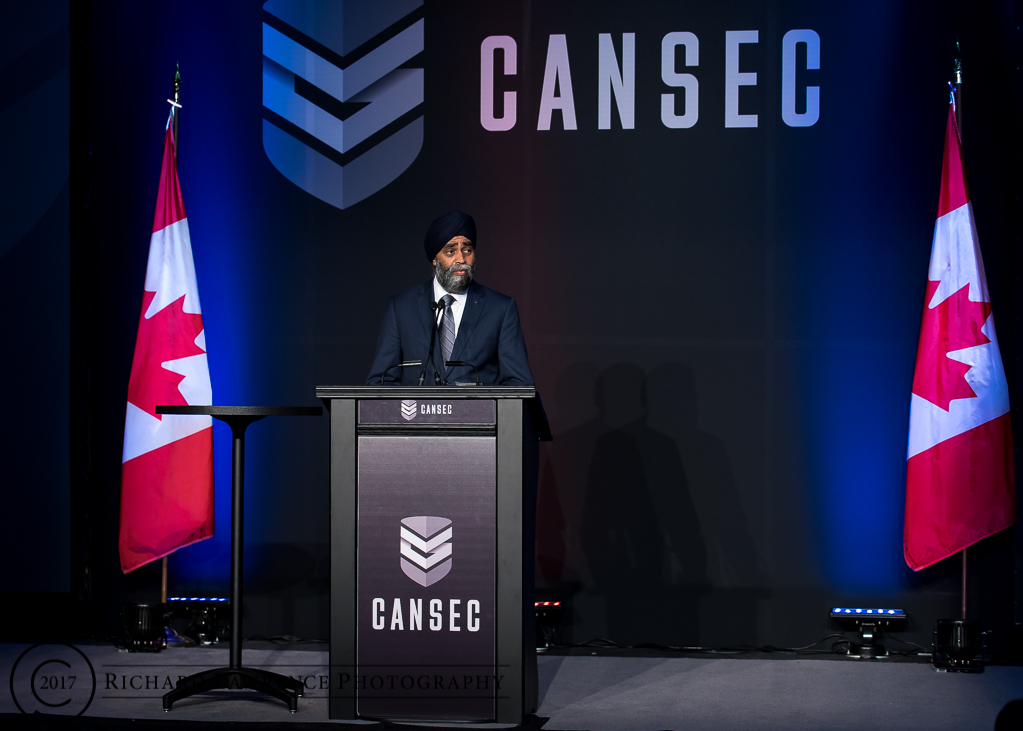
Minister Sajjan did not pull punches in his CANSEC remarks, suggesting Boeing was not behaving as a “trusted partner” because of the U.S. aerospace company’s complaint against Bombardier.

Minister Sajjan did not pull punches in his CANSEC remarks, suggesting Boeing was not behaving as a “trusted partner” because of the U.S. aerospace company’s complaint against Bombardier.

(Volume 24-6)

By David Pugleise

Over the years, CANSEC has earned the reputation of being a somewhat predictable defence and security trade show.

Not this year.

While many of the exhibitors were the same, the political action at CANSEC 2017 was arguably unprecedented.

Defence Minister Harjit Sajjan used his keynote speech on the first day of the trade show to fire a salvo direct at Boeing.

While Lockheed Martin staff looked on with smiles on their faces, Sajjan laid into their rival Boeing for prompting a U.S. government trade investigation into Canada’s largest aerospace firm, Bombardier.

Boeing has complained to the U.S. government that Bombardier is receiving subsidies, allowing it to sell its C-Series aircraft at below market prices.

Sajjan suggested to the CANSEC audience that Boeing could no longer be considered a trusted Canadian partner. And though he stopped short of cancelling the Liberal government’s plan to purchase 18 Super Hornet fighters from Boeing, Sajjan said the company has damaged its relationship with Canada.

“It is not the behaviour of a trusted partner,” Sajjan said in his speech.

He called on Boeing to withdraw its complaint, adding that Canada requires “trusted industry partners.”

Canada has not yet signed the deal to acquire the Super Hornets. It is now unclear when the deal might proceed, or if it will be scuttled if Boeing does not withdraw its complaint against Bombardier.

Members of the Canadian Armed Forces receive complimentary access to CANSEC and many take advantage to visit the booths and see what systems and technology are currently available from the defence industry and what prototypes are being devised for t…

Members of the Canadian Armed Forces receive complimentary access to CANSEC and many take advantage to visit the booths and see what systems and technology are currently available from the defence industry and what prototypes are being devised for the military of the future. (cadsi flickr)

Sajjan said that Canada is still discussing the proposed purchase with the U.S. government. He noted that Canada has had a good relationship with Boeing over the decades, but it is now reviewing all procurement with that firm.

Sajjan also called on other companies at the CANSEC show to remind the U.S. government of the close ties that defence industries on both sides of the border have with each other and the value of that relationship.

Despite Sajjan’s public dressing down of Boeing, the company took a defiant tone. It has refused to withdraw its complaint. Instead, Boeing cancelled a press conference it had planned for CANSEC to announce the Canadian industry partners who would be involved in any Super Hornet acquisition. “Due to the current climate, today is not the most opportune time to share this good news story,” Boeing noted in a statement.

The Liberals, in turn, continued to use the CANSEC venue to ratchet up the pressure on Boeing.

After Sajjan’s speech, government officials told journalists in off-the-record briefings that Canada had suspended talks with Boeing on the fighter deal.

That information didn’t stay off-the-record for long. On the second day of CANSEC, Steven MacKinnon, parliamentary secretary to Public Services and Procurement Minister Judy Foote, used his appearance to once again launch an attack against Boeing.

Boeing “is not acting like a valued partner right now so we’ve suspended discussions with that partner,” he told journalists several times in interviews during the trade show.

(An official with Foote’s office, Annie Trépanier, later claimed that while government ministers were not talking to Boeing, “there is no formal suspension.”)

MacKinnon did soften the blow against Boeing by pointing out that Canada isn’t talking to any other companies about replacement aircraft for the CF-18s.

The political drama at CANSEC later shifted to shipbuilding. At a news conference on day two of the trade show, Irving Shipbuilding released a study on the Canadian Surface Combatant (CSC) which it will build in the coming years for the Royal Canadian Navy. That study concluded it is cheaper to build the warships in Canada rather than overseas.

However, several hours after the Irving news conference, Parliamentary Budget Officer Jean-Denis Fréchette released his report on the ballooning cost of the CSC. “PBO also estimated the cost saving of having the CSC built at the foreign shipyard that built the original ship design rather than in Canada. It was estimated that Canada would save $10.22-billion FY2017 of the total $39.94-billion FY2017 program budget, or 25 per cent.”
POSITION, NAVIGATION & TIME - ASSURED: Calgary's NovAtel Provides High-Tech Solutions For Military Forces

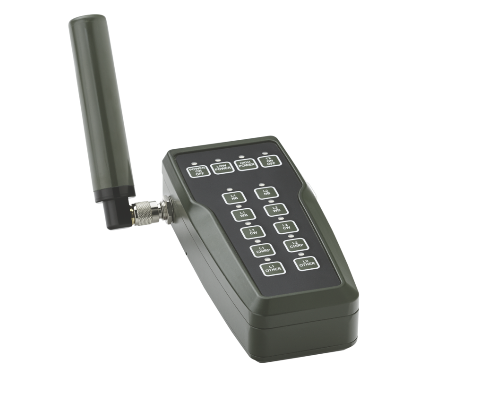
 NovAtel has a license to manufacture and supply the NAVWAR Electronic Attack Trainer (NEAT), which wasinitially developed by Defence Research and Development Canada (DRDC). NEAT is a handheld, easy to use device that operates using minimal pow…

 NovAtel has a license to manufacture and supply the NAVWAR Electronic Attack Trainer (NEAT), which wasinitially developed by Defence Research and Development Canada (DRDC). NEAT is a handheld, easy to use device that operates using minimal power, so its effect can be kept to a specific training area. (novatel)  

(Volume 24-4)

Military operations require assured position, navigation and time (PNT). Users need access to accurate and reliable PNT while potentially denying it to others, to trust PNT and to know how to deal with adversarial disruption or deception. While multi-sensor PNT is robust, the most accurate worldwide PNT is still from GPS and other Global Navigation Satellite Systems (GNSS). GNSS signals however are susceptible to unintentional interference or jamming, and can encounter low power issues.

NovAtel delivers assured PNT through three aspects of navigation warfare (NAVWAR): Electronic protection – ensuring access to PNT and its reliability; electronic support – finding jammers and enabling situational awareness; and electronic attack – training for jamming.

NovAtel offers a number of protection techniques; as the number of techniques used increases so does the level of protection. NovAtel’s OEM7 receivers have 555 channels and can use all available and planned GNSS signals for robust and reliable PNT. Globally available corrections from its TerraStar service or local Real-Time Kinematics (RTK) offer centimetre-level or better accuracy. GPS Anti-Jam Technology (GAJT) is a retrofittable antenna system that nulls jamming signals to ensure satellite signals required will be available. To benefit from protection by encrypted military signals while still getting NovAtel precision, the OEM625S receiver carries a Selective Availability Anti-Spoofing Module (SAASM).

NovAtel’s GPS Anti-Jam Technology (GAJT) is a retrofittable antenna system that nulls jamming signals to ensure satellite signals required will be available. (novatel)

NovAtel’s GPS Anti-Jam Technology (GAJT) is a retrofittable antenna system that nulls jamming signals to ensure satellite signals required will be available. (novatel)

NovAtel’s technology provides electronic support to assist in detecting, locating and characterizing jammers for situational awareness or cueing countermeasures. OEM7 receivers carry NovAtel’s unique Interference Toolkit (ITK) to selectively mitigate interference and geo-locate jammers.

Incidents of electronic attack are on the rise with adversary forces looking to disrupt allied PNT systems. NovAtel has a license to manufacture and supply the NAVWAR Electronic Attack Trainer (NEAT), which wasinitially developed by Defence Research and Development Canada (DRDC). NEAT is a handheld, easy to use device that operates using minimal power, so its effect can be kept to a specific area for training purposes.

For 25 years, NovAtel has been the leader in high precision, robust PNT for defence in Canada, the U.S. and other allies. NovAtel is “Buy American” compliant, the only non-U.S. company accredited to sell SAASM-based products to the U.S. Located in Calgary, Alberta, NovAtel’s 350 employees strive to create the best assured PNT solutions through innovation, reliability and the ability to react on time and in volume. The company helps the world’s leading companies achieve their goals.

LEVELLING THE PLAYING FIELD: A veteran brings experience to the mortgage scene

(Volume 24-02)

By Sandrine Murray

Finding a mortgage is always a daunting challenge. Being in the military only increases the possibility of relocation and change, making it even more important to find a mortgage agent who understands the Canadian Armed Forces.

Having grown up in a large family, Diane Holleman knows the value of the best deal for your dollar. Diane is an agent with Martel Mortgages, serving the Ottawa community and its surroundings. With honesty and integrity, she seeks to provide the best financing solutions for her clients. More importantly, she knows the Canadian military.

Diane retired honourably from the Forces with 27 years of service, Logistics Branch. During her time in uniform, she played a vital role as an instructor and educator to newly recruited personnel. Her duties as a culinary arts specialist saw her responsible for many administrative and leadership tasks, and overseeing hundreds of military and civilian staff.

When buying a home, you need help from professionals who have a deep understanding of what military and RCMP members and their family go through during relocations. A veteran of the CAF, Diane Holleman understands those challenges and helps guide he…

When buying a home, you need help from professionals who have a deep understanding of what military and RCMP members and their family go through during relocations. A veteran of the CAF, Diane Holleman understands those challenges and helps guide her clients through them.

The latter half of her Logistics career focused on administration and finance. She provided administrative guidance to the chain of command, and was responsible for subordinate mentoring and career development. Her expertise in management and financial systems stems from years as chief clerk and senior tasker, managing offices, staffs, and budgets. Her career path led her across Central and Eastern Canada.

For those in the Forces and the RCMP, Diane’s extensive service, and rich, varied background means she has an in-depth understanding of how relocations work, and how to interpret the related DND directives and orders. After her retirement, she became well versed in U.S. real estate investing, through formal and informal training and experience. As a U.S. real estate businesswoman and coaching advisor in the industry, she has mentored many other like-minded Canadians.

As a licensed mortgage agent (FSCO 11963) with access to dozens of financial institutions, banks and private lenders, she looks for the best available options. Diane’s website page offers online applications, related links, and samples of available current rates. Whether it is buying a home for the first time, relocating, or looking to switch mortgages, Diane is there to help. She offers expertise in budgeting, affordability, best fits, appropriate strategies, and informed decision-making. There is no charge for services to qualified borrowers, consults are complimentary, and there is no obligation.

SOUTHERN ONTARIO ON PARADE: Best Defence Conference showcases the best that local industry has to offer

(Volume 23-11) 

By Scott Taylor

For the fifth year in a row London, Ontario has hosted the two-day Best Defence Conference to showcase the vast capabilities of Southern Ontario’s high-tech defence-related industries.

Originally staged under the auspices of the London Economic Development Corporation (LEDC), Best Defence was always the brainchild of the ubiquitous Heather Pilot. This year marked the first time that Pilot, who split from LEDC, coordinated the conference under her own Pilot Hill Ltd. brand.

Over the years the show has grown from what started as essentially a networking opportunity, to what is now a hybrid tradeshow and educational conference. True to its roots, the socializing aspect remains one of the key reasons that Best Defence attracts a steadily increasing number of attendees. This year there were over 300 registered participants and a total of 65 exhibitors.

Like the guest list, the format also continues to expand, with the addition of sessions and tours on the afternoon of November 8, before the traditional kick-off cocktail reception. Buses were provided to shuttle registered participants to the Canadian Centre for Product Validation (CCPV) for a tour of their new 25,000 square-foot facility, which houses state-of-the-art validation technologies and equipment. Given that CCPV is a subsidiary of Fanshaw College, it wasn’t a surprise to see former Canadian Army commander Lieutenant-General Peter Devlin in attendance at the General Dynamics Land Systems–Canada kick-off party. Devlin is now the much-respected president of Fanshaw College, but he is never out of the military loop. It was Devlin’s task to introduce the keynote speaker and current Chief of Force Development at NDHQ, Rear Admiral Darren Hawco. Although Hawco’s lengthy presentation curtailed the networking process, his insights were nonetheless eagerly absorbed by the industry reps in attendance.

The second and main day of Best Defence began with a 7:00 am breakfast courtesy of Armatec Survivability and Gowling WLG. As usual, there were more than a few sets of bloodshot eyes among the early risers, as many of the participants used the kick-off party as a springboard to a night on the town in London. The morning sessions included presentations on naval requirements, next-generation military vehicles; a panel on future warfare capability requirements and, after a coffee break, a second panel on future technology trends and existing gaps.

Lunch was provided courtesy of CCPV. During dessert the Honourable John McKay, Parliamentary Secretary to the Minister of National Defence, delivered the keynote speech. The single afternoon session was a technology showcase that allowed innovative high-tech companies to each give a four-minute pitch. By the time the clock struck 4:00 pm, it was time for the closing reception.

Despite the change in the management structure, Best Defence once again lived up to its name. They say the devil is in the details and, in this case, Heather Pilot proved superb, from little things like having large print, double-sided name tags to the cleverly designed site map and schedule. Esprit de Corps has already blocked off November 1–2, 2017 in the planning calendar to attend next year’s, undoubtedly even better, Best Defence Conference.

EYES IN THE NORTH: Airbus Canada aims to deliver cutting-edge space systems

(Volume 23-11)

By Evelyn Brotherston

Do you know which capability provides maritime surveillance, maintains sovereignty in the Arctic, has helped save thousands of lives, and provides disaster management and environmental monitoring capabilities to the Canadian government?

Air force planes, unmanned aerial vehicles (UAVs) and helicopters are only part of the story. The full picture comes from space-based systems procured by the Director General of Space for the Royal Canadian Air Force.

Satellites and space systems make major contributions to the effectiveness of Canada’s maritime surveillance, search and rescue, and Arctic sovereignty capabilities. While space capabilities are essential in the 21st century, big-ticket military programs like new fighters and ships overshadow Canada’s military space projects in the press and public’s attention. Though under the radar, several future space capabilities important to DND will move forward in the next few years.

Esprit de Corps sat down to chat about upcoming Canadian space projects with Simon Jacques, President of Airbus Defence and Space Canada. Airbus is a strong contender for DND’s Fixed-Wing Search and Rescue (FWSAR) project, which would see it supply the C295W to the RCAF. However, space programs are also big business for Airbus Defence and Space, the largest space company in Europe and the second largest space enterprise globally.

Airbus Group has had a significant presence in Canada for over 30 years. It employs over 2,000 Canadians and has a Canadian supply chain of more than 570 companies. Each year Airbus Group purchases $1.2 billion in goods and services from Canadian suppliers. Airbus will leverage this Canadian aerospace heritage with its stature as a world-leading space company as it seeks new opportunities in Canada.

Airbus is already successful in Canada’s space sector as a supplier of satellites, space systems and capabilities to the military as well as civil and commercial sectors. Existing Canadian space customers include DND, the Canadian Space Agency (CSA), Telesat, MDA, General Dynamics and Urthecast.

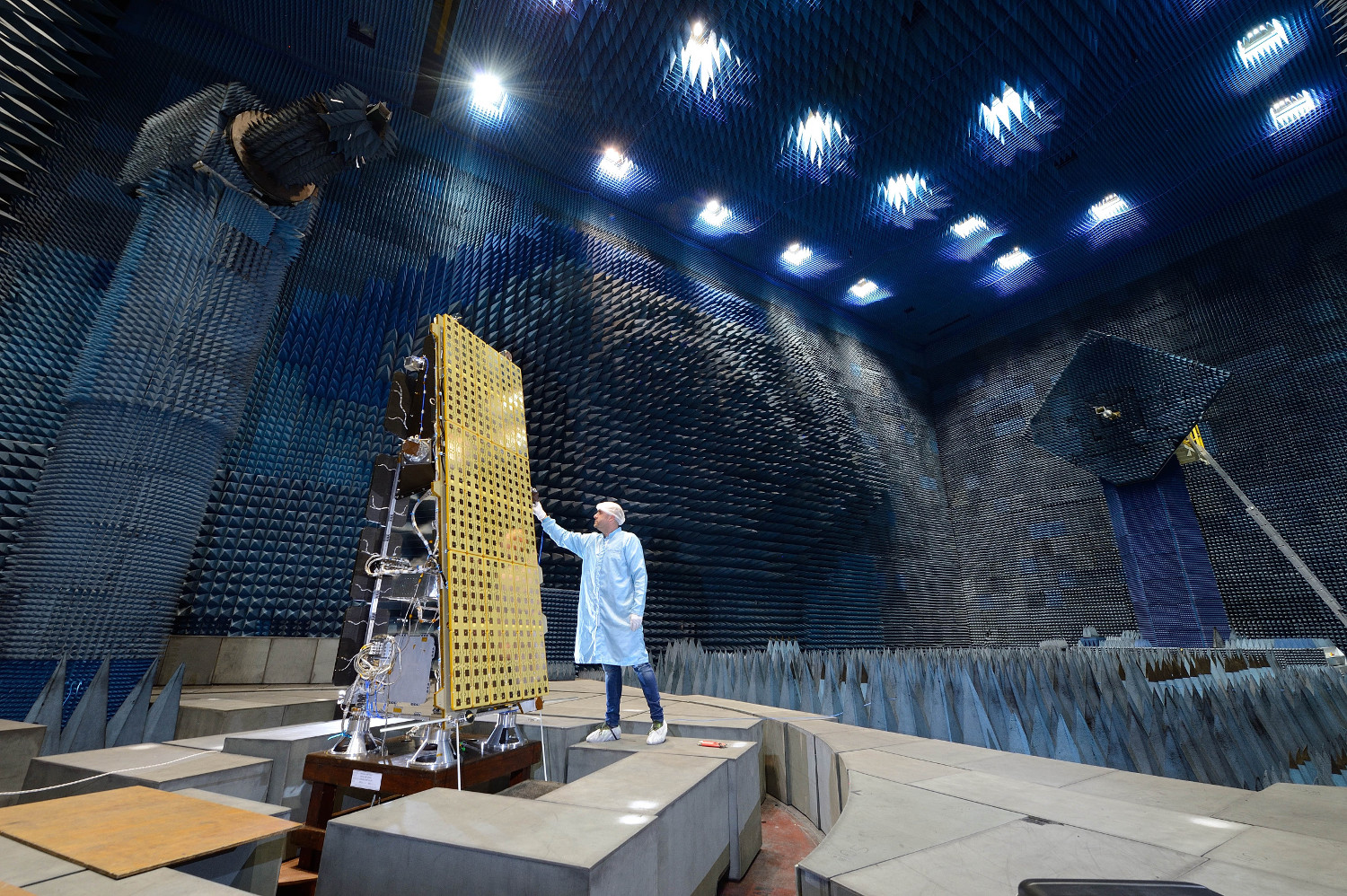
Airbus will build on this success and offer its world-class capabilities on a number of DND space projects. This includes the Synthetic Aperture Radar Data Continuity (SAR DC), a follow-on to the Radarsat Constellation Mission (RCM), scheduled for launch in 2018. SAR DC is led by the CSA, but DND will be a significant user of the system for maritime surveillance and Arctic sovereignty. DND will likely make a significant contribution to the project budget, and as a result co-chairs the interdepartmental committee planning the system. DND’s part of the SAR DC project is the Enhanced Surveillance from Space Programme (ESSP).

Airbus is the world leader in Earth observation satellites and space-based synthetic aperture radar systems, having completed numerous mission concept studies and implementation programmes. It has experience in both military and civil radar systems. The company’s space-based radar credentials include SARah, TerraSAR-X, Tandem-X, Sentinel-1, Biomass, NovaSAR-S and the CoreH2O projects. Beyond a significant flight heritage on radar systems, Airbus uniquely has radar credentials that span the C, X, Ku, S, L and P-band radar frequencies.

The SAR DC project is in the very early phases of the procurement strategy. A request for proposal (RFP) that will propose mission concept options is expected in early 2017. The SAR DC project will deliver Canada’s fourth generation radar system and provide DND with cutting-edge satellite capabilities in support of maritime surveillance and sovereignty projection. 

Jacques believes that if the Canadian government wants the most innovative capability for SAR DC, it must consider solutions that are available from companies like Airbus. It is important that in the mission concept phase of the project that Canada considers a broad range of options offered by companies experienced in delivering space-based radar systems. Limiting concepts to those proposed by industry located in Canada is too restrictive.

“Competition yields the best technical solution and the best price for Canada. Competition for the SAR DC system benefits DND, Canadian taxpayers and Canadian industry,” says Jacques. “Competition allows Canada to gain access to and leverage radar R&D investments being made outside of Canada. By opening the door to these new technologies and creating opportunities for Airbus to work with Canadian space companies, universities and other industry, Canada will benefit in the long term.”

Airbus is also evaluating potential roles on DND’s Enhanced Satellite Communications Program – Polar (ESCP). Unlike the RCM program, ESCP has a specifically military purpose. This project will provide guaranteed, reliable and secure access to X-band, Ka-band and UHF communications over the North Pole. While not yet funded, the DG Space project team is developing a business case, which will lead to a request for information (RFI) in 2017. Initial operational capability is projected for 2023.

DND plans to implement ESCP in cooperation with allies that share a common requirement for military communications in the Arctic region, using the partnership to share implementation costs. The United States, Denmark, and Norway have already provided letters of support regarding working with Canada on ESCP.

As a leader in military and commercial satellite communications, ESCP is of great interest for Airbus. Jacques noted that “Airbus has 50 years of experience in communication satellite manufacturing and has delivered over 100 GEO communications satellites. We provide both communications satellites and ground terminals. As the innovator behind the OneWeb constellation and the Quantum software-defined satellite, we have much to offer on projects like ESCP.”

Airbus was the industry leader in orders for commercial communications satellites in 2015. It is also a leading prime contractor for end-to-end military satcom systems with credentials that include Skynet 4, NATO IV, SatcomBw 2 and Skynet 5. The four Skynet 5 satellites now in orbit carry both UHF and SHF payloads and are the most powerful military X-band satellites launched to date by any nation. Airbus was also the prime contractor on dual civil/military systems such as Telecom I/II, Hispasat, and Yahsat, and providing bespoke military-hosted payloads on satellites such as MEASAT 3B and Alphasat.

“Beyond building satellites, Airbus has unique experience with Public-Private Partnerships (PPP) for military communications systems that could be advantageous should DND decide to select the managed satellite services option for the ESCP project,” said Jacques. “As one example, Airbus is the industry partner on the UK’s Skynet system, and owns and operates a hardened constellation of eight satellites and the associated ground network that provides all Beyond Line of Sight communications to the UK Ministry of Defence.”

This PPP contract also allows NATO and other allies to use the Skynet system to augment their existing services.

“Airbus in Canada is led by a Canadian. We understand Canada as a market and are continuously seeking opportunities that will result in long-term win-wins for Canada and Airbus,” said Jacques. “These upcoming space projects represent the chance for Airbus to build on existing partnerships and forge new ones with Canadian companies in the space sector.”

“We are looking beyond FWSAR, and see space as a way to build on the 30-year presence that we established in Canada,” concluded Jacques. “Canada is an important aerospace market, and we are committed to it. We believe Canadian space projects present us with new ways to bring innovation and technology to this country and expand our supplier and partnership relationships with Canada’s space sector.”

PRECISION, POWER AND PERFORMANCE: Nammo is a global leader in cutting-edge, specialist ammunition

Nammo’s 40 mm airburst and 155 mm artillery ammo have been developed using the most innovative technology, extensive knowledge and over a century of industry expertise for ultimate accuracy.

Advances in technology means that today’s battlefield is more dynamic than ever before. Weapon systems used must be up to the challenge, and able to adapt at a moment’s notice to counter any threat. Not only are these systems required to offer precision and power, but effectiveness and versatility too.

As a global leader in defence solutions, Nammo’s range of cutting-edge, specialist technologies are designed to overcome the progressively complex challenges of the modern combat environment. Its broad portfolio includes shoulder-launched munitions systems, military and sports ammunition, rocket motors for military and space applications, and demilitarization services.

The company’s investments and innovations have led to a range of globally significant technologies, offering superior innovations for current and future challenges.


Flexible and versatile

Nammo recognized that the conventional 40 mm ammo rounds — which have remained the same for more than 40 years — are not always enough on the modern battlefield, and that it was time for something new.

To introduce more capability to the round, Nammo was the first company to qualify airburst ammo for 40 mm automatic grenade launchers. The HEDP-RF (High Explosive Dual Purpose – Radio Frequency) round is the latest technology available for AGLs (automatic grenade launchers) like the Mk19 system, which provides users with the ability to defeat targets in an urban warfare scenario.

The Nammo 40 mm airburst solution is already in use in Canada and the U.S., where the ammunition’s functionality means that the airburst distance can be precisely programmed into the round. This makes the ammo ideal for targets in defilade, such as trenches, rooftops or inside buildings, and helps troops to neutralize the impact of enemy forces hiding behind obstacles, or otherwise avoiding direct fire. It has been successfully demonstrated taking out smaller unmanned aerial vehicles (UAVs), and can also take out sensors on armoured vehicles, as well as penetrate light armoured vehicles.

For extra adaptability, the Nammo 40 mm airburst incorporates a wireless solution to program the ammunition, and it can be easily integrated with existing weapon platforms and fire control systems for added advantage. Nammo has also developed a standalone MPU (Manual Programming Unit) that enables airburst programming even without a fire control system.


Low dispersion at long range

Complementing the 40 mm airburst’s precision, Nammo’s 155 mm artillery has exceptional accuracy at long ranges. Thanks to Nammo’s long history of developing and manufacturing artillery ammunition, it combines insight with modern production methods to create shells with much more stringent tolerance levels than before.

Nammo has created six different types of 155 mm artillery shells, all designed to have the same external shape, weight and centre of gravity for uniform ballistics. The highly explosive shells are adapted for 40-kilometre distances when fired from modern L52 gun systems, and have low dispersion at long range to ensure an increased lethal effect on the target.

Additionally, the new shells are some of the most precise, agile and accurate shell bodies produced on the market — and with a total weight variation of less than 0.5 kilograms. Previously, the weight of the shell bodies manufactured could vary by up to several kilograms, leading to increased dispersions.

The practical impact of firing the 155 mm artillery is that shells with low-weight variation, in combination with state-of-the-art base bleed, can significantly reduce the dispersion in the target area — particularly when fired at long range.


Proven in practice

To test ammunition, it has to be fired. Designed to withstand the harsh climates of Nordic countries, Nammo products are capable of operating under extreme temperatures and even snow.

The 40 mm airburst has successfully completed several live demonstrations, including the Manual Programming Unit (MPU) world premiere in Sweden in 2015. Representatives from special operations forces across 20 countries commented on how impressed they were with the display, as well as the performance of the new, fully integrated products.

Subsequently, the 155 mm artillery has also reached several important test milestones: the first in 2014, when the TP-ER (Training Practice – Extended Range) and IM HE-ER (Insensitive Munition High Explosive – Extended Range) were launched by Archer at the Älvdalen firing range in Sweden; the second more recently in 2016, when the IM HE-ER and TP-ER were successfully fired more than 40 kilometres from the K-9 at the Ravlunda test range in Sweden.


Prepared for combat

When it comes to ammunition and defence solutions, precision, power and performance are key.

Nammo is constantly developing new products and technologies to give troops the best possible advantage during combat. This is exemplified by the 40 mm airburst and 155 mm artillery ammo — the optimum choice for success on the battlefield.