LIBERAL DEFENCE POLICY REVIEW

Weapons technician, Cpl Chad Doley-Bourget indicates a thumbs up for the CF-188 Hornet to return to the hangar in Keflavik, Iceland during Operation REASSURANCE, May 19, 2017. According to the Liberal’s Defence Review, “Canada will procure a fighter…

Weapons technician, Cpl Chad Doley-Bourget indicates a thumbs up for the CF-188 Hornet to return to the hangar in Keflavik, Iceland during Operation REASSURANCE, May 19, 2017. According to the Liberal’s Defence Review, “Canada will procure a fighter capability of 88 jets to replace the aging CF-18 fleet” in order to meet NATO and NORAD commitments. (Cpl Gary Calvé, ATF Iceland)

(VOUME 24-6)

By David Pugliese

The Liberal government rolled out its long-awaited defence policy review on June 7, promising large-scale spending increases over a decade-long period.

Over the next 10 years, defence spending will increase from $18.9-billion in 2016–17 to $32.7-billion in 2026–27, according to Defence Minister Harjit Sajjan.

Most of the spending increases are projected after the next federal election or near the end of that decade-long period.

More troublesome is that Sajjan continually avoided answering questions from journalists on where the new money would come from. Instead, he repeatedly stated that the Liberal government was committed to providing the funding the Canadian Armed Forces needed in the future.

The policy review contained a list of key equipment programs. Many of them would be recognizable to defence observers and industry officials since they have either been on the military’s requirement lists for years or have been featured in the Defence Acquisition Guide.

In some cases, such as the program to replace the CF-18 fighter jet fleet, the Liberals have provided new details. They say they will buy 88 advanced fighter jets to replace the CF-18s. This number of aircraft will be required to fully meet Canada’s North American Aerospace Defense Command (NORAD) and NATO obligations simultaneously, the Liberal government noted.

Released on June 7, 2017, the Liberal government’s defence policy review has devised a plan that is based on people — “The women and men of the Canadian Armed Forces and the families that support them” — and has a vision for the future — “a Canada t…

Released on June 7, 2017, the Liberal government’s defence policy review has devised a plan that is based on people — “The women and men of the Canadian Armed Forces and the families that support them” — and has a vision for the future — “a Canada that is strong at home, secure in North America, and engaged in the world.”  Following the release of the document, Defence Minister Harjit Sajjan (above) travelled to bases across the country to answer questions from CAF members. (dnd)

Department of National Defence spokesman Dan Le Bouthillier said the 88 aircraft would be the full fleet replacement. As the aircraft are delivered, Canada would remove the CF-18s as well as any interim fighter jets from the flight line, he added.

The purchase of those aircraft would cost between $15-billion and $19-billion. Details were not provided, however, on what long-term maintenance costs the Royal Canadian Air Force would face once the planes are acquired.

Sajjan also committed to acquiring a specific number of Canadian Surface Combatants (CSCs). The Royal Canadian Navy originally wanted 15 CSCs, but the Conservative government’s $26-billion budget would not have paid for that number of vessels.

“This plan fully funds for the first time the Royal Canadian Navy’s full complement of 15 Canadian Surface Combatant ships necessary to replace the existing frigates and retired destroyers,” Sajjan said during the June 7 news conference. “Fifteen, not up to 15 and not 12, and definitely not six, which is a number the previous government’s plan would have paid for as the Parliamentary Budget Officer reported last week.”

The Liberal defence policy would set aside between $50-billion and $60-billion for the CSC program.

In addition, the Royal Canadian Navy’s Victoria-class submarines would undergo incremental modernization in the mid-2020s, which will ensure their continued effectiveness to the 2040s. That program is estimated to cost between $1.5-billion and $3-billion.

The size of the Canadian Forces would increase to around 71,000 (and it would include a boost for Canada’s special forces with an additional 605 personnel).

In addition, the Canadian Forces would increase the number of women in the ranks. Females will make up 25 per cent of the military by 2026, according to the policy.

The defence policy also provides for an income tax break on salaries earned while overseas. “In order to ensure that Canadian Armed Forces members are treated equally on deployment, all troops deployed on any named international operations will be exempted from paying federal income tax on their salary to the level of lieutenant-colonel,” the defence policy noted. “This is in addition to the allowances awarded to compensate for hardship and risk.”

The chief of the defence staff is the authority to designate those “named operations,” according to the policy. The initiative is retroactive to January 2017.

Canada will also grow and enhance its cyber capabilities by creating a new Canadian Armed Forces Cyber Operator occupation.

The RCN’s 12 Halifax-class frigates are to be replaced by a “full complement of 15 Canadian Surface Combatant ships” according to the new defence policy review. (master seaman peter reed, formation imaging services halifax)

The RCN’s 12 Halifax-class frigates are to be replaced by a “full complement of 15 Canadian Surface Combatant ships” according to the new defence policy review. (master seaman peter reed, formation imaging services halifax)

The new occupation will compliment the capability Canada already has in cyber space, according to Chief of the Defence Staff Gen. Jonathan Vance.

“Canada has the ability to conduct active and offensive cyber operations and those operations will be undertaken consistent with the rule of law, consistent with the law of armed conflict in a very disciplined targeting cycle that can achieve the effects within the theatre of operations,” Vance said.

The reserves would increase to 30,000 — a boost of 1,500 personnel. Reserves will be assigned new roles including light urban search and rescue; chemical, biological, radiological and nuclear defence; combat capabilities such as direct fire, mortar and pioneer platoons and other roles such as cyber operators; intelligence operators; naval security teams; and linguists.

Canada also committed to NORAD modernization, but that is to take place at a later date. Sajjan suggested that new surveillance systems could be added to expand the amount of information that NORAD will collect.

“We will enter discussions with our U.S. counterparts on NORAD modernization that will include replacing the North Warning System with new technology and it will include an all-perils approach to protecting against the full range of threats including air, maritime and underwater threats,” Sajjan said.

The defence policy also calls for the following new equipment or initiatives:

Purchase of new multi-mission aircraft to replace the CP-140 Aurora fleet in the 2030s.

Replacement of the CC-150 Polaris with next generation strategic air-to-air tanker transport.

Replacement of the CC-138 Twin Otter with utility transport aircraft.

Acquisition of a medium altitude remotely piloted system (drones).

Modernization of short-range air-to-air missiles (fighter aircraft armament).

Upgrade of avionics on CH-149 Cormorant.

Upgrade of the C-130Js with new software and hardware.

Limited upgrade of the Griffon helicopters.

Upgrade of the lightweight torpedoes currently used by the RCN and the Royal Canadian Air Force.

Acquisition of 20,000 new assault rifles with upgraded sights and barrels.

Purchase of ground-based air defence systems and associated munitions capable of protecting all land-based force elements from enemy airborne weapons.

Modernization of improvised explosive device (IED) detection and defeat capabilities.

The defence policy review calls for an increase in the total number of Canadian Armed Forces members — from 68,000 to 71,500 over the next 10 years — and a target of 25 per cent of women in the Forces by 2026 (an increase of 10 per cent).

The defence policy review calls for an increase in the total number of Canadian Armed Forces members — from 68,000 to 71,500 over the next 10 years — and a target of 25 per cent of women in the Forces by 2026 (an increase of 10 per cent).

Equipping of Canadian Army light forces with utility terrain vehicles, all-terrain vehicles, trailers, lightweight generators and tents, radio rebroadcast kits, long-range communications equipment, special insertion/extraction equipment, and aerial delivery kits to enable deployment and operations in complex terrain and challenging operating environments.

Upgrade of the light armoured vehicle (LAV) fleet to improve mobility and survivability.

Modernization of logistics vehicles, heavy engineer equipment and light utility vehicles. Also replace obsolete material handling equipment such as bulldozers and cranes for domestic and expeditionary operations.

Modernization of land-based command and control, intelligence, surveillance and reconnaissance systems.

Acquisition of all-terrain vehicles, snowmobiles and larger tracked semi-amphibious utility vehicles optimized for use in the Arctic environment.

Acquisition of a new multipurpose anti-armour, anti-structure weapon system.

Upgrade of air navigation, management, and control systems.

Acquisition of aircrew training systems. This would involve the delivery of a new and cohesive training program that replaces the current Pilot, Air Combat Systems Officer and Airborne Electronic Sensor Operator training systems. This capability will improve the RCAF’s ability to train sufficient numbers of aircrew for various roles.

Acquisition of airborne intelligence, surveillance and reconnaissance (ISR) platforms for Canadian special forces.

Purchase of new commercial pattern SUV-type armoured vehicles for special forces.

Modernization and enhancement of Special Operations Forces Command (CANSOFCOM), control and communications information systems, and computer defence networks.

Purchase of next generation Special Operations Forces integrated soldier system equipment, land mobility, and maritime mobility platforms and fighting vehicle platforms.

Improvement of chemical, biological, radiological, nuclear, and explosive (CBRNE) detection and response capabilities.

Highlighting Arctic Joint Intelligence, Surveillance and Reconnaissance (JISR) as a defence research and development priority.

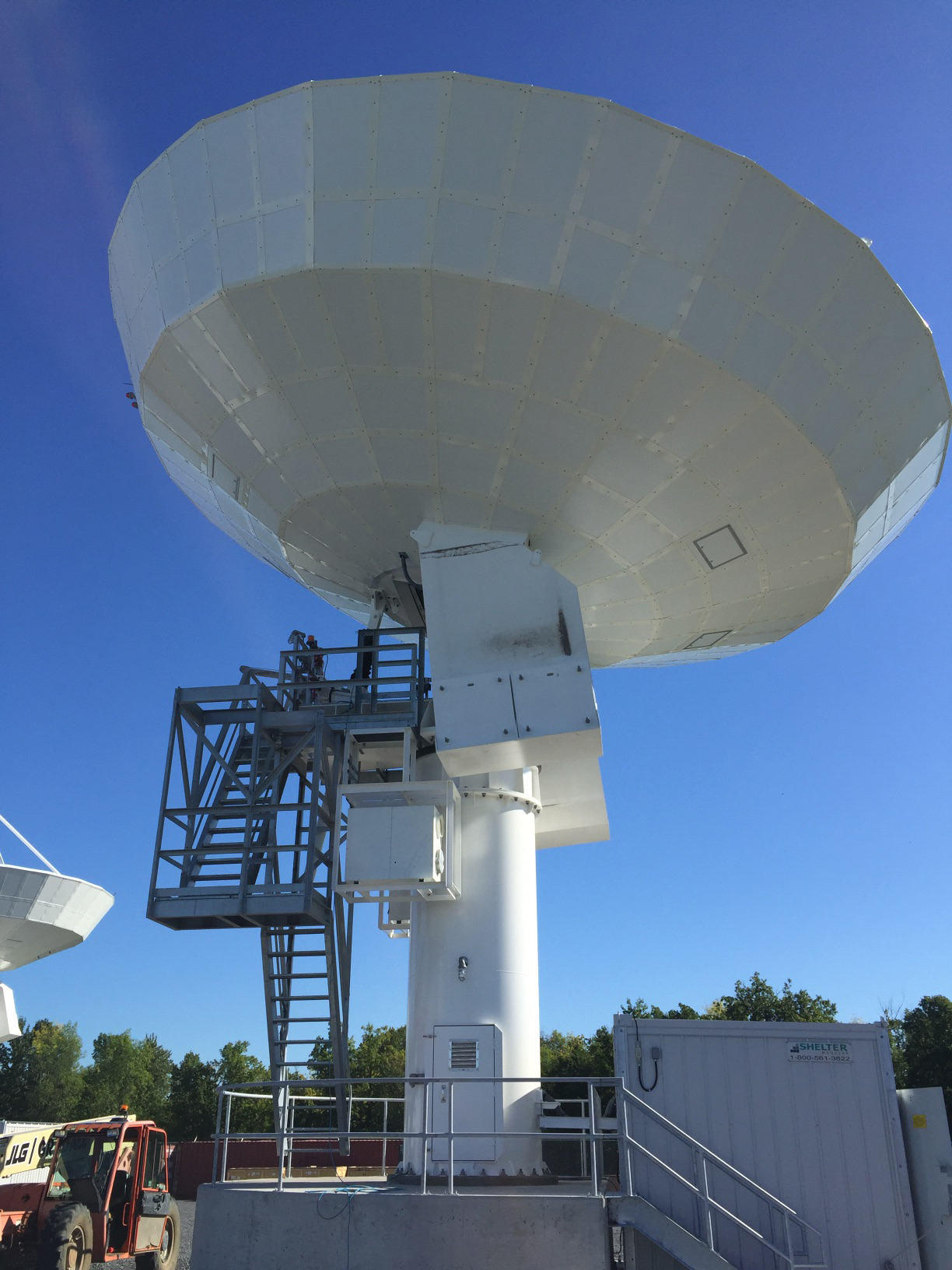
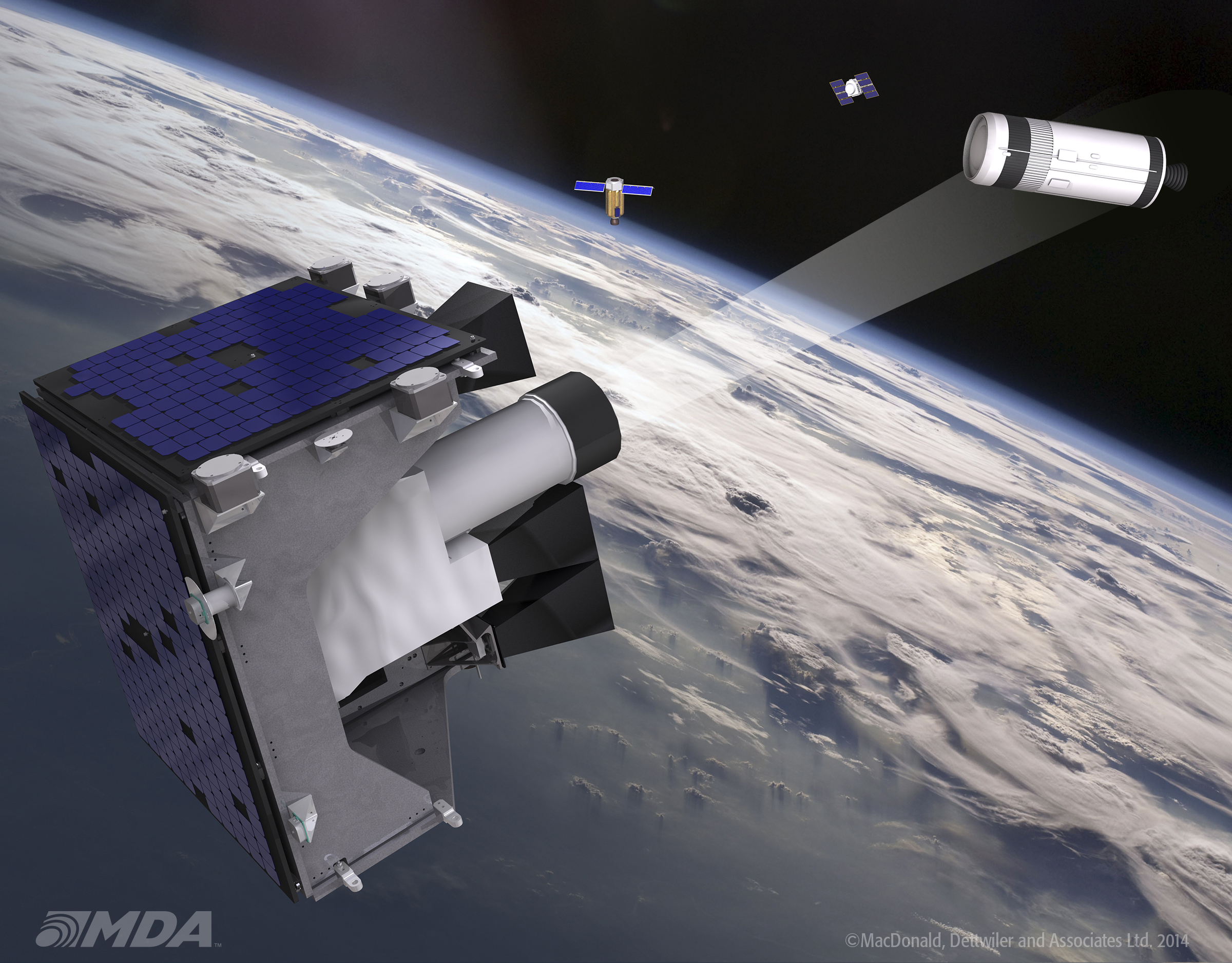
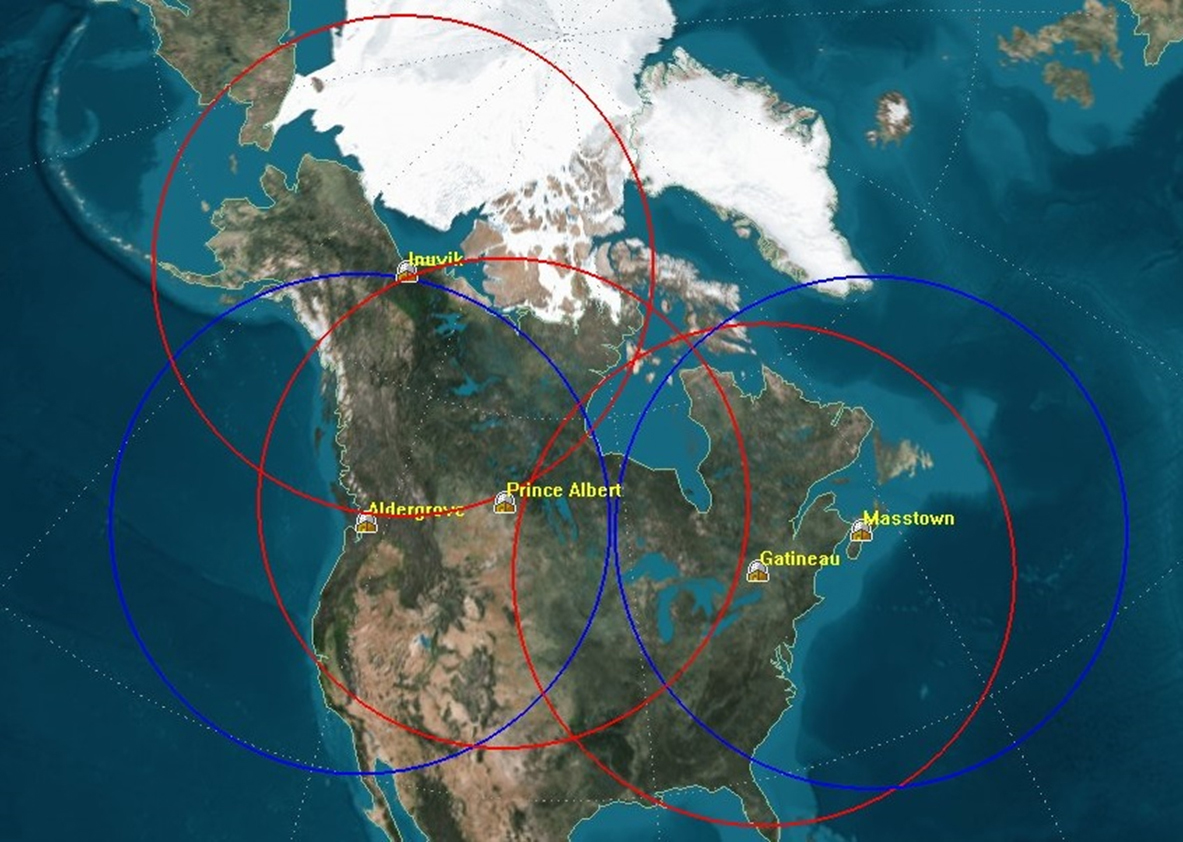
Replacement of the current RADARSAT system to improve the identification and tracking of threats and improve situational awareness of routine traffic in and through Canadian territory.

Acquisition of new armoured combat support vehicles. This project will replace aging armoured command vehicles, ambulances, and mobile repair teams with a modern, well-protected fleet.

Modernization of the Army’s bridge and gap crossing capabilities. This is needed since existing systems cannot support the weight of many current Canadian Army vehicle types.

Acquisition of a tactical narrowband satellite system. This would provide narrowband near-global communications between 65 degrees South and 65 degrees North latitudes to provide assured, secure, and reliable communications in support of Canadian and international operations.
The Struggle To Transition

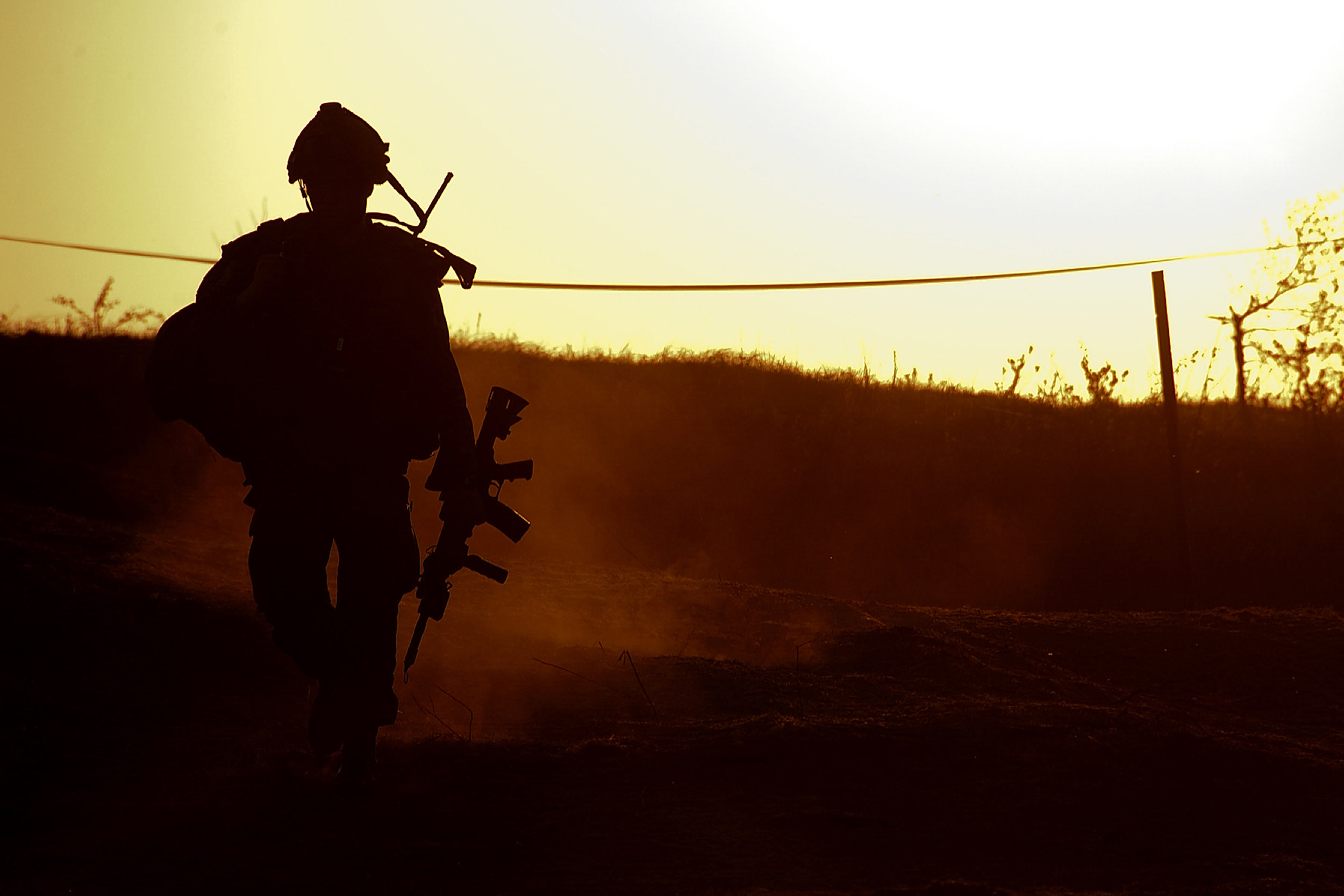
For many who served in Afghanistan, the stress of combat and being in dangerous situations led to post-traumatic stress disorder (PTSD) and other non-visible wounds. But help is available, through Veterans Affairs programs, counselling services, and…

For many who served in Afghanistan, the stress of combat and being in dangerous situations led to post-traumatic stress disorder (PTSD) and other non-visible wounds. But help is available, through Veterans Affairs programs, counselling services, and outside agencies such as the Veterans Transition Network. (Cpl Simon Duchesne, Combat Camera)

(Volume 24-5)

By Tyler Hooper

For Canadian Armed Forces members facing release, the reality of finding a new job, a new home, applying for benefits, adjusting to life out of uniform can present several challenges. For those dealing with mental and health issues, it can be even more daunting.


The transition to civilian life for former Canadian Army medic Sergeant Elizabeth Newman has been anything but easy. In 2010, while working with the military at the 2010 Vancouver Winter Olympics, Newman became very sick. She developed Legionnaires’ disease, acute respiratory distress syndrome (ARDS), and sepsis, a serious blood infection that is often fatal. With her heart, kidneys, and brain starting to fail, Newman’s survival looked dire. 

“I know now I probably had a 70 per cent chance of dying,” Newman told Esprit de Corps.

Ultimately, she was in a coma for almost four weeks before her body began to recover. Approximately almost a month into her recovery she was back at work, a decision that would create an entirely different battle. 

Prior to falling ill, Newman had served two tours in Afghanistan, her second and final one being in 2008. Newman deployed with the 1st Canadian Field Ambulance Unit during the Taliban resurgence. From 2006 until 2009 the Canadian military in Afghanistan would experience some of the most intense firefights in recent memory.

 Sergeant Elizabeth Newman did two tours of duty in Afghanistan as a medic with the 1st Canadian Field Ambulance Unit at the height of the heaviest fighting. But transitioning to civilian life after a20-year career in the Canadian Armed Forces …

 Sergeant Elizabeth Newman did two tours of duty in Afghanistan as a medic with the 1st Canadian Field Ambulance Unit at the height of the heaviest fighting. But transitioning to civilian life after a
20-year career in the Canadian Armed Forces and suffering from PTSD has not been easy for her. (courtesy elizabeth newman)

“That was a really bad tour,” Newman recalled. “I made a conscious decision on the first day that this wasn’t real life.”

With her fellow soldiers suffering serious injuries and wounds — and others being killed — Newman began to compartmentalize the trauma to push on with the job. Like many soldiers do, Newman used humour to cope, while thinking, “I’m going to pay for that one later.” When Newman came back from her last tour she threw herself into work, trying to compartmentalize her experiences in Afghanistan.

“Inevitably, people throw themselves into work, they lose their relationships, they lose their families … and then it gets harder and harder to ignore the subconscious,” Newman said.

After her recovery from her coma, Newman was put in charge of a reserve course exercise near Williams Lake, B.C. However, being in such a remote region, with a lack of proper health resources, caused her undiagnosed post-traumatic stress disorder (PTSD) to manifest. “[I] started to spiral downhill really quickly,” Newman recalled.

The illness and subsequent coma Newman fell into caused brain damage, and although she cannot directly correlate the brain damage to the triggering of her trauma and PTSD, it seems likely that the brain damage played a part in her “downhill” spiral.

Not long after, her 20-year career in the military ended, something she had an incredibly hard time accepting. To make matters worse, she says her transition to the civilian world was made difficult by certain units and people in the military who, she says, did a poor job of helping her manage her retirement and transition back to civilian life.

Apart from the struggle to treat her PTSD, battling the stigma associated with PTSD, and trying to put her life together, she says that the military, particularly the treatment she received from the Joint Personnel Support Unit (JPSU) in Esquimalt, was beyond unsatisfactory. She claims they were “unhelpful” and not overly empathetic in supporting her. She even says she received the wrong retirement package from the military.

When asked about Newman’s experience with JPSU Esquimalt, CAF spokesperson Lt(N) Kelly Boyden told Esprit de Corps in an e-mail, “If a member has any concerns regarding their care and support, they are strongly encouraged to raise these concerns with their Joint Personnel Support Unit staff. Bringing their concerns forward will allow staff to address them and hopefully resolve any issues at the lowest level. Ultimately, the goal is to ensure the best possible care and support for the member.”

In a separate comment, Veteran Affairs Canada spokesperson, Marc Lescoutre, admitted in an e-mail to Esprit de Corps, that “more work needs to be done … this means harmonized services, clear guidance, timely access to benefits and services, and coordinated case management between both departments during transition.” However, Lescoutre ultimately said, “The goal [of VAC] is to help transitioning members find their new normal and to help them through this process, however long it might take, with the dignity, respect and support they so fully deserve.”

Part of the challenge for VAC and the military is that not every soldier or veteran has the same problems transitioning back to the civilian world. Oliver Thorne, who is the National Operations Director of the Veteran Transition Network (VTN), says that lifestyle and career adjustments are two of the biggest and broadest issues. VTN was founded to help veterans share their stories with fellow soldiers, and offers programs to help veterans transition back to civilian life.

Veterans gather to discuss issues facing them in a group setting. The staff and volunteers of the VTN assist vets to find balance in their new life. (vtn)

Veterans gather to discuss issues facing them in a group setting. The staff and volunteers of the VTN assist vets to find balance in their new life. (vtn)

Thorne said that an integral part of the VTN program is for veterans to identify the barriers to overcoming a difficult transition, and to recognize these barriers early in their transition. Thorne added that if these barriers are not recognized early, the likely hood of a veteran developing negative coping mechanisms, such as substance abuse or isolation, becomes greater.

Currently, there’s a four-year pilot Veteran Family Program taking place at the Esquimalt Military Family Resource Centre (MFRC) based in Victoria, B.C. The Veteran Family Program provides services for medically released CAF members for a two-year period after their release. Jon Chabun, Communication and Marketing Coordinator for the MFRC, said that medically released soldiers were chosen as “that was the group that most [needed] assistance.” According to Chabun, the MFRC Veteran Family Program offers short-term services such as counselling, social work, help with finding community resources and navigating civilian health care as well as emergency services.

But for Elizabeth Newman, her transition was not only painful, she also says it stalled the progress she had made treating her brain injuries and PTSD.

“We have to have a focus on how we return citizens back to our community … we’re doing a terrible job,” Newman stated. She added that she doesn’t see it as the military’s job to help soldiers transition. Ultimately, she says that an outside organization should be a part of helping veterans transitioning, an organization, that unlike the military, is not always focused on “pushing forward.”

FEATURE: Land Projects On Review

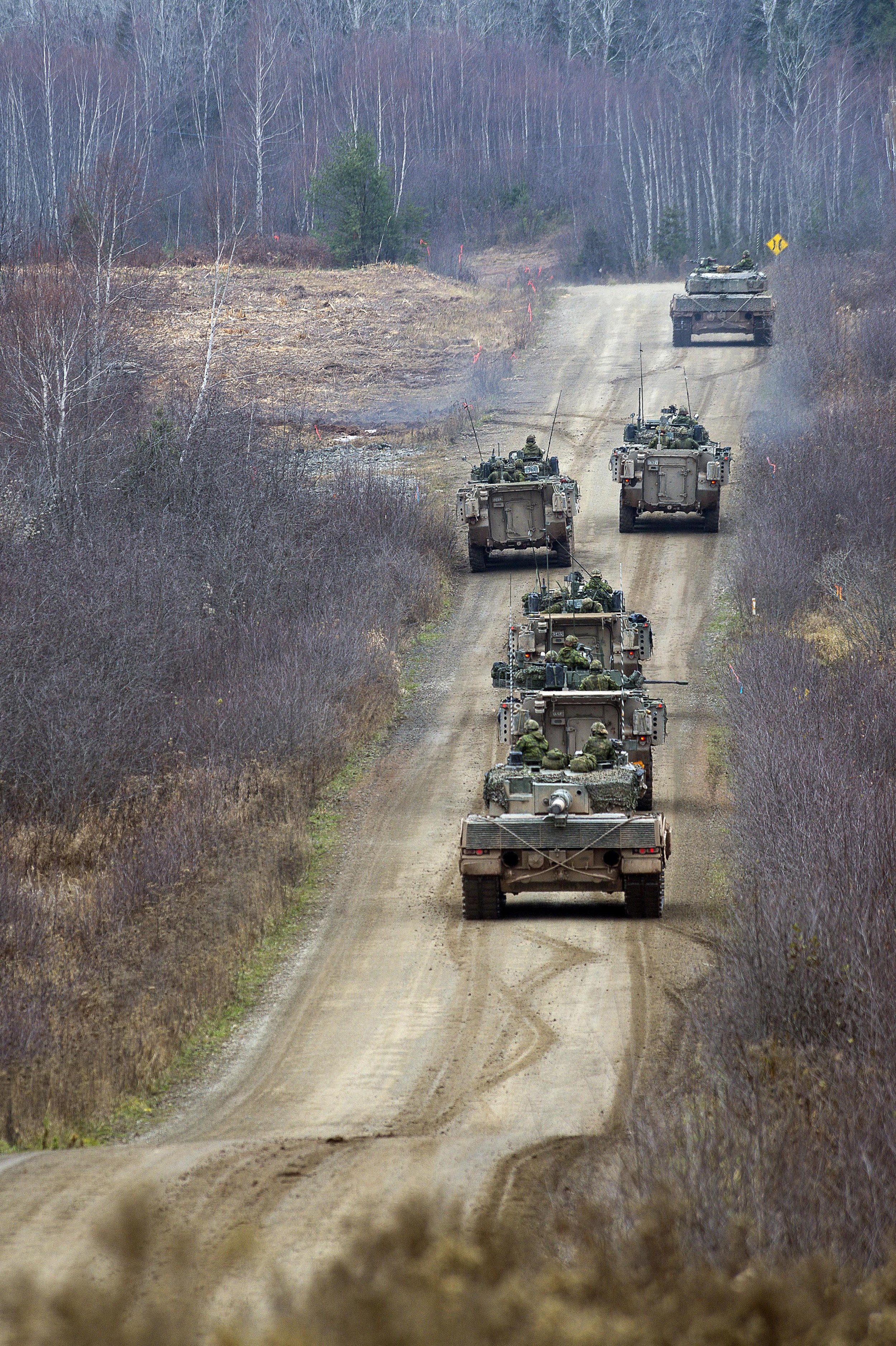
Canadian Army soldiers participated in Exercise COMMON GROUND II 2016 at 5th Canadian Division Support Group Gagetown, November 15, 2016. In a May 3 presentation, Defence Minister Harjit Sajjan stated that the Liberals have “a plan to allocate reali…

Canadian Army soldiers participated in Exercise COMMON GROUND II 2016 at 5th Canadian Division Support Group Gagetown, November 15, 2016. In a May 3 presentation, Defence Minister Harjit Sajjan stated that the Liberals have “a plan to allocate realistic funding to those ‘bread and butter’ projects that will keep our military running efficiently and effectively for years to come.” Among the projects mentioned were engineering and logistical vehicles for the army. (Cpl Peter Ford, Tactics School, Gagetown)

(Volume 24-4)

By David Pugliese

The Canadian Army is in the midst of a re-equipment phase with upcoming delivery of everything from new trucks to armoured personnel carriers.

The latest technology from companies specializing in land warfare, and who hope to supply the Army in the future, will be on display at CANSEC 2017. Other firms already have contracts in place and long-term relationships with Canada’s land forces.

CANSEC, the country’s largest defence trade show, will be held this year on May 31 and June 1 at its usual location at the EY Centre, near Ottawa’s international airport.

The timing is opportune.

Defence Minister Harjit Sajjan focused on a number of Army programs during a presentation on May 3 in the lead-up to the Liberal government’s new defence policy.

A number of those Army projects were highlighted by Sajjan as key equipment purchases for the government in the future. This includes a program that could provide companies up to $500-million in work as well as a needed system for land forces. “Investments in ground-based air and munitions defence systems are required to guarantee the safety of our deployed troops,” Sajjan told the crowd of retired military personnel and defence industry executives on May 3.

The purpose of the ground-based air and munitions defence system is to protect deployed forces from a variety of air threats. The Army says it will likely include an integrated radar feed, a networked command, control and communications system, as well as munitions and launcher systems.

Another project Sajjan talked about was the acquisition of a fleet of heavy support equipment, such as forklifts, dozers, loaders, and excavators. He also pointed out that the Army needs new logistics support vehicles.

Members of the Quebec Immediate Reaction Unit (IRU) prepare to take part in Operation LENTUS 1703 at CFB Valcartier in Courcelette, Quebec on May 6, 2017. OP LENTUS is the CAF’s response to forest fires, floods, and natural disasters in Canada. As o…

Members of the Quebec Immediate Reaction Unit (IRU) prepare to take part in Operation LENTUS 1703 at CFB Valcartier in Courcelette, Quebec on May 6, 2017. OP LENTUS is the CAF’s response to forest fires, floods, and natural disasters in Canada. As of May 12, 2017 a total of approximately 2,600 CAF personnel — with vehicles, boats, and air assets such as helicopters — had been deployed to support Quebec citizens in four affected regions: Montérégie, Outaouais, Mauricie and Montréal. (sgt marc-andré gaudreault, valcartier imaging section, dnd)

Those attending CANSEC 2017 can also expect to see the military’s new Standard Military Pattern (SMP) truck.

Mack Defense, LLC, of Allentown, Pennsylvania, had been awarded two contracts to provide SMP trucks and related equipment for the Canadian Armed Forces. The vehicles will be mainly used by the Army.

The first delivery of the SMP truck is scheduled for the fall, Department of National Defence spokeswoman Ashley Lemire told Esprit de Corps. The deliveries will be completed by 2019, she added.

Assembly is taking place in a Sainte-Claire, Quebec, plant operated by Prevost, one of the firms partnered with Mack. With the ability to carry 9.5 tonnes, the Standard Military Pattern vehicles are the backbone of the Canadian military’s truck fleet.

More than 1,500 8x8 trucks will be delivered and the firm will also provide an initial five years of in-service support (ISS). Mack Defense will also provide 300 trailers and 150 armour protection systems as part of the purchase.

No CANSEC would be complete without the large exhibit from General Dynamics Land Systems – Canada of London, Ontario.

The firm is currently delivering upgraded LAV IIIs — or LAV 6.0 — for the Canadian Army. (For LAV terminology, the program is LAV UP or Upgrade Program, which converts the vehicle from LAV III to LAV 6.0. So the program is LAV UP, and output / vehicle is LAV 6.0, according to GDLS–Canada.)

A total of 550 LAV IIIs will be upgraded to the LAV 6.0, DND spokeswoman Lemire said. These vehicles come from two separate LAV III base variants. Of the first LAV III variant, General Dynamics Land Systems – Canada has delivered 409 LAV 6.0s to the Canadian Armed Forces, she added.

The second LAV III variant is called the LAV Operational Requirements Integration Task (LORIT). In February 2017 the Canadian government announced an amended contract award to complete the upgrades of those 141 LORIT vehicles in what it is calling the LAV Operational Requirements Integration Task Mobility Upgrade.

Those vehicles will be upgraded to the LAV 6.0 starting in June 2017 with a final delivery anticipated for fall 2019, Lemire said.

 At CANSEC 2016, the Honourable Harjit Sajjan, Minister of National Defence, after presenting at CANSEC, revealed in a scrum with journalists — including Esprit de Corps’ David Pugliese (far right) — the Liberal’s proposal to purchase the Super…

 At CANSEC 2016, the Honourable Harjit Sajjan, Minister of National Defence, after presenting at CANSEC, revealed in a scrum with journalists — including Esprit de Corps’ David Pugliese (far right) — the Liberal’s proposal to purchase the Super Hornet fighter jets as the CF-18’s interim replacement. This year, CANSEC attendees will no doubt be discussing what will be contained in the Liberal’s defence review, which had yet to be released at time of press. (cadsi)

General Dynamics Land Systems – Canada was awarded a $404 million order to work on the 141 LAV Operational Requirements Integration Task (LORIT) vehicles.

During the Canadian Forces deployment to Afghanistan, the 141 LORIT vehicles received additional armour, blast-absorbing seats, and other minor upgrades to increase survivability against improvised explosive devices (IEDs). These changes added extra weight to the vehicle’s platform. The additional weight resulted in increased wear and tear, and affected the vehicle’s full mobility potential. The full upgrades announced in February will address these issues.

“This will result in all LAV III upgraded vehicles having the same configuration and performance as outlined in the LAV III Upgrade Project,” said Evan Koronewski, a DND spokesman.

At its CANSEC 2017 booth, GDLS-Canada will be displaying two variants of the LAV Combat Support Vehicle (CSV) — a maintenance and recovery vehicle (similar to a vehicle displayed last year, but on a LAV 6.0 baseline chassis) and an ambulance. “CANSEC will highlight how we are ready to deliver more LAV 6.0 capability with the development of more combat support variants,” Doug Wilson-Hodge, Manager – Corporate Affairs of GDLS-Canada, told Esprit de Corps.

Other CANSEC exhibitors are interested in providing equipment for the Land Vehicle Crew Training System or LVCTS. The Army appears once again to be ready to move ahead on that after a number of delays.

Now Public Services and Procurement Canada (PSPC) has issued a request for price and availability for such a system. Responses are expected early next year and a contract hopefully in place in 2019.

The project is designed to improve individual and collective vehicle crew skills through the use of high, medium and low fidelity simulators. The Land Vehicle Crew Training System will provide simulation for the upgraded Light Armoured Vehicle fleet as well as for the Leopard 2 fleet of main battle tanks, according to the Canadian Army.

The LVCTS will consist of new simulators, connected by a network as well as simulation facilities to allow crews of armoured vehicles to train realistically without their actual vehicles. All of it will be done at their home garrison locations, according to Public Services and Procurement Canada.

“The project will deliver a virtual training system that will provide the CA (Canadian Army) with the capability to enhance various types of armoured vehicle crew training from individual training for drivers and gunners up to collective training for subsection and full combat team,” the department has told industry in its solicitation for price and equipment availability.

Five simulation centres would be built to train drivers, gunners and crew commanders at the following Canadian Forces Bases: Gagetown, Valcartier, Petawawa, Shilo, and Edmonton. Each centre will be designed so it could be expanded.

The simulators would include systems for the LAV 6.0 and Tactical Armoured Patrol Vehicles (TAPVs) and various crew stations for the Leopard 2 main battle tank. In addition, it would include capabilities from DND’s Land Command Support System (LCSS): Intercom, Command Net Radio, and Battle Management System, according to information provided to industry.

Through the synthetic environment, the Army’s trainees will be able to access variants of the LAV 6.0, Leopard 2, and TAPV.

The Canadian government wants deliveries of such systems finished by 2024. The Defence Acquisition Guide (DAG) lists the cost at between $250-million and $499-million. A variety of firms can offer solutions for the Army’s training and simulation needs.

For instance, Meggitt has noted it produces a full range of Armoured Fighting Vehicle (AFV) Trainers. Meggitt’s AFV Trainers support both individual collective levels of gunnery and tactical training, allowing soldiers the opportunity to practice scenarios they normally face in combat situations, the firm added. Meggitt also offers all levels of fidelity.

In August 2015, the Canadian government awarded Meggitt Training Systems (Quebec) Inc. a $25-million, three-year contract to provide in-service support to the Canadian Armed Forces for Meggitt’s Small Arms Trainer (SAT) and Indirect Fire Trainer (IFT).

The contract included operator and maintenance support for related training activities, incorporating on-site support for health, usage and equipment monitoring at major bases across Canada, according to the company.

Other CANSEC 2017 exhibitors also received recent contracts for Army equipment. They can also be counted to promote their various systems at the show.

Textron has its new Tactical Armoured Patrol Vehicle, now being delivered to the Canadian Army. The TAPV replaces the Army’s existing fleet of RG-31 Nyala mine-protected vehicles and the Coyote wheeled light armoured vehicles.

Tactical Armoured Patrol Vehicles patrol flooded streets in Saint-Barthélemy, Québec during Operation LENTUS, May 12, 2017. The TAPV, which replaces the RG-31 Nyala, is now being delivered to the Canadian Army. Under the Defence Acquisition Guide (D…

Tactical Armoured Patrol Vehicles patrol flooded streets in Saint-Barthélemy, Québec during Operation LENTUS, May 12, 2017. The TAPV, which replaces the RG-31 Nyala, is now being delivered to the Canadian Army. Under the Defence Acquisition Guide (DAG), the Army will also receive simulators for the LAV 6.0, Leopard 2 main battle tank and TAPV. (sgt marc-andré gaudreault, valcartier imaging services)

Deliveries started in August 2016. The Canadian Army has said it expects to declare full operational capability by mid-2020 on the TAPVs, following training of all operators, and completion of user trials and exercises confirming operational readiness.

Of the deal for 500 TAPVs, 307 units will be general utility variants and the remaining 193 vehicles will be reconnaissance variants, according to the Army.

Rheinmetall Canada Inc. of Saint-Jean-sur-Richelieu, Quebec is another company exhibiting at CANSEC 2017 with Army programs on the go. In 2015 it was selected by the Canadian government to provide equipment for two programs: the Integrated Soldier System Project (ISSP) and the Medium Range Radar System.

ISSP will provide the high-tech gear which will not only allow troops to track each other as they move throughout the battlefield, but feed communications and targeting information into their helmets or the data devices they carry. Once the Canadian military declares the Rheinmetall system fully acceptable, it may exercise options under the deal to buy up to 4,144 of the systems.

The Medium Range Radar System will provide the Canadian military with 10 radar systems that can be transported into an operation by truck, the government has pointed out. This equipment will give Canadian soldiers the ability to detect the point of origin of indirect weapons fire, such as mortars, artillery or rockets. The radars will also allow soldiers to track multiple airplanes, helicopters or other airborne threats in and around where troops are operating.

The first contract is to procure 10 Medium Range Radar Systems; a second contract is for related in-service support.

An Army project to acquire bridging capabilities could also attract interest from CANSEC exhibitors, including Krauss-Maffei Wegmann and Rheinmetall.

Krauss-Maffei Wegmann has also been promoting the Leguan, its bridge laying system. The firm points out the armoured system can handle bridge laying in five minutes under combat conditions with a crew of two. It can lay one 26-metre or two 14-metre bridges, depending on the length of the obstacle to overcome.

The Army’s bridging capabilities project will deliver a suite of light, medium and heavy bridging capabilities to replace in-service systems. Potential deliverables are: infantry foot bridges, light support bridges, medium support bridges, heavy support bridges, heavy assault bridges, line of communication bridges, floating bridges and rafts.

The program could cost up to $249-million, according to the Department of National Defence. Options analysis is to begin next year, with a request for proposals and contract award set for 2023.

AVIATION PROJECTS ON REVIEW

Presenting CF188734, the Royal Canadian Air Force’s 2017 seasonCF-188 Demonstration Jet in celebration of Canada’s 150th anniversary of confederation. The Hornet was flown over northern Alberta by Captain Matthew “Glib” Kutryk, the 2017 Demonstratio…

Presenting CF188734, the Royal Canadian Air Force’s 2017 season
CF-188 Demonstration Jet in celebration of Canada’s 150th anniversary of confederation. The Hornet was flown over northern Alberta by Captain Matthew “Glib” Kutryk, the 2017 Demonstration Jet pilot from 425 Tactical Fighter Squadron, Bagotville, Quebecon April 6, 2017 over 4 Wing, Cold Lake, Alberta. (Cpl Manuela Berger, 4 Wing Imaging)

(Volume 24-04)

David Pugliese reviews some of the projects that will be vying for the Royal Canadian Air Force’s attention at CANSEC 2017. Among this year’s hot topics of discussion are the controversial issue of replacing the fleet of CF-18s, the recent FWSAR contract announcement, communications satellites, trainers and radar systems.


If there is one topic that is destined to dominate the area of Royal Canadian Air Force requirements at CANSEC 2017 it would have to be the controversial issue of the replacement of the CF-18 fighter jets.

Just months before the start of CANSEC 2017, the Liberal government announced its timetable on both the purchase of interim Super Hornet fighter jets from Boeing and the permanent replacement for the CF-18 fleet.

 Two CF-188 Hornet aircraft from 433 Tactical Fighter Squadron conduct air-to-air refueling during Exercise TIPIC SAUVAGE in Florida on February 7, 2017. (cpl jean-roch chabot, 3 wing bagotville, dnd)

 Two CF-188 Hornet aircraft from 433 Tactical Fighter Squadron conduct air-to-air refueling during Exercise TIPIC SAUVAGE in Florida on February 7, 2017. (cpl jean-roch chabot, 3 wing bagotville, dnd)

The Liberal government plans to request bids for a new fleet of fighter jets as early as 2019, which would coincide with the next federal election.

Public Services and Procurement Canada also noted the Canadian government expects a deal in place by the end of 2017 or early 2018 to acquire the 18 Boeing Super Hornets as an interim stopgap measure.

Expect to see both programs front and centre at CANSEC 2017, which will be held on May 31 and June 1 at its usual location at the EY Centre, near Ottawa’s international airport.

The Liberals have reversed their position, somewhat, on the F-35 fighter jet. They now say they will hold an open competition for the permanent fleet of fighter jets and that Lockheed Martin is welcome to bid the F-35.

Lockheed Martin Canada has highlighted the F-35 at previous CANSECs and this year’s event is expected to be no different. The aircraft’s supporters point out that things have been looking up lately for the stealth fighter; the cost of the plane has been dropping and the aircraft has been deployed, such as during a recent exercise by the U.S. Marines in South Korea. In addition, the U.S. is now considering sales of the aircraft to Taiwan.

Boeing has also conducted a marketing push on its Super Hornets, which it is also expected to offer for the Royal Canadian Air Force’s permanent fighter jet fleet.

Boeing has successfully brushed aside criticism from 13 retired RCAF generals who raised concerns about the interim Super Hornet deal. The officers, some with connections to Boeing’s rivals, want the Liberal government to scuttle the Super Hornet purchase. But that won’t be happening as the procurement continues to proceed on schedule.

It addition to its fighter jet, Boeing also has the success of the Wideband Global SATCOM (WGS) satellite system to promote at CANSEC. One of these U.S. military satellites, partially funded by Canada, was launched from Cape Canaveral, Florida on March 18. Representatives from the RCAF and Department of National Defence were on hand at Cape Canaveral to watch the launch of the ninth WGS satellite.

Canada contributed $340-million to the development of the satellite, the largest financial contribution of the five project partner nations, according to the DND. The spacecraft will aid in meeting Canadian military strategic satellite communications requirements, according to the DND.

Rico Attanasio, executive director, Boeing Department of Defense/Civil Satellite Programs, called the system a “unique international collaboration (which) increases military interoperability and expands affordable high-data-rate communications for U.S. and allied partners around the globe.”

WGS-9 launched on a United Launch Alliance Delta IV rocket. Boeing is on contract for 10 WGS satellites, the last of which is tentatively scheduled for launch in 2018.

The Fixed-Wing Search and Rescue (FWSAR) Project will also be another highlight at CANSEC. The Liberal government announced December 8, 2016 that it had selected the Airbus C295W aircraft as its new FWSAR plane. Between 2019 and 2022 all 16 C295Ws will be delivered as replacements for the RCAF’s current SAR fleet, which consists of six CC-115 Buffalos and 13 CC-130H Hercules.

The contract worth $2.4-billion (with a potential increase of $2.3-billion should the government option further support contracts) also includes in-service support (ISS) for the life of the program, which will be provided by AirPro, a joint venture between Airbus Defence and Space and PAL Aerospace of St. John’s, Newfoundland.

The C295W features substantial Canadian content, Airbus has pointed out. Every C295 is powered by two Pratt & Whitney Canada PW127G turboprop engines driving a pair of Hamilton Standard 586-F six-bladed propellers. Pilots and technicians will be trained at a new facility developed by CAE in Comox, B.C. L3 WESCAM of Burlington, Ontario, will provide the electro-optical systems for the aircraft.

The federal government noted that additional industry partners will contribute to maintain the FWSAR capability and include Heroux-Devtek to repair landing gear; Hope Aero to repair propellers; Sonovision for technical publications; CLS Lexi-Tech for translation of publications; and Precision Aero to repair component parts on the aircraft.

But the program also brings intrigue to CANSEC 2017 as Airbus rival, Leonardo, has gone to federal court in an attempt to overturn the contract decision. Leonardo’s Team Spartan is alleging that the selected airplane is “unfit to safely perform certain key search and rescue tasks and missions required by Canada and should have been, therefore, disqualified.”

Airbus denies that and states that its C295W aircraft meets all the Canadian requirements.

Other companies are also going into CANSEC 2017 with new federal contracts.

Magellan Aerospace announced February 3 that it had received a contract award from Public Services and Procurement Canada for engine repair and overhaul and fleet management services on the F404 engine, which powers Canada’s current fleet of CF-18 Hornet aircraft. The contract commenced in January 2017 and work will be carried out until the terms expire at the end of March 2021.

A preliminary funding amount of $45-million has been approved to launch the multi-year agreement, the firm noted. The contract includes options to extend the duration of the agreement beyond 2021, based on performance.

Magellan will service the F404 engines at its facility in Mississauga, Ontario and at Royal Canadian Air Force bases located in Bagotville, Quebec and Cold Lake, Alberta.

Under the terms of the contract, Magellan will provide repair and overhaul (R&O) services, engineering and field support services, technical and publication management services, and supply chain management services for the F404-GE-400 engines and CF-18A/B secondary power systems, the company pointed out in a news release.

“Magellan Aerospace is an approved source for F404 and J85 engine repair and has been the RCAF’s choice for F404 engine R&O service for 35 years,” Phil Underwood, president and CEO of Magellan Aerospace, said in a statement. “We are pleased to continue this relationship with Canada’s air force, which demonstrates confidence in Magellan’s world-class technical experience and value in terms of competitive pricing.”

Another aviation contract that will soon be announced is for the $1.5-billion Contracted Airborne Training Services (CATS) Project. The winning bidder was supposed to be selected in December 2016, but that has been delayed somewhat. Will the winner be announced at CANSEC 2017? If that were the case, it would be a good public relations move for the Liberal government, and some much-needed good news in the area of defence procurement.

Discovery Air Defence from Montreal has been providing such services for the Canadian military since 2005. It has also expanded in operations internationally and was recently hired to provide similar services to Germany.

Discovery is up against CAE, which has allied itself with Draken, a U.S. firm. Both firms promoted their CATS solutions at last year’s CANSEC and are expected to do the same this year.

In the period leading up to the CATS selection, Discovery Air Defence has made a number of announcements of wins in the training world or new teaming arrangements for international competitions. It has joined forces with Inzpire Ltd. to bid for the UK Ministry of Defence’s Air Support to Defence Operational Training (ASDOT) Program. The two companies will combine their capabilities in the live air training environment to deliver what they hope is a winning solution.

“The combined strengths of our two companies are uniquely suited to meet the ASDOT requirements and to serve the British Armed Forces’ evolving live-fly, tactical training needs well into the mid-2030s,” Paul Bouchard, president of Discovery Air Defence, said in a recent statement.

On November 22, 2016 Chief of the Defence Staff General Jonathan Vance, Defence Minister Harjit Sajjan, Minister of Public Services and Procurement Judy Foote, and Minister of Innovation and Science and Economic Development Navdeep Bains held a pres…

On November 22, 2016 Chief of the Defence Staff General Jonathan Vance, Defence Minister Harjit Sajjan, Minister of Public Services and Procurement Judy Foote, and Minister of Innovation and Science and Economic Development Navdeep Bains held a press conference in Ottawa to announce the plan to replace the fighter jet fleet. Despite investing in ongoing modernization that will keep the CF-188s “viable into the middle of the next decade,” according to the RCAF website, the Liberal government has stated that a stop-gap purchase of additional fighter jets is required. (cpl mark schombs, combat camera)

Inzpire already provides an independent exercise management team to the RAF’s Air Battlespace Training Centre, as well as supplying expertise within the RAF’s Air Warfare Centre through the management of large-scale live training exercises. Inzpire’s qualified helicopter flying instructors instruct the British Army Apache attack helicopter and Wildcat helicopter conversion-to-type and conversion-to-role courses, according to the company.

In March, Discovery Air Defence also announced it had been awarded a two-year trial contract by the Royal Australian Air Force to provide Red Air and fighter support to the Australian Defence Force. The “Jet Air Support – Fast Jet Trial” consists of three highly advanced Alpha Jets based at RAAF Base Williamtown, the firm noted. These upgraded jets feature dual touch screens, new radios and GPS receivers for enhanced precision and safety. Air Affairs Australia will be working closely with Discovery Air Defence for the Fast Jet Trial.

Discovery Air Defence will provide Red Air and fighter support to the RAAF as well as Joint Terminal Attack Controller (JTAC) training to the Australian Army, and anti-surface training for the Royal Australian Navy. The trial will begin in the third quarter of this year.

In the area of NATO Flight Training in Canada (NFTC), Field Aviation has been awarded a contract by CAE to upgrade the Harvard trainer aircraft used in the program. Twenty-two CF-156 Harvards will be upgraded. A Traffic Advisory System (TAS) and an Automatic Dependent Surveillance — Broadcast (ADS–B) transponder system will be installed on the planes.

TAS improves pilot situational awareness of other nearby aircraft by providing traffic detection and alerting appropriate for military flight training operations, according to Field Aviation. A Wide Area Augmentation System (WAAS) GPS receiver will also be installed with the ADS–B transponder system, allowing the aircraft to accurately determine and broadcast its position information to air traffic control.

Various other firms will also highlight at CANSEC 2017 their solutions for other future RCAF or international programs.

L3 Mission Integration recently unveiled its reconfigurable multi-mission aircraft (MMA). Built on Bombardier’s Q400 platform, the MMA has the speed, power, range and endurance for various missions, according to the company. L3 Mission Integration worked closely with Cascade to come up with the solution to a maritime MMA with a low operating cost.

Work began in early 2013 to convert a standard commercial Bombardier Q400 to a multi-mission aircraft. The conversion consisted of an auxiliary fuel tank system for extended range, interior reconfiguration to provide the foundation of the integration of mission systems and equipment, and a maximum take-off weight (MTOW) increase for the aircraft, the firms noted.

In addition, the modifications are compliant with International Traffic in Arms Regulations (ITAR) regulations, giving the companies more flexibility in the international marketplace. All prototype integration work has been completed at Cascade’s facilities in Abbotsford, British Columbia.

The RCAF will also be on the hunt for a new Tactical Control Radar System. The federal government recently issued a letter of interest for the purchase of three transportable 3D Long-Range Air Defence Tactical Control Radar systems. The deal will also include infrastructure design, spare parts, training, and in-service support. The closing date on the letter of interest was April 25 and a request for proposals is expected in late August. Equipment demonstration would take place in mid-March 2018 and a contact awarded in October 2018.

LEADING CULTURE CHANGE FOR THE CAF

An Interview with Rear-Admiral Jennifer Bennett, Director General of the Canadian Armed Forces Strategic Response Team on Sexual Misconduct

(Volume 24-3)

By David Pugliese


Rear-Admiral Jennifer Bennett enrolled in the Naval Reserve in 1975 and, following a stellar career, she was appointed as the first female Chief for Reserves and Cadets in 2011. In response to former Supreme Court Justice Marie Deschamps’s 2015 external review into sexual misconduct and sexual harassment in the Canadian Armed Forces, a strategic response team was stood up and RAdm Bennett assumed responsibility for this from LGen Christine Whitecross is September 2015.

In August 2015, the Canadian Armed Forces’ response to sexual misconduct expanded to a more comprehensive institution-wide effort under Operation HONOUR, the CAF mission to eliminate harmful and inappropriate sexual behaviour.

RAdm Bennett met with Esprit de Corps at her Ottawa office on March 13 to discuss the CAF Strategic Response Team on Sexual Misconduct (CSRT-SM), its success, challenges, and where it’s headed next. (This interview has been edited for clarity and length.)


Esprit de Corps:  How has the CSRT-SM evolved?

RAdm Jennifer Bennett:  The CSRT-SM was stood up in February 2015, under the leadership of LGen Christine Whitecross (then Major-General), in response to the external review conducted by retired Chief Justice Madame Marie Deschamps. Their mandate was to review the Deschamps Report and develop an action plan to implement the 10 recommendations. That was the case until July of 2015, when General Jonathan Vance took over as Chief of the Defence Staff.

Vance changed the mandate and made this a much broader, all-encompassing response to not simply address what was in the Deschamps report and her recommendations, but also the elimination of harmful and inappropriate sexual behaviour institution-wide. It now involves other agencies and CAF organizations and leaders across the entire institution. So, instead of being a small team with a narrow focus, this is a much, much broader CAF-wide response.

Esprit de Corps interviews Rear-Admiral Jennifer Bennett on the progress made to date in the Canadian Armed Forces Strategic Response Team on Sexual Misconduct (CSRT-SM), and what is planned for the future. (esprit de corps)

Esprit de Corps interviews Rear-Admiral Jennifer Bennett on the progress made to date in the Canadian Armed Forces Strategic Response Team on Sexual Misconduct (CSRT-SM), and what is planned for the future. (esprit de corps)

Even the composition of the team and our mandate has evolved quite a lot. We are now responsible for implementing and leading Operation HONOUR on behalf of the Chief of the Defence Staff as well as the External Review Authority (ERA) recommendations and links to other numerous related initiatives across the institution. We have a much different role in facilitating and being a catalyst for larger cultural change than just dealing with the Deschamps Report.


Esprit de Corps:  Is this an interim solution, or do you see the CSRT-SM becoming a permanent fixture of the CAF?

RAdm Jennifer Bennett:  Originally the strategic response team had a three year mandate to accept the Deschamps Report and implement those recommendations. However, we now know that this requires major culture change that won’t occur within a three-year period. It requires broad, sweeping institutional change. You can’t simply focus on just one type of behaviour or one type of harassment. While we are addressing harmful and inappropriate sexual behaviour and sexual misconduct, you can’t just fix sexual harassment without having an impact on the larger workplace culture.

It will be a longer mandate and one of my responsibilities is to look at what this should become, where it should reside within the institution, and whether this needs to be more all-encompassing about social programs and other aspects of workplace culture. And again, this isn’t necessarily a personnel issue. Should we be a separate institution, agency, or organization? Should we have a direct reporting relationship to the CDS? That’s what we’ll be developing now.


Esprit de Corps:  Can you give me an example of some of the changes or programs you’ve implemented or reviewed so far?

RAdm Jennifer Bennett:  We’ve done a great deal of work and have communicated this in two progress reports to date and we’re about to release our third report that will focus primarily on the substantial work we have done on training and education as well as our response to the Statistics Canada (StatCan) survey results.

We initially concentrated on awareness and understanding of harmful and inappropriate sexual behaviour including the scope and spectrum of sexual misconduct and the impact on members and operational effectiveness. We immediately stood up the Sexual Misconduct Response Centre and provided victim support that we’d never had in the past. We implemented new investigation procedures and training for our military police and changes were made by the Director of Military Prosecutions for cases for sexually based offences. We’ve done Bystander Intervention Training and we’re introducing a new workplace program called “Respect in the CAF.”

We also completed a survey with StatCan between April and June of 2016, so that we could better understand the prevalence and nature of sexual misconduct and have a baseline from which to measure our performance and progress. We’ve changed policies and introduced new programs. There are other related DND/CAF initiatives including a new agency on Bases and Wings that is integrating complaints and conflict resolution including sexual harassment. We had to first lay the groundwork and engage the institution and our members to increase understanding and awareness and then initiate our response with victim support being paramount to that.


Esprit de Corps:  Were you shocked at the Statistics Canada survey results?

RAdm Jennifer Bennett:  We worked with StatCan to design the survey and create the questions. We didn’t ask questions about how many happy days people had at work. We really wanted to know, so we asked tough questions.

I was really disappointed that we still have the extent of the problem that we do. I joined in the 1970s so I am one of the women who was a trailblazer and went through integration. I had a different experience, mind you, in the Reserve Force. The Navy is quite different than the Air Force or Army. Each of us have different environmental perspectives. It was really revealing to us that the greatest prevalence was still people doing dumb things: the inappropriate jokes, the inappropriate touching without consent. We’ve been trying to tackle that for years.

But there were some positives in it as well. Even in the short time that we’ve been implementing Operation Honour and working on things like victim support and trying to regain the trust and confidence, we are making a difference. The number of folks who said they would trust their chain of command to take action if they made a report increased quite dramatically over what we’ve heard in the past.

 Prime Minister Justin Trudeau and Rear-Admiral Jennifer Bennett attended a breakfast meeting with senior women of the Department of National Defence, CAF and RCMP in December 2016. In January 2013, Bennett was appointed as the National Champio…

 Prime Minister Justin Trudeau and Rear-Admiral Jennifer Bennett attended a breakfast meeting with senior women of the Department of National Defence, CAF and RCMP in December 2016. In January 2013, Bennett was appointed as the National Champion for Women in Defence. In this role, she provides a voice for the female workforce and promotes diversity and equality throughout DND and the CAF. (photo courtesy radm jennifer bennett)

More than anything, it provided us with a great baseline. I think the next survey that we’ll do in 2018 will be more revealing because it will show us what we’ve done, and the impact we’ve had. It will be disappointing and shocking if we haven’t made a difference. From my perspective, being a woman who’s been in the Forces as long as I have, I was just truly, really disappointed we still had some of the same issues that we have been trying to tackle and address.


Esprit de Corps:  Do you have a mix of men and women on your team?

RAdm Jennifer Bennett:  I do, but it was more important to have a mixture of background and areas of expertise. I have a core team of 22 plus special advisors. As I say, it’s a core team. We also have an enabling team that represents all the agencies and the organizations that we work with. There’s an additional 30 people there.

While I have a small team of three people working on training and education, they’re connected to a much larger network of training authorities and agencies. What expertise we don’t have in our team, we access, both external to the Canadian Forces and internally as well. Because we aren’t experts in the Canadian Armed Forces, we are consulting with civilian experts and people who are doing this in other agencies and other organizations. We are also working very closely with the Sexual Misconduct Response Centre.


Esprit de Corps:  Will this team change or expand in the future?

RAdm Jennifer Bennett:  It will. It has changed completely from the original group, which was brought in with that very specific and narrow mandate to respond to the Deschamps report. The team will change and morph as we now look into a more stable organization and as the needs change. I may not need the same expertise long term. We are working very closely with the Sexual Misconduct Response Centre and we will both continue to change and evolve.

We’ve tapped into a lot of resources and expertise beyond what we had on our original team. We needed to define the requirements and develop the plan then build the team accordingly.


Esprit de Corps:  Are there challenges you’ve overcome or are still working on?

RAdm Jennifer Bennett:  Culture change: it doesn’t happen quickly. And the second challenge is measuring outcomes. It’s easy to demonstrate intent and to demonstrate action, but it’s the “so what?” factor we need to address. Everybody wants you to measure that. It’s a challenge in this because if the number of reports increases that’s a good thing because you’ve facilitated reporting, but people could say, now you’ve got more people who have come forward, so the perception is of a bigger problem.

For us, what we see as a success is that we have increased the confidence and trust in the system and people are now coming forward to make reports. We have a lot of victims with historic cases who did not come forward, and for the first time [they] feel that they will be heard. These are both former and serving Canadian Armed Forces members. We see that as a real positive step.

The other is that we have some very positive messages and findings in the way we’ve established the Sexual Misconduct Response Centre, with a single military police liaison officer, so that victims only have to tell their story once. That’s made a huge difference. Establishing a rapport with a counselor or one military police officer has meant that, sometimes, it will take 17 phone calls or emails, but that person will eventually come forward, and we’ve found that’s a success.

There is a continued need for communication and engagement and we’re working on new ways to do that. Our greatest challenge remains how to measure success? It’s not something you can do a customer satisfaction survey for very easily. But the StatCan survey that we will conduct in a couple of years will do that.

NAVAL PROJECTS ON REVIEW

(Volume 24-03)

By David Pugliese

Maritime systems and naval equipment will be front and centre at CANSEC 2017 as the Canadian government’s massive military shipbuilding program continues to dominate defence procurement.

CANSEC 2017 will be held this year on May 31 and June 1 at its usual location at the EY Centre, near Ottawa’s international airport.

Some of the top maritime equipment providers and shipbuilders — from Saab to DCNS to Atlas Elektronik — will be highlighted at the trade exhibit.

Fuelling much of the interest will be the Canadian Surface Combatant (CSC) program.

The project to purchase new future warships for the Royal Canadian Navy is in a critical year. Requests for proposals will be submitted this year from a series of pre-approved firms. The 12 pre-approved bidders are:

  • Alion-JJMA Corp.
  • Atlas Elektronik GmbH
  • BAE Systems Surface Ships Limited
  • DCNS SA
  • Fincantieri S.p.A. Naval Vessels Business Unit
  • Lockheed Martin Canada
  • Navantia SA
  • Odense Maritime Technology
  • Saab Australia Pty Ltd.
  • Selex ES S.p.A.
  • Thales Nederland B.V.
  • ThyssenKrupp Marine Systems GmbH

The submission of bids for the Canadian Surface Combatant project will be delayed somewhat, coming shortly after CANSEC 2017 wraps up. Companies were to submit their bids on the CSC by April 27 but a third of the firms approved by the Liberal government to submit proposals had requested extensions. Bids are now due June 22, according to Public Services and Procurement Canada.

MP Darrell Sampson, Parliamentary Secretary for National Defense John MacKay, Minister of Public Services and Procurement Judy Foote, Halifax Mayor Mike Savage are given a tour of the Halifax Shipyard by Kevin McCoy, president Irving Shipbuilding. A…

MP Darrell Sampson, Parliamentary Secretary for National Defense John MacKay, Minister of Public Services and Procurement Judy Foote, Halifax Mayor Mike Savage are given a tour of the Halifax Shipyard by Kevin McCoy, president Irving Shipbuilding. A number of companies have warned the Canadian government that the CSC project is poorly structured. (irving shipbuilding)

The reason for the extension is to allow companies the time to go over the technical requirements and line up Canadian firms as partners for the CSC project, which is expected to cost more than $26-billion.

A winner is expected to be announced sometime in the fall of this year. Construction of the vessels is expected to start in the early 2020s.

A number of companies have warned the Canadian government about the structure of the project. Fincantieri, the Italian shipbuilder, had told procurement Minister Judy Foote last fall that the project was so poorly structured it had doubts whether it could bid unless significant changes were made. Lucas Maglieri, a consultant for Fincantieri, however has pointed that the company “remains interested in doing business in Canada and in the CSC project — we continue to assess our options for the Canadian marketplace.”

What could emerge at CANSEC 2017 are details about which companies will not proceed with a bid on CSC as well as various announcements on the long-awaited teaming arrangements with Canadian firms. The trade exhibit would be one way to gain publicity for those teams.

Federal Fleet Services will have a number of programs to highlight at CANSEC 2017.

Its Project Resolve, the program to provide an interim refuelling and supply vessel for the Royal Canadian Navy, is on track and on schedule.

The ALMACO Group was recently awarded the contact for the delivery of the superstructure/accommodation unit for Project Resolve. The vessel’s accommodation will soon be delivered by ALMACO as a single structure to be integrated at the Davie shipyard.

ALMACO’s scope of work includes the full EPC (Engineering, Procurement and Construction) contract for the accommodation including cabins, public areas, galley, provision stores, wheelhouse and technical spaces, the firms noted. Combining cruise-ship standard accommodation with military requirements will ensure a safe yet highly comfortable experience for the crew, according to the companies.

“We are proud to be part of this project where ALMACO and Davie will combine Finnish accommodation production expertise with Canadian shipbuilding capabilities to the great benefit of the vessel’s end users and to meet the timeline for the delivery of the superstructure,” Vilhelm Roberts, ALMACO Group’s President and CEO, stated.

Jared Newcombe, CEO of Chantier Davie, also pointed out that ALMACO has consistently delivered on Project Resolve.

The companies plan to highlight ALMACO’s concept of fabricating accommodation solutions for the international market, an advantage for future projects carried out at Davie’s shipyard premises, which will strengthen the cooperation between the companies even further.

“ALMACO will establish a more permanent presence in Canada by supporting projects at Davie, with the aim of fabricating modular cabins in Québec,” Mikael Liljeström, President of ALMACO’s offshore division, pointed out.

For its part, rival shipyard Seaspan comes to CANSEC 2017 armed with a new contract for the Queenston-class Joint Support Ship (JSS) project. In February the Liberal government announced it had awarded the JSS Design & Production Engineering (D&PE) contract to Seaspan’s Vancouver Shipyards Co. Ltd. The latest contract is worth about $230-million.

Seaspan was selected to build the JSS for the Royal Canadian Navy. The entire project has an estimated budget of $2.3-billion. Under the non-combat vessel component of the National Shipbuilding Strategy, the RCN will receive two Joint Support Ships with the option for a third. The first JSS is scheduled for delivery in 2021; the second ship is expected to be delivered in 2022.

Seaspan’s Vancouver Shipyards is completing the initial design review of the off-the-shelf ship design from ThyssenKrupp Marine Systems Canada. In December 2015, Vancouver Shipyards was awarded the long lead items contract to engage suppliers and select the equipment, including the propulsion systems and generators, needed to finalize the design and to build the JSS.

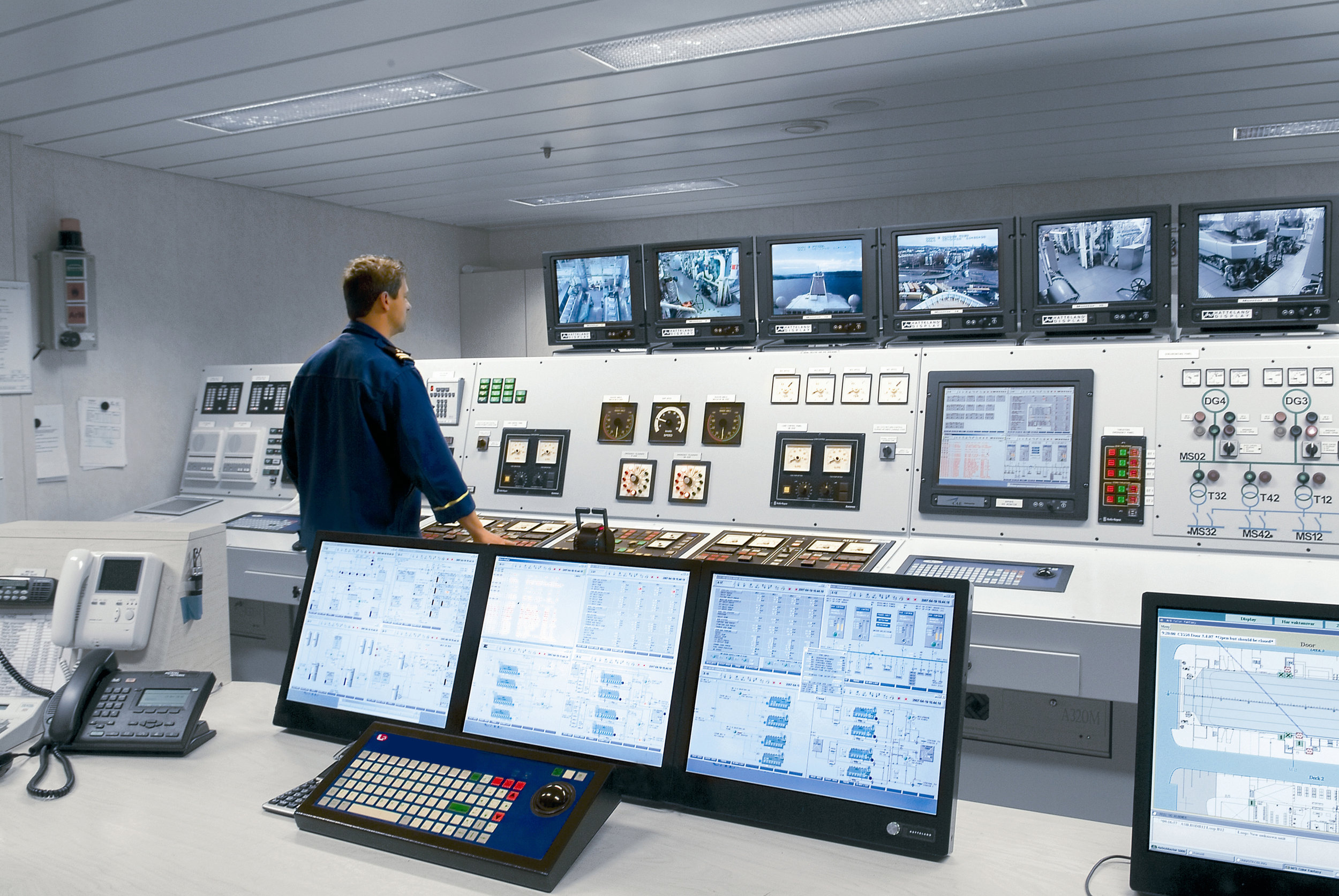
  Although the captain still overseas the bridge, ships in the 21st century rely more and more on complex integrated computer networks and automated systems. L3 Technologies is known around the world for its system integration.

  Although the captain still overseas the bridge, ships in the 21st century rely more and more on complex integrated computer networks and automated systems. L3 Technologies is known around the world for its system integration.

It will remain to be seen if French defence giant Thales uses CANSEC 2017 to finally acknowledge it was selected by the Canadian government to provide the long-term in-service support (ISS) for the Joint Support Ships and the Arctic Offshore Patrol Ships (AOPS). Neither the Canadian government nor Thales has yet acknowledged that Thales was selected for the contract worth around $5-billion.

But Public Services and Procurement Canada spokesman Nicolas Boucher confirmed to Esprit de Corps that the negotiations over the in-service support deal are finished and that the actual contract is expected to be awarded in the fall of 2017.

The awarding of the contract to Thales is controversial. CANSEC 2017 exhibitor Irving Shipbuilding, which is building the Arctic Offshore Patrol Ships, has publicly questioned the deal, suggesting it doesn’t make sense to award Thales the lucrative contract.

The Department of National Defence’s various unions have also vowed to fight the contract to Thales.

The unions, representing 24,000 civilian employees at DND, including those involved in the purchase of military equipment, ship maintenance as well as other work in the federal government dockyards serving the Royal Canadian Navy, are lobbying to have the Liberal government change course and keep the work among federal employees.

Irving Shipbuilding and Lockheed Martin will have a few projects to promote at CANSEC 2017, in particular the successful completion of the Halifax-class Modernization/Frigate Life Extension project. HMCS Toronto, based on the East Coast, has completed the refit portion of its modernization by Irving. This means all 12 frigates, five on the West Coast and seven on the East Coast, have completed the refit portion of their modernization, according to the Royal Canadian Navy. The Halifax-Class Modernization/Frigate Life Extension project included a new combat management system purchased from Lockheed Martin Canada, as well as new radar capability, a new electronic warfare system, and upgraded communications technologies and missiles.

Irving should be able to use CANSEC 2017 to improve its public relations situation on the shipbuilding program. The company faced negative publicity in February and March when the Chronicle Herald newspaper in Halifax broke a number of stories about Irving Shipbuilding hiring outside of Canada for various jobs related to the construction of the Arctic Offshore Patrol Ships. Irving was trying to recruit workers from Poland and a subcontract was put in place with the Spanish firm Gabadi LC, which involves Spanish carpenters being brought in to work on the Arctic Offshore Patrol Ships in Halifax.

Irving pointed out that Canada has not had a new-build naval program in place for almost 25 years so some specific shipbuilding expertise does not exist in the country. The firm also says it has tried to recruit Canadians for certain positions but has not found the skilled personnel it needed.

Union officials, however, say they find it difficult to believe that no one in Canada could fill any of these positions.

Irving is also hoping to convince the Liberal government to provide it with additional shipbuilding work that would deal with the expected gap between the time when the building of AOPS ends and the construction of the CSC begins. Irving says without the extra work it is looking at significant staff layoffs during that gap period.

Last year, Irving pitched the idea at CANSEC of a $300-million support ship for humanitarian missions. But the controversy swirling around the use of foreign labour at its Halifax yards could conceivably harm those chances for additional government shipbuilding contacts to deal with the gap period.

Firms providing equipment for warships will also be able to use CANSEC 2017 to highlight their systems.

The Canadian Surface Combatant has the RCN looking for a new drone. It requires a tactical unmanned aircraft system (UAS) that can provide what it is calling a cost-effective and sustainable shipborne, persistent, near real-time, over the horizon intelligence-gathering capability. The RCN is expecting initial approval for the project in 2018 and a request for proposals to be issued in 2019. Contract award is set for 2020. The cost estimate for the project is between $100-million and $240-million.

Industry was recently provided with more details by the federal government on the naval drone program. It’s currently seeking a minimum flight time of six hours, minimum range should be just less than 100 kilometres, and the system can be either vertical takeoff or rotary wing. The RCN does not want a launch or recovery system.

 The Mk 46 torpedo, first introduced in 1965, is a surface ship and aircraft-launched anti-submarine weapon. It is presently identified as the NATO standard and has been acquired by more than 25 countries, including Canada. Various modification…

 The Mk 46 torpedo, first introduced in 1965, is a surface ship and aircraft-launched anti-submarine weapon. It is presently identified as the NATO standard and has been acquired by more than 25 countries, including Canada. Various modifications, including improved acoustics, guidance and control upgrades, and countermeasure-detection capability have been introduced into the weapon. (seaforces.org)

The RCN is also looking for an upgrade for the Canadian MK 46 Mod 5A (shallow water) lightweight torpedo. It wants to improve fleet survivability against evolving near and medium-term underwater threats. Project cost is estimated to be between $250-million and $499-million. The issuing of a request for proposals is scheduled for 2020 with a contract award the same year.

The RCN’s Torpedo Countermeasure Hard Kill project is also another program that is attracting interest from exhibitors at CANSEC 2017. It is estimated that the project could cost up to $249-million.

The Torpedo Countermeasure Hard Kill project is to acquire a system to provide Royal Canadian Navy frigates, support ships and submarines with an effective defensive capability against the full range of modern and emerging threat torpedoes.

How will it do that? By adding a hard kill anti-torpedo weapon to compliment shipboard soft-kill torpedo countermeasure systems, the RCN pointed out.

The system will be fielded until the end of life of the Halifax-class frigates, Victoria-class submarines, the Queenston-class Joint Support Ships, and may be also used on the Canadian Surface Combatants. A request for proposals is expected to be issued in 2021, with a contract awarded the following year.

Atlas Elektronik Canada of Victoria, BC is using CANSEC 2017 to highlight its SeaSpider, among other equipment.

The company points out that SeaSpider, which can operate in both deep and shallow water, is the world’s first dedicated anti-torpedo-torpedo (ATT) and is capable of being used to counter threats against submarines or ships. Atlas Elektronik also points out that the weapon system is deliberately designed to be affordable for navies in procurement and operation. To achieve a low unit cost, a solid propellant rocket motor was chosen as SeaSpider’s propulsion element, which provides affordable compact high-energy performance, notes the company.

The operational concept for SeaSpider also allows for a “torpedo alarm” configuration with a very low false alarm rate that, in turn, reduces expenditure, the company noted. The maintenance-free SeaSpider canistered round reduces maintenance effort and simplifies handling.

Who Supported The Canadian Armed Forces More: Stephen Harper VS Pierre Trudeau

(Volume 20-11)

By Robert Smol

IF THERE IS ONE PERCEPTION of Canada’s military that both the left and right can agree on, it would be that our military is bigger, better equipped and more operationally active under Harper. Whether it’s to dote on or denigrate our current prime minister, we all seem to accept Harper’s exuberant public affairs love-in with everything military as proof that our military has indeed grown stronger under our current Conservative government.

RECENT LIBERAL LEADERS, on the other hand, are widely perceived as lacklustre at best when it comes to supporting our men and women in uniform. And nowhere does that “enemy of the military” legacy strike stronger than in our collective memory than with Pierre Trudeau.

 Released in May 2008, the Canada First Defence Strategy is the Harper government’s comprehensive plan to ensure the Canadian Armed Forces will have the people, equipment, and support they need to meet the nation’s long-term domestic and internation…


Released in May 2008, the Canada First Defence Strategy is the Harper government’s comprehensive plan to ensure the Canadian Armed Forces will have the people, equipment, and support they need to meet the nation’s long-term domestic and international security challenges. (jason ransom, government of canada)

If you served, as I did, while Trudeau was in power you just accepted that Trudeau was the “enemy of the military.” Was it not Trudeau who was responsible for starving the Canadian military of funds and equipment and reducing the size of our Armed Forces to unaccepted levels? Was it not Trudeau who maintained unacceptably low levels of troops deployed overseas? Was it not Trudeau who did not procure sufficient material to support out troops?

But dare we dispense with perception and, instead, look at historical facts, a very different perception of the military under Trudeau emerges. In spite of the occasional military cuts he was so derisively credited with, Trudeau actually exceeded Harper’s current record in terms of the country’s gross domestic product (GDP) defence spending, military size, procurement, deployments overseas, casualty rate, and nuclear defence.

Let’s begin with who was actually ready to take a bullet for Canada.

RELUCTANTLY STANDING ON GUARD FOR CANADA?

Steven Harper, in spite of his incessant rhetoric in support of the military, never served a day in uniform. Pierre Trudeau, as a young healthy man in the 1940s, was conscripted into the Canadian Army Reserve under the National Resources Mobilization Act. Though Trudeau’s brief, rudimentary and part-time service was as far from heroic as one might have imagined, it was military service nonetheless and would have made Trudeau a military veteran today. Harper never has — and never will — earn this right.

ARE WE REALLY COMMITTING MORE OF OUR FINANCIAL RESOURCES TO THE MILITARY?

 Liberal dynasty in the making: Pierre Elliott Trudeau, John Turner, Jean Chrétien and Prime Minister Lester B. Pearson together following Cabinet changes in April 1967. Each of these men would leave their mark in Canadian history. (duncan cameron, …


Liberal dynasty in the making: Pierre Elliott Trudeau, John Turner, Jean Chrétien and Prime Minister Lester B. Pearson together following Cabinet changes in April 1967. Each of these men would leave their mark in Canadian history. (duncan cameron, library and archives canada, pa-117107

In the 1970s and 1980s, we were consistently told that our military was being financially starved by Trudeau’s government. Back then, the point of reference for Trudeau’s critics always seemed to be his government’s GDP spending on defence, which seldom exceeded 2 per cent. Granted, during Trudeau’s first two terms in office GDP spending on defence declined from 2.5 per cent in 1968 to what we thought was an “all-time low” of 1.6 per cent in 1979, rising again in the 1980s to just under 2 per cent in 1984.

But, looking objectively at the data, if the Trudeau government of the 1970s and 1980s was “uncommitted” to providing financial support to the Canadian Armed Forces, then Prime Minister Harper is a true financial deadbeat. Since Harper took office in 2006, GDP spending on defence has never exceeded 1.4 per cent, which is actually lower than even the alleged “all-time low” under Trudeau. Based on data provided by the International Institute for Strategic Studies, GDP spending on Canada’s military in 2012 stood at around 1.14 per cent of the country’s GDP.

WHO HAD THE BIGGER MILITARY WITH A BIGGER FOOTPRINT IN THE WORLD ?

Today, the size of our combined regular force stands at 68,250 members. But, like the bone-thin anorexic who thinks they are still fat, the common perception today is that we have a “big military.” Perhaps some might argue that having a military less than half the population of Kingston, Ontario, is more than enough to defend the second-largest country in the world. So be it. But how does the size of today’s regular military, which under Harper varied from 62,703 (in 2006) to 68,703 (in 2011) compare to that under Trudeau?

A group of children gather in front of Montreal’s Quebec Provincial Police headquarters to see armed soldiers and an Iroquois helicopter policing the area against terrorists during the 1970 October Crisis after the War Measures Act was instated. The…

A group of children gather in front of Montreal’s Quebec Provincial Police headquarters to see armed soldiers and an Iroquois helicopter policing the area against terrorists during the 1970 October Crisis after the War Measures Act was instated. The suspension of civil liberties in Quebec was politically controversial. When the crisis was over, Prime Minister Pierre Trudeau pledged to refine and limit the application of the Act in internal crises, but by the time of the defeat of the final Trudeau government in 1984, the Act had not been modified. Not until 1988 was the War Measures Act repealed and replaced by the Emergencies Act, which created more limited and specific powers for the government to deal with security emergencies. (lac/pa-129838) 

When Trudeau came to power in 1968 the Canadian Forces stood at 101,600, declining to what was then perceived as a “pathetically low” 77,000 in 1976. But what Conservatives and the military community then considered a savage suppression of Canada’s military strength, was actually 8,297 more men and women in uniform than the “peak” size of the Canadian Forces under Harper’s Conservatives. Furthermore, as with defence spending, the size of Canada’s military gradually grew during Trudeau’s last term in the early 1980s to just under 83,000 or 14,750 more than our Canadian Armed Forces of today.

Perhaps now it should not come as a surprise that, under Trudeau, the Canadian Armed Forces had a much more sub­stantial military presence in the world — both within NATO and on peacekeeping missions.

In terms of our commitment to NATO, the worst our numeric presence ever got under Trudeau was in 1972, when we had 2,800 troops committed to NATO postings overseas (not including air force personnel deployed to Europe). Of course, when the period of détente died and the Cold War got hotter, that number increased and, by the time Trudeau left office, we had 6,700 military personnel committed to NATO.

Compare this to Harper, whose efforts to bolster NATO with Canadian Armed Forces personnel peaked in 2011 when 3,214 personnel were deployed overseas. In 2012, our commitment to NATO reached a low of 886 troops — or 1,914 troops less than the alleged darkest days under Trudeau.

Also, consider the fact that while Trudeau frequently had more combat troops and air squadrons committed to NATO, he also had far more Canadian soldiers deployed on peacekeeping missions, primarily in the Middle East. Under Harper we have never seen more than 274 troops deployed in any one year on peacekeeping missions. Trudeau’s commitment to peacekeeping varied from 467 in 1972 to a high of 1,963 peacekeeping troops deployed overseas in 1979.

TRUDEAU’S ARMY: A VERY DEADLY PLACE TO SERVE

If there is one area of defence where Harper has received unfair negative publicity, it is in the area of military casualties. During the war in Afghanistan, both the media and the public became sensitized to the fact that Canadian military personnel were getting killed, leaving the impression that military fatalities were somehow a new reality for today’s military.

But as those of us who served in the Canadian Armed Forces in the 1970s and 1980s know full well, the military under Trudeau was anything but a casualty-free zone.

It may come as a total surprise to many, but while the alleged peace-loving Trudeau was in power a total of 328 Canadian military personnel were killed in the line of duty. That is 135 more than the total number of casualties under Harper’s Conservatives.

Back then our troops were getting killed in Cyprus, Egypt, Syria, Africa, Europe and while training here in Canada. Indeed, it was on August 9, 1974, under Pierre Trudeau’s watch, that the Canadian Forces experienced its largest single day loss when nine Canadian military peacekeepers were killed by the Syrian army.

In fact, last year marked another “low” for Harper’s military legacy, one we can all celebrate. In 2012 the Canadian Armed Forces, for the first time ever, lost only one person. Granted, that is still one too many! But the fact remains that the Harper government has managed to bring our military casualty rate down

to a level that the patron saint of the Liberal party could never remotely achieve while in power.

WHO WAS READY TO FIRE NUKES IN DEFENCE OF CANADA?

This spoof ad on the aging Sea King and the many mishaps it had suffered first ran in the December 2002 issue of Esprit de Corps (Volume 10 Issue 2). Other than having two more faces to add to the tableau (Paul Martin and Stephen Harper), not much h…

This spoof ad on the aging Sea King and the many mishaps it had suffered first ran in the December 2002 issue of Esprit de Corps (Volume 10 Issue 2). Other than having two more faces to add to the tableau (Paul Martin and Stephen Harper), not much has changed. Although the CH-148 Cyclone has been purchased as the Sea King’s highly anticipated replacement — delivery of all 28 helicopters was supposed to be completed by early 2011 — Sikorsky has yet to turn over a single helicopter to Canada and the $5-billion project has been saddled with various problems. According to reports, Sikorsky is offering to provide Canada with what the firm is calling interim helicopters; aircraft not fully outfitted with all of the necessary equipment. It would then deliver fully-compliant aircraft starting in 2015. 

Largely erased from our collective historical memory today is the fact that during the Pearson/Trudeau dynasty from 1963 to 1984 Canada had a restricted tactical nuclear weapons capability. Although actual custody and control of the nuclear warheads remained in the hands of U.S, military, the Liberal governments of Pearson and Trudeau had units of the Canadian military deployed to fire nuclear weapons should a threat to Canadian air space arise. These included two CIM-10 BOMARC surface-to-air interceptor missile sites in Ontario and Quebec, with each carrying a 1.5 kiloton W25 nuclear warhead, as well as one army surface-to-surface missile battery that could fire W35 nuclear weapons.

And while Trudeau had the above units dismantled in 1972 (mainly because their counterparts in the U.S. were set to be dismantled as well), he did allow the Air Force to hold onto the AR-2 Genie air-to-air rockets, which also had the 1.5 kt W-25 nuclear warhead. This weapon remained in service here in Canada until 1984 — the year Trudeau left office. So it was only under Trudeau’s successors, namely Conservative Prime Minister Brian Mulroney, that Canada could honestly say it had ridded itself of nuclear weapons.

In spite of Harper’s bellicose military rhetoric on the idea of Canada’s military ever carrying nuclear weapons again, on loan from the U.S. or otherwise, as we once did under the Pearson/ Trudeau governments is so far removed from our shrunken military-capability mindset that it is not even considered for debate.

PROCUREMENT PERCEPTION AND REALITY

We also love to scoff at Trudeau for his alleged lack of commitment in providing new equipment for the navy and air force.

Admittedly, on the air force side, the Harper government has made some progress with the acquisition of 15 CH-147 Chinooks, 17 CC-130 Super Hercules and 4 C-117 Globemaster III aircraft for Canada’s Royal Canadian Air Force. As recently reported, there is talk of scaling back the planned yet long-delayed purchase of 28 C-148 Cyclone helicopters for the RCAF.

But just how impressive is this track record when compared to Trudeau, whose government procured 138 then top-of-the-line CF-18 fighter aircraft in the early 1980s? This is more than double the number of fighter jets that the Harper government tried, and failed, to purchase with the F-35 Joint Strike Fighter debacle. But it does not stop there.

A decade before the CF-18 order was executed, the Liberals also procured 135 CF-116 light attack strike and reconnaissance fighters, which were in operation from the late 1960s to 1995. The Trudeau Liberals can also be credited with the design and building of the 18 CP-140 Aurora maritime patrol aircraft that became operational in 1980 and which are still in use.

Today, Canada’s entire blue water fleet of 12 frigates and three destroyers were either launched while Trudeau was in power, or had their budget and building program approved by Trudeau. But as the navy Trudeau built now rapidly ages, just how much of an improvement has Harper made?

After six years in office, the only new naval shipbuilding projects Harper’s government has been able to finally launch includes a much-delayed contract for three joint support ships (JSS) as well as a contract for seven Arctic offshore patrol vessels (AOP). To date, there is no firm contract to build replacements for the frigates and destroyers that were launched or were designed and contracted under Trudeau’s watch. In addition, Canada’s existing fleet of 12 minesweepers are being retired under Harper.

So, almost 30 years after Trudeau’s retirement from politics, and 13 years after his passing, the Royal Canadian Navy con­tinues to sail primarily with ships from the Trudeau era.

PERCEPTION IS EVERYTHING

So why is it important that we continue to make comparisons like

this today? The reason is that politics is about perception — and the perception that Harper’s Conservatives have so successfully managed to create is that they are the only true and understanding “friend” of the military. This mistaken perception has been tacitly enabled by this country’s centre and left, who often refuse to realize that a viable defence posture can and should be part of their political platform.

If we blindly accept the mistaken belief that, under the Conservatives, we have supported and developed a stronger military, Canadians on all sides of the political spectrum will be far more accepting of any proposed defence cuts, believing that there actually is fat to cut.

There isn’t.

Pierre Elliott Trudeau, who never felt he needed to pander to the military to make himself look strong, may not be turning in his grave. But surely his legacy might well start screaming for a reality check.

DELIVERING THE GOODS, IN ALL CONDITIONS

(Volume 24-2)

By David Pugliese

The Royal Canadian Air Force and the Department of National Defence have created new working groups to prepare for the arrival of the Airbus C295W fixed-wing search and rescue planes (FWSAR).

Procurement Minister Judy Foote and Defence Minister Harjit Sajjan announced December 8 that the government had selected the Airbus C295W aircraft for its new FWSAR aircraft. The RCAF will receive 16 C295Ws. The contract will also include in-service support, provided through a joint venture between Airbus Defence and Space and PAL Aerospace.

DND spokesman Evan Koronewski told Esprit de Corps that the working groups include those to look at operational requirements and infrastructure. Based on their recommendations, a plan will be produced and implemented to ensure the RCAF is prepared for the delivery of the C295 fleet, he added.

“The first aircraft will be delivered in 2019 in Comox, B.C., three years after contract award and is expected to meet its initial operational capability by 2021,” Koronewski explained.

 With the announcement on December 8, 2016 that Airbus’ C295W has been selected as Canada’s next fixed-wing search and rescue platform, the RCAF has begun preparing to receive its first aircraft in 2019 in Comox, BC. The sixteenth and final air…

 With the announcement on December 8, 2016 that Airbus’ C295W has been selected as Canada’s next fixed-wing search and rescue platform, the RCAF has begun preparing to receive its first aircraft in 2019 in Comox, BC. The sixteenth and final aircraft is expected to be delivered in 2022. (airbus)

The existing CC-115 Buffalo and CC-130H Hercules will continue operating until the new fixed-wing platform has reached its full operational capability, at the four main operating bases of Comox, Winnipeg (Manitoba), Trenton (Ontario), and Greenwood (Nova Scotia), he added.

Nicolas Boucher, a spokesman for Public Services and Procurement Canada, told Esprit de Corps that the final aircraft of the 16-strong fleet is expected to be delivered in 2022.

He said training of aircrew will have started by the arrival of the first plane in 2019.

The 2022 arrival of the final aircraft will also mark the beginning of the long-term maintenance and support services for the aircraft, Boucher said.

The contract between Airbus and Canada covers the following:

delivery of 16 C295W aircraft;

infrastructure and set-up activities, such as training and engineering services;

construction of a new simulator-equipped training centre in Comox, British Columbia;

maintenance and support services.


Also included are tools and test equipment, spare parts and access to the necessary technical data for military personnel, the government noted.

The contract for the initial period of 11 years is valued at $2.4-billion and includes delivery, set-up of support systems (training centre, initial spare parts, tools, support and test equipment, electronic information environment, etc.) and the first five years of maintenance and support of the aircraft, according to Public Services and Procurement Canada.

It also includes the opportunity for Airbus to earn contract extensions for the operation and maintenance of the aircraft in increments of one to three years, for up to a possible additional 15 years. This could potentially extend the maintenance and support services until 2043, for a total value of $4.7-billion, according to the Public Services and Procurement Canada.

As part of the government’s evaluation process, a computer model was created to measure response time to reach the search area, time on station and recovery time, with each aircraft in the competition being assessed on these criteria in relation to …

As part of the government’s evaluation process, a computer model was created to measure response time to reach the search area, time on station and recovery time, with each aircraft in the competition being assessed on these criteria in relation to the more than 7,000 SAR incidents the RCAF responded to in the past five years. The area of responsibility for the RCAF’s FWSAR and CH-149 Cormorant helicopter fleets, augmented by the Canadian Coast Guard’s vessels, covers Canada’s 18-million square kilometres. (airbus)

The Canadian government said it expects Airbus Defence and Space will continue to develop strategic relationships with Canada’s aerospace and defence firms and will undertake business activities in Canada equal to the contract value. Such business activities include manufacturing major systems on the FWSAR aircraft, such as engines, radars and sensors, as well as researching and developing new product lines in Canada. This will open up opportunities for these firms to enter new markets in partnership with PAL Aerospace, the federal government pointed out.

The C295W features substantial Canadian content. Simon Jacques, head of Airbus Defence and Space in Canada, said about 20 per cent of the aircraft is already made up of Canadian-made systems. Every C295 is powered by two Pratt & Whitney Canada PW127G turboprop engines driving a pair of Hamilton Standard 586-F six-bladed propellers.

In addition, pilots and technicians will be trained at a new facility developed by CAE in Comox, B.C. The electro-optical systems for the aircraft will be provided by L-3 WESCAM of Burlington, Ontario. AirPro, a joint venture between Airbus Defence and Space and PAL Aerospace of St John’s, Newfoundland, will provide in-service support for the life of the program.

The federal government noted additional industry partners that will contribute to maintain the FWSAR capability include Heroux-Devtek to repair landing gear; Hope Aero to repair propellers; Sonovision for technical publications; CLS Lexi-Tech for translation of publications; and Precision Aero to repair component parts on the aircraft.  

CSC SAILING INTO STORMY WATERS

(Volume 24-02)

By David Pugliese

The Canadian Surface Combatant (CSC) will be the backbone of the Royal Canadian Navy’s future fleet, yet the program — one of the largest defence procurements Canada has undertaken in modern times — is sailing into stormy waters.

The Liberal government announced October 27, 2016 that Irving Shipbuilding Inc. of Halifax had issued a request for proposals to companies on the design of the new warships. Firms are required to provide those bids, which must not only include the design but details of teaming arrangements with Canadian firms.

    But allowing only six months to compile bids for one of the largest procurements in Canadian history doesn’t make sense, say representatives of some of the companies. The extent of the technical data and other information the Canadian government requires is overwhelming, they add. Four companies requested that the bidding period be extended and on February 16 the Liberal government agreed. Instead of submitting bids on April 27, the proposals will now be due on June 22.

But there are other issues looming as well. Some firms are questioning whether it will be worthwhile to bid on the project, estimated to be valued at more than $26-billion.

On October 24, 2016 Italian shipbuilder Fincantieri sent Public Services and Procurement Minister Judy Foote a detailed outline of why the acquisition process was in trouble, warning that “Canada is exposed to unnecessary cost uncertainty.”

 The Honourable Judy Foote, Minister of Public Services and Procurement, gives her speech at CANSEC 2016. In it, she detailed the Liberal’s plans on procurement matters while also touting the government’s desire for transparency. But in Februar…

 The Honourable Judy Foote, Minister of Public Services and Procurement, gives her speech at CANSEC 2016. In it, she detailed the Liberal’s plans on procurement matters while also touting the government’s desire for transparency. But in February 2017, Foote seemed unconcerned about one bidder’s concerns about the current process and worry of bias in the competition. (richard lawrence)

Preparing a bid for the Canadian Surface Combatant project will cost companies between $10-million and $20-million, industry representatives say. If they don’t see that there is a chance of winning the contract because of various issues, then firms might decide not to bid, further narrowing the choices for the Liberals on a new fleet for the Royal Canadian Navy.

In its letter to Foote, Fincantieri pointed out that the current structure of the procurement limits the role of the warship designers to simply providing engineering and design services to Irving, which will then build the vessels.

In return for that small role, the companies are being asked to provide valuable intellectual property to their designs, access to their established supply chains, and transfer technology to Irving and Canada.

In addition, the warship designers have to provide a warranty on the integration of technology into their designs, even though they are not responsible for buying that equipment.

The project as it is structured now leaves little incentive for warship designers and builders such as Fincantieri, which has designed and constructed ships for the navies of Italy, India, Iraq, Malaysia, Malta and the United Arab Emirates.

“If the current proposed procurement approach is retained, then it will be very difficult for Fincantieri to obtain approval to bid from its board,” the company warned Foote.

The company instead proposed to Foote that a fixed-price competition be held, with the wining shipyard building the first three warships, complete with Canadian systems, and deliver those to Irving. The ships would then be run through evaluations and after any technical issues were worked out, Irving would begin to build the remaining 12 vessels.

That way work on the new ships could get underway faster, the vessels will be fully tested, and the risk to the Canadian taxpayer significantly reduced. The “winning team can be held accountable for the overall performance of the finished ship,” Fincantieri added.

“Companies are also given incentive to make long-term investment in Canada because they can expect to get a fair return from the greater value of their work responsibility,” Foote was told.

The minister responded by suggesting Fincantieri approach Irving with their concerns.

But that response further worried the Italian shipbuilder as they had believed the Canadian government and its ministers were ultimately responsible for the program and the spending of billions of tax dollars.

Foote’s comments to journalists on February 7 will also not likely go down well with the Italian firm. She said she wasn’t concerned about Fincantieri’s warning that the current process was putting Canada at risk of unnecessary costs.

“That certainly is not our opinion on this,” Foote explained. “We’ve worked with industry. We did extensive consultations with industry to get to where we are. We will always consult with industry, and that is why we were successful in terms of the CSC. The fact that some people are questioning it is something we’ll look at, but in reality, of the 12 primes, eight have not expressed any issue with respect to the deadline.”

Irving spokesman Sean Lewis said the contract for CSC design would be awarded to an existing warship design that best fits the requirements of the Royal Canadian Navy. “I can assure you that the procurement process is being conducted in a way that ensures that all bidders are treated equally, with no unfair advantage given to any individual bidder, and under observation of an independent fairness monitor,” he added.

The other issue that has emerged on CSC are questions about whether there is a bias on the part of Canada for a specific design.

There is a strong belief in some industry circles that the federal government is favouring the design from the British firm BAE, which is offering the RCN the Type 26 warship.

An artist’s rendering released by BAE Systems of the expected form of the Global Combat Ship, a United Kingdom program to replace the Royal Navy’s Type 22 and Type 23 frigates through the Future Surface Combatant program, which has yet to start cons…

An artist’s rendering released by BAE Systems of the expected form of the Global Combat Ship, a United Kingdom program to replace the Royal Navy’s Type 22 and Type 23 frigates through the Future Surface Combatant program, which has yet to start construction. Originally, the Liberal government said only proven warship designs would be considered for the CSC, but it reneged on that point just a few months later. (bae systems)

Much of that belief is fuelled by the unusual change in the CSC procurement process in mid-2016.

In the summer of 2016 Foote said only proven warship designs would be considered, a strategy that she insisted would cut down on risk and speed up construction.

But just months later the Liberal government retreated on that and instead indicated it would accept a Type 26 bid, even though that type of vessel has not been built yet. Construction of the first Type 26 ship for Britain will start sometime this year.

“You want to make sure that what you get on offer reflects not only what’s tried and tested in the market but also what’s coming on the market,” Lisa Campbell, assistant deputy minister of acquisitions at Public Services and Procurement Canada, explained to journalists.

In an earlier statement, BAE official Anne Healey said the company looks forward to bidding in an open and fair competition.

Other industry representatives point to the close ties between Irving and BAE as a reason for concern on the CSC. The two firms had joined forces to bid on the long-term maintenance contract for the Royal Canadian Navy’s Arctic patrol ships and the Joint Support Ships. They lost that contract to Thales.

But rival companies are still worried about whether BAE has an inside track on CSC.

Irving’s spokesman Sean Lewis said there is no need for concern. “The CSC procurement is being conducted in a way that ensures that all bidders are treated equally, with no unfair advantage given to any individual bidder,” he noted in an email. “We will continue to actively monitor the effectiveness of measures taken to avoid any conflict of interest.”

Meanwhile, Irving has raised its own issues about CSC. Irving president Kevin McCoy said the firm is concerned about the gap between when it finishes work on the new Arctic Offshore Patrol Vessels (AOPS) and the start of the CSC building.

The work Irving is doing on AOPS will provide its employees with the experience and expertise required to construct the surface combatants starting in the early 2020s.

But McCoy told Esprit de Corps that he is worried that if there is a gap where there is a slowdown or lack of work then those skilled employees will leave for other jobs. That, in turn, could impact the CSC program.

McCoy had an even blunter warning in early February when he told the House of Commons defence committee that the gap or any delays on the surface combatant program could mean “significant layoffs” for employees.

“It is imperative that we work at a steady pace and minimize delays,” he warned.  “Starting in fall 2019, production work on AOPS starts to wind down. If we don’t put our skilled shipbuilders to work on CSC we face significant layoffs. If there is a production gap between the two shipbuilding programs, the cost to reconstitute this workforce and their experience will be borne by the CSC program.”

McCoy also warned that “the impact of inflation is very real on a shipbuilding program such as CSC. With shipbuilding inflation running three to five per cent annually, on a 15-ship program you lose the buying power equivalent of 45 to 75 per cent of one ship for every year of delay. Delays have a serious impact on a program such as CSC.”

BRINGING RELIEF TO VETERANS

A few capsules, each containing approximately 0.1 grams of MDMA crystals, more commonly referred to as ecstasy. Although MDMA is generally illegal in most countries, researchers are investigating whether a few low doses of MDMA may assist in treatin…

A few capsules, each containing approximately 0.1 grams of MDMA crystals, more commonly referred to as ecstasy. Although MDMA is generally illegal in most countries, researchers are investigating whether a few low doses of MDMA may assist in treating severe, treatment-resistant post-traumatic stress disorder. In November 2016, phase 3 clinical trials for PTSD were approved by the United States Food and Drug Administration to assess effectiveness and safety. (wikipedia)

(Volume 24-01)

By Tyler Hooper

 A clinical study, which saw psychotherapy used in conjunction with the drug methylenedioxymethamphetamine (MDMA) to treat psychological and emotional trauma, wrapped up in Vancouver last November, and the results appear to be hopeful.

The study was led by several Vancouver-based psychotherapists who administered MDMA to six patients suffering from post-traumatic stress disorder (PTSD) to assist with psychotherapy sessions. Several of the patients are military veterans suffering from PTSD.

According to the Canadian Mental Health Association, PTSD “often involves exposure to trauma from single events that involve death or the threat of death or serious injury.” PTSD, through certain triggers such as sound or smell, often causes those who have witnessed trauma to relive the event. Those who suffer from PTSD often suffer from flashbacks, nightmares, have trouble sleeping and may become anxious, depressed and/or detached from their surroundings.

MDMA, commonly referred to as ecstasy (E), is labelled a psychoactive drug whose effects include increased sensations of empathy, euphoria and trust. The therapists who administered the drug to the clinical trial patients hoped the drug would allow the patients to open up more about their thoughts and feelings. Ultimately, the therapist ends up having a conversation with the person’s unconscious mind, which can be quite different from a regular conversation.

According to the therapists who administered the study, the drug increases the release of chemicals like serotonin, dopamine and hormones that, in theory, can relax patients, thereby allowing them to speak more freely about their thoughts and experiences.

Metro News reported that the patients were given 125mg of MDMA with eight hours of therapy. The patients also slept at the clinic and received additional counselling the following day; months later, they were given half the dose and more therapy.

The study was funded by the Multidisciplinary Association for Psychedelic Studies (MAPS) and a good portion of the funding for the study came from online donations from the MAPS website. It took Health Canada almost six years and $200,000 to approve the trial.

Mark Haden, chair on MAPS Canada’s Board of Directors and an adjunct professor at the UBC School of Population and Public Health, said that veterans often tend to be resistant to psychotherapy or talking in a group setting. Haden added that, “When you tell them that they don’t need to talk very much … that is quite attractive to veterans.”

Haden told Esprit de Corps, “To be honest with you, I was surprised of the level of welcome we got from the Canadian military. I sort of braced myself going into the military to talk about it … I really thought I would be challenged.” Haden added that while presenting to the Canadian military there seemed to be genuine interest shown towards the study.

The two diagrams above show the results of the recent study, in terms of treatment (left) and severity of symptoms (right). Published in the Journal of Psychopharmacology, the study reveals that 83 per cent of the subjects receiving MDMA-assisted ps…

The two diagrams above show the results of the recent study, in terms of treatment (left) and severity of symptoms (right). Published in the Journal of Psychopharmacology, the study reveals that 83 per cent of the subjects receiving MDMA-assisted psychotherapy in a pilot study no longer met the criteria for PTSD, and every patient who received a placebo and then went on to receive MDMA-assisted psychotherapy experienced significant and lasting improvements. (mithoefer et al, 2010)

A long-term follow-up of patients in this program who received MDMA-assisted psychotherapy revealed that overall benefits were maintained an average of 3.8 years later. According to the Multidisciplinary Association for Psychedelic Studies (MAPS), t…

A long-term follow-up of patients in this program who received MDMA-assisted psychotherapy revealed that overall benefits were maintained an average of 3.8 years later. According to the Multidisciplinary Association for Psychedelic Studies (MAPS), these results indicate a promising future for MDMA-assisted psychotherapy for PTSD and lay the groundwork for continued research into the safest and most effective ways to administer the treatment. (mithoefer et al., 2012)

In April of 2016, a psychiatrist from the Canadian Armed Forces told Global News that the military was not ruling out these sorts of alternative treatment, but the studies would need to published and proven to be safe.

MAPS is careful to suggest that laboratory-produced MDMA is not the same as street ecstasy, or “molly” as it is also known, because the street drugs are often laced with other chemicals and/or dangerous adulterants. “Pure MDMA has been proven sufficiently safe for human consumption when taken a limited number of times in moderate doses,” states the MAPS website.

There will be another phase of research this spring with the hope getting the trial authorized as a legal prescription. Metro News reported that after the trial, 56 per cent of subjects no longer met criteria for PTSD. Followed up 12 months later, these same individuals now accounted for 66 per cent who no longer met the definition for PTSD. Two other recent trial studies, also involving the treatment of PTSD with MDMA in Charleston, South Carolina, also saw a 56 per cent decrease in the severity of PTSD symptoms.

According to the non-profit research and educational organization’s website, “MAPS is undertaking a roughly $25-million plan to make MDMA into a Food and Drug Administration (FDA)-approved prescription medicine by 2021.”

Since 2014, at least 54 Canadian veterans have committed suicide; however, the number could be higher due to lack of public reporting. Since the beginning of 2017, at least two Canadian military veterans have killed themselves, and both were thought to be suffering from PTSD.

Mark Haden said that during the study it was evident the veterans were in suffering due to trauma. “We know that it can be treated, and to watch this process happen in our society with the amount of suffering, and to know that this is available, is a source of great distress for us.”


Next month we’ll look at the study in more detail, and discuss alternative forms of treatment for veterans suffering from post-traumatic stress disorder.

SPACE: DEFINING THE FUTURE BATTLEFIELD

(Volume 24-01)

By David Pugliese

As modern combat forces rely increasingly on space-based technology, the Canadian Armed Forces is committing more resources to satellites. BGen Blaise Frawley discusses some of these programs.


 Brigadier-General Blaise Frawley was the Combined Forces Air Component Commander at Exercise Rim of the Pacific (RIMPAC) 2016. In the Forces since 1985, BGen Blaise Frawley was appointed Director General Space on June 9, 2016. (rcaf)

 Brigadier-General Blaise Frawley was the Combined Forces Air Component Commander at Exercise Rim of the Pacific (RIMPAC) 2016. In the Forces since 1985, BGen Blaise Frawley was appointed Director General Space on June 9, 2016. (rcaf)

In the last decade, space has begun to play a greater role for the Canadian Armed Forces.  Space-based systems have already had a significant place in the lives of the Canadian public, which relies on such assets for everything from banking transactions to daily reports about the weather.

In the military realm, Canadian soldiers now regularly use space-based assets to operate effectively on the battlefield. Such systems do everything from allowing long-range communications to guiding weapons to their targets. The Department of National Defence employs space systems to monitor the maritime approaches of the nation and conduct surveillance on locations around the world.

And with potentially billions of dollars of new projects planned for the future, space operations are on the way to becoming even more central to the effectiveness of the Canadian military. “For us in the Canadian Armed Forces, space is critical,” Brigadier-General Blaise Frawley, Director General of Space, explained in an interview with Esprit de Corps. “The effects that we provide now (because of space assets) support all of the joint players within the Canadian Armed Forces, both domestically and deployed overseas.

Frawley, whose appointment was announced on June 9, 2016, noted that the Royal Canadian Air Force has now taken responsibility for the military’s space programs. It is a natural fit, he added.

The service had a lot of experience with space, starting in the 1960s. “The way we look at this is that space is now delivered by the RCAF but for the joint warrior — so the Army, Navy, Air Force and SOF (special operations forces) warriors,” he said.

Collaboration with allies, industry and other government departments is key to moving forward, Frawley added.

He wants to stay the course for now and deliver the same professional capabilities that have been offered over the years.

But Frawley said he also wants the RCAF to start understanding how it can “grow” the space capability. “We do have a mandate to do that,” Frawley explained. “We’re looking at that and creating a vision for the RCAF commander so we can really understand where we are going to be 10 or 20 years from now.”

After that vision is developed, the RCAF can set about planning how to achieve that end-goal.

Frawley outlined for Esprit de Corps a number of key space programs. They include:

The Wideband Global SATCOM Satellite system is considered “the backbone of the U.S. military’s global satellite communications,” according to the U.S. Air Force. General Dynamics was awarded a $59-million contract to build three anchor stations in C…

The Wideband Global SATCOM Satellite system is considered “the backbone of the U.S. military’s global satellite communications,” according to the U.S. Air Force. General Dynamics was awarded a $59-million contract to build three anchor stations in Canada, like the one pictured. The anchor stations will allow communication with the WGS constellation and link it to existing Canadian Armed Forces communications infrastructure.

MERCURY GLOBAL

Canada announced in late 2011 that it was joining the U.S. Wideband Global Satellite (WGS) program, contributing $337-million for construction of a ninth satellite as well as operational support costs. Canada is investing as part of a consortium that includes four other countries — Denmark, Luxembourg, the Netherlands and New Zealand — all of which will gain access to the system in proportion to their individual contributions. In exchange for its financial contribution, the Canadian Armed Forces will have access to the Wideband Global Satellite system until 2031.

“Wideband is quite critical to support our joint warriors, both domestically and deployed,” Frawley said.

The Canadian military has already been using the WGS network through interim satellite ground terminals or through allied systems. That use began in May 2012.

In addition, the CAF is spending another $59-million to construct three anchor stations in Canada for the WGS system. In 2014, General Dynamics Canada Ltd. of Ottawa was awarded the contract to build those anchor stations, which will allow communication with the Wideband Global Satellite constellation and link that to the existing CAF communications infrastructure.

The Canadian military will also buy portable satellite communications terminals to allow its commanders on overseas missions to make use of the U.S. Air Force’s WGS network. It wants to buy three types of strategic deployable terminals.

One type would be capable of being operated by an individual and would be small enough to be able to be transported as carry-on luggage on an aircraft. A second type would be the size of check-in luggage, and have an increased ability to transmit information to the digital battlefield.

The third type, called the Heavy Strategic Deployable Terminal, would be able to provide a deployable very high data throughput capability and would be operated by a small team at headquarters level.

The terminals will allow the Canadian Armed Forces to deliver voice, image and data between deployed headquarters and commanders back in Canada.

Artist rendition of the Department of National Defence’s Sapphire satellite, developed by MDA. Sapphire was launched on February 25, 2013, and is DND’s first dedicated operational military satellite. The satellite tracks man-made space objects in Ea…

Artist rendition of the Department of National Defence’s Sapphire satellite, developed by MDA. Sapphire was launched on February 25, 2013, and is DND’s first dedicated operational military satellite. The satellite tracks man-made space objects in Earth’s orbit between 6,000 and 40,000 km in altitude, as part of Canada’s continued support of Space Situational Awareness. Data from the Sapphire satellite is contributed to the U.S. Space Surveillance Network, enhancing the ability of both countries to detect and avoid the collision of critical space platforms with other satellites or pieces of debris. (macdonald, dettwiler and associates ltd.)

Bids were submitted December 8. The Canadian military has set aside up to $20-million for the project to acquire the deployable terminals.

The strategic deployable terminals to be purchased would provide seamless interoperability via the Wideband Global Satellites system to the anchor stations as well as allied WGS-certified stations.

But why take part in WGS? The Canadian military was spending approximately $25-million per year on satellite communications capacity acquired from commercial operators. The cost to maintain that status quo was expected to increase significantly during the next 20 years, according to military officers.

The Canadian government has said it decided to take part in WGS because its military needed assured access to satellite communications instead of relying on commercial capacity. In addition, participation in WGS is cheaper than using commercial services, government officials added.

MEOSAR

In 2015, Canada decided to proceed with a project to provide search and rescue (SAR) repeaters for the U.S. Air Force’s next generation of global positioning system (GPS) satellites.

The repeaters provided by Canada’s Medium Earth Orbit Search and Rescue (MEOSAR) satellite project will significantly cut down on the time it takes to locate a distress signal, Canadian military officers say.

The plan would see the installation of the search-and-rescue repeaters on the USAF’s GPS 3 satellites.

Frawley calls MEOSAR “a great capability.” “We are in implementation right now,” he said. “We’re in the process of fitting one of our SAR receivers within one of the satellites.”

The MEOSAR satellite project, which will also include the construction of three ground stations, is expected to cost Canada between $100-million and $249-million, according to the defence acquisition strategy document.

Once in orbit 22,000 kilometres above the Earth, a MEOSAR repeater will be able to detect signals from emergency beacons and retransmit the signals to receiver stations on the ground. The emergency messages can then be sent to appropriate authorities so that people in danger can be quickly located and rescued.

MEOSAR will provide a more capable system to COSPAS–SARSAT (Cosmicheskaya Sistyema Poiska Avariynich Sudov – Search and Rescue Satellite Aided Tracking), according to Canadian military officers.

COSPAS–SARSAT is an international satellite-based search and rescue distress alert detection system established by Canada, France, the former Soviet Union, and the U.S. in 1979. It is credited with saving more than 33,000 lives since its inception.

Surveillance of Space: SAPPHIRE

With the 2013 launch of the Sapphire satellite, the Canadian military received, for the first time, its own spacecraft.

Sapphire is Canada’s first-ever dedicated military operational satellite.

The Sapphire satellite, with its electro-optical sensor, tracks space objects in high Earth orbit as part of Canada’s contribution to space situational awareness. Data from Sapphire also contributes to the U.S. Space Surveillance Network, Frawley noted.

Responsible for protecting North America from aerospace threats, NORAD, which is based in Colorado Springs, Colorado, receives its information from that network.

The sensor also provides information to the Department of National Defence and the Canadian Armed Forces about the location of foreign satellites as well as on the whereabouts of orbiting debris, which could pose a hazard to satellites and other spacecraft. In addition, it also allows Canada to gather data about objects, such as space junk, re-entering the Earth’s atmosphere.

Canada’s military has contributed to the surveillance of space mission previously using ground-based telescopes.

But space-based sensors such as Sapphire have a major advantage as ground-based systems can only be used at night. In addition, their performance can be limited by weather or excessive clouds.

RADARSAT Constellation Mission (RCM) will consist of a constellation of three identical satellites flying in a low-earth orbit (altitude from 586 km to 615 km above the Earth). This graphic illustrates the national ground station locations — at Alde…

RADARSAT Constellation Mission (RCM) will consist of a constellation of three identical satellites flying in a low-earth orbit (altitude from 586 km to 615 km above the Earth). This graphic illustrates the national ground station locations — at Aldergrove, Inuvik, Prince Albert, Gatineau and Masstown in Canada — and their coverage areas on a map of North America. (csa)

Sapphire has a five-year mission life, according to the satellite’s prime contractor MDA Corp., of Richmond, British Columbia.

MDA was award the $66-million contract to build Sapphire in October 2007. The Sapphire contractor team also included Terma A/S of Herlev, Denmark; COM DEV International of Cambridge, Ont.; and Surrey Satellite Technology Ltd. of Surrey, England.

MDA also operates the satellite from its Richmond facilities for the Department of National Defence.

SURVEILLANCE OF SPACE 2

The Canadian military is looking now for a follow-on program for Sapphire. Called Surveillance of Space 2, the solution would allow Canada to continue providing information to the U.S. space surveillance network beyond 2021.

“Our thoughts right now are space-based, but our job is to look at all the options,” Frawley said.

Options could include a single satellite combined with a ground optical sensor or a constellation of electro-optical satellites. The system would track man-made objects in Earth’s orbits having altitudes of 6,000 kilometres or greater.

The Canadian military wants the new system to be able to detect dimmer objects — the focus will be on operational satellites, just a bit smaller than targeted currently. The number of observations the satellite could do per day to feed the Space Surveillance Network would also grow.

The preliminary cost estimate for the project ranges from $100-million to $249-million in Canadian dollars. The wide price range reflects the scope of options that might be considered.

Previously, there was talk about a 2021 launch date. But that is highly unlikely.

Sources say a contract could be signed in 2021 with the system going into orbit by 2025 or 2026.

“We’re fairly nascent in the program,” said Frawley. “It takes time to put things into space, but it’s an important mission for sure.”

Surveillance of Space 2 illustrates one of the big challenges with procurement of space assets, Frawley explained. Unlike an aircraft, ship or tank, the lifespan of a spacecraft is relatively short. “When you have a satellite that lasts between five and 10 years, it changes our mindset when it comes to how we procure these capabilities,” he said.

POLAR COMMUNICATIONS

At one point the Canadian government was looking at putting into orbit a constellation of satellites to provide communications for the Arctic as well as to gather weather data from the region. The launch date was tentatively scheduled for 2016 but the project, called the Polar Communications and Weather (PCW) Mission, has been scuttled.

“What we do have now is two separate projects,” Frawley explained. “One is called Tactical Narrowband Satellite Communication (TNS) Project. And there is a project that is still fairly nascent that we’re trying to move forward and it’s very important to us because of our focus on the Arctic. It’s called the Enhanced Satcom Program – Polar. That will give us the ability to do both narrowband and wideband over the North Pole specifically.”

Frawley said the military is hoping a draft solicitation for that project will be put out sometime in 2017.

“Obviously it will open for competition,” he said. “At the end of the day a company will propose a solution and we’ll go through the normal process on that. But the orbital mechanics say the only way you can cover off on the Arctic effectively would be probably multiple satellites given that you can’t use the geosynchronous orbit. You’ve got to have multiple satellites.”

RADARSAT CONSTELLATION MISSION

The RADARSAT Constellation Mission, or RCM, will be a follow-on program to the existing and highly successful RADARSAT-2 spacecraft. RCM, however, will provide more capability. Instead of a single satellite, RCM will use three radar-imaging satellites to conduct maritime and Arctic surveillance.

In January 2013, MDA Corp. was awarded a $706-million contract by the Canadian government that would see the Richmond company build, launch and provide initial operations for the RADARSAT Constellation Mission.

The first spacecraft is expected to be launched in the fall of 2018, Frawley noted.

He says the information to be gathered by the spacecraft will be critical for Canada’s warfighters. The Canadian military expects to use about 80 per cent of the data that RCM provides while the rest will go to other government departments, Frawley added.

FWSAR REPLACEMENT WINNER ANNOUNCED!

By Scott Taylor

(Volume 23-12)

On December 1, 2016 the Canadian government finally announced the awarding of a $2.4-billion contract to acquire 16 Airbus C295W aircraft. The new C295W will replace the Royal Canadian Air Force’s remaining six 50-year-old CC-115 Buffalo aircraft along with a dozen of the older CC-130E/H Hercules planes which have been carrying out Canada’s search and rescue (SAR) missions.

The contract value includes the construction, delivery and transition phase which is to be complete by 2023, as well as an additional five years worth of in-service support (ISS). For Airbus Defence and Space, and all the other competitors for this contract, the procurement process was a gruelling marathon, which was originally intended to be a short, sole-source sprint.

Planning for replacing the RCAF’s FWSAR fleet actually began back in 2002. At that time, RCAF officials were bemoaning the advanced age of the Buffalo planes, and the fact that older CC-130 Hercules — some aircraft had entered service in 1960, others in 1996 — had to be pressed into service to sustain SAR operations.
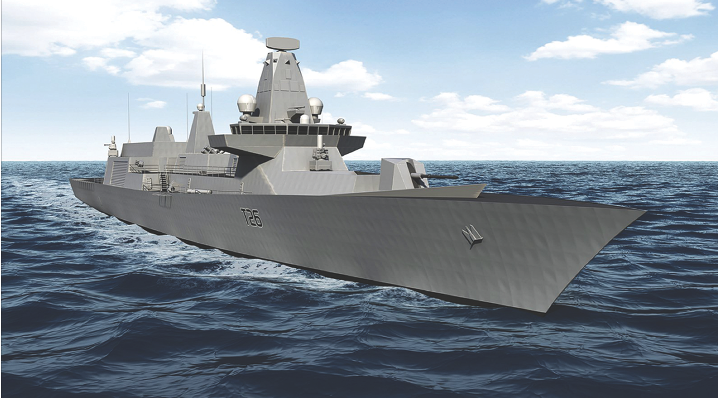
Their complaints did not fall on deaf ears. Then Prime Minister Jean Chrétien hastily declared the FWSAR replacement project to be a top priority in 2003. True to Chrétien’s word, the March 2004 federal budget included $1.3-billion in funding for the Air Force to purchase 15 FWSAR aircraft, with an original first delivery date of 2006.

The RCAF had their eyes set firmly on the Alenia C-27J Spartan. This twin-engine military cargo plane was well suited to a SAR role, and with its long range and large payload, the Spartan could easily operate from southern Canadian SAR airfields and still service the Arctic. A bonus was the fact that the Spartan was actually designed to be compatible with Lockheed Martin’s C-130 Hercules, so RCAF officials saw the C-27J giving them additional tactical transport capabilities.

Then along came the European firm EADS, which offered up its C-295 aircraft to the Canadian government. In 2005, EADS Canada first began challenging the original Statement of Operational Requirements (SOR) for the FWSAR replacements, as company officials felt the SOR had been purposefully drafted to make only Alenia’s Spartan a qualified contender.

The EADS Canada team admitted that their aircraft was slower and did not have the range to patrol the Arctic from the current SAR bases CFB Trenton, CFB Greenwood and CFB Comox. However, the EADS team also argued that alternate bases, located further north, should be considered.

For five long years EADS Canada pleaded its case and finally, in 2010, the Harper Conservative government ordered the National Research Council (NRC) to undertake a thorough review of DND’s original FWSAR Statement of Operational Requirements. First off, the NRC report recommended that DND seek an Alternate Service Delivery (ASD) option; in other words, to engage a private contractor to fulfill Canada’s SAR role. The NRC also supported the idea that alternate bases be considered.

There was no way in hell that the RCAF was going to let their SAR role go to a private company. As Peter MacKay was then both the minister of National Defence and the director of the National Search and Rescue Secretariat, the ASD option was quickly squashed.

However, with the NRC report came renewed interest from other aircraft manufacturers. What had been a two-man race between Alenia and EADS now became a field of six. In addition to the C-27J Spartan and the EADS Canada C-295, Viking Air was offering up a fully modernized version of the Buffalo; Bell-Boeing tossed in its vertical take-off and landing (VTOL) hybrid helicopter-plane, the V-22 Osprey; Lockheed Martin proposed an additional purchase of its latest C-130J model Hercules; and the Brazilian company Embraer was shopping its embryonic new KC-390.

In December 2011, DND wiped the dust off the desks and re-opened the FWSAR Project Management Office. The March 2012 federal budget once again approved the necessary funding. However, it was still a full three years later before the request for proposal (RFP) was formally posted.

When the bidding closed on January 11, 2016, only three contenders chose to actually submit offers. Of these three, long-shot Embraer was declared non-compliant by March. This left just Leonardo (formerly Alenia) with its C-27J Spartan and Airbus Defence and Space (formerly EADS) with its C295W, in the hunt.

The evaluation of the bids was completed by the end of June, but as with all major military procurement announcements, politics plays a role. Good-news stories regarding defence procurements are few and far between these days, and thus the FWSAR contract awarding was something of a PR silver bullet for the Liberal government.

A fair and transparent competition had been held to replace an aging fleet of search and rescue planes — who could take exception to equipping the RCAF to save lives?

Thus, it was while the Trudeau government was in the midst of a controversy surrounding their recent announcement to sole-source a purchase for 18 Super Hornet fighter jets as an interim measure to fully replacing the RCAF’s legacy CF-18 fleet that they finally announced Airbus’s C295W as the FWSAR winner.

Nearly 15 years have passed since this ‘urgent requirement’ was first flagged for replacement. Names changed, bidders came and went and, in the end, the C295W finally eclipsed the C-27J Spartan. Persistence paid off in this instance, but it is also true that Airbus compiled a strong Canadian team of partners, which includes Pratt & Whitney Canada and its PW127G engine, Provincial Aerospace for the in-service support, and CAE with the simulation and training package.

Let’s hope that, with the contract now in place, this project moves from the ‘mess’ category to a ‘success story!’