ON TARGET: Let Edward Cornwallis Be Remembered For Who He Really Was

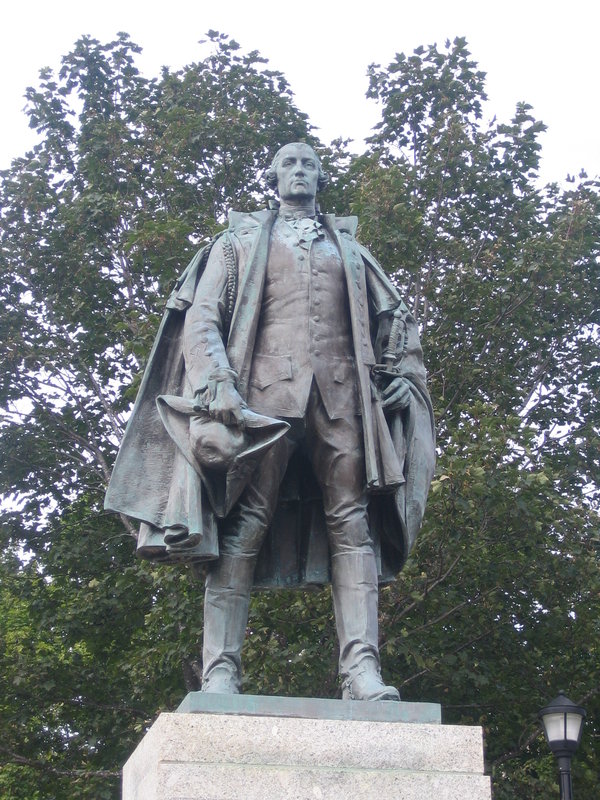
Statue of Edward Cornwallis Photo Credit: http://tari-stock.deviantart.com/

Statue of Edward Cornwallis


Photo Credit: http://tari-stock.deviantart.com/

By Scott Taylor

There has been a lot of controversy recently in Halifax over the statue of Edward Cornwallis, that city’s founder.

On Canada Day, a crowd of Mi’kmaq and their supporters gathered at the base of the statue to decry Cornwallis as a perpetrator of genocide against Indigenous Peoples. In their opinion, Cornwallis symbolizes a ruthless chapter in Canada’s colonization.

Challenging the First Nations demonstrators was a group of five Proud Boys waving the alt-rights adopted symbol of Canada’s old Red Ensign national flag. Embarrassingly, the gaggle of Proud Boys turned out to be members of the Canadian Armed Forces. All five were immediately suspended with pay, and Rear-Admiral John Newton hastily offered a full apology for their actions.

Following up on this incident, on July 15 another crowd gathered in Cornwallis Park with the stated objective of tearing down this alleged tribute to genocide. But cooler heads prevailed and, in the end, the compromise solution was to cover the image of Lord Cornwallis with a tarp. Halifax Mayor Mike Savage was on hand at this second demonstration and he acknowledged that removal of this polemic statue may yet be the final solution.

One could argue that, on the plus side, at least it has generated interest in what was heretofore just another bronze image of a British historical figure in a Canadian public space.

Edward Cornwallis was born into nobility in 1713, and at the age of 18 he purchased a commission in the British Army. His one claim to fame during the War of the Austrian Succession came at the Battle of Fontenoy in 1745, when he stepped up to take command of his battalion. The public mocked him for his subsequent retreat with the appalling loss of 8 officers and 385 of his men.

Cornwallis also fought at the Battle of Culloden in 1746, wherein the English army shattered the Jacobite Highland clans. While he played only a bit part in the battle, in the aftermath of the Scots’ defeat, Cornwallis led a punitive force into the Highlands.

It was here that Cornwallis committed his first atrocities. His orders were to bring back no prisoners, and his elite unit used mass murder and rape to pacify the rebellious Highlanders into submission.

Pleased with his actions, British parliament dispatched Lord Cornwallis to North America in 1749 for the purpose of establishing a colony that could compete with the French foothold of Louisbourg on Cape Breton. The site that Cornwallis chose was Halifax, perfect for its deep harbour and easily defended approaches.

One problem with this location was that it violated a former treaty with the Wabanaki Confederacy of First Nations, which included the Mi’kmaq tribes. The Wabanaki allied themselves with France, and the Acadians and Mi’kmaq did kill British settlers. In retribution, Cornwallis ordered his elite Rangers to hunt down the Mi’kmaq and he made the now-infamous offer to pay a bounty for Mi’kmaq scalps.

This conflict became known as Father Le Loutre’s War and it should be noted that the French also paid the Mi’kmaq for English scalps. It also should be pointed out that Cornwallis left Halifax long before those clashes and massacres were concluded, but nobody has yet to decry his successor, Peregrine Hopson, as a symbol of colonial genocide. But then again there are no statues of him.

Personally, I believe the statue of Cornwallis should remain in place so that it can be used as an educational tool for taking a closer look at the past myths that have shaped our nation’s history. Not only did Lord Cornwallis and other individuals like him commit heinous war crimes against, in his case, the Scots and the Mi’kmaq, but we were so immune to any empathy for his victims, that we actually glorified his ‘accomplishments’ with a statue and street names.

This is the lesson that needs to be taught.
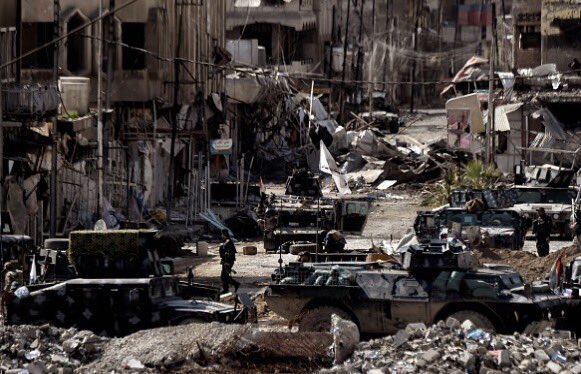
ON TARGET: Mosul: This Is What Victory Looks Like

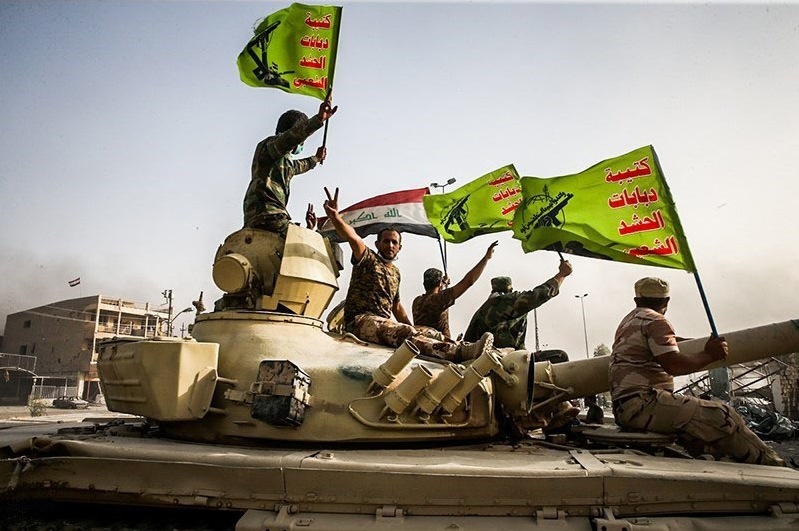
Destroyed City of Mosul Photo credit: https://www.almasdarnews.com

Destroyed City of Mosul


Photo credit: https://www.almasdarnews.com

By Scott Taylor

Last Tuesday, Iraqi Prime Minister Haider al-Abadi officially declared that the brutal nine-month battle to retake the city of Mosul was finally over. However, just four days later, explosions were still rocking the shattered rubble in the city’s downtown core as the last of the Daesh (aka ISIL or ISIS) fighters continued their fanatical resistance.

If one can be dispassionate about Daesh’s evil ideology, then from a purely military perspective their prolonged defence against overwhelming odds was one hell of a martial feat. It was estimated at the outset of the siege that Daesh defenders numbered fewer than 4,500. On the attacking side, the U.S.-led alliance numbered more than 100,000 ground troops plus airpower. This loose-knit coalition of disparate militias included Iraqi government troops, Shiite militia and Kurdish peshmerga.

The professional ‘stiffening’ of these forces was provided by a large number of U.S. and Iranian military advisors. Canada also contributed to the mix with approximately 200 special forces soldiers in an advise-and-assist role. The Canadian troops are attached to the Kurdish militia, which is loyal to the Kurdistan Democratic Party’s leader, Masood Barzani.

Although Canadians have repeatedly been told that our soldiers are not involved in combat operations, the commanders on the ground have taken extreme liberties with the word ‘assist’ in their advise-and-assist mandate.

Such assistance to the Kurds has taken the form of using anti-tank missiles to destroy Daesh vehicles, and a world record sniping shot that killed a Daesh fighter at the incredible range of 3,500 metres.

I am of the perhaps somewhat biased view that Canadian soldiers are not among the best in the world … they are the best in the world. That said, this means that the Daesh defenders of Mosul were not only up against a staggering quantity of attackers, they were also pitted against an impressive quality of warriors.

Add to this mix the fact that the allied forces could call upon the unchallenged might of the U.S.-led aerial armada that included a fleet of unmanned drones capable of around the clock observation and missile strike capabilities.

The fighting may finally be over, but the devastation is nearly complete, particularly in the western area of the city, which was Daesh’s last bastion of resistance. Nearly every building in West Mosul has been destroyed.

To protect the ground troops from possible Daesh vehicle-borne suicide attacks, the allied air force deliberately cratered every intersection in the city with precision bomb strikes. The bridges spanning the Tigris River, which connected East and West Mosul, were all destroyed in the fighting, either by allied aircraft or Daesh demolition.

The pile of rubble is reminiscent of the Second World War’s aftermath of the Battle of Stalingrad. The devastation in Mosel is so complete that it makes Haider al-Abadi’s claim of victory akin to U.S. General Westmoreland’s famous Vietnam War quip that in order to save the village, they needed to destroy the village. Only this time the village was Iraq’s second largest city and the damage is estimated to be in the tens of billions of dollars.

The question now begs as to who will oversee the reconstruction of Mosul? It was the deliberate exclusion of Iraq’s Sunni Arab minority by al-Abadi’s Shiite regime in Baghdad that led Mosul’s Sunni residents to welcome Daesh as liberators in the summer of 2014. That was when Mosul was an undamaged metropolis, not a heap of broken bricks and destroyed infrastructure.

If history repeats itself, as it so often does in the Middle East, the Sunni minority will be further punished by the victorious Shiite militias, many of whom are woefully ill-disciplined and fighting an ideological war of revenge against the Sunnis.

To the west of Mosul, Daesh retains control of the city of Tal Afar, which is a Turkmen enclave. The city is presently besieged by Shiite militia assisted by Iranian advisors. Neighbouring Turkey has warned that it will take military action if the Shia militia is allowed to enter Tal Afar and exact revenge upon the Turkmen.

As each domino falls, it seems this conflict only gets more complex and any notion of a ‘victory’ remains undefined. Canada has no say in resolving any of these major issues, yet we have just committed our military to at least two more years in Iraq. We will very soon need to choose which Iraq we support, because it is very unlikely to continue to exist in its present form.

ON TARGET: Khadr Was A Victim, Not A Terrorist

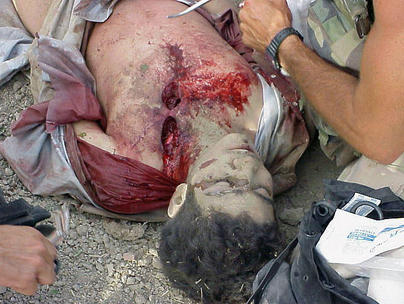
Two soldiers kneel over the wounded Khadr.http://bit.ly/2u52P9Q

Two soldiers kneel over the wounded Khadr.

http://bit.ly/2u52P9Q

By Scott Taylor

The Liberal government certainly stirred up a flurry of emotion with last week’s announcement that Canada will pay out a whopping $10.5-million in compensation to Omar Khadr.  Those who are firmly in the anti-Khadr camp howled with indignity that this payout is in essence a reward for a terrorist.

To back up their argument they point to the fact that Khadr confessed to having thrown a grenade which killed U.S. soldier Christopher Speer and wounded another American infantryman. This makes Khadr a murderer in the eyes of his detractors.

The terms ‘terrorist’ and ‘murderer’ are indeed evocative, but in the case of Khadr they are not warranted. Yes, Khadr’s father Ahmed was indeed a full-fledged member of the notorious al-Qeada terrorist network. Following the post-9/11 U.S. invasion of Afghanistan, Ahmed returned to the land where he had fought against the Soviet occupation in the 1980’s, this time bringing along with him his sons Abdurahman and Omar. Their intention was to resist the U.S. military, whose objective was to round up or eliminate any and all who could be linked to the 9/11 terror attack.

The fact is that Omar Khadr was just 15 years old at the time. This puts him in the same category as boy soldiers of Africa whom Canada considers to be the victims of their circumstance.

There is video footage showing the 15-year-old Omar assembling an improvised explosive device (IED). As these sorts of insidious weapons were responsible for the deaths of 97 Canadian soldiers deployed into Afghanistan, it is easy to understand that this is an emotional sore point for the anti-Khadr crowd.

However, as the name would indicate, an IED is simply a homemade landmine and a rudimentary weapon. Used against other combatants, they are not instruments of terror, no matter how frightening they may be.

Which brings us back to the incident in which young Khadr was captured. This was clearly a firefight with distinct combatants on both sides. Nobody was out to terrorize anybody, and Khadr was equipped with conventional firearms.

To call throwing a grenade in a battle ‘murder’ is ludicrous in the extreme. To follow that logic, given that Khadr was shot twice and suffered shrapnel wounds prior to being captured, the American soldiers involved should be charged with attempted murder.

There is also no clear-cut evidence that Khadr actually threw the grenade that killed Speer. During his lengthy captivity at Guantanamo Bay, Khadr was tortured by his U.S. captors and his ‘confession’ to Speer’s murder was a key condition in securing his release from prison. There was never any independent verification of Khadr’s action.

The compensation being paid now to Khadr is in recognition of the fact that the Canadian government failed to protect Khadr following his capture. He was a Canadian citizen, a minor, caught up in the violent chaos of post-9/11 Afghanistan. He also had the misfortune of having a father who firmly adhered to a jihadist ideology.

That he was allowed to languish in the brutal conditions of the notorious Guantanamo Bay facility amidst hard-core terrorists and equally sadistic U.S. interrogators is indeed a failure on the part of previous Canadian governments.

Does this in turn warrant him a $10.5-million pay day? How can you possibly put a dollar figure on what Khadr went through?

Likewise, the widow and family of Christopher Speer have a court ruling that awards them $134-million (U.S.) from Omar Khadr as a result of him ‘murdering’ the American soldier. With Khadr now in receipt of his payout, the Speers are already seeking to seize that compensation money for themselves.

That Speers was killed while serving his country is indeed a tragic loss. However, I fail to see why his family would be entitled to such a massive sum to offset their loss. He was killed in battle, he was not murdered in his bed.

ON TARGET: Extending Mission In Iraq Is Wrongheaded

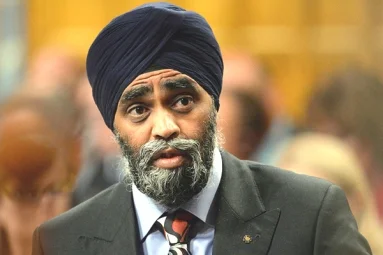
Harjit Sajjan

Harjit Sajjan

By Scott Taylor

Last Thursday the Liberal government gave Canadians a pre-Canada Day gift in the form of a clarification on our military role in Iraq. Defence Minister Harjit Sajjan joined Foreign Affairs Minister Chrystia Freeland at the press conference to announce the extension of the Canadian Armed Forces’ ‘advise and assist’ mission until March 2019. That revised end date was unfortunately about the only thing that is now clear about Canada’s commitment of troops to Iraq.

Since 2014, Canada has deployed special forces personnel to assist Kurdish militia in the battle against Daesh (aka ISIS or ISIL). This effort is part of a U.S.-led coalition operation to wipe out Daesh evildoers. Unfortunately for this hodgepodge collection of allied forces, the only unifying goal they share is eliminating the threat of Daesh.

Once that objective has been achieved, every one of these disparate militias — be they Shiite factions, secular Sunnis or Canadian-trained Kurds — is prepared to fight the other for the spoils.

The Kurds that Canada supports make no secret of the fact they are fighting for an independent state. Masood Barzani, the warlord turned elected president of the Kurdistan Regional Government (KRG), has declared that a referendum on independence will take place this September.

This will, of course, prove an awkward situation for our government as it has always been Global Affairs Canada’s stated policy to support the sovereignty of a unified Iraq.

Our soldiers on the ground — with permission granted by none other than Chief of Defence Staff General Jonathan Vance — have been recklessly flaunting Canada’s stated foreign policy by wearing the flag of Kurdistan on their combat uniforms. Vance’s explanation — that our wearing of Kurdish flags helps to foster good will between the Kurdish soldiers and the Canadian trainers — borders on the absurd: Canadian soldiers should not be wearing foreign flags on their uniforms, especially when that flag is a symbol of a breakaway non-recognized state.

In the joint Sajjan–Freeland announcement, it was stated that Canada will not be solely in support of the Kurds as the war in Iraq moves into the next post-Daesh phase. According to the Liberal government, the Canadian military now has the option to train “new potential partners within the Iraqi security forces.” If that is the case, then someone better tell our soldiers to take off their Kurdistan flags.

It will be interesting to see just which faction or factions Canada chooses to support. Elite soldiers in the Iraqi army loyal to the regime in Baghdad were recently found guilty of vicious war crimes committed during the battle in the city of Mosul, and the Shiite militia has an equally sullied reputation for committing atrocities. There are no white-hatted good guys in the complex factional violence that has gripped Iraq since the U.S. invasion of 2003.

This is the other thing that was notably bizarre about the announced extension. The Canadian government acknowledges that we will keep troops there for at least two more years, but it makes no attempt to even describe what we hope to achieve within that time frame. There is no goal, no objective, no explanation of what victory will look like.

It is simply a promised commitment to keep Canadians in harm’s way for a set period of time. Just like our repeated mission extensions in Afghanistan, there is not even any hint that those running this war expect to be successful anytime soon.

Offsetting the announced extension of the mission in Iraq was the confirmation that, despite pressure from NATO, Canada will not be sending troops back into Afghanistan. Given that there is just as little hope for a successful conclusion in Iraq, that decision is not very comforting.

We are not sure who we will be training in Iraq and we have no idea what we hope to achieve there, but we do know we will stay until March 2019, and that we will spend $378-million doing it.

How do you justify extending a war when you cannot describe what ‘victory’ will look like?

ON TARGET: Real Life Not Imitating Art

Brad Pitt in the movie War Machine

Brad Pitt in the movie War Machine

By Scott Taylor

I recently had the opportunity to watch the new, made for Netflix movie War Machine, starring Brad Pitt. The subject of the film is the U.S. led war in Afghanistan with Pitt playing the fictitiously named Lieutenant-General Glenn McMahon. While the name is changed to provide some Hollywood artistic licence, the movie closely depicts the real life Lieutenant-General Stanley McChrystal and the events that transpired during his command of the Afghan mission in 2009.

The opening scene has Pitt as McMahon strutting through the airport in Dubai along with his attendant staff officers. The narrator sets the scene, telling us that the war in Afghanistan is going poorly and therefore a new General – McMahon is being brought in to jump start the whole allied campaign. The plotline follows McMahon’s attempts to do just that, up until he is fired and the final scene is his successor and a fresh set of staff officers striding through an airport, full of confidence en route to Kabul to turn things around.

War Machine is a brave diversion from the usual rah-rah, war movie genre, propaganda in that it portrays former Afghan President Hamid Karzai as a powerless puppet of the U.S. . In one dramatic scene McMahon pursuesKarzai right into his private Presidential bedroom in order to get the Afghan leader’s permission to launch a large offensive. Karzai replies that both men know such permission is not his to grant – “but thanks for asking” he tells McMahon.

There is also a poignant moment after the big offensive begins and naturally enough, innocent civilians are killed. True to his beliefs, McMahon flies to the front lines to explain to Afghan villagers – through his translator – that the U.S. is intent on bringing Afghans security, democracy and freedom.

The bewildered Afghan elder replies concisely “Just leave.”

It was refreshing to see that a U.S. moviemaker understands that despite all of our good intentions and ideals, since 2001 the West has delivered nothing but violence, corruption and insecurity to the Afghan people.

Then of course came the real life news last week that the U.S. is committing more troops to Afghanistan, and urging NATO allies such as Canada to do the same. There will be a new commander and a new strategy and this time, by golly, we are going to get it right. U.S. Secretary of Defence Jim ‘Mad Dog’ Mattis admitted to a Senate Committee “We are not winning in Afghanistan right now. And we will correct this as soon as possible.”

Of course, Mad Dog neglected to say how the U.S. will do things differently after sixteen years of futile intervention. The only response seems to always be more troops.

Then we had former U.S. General David Petraeus – famous for his briefly successful, but ultimately failed surge strategy in Iraq – telling the media that we should brace ourselves for a “long-haul, generational war” in Afghanistan.

As if sixteen years isn’t already of generational length, Petraeus went on to point out that the U.S. has had a ‘long haul’ military presence in Korea for more than 65 years. Not mentioned by Petraeus was the fact that Korea and Afghanistan are as different as soap and beans. In Korea, the U.S. fought alongside Korean allies to prevent them being overrun by the North Korean Communist forces. This was successfully achieved in 1953 with the ceasefire agreement establishing a clearly defined boundary between North and South Korea. In Afghanistan the U.S. led intervention never eliminated the Afghan insurgency, and the U.S. trained and equipped Afghan forces are woefully inadequate to fight the war on the their own.

A better analogy would be that of the U.S. failure in Vietnam. If the U.S. pulls out of Afghanistan now, the corrupt cabal that they installed in Kabul will collapse just like the South Vietnamese, U.S. backed government did in 1975.

It is for certain that the U.S. would not have spent 65 years in Korea if every day their soldiers were being attacked and killed by fanatical Koreans.

The War Machine Afghan elder had the right answer “just leave”. The Afghan people are hardy survivors who will eventually sort out their own future – even if it does not resemble a western democracy.

ON TARGET: When The Good Guys Are Bad It is Time To Quit Iraq

By Scott Taylor

Earlier this month the Toronto Star published an exposé complete with graphic photographs depicting horrific torture and abuse of prisoners in Iraq. What made the story and images so shocking was that this barbarism was not the handiwork of Daesh (aka ISIS or ISIL) evildoers, but rather that those atrocities were blatantly perpetrated by the Iraqi Emergency Response Division (ERD).

The ERD is considered to be an elite counter-terrorism unit under the command of the Iraqi government’s Ministry of the Interior. The ERD has been a critical factor in the allied effort to recapture the city of Mosul from Daesh.

Canadian Special Operations Forces Command soldiers are working closely with Kurdish militia in that same vicious struggle to retake Mosul. While Canadians are not directly in support of the ERD, the soldiers in this elite unit are very much Canada’s close allies in a common struggle.

That is why the images of the ERD’s torture victims is so disturbing. The photos were taken by Ali Arkady, a photographer embedded with the ERD troops who seemingly had no qualms about allowing themselves to be filmed putting knives to prisoners heads, pressing fingers into eye sockets, or beating trussed up captives suspended from the ceiling.

Even more bizarrely, the ERD soldiers actually provided Arkady with a video depicting the execution of a terrified captive. In other words, there is no shame or guilt associated with their ruthless brutality; these guys are happy to have their violent exploits broadcasted for all to see.

Last week, General Jonathan Vance, Canada’s chief of defence staff, reacted to the torture revelations in an interview with the Toronto Star. “It doesn’t even fall into the category of understandable. In fact it mirrors what Daesh is doing, and you lose if you don’t maintain the moral high ground in this kind of war,” Vance said.

Vance also conceded that Canadians might question why Canada’s military is involved in a conflict wherein our allies are committing the exact same atrocities as those evildoers we are fighting against.

However, instead of questioning Canada’s role, Vance saw the ERD’s brutal behaviour as further proof as to why Canada should stay in Iraq. “They’re horrible. They need training, advice, and assistance,” he said.

To his credit, Vance apparently gets the fact that the ceaseless cycle of violence in Iraq’s interfactional conflict will continue unabated as long as reciprocal revenge is waged.

What Vance does not understand is that this level of barbarity is not going to be stopped by a few more lessons in a classroom, taught by good old Canadian combat soldiers with a firm grasp of the Geneva Convention. We do not have a training plan

that stresses the fact that prisoners are not to be beheaded, eye-gauged, or chained to the ceiling for days at a time. Some things we tend to simply take as a given.

Another problem with Vance’s assertion that training and assistance could turn the ERD around is the fact that they are not some “ragtag militia” as he asserted to the Star. The ERD are among the best-trained and motivated units available to the Iraqi central government in Baghdad.

When Daesh first rolled out of Syria and captured a vast swath of Iraq in 2014, the U.S.-trained and -equipped Iraqi army collapsed without much of a fight. Tens of thousands of soldiers defected en masse, leaving their weapon arsenals and vehicle fleets at the disposal of Daesh fighters.

The only thing that prevented Daesh from seizing Baghdad was a desperate call-out for volunteer Shia militias to stem the Sunni Muslim fanatical Daesh.

Those same Shia militias are still in the fight against Daesh and, therefore, are also ostensibly Canada’s allies in this fight. Unlike the Iraqi government’s ERD unit, these Shia militias are truly ill-disciplined and ragtag.

They are also fighting for purely factional-based revenge against Daesh’s Sunni supporters.

If a photographer embedded with an elite Iraqi government unit can uncover rampant occurrences of torture and execution, one can only imagine what sort of revenge abuse is being meted out by Canada’s even more notorious allies — the Shia militia.

Vance was right in his first assessment of the torture revelations: Canadians should seriously question why we are taking sides in this barbaric bloodletting.

ON TARGET: This Time Canada’s Defence Budget Is Going To The Moon!

Charlie Brown and Lucy 

Charlie Brown and Lucy 

By Scott Taylor

Last Wednesday’s release of Canada’s new Defence Policy reminded me of the old Peanuts cartoon. In a long running gag, Lucy promises to hold the football in place for Charlie Brown to kick it. Charlie brown is always suspicious and reminds Lucy that on every previous occasion she has snatched away the football at the last moment, leaving him kicking at air and landing flat on his back. Somehow, Lucy is always able to convince simple Charlie that this time it will be different. Once he is convinced, Charlie sets himself up with a long run, throughout which he tells himself “This time I’m going to kick this ball clear to the moon.”

That is where all of the self-proclaimed military boosters are right now. They have convinced themselves that this time, Lucy, aka the government of the day is really going to come through on her promise for a whopping 70% increase in the defence budget over the next decade, including the acquisition of all kinds of new equipment. The policy review also calls for an increase in personnel up to 71,000 from the current level of 68,000 – which in reality is fewer than 66,000.

For those of us long enough in the tooth to remember such things, thirty years ago the Progressive Conservative government promised a similarly robust investment in Canada’s military. The 1987 White Paper on Defence advocated the acquisition of twelve nuclear submarines and 400 main battle tanks. The Royal Canadian Navy presently operates four used diesel-electric submarines, and there are but 40 operational tanks in our Army.

 That same blueprint called for the purchase of 820 Northern Terrain Vehicles- an articulated, tracked, multi-purpose utility vehicles which would have equipped Army reserve units across Canada. That project got as far as the factory being built in Calgary to assemble the NTVs, before the whole thing was scrapped.

The original plan for our current Patrol Frigates was to build twelve with an option for an additional six. When six additional frigates were cancelled, it was announced that the Navy would get six ocean going Corvettes instead. That scheme simply disappeared from the books.

 In 2005 the Army announced they were going to invest nearly one billion dollars into something called the Multi-Mission Effects Vehicle. These 30 MMEV’s were essentially a reconfiguration of the 1980’s Air Defence, Anti-Tank (ADAT) system mounted on a wheeled chassis. Like the ADATs, the MMEV never actually entered Canadian service and in 2007 the project was quietly scrubbed.

In the summer of 2009 the Army announced with much fanfare that it was going to spend over $2 billion to purchase 108 Close Combat Vehicles. After conducting not one, but two sets of trials, the decision was taken in December 2013to not by any CCV’s for the Army.

In 2004 Canada announced the Joint Support Ship project which should have had the first of three supply ships built and in operational service by 2012. That procurement was cancelled in 2009, and now the RCN cannot expect delivery of a new supply ship before the year 2021.

The Air Force first announced it was seeking to replace its aging Sea King helicopters in 1983. Thirty-four years later the same old Sea Kings are conducting operations in the Mediterranean.

So forgive me if I don’t join in the current discussion as to how high we are going to kick the football this time. I will believe it when I see it.

The huge projected budget hike did resonate well south of the border it would seem. Trump’s spokesman Michael Short tweeted out a triumphant message that Canada’s 70% increase in defence spending was a case of the Donald “getting results”. Yeah, and Charlie Brown thought he could kick a football to the moon.

ON TARGET: Somalia And Afghanistan Were Failures, We Need To Admit It

A Canadian Forces soldier from A Company, 1 Platoon, 1st Battalion Princess Patricia’s Canadian Light Infantry surveys the perimeter within the Zjarey district, west of Kandahar, in a joint Afghan National Army and Coalition security operation to re…

A Canadian Forces soldier from A Company, 1 Platoon, 1st Battalion Princess Patricia’s Canadian Light Infantry surveys the perimeter within the Zjarey district, west of Kandahar, in a joint Afghan National Army and Coalition security operation to remove Taliban forces from the area. (Photo by MCpl Robert Bottrill, Canadian Forces Combat Camera)

By Scott Taylor

Last week I attended the two-day annual defence and security tradeshow in Ottawa known as CANSEC.

While this exhibition is a great opportunity for the defence industry to showcase their latest technology to military personnel, it is also a rare venue for media to have casual access to a wide variety of serving soldiers.

During one encounter with a veteran of the 1992 mission to Somalia, this ex-paratrooper lamented the controversial decision to disband the Canadian Airborne Regiment in 1995. The Liberal government of the day, under then Prime Minister Jean Chrétien, had taken the decision to disband this heretofore elite unit following revelations of violent atrocities in Somalia and the release of a video tape displaying a vulgar hazing ritual at the Airborne Regiment’s home base in Petawawa. The ex-paratrooper did not downplay the seriousness of those incidents, which were dubbed the ‘Somalia Scandal’ in the press, but he felt that by the time Chrétien ordered the regiment disbanded in disgrace, the unit had redeemed itself. He went on to say that because of the focus on the two violent incidents – one involved the execution of a wounded looter, and the other a beating death of an unarmed teenage prisoner – the people have forgotten that the mission was otherwise quite a success. This of course was the standard solitary response at the time.

While the press concerned themselves with these barbaric and shockingly ‘un-Canadian’ acts of violence and the subsequent top level attempts to cover them both up, all the good news stories were left untold. Yes, it is true that during the Canadian deployment to Somalia as part of a U.S. led coalition, there were some schoolhouses built, some food got delivered, and some wells were dug.

However, one cannot lose sight of the bigger picture. The international community abandoned Somalis to their own fate. Not surprisingly, that war torn country plunged back into a failed state awash in violent anarchy.

Despite whatever good our soldiers may have achieved during their brief deployment we cannot deceive ourselves into believing that the Somali mission was in any way successful. It was a huge cock-up that failed miserably.

Which brings us to Canada’s more recent military intervention in Afghanistan as part of another U.S. led coalition. Many soldiers at CANSEC spoke proudly of their deployment to Kandahar. Despite the sacrifice of 158 of their comrades killed in action, another 2000 suffering physical wounds and an untold legion of veterans coping with PTSD, they spoke of the difference they had made in the lives of the Afghan people. Like the Somali veteran, they reflected on the schoolhouses built and the irrigation systems that were dredged in the Kandahar valley. However, Canada ceased combat operations in Afghanistan in 2011, and shut down the subsequent training mission in 2014.

Since our military’s withdrawal the Afghan insurgency has continued unabated. As witnessed by last Wednesday’s massive bomb attack in the centre of Kabul’s heavily protected diplomatic zone – that left over 100 people dead and 400 people wounded – the Taliban can strike anywhere in Afghanistan. Afghan security forces trained and equipped by NATO are no match for the insurgents who currently control over 40% of Afghanistan's territory. The military power vacuum has allowed the dastardly Daesh (aka ISIS) evil-doers to establish a foothold in Afghanistan’s eastern provinces.

It is only a matter of time before the Americans will weary of putting fresh lipstick on the corpse of their Afghanistan democracy experiment. Once the U.S. troops withdraw, Afghanistan will plunge back into an impoverished failed state awash in violent anarchy.

In other words, despite any temporary progress made during our soldiers decade long deployment and sacrifice, Afghanistan is a huge cock-up that is failing miserably. We need to admit these failures rather than proclaim them to be unrecognized successes in order that we do not repeat such mistakes on future commitments into foreign conflicts.

ON TARGET: Maybe America Should Spend Less On Defence Rather Than NATO Spending More

By Scott Taylor

At last week’s NATO summit meeting, U.S. President Donald Trump surprised no one with his bombastic comments on defence spending.

The Donald has long railed against those NATO member states that do not spend the target goal of 2% of their gross domestic product (GDP) on the military.

Yes, with Canada spending barely 1% of GDP on defence, we would be lumped in with the group Trump refers to as ‘laggards’. We are certainly not short of company in the laggard club as only five NATO countries currently spend that magical 2% of GDP while the other 23 fall short.

In Trump’s opinion, those of us who have failed to meet this defence-spending goal are a burden on the U.S. taxpayers. As we are all responsible for the collective defence and sovereignty of the 28 member states, Trump believes those not pulling their 2% of GDP weight actually owe a debt to the U.S.

That line of reasoning might make sense if NATO was actually at war, or if there was even a tangible threat to the alliance. That the U.S. chooses to spend a whopping 3.6% of their GDP on defence, which amounts to more than double the collective dollar figure of the other 27 NATO countries combined, is purely out of America’s quest to remain a superpower, rather than defending the sovereignty of places like Latvia and Montenegro.

Trump himself described NATO as “obsolete” and the U.S. has shown in recent history that it has no hesitation in wielding its military force without either consent or consultation with the alliance.

To wit, in 2003 U.S. President George W. Bush falsified claims that Saddam Hussein possessed weapons of mass destruction in order to justify illegally invading Iraq. That ill-fated campaign quickly toppled Saddam, but it failed to secure the country. Instead, the U.S. invasion triggered a fanatical insurgency and wholesale inter-factional bloodletting that continues to this day.

The war in Iraq cost U.S. taxpayers trillions of dollars and, given the violent anarchy that resulted and has since spilled over into Syria, the Middle East remains engulfed in the bloodiest conflicts since the Crusades.

Has that vast expenditure of U.S. tax money helped to protect America’s NATO allies? Hell no. Instead, the protracted violence and instability has led to the current migrant crisis, which our European NATO allies are all struggling to cope with.

The U.S. similarly took a lead role in toppling Moammar Gadhafi in Libya in 2011.

Technically, the United Nations Security Council passed a resolution authorizing NATO to enforce a no-fly zone over Libya to prevent Gadhafi from using his air force to punish rebellious civilians.

However, simply keeping the Libyan air force on the ground was never America’s goal. From the outset it was regime change, and the minute they had a UN no-fly zone authorization, the U.S. exceeded its mandate and began bombing Gadhafi loyalists. Gadhafi was prevented from bombing rebels; but the U.S.-led NATO air armada had virtual unrestricted authority to bomb Libyans.

Of course, no one planned for the aftermath of Gadhafi’s removal, and as a result the Libyan rebels immediately began battling among themselves once he was executed. To this day, Libya remains a failed state gripped by violent anarchy. It is also a principal conduit for the masses of African migrants seeking to cross the Mediterranean to seek a better life in Europe.

Instead of buckling under to Trump’s demands to spend more, NATO leaders should take the bullyboy to task for America’s reckless role in all of these unresolved conflicts.

Thanks to the U.S. track record of illegal invasions and regime changes, the world is less safe now than at any point since the end of the Second World War. Maybe the answer is not for the laggards to spend more, but for the U.S. to spend less, and to refrain from kicking over political hornet’s nests around the globe.

ON TARGET: Canada must stay out of any future NATO mission in Afghanistan

By Scott Taylor

On May 25, NATO will host a heads of state summit in Brussels, and at the top of the agenda list will be the war in Afghanistan. The simple truth is that the NATO-trained and -equipped Afghan National Security Forces are losing the war to a resurgent Taliban.

That right folks, after 16 years of being trained, mentored and molded by NATO forces, including Canadians up until 2014, the Afghans need an urgent infusion of more NATO troops or else the Taliban is poised to regain control.

The senior NATO commanders will argue to the heads of state – including Canada’s own Prime Minister Trudeau — that if we, as member states, don’t send reinforcements to Afghanistan, then all of the progress made towards democracy will be lost.

Generals reason that we owe it to all of those NATO soldiers who made the ultimate sacrifice to the Afghan cause, including 158 Canadian soldiers killed, to once again pony up more soldiers, more money and more weapons to shore up the government in Kabul.

This would of course be the pack of murderous thugs and crooks headed by the dual leadership of President Ashraf Ghani and Chief Executive Officer Abdullah Abdullah, which is considered to be one of the most corrupt regimes on the planet. So much for our success in terms of foisting democracy upon the people of Afghanistan.

For those who care to recall, the 2014 presidential election was so rife with corruption and voter fraud that no clear winner could even be determined. Thus it was a compromise solution that led to the creation of a national CEO position, which would allow Abdullah Abdullah to share power equally with Ashraf Ghani.

Trained, equipped and paid by NATO, the Afghan forces took the lead role in the combat mission against the Taliban in 2014. However, since then they have suffered staggering losses, which have resulted in plunging morale, wide-scale desertions and even wholesale defections to the Taliban.

The Afghan National Security Forces are themselves corrupt and inefficient, with no clear-cut motivation to prop up their corrupt, inefficient West- installed leaders.

One of the biggest problems Afghan commanders are facing is what are known as ‘ghost soldiers.’ These are not sinister unearthly spectres, but Afghan soldiers which are on the books collecting pay and rations but who simply do not exist. There have been occasions when Afghan forces were called upon to resist a Taliban attack and, instead of the paper strength Kandak (a battalion of approximately 900 soldiers), only a handful of demoralized troops were actually available for combat.

It is estimated that the resurgent Taliban have reclaimed approximately 40 per cent of Afghan territory and one can only imagine what the situation would be like were it not for the continued presence of 9,000 U.S. troops and an additional 4,000 NATO soldiers.

Despite their so-called ‘train and assist’ mandate, U.S. Special Forces have often been called in to bolster the Afghan National Security Forces to prevent their complete collapse in combat. One must also add to this mix the overwhelming air armada the U.S. has on station to support operations as well as their extensive fleet of armed unmanned aerial vehicles.

At the upcoming summit in Brussels, the NATO commanders will claim that they need member states to pony up more resources, with the excuse that creating an Afghan army that is self-sufficient takes time.

Folks, a reality check will show that we have been training Afghans for longer than the First and Second World War combined. It is not about training more recruits, it is about motivating them to fight. The Taliban are drawn from the same talent pool as the Afghan Security Forces and,  without the benefit of international monitoring and the provision of modern weaponry, have shown themselves to be formidable fighters.

As such, unless there is a sweeping proposal to remove the current Kabul regime and install an interim administration with a clearly defined anti-corruption mandate, Canada should flatly refuse NATO’s request to return to Afghanistan. Remember that Einstein’s definition of insanity is doing the same thing over and over again yet expecting a different result.

Let’s stop the insanity.

ON TARGET: Mission In Latvia A Waste Of Cash And Resources

Cincu, Romania. Corporal Michaël Lafrenais-Dietrich of the Voltigeurs de Québec and Private Simon Tremblay of the 1st Battalion, Royal 22e Régiment (in background) fire the Carl Gustav short-range anti-armoured weapon, as Corporal Sonny Gauthier of …

Cincu, Romania. Corporal Michaël Lafrenais-Dietrich of the Voltigeurs de Québec and Private Simon Tremblay of the 1st Battalion, Royal 22e Régiment (in background) fire the Carl Gustav short-range anti-armoured weapon, as Corporal Sonny Gauthier of 5e Ambulance de campagne (in foreground) supports their efforts, during a live-fire frontal assault exercise on a firing range in Cincu, Romania on April 9, 2016 during Operation REASSURANCE. (Photo: Corporal Guillaume Gagnon, Liaison Officer Driver, Operation REASSURANCE Land Task Force)

By Scott Taylor

Early next month the first of an estimated 450 Canadian troops will begin deploying into Latvia. The purpose of this mission is part of a major NATO effort known as Enhanced Forward Presence to deter any Russian aggression into the Baltic States. Given that Estonia, Lithuania and Latvia all became full-fledged members of the NATO alliance in 2004, this deployment of thousands of NATO troops along the Russian border is an unnecessary provocation of the Kremlin.

Article Five of the NATO Treaty states that if an armed attack occurs against one of the member states, it is to be considered as an armed attack against all members and, as such, they are entitled to collective defence. In other words, the Baltic States are already protected by the overwhelming might of NATO’s military power.

By their very definition, the multi-national forces being deployed into the Baltic are described as a tripwire defence. Defence experts have speculated that even with the bolstering of some 4,000 NATO troops from 15 different countries, Russian forces would roll over the Baltic in 36 to 60 hours.

If it were to be a true military deterrent — in other words, an effective fighting force — it would not be constituted as a hodgepodge of nations. For instance, the Canadian-led force will be augmented with soldiers from Albania, Italy, Poland, Slovenia and Spain. All of these countries are capable of producing excellent war fighters, but battlefield communications could prove problematic.

Even though Canada is a fully bilingual nation and our armed forces reflect that bilingualism, we still have enough common sense to segregate our combat forces into English- and French-speaking units. When you are locked in a life-or-death struggle, where every moment counts, you do not want to be relying on Google Translate to communicate with your allies.

In theory, the presence of soldiers from an additional 15 NATO countries would mean that, in the event of a full-scale Russian invasion, all contributing nations would have dead soldiers to avenge, not just Baltic states to liberate.

However, unless Putin loses his marbles, he will never challenge a NATO alliance that collectively spends more than 20 times the annual Russian defence budget, and whose military manpower dwarfs those of the Russian forces.

To keep the sabres rattling and the Cold War revisited, the usual alarmists point to the fact that this summer Russia will be conducting a massive military exercise. Scary stuff indeed, with an estimated 70,000 to 100,000 troops conducting exercises all along Russia’s western borders. Except that these Zapad exercises (literally meaning west) have been conducted every four years since 2009.

Despite the Chicken Little predictions that Putin will use this assembly of troops to unleash Armageddon upon us, by all estimates this year’s Zapad operation will be significantly smaller than the one conducted in 2013.

Then we have the magnified fear of a full-scale Russian disinformation campaign against the NATO troops that will soon be stationed in the Baltic. This fear is so overwhelming that Canadian commanders made the decision to keep our soldiers locked up on their Latvian bases for the duration of their tours.

That’s right folks, our young warriors are deploying to Latvia to protect the citizenry from the evil Russians, and they will not be allowed to socially interact with those same locals for fear that the Russians will invent atrocities. Any excursion off the base will therefore be supervised outings to places like local museums and restaurants.

Under such circumstances, boredom will become our soldiers’ worst enemy. This is not a shooting war like they faced in Afghanistan; it is simply NATO putting soldiers on the Russian border to show that we can. For these soldiers to be confined to barracks — far from home and loved ones for extended periods of time — makes no sense.

We can better avoid Russian disinformation by not putting our soldiers in Latvia. The hundreds of millions of dollars we will spend on building infrastructure and logistic support for this mission would be better spent on Canadian bases.

As for the security of Latvia, rest assured that NATO members will uphold the sanctity of Article Five — with or without our soldiers being in harm’s way.

ON TARGET: Madness In Mosul

credit: arabstoday.net

credit: arabstoday.net

By Scott Taylor

For those closely following the conflicts in Syria and Iraq, it would appear that the days of the self-proclaimed caliphate of Daesh (aka ISIS or ISIL) are coming to an end. Backed by Russia and Iran, Syrian President Bashar al-Assad and his loyalist forces have had recent success against the Daesh forces based in and around the city of Raqqa.

Some reports suggest that embattled Daesh fighters have sought to desert the current fight and join the ranks of al-Qaeda instead. However, I’m not sure how, in the bigger picture, this change of alliance will matter squat given that both Daesh and al-Qaeda are fundamentalist Sunni extremist evildoers.

However, in the same way that the election of Donald Trump as U.S. President made George W. Bush appear like a sage statesman by comparison, Daesh atrocities somehow have made al-Qaeda seem like a more reasonable brand of Islamic terrorists. But I digress.

In Iraq, the U.S.-led international alliance has stepped up its siege of the Daesh-held city of Mosul. This combat offensive is now well into its seventh month, and Canadian special forces soldiers have been playing an active role in assisting the Kurdish militia in that quest. The reason for such a lengthy battle can only be partially attributed to the fanaticism of the Daesh defenders. It is now estimated that there are less than 1,000 Daesh fighters holding on to approximately 30 per cent of the western part of Mosul. The eastern half of the city was reported as being fully liberated by the alliance in late January.

To keep their fighters loyal to the cause, Iraqi news reported that Daesh has begun lopping off the ears of those suspected to be plotting surrender or desertion. This seems like a hell of a way to enforce loyalty, but if nothing else it should make it easy to identify these one-eared individuals after the battle.

The final stronghold of Daesh in Iraq is in the old city of Mosul which, with its labyrinth of narrow streets, will prove a nightmare for the alliance attackers.

It is of course reluctance on the part of the allied units to endure that nightmare that has led to the snail’s pace of the overall siege. Although the assorted hodgepodge of allied units outnumbers the remaining Daesh forces groups by something like 25 to 1, the fact is that all of these disparate groups are fighting for a different ultimate objective.

There are American advisors and troops on the ground, and the U.S. is coordinating the massive aerial armada, which includes Canadian refueler and reconnaissance aircraft. The U.S. policy is to support the corrupt regime of Prime Minister Haider al-Abadi in securing a unified, Daesh-free, Iraq under a central Baghdad authority. That is also the stated intent of Global Affairs Canada.

While al-Abadi is a Shiite, many of the Shiite militia assisting in the siege of Mosul are waging a punitive offensive against the Sunni followers of Daesh, in the name of a holy war. Revenge atrocities committed by the Shiite militias in the early stages of the Mosul offensive have cast doubt upon their suitability for any post-victory occupation role.

Also on the ground are a large number of Iranian military advisors who are working directly with the Shiite militias.

Then of course you have the Kurdish militia, which have been tutored by some of Canada’s most professional commandos. But these Kurds are not fighting to liberate the Sunni Arab residents of Mosul from the Sunni Arab Daesh extremists. They are instead fighting to increase Masood Barzani’s bargaining position in the Kurdish quest for an independent state. Barzani is the president of the Kurdistan Regional Government, and he has been adamant from the get-go that he has no intention of ever returning to a unified Iraq under the control of al-Abadi.

The allied commanders have vowed that they will liberate the remainder of Mosul within the next three weeks. With the elimination of their common enemy, the power struggle among the various allies is sure to erupt. Rather than sticking around to pick sides, Canada would be wise to pull out our trainers and leave the future of Iraq and Syria to the regional stakeholders and the world’s superpowers.

Not our fight.

ON TARGET: Does Anybody Check Trump's 'Facts'?

By Scott Taylor

Ever since Donald Trump was elected US President the Canadian defence community has been in a self-flagellating flap. The reason for this being that the tough talking Trump made it part of his campaign platform to crack down on NATO member states that are not paying their fair share in terms of defence spending. The arbitrary yardstick used by Trump is NATO’s own self-professed goal for countries to spend 2% of their Gross Domestic Product (GDP) on weapons and soldiers.

Canada currently spends a little less than 1% of our GDP on National Defence, which would put us squarely in the Donald’s sights as a delinquent freeloader, unworthy of US protection, and a drain on the alliance

Fearful of invoking the ire of our closest ally and only nation with whom we share a common border, many a Canadian defence pundit has urged the Trudeau government to rapidly increase our defence spending to reach this 2% of GDP goal. There is a whole choir of them singing from the same song sheet, but lead soloist, David Perry of Canadian Global Affairs Institute is perhaps the most strident voice among them. Like a pet shop parrot, Perry repeats “two percent of GDP” to anyone, and everyone who will listen.

The reality of such an increase would mean that the Liberal government would need to find $20 billion per year in tax revenue every year, which would either mean massively increasing our current deficit or cutting services from other departments. That would be one hell of a big pill for Canadians to swallow.

Perry and the Colonel Blimp brigade argue that we need to meet Trump’s “two percent of GDP” objective if only to keep the orange haired bully boy appeased. The problem with that approach is that when it comes to spending money on defence, Trump will never be satisfied.

Just last week Trump complained that Saudi Arabia was not paying its fair share for collective defence in the Middle East. “Frankly, Saudi Arabia has not treated us fairly because we are losing a tremendous amount of money defending Saudi Arabia” Trump told reporters. This of course echoed Trump’s election campaign message wherein he claimed the US was “losing it’s shirt” in protecting Saudi Arabia.

This all sounds plausible to a lay audience in North America, wherein we are eager to believe that poor old US G.I. Joes and Janes are holding the bad guys at bay, while fat cat Saudis spend their days counting oil profits.

The reality is that Saudi Arabia has the third largest defence budget in the world, behind only the US and China. In terms of defence spending per capita, Saudi Arabia ranks number one, and its defence spending as a percentage of its GDP               is by far the highest in the world at a staggering 10%.

The estimated $88 billion (US) annual defence budget is not simply squandered away on excessive salaries and fancy uniforms. The Saudis have approximately 688,000 active military personnel in their armed forces including reservists.

The Saudi army has nearly 1200 main battle tanks, and the air force employs over 300 frontline fighter jets. By comparison, Canada operates 80 main battle tanks and just 80 CF-18 fighters.

The Saudis are by no means a military powerhouse, but they do engage in regional disputes. In 2011, Saudi forces entered Bahrain to prop up the Sunni muslim monarchy against a popular uprising by the Shiite majority. Some 1500 Saudi troops remain in Bahrain as a deterrent to future unrest.

There are also nearly 10,000 Saudi troops deployed into neighbouring Yemen to assist the deposed Sunni regime in its attempt to overthrow the new Shiite government in Sana’a.

Canadian pundits should realize from Trump’s latest rant against the Saudi freeloaders, that it matters not what you spend, nor how many soldiers you put in harms way, you are still a freeloader in the Donald’s eyes.

Canada has the best military in the world, and we have contributed to the costly international interventions in the recent past. That should mean a lot more to our US neighbours then spending an arbitrary percentage of our GDP.

ON TARGET: Trump vs. Kim Jong-Un: Who Is More Dangerous?

By Scott Taylor

To follow the course of recent Western political and media rhetoric, North Korean President Kim Jong-un is a reckless megalomaniac with a goofy haircut who is bent on a nuclear war with the U.S.

All eyes were on the Kim Jong-un regime as they prepared to celebrate the country’s national holiday on April 15. Tradition has it that every year on this date, North Korea flexes its military might with massive parades and displays of firepower in celebration of the birth of the country’s founder. This year was no different as a defiant President Kim Jong-un was expected to conduct yet another nuclear test as well as launch a medium-range missile.

However, the game changer on this side of the Pacific Ocean is that Donald Trump is now in the White House. Facing the lowest domestic approval rating for a president’s first quarter in office, Trump is eagerly seeking foreign distractions.

To counter North Korea’s bluster, Trump dispatched the USS Carl Vinson aircraft carrier strike group — described by White House spokesman Sean Spicer as “an armada” — to patrol off the Korean peninsula.

U.S. Vice-President Mike Pence was also sent to South Korea to issue a stern warning to the Pyongyang regime that America will no longer tolerate North Korea’s actions. “The era of strategic patience is over,” stated Pence to bring home that point and to illustrate the resolve of Trump to act decisively.

Pence reminded everyone that only hours earlier the U.S. military had launched what is known as the “mother of all bombs” against Daesh fighters in Afghanistan.

The 11-ton MOAB (Massive Ordinance Air Blast) is considered to be the largest non-nuclear explosive device on the planet. It was developed in time for the 2003 U.S. invasion of Iraq, but Saddam’s army melted away before they could test the MOAB. With a three-kilometre destructive diameter, the MOAB was considered too lethal and too indiscriminate to be used in counterinsurgency operations such as Iraq or Afghanistan. That was until Trump needed to send a tough message to North Korea.

The target of the MOAB, we are told by U.S. military officials, was a Daesh (aka ISIS and ISIL) military base. For some reason, these Daesh fighters were in the remote eastern Afghanistan province of Nangarhar, digging a tunnel complex. Given that these tunnels were nowhere near any Afghan villages, there was no risk of any civilian casualties.

In other words, Daesh had inadvertently handed the U.S. Air Force the perfect target to test the world’s biggest non-nuclear bomb: A large group of evildoers huddled together in the middle of nowhere.

With the bombsite still on U.S. military lockdown, we have no way of verifying their claim that 94 Daesh fighters were killed without a single civilian casualty.

The truth of the matter is that the use of the MOAB had nothing to do with eliminating a small band of Daesh fighters in Afghanistan and everything to do with showing North Korea that Trump will drop massive bombs on real targets.

Trump also violated international law on April 6 when he fired 59 Tomahawk cruise missiles into Syria as a punitive measure against President Bashar al-Assad for his alleged involvement in a chemical weapons attack. No independent agency has yet proven who launched that chemical weapon in Syria, yet Trump has already delivered a lethal punishment.

For Kim Jong-un, April 15 turned out to be a bit of a bust. The KN-17 missile that was test fired embarrassingly blew up shortly after take-off, and the satellite imagery of his nuclear test site revealed the workers to be playing a tournament of volleyball at the suspected ground zero.

There are two reckless megalomaniacs with goofy haircuts playing in a game of brinkmanship on the Korean peninsula. It is not yet clear which of the two is more dangerous.

ON TARGET: Who Is The U.S. Fighting For In Syria

By Scott Taylor

The U.S. has made it clear that it believes Syrian President Bashar al-Assad used chemical weapons to gas civilians. The Trump administration needs to remain adamant about that point because it has already violated international law by launching a punitive missile strike against the Syrian air base where the U.S. claims that a chemical attack originated.

Keep in mind that President Donald Trump ordered that barrage of 59 cruise missiles against Assad’s forces before any international agency had even tested soil samples at the site of the gas attack — let alone prove who was the culprit.

Be that as it may, what is truly troubling is the Americans’ over-simplification of the Syrian equation following this chemical attack. Only the previous month, White House spokesman Sean Spicer had admitted that Assad’s presidency was a “reality we are going to have to live with.”

Then came the April 4 chemical incident in the rebel-held Syrian village of Khan Sheikhoun and with the U.S. finger of blame pointed at Assad, the Trump administration has renewed demands for his ouster. Secretary of State Rex Tillerson and Nikki Haley, U.S. Ambassador to the United Nations, have been leading the charge, insisting that Assad will have no place in a political solution on the future of Syria.

What we are not hearing, and have not heard since the uprising to overthrow Assad began in Syria in the spring of 2011, is who is going to have a place in the political leadership of a future Syria?

In Syria’s six years of bloody civil war, not a single rebel leader has emerged as the face of an anti-Assad movement. Instead, the Syrian rebels have shown themselves to be a fractious collection of splinter groups all fighting for different objectives. Many of those militias are in fact Islamic extremists ranging from al-Qaeda and al-Nusra Front to the especially evil group known as Daesh (aka ISIS and ISIL). Then there are the Kurdish separatists who are fighting to create their own independent state called Rojava.

Do we really want to leave the future of Syria in the hands of any of these factions? I think not.

Then again, if you simply insist that “Assad must go,” what happens to the numerous factions that have been fighting to prop up the embattled president? Despite the western media’s campaign to paint Assad as evil incarnate, there are several Syrian minorities — such as the Alawites (Shiite Muslims), Chaldean Christians and Armenians — who are fighting on the side of the Assad loyalists. It is not necessarily because of their affection for their president but rather out of fear for their own survival should any of the Sunni Muslim extremist groups triumph over him in Syria.

So when Tillerson and Haley say remove Assad, this begs the question of who will replace him?

Surely the U.S. cannot have forgotten the massive mistake they made in Libya in 2011. Canada may have nominally led the NATO charge against Libyan President Moammar Gadhafi, but it was the U.S, France and U.K. that were pulling the strings. Backed by NATO’s air armada, a polyglot collection of anti-Gadhafi rebel groups finally captured and killed the Libyan president in October 2011 after eight bloody months of civil war.

However, it was only after Gadhafi’s murder that everyone woke up to the fact that the rebels we had supported included Islamic extremists, murderers, criminals and unruly thugs. We had focused solely on the evil madman we were fighting against and, as such, failed to see the even more dangerous elements that we were fighting for. Libya was plunged into a state of violent anarchy and has since devolved into a failed state.

Likewise in Iraq, in the present allied campaign to eliminate Daesh, international forces, including some 200 Canadian Armed Forces trainers, all know that they are fighting against evildoers. However, I do not think that any one of them is risking their life to prop up a corrupt Shiite regime in Baghdad, or to establish a future independent state of Kurdistan.

If we are going to expend Canadian blood and gold in any military venture, we need to establish a clear objective — not just attempt to counter a recognized negative.

The mistakes made in Afghanistan, Iraq and Libya were massive and the failed results remain ongoing. So why have we not learned any lessons from them?

ON TARGET: Is Assad The World's Dumbest Villain?

By Scott Taylor

Last Friday morning, U.S. President Donald Trump authorized a cruise missile strike against a Syrian air force base. This marked the first time that the U.S. has used direct military force against Syrian forces loyal to President Bashar al Assad. Trump’s rationale for the missile attack was that Assad had “launched a horrible chemical weapons attack on innocent civilians using a deadly nerve agent.”

At that juncture there was still confusion, allegations and denials as to what exactly had caused the tragic, horrific death of more than 80 Syrian civilians in the town of Khan Sheikhoun three days earlier. It was clear that a chemical weapon had been employed but experts were only able to speculate that it could have been a nerve agent, as soil samples had yet to be tested by any international authorities. Yet somehow, Trump and his advisors were not only sure of the substance used, they knew without a doubt who was to blame, and even where the attack had originated. That is why at 3:45am on Friday, April 3, 59 U.S. cruise missiles slammed into hangars, the control towers and ammo dumps at the Assad controlled Shayrat airbase.

Syrian military authorities claimed that seven people were killed and nine wounded in that attack.

One has to ask what was achieved by launching such a hasty punitive attack before all the facts were investigated. Those Syrian troops on duty in the middle of the night at Shayrat airbase would not have been the individuals who would have authorized the use of a chemical weapon.

Retaliation for the sake of retaliation is a futile exercise. Trump would have been better served to have put Assad on notice that action would be taken once the Hague-based, Organization for the Prohibition of Chemical Weapons (OPCW) team concludes its investigation into this incident.

Back in 2013, following a deadly chemical weapon attack in a suburb of Damascus, OPCW investigators were able to access the scene of the crime within five days.

After weeks of thorough analysis, they were only able to conclude that saran gas-a-nerve agent had been used, but there was insufficient evidence to conclude that Assad’s loyalists were responsible. And certainly no proof that Assad was personally responsible.

That incident did however prompt Assad to comply with a Russian brokered agreement to surrender his entire arsenal of chemical weapons under international supervision.

The attack on Khan Sheikhoun last week has been held up as proof positive that Assad reneged on that deal. There were also speculative claims that the recent shift in U.S. policy in Syria had caused Assad to become emboldened in the extreme.

In the last week of March, White House spokesman Sean Spicer had admitted to reporters that Assad’s presidency was “a political reality that we have to accept.” That sentiment was echoed by Nikki Haley the U.S. Ambassador to the U.N.

According to one Canadian pundit this supposed weakening of resolve on the part of the U.S. allowed Assad to at least to get back “to slaughtering his own people.”

If that is indeed what transpired, then not only is Assad a bloodthirsty monster, he is also one of the dumbest villains in history.

Just twenty months ago, Assad and his embattled loyalists were on the verge of defeat. Russia and Iran stepped in militarily to assist and together they were able to successfully reverse Assad’s battlefield fortunes. With the support from both Moscow and Tehran, suddenly Assad was back in the catbird seat. Add to this equation the U.S. withdrawing their demand for his ouster, and Assad must have thought he had beat the odds, and that his family’s three decades of rule would continue in perpetuity.

Then he allegedly did the one thing that would bring that all crashing down around him, and that was to recklessly employ a chemical weapon. Not only has Trump already brought military might down upon him, the U.S. has also renewed their pledge that Assad will have no role in any future Syrian administration.

Assad authorizing the use of a banned weapon with victory being within his grasp makes absolutely no sense. He must truly be mad. The results of the OPCW report on this latest incident should prove this once and for all.

ON TARGET: Mission Extended, But Still No Clear Objective In Iraq

Last year CTV News revealed that Canadian soldiers in Iraq are wearing the flag of Kurdistan on their uniforms…Despite the fact that Canada does not recognize this break-away State.Photo Credit: Toronto Star

Last year CTV News revealed that Canadian soldiers in Iraq are wearing the flag of Kurdistan on their uniforms…Despite the fact that Canada does not recognize this break-away State.

Photo Credit: Toronto Star

By Scott Taylor

Last Friday, Defence Minister Harjit Sajjan made the long-anticipated announcement that Canadian troops are extending their mission to battle Daesh evildoers (aka ISIS or ISIL).

The official news release was a very craftily worded document that attempts to weave through the complexity of the current conflict: “Canada remains committed to defeating Daesh and responding to the needs of the people who have been displaced or devastated by war in Iraq, Syria and the region,” reads the opening sentence.

In this case the word region is used in lieu of the name Kurdistan, which is where Canadian combat troops and our military field hospital are currently located. But no one can officially admit this because Canada’s current foreign policy supports a unified Iraq once the Daesh evildoers have been defeated.

This is of course not the intention of the Kurdish fighters that our soldiers are currently ‘advising and assisting’ in the bloody battle to recapture the city of Mosul from Daesh.

Those Kurds proudly fly the flag of Kurdistan above their vehicles and outposts, and their leaders have openly stated they will not return to Iraq or submit to the authorities of the regime in Baghdad.

Senior Canadian officers took the bizarre decision to have our special forces trainers wear the flag of Kurdistan on their uniforms despite the fact it is the symbol of an unrecognized, breakaway state. Not to mention the fact that this symbol on our soldiers’ sleeves runs completely counter to our stated objective.

Again, the official announcement was extremely careful not to mention what our soldiers’ extended mission is hoping to achieve. Instead, it simply repeats what our contingent is fighting against — and that is, of course, Daesh evildoers.

The battle is now centered on Mosul, one of two remaining Daesh strongholds in Iraq. By all accounts, Daesh is putting up one hell of a fight. The offensive to liberate Mosul began last October and in five and a half months of combat, the U.S.-led allied coalition has only recaptured two thirds of the city.

The cost in casualties has also been high for the allies, with an estimated 5,000 allied Iraqi soldiers killed or wounded to date.

The progress made thus far is in large part due to the fact that the allies can call upon a vast air armada led by the U.S. — and to which Canada contributes air-to-air refuelling and reconnaissance aircraft.

The loose coalition of Iraqi ground troops, including the Canadian-trained Kurds, is also estimated to outnumber the die-hard fanatical Daesh by 10 or 15 to one.

To put Daesh resistance into context, it should be recalled that when the U.S. invaded Iraq in 2003, they routed Saddam’s 300,000-strong army and captured the entire country in less than six weeks. During that one-sided campaign, the original U.S.-led four-country coalition killed an estimated 30,000 Iraqi soldiers for the loss of only 172 allied dead.

As the current Iraqi coalition force fights its way into the narrow congested streets of western Mosul, the U.S.-led airstrikes have only intensified. It is estimated that more than 2,000 allied bombs were dropped on Mosul in the month of March alone. Given the densely populated and steadily decreasing territory held by Daesh, these air attacks have been taking an alarmingly increased toll on innocent civilians.

One incident on March 17, initially denied but subsequently admitted to by the U.S. Air Force, resulted in the death of more than 130 Iraqi civilians in a single errant airstrike.

In addition to the mounting loss of civilian life, there have also been reports of atrocities committed by Iraqi coalition troops against suspected Daesh sympathizers.

So while our government announced a 90-day extension to the current deployment, the situation on the ground only continues to get murkier and bloodier. Pretty soon Canada is going to need to determine what our soldiers are fighting for — not just what they are fighting against. And that isn’t going to be easy.

ON TARGET: Terrorists Come In All Colours

Khalid Masoodphoto credit: Metropolitan Police

Khalid Masood

photo credit: Metropolitan Police

By Scott Taylor

Last Thursday’s deadly attack in London was a shocking act of violence resulting in five deaths and 50 innocent bystanders being injured along the famous Westminster Bridge and on the grounds of the British Parliament Buildings. It was also immediately deemed an act of terrorism and the Western world sent messages of solidarity to Britain in our common fight against radical Islam.

The weapons employed by Khalid Masood were nothing more than a rental van, a knife and his own fanatical beliefs. Masood drove through a crowd of pedestrians on the famous bridge and was in the process of stabbing a policeman to death when he was fatally shot by Metropolitan Police close protection officers.

In the hours following the tragedy, Daesh evildoers (aka ISIS or ISIL) announced that Masood was acting upon their recent call for radicalized Muslims to rise up in Western countries. There is no evidence that Masood was an actual Daesh foot soldier or that he ever had direct contact with that group, but Daesh’s claim of responsibility for the attack was good enough for the media to grant them what they sought: To spread the unfounded myth that Daesh is everywhere and able to strike us on home soil at any time.

For the record, Khalid Masood was born in Britain in 1964 and the name on his birth certificate is Adrian Russell Ajao. At the age of 19 he embarked upon a lifetime of violent crime, and it was while in prison that he converted to Islam. He is the quintessential homegrown nut job who just proved to us once again that no matter what security measures we take against terrorism, there is no possible defence against suicidal attackers using such common items as a car and a knife to kill unsuspecting civilians.

Since Masood ended up being gunned down in front of the Parliament Buildings, Canadians naturally drew a parallel to the October 22, 2014 attack in Ottawa by homegrown terrorist Michael Zehaf-Bibeau. Like Masood, Zehaf-Bibeau a the lifetime criminal and drug addict who shot and killed Corporal Nathan Cirillo at the Tomb of the Unknown Soldier memorial before launching his solo charge into the Parliament Buildings. Like Masood, Zehaf-Bibeau was gunned down by security guards. There was no evidence that Zehaf-Bibeau had ever been in direct contact with Daesh, and even those evildoers claimed only that their movement had “inspired” the suicidal rampage of violence in Ottawa.

That incident was nonetheless rightfully declared an act of terrorism, as was the deliberate vehicular manslaughter of a Canadian soldier, Warrant Officer Patrice Vincent, in Saint-Jean-sur-Richelieu two days prior to Zehaf-Bibeau’s attack.

That particular attack was also perpetrated by a homegrown nut job, Martin Couture-Rouleau, who had tried to head to the Middle East to join Daesh but who was instead stopped by Canadian authorities. After killing Vincent and injuring another soldier with his car, Couture-Rouleau was involved in a high-speed chase with Quebec police. After losing control of his vehicle and rolling into a ditch, Couture-Rouleau was shot seven times as he exited the damaged car.

The standard line in labelling those two incidents as ‘acts of terror’ was that Cpl Cirillo and WO Vincent were targeted because of the uniform they wore and, in turn, what that uniform symbolizes.

Conversely, this year we had a mass shooting at a mosque in Quebec City on the evening of January 29. In that attack six people were killed and another 19 wounded by lone gunman Alexandre Bissonnette. Following his arrest, Bissonnette was charged with six counts of first-degree murder, but not an act of terrorism. Legal experts opined that it would be difficult for Crown attorneys to prove that this case met the criteria for a terrorist act under the Criminal Code of Canada.

How is that possible? These people were gunned down in their place of worship, while observing their religious faith. What could be more symbolic than that?

To be fair, both Prime Minister Justin Trudeau and Quebec Premier Philippe Couillard did label the mosque shooting as an act of terror, but those words are hollow when our courts do not apply the law evenly.

I’m sure the victims who were in the mosque that night were just as terrified as the innocent bystanders on the Westminster Bridge last Thursday. Terrorists come in all colours.

On Target: Is Trump Our BIGGEST Threat?

Donald Trump speaking at CPAC 2011 in Washington, D.C.photo credit: Gage Skidmore/Flickr

Donald Trump speaking at CPAC 2011 in Washington, D.C.

photo credit: Gage Skidmore/Flickr

By Scott Taylor

You can call Donald Trump many things, but after his first few months in power it appears that he intends to keep his election campaign promises.

In delivering his first budget last week, Trump boosted discretionary defence spending by a whopping $54-billion (US), which amounts to roughly a 10 per cent increase to the current expenditure.

To realize these additional funds, Trump plans to cut out an equal amount from the budgets of the U.S. State Department and the Environmental Protection Agency. Cut back on diplomats, buy more weapons and to hell with the environment.

Trump also increased funding for border security, including money for the wall he intends to build along the Mexican border. These funds are, of course, only a temporary expenditure until Trump figures out how to make the Mexicans pay for it.

Also included in Trump’s budget was a few billion dollars to help refurbish and renew America’s nuclear arsenal.

Nothing makes a country great again better than its enhanced capability to destroy the planet.

For Canada, Trump’s prioritization of defence spending means that we will be under enormous pressure to boost our own defence budget. The usual military pundits and tub-thumping cheerleaders are like broken records, repeating the same old mantra of two per cent of GDP defence spending objective for Canada. This is of course the same arbitrary percentage that NATO members have agreed to aspire to, but which only a handful of members actually meet.

Canada currently spends roughly one per cent of its GDP on defence. To meet NATO’s goal would require a 100 per cent increase in funding, translating to spending an additional $21-billion a year — every year — on defence. This would mean the loss of a hell of a lot of essential government services beyond defence. The two per cent figure also does not factor in the actual dollars that we spend.

Canada happens to be blessed with an enormous GDP proportionate to our relatively small population. In terms of real dollars spent, Canada ranks 17th in the world (top 10 per cent) and seventh out of the 28 NATO countries. If we were to heed the hawks’ advice and follow Trump’s dictates to reach the arbitrary ‘two per cent of GDP’ goal, Canada would be the 8th largest defence spender in the world and third among NATO countries, behind only the USA and United Kingdom.

Then again, you have to ask yourself why we require such a massive increase in military capability. The current storyline is of course to contain those nasty old Russians. That is why Canada is sending 200 trainers to Ukraine and will soon deploy a 450-strong detachment into Latvia, right along the Russian border.

We know that Russia is bad because after the civil uprising in 2014 destabilized Ukraine, Vladimir Putin occupied and annexed the Crimea to secure Russia’s Black Sea naval base.

Russia is also flexing its muscle by propping up embattled Syrian President Bashar al-Assad — again with the clearly stated intention of securing Russia’s Tartus naval base in the Mediterranean.

However, if Putin is indeed embarking on a campaign of world domination, as the fear mongers would have us believe, he has just taken a very unusual course of action.

Lost amid the swirling speculation caused by Trump’s first budget was the little reported news that the Kremlin has slashed Russia’s military budget by 25 per cent. Due to low oil prices and a slumping economy, Putin has reduced the defence budget from approximately $65-billion (US) to just $48-billion (US).

That’s right folks. Trump’s 10 per cent increase to the U.S. military is now greater than Russia’s entire defence budget.

If the biggest perceived threat to world security is drastically downsizing its military, does it make sense for Canada and the rest of the non-compliant NATO member states to boost their defence budgets by tens of billions of dollars to reach that arbitrary two per cent of GDP objective?

ON TARGET: Nazi Connections: Minister Freeland Deflects and Latvia Openly Celebrates

https://www.pinterest.com/hernndezlobato/waffen-ss/

https://www.pinterest.com/hernndezlobato/waffen-ss/

By Scott Taylor

Last week there was a mini media storm swirling around Foreign Affairs Minister Chrystia Freeland. The genesis of the controversy stemmed from some international media reports that her maternal grandfather, Michael Chomiak, was a Nazi collaborator during the Second World War.

When Canadian journalists first asked Freeland for comment and clarification, she was quick to present herself as a victim of Russian disinformation.

“American officials have publicly said, and even [German Chancellor] Angela Merkel has publicly said, that there were efforts on the Russian side to destabilize Western democracies, and I think it shouldn’t come as a surprise if these same efforts were used against Canada,” said Freeland to reporters.

What Freeland neglected to mention was that her granddad was indeed a Nazi collaborator and that she has known this ugly truth for the past two decades.

Instead of simply admitting what she knew to be true, Freeland falsely invoked the spectre of dastardly Russians spreading fake news to discredit her personally.

This is the same storyline that was recently put forward by Canada’s Chief of Defence Staff, General Jonathan Vance. At a defence conference, Vance warned that Russia would attempt to undermine Canadian support for the upcoming troop deployment into Latvia.

“There will be a desire to skew way out of proportion and potentially provide falsehoods about what is actually happening in Latvia with Canadian troops,” said Vance. He then assured the audience that Canada has its own communications strategy to “ensure that the truth prevails.”

The official spin on NATO deploying some 4,000 troops — including an estimated 450 Canadians — into the Baltic States is that this will be a tangible deterrent to the evil Russians. However, since Latvia, Lithuania and Estonia are all NATO members and therefore entitled to the alliance’s collective defence if attacked, such a bold troop deployment right on the Russian border could also be viewed as an unnecessary provocation towards the Kremlin.

Veterans of Latvia SS Legion celebrate Nazi past at parade in Riga 16 March 2016rt.com/news/latvia-waffen-ss-march-170/

Veterans of Latvia SS Legion celebrate Nazi past at parade in Riga 16 March 2016

rt.com/news/latvia-waffen-ss-march-170/

Last year, it was announced that the Canadian contingent would arrive in Latvia in early spring, but this date has now been pushed back until June. This delay will no doubt make things a little easier for the Canadian government’s communications team because they won’t have to come up with an inspired way to spin Latvia’s annual tribute to fascism.

Since Latvia’s independence in 1990, every year on March 16 the locals stage a parade in the capital of Riga in commemoration of the SS Latvian Legion. This is the same Waffen SS that became synonymous with Adolf Hitler’s Nazis.

This is not Russian fake news. The parades to celebrate the SS were officially sanctioned. In 1998, March 16 was declared an official Remembrance Day in Latvia; however, due to international pressure, in 2000 this date was abolished as an official commemoration day. Riga city council then attempted to ban the marches in 2010, but that ruling was overturned by an administrative district court. The controversial parades thus continue unabated to this day.

We are all presently being bombarded with the ‘Russia bad’ media rhetoric, but on the other hand we all know that Nazis are really bad. So sending our soldiers to protect a large group of Latvians that are sporting SS runes and celebrating their Nazi past is bound to cause the majority of Canadians some unease.

A closer look at Latvia’s current parliament reveals that this is not merely a nostalgic commemoration of fallen warriors, as the neo-fascist (ultra nationalist) National Alliance Party holds 17 seats and is a member of the ruling coalition.

Then there is the little issue about the non-citizen status of all non-ethnic Latvian residents. Approximately one-eighth of Latvia’s 2-million inhabitants are effectively considered second-class citizens as they are not allowed to vote and cannot hold certain positions in local and national governments as well as in the civil service. The majority of non-ethnic Latvians are ethnic Russians, whose family history in Latvia dates back to the Second World War.

We repeatedly are told that we are deploying our military abroad to ‘defend Canadian values.’ However, Canadians do not celebrate Nazis and we pride ourselves on striving for equal rights for all.

As with Chrystia Freeland’s grandfather and his wartime Nazi collaboration, we need to be honest about Latvia’s shortcomings and not simply blame everything on those evil Russians spreading falsehoods. It isn’t disinformation if it’s true.