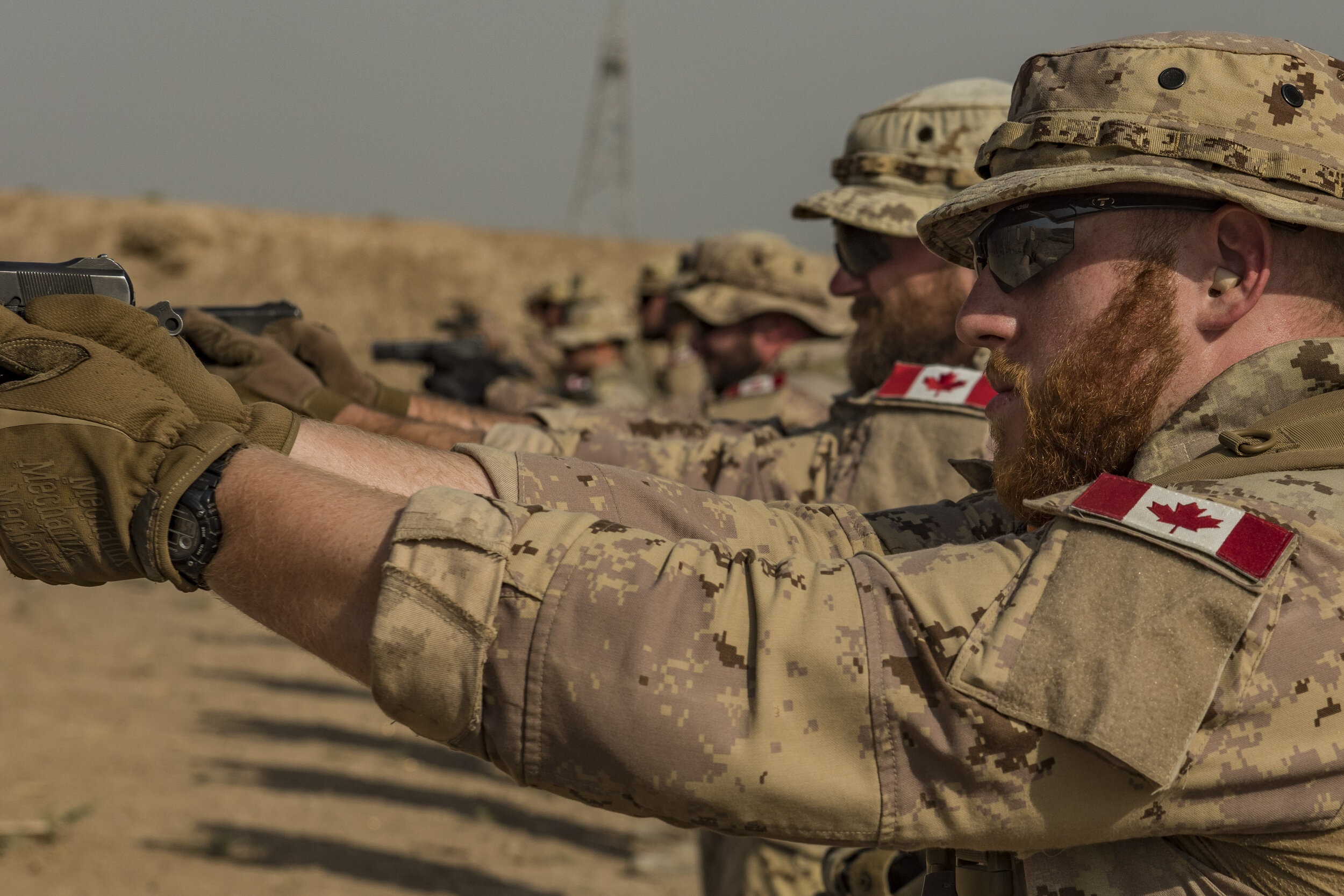
ON TARGET: Remembrance Day Ceremonies Even More Solemn

Beechwood Cemetery, Remembrance Day Ceremony

Photo Credit: DND: Private Jonathan King

By Scott Taylor

This year’s Remembrance Day ceremonies took on a slightly more somber tone than in years past. It is always a sorrowful occasion, particularly for veterans and their families who reflect upon those loved ones who fell in the service of Canada.

However, with all the martial pomp and ceremony surrounding these ceremonies they were also unwittingly a glorification of war itself.

In the three major wars fought in the previous century, Canadian soldiers had; helped the British empire defeat the Kaiser in 1918, assisted the allies in defeating Hitler’s Nazis and the Japanese in 1945, and fought as part of a U.N coalition that was able to battle the North Korean communists to a standstill in 1953.

We essentially had a record of two wins and a tie and in each of these conflicts our soldiers’ sacrifices had not been in vain.

One could justify the loss of those loved ones with the fact that in victory they had made the world a better place.

The same cannot be said for the conflicts in which Canada has engaged in the current century.

This past summer, Canadian veterans of the war in Afghanistan had to watch with stunned impotence as the Taliban roared back to power in Afghanistan virtually unopposed by the U.S. trained Afghan government forces.

From 2002 until 2014 nearly 40,000 Canadian soldiers were committed to propping up the U.S. installed puppet Afghan government in Kabul.

During that 12-year span of commitment, 158 Canadians were killed, 2,000 were wounded or suffered physical injuries and thousands more suffer the invisible wounds of PTSD.

From a financial perspective it is estimated that Canada will eventually spend $21 billion on that war when one factors in the long-term health care costs for our wounded.

As long as the U.S. and remaining NATO allies continued to prop up the Afghan regime and fund the Afghan security forces, our veterans could hold out hope that their sacrifice could still yield a positive result.

Those hopes were dashed when the Taliban seized control of Afghanistan several months ago and we all witnessed those horrific scenes of terrified Afghans clinging to American air force transport planes in their attempt to flee.

The U.S., NATO and by extension Canada lost the war in Afghanistan. With an expenditure of $2 trillion (U.S) over a 20-year occupation, the most powerful military alliance in the world was defeated by a ragtag bunch of illiterate Islamic extremists.

That is a tough pill for the rah-rah Colonel Blimps who refused to recognize there would never be a victory in Afghanistan and as such continued to take to the airwaves to help convince the Canadian public that we were one new schoolhouse short of success.

Unlike the wars in the previous century where Canadian troops were viewed as defenders and liberators, in Afghanistan we were seen by the local population as unwelcome foreign occupiers.

Thus, this year’s Remembrance ceremonies mark the first time that Canadians have had to mourn fallen soldiers who died in the service of Canada, but because NATO lost the war and the Taliban prevailed, those lives were lost in vain.

Canada has been a direct participant in three other NATO-led conflicts since 1999. That year the RCAF participated in the 78- day bombing campaign against Serbia and Kosovo. Mercifully, there were no casualties among Canadians.

In 2011 Canada was at the forefront of a NATO-led, 10-month campaign to oust Libyan President Muammar Gadaffi. Canada suffered no casualties once again.

After Daesh (aka ISIS or ISIL) swept into Iraq in 2014, Canada deployed fighter jets, trainers and Special Forces to Iraq to counter the threat.

Following the defeat of Daesh in 2017 Canadian troops remain deployed in the region as part of a NATO training initiative. To date Canada has suffered only one fatality and three wounded in a 2015 friendly fire incident in Northern Iraq.

While reflecting on the sacrifice of our soldiers we should also examine closely the results of our military actions.

Kosovo declared independence in 2008 but remains to date a failed state. President Hashim Thaci recently had to step down to face charges of war crimes, including murder and human organ trafficking, which he is alleged to have committed while NATO supported his separatists with an air force which included the RCAF.

Libya descended into violent anarchy as soon as NATO helped the rebels achieve victory. In the lawless violent vacuum created by NATO airpower, Libya is now a failed state.

Under the mandate of Operation Impact, Canada remains committed in Iraq through March 2022.

No one can even define what ‘victory’ will look like in Iraq, but it will not be delivered at NATO gunpoint.

Instead of simply mourning fallen soldiers Canada needs to closer examine how we employ our still serving soldiers.

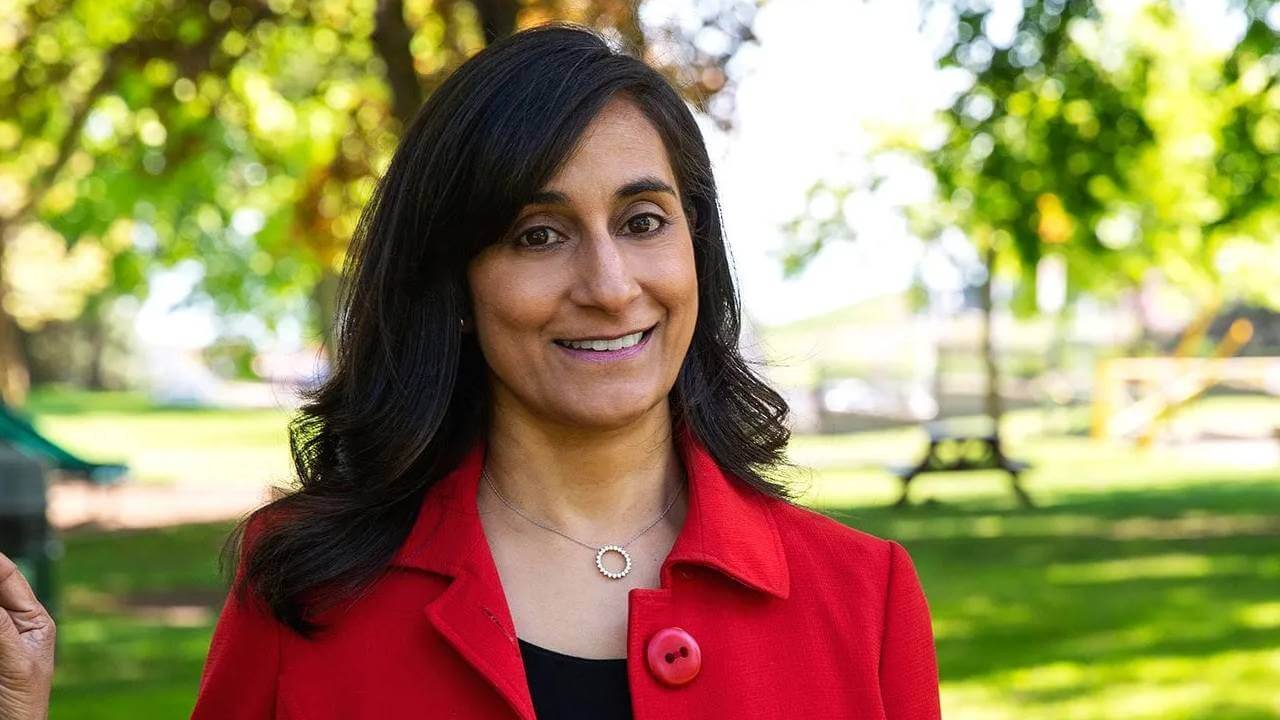
ON TARGET: Libya Recognition Is Absurd

By Scott Taylor

Last week, seemingly in advance of Remembrance Day commemorations, the Embassy of Canada in Egypt tweeted a Veterans Affairs Canada message, which depicted Canadian sailors aboard HMCS Charlottetown during the war in Libya.

The Embassy’s tweet read “10 years ago [Canadian flag] was one of the first countries to respond to the Libyan people’s demand for democracy. CAF members served in the air and sea, helping to enforce a no-fly zone, evacuate people and patrolling the waters.”

To anyone completely unaware of the current state of affairs in Libya this message would appear to be a salute to the Canadian Armed Forces for a job well done.

To correct this false narrative we need to first look at the fact that it was sent by our embassy in Egypt, not Libya.

The reason for that is that Canada does not staff the embassy in Tripoli because after the fall of Libyan leader Muammar Gaddafi in October 2011, violent anarchy has continued unabated throughout Libya.

There are two main factions, each claiming to be the legitimate government of Libya, propped up by hundreds of warlords with their private militias.

There may have indeed been Libyan voices calling for democracy and Canada may have thought that was the goal when we joined in the fray early on. However by the time the rag-tag assortment of rebels defeated the Gadaffi loyalists it was clear that a Liberal democracy was not going to be the result.

We promised democracy but delivered anarchy to the Libyans.

Contrary to the Embassy’s tweet, Canadian military personnel did not simply enforce a no-fly zone over Libya.

The original U.N mandate was to have an allied NATO led air force authorized to prevent Gadaffi from using his warplanes to inflict revenge bombings on the rebels. Instead the very NATO force that was to prevent Libyans from being bombed then proceeded to bomb those Libyans who were loyal to Gadaffi.

Led by Canadian Lieutenant-General Charles Bouchard, the NATO forces bombed military targets, vital infrastructure and despite their best intentions, inflicted casualties on the very civilians that they were to protect.

Once Gadaffi was brutally executed by jubilant rebels, it was clearly evident that the thugs to whom NATO assisted to win victory were not of the rules based international order.

Predictably chaos ensured, with these heavily armed civilians empowered and unwilling to surrender that power to a civilian authority. Between the unsecured arsenal abandoned by the defeated Gadaffi loyalists and the vast amount of weapons supplied by NATO forces to the rebels, post Gadaffi Libya was awash with weapons and munitions.

This directly led to the Tuareg and al Qaeda of the Islamic Maghreb seizing territory in neighbouring Mali. That conflict continues to the present despite the presence of large French and U.N peacekeeping contingent.

Libya also was the staging area for large number of foreign fighters making their way to fight against the forces of Syrian President Bashar al-Assad.

It was a two way street however as Daesh (aka ISIS or ISIL) soon found their way back into Libya.

What was a thriving north African, oil-exporting nation just ten years ago is now a failed state, gripped by violent anarchy and lawlessness. One of the darkest elements to this present power-vacuum in Libya are the slave traders who prey upon those migrants trying to make their way to a better life in Europe.

Had Canada contributed to actually bringing democracy, stability and prosperity to Libya one could point to the collateral damage suffered by the population during Gadaffi’s ouster as having to break some eggs in order to make an omelet. Instead, we failed to deliver on democracy and in doing so removed the pre-existing stability and prosperity from the Libyan people. Essentially we broke a lot of eggs and left them to rot.

This is no way the fault of the members of the CAF who participated in this war. They did what their government ordered them to do. It is the government of Canada along with our willing allies who failed to deliver in Libya.

To have the Canadian embassy salute the anniversary of this catastrophe is disturbing in the extreme.

ON TARGET: Trudeau’s Choice of New Defence Minister Sends Message

By Scott Taylor

In naming his new cabinet, Prime Minister Trudeau has finally relieved long serving Minister of National Defence Harjit Sajjan of his embattled portfolio.

Since February the Canadian Armed Forces senior command have been immersed in a still raging string of military sexual misconduct scandals. Despite the fact that Sajjan had announced yet another external review of the military’s sexualized culture last April, critics felt that his handling of this crisis was weak and ineffective.

Taking the helm from Sajjan will be Anita Anand.

She is new to federal politics as she was first elected to parliament in 2019. However, she is seen as a rising star within the Liberal party and was gained kudos for her handling of the COVID-19 vaccination acquisition as Canada’s procurement minister.

The fact that Anand is a woman, potentially sends out the signal to CAF survivors and victims of sexual misconduct that the government is finally serious about tackling the current crisis.

At her swearing in ceremony, Anand told reporters she plans to bring herself up to speed on her new department as quickly as possible.

Here’s a piece of free advice for the new Minister: What you are inheriting from Sajjan is not a mere dumpster fire, this is a towering inferno of sexual misconduct and it is burning from the top down. There were nine top military commanders involved in some level of a sexual misconduct scandal.

Without stability and continuity among the senior CAF leadership, Anand will have her hands full just trying to build a solid foundation from which to staff any sort of cultural reform within the ranks.

At present, the CAF is facing both a recruitment and a retention problem among their membership due to the almost continuous stream of sexual misconduct revelations that have been brought to the forefront by the media.

Many of the allegations being brought against the senior commanders are of a historic nature, dating back ten, twenty and in a couple of cases, thirty years, when these officers were young men.

In no way does the passage of time diminish or negate these allegations.

However, when one turns back the hands of time and looks at the military culture that existed three decades ago, it is actually encouraging to realize how far the CAF has evolved in just a short period of time.

Up until 1987 women were not allowed to serve in combat units and they were not allowed to sail on warships.

We currently have Lt-Gen Frances Allen serving as Canada’s first female Vice Chief of Defence Staff. There is also Lt-Gen Jennie Carignan serving as Chief of Professional Conduct and Culture.

Carignan not only served as a combat officer, she most recently commanded Canada’s battle group in Iraq.

At the Royal Military College, the new commandant is Commodore Josee Kurtz, the institution’s first ever female to head the college. Her last operational post was as Commodore of the NATO Standing Squadron serving in the Mediterranean.

Up until 1992 when a court challenge overturned the CAF policy, it wa illegal to be gay and serve in uniform.

The military had no choice but to accept the ruling, which overturned their discriminatory practices. However it was not until 2017 that the federal government issued a formal apology to all of those who had been purged from the ranks as a result of their sexual orientation.

Service members are now authorized to wear their uniforms in pride parades.

Anand should be encouraged by the fact the military has belatedly and slowly changed over the decades.

But that it can change should give her hope of possible success.

ON TARGET: Military Sexual Misconduct: The Beat Goes on…and on

By Scott Taylor

On February 7, 1981 a Soviet Navy Tupolev-104 passenger plane crashed immediately after taking off from the Pushkin airbase near St. Petersburg. All 50 passengers aboard were killed including the Commander of the Soviet Pacific fleet and 27 other top ranking naval officers.

This decapitation of the entire senior leadership of the Pacific Fleet was first suspected to be an act of war precipitating an actual U.S. attack. Once a thorough investigation of the wreckage had been conducted the Soviet authorities were able to conclude that the crash was in fact caused by the plane being grossly overloaded.

These top officers had used their time in St. Petersburg to stock up on luxury items that were at that time unavailable in the far east of the Soviet Union. They then used their rank to over-rule the aircraft’s pilot into attempting a takeoff with an unsafe load.

In other words, the Soviet Pacific fleet decapitated themselves.

Those of us who closely monitor the activities of the Canadian Armed Forces have been watching a similar circumstance unfold amongst our military’s senior leadership. And, like those Soviet commanders, the damage being done is self-inflicted.

At time of writing Canada has had a total of nine of this country’s top military officers under investigation; on a paid leave while suspended, retired early, or a combination of the above, because of allegations of sexual misconduct.

There are numerous other stories of more junior commanders facing similar circumstances for the same reason, but there is not enough space to list them all.

So to recap just the top nine and the rapid succession in which they entered the public spotlight for their alleged sexual misconduct, here goes.

First up it was just retired Chief of Defence Staff General Jonathan Vance. He had barely stepped aside as CDS, when Global National News alleged he had had a 20-year extramarital affair with a subordinate, and that he had sent another subordinate an email invitation in 2012 to accompany him to a clothing optional beach resort.

Following a military investigation Vance now faces a single count of obstruction for allegedly asking the subordinate to lie to investigators about the affair.

Twenty two days after the Vance story broke, it was announced that his successor, Admiral Art McDonald was stepping aside to allow a sexual misconduct claim against him to be investigated. We now know that McDonald’s alleged misconduct occurred during a drunken party aboard a frigate in 2010.

It is alleged that McDonald pushed the face of another male officer into a female sailor’s breasts after one of her blouse buttons came loose.

The military investigators found insufficient evidence to lay a charge. McDonald has recently claimed he has been ‘exonerated’ and wants his job back. The military police have subsequently said that not laying a charge is not an exoneration; they simply didn’t have enough credible witnesses who were sober enough to testify with clarity.

Odds are that McDonald ain’t coming back. 

Shortly after McDonald was placed under investigation, it was learned that air force Lt-Gen Chris Coates’ extra-marital affair while at NORAD precluded him from a post at NATO HQ. He retired early.

Then we had allegations that Chief of Military Personnel (CMP), Vice Admiral Haydn Edmundson had committed sexual assault against a shipmate in 1991. That allegation is still under investigation.

Maj-Gen Dany Fortin was the face of the federal vaccine roll-out until he was relieved of that post accused of a 1989 incident while he was a cadet at military college. He has since been charged in civilian court on one count of sexual assault.

Maj-Gen Pete Dawe was sent on paid leave on May 2 due to the public backlash over him writing a character reference for an officer who was convicted of sexually assaulting a fellow officer’s wife.

Dawe was quietly brought back to active duty until the media reported his new job was to help on reforms to the way the military handles sexual misconduct.  He is back on paid leave.

Vice Chief of Defence staff, Lt.-Gen. Mike Rouleau took early retirement after it was learned he had the poor judgment to play golf with Gen. Vance while the former CDS was under investigation.

The most recent two suspensions came in rapid succession when it was revealed that Lt-Gen Trevor Cadieu and Lt-Gen Steve Whelan are both facing investigations into alleged sexual misconducts. Cadieu was to take command of the Canadian Army and Whelan had replaced the ousted Edmundson as the CMP.

Like the Soviets in 1981, it must seem to those at National Defence Headquarters that our military leadership is under attack. It is, but like the Soviet plane crash, this from within.

ON TARGET: Time for Canada to Quit Iraq War

5.jpg

By Scott Taylor

On Sunday October 10, Iraqi citizens went to the polls to elect a new parliament. Given that this coincided with Thanksgiving, it is no surprise that this story garnered barely a mention in the Canadian media.

This was unfortunate as this election result should concern Canadian citizens for the simple reason that the military is authorized to have up to 850 personnel deployed in the region on a mission known as Operation Impact.

As well as supporting security operations in Lebanon and Jordan, the Liberal government’s objective for Op Impact states that it is “in support of the Global Coalition and NATO [to] improve Iraqi security forces’ capabilities.” These efforts help Iraq to achieve long term success in keeping its territory and people secure.”

That sounds like a noble gesture, but the long and the short of it is that we are training Iraqi troops to prop up the government therefore we Canadians should probably pay attention to who is leading that government.

To date, Iraq’s attempt to establish a functioning democracy after the U.S invaded and toppled dictator Saddam Hussein in 2003, cannot be described as a resounding success.

There have been five parliamentary elections staged since the American occupation in 2003. The 2018 election was a garbled farce. When the Iraqi officials could not determine a verifiable result, a full recount was ordered. But before that could happen the central warehouse containing the ballots was burned to the ground.

The result has been an inefficient Iraqi government in the interim, rife with corruption and unable to deliver basic utilities to an ever more impatient populace. In the months leading up to the latest parliamentary election, there have been a number of violent demonstrations across Iraq calling for an end to the corruption.

With the early result tabulated, it appears that the big winner of the election – taking 73 of 329 seats – is a chap named Muqtada al-Sadr.

If that name sounds vaguely familiar it is because during the U.S. occupation he was listed as America’s “public enemy number one.”

He is a Shiite fundamentalist cleric who doubled as an anti-American warlord. When his fanatical followers rose up against the U.S. forces in 2004 al-Sadr taunted the Americans with billboards adorned with his giant portrait and the slogan – in English – “All men belong to me.”

So he is just a little crazy.

His militia are known as Sadrists and they were mobilized in 2014 when Daesh (aka ISIS or ISIL) burst into Iraq from Syria and the U.S. trained Iraqi government army simply melted away.

As part of that Global coalition deployed to counter Daesh, Canadian troops were in fact in a loose alliance with these Sadrists.

Following the successful defeat of Daesh in the City of Mosul in 2017. Shiite militiamen, including Sadrists were accused of war crimes. Canadian military trainers were subsequently shown videos of these crimes being committed.

In an official DND document it was noted that “these acts included violence pertaining to rape, torture and execution.” The report further detailed that the videos included “raping a woman to death; the torture and execution of a line of bound prisoners whereby they were beaten to death by what appeared to be a rebar steel bar; and the execution of a man by hanging him from the barrel of a [main battle tank]”

The Canadian instructors raised this issue with their superiors in theatre because the men committing these crimes were the very Iraqi recruits whom they were training. The immediate response from the Canadian chain of command was to carry on with the training and to stop watching the videos.

Now that it appears Muqtada al-Sadr will form the next coalition to rule Iraq. It would seem that, like Afghanistan, the U.S. effort in Iraq has produced a far from desirable result.

As a fierce nationalist, Sadr has repeatedly stated that he wants foreign troops off Iraqi soil.

Rather than keep flogging a dead horse and maintaining Operation Impact to its next parliament-approved deadline of March 2022, Canada should get our troops out of there now. It was a mission that never had a clear objective once Daesh was defeated in 2018. Like Afghanistan, there will be no victory parade when the war in Iraq finally peters out.

We did our bit. Now bring our troops home. The Sadrists can prop up their own leader without our assistance.

ON TARGET: Another DND Self Inflicted PR Wound

Screen Shot 2021-10-13 at 12.19.06 PM.png

By Scott Taylor

Last week Ottawa Citizen reporter David Pugliese broke the story that Maj.-Gen. Peter Dawe had been quietly assigned a new post and brought back to work. Dawe had earlier fallen from grace when it was revealed earlier this year that in 2017 he had written a positive character reference for a fellow officer after that individual had been found guilty on various criminal charges, not the least of which being sexual assault.
The victim of the sexual assault was the wife of a fellow officer in the Princess Patricia’s Canadian Light Infantry. She was also a former soldier herself.

Partly on the strength of Dawe's letter and a separate character reference from the PPCLI association, the judge in the case placed the convicted perpetrator – Maj. Jon Hamilton on probation rather than issuing him a jail sentence.
Unfortunately for Hamilton he was later convicted of another, unrelated sexual assault, and the judge in that trial put him behind bars on a three-year sentence.
The story that Dawe had written a letter of support for a sex offender was made worse by the fact that he had not expressed empathy for the victim and he had ignored the expressed wish of her husband to not support Hamilton in this instance.

Recently Dawe was quietly returned to a job at National Defence headquarters. His new position was not to be just any old job, but rather he was to work in a role involving responses to the various reviews looking into sexual misconduct in the Canadian Armed Forces (CAF) as well as the much maligned military justice system.

There was no fanfare of official announcement for Dawe's new assignment, but obviously his selection for this job did not sit well with fellow officers. Hence one (or more) informed Pugliese who was subsequently able to confirm the details. Again, the news of this sparked a backlash from sexual misconduct survivor groups, political opposition parties and anyone who understands common sense and bad optics.
The backlash was so swift and severe that Acting Chief of the Defence Staff, Gen. Wayne Eyre almost immediately rescinded the post. It would have been Eyre who approved Dawe of being back and given him that job, but it was Vice Chief of Defence Staff, Lt.-Gen. Frances Allen who made the formal announcement that Dawe would not be immediately going into that new position. Perhaps the military felt that putting a female face on the change of Dawe's appointment would make it look like they are finally "getting it".

Unfortunately, the underhanded way in which they tried to quietly resurrected Dawe in this new role appears to prove Prime Minister Justin Trudeau to be correct in his assessment. "It is obvious that despite the work the military has done, despite the work that we have done, the military still doesn't get that survivors need to be at the centre, and the unique priority of everything in regards to sexual misconduct and harassment in the military," said Trudeau to reporters, adding "this shows they simply still don’t get it."

Regrettably, Trudeau blanket statement should have been more targeted at the very senior command level of the CAF.

The fact that the news of Dawe's appointment generated enough internal reaction that it was subsequently leaked to the Ottawa Citizen, means that many of the rank and file do in fact "get it".

Gen. Eyre and the senior command must have known there was potential for such a backlash as the entire Canadian military has been engulfed in a steady stream of sexual misconduct scandals for the past eight months. That was why they kept it on the down low. For his part, Maj.-Gen. Dawe - who is by all accounts an outstanding combat soldier - should have known better than to accept a job involving the review of military sexual misconduct. This was yet another entirely avoidable black eye for the CAF senior command.


ON TARGET: DND Information Wars: A Lack of Accountability

13.png

By Scott Taylor

Last week the Canadian Armed Forces were pummeled with yet another self-inflicted wound to their public trust. The Ottawa Citizen reported the stunning news that certain military leaders viewed the COVID-19 pandemic as a welcome opportunity to employ propaganda techniques against the Canadian public.

To be clear, this initiative was not directed by the Liberal government, and when the country’s top general got wind of the scheme he shut it down post haste.

In fact, not only did then Chief of Defence staff, General Jonathan Vance terminate the operation, he also later brought in retired Maj.-Gen. Daniel Gosselin to investigate just how this plan was hatched in the first place.

It was the findings in Gosselin’s report which provided the genesis for the latest Citizen story.

This fittingly brings us full circle as it was Citizen reporter David Pugliese who first broke the story in the spring of 2020.

As it gets a bit confusing and involves a number of separate yet related issues, I will do my best to recap the sequence of events.

In April 2020, almost as soon as it was being implemented, Pugliese reported that the military’s Canadian Joint Operation’s Command (CJOC) planned to employ propaganda techniques on the Canadian public as part of Operation Laser, the CAF’s response to the pandemic.

It was also reported that a separate initiative, this one involving officers working under the direction of military intelligence, was put in place to cull information from social media accounts in Ontario. This initiative also included military personnel compiling data about Black Lives Matter leaders and their gatherings.

The Citizen stories sparked public outrage and General Vance ordered the CJOC scheme shut down. The data mining initiative was allowed to continue. For his part, Minister of National Defence Harjit Sajjan promised his fellow parliamentarians that these highly questionable activities by Canada’s military had been cancelled.

The CBC later reported that in fact some of those activities had continued unabated until Vance sent out written orders.

That prompted the review by Gosselin, which although completed in December 2020, is only now being released under the Access to Information Act.

What Gosselin’s findings now reveal is that this was not simply the wayward ideology of a rogue military propaganda specialist. It is clear from his report that Gosselin was convinced this represented the collective mindset of the CJOC senior commanders who viewed the pandemic as a “unique opportunity” to test out their theories.

Around the same time that the Citizen first began reporting these anomalies it was also revealed that the Canadian military had already spent more than $1 million to train public affairs officers on behavior modification techniques similar to those used by the parent firm of Cambridge Analytics, a company which was implicated in 2016 data – mining scandal aimed at boosting Donald Trump’s U.S. Presidential campaign.

That training initiative was the brainchild of Brig.-Gen. Jay Janzen, who was at the time the senior officer in the Public Affairs Branch.

The military leadership also formally shut down another one of Janzen’s initiatives, this one a controversial plan which news reports pointed out would have allowed military public affairs officers to use propaganda to change attitudes and behaviors of Canadians as well as collect and analyze information from the public’s social media accounts.

When the news of Canada’s military using military psyops on their own citizens became public, it did not take long to realize how badly that plan backfired.

A story in Vice World News last week reported that “The Canadian Armed Forces attempt to combat misinformation only ended up giving conspiracy theorists another way to spread it.”

Apparently QAnon forums, Covid-conspiracy Telegram groups and something called 4chan are claiming that the CAF’s plan to modify behavior among the population is further damning proof of the government’s great COVID-19 conspiracy.

Despite the fact that Canada’s senior brass shut these initiatives down and ordered investigations into their origins, no one has been sanctioned for these actions.

Even now that it is increasingly clear how this has eroded public trust in the military institution, not one officer has been held to account.

For his part, Janzen has since retired and taken a senior civilian position in communications with NATO.

Just wait until the conspiracy theorists dig their teeth into the fact that Janzen is now in a position to influence the communications strategy for all 30 nation states within the alliance.

That cannot be very reassuring.

ON TARGET: National Day for Truth and Reconciliation: Time for Personal Reflection

By Scott Taylor

The current sense of national shame began on May 28 with the media reports of some 200 unmarked graves discovered on the grounds of the former Kamloops Indian Residential School in British Columbia. The majority of those bodies are believed to be those of Indigenous students attending the facility. 

Then in rapid succession came the reported findings of more unmarked graves at four other former residential schools; Brandon, Manitoba, Marieval, Saskatchewan, Cranbrook, BC and Kuper Island, BC. The largest single discovery was at Marieval with an estimated 751 graves, putting the collective total at just under 1400. There are presently 21 investigations underway in search of additional unmarked graves at former residential schools. It is estimated the number could climb to 4100 bodies. 

The implementation of the residential school system dates back to its authorization by then Prime Minister Sir John A. Macdonald on July 1, 1883.

Macdonald's stated goal was to isolate Indigenous children from their families and to cut all ties they had to their culture. In hindsight this practice has been widely denounced as a form of cultural genocide. These graveyard discoveries suddenly put an entirely new spin on things, and Canadians were shocked to discover this sad chapter in our nation’s history. 

The public outpouring of emotion was immediate with demonstrators wearing orange and carrying signs proclaiming ‘All lives matter’. In many towns and cities across Canada, statues of Macdonald were either vandalized or toppled. As early as June, the Trudeau Liberals ordered flags to be flown at half-mast in recognition of this historical tragedy. To date they remain there as no one quite knows what would be a suitable marker signifying that we have paid proper respect to the victims. Some have suggested that the new September 30, National Day for Truth and Reconciliation federal statutory holiday would be that occasion. 

For me these revelations of systemic Indigenous abuse actually caused me for the first time to further research my own familial roots. Growing up in Toronto I knew that my maternal grandmother Pauline was a Mohawk born on the Six Nation of the Grand Reserve near Brantford, Ontario.

Our family also knew that Pauline had left the reserve in 1930 at the age of 16, soon after married my grandfather –a Scotsman, and by doing so she cut all ties with her Mohawk roots. By marrying a ’non-Indian’ she legally lost her status as an ‘Indian’.

Given the current attention on this subject, I now know that under the terms of the 1885 Indian Act it would have been mandatory for Pauline to attend the Mohawk Residential Institute at Brantford until the age of 16.

This particular school was notorious for its abuse of students. The food quality was substandard and the school was nicknamed the ‘Mush Hole’ by attendees. Students who ‘escaped’ were placed in a purpose-built prison in the school’s basement. Described as essentially a dark closet, students would kept in there for days at a time. Shock treatment for the infraction of bed wetting and the close cropped hair for males and females led to the students being referred to as ‘Mush Hole baldies’. 

In 1985 under Canada’s new Charter of Rights and Freedoms, the previous law was changed, allowing those Indigenous women married to ‘non-Indians’ to reclaim their status. However by that juncture Pauline was 71 years old and had been cut off from the reserve for 55 years. As a result, not only myself, but my sister and our cousins were never connected to our Indigenous relatives. That is going to change. Through my maternal aunts and uncles I am starting to assemble the genesis of a family tree and I plan to reach out to Pauline’s extended family on this first ever National Day for Truth and Reconciliation holiday.

ON TARGET: Is the new AUKUS Alliance a Snub to Canada?

12.jpg

By Scott Taylor

At the United Nation’s general assembly in New York, U.S. President Joe Biden, Australian Prime Minister Scott Morrison, and U.K Prime Minister Boris Johnson used the occasion to announce a new security pact between the three countries.

Under the terms of the new agreement, the U.S. and U.K will agree to furnish Australia with advanced nuclear propulsion technology for their proposed submarine fleet.

In announcing the deal, Biden made the claim that “The United States has no closer or more reliable ally than Australia.”

The fact that even in making that statement Biden could not remember Morrison’s name, would seem to take the gravitas out of this ‘best buddy’ moniker.

Nevertheless, a single quip of hollow praise was enough to set off squeals of protests by Canadian defence cheerleaders.

With their logic it is somehow proof of the Trudeau Liberal’s neglect of our military that we are being left out of this exclusive new military alliance.

One of talking points used by Biden, Morrison and Johnson was that this new agreement would allow Australia to bolster the collective counter balance to China’s growing military threat in the Pacific.

Not mentioned by these three amigos was the fact that Australia already had a contract with France to supply them with nuclear propelled submarines, valued at an estimated $66 billion.

This little item was not lost on the French government-owned shipbuilder the Naval Group, who have already demanded massive cancellation costs from the Australians.

This was not an alliance formed to thwart China. It was simply a creation of convenience aimed at cutting France’s grass on a major military procurement project.

As Trudeau pointed out to reporters who questioned him regarding our exclusion from this new club, Canada is not in the process of acquiring nuclear-powered submarines.

As for ramping up our collective defence forces to counter China’s burgeoning military muscle, Canada is in fact already keeping pace.

China and Canada both spend approximately 1.3% of their respective GDP’s on defence spending.

As such both countries would be considered ‘laggards’ by former U.S. President Donald Trump for failing to meet the NATO objective of 2% GDP on defence.

Speaking of NATO, if the U.S. and U.K can undermine NATO ally France and create their own mini-alliance with Australia, maybe it is time for Canada to rethink our own membership in NATO?

Canada was an original member of the North Atlantic Treaty Organization, which was formed in 1949 to counter the post WW2 threat of Soviet Union expansion in Europe.

In response to the threat of NATO, the Soviet Union formed its own alliance called the Warsaw Pact.

Throughout the Cold War the threated seemed real, and I’m proud to wear my NATO medal for my military service in West Germany during the 1980’s.

However, by 1991, the Soviet Union was dissolved and the former Warsaw Pact members began clamoring for admission into NATO.

At the end of the Cold War there were 16 members of NATO. Since the collapse of the entity they were collectively bound to defend against, that alliance now sits at 30 members.

On the flip side, what was once a combined 15 Soviet Socialist Republics and seven Warsaw Pact members, is now the solitary Russian Federation.

Of course, without the threat of a Soviet invasion, NATO has adopted a far more aggressive mandate than a simple pledge of collective defence by member states.

In 1999, NATO waged a 78-day air war against Yugoslavia, took over the occupation of Afghanistan in 2002, bombed Libya for 10 months in 2011 and entered Iraq to combat Daesh in 2014.

Of those four at bats, NATO has yet to squarely hit the ball out of the park.

Kosovo declared its independence in 2008, but remains unrecognized by European union and the U.N. It remains a failed state in the center of Europe.

Afghanistan just recently fell to the Taliban after NATO’s 20-year failed occupation. Libya has been gripped by violent anarchy since the NATO bombing toppled President Gadhafi in October 2011.

As for Iraq, I’ll predict right now that ain’t gonna end well either.

I think it’s safe to say that NATO is fully capable of losing foreign adventures without Canada’s ‘laggard’ contribution. 

ON TARGET: Canada Is as Bad at Winning Wars as we are at Losing Wars

Screen Shot 2021-09-20 at 1.33.26 PM.png

By Scott Taylor

With the Taliban firmly back in control in Afghanistan, many Canadian veterans of that war are conflicted in their emotions. They question the sacrifice of those 158 comrades who made the ultimate sacrifice, the two thousand fellow veterans who bear the scars of battle injuries and the untold legion of those soldiers suffering from the invisible wounds of PTSD.

The embarrassing withdrawal of U.S. military personnel from Kabul, and the complete evaporation of the U.S. armed and equipped Afghan security forces has eliminated any doubt about the war’s outcome.

The U.S. led NATO intervention which lasted twenty years and costing over $2 trillion has ended in bitter defeat.

The world’s most sophisticated and technologically advanced military alliance was bested by a largely illiterate rabble of poorly armed zealots. One of the most difficult pills for our veterans to swallow is the fact that the Taliban and other Afghan insurgents never won a single set piece battle against NATO troops.

It was instead just a relentless series of ambushes, suicide attacks and improvised explosive devices that eroded NATO’s will to extend their occupation in perpetuity.

Canada can infact take some solace in the fact that our government ‘cut and ran’ from this conflict long before its humbling conclusion.

Canada’s training mission in Afghanistan was wrapped up in the early spring of 2014, but the main combat mission in Kandahar was aborted in late 2011.

There were a number of hawkish pundits and Colonel Blimp tub-thumpers who chastised the Harper Conservatives for bringing the troops home early.

However, none of those soldiers who served in theatre held the notion that there would one day be a glorious victory parade after peace spontaneously broke out across Afghanistan.

When the last of our soldiers were safely back on Canadian soil, the military staged a “day of Honour” on Parliament Hill to commemorate those who had served in Afghanistan. The war we had walked away from was still raging and everyone knew we didn’t win anything.

At that juncture the die hard war mongers claimed that it was too soon for us to assess whether or not our expenditure of blood and treasure was worth the investment.

Now that the Taliban have clearly won the war, that answer is a resounding ‘no’.

What is interesting is that while we are still hand wringing and lamenting Canada’s contribution to a lost cause which we quit 10 years ago, almost no one mentions the war that we won that same year.

From March to October 2011, the Canadian military spearheaded a NATO led allied intervention in Libya. Canadian Lt-Gen Charlie Bouchard was the commander of the overall NATO mission, the RCN deployed HMCS Charlottetown, the RCAF flew bombing missions as well as psychological warfare operations and the Canadian Special Operations Regiment (CSOR) assisted the Libyan rebels.

After the NATO assisted Libyan rebels toppled and executed President Moammar Gadhaffi the Harper government proudly staged a patriotic victory parade, complete with an RCAF flypast on Parliament Hill on November 24 2011.

It should be noted that of the seventeen allied countries that contributed military muscle to Bouchard’s NATO effort in Libya, only Canada trumpeted Gadhaffi’s defeated with a martial parade.

There is a good reason why the Libya war registers barely a footnote in Canada’s military history. As a feat of arms, NATO defeating Libya was like a prize fighter crushing a toddler.

Secondly, despite the fact that Canada declared ‘victory’ the civil war in Libya never ended. With the death of Gadhaffi, Libya descended into anarchy with hundreds of warlords carrying out personal fiefdoms. To this day, Libya remains gripped in a multi-factional, bloody internal conflict.

So to revisit the war that Canada ‘won’ would mean examining the aftermath of our involvement in a foreign war.

It turns out we were just as bad at winning in Libya as we were at losing in Afghanistan.

ON TARGET: Taliban Not Living Up to Their Terrifying Hype

1.jpeg

By Scott Taylor

Last week, the former Hamid Karzai International Airport was back in business under the new moniker of Kabul International Airport (aka KIA). The first flight to lift off from KIA was a Qatar Airlines charter carrying an estimated 200 foreign nationals including a number of Canadians.

Apparently the airport is being managed by the same Afghanistan Civil Aviation authority which operated the facility prior to the Taliban seizing power last month. Two Afghan airlines – Kam Air and Ariana Afghan Airlines have announced plans to resume flying regular routes out of Kabul in the coming days.

This anti-climatic, virtually bloodless return to near normalcy is almost as shocking as the Taliban’s lightning overthrow of President Ashraf Ghani’s regime.

When the Taliban-of-old captured Kabul in 1996, they hanged former opponents from traffic control towers in the central square.

Fear of such bloody reprisals led to those scenes of desperation during the U.S. led allied airlift out of Kabul prior to Aug. 31.

Most analysts believed that when the last U.S. plane lifted off the runway that the revenge bloodletting would begin.

For Canadian veterans of the war in Afghanistan, the fear was that those Afghans who had supported our mission such as translators and support staff would be at risk of Taliban vengeance.

Throughout the summer appeals by veteran’s groups rose to a crescendo as the Taliban rapidly captured town after town in quick succession.

Admittedly, this was not the Canadian government’s finest moment. Global Affairs Canada agreed to restart an earlier program to evacuate Afghans and their families who would be at risk.

However, with the Taliban advancing on the Afghan capital virtually unopposed throughout July, Canada’s ambassador returned to Canada on stress leave.

With the Taliban at the gates of Kabul, the decision was made to repatriate the rest of the embassy staff, and the Canadian authorities were subsequently hard pressed to screen applicants from the safety of Ottawa.

The poor handling of this affair has led to an almost rabid response from many veterans’ groups and media pundits.

I’m not going to defend the Liberal government’s actions in this instance.  However it would be unfair not to offer up a little context.

First of all, Canada concluded it’s military training mission in Afghanistan in the spring of 2014. Our major combat mission was concluded in 2011.

At those junctures, the war mongering military pundits chastised the Conservative government of Stephen Harper for ‘cutting and running’ from a challenging war.

Their line of reasoning was that our troops would miss out on the eventual victory parade. No one, other than Afghans predicted this would end in a Taliban triumph.

My library includes over thirty book titles written by Canadians about the war in Afghanistan.

The list of authors includes generals, soldiers, doctors, historians and journalists. While they all include elements of the challenges posed by the Afghan insurgency, not one of them foretells an outcome wherein the Taliban emerge victorious.

One book, published in 2018 and authored by Afghan war veteran Major General, (ret’d) David Fraser is misleadingly entitled Operation Medusa: The furious battle that saved Afghanistan from the Taliban.

Given that the public narrative from these well placed individuals with personal Afghanistan experience all projected a sense that if not already achieved, than an ultimate victory was nigh, why would any Canadian government have made it a priority to evacuate our former Afghan employees?

No one was predicting that individuals who had last supported our combat mission more than a decade ago would be imperiled by an enemy that our top military commanders had proclaimed defeated.

By the time this crisis erupted with lightning speed, the Canadian resources necessary to handle this mess were long since withdrawn from Afghanistan.

Those veterans who have stepped up by volunteering their time and money to evacuate former interpreters are to be commended for their noble efforts.

The blame for the Canadian government’s failing to handle this crisis in a timely manner, partly rests on the shoulders of those who circulated the false notion of allied success.

We can only pray that this new incarnation of the Taliban remains a kinder, gentler version of itself and that airlifts to safety replaces vengeful bloodletting.

ON TARGET: Afghanistan: The Writing Was On The Wall

Screen Shot 2021-09-07 at 9.09.03 AM.png

By Scott Taylor

Now that the last U.S. air force plane has departed the Hamid Karzai International airport in Kabul, western analysts and pundits remain shell shocked at the Taliban’s lightning overthrow of the Afghan regime.

More accurately, military experts are wondering how the Afghan security force, with a payroll strength of 350,000 U.S.-trained personnel, and equipped with an arsenal valued at over $100 billion could simply dissolve without a fight.

U.S. President Joe Biden and the U.S. intelligence community had all banked on the Afghan government forces holding back the Taliban for six months to one year after the American troop withdrawal.

This window would have allowed the U.S. to get their people out of Afghanistan, but more importantly it would have dimmed the western media spotlight.

With western media out of the country and no U.S. soldiers involved, the ultimate fall of President Ashraf Ghani’s government would have garnered but a couple of paragraphs on page 17 of the world news section of Canadian newspapers.

Instead, Ghani and his not so loyal security forces easily read the American playbook. Knowing there was no long term future possible, Ghani did not attempt to rally his troops for one final face-saving last stand in Kabul.

Instead, Ghani proved himself to be a corrupt thief to the bitter end. He grabbed a reported $160 million and fled to the United Arab Emirates.

With Ghani gone, the Afghan security forces had no reason to continue showing up for work.

They also know the value of weapons, ammunition and armoured vehicles. They would have been foolish in the extreme to employ their vast arsenal against the Taliban in order to simply delay the inevitable.

They were never going to keep fighting and dying for an American installed corrupt puppet who fled into exile, to simply spare their former U.S. masters the embarrassment of being routed by the Taliban.

Ironically, the intact arsenal which the Taliban now find themselves in possession, is too enormous for them to absorb. There are news reports that much of the hardware the Taliban captured is being sold to Iran.

That has got to irk the brass hats at the Pentagon.

Anyone familiar with the history of Afghanistan would realize that once the last foreign soldiers has been driven from their soil, the various Afghan factions will resort to fighting each other.

This has already begun with the son of the revered former Tajik warlord Shah Massoud proclaiming to lead the anti-Taliban resistance from his stronghold in the Panjshir valley.

Bolstering Ahmad Massoud’s claim to legitimacy was the presence of Afghanistan’s self-proclaimed acting President, Amrullah Saleh. Following the last Presidential election Saleh was named Afghanistan’s first Vice-President. With Ghani in exile, Saleh professes that constitutionally that means the presidency is now in his hands.

Nevertheless, it might have been wiser for Saleh to resist the Taliban at the head of the former Afghan Army which still had the U.S. air force in support rather than organizing a handful of fighters in a remote valley.

Allying themselves with Massoud’s resistance movement are two former notorious warlords, Atta Noor and Marshal Abdul Rashid Dostum.

Noor is an ethnic Tajik, while Dostum is an Uzbek. For decades they have ruled over Mazar-i-Sharif and Sheberghan respectively, first as warlords and then under the moniker of governor as part of the U.S. installed Kabul regime.

Neither Noor or Dostum’s private militia’s resisted the Taliban in support of Ghani’s government forces.

In typical Afghan fashion, they cut a deal not to interfere until after Ghani was removed. They are now hoping to use their military muscle to negotiate with the Taliban for a share in the spoils.

For those looking to understand just how the Canadian government could have been so wrong about our involvement in Afghanistan, we need to look at the self-delusion of the key players.

In 2007, I met with Canadian Ambassador Chris Alexander in Kabul. At that juncture he chastised me for having interviewed Dostum at his stronghold in Shebirghan.

According to Alexander, I was wrong to give Dostum any sort of publicity because he was a remnant of the old warlord regime – a thing of the past.

Dostum went on to serve as Vice President in the Ghani regime, and is now back on the board as a key player in this new Taliban era.

Alexander’s inaccurate view that Dostum was a remnant of Afghanistan’s past revealed just how little the youthful ambassador grasped the complexity of the Afghan political landscape.  Alexander saw only what he wanted to see.

Unfortunately far too many Canadians put their faith in his flawed judgment. The writing was always on the wall but our senior leadership did not know how to read it.

ON TARGET: Reminder: There Are Worse Elements in Afghanistan Than the Taliban

2.jpeg

By Scott Taylor

The deadly terrorist attack at Hamid Karzai International Airport in Kabul last Thursday was yet another serious blow to American martial pride as they struggle desperately to extricate themselves from a disastrous 20-year long occupation of Afghanistan.

A combination of suicide bombers and pre-placed gunmen with automatic weapons delivered an extremely lethal blow. A total of 13 U.S. servicemembers were killed and a further 15 were wounded, marking one of the highest single day casualty tallies during the entire conflict.

For the would-be Afghan asylum seekers crowded against the airport perimeter awaiting a possible flight to safety, the toll was even higher. Some estimates put the number of dead civilians as high as 90 with another 150 suffering injuries.

As devastating as this was to the increasingly frantic U.S. airlift effort, the attack was also a blow to the fledgling Taliban regime.

Within hours of the terror attack, DAESH-K was claiming responsibility for the killing spree.

For those who are perhaps not completely familiar with all the insurgent groups in Afghanistan, DAESH-K is also known as ISIS-K and ISKP. These evil doers are an off-shoot of the DAESH aka ISIS that we first encountered in Syria and Iraq. The letter “K” stands for Khorasan Province, which actually constitutes vast swaths of Central Asia, wherein they intend to establish an Islamic caliphate.

They first appeared on the scene in Afghanistan’s eastern provinces in 2014-15 and their initial recruits were from Pakistan-based Taliban who did not think the original Taliban were extreme enough.

Their attack on the Kabul airport not only sorely undermines the Taliban’s claim to be able to control the country, it also served as a reminder that as bad as they are, there are even worse elements to deal with in Afghanistan besides the Taliban.

Ironically the U.S. intelligence community now finds itself engaging in limited cooperation with the Taliban to not only prevent further DAESH-K attacks against their withdrawal efforts, but also to facilitate any hope of enforcing punishment upon the perpetrators of last Thursday’s attack.

In the immediate aftermath of the terror strike, a visibly enraged President Joe Biden vowed to the American people that justice would be served. “To those who carried out this attack, as well as anyone who wishes America harm, know this. We will not forgive. We will not forget. We will hunt you down and make you pay. I will defend our interests and our people with every measure at my command,” stated Biden in a public address.

Those are tough words, but as the U.S. military presence in Afghanistan now consists of nothing more than a desperate rear-guard securing the soon to be renamed Hamid Karzai International Airport, Biden’s only hope of punishing the culprits will require the Taliban’s cooperation.

Most western analysts disbelieve the claims by the Taliban leadership that this new and improved regime will be a kinder and gentler version of its former self.

Many fear that despite promises of amnesty the Taliban will soon resort to revenge killings of those who had facilitated the foreign occupation.

This eventually may in fact play out in the days to come, but it is somewhat ripe for the U.S. State Department to be preaching against revenge killings.

In 2001, the U.S. invaded Afghanistan with a small number of special forces troops and heavy air support allied with anti-Taliban Warlords. The most notorious of these was Marshal Abdul Rashid Dostum.

Hollywood glorified Dostum and his American advisors in the 2018 film 12 Strong. What that movie did not reveal was that after his victory, Dostum executed approximately 2,000 of his Taliban prisoners. While that is horrific in itself, it was the fact that he killed them by simply locking them into crowded sea containers. They literally died through suffocation or starvation.

This was not an immediate death for the Taliban fighters, and the atrocity was well known among the rules-based international-order abiding U.S. military command.

Dostum was never charged with war crimes, and went on to serve pre-eminently within the Hamid Karzai regime. From September 2014 – February 2020, he was Afghanistan’s Vice President.

So yes, there are worse entities in Afghanistan than the Taliban and for the past twenty-years we helped keep them in power there.

ON TARGET: The U.S. Embarrassing Exit From Afghanistan Was Predicted By The Afghans

1.jpeg

By Scott Taylor

It has been just over a week since the Taliban shocked the world with their blitzkrieg speed overthrow of the Afghan regime. The first major shock was the fact that the Taliban accomplished their victory without having to fight any battles.

The 350,000 strong Afghan security forces, simply disappeared. No western military analyst predicted such a complete and instant collapse of a fighting force, into which the U.S. and NATO had invested two decades of training and equipping. The U.S. supplied Afghan military arsenal was valued at nearly $100 billion and included armoured vehicles, artillery and even combat aircraft. That impressive collection of weaponry and munitions is now in the hands of the Taliban.

While U.S. President Joe Biden was quick to scapegoat the Afghan army for their lack of will to fight, in all honesty no one can blame them for this defeat.

No one can ever question the courage of the average Afghan fighter. Afghanistan has shed a lot of blood over the centuries to earn itself the moniker the graveyard of empires. Courage was not the problem.

As for professionalism and combat proficiency, the Afghan army has twenty years of top-level international instruction, including that of many Canadian soldiers. Compared to their Taliban counterparts the Afghan army were by far better trained, and certainly far better equipped with modern weapons. Firepower was not the problem.

In terms of opposing numbers, estimates of the Taliban’s current strength vary greatly but they are thought to have between 30,000 to 60,000 fighters. That means that at the start of the Taliban offensive on August 5th, the Afghan army outnumbered them – on paper – by at least a six to one margin.

Owing to the widespread corruption in the ranks of the Afghan army and police, the actual number of government security forces may have been as low as 100,000 at the start of the Taliban campaign.

The reason for the discrepancy is the phenom of what he became known as the employment of ‘Ghost soldiers.’

This was not a legion of spectral warriors, but rather a term applied to the artificial inflation of the strength of Afghan military units. When soldiers died or deserted, they were kept active on the duty roster so that commanders could continue drawing pay and rations for non-existent ‘Ghost soldiers’.

This brings us to the real reason why the Afghan army proved to be so absolutely useless in the face of the Taliban.

They had no will to fight and they certainly had no will to die for the corrupt puppet government which the U.S. had established in Kabul.

With the abrupt withdrawal of the last of the U.S. combat forces on July 2, the Afghan military knew the plug had been pulled on the regime of President Ashraf Ghani.

During the peace negotiations in Doha, Qatar, the U.S. military leaders had met with the Taliban to ostensibly broker a power-sharing agreement with the Ghani government.

The problem with that scenario was that there were no representatives from the Ghani regime at those talks.

For his part, Ghani understood that he’d been cut from the team and as such his 11th hour departure to safety is understandable. Loyalty is a two-way street. In the end, he owed the U.S. nothing, ditto for the Afghan army.

Sure, they could have put up a fight and delayed the Taliban advance. Their American trainers probably thought that they would resist based purely out of martial pride and esprit de corps.

Unfortunately it is not enough to simply fight against something – in this case the Taliban, if you cannot believe in the cause you are fighting for.

For the two decades the Americans spent occupying Afghanistan they did not realize that the Afghans never considered the presence of foreign troops on their soil as a liberation.

Had we focused on developing a progressive, functioning central government, instead of arming and training a military force to prop up the most corrupt regime on earth, the tragic ending may have been different.

The crazy part is that Afghans always knew this and they predicted exactly how the American withdrawal would play out. In 2008, I interviewed tribal leader Akbar Bey and he forecast “If the U.S and NATO troops leave Afghanistan at 4:00pm, by 6:00pm the [Afghan] government will collapse. They will not last two hours.”

His prediction was bang on.

ON TARGET: Warlords Will Not Save Afghanistan From Taliban

010.jpeg

By Scott Taylor

At the time of writing, Afghan government security forces had completely collapsed without a fight and Taliban forces in Afghanistan were in control of Kabul. 

Amidst all the chaos it was announced that both the U.S. and U.K are redeploying thousands of combat troops into the Afghan capital.  

These soldiers are not the vanguard of yet another NATO surge to attempt to re-install President Ashraf Ghani to power.  On Sunday President Ghani realized the game was up and he fled to safety in Tajikistan 

No, these British and American troops are being sent in to provide a secure corridor by which to extricate the remaining international diplomatic community. 

The once nearly 400,000 strong Afghan National Security Forces have proven woefully incapable of holding back the Taliban fighters in the wake of the U.S. withdrawing the last of their major combat forces on July 2.

The U.S. was still providing air support, but such strikes were meaningless if the Afghan ground forces had no will to fight back against their fellow countrymen.

For keen eyed observers of the Afghanistan conflict one of the most surprising developments was the success which the Taliban have enjoyed in capturing towns in the north of the country.

The predominantly Pashtun Taliban have never fared well north of the Hindu Kush mountain range wherein the majority of the population are Uzbeks, Tajiks and Turkmen.

Abandoned without any serious resistance from the demoralized Afghan army, the Taliban have seized the cities of Sheberghan, Konduz and Mazar-i-Sharif. 

In response to that dire situation, Thompson Reuters reported that prior to his defection, President Ghani had made a last ditch appeal to call on the support of “regional strongmen” to help repulse the Taliban advances. In particular Ghani was appealing to “regional strongman” Atta Muhammad Noor to help prevent the fall of Mazar-i-Sharif.

Another “regional strongman” is Marshal Abdul Rashid Dostum who has in recent days flown back into Afghanistan after receiving medical treatment in Turkey. It was hoped that with his presence on the ground, the infamous Dostum could still rally his Uzbek fighters to retake their former stronghold of Sheberghan.

The crazy part of Ghani’s plan was this belated attempt to rebrand Noor and Dostum with the new, kinder, gentler moniker of regional strongmen. 

Since the Soviet invasion in 1979, Noor and Dostum have been called warlords. They fought against and for the Soviets respectively. 

After the Soviet withdrawal in 1989, Dostum had continued to prop up the communist regime of President Najibullah in Kabul. In 1992, Dostum did what he does best and changed his loyalty to the Mujahadeen.  Najibullah was finished, but Dostum lived to fight another day. 

The ongoing clashes between Dostum and his rivals such as Atta Noor, became known as the warlord era.

The perpetual violence and virtual anarchy of the warlord-era helped the Taliban movement to gain popularity with those Afghans who were prepared to sacrifice personal freedoms in exchange for the stability that the Taliban could provide them.

In 2001 Dostum and Noor both fought for the U.S. in what was dubbed the Northern Alliance, when they collectively collapsed the Taliban regime.

Hollywood aficionados will recall that Dostum’s fighters were lionized in the 2018 war movie ‘Twelve Strong’

After garnering more than one million votes in the 2004 presidential election, Dostum held a variety of high level posts in the Afghan regime, including that of Vice President. 

Atta Noor was named the governor of Mazar-i-Sharif until Ashraf Ghani fired him from that post in 2018 as a result of corruption allegations. 

Throughout the entire two decades of U.S. led occupation, both Noor and Dostum maintained their own private militias. It is those forces which ex-President Ghani and his western backers had hoped would turn back the Taliban tide.

Calling them regional strongmen does not change the fact that these two Afghan warlords already have had their era. They were so violent and corrupt that Afghans turned to the Taliban. 

For Ghani’s last roll of the dice to have stood any chance of success would have required the average Afghan forgetting about the bloody violence which the warlords had inflicted upon them. The surging success of the Taliban in recent days would appear to prove that Afghan memories are not that short.

ON TARGET: History will be the judge of NATO’s Occupation of Afghanistan

Photo by: FRAIDOON POOYAA, AP

Photo by: FRAIDOON POOYAA, AP

By Scott Taylor

The mad scramble has begun in an effort to extricate those Afghans who will be at risk when the Taliban wrest control of Afghanistan from the rapidly collapsing government forces.

Sparked by demands from Canadian veterans of that war, the Liberal government has been hurriedly arranging flights and visas for Afghan civilians who were formerly employed as interpreters by our combat forces.

Canada is also arranging to bring out the extended families of those Afghans who had previously assisted the NATO led effort. It is estimated that the current initiative to save these Afghans from Taliban revenge will result in several thousand refugees arriving in Canada.

In previous efforts, Canada has brought over roughly 800 Afghan interpreters and their families.

Admirably, Canadian veterans under the organizational umbrella of the Conference of Defence Associations (CDA) are volunteering to assist this new wave of Afghan refugees to settle into their new homeland.

The U.S. has initiated a similar program to rescue those Afghans who assisted the American forces during their twenty year occupation of Afghanistan. Other NATO countries are also pitching in to save their former employees, while Turkish troops have been tasked with defending the Kabul airport long enough to get these refugees safely outside the borders of Afghanistan.

The defeat of NATO is as humiliating as it is complete. As we exit the country we are bringing out all those personnel who were ever associated with the foreign occupying forces.

The truly sad part of this enormous waste of lives and money is that none of it was necessary.

How is it possible that our senior leadership learned nothing from the Soviet Union’s disastrous ten-year attempt to militarily subdue Afghanistan between 1979 and 1989?

We condemned the Soviet actions as morally reprehensible. The narrative of the West was that the evil Soviets were trying to forcibly educate the Afghans and thereby destroy their ancient culture and customs.

The best example of this propaganda would have to be the 1988 Hollywood blockbuster action film Rambo III.

The plot line has American super soldier John Rambo entering Afghanistan to rescue his former commanding officer who has been captured by the Soviet evil doers.

The Afghan resistance fighters assist Rambo in his quest and because this is Hollywood, the good guys win. The original dedication of the movie was to “the brave mujahedeen of Afghanistan.”

That sentiment was stood on its head in the wake of the events of 9-11 in 2001.

Islamic extremists – mujahedeen – had been responsible for the terror attacks on the U.S. that day and the Taliban were accused of harbouring Osama bin Laden’s al Qaeda operatives in Afghanistan.

In advance of justifying the U.S. invasion, western media began demonizing the Taliban for those same cultural practices for which we not only hailed them for defending against Soviet influences, but we actually provided them with the sophisticated weaponry which allowed them to do so.

We lied to ourselves when we proclaimed to have brought democracy to this impoverished war ravaged country. The U.S. hand-picked Hamid Karzai to be the president, and the Afghan electorate had little choice but to cast votes for the warlords and chieftains that already ruled them.

The last two attempts at a presidential election were so farcical that they could not produce a verifiable result. When Abdullah Abdullah refused to accept the fact that Ashraf Ghani had received more votes than him, the Americans simply created a new position called Chief Executive of Afghanistan, with equal powers to the president.

I’m not sure that would be possible in a developed nation with a strong economy and it sure as hell did not work in impoverished Afghanistan.

As we rush to rescue those Afghans who helped facilitate the NATO occupation, one has to also ponder the moral legacy of our military alliance having imprisoned tens of thousands of Afghan fighters whose only crime was resisting our armed presence on their soil.

ON TARGET: Time For Canada to Cut & Run From Iraq Mission

Canadian Armed Forces members deployed as part of Operation IMPACT conduct small arms training at Camp Taji, Iraq on September 26, 2019.  Photo: Corporal Ryan Moulton, OP IMPACT JTF-I Image Tech KW11-2019-0061-27

Canadian Armed Forces members deployed as part of Operation IMPACT conduct small arms training at Camp Taji, Iraq on September 26, 2019.

Photo: Corporal Ryan Moulton, OP IMPACT JTF-I Image Tech
KW11-2019-0061-27

By Scott Taylor

The recent withdrawal of the bulk of U.S. combat forces from Afghanistan has caused angst and consternation among the thousands of Canadian soldiers who served in that war.

No one has any doubt that the resurgent Taliban will easily defeat the Afghan government’s security forces, which are now devoid of American combat support.

To offset the emotional pain of realizing that Canada’s sacrifice of blood and gold was truly in vain, many of our veterans are embarking on a humanitarian crusade to extricate the Afghan civilians who worked alongside our soldiers and who are now, as a result, facing the revenge of the Taliban.

That, to me, is a noble cause. Our military presence in Afghanistan gave these individuals the false hope that the international community was fully committed to effecting lasting change in their country.

After 20 years and the expenditure of over a trillion dollars, the U.S. is now deciding to cut its losses.

It is a bitter pill to swallow that NATO, the most powerful and technically advanced military alliance in history, could not defeat an illiterate horde of fanatical Afghans armed with assault rifles and homemade explosive devices.

To give credit where it is due, Canada’s political leadership cut bait well in advance of the U.S. finally admitting the obvious.

Canada ended combat operations in Afghanistan in 2011, and we wrapped up our military training initiative in the spring of 2014.

Thus, while Canadian officials scramble to locate and arrange safe passage for former Afghan interpreters and locally engaged staff, our soldiers will be spared the embarrassment of having to bug out of our base in Afghanistan as our American allies just experienced when they vacated Bagram in the dead of night on July 2nd.

Canada should pull the plug on our mission in Iraq.

Almost lost with all the media attention focused on Afghanistan’s crisis, U.S. President Joe Biden quietly met with Iraqi Prime Minister Mustafa al-Kadhimi on Monday, July 26th.

The main announcement resulting from that meeting was that the U.S. plans to conclude its combat mission in Iraq before the end of 2021.

Few Canadians are likely aware that this past March parliament quietly extended Canada’s own military commitment to Iraq, known as Operation Impact, until March 2022.

This directive allows Canada to deploy up to 850 military personnel to the region which includes the NATO mission in Iraq, and secondary capacity-building missions in neighbouring Lebanon and Jordan.

The origin of Canada’s Operation Impact mission in Iraq dates back to September 2014 when we deployed fighter jets and special forces personnel to assist the U.S.-led international coalition to defeat Daesh (aka ISIS, IS or ISIL).

When the Trudeau Liberals were elected in 2015, the fighter jets were brought home, but in their stead, Canada increased the number of personnel deployed on the ground in Iraq.

The alliance deployed against Daesh included not only Iranian-backed Iraqi Shiite militia, but also members of the Iranian Revolutionary Guard. Having a common enemy meant that Canadians were also loosely allied with the Syrian forces of President Bashar al-Assad and his Russian military allies.

Canadian special forces personnel were advising and assisting Iraqi Kurdish militia whose ultimate objective was not only to defeat Daesh, but to establish an independent Kurdistan.

Canadian government policy ran counter to the Kurds’ goal, as we support a unified Iraq under a central Baghdad government.

All that to say that it was a very complex alliance with the only common bond being that of a collective desire to defeat the Daesh evildoers.

Once that was achieved, with Daesh being effectively eliminated as a military threat in December 2017, Canada should have withdrawn our troops.

With Daesh gone, Canada no longer has a dog in this fight, and it would be foolish to think that a paltry commitment of a handful of military trainers will effect the ultimate desired outcome in Iraq.

Biden’s announcement indicates the U.S. is about to jump ship. If they are giving up in yet another unwinnable war, let’s beat them to the exit once again. And let’s bring the translators with us this time.

ON TARGET: Better to Tell The ‘Whole’ Story of Afghanistan War As It Unfolded

unnamed.jpeg

By Scott Taylor

The situation on the ground in Afghanistan continues to worsen for Afghan government troops attempting to contain a resurgent Taliban. Since the U.S. pulled out the bulk of their remaining combat forces from Bagram airfield on July 2, the Taliban have captured vast swaths of territory.

There seems to be very little fight in the U.S. trained and equipped Afghan government forces. They may have volunteered to collect their relatively lucrative U.S. funded pay cheques, but they want to remain alive in order to cash those cheques. None of these Afghan soldiers seriously wants to sacrifice their lives to prop up the regime of President Ashraf Ghani, which is without doubt, one of the most corrupt administrations on the planet.

On the flip side, the Taliban volunteers have proven repeatedly that they are prepared to die for the cause they believe in.

Given these dynamics, without U.S. air power or Special Forces support, the Afghan government forces are doomed. The Afghan soldiers know this all too well and desertions are occurring at an alarming rate.

Optimistic western analysts had hoped that with continued U.S. funding of the Afghan army’s payroll and ongoing logistics support, the government forces could at least retain control of the major provincial capitals and Kabul itself.

Now the fear is that the Taliban will win a complete victory before December and that the Afghan forces will not even be able to secure the Kabul airport to allow for a safe exodus of would-be refugees.

These dire straits have generated a panicked grass roots campaign across Canada among veterans who fought in Afghanistan during our country’s thirteen-year commitment to the war effort.

The fear among our vets is that the Taliban will exact a violent revenge upon those Afghans who worked for the Canadian military as interpreters or cultural advisors. In addition to petitioning the government to expedite the visa process for an estimated 125 Afghans and their families who are considered to be at risk, the veterans are also seeking volunteers to help re-settle these refuges on Canadian soil.

Last week, the Conference of Defence Associations, also known as CDA, announced they would spearhead the initiative to connect Canadian veteran volunteers with these Afghan refugee families.

“We don’t know exactly what the needs are going to be at,” said Lieutenant-General (ret’d) Guy Thibault, the president of the CDA and chairman of its sister group, Conference of Defence Associations Institute or CDAI. “We’re just really trying to get ahead of it with a group of volunteers who have a connection to the whole story of Afghanistan.”

I will state that I honestly believe those Afghan interpreters who worked with Canadians will be at risk of retribution.

To the Taliban these individuals are the traitors who worked for the foreign occupation forces. In victory, the Taliban are not likely to be magnanimous with those Afghans who spent the past two decades aiding and abetting the hated foreign infidels.

I also applaud the fact that the CDA is now lending its weight to this effort to save those who served alongside Canadians in Afghanistan.

However, it must be remembered that the officials and members of the CDA and the CDAI were not known for telling the “whole story of Afghanistan” while the war was in progress.

Consisting of mainly retired senior officers, the CDA and CDAI were among the primary cheerleaders of Canada’s Afghan military mission. During its various conferences and meetings in Ottawa between 2002 and 2014, the tone of their collective message was that to question the mission was to question the troops themselves.

When Canada announced it would be terminating the combat mission in 2011 and our training mission in 2014, those associated with the CDA squealed like stuck pigs.

Their argument was that Canada should not cut and run from a tough fight. Just look at history they argued, pointing out that we didn’t stop fighting Hitler just because of the disastrous raid on Dieppe, France in August 1942.

Now the end in Afghanistan is nigh, and there will never be a victory parade in the streets of Kabul for NATO troops.

We lost the war, and even CDA and CDAI knows we must do what we can to save our surviving Afghan allies.

It must not be forgotten that for more than 13 years, many of those associated with the CDA and CDAI were instrumental in pushing a narrative of success in what was clearly an unwinnable war from the outset.

ON TARGET: When Did Canadian Leaders Realize Afghanistan Was Always Unwinnable?

Soldiers at Kandahar Air Field take part in a Ramp Ceremony to pay respects to their fallen comrades on 22 March 2009. Canadian Army/Pintrest: Canadian Armed Forces

Soldiers at Kandahar Air Field take part in a Ramp Ceremony to pay respects to their fallen comrades on 22 March 2009. Canadian Army/Pintrest: Canadian Armed Forces

By Scott Tayor

The news out of Afghanistan has gone from bad to worse since the American military virtually fled their main base at Bagram in the dead of night on July 2. With the withdrawal of these last major U.S. combat forces, the Taliban have been emboldened in their attacks against Afghan government security forces.

At time of writing, the Taliban were estimated to control roughly 85 per cent of Afghanistan’s territory. While not yet in control of provincial capitals, they are threatening to overrun the northern city of Kunduz.

The Taliban have also recently seized key Afghan border checkpoints including Spin Boldak, which is one of two major trade routes into Pakistan.

To stoke fear in the ranks of the Afghan National Army, the Taliban recently released video footage depicting the execution of 22 American trained elite Afghan Commandos. As they shot each of the captive Commandos in the head, the Taliban executioners shouted “Allahu Akhbar!” (God is Great). 

The intended message is that if these elite special forces troops cannot resist the Taliban, the average line unit of the Afghan National Army does not stand a chance.

The propaganda has obviously been effective as thousands of Afghan soldiers have since deserted and sought asylum in neighbouring Tajikistan.

The end is definitely nigh, and the outcome is no longer in doubt. After more than two decades of U.S. led International occupation of Afghanistan, the Taliban will emerge victorious.

This news, while not unexpected has caused many Canadian veterans of the Afghanistan war to question the sacrifice made by them and their comrades.

The emotional impact on our serving soldiers was so acute, that acting Chief of Defence Staff, Lt-Gen Wayne Eyre – himself a veteran of Afghanistan – felt compelled to issue a Forces-wide message on July 13. “Many of us have been watching the reports coming out of Afghanistan with dismay. The fall of Panjwai, reported last week, has hit many of us particularly hard, and as we question our legacy, it serves as a harbinger for all Canadians who served in the country regardless of when and where,” wrote Eyre.

He pointed out that following previous wars in Europe and Korea, our veterans could return to those lands with a sense of satisfaction for having made a difference.

However, wrote Eyre “At this moment in time it is difficult to envision having similar sentiments for our war.” The message ended with advice for any soldiers who are struggling with their experience to seek help.

With the Taliban poised to claim victory, many fear that will result in a wave of bloody revenge against those Afghans who cooperated with the foreign occupiers.

That angst has prompted a grass-roots campaign petitioning the Canadian government to bring home any of those Afghans who were once employed by the Canadian military as interpreters and their families.

Organizers of this quest estimated there are still approximately 125 such individuals remaining at risk in Afghanistan.

As Canada’s combat mission ended in 2011 and our military training mission concluded in 2014, these interpreters have not been employed by Canadians for some time.

However it was Canada, along with the U.S. and our NATO allies that fed these willing Afghans the false hope that we would actually make a difference in their country.

The most upsetting part about this current crisis is that the senior leadership in the U.S.A knew almost from the outset that this was an unwinnable war.

In December 2019, the Washington Post published a story entitled “At war with the Truth.” It was based on a treasure trove of documents obtained under the Freedom of Information Act.

These assessments were generated by the Special Inspector General for Afghanistan Reconstruction (SIGAR) and they compelling illustrated that high ranking officials were of the opinion that the war was already lost, but that truth was to be hidden from the public.

Regrettably, when the Post published these documents now known as the Afghanistan Papers, there was no outcry of disbelief or outrage from either Canadian or NATO officials.

Maybe Canada needs to establish a Parliamentary probe into when it was first known by Canadian military leaders and politicians that our soldiers were being sent to fight a war they knew we could not win?

ON TARGET: Canadian Generals Quick to Change Their Tune on Afghanistan

Maj-Gen David Fraser (above left) & Maj-Gen Dean Milner (above right)

Maj-Gen David Fraser (above left) & Maj-Gen Dean Milner (above right)

By Scott Taylor

Over the past few weeks the news out of Afghanistan has not been very re-assuring. In keeping with U.S. President Joe Biden’s election campaign promise to end the war in Afghanistan, American troop withdrawals have begun in earnest.

On July 2, in one of the most dramatic and farcical moves to date, the U.S. military literally bugged out of the sprawling base at Bagram in the dead of night.

Reportedly the last American flight lifted off around 4 am, and it was not until three hours later that those Afghan security forces remaining in Bagram were advised of the departure.

The Afghans did have a suspicion that something was afoot as the Americans had shut down the base generators before leaving. In other words they literally adhered to the old adage “last one out turns off the lights.”

By the time the Afghan security forces were aware that they were now in sole control of the base, locals had already breached the perimeter and spent over two hours looting the American provisions left behind.

The American military scale down has emboldened the Taliban, who have been resurgent on the battlefield all across Afghanistan.

The NATO trained Afghan security forces, tasked with propping up the corrupt regime of President Ashraf Ghani are showing little stomach for the fight with the Taliban. Without U.S. air support and American special forces backing, it has been reported that thousands of Afghan soldiers are illegally crossing the border to seek asylum in neighboring Tajikistan.

Earlier this month it was announced that the Taliban had taken control of the Panjiway district in the southern province of Kandahar. This news struck a resonant chord among Canadian veterans, many of whom fought to defend Panjiway from insurgents between 2005 and 2011.

Almost on cue, the tone deaf Liberal government issued a statement on Wednesday July 7, wherein Minister of Veteran Affairs, Lawrence MacAulay and Minister of National Defence, Harjit Sajjan jointly marked “the 10th anniversary of the end of Canada’s combat mission in Afghanistan.”

Almost exactly one decade after Canada withdrew, the Taliban officially rendered our soldiers’ sacrifice meaningless by retaking the ground which we had temporarily held.

Observers are no longer speculating as to whether the Taliban will defeat the Afghan security forces. They are now simply trying to pinpoint when that victory will occur.

This has led to a grass roots campaign among our veterans urging the Canadian government to fast track the immigration process for those Afghans who served as translators for the Canadian military.

I fully support this initiative, as there is no doubt that these individuals and their families will be at risk of Taliban retribution.

Canada has already brought nearly 800 interpreters and their relatives out of Afghanistan for asylum prior to 2011, but it is estimated that several hundred remain at risk.

What was interesting to note was that three Canadian retired generals – all Afghanistan Task Force Commanders – have written a joint letter urging the government to fast track the rescue of these former interpreters.

Ironically it was two of these three generals who were among the most vocal in reassuring Canadians that the war was all but won.

When I interviewed Maj.-Gen. Dean Milner in Kabul in 2013 he was in command of the NATO training mission for the Afghan National Army. At that juncture he stated “They [the ANA] have come a long way, I’ll tell you. Look at the force now, the Afghan National Army some 190,000 strong. I’m very confident in them. We have built that force to these numbers with the professional capability to beat the Taliban.”

Fellow letter-writer, Maj.-Gen. David Fraser went one better when he released his book in May 2018 titled Operation Medusa: The Furious Battle that saved Afghanistan from the Taliban.

Is it in any way the Canadian government’s fault for not prioritizing the evacuation of these Afghan interpreters sooner? One general was telling them confidently that the Taliban would soon be beat and the other general wrote a book just three years ago claiming Afghanistan was already saved.

Now they are begging the government to forget their past analysis and get these Afghan interpreters out of harm’s way.

Given this level of incompetence in judging the situation on the ground, is it any wonder that we lost the war?