20th Annual Senate Remembrance Ceremony

By Richard Lawrence

Senate Remembrance Ceremony 2017

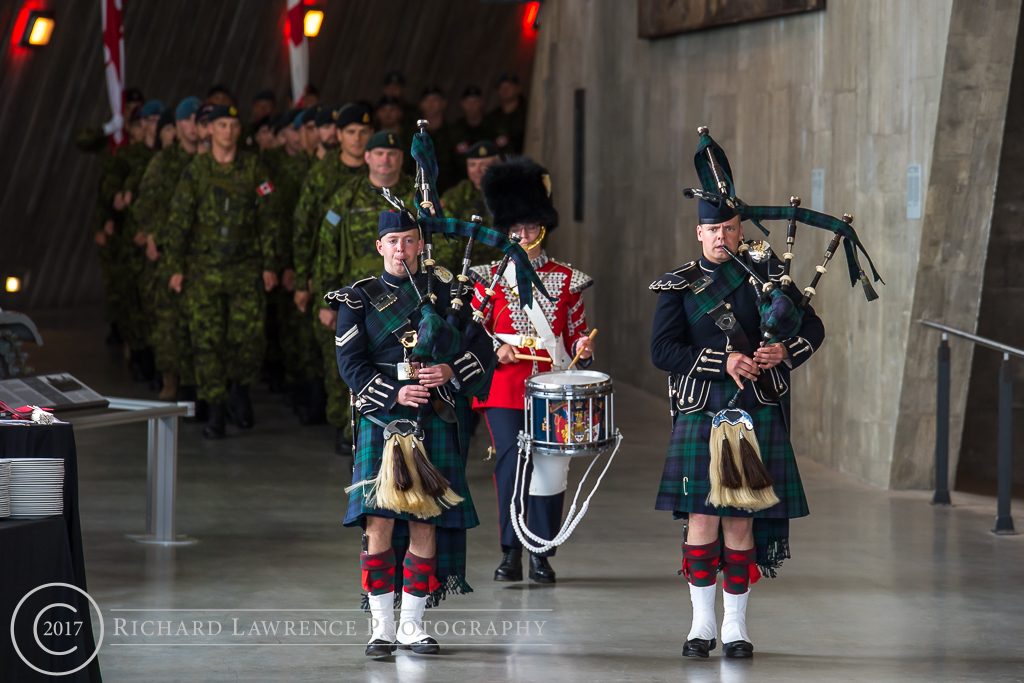
On Friday, 3rd November, 2017, the Senate of Canada held its 20th Annual Ceremony of Remembrance in the Senate Chambers of the Parliament Buildings.  The official party consisted of the Speaker of the Senate, the Honourable George Furey, the Speaker of the House of Commons, the Honourable Geoff Regan, and the Parliamentary Secretary for Veterans Affairs, the Honourable Sherry Romanado, who stood in for the Minister of Veterans Affairs, the Honourable Seamus O’Regan, who was sidelined with a health issue that was “serious but not life threatening”.

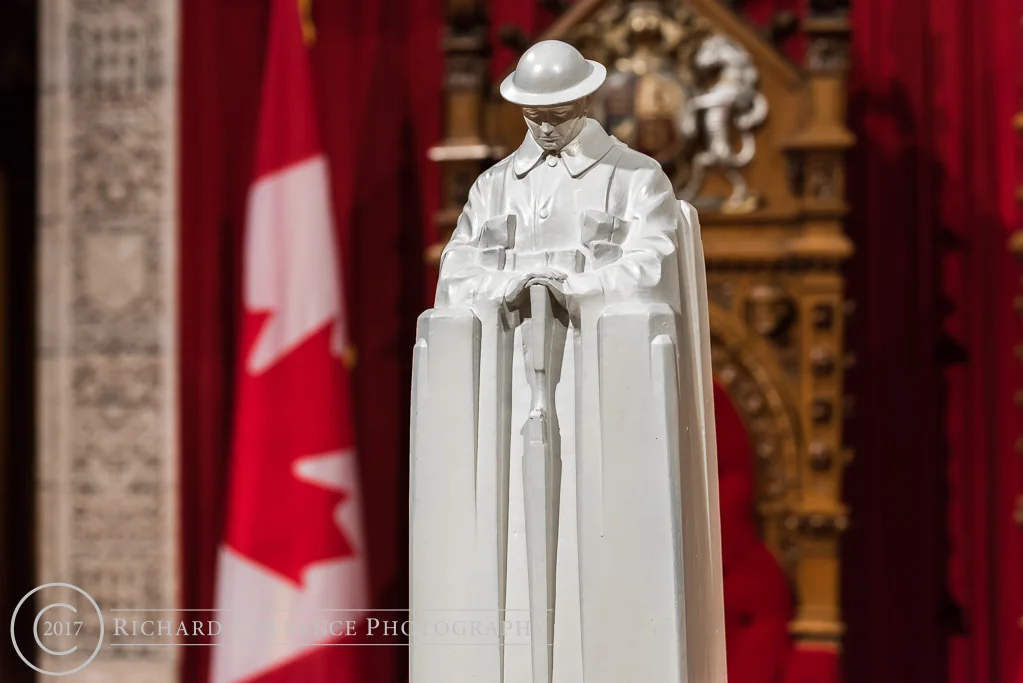
While the speakers today largely focused on the Great War battle of Passchendaele, marking the 100th Anniversary of this battle and the Canadian losses from it, Speaker Furey also remarked that it was the 75th Anniversary of the Battle of Dieppe, one of the bloodiest battles in World War II for Canadians.  Speaker Regan took another direction and provided an eloquent history of the Memorial Chamber in the Peace Tower and how architect John A. Pearson visited the various battlefields in France and Britain to collect stone for its construction.  He noted that the main altar, the “heart of the chamber”, was a gift from Great Britain and that the cap badges of many Canadian regiments are carved into the stone walls of the chamber. 

Of particular interest was the fact that Pearson had originally intended to have all the names of the war dead engraved into the walls of the Chamber but that became impossible as the numbers of dead, over 66,000, continued to mount.  Instead it lead to the First World War Book of Remembrance, which sits upon the altar in the Chamber and to which six other Books of Remembrance of war dead, from the Nile to Korea to present day, sit on other altars, pages turned each day at 1100 hours.  As Speaker Regan noted, “it was not possible to return the remains of all the fallen for burial in Canada” but Pearson got his wish “… to provide Canadians with a way to honour those lost and a place on Canadian soil to mourn them.”.
Invictus Games departure

_RLP1785.jpg

By Richard Lawrence

A small crowd gathered at Ottawa’s VIA Rail Station this morning to wish athletes from Team Canada well for their upcoming competitions at the Invictus Games in Toronto.  Among those in attendance were Ottawa city councillor Jody Mitic, ex-serviceman and double leg amputee suffered during his last deployment in Afghanistan; Gen Walt Natynczyk, former Chief of Defence Staff now Deputy Minister of Veterans Affairs; MP Karen McCrimmon, who retired as a lieutenant-colonel after 31 years in the Royal Canadian Air Force; Minister of Transport Marc Garneau, who was a captain in the Royal Canadian Navy before being selected as astronaut; Ottawa-South MP John Fraser; and the host of the event, Yves Desjardins-Siciliano, President and CEO of VIA Rail and Honorary LCol of the Régiment de Maisonneuve.

In addressing the departing athletes, Desjardins-Siciliano noted he was “specifically inspired by the resilience, courage and determination that you have to represent Canada after [your military] service.  And, therefore, I hope you all realize how you continue to be an inspiration, [are] someone to look up to, heroes of Canada.”

Speaking to the group, Team Canada co-captain MCpl (ret’d) Natacha Dupuis reminded everyone that ”what we need to remember is within our recovery there is hard times, but together remember that there is hope. And when you get the strength to keep on going, there is light at the end of the tunnel.”

After the speeches, the athletes and invited guests enjoyed the pastries and coffee supplied by VIA Rail before the call to board the train for Toronto.


http://www.richardlawrencephotography.ca/clients/edec/invictus/

Battle Of Britain Parade

By Richard Lawrence

The day started off with a fog that only gave a few yards of vision but as the morning dawned, the sun burned off the moisture revealing a sunny and hot day for the 2017 Battle of Britain Ceremony held at the Vintage Wings of Canada (WVoC) hanger at the Gatineau Executive Airport.  This was the first year for the ceremony to be held at this venue, having been at the Canada Aviation and Space Museum for the past many years.  It is appropriate, however, to have it at VWoC as they have a stellar collection of flying WWII aircraft.

Among the distinguished guests were Ms. Tanya Sefolo, representing the High Commissioner of South Africa, Senator Joseph Day, Honourary Colonel of the Royal Canadian Air Force (RCAF) Loreena McKennitt, along with local members of Parliament and city councillors.  The dignitaries included the Commander of the RCN, VAdm Ron Lloyd, Acting VCDS LGen Parent, the British High Commissioner to Canada, Her Excellency Susan le Jeune d’Allegeershecque, and the Commander of the RCAF, LGen Michael Hood as the Reviewing Officer.

As mentioned earlier, it was a beautiful, sunny day, but also warm and it took its toll on the parade members.  Several of the airmen and cadets took a knee indicating that they didn’t feel well enough to continue so were helped off the parade to shade and water.  Other than that, the parade continued as most do with the lament, rouse, commitment to remember, and the laying of wreaths.  After the laying of wreaths, H.E. d’Allegeershecque addressed the parade remarking that:

It is often said that the UK stood alone during the summer of 1940.  But of course that isn’t true.  The United Kingdom stood with its friends and allies from 15 countries across the world who believed in the cause of freedom.  During this time we had no greater friend than Canada.”

She also mentioned Canada’s contribution, not only in manpower for the fighter squadrons, but for our training of aircrew and our manufacturing of war goods, so that “… the RAF … ended the battle stronger than it went into it”.

In his address, LGen Hood asked everyone to:

“…  remember all of our airmen and airwomen, past and present, who served Canada and Canadians, at home and around the world, in the cause of freedom and security.”.

After the march-off of veterans and troops, the Snowbirds, who had just completed a flypast, put on a show for the hundreds of people in attendance.


http://www.richardlawrencephotography.ca/rlpgalleries/2017/bob2017/index.html

10th Anniversary of the National Military Cemetery

By Richard Lawrence

Ten years ago, the Commonwealth War Graves Commission (CWGC), Veterans Affairs Canada (VAC), the Department of National Defence (DND), and Beechwood Cemetery came together to amalgamate the four veterans sections within Beechwood Cemetery — the Last Post Field of Honour (Section #19), Veterans and War Dead (Section #29, managed by CWGC), the Field of Honour (Section #27, managed by VAC), and the National Military Cemetery of the Canadian Forces (Section #103, managed by DND) — to create the National Military Cemetery. It is this amalgamation that was celebrated on September 13, 2017 at the Beechwood Cemetery’s Sacred Space.

The ceremony was divided into two parts: the first included addresses and a concert in the Sacred Space and the second a walking tour of the four sections with stops at notable graves along the way. BGen (ret’d) Gerald Peddle hosted the event. Among those addressing the small audience were LGen Charles Lamarre, Commander of Military Personnel Command, Member of Parliament for Ottawa-Vanier Mona Fortier, and BGen (ret’d) David Kettle, Secretary General of the Canadian Agency for the Commonwealth War Graves Commission. Following the addresses, a 40-minute concert of music and song from the wars and interwar years was given by Andrew Ager (pianist/composer), Joan Fearnley (soprano) and Ian MacPherson (tenor).

The tour portion of the event was a bit of a walk, but it was a beautiful day so no one really minded. In section 103 it was noted that it was opened 16 years ago and that the central monument was unveiled by Governor-General Adrienne Clarkson on June 28, 2001. The National Military Cemetery is open to any Canadian military personnel, either still in uniform or honourably released; this includes veterans of the World Wars, Korea and the Canadian Merchant Navy. Also found in Section 103 is the tri-service monument, which is inscribed with a poem on each of its three sides, one for each service.

Interestingly, there is no separate area for officers or generals as plots are assigned as they are needed and all headstones are the same except for crests and religious symbols. All the headstones also face east so they may be kissed by the first light of the day.

The Field of Honour (Section #27) is reserved for the graves of those who fell during 19th to 21st century conflicts; the land was purchased from the Crown in 1944 but is now overseen by VAC and CWGC. It contains over 2,400 graves and is designed to be a hollow square: a military formation in which four sides of a square are formed, guns facing outward, so that every soldier knows that his back is covered by a mate, and the general and colours are protected in the centre.

In the centre of this section stands the Cross of Sacrifice. It is one of 26 such crosses, designated in 1918 to stand in military cemeteries hosting 40 or more Canadian graves. In one corner stands a Sherman tank and in two other corners are cannons.

The other two sections, although small, did have notable people resting there. BGen Kettle did note that some of the headstones differed from others in that those killed in battle had their service emblem (i.e. fouled anchor, CAF Maple Leaf, etc.) as the top element of the headstone whereas those who died of natural causes had a religious symbol (i.e. cross, Star of David, etc.) as their top element.

Following the tour, and stops for BGen Cruikshank, Gen Foulkes, Gen Crerar, and Gen McNaughton, everyone went back to the main building for a look at the Hall of Colours and then on to the reception.


For more photos please go to: http://www.richardlawrencephotography.ca/clients/bw/10nmc/index.html

Operation NANOOK 2017

October 2017 Issue

From August 23-24, Esprit de Corps photojournalist Richard Lawrence accompanied the Canadian Armed Forces on Operation Nanook.

In describing his adventure in Rankin Inlet, Lawrence explained: "The story here is not one of the the CAF doing its sovereignty operations but more one of emergency preparedness and the co-ordination between all the municipal, territorial, and federal agencies (including DND) to get things done.  A big part of it is understanding that regardless of what level is involved, all command and control originates with the municipal authorities through requests for assistance (RFAs) and all agencies are subordinate to the local authority, including DND.  It was interesting to see all these people who are used to being in charge and issuing commands holding themselves back so that the local authority can learn what to do and do what works within the framework of their society.”

Look for a full feature story in the October issue of Esprit de Corps.

Canadian Armed Forces contingent ready to march

By Richard Lawrence

July 11, 2017 marked the 65th time the Canadian Armed Forces sent a contingent to the annual Nijmegen Marches in the Netherlands since 1952 and the 20th time that the Nijmegen Departure Parade has been held at the Canadian War Museum. Leading the contingent of 13 eleven-person teams was Col. Geoff Abthorpe and the reviewing officer was Commodore Hadyn Edmundson, Chief of Staff for Military Personnel Command.

The Nijmegen Marches was originally a way for the Dutch infantry to increase their long-distance marching and weight-carrying capabilities and has evolved into an international four-day event where 47,000 participants, both civilian and military, from 50 countries march the route of the Allied troops in WWII by covering 160 kilometres in 4 days carrying rucksacks of at least 10 kilograms. During this journey they often stop at military cemeteries to pay respects. It is expected that at least 1,000,000 Dutch people will line the routes to cheer on the participants.

The Departure Ceremony started with the march on of the team who were then reviewed by the official party, including Commodore Edmundson, representatives from the Kingdom of the Netherlands, Stephen Quick of the War Museum, and the Royal Canadian Legion. Addresses were then given and three wreaths — from the Embassy of the Kingdom of the Netherlands, the Royal Canadian Legion, and the Canadian War Museum — were presented to the Contingent Commander to be taken to the Netherlands and laid at Groesbeek Canadian War Cemetery.

In conjunction with the departure parade, a pair of miniature wooden shoes was presented to the Canadian War Museum by the family of James McGinnis, a member of the Royal Canadian Army Service Corps (RCASC) during WWII and who served in the Netherlands. These shoes, known as “Liberation Shoes,” were a way to express gratitude to the Canadian soldiers who liberated their country. The shoes were donated by McGinnis’s daughter, Doreen, and son-in-law, Simon Beekhuizen, who was 8 years old and living in the Netherlands at the time of the liberation.

After the presentation and march-off of the contingent, a reception was held in the Lebreton Gallery of the museum.

To see all the pictures, CLICK HERE

Aboriginal Veterans Day

By Richard Lawrence

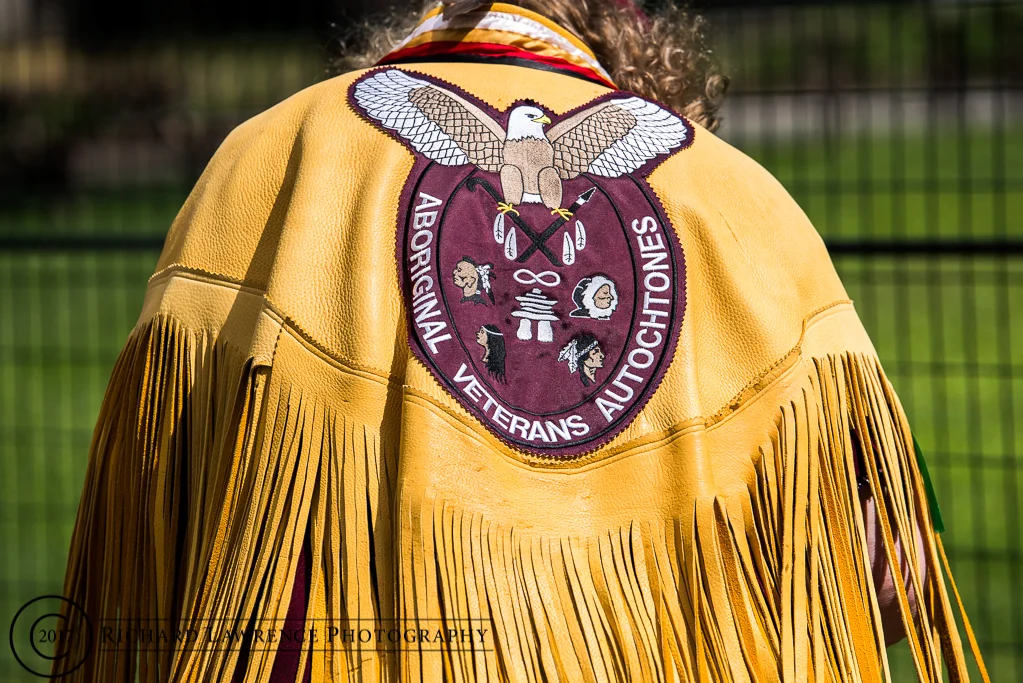
On June 21, 2017, the organization Aboriginal Veterans Autochtones (AVA) celebrated and remembered the veterans of indigenous heritage by holding the annual Remembrance Ceremony at the Aboriginal War Veterans monument in Ottawa.

It was a perfect day with temperatures in the high teens, a coolish breeze, and blue sky smattered with clouds. In attendance was the Commander of the Canadian Army, LGen. Paul Wynnyk, Deputy Minister of Veterans Affairs Walt Natynczyk, and Veterans Affairs Ombudsman Guy Parent. Each laid a wreath in remembrance of the countless Canadian Armed Forces members of Aboriginal descent who served. Many other veterans groups attended, including the Canadian Association of Veterans in United Nations Peacekeeping and the Korean Veterans Association (KVA) who assisted in the organization and parts of the ceremony. Attendance at the event was quite good for such a niche ceremony held in the middle of the week with probably around 200 present.

The ceremony itself followed the standard pattern of remembrance with the Commitment to Remember, the Last Post, the Silence, the Rouse, and the laying of the wreaths; the ceremony lasted about 40 minutes. However, Aboriginal ceremonies have some special touches found nowhere else, such as a smudging ceremony to cleanse the area and the bringing of the Eagle Staff ahead of the flags of the Colour Party. There was also a drumming group in attendance who played prior to and during the ceremony.

At the end, LGen. Wynnyk was asked to come forward and he was presented with a ribbon shirt, which he accepted on behalf of the Army and the Canadian Armed Forces. He was then asked to present the Aboriginal Veteran Millennium Medal to Capt. Stanley in recognition of her service, completion of her degree, and her commitment to keeping and promoting native culture and lifestyle.

The ceremony completed, the assemblage retired to the Lord Elgin Hotel for a reception.

Celebrating ANZAC Day in Ottawa

By Richard Lawrence

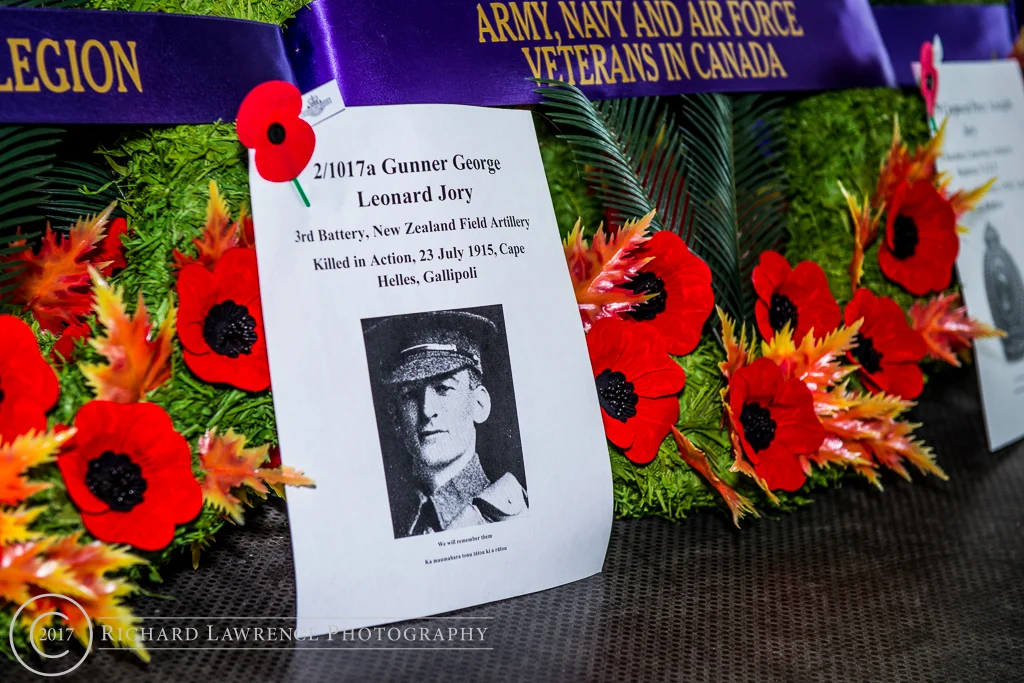
Australians and New Zealanders have been commemorating the landings at Gallipoli during the Great War since 1916. “It has become the national day of commemoration to remember those Australians and New Zealanders who died during WWI, WWII, and all subsequent wars and peacekeeping operations in which both countries have been involved,” stated Wing Commander Mike Salvador, the newly arrived New Zealand defence advisor who was the master of ceremonies at this year’s 102nd ANZAC Day, held at the Canadian War Museum on April 25, 2017.

Although all chairs were filled, it was a smaller ceremony than in the past couple of years, when it was standing room only. Also absent this year was anyone of significance from the Canadian government which, in the past, had been represented by such dignitaries as the Governor-General of Canada and/or the prime minister. And although Chief of Defence Staff General Jonathan Vance was also absent, he was ably and appropriately represented by LGen Paul Wynnyk, Commander of the Canadian Army.

The ceremony started with the posting of sentries around three stacked rifles, followed by a hymn and a prayer, and then an address by His Excellency Daniel Mellsop, High Commissioner of New Zealand to Canada. During his speech, Mellsop reiterated that, although this day commemorates the Gallipoli landings, it also recognizes the huge losses the two countries suffered on the Western Front during WWI and all the losses of military personnel since. Following an address by Wynnyk, Mustafa Kemal Ataturk’s Memoriam was read by His Excellency Selçuk Ünal, Ambassador to Turkey. Laurence Binyon’s ode “For the Fallen” was read my His Excellency Tony Negus, High Commissioner of Australia. From this point, the ceremony resembled most other remembrance ceremonies with the playing of the Last Post and the Rouse, and the laying of wreaths.

What is special about this ceremony is that all combatants participate in its remembrance, understanding that both sides had losses, and that, although enemies during the First World War, Turkey cares for the fallen Australia and New Zealand soldiers who are interred there with reverence and care. This is truly unique, as you don’t see this in other remembrance ceremonies, where former enemies unite to remember all those lost to battle.

Afterwards, all were invited to join the High Commissioners of New Zealand and Australia for morning tea in the Canadian War Museum lobby. (Fruit, juices, piggies in a blanket, huge croissants, cookies, and other munchies I think constitutes more than “tea”.)