
By Vincent J. Curtis
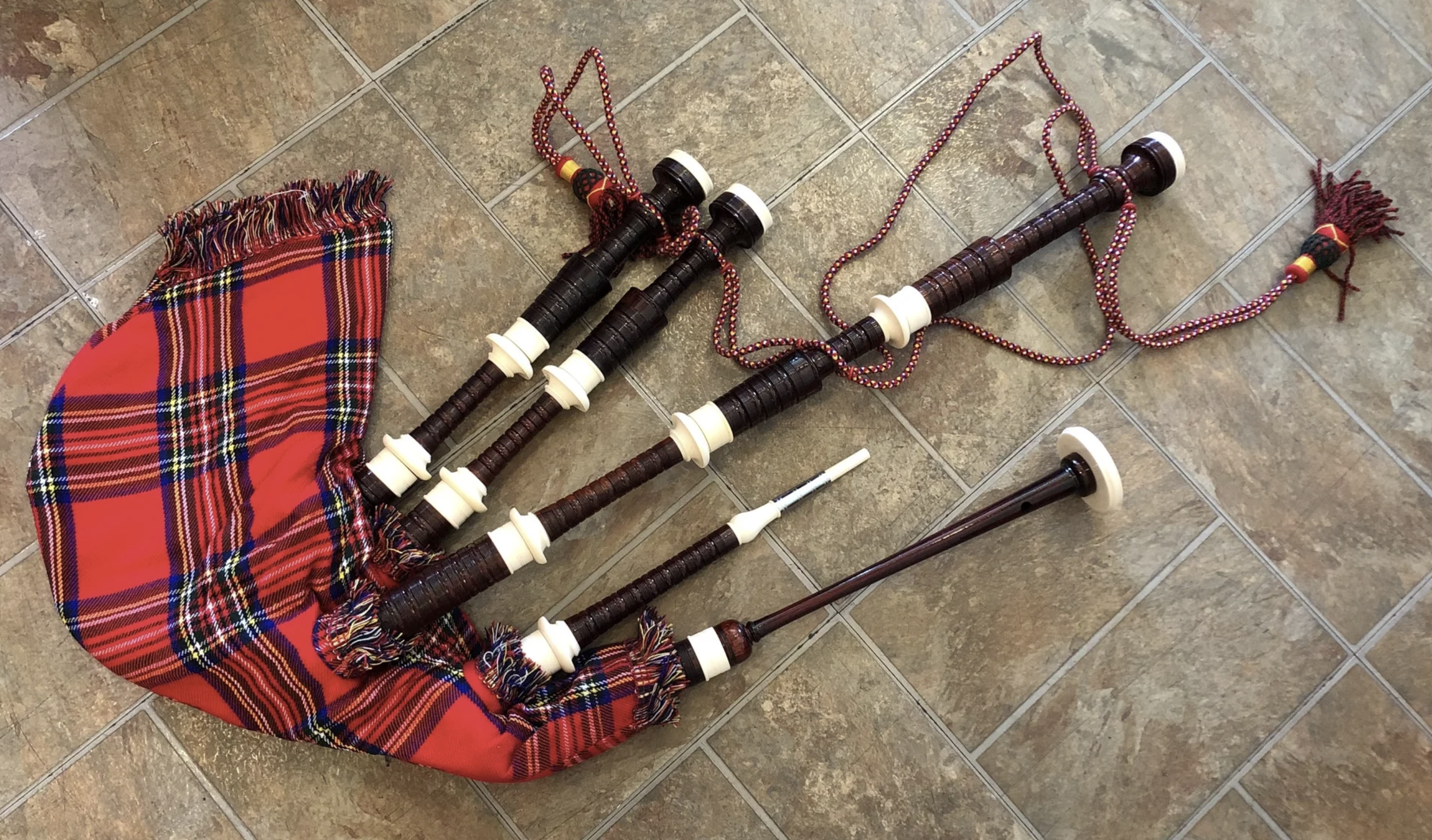
When you say the word “drone”, a Highlander will think of the wooden tubes that protrude from bagpipes. A beekeeper will think of a male bee whose sole function in life is to service the queen. A dedicated YouTube watcher might think of someone droning on about the latest inanities in Ottawa or Washington.
But that’s not what we’re talking about. Drones are in the news because of their use in the Russo-Ukraine war, and because of the announcement of a $5 billion purchase of Coyote drones for the U.S. Army. The Coyote is a small, expendable, unmanned “aircraft system” simple enough that it could be reverse-engineered by an Iranian manufacturer; but in fact will be purchased from that gargantuan U.S. military contractor, Raytheon.
The Coyote comes in two arrangements and three Blocks. The first arrangement is pusher-propellor driven, and comprise Block 1; the second arrangement is jet-turbine and rocket powered and comprises Block 2 and 3. The unit cost of a Block 1 is $15,000, while those of Blocks 2 and 3 run around $100,000 per.
The Block 1 is about 3’ long and weighs 13 lbs., its electric motor is battery powered. Its wingspan is 59’’, and the wings pop out immediately after launch, which can be pneumatically from a tube, or air dropped from altitude as high as 30,000’. It is ISR capable, and carries a 4 lb explosive warhead with a proximity fuse. A Block 1 can be used to intercept small incoming drones, and in that role is guided partly by a Ku band proprietary radar system as well as on-board sensors. The flying, or loiter, time of a Block 1 can up to two hours, with a cruising speed of 60 mph and a dash speed of up to 80 mph.
The jet-powered Block 2s, are launched from a missile launch tube at an exit velocity of near Mach 0.9, though its cruising speed is closer to 370 mph. This version is a little over 4’ long, and weighs about 15 lbs. It has an effective intercept range of about 10 miles. It too is guided by a combination of Ku band radar and on-board sensors. At an estimated price tag of $125.000 per, the Coyote Block 2s offer a far cheaper alternative to drone interception than an AIM-9 air-to-air missile, or an SM-2, which run a couple million per. The Block 2s are capable of re-engagement if it misses on the first pass. It kills either kinetically, by smashing into the incoming drone, or by exploding a warhead that produces a shroud of shrapnel that can destroy a swarm of incoming drones. It can engage targets as far as 9 miles away.
The drone warfare in Ukraine prompted the U.S. Army to look for a counter-unmanned aerial system (C-UAS), which led to the Block 3s in a configuration called LE SR, for Low-cost Expandable Small Range. This configuration can be launched from a TOW missile launcher, and is capable of air-intercept, ISR, EW, signal relay and precision ground-strike. In an early test, using a non-kinetic, directed energy warhead. i.e. microwaves, (making it recoverable) a Block 3 defeated a swarm of 10 drones. The Block 3s can operate as autonomous swarms.
The U.S. Army purchase is for their M-LIDs and FS-LIDS systems, (for Mobile- and Fixed Site Low, Slow, Unmanned Aircraft Integrated Defeat System). The Block 3 is to provide a “hard-kill’ layer after incoming drones get past jammers and spoofers which also comprise the LID. The big purchase was for 6,000 Block 2c’s and 700 Block 3s, which will carry an electronic warfare or directed energy weapon, enabling them to be reused. The Blocks 2 and 3 are intended to defend against the Iranian Shahed drones, which are used by Russian against Ukraine.
Raytheon is exporting its radars and Coyote systems, and the CAF can get with the program with little up-front capital cost: for the radars, launchers, and generators, and US$125,000 per recoverable missile.
