
By Mike Blais
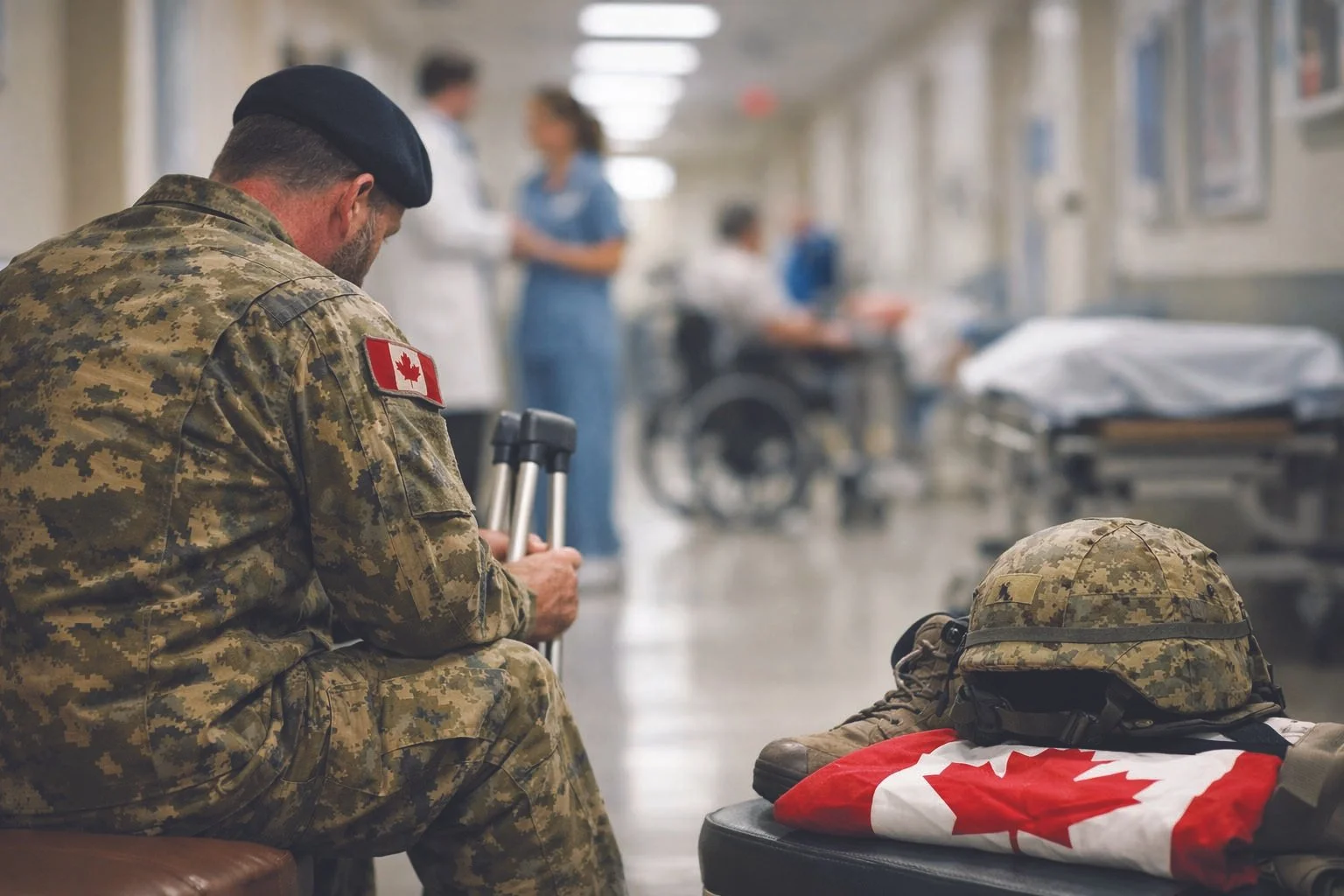
First of all, let me acknowledge that the state of health care across our nation is in dire need of improvement to a level wherein all Canadians have access to expedient care dictated by the nature of the emergency or illness which they are confronting. And through this acknowledgment, let me be clear when I state that veterans who have offered national sacrifice on behalf of the nation are being adversely affected not only in the provision of medical service, but also a lack of respect for their service. There was a time in Canada wherein the trauma of national sacrifice was honoured through the provision of care that respected their war-time service, and the obligation therein to provide medical assistance with respect to wounds and injuries sustained in war. For decades, this system was effective and through a network of Veterans Affairs Canada (VAC) sponsored hospitals, provided direct medical care for physical or mental trauma and, as veterans required age related services, a hospital dedicated strictly to veterans.
During the Prime Minister Stephen Harper era, support for these hospitals evaporated under the guise of balancing the budget and the last independent veterans’ hospital in Canada, St Anne de Bellevue, was transferred to the Quebec health system. Despite ominous warnings and an actual protest by the staff who had, until that moment, dedicated their lives to serving veterans, the conservatives were not deterred. I would note that when St Anne’s was opened to the general public, the only in-patient Operational Stress Injury clinic was also eliminated.
Of course, the provinces were collectively eager to effect the transition, promising support for those veterans already interned while concurrently eliminating any obligations to subsequent generations of veterans. Disabled veterans no longer had access to VAC sponsored medical facilities or professional help. Instead, the duty-to-care obligation was abandoned and veterans were downloaded to provincial systems bereft of any knowledge or respect pertaining to the reason they need help, (ie, signing on the dotted line and being willing to die or sustain horrific injuries or wounds on behalf of Canada).
This is an important distinction. It is one that directly affects thousands of veterans, particularly those who sustained trauma as a result of the Afghanistan War.
Unlike previous generations of veterans, they have been abandoned to provincial systems and the inevitable backlog obstructions created through insufficient; doctors, mental health professionals and brick and mortar facilities inadequate to the demands of the general population. Without a doubt, this distinction should have been addressed during the negotiations pertaining to the downloading of hospitals and, as part of the arrangement, preferential treatment accorded to clients of Veterans Affairs should they require assistance with respect to their service orientated trauma.
Would that not be fair? Would not that ensure that the veterans of today are treated with the same level of respect as those who served in previous wars? One veteran should equal one standard.
Unfortunately, there are levels of resistance that must be overcome before the sacred obligation can be restored. Division exists within the cohort: Some believe their national sacrifice is not worthy of preferential treatment within the provincial system.
I disagree. It is not a matter of being worthy, it is a matter of lost respect and grotesque inequity. Seriously, when veterans roll over when the government marginalizes or eliminates policies designed to respect national sacrifice, we surrender our very quality of life. Others would claim that changes would involve bureaucratic, perhaps even legislative enactment.
This is very true. But these are not obstacles that cannot be overcome if Canadians embrace the spirit of the nation and acknowledge the national sacrifice of thousands of Canadians’ military service in war and peace.
Canada has an obligation to the valiant. The federal government failed the valiant when, in a rush to balance the budget, they downloaded responsibilities for Veterans Hospitals to the province while concurrently disregarding the direct care obligation.
And here we are. In the aftermath of Canada’s longest war, where thousands of veterans have been ensnared in never ending loops of federal and provincial bureaucracies seemingly more focused on budgetary restrictions than providing services to veterans. How many veterans have died through suicide while waiting in the queue? How many are suffering today as they confront the prospect of filling out forms requiring the assessments by doctors, pain specialists, psychiatrists or psychologists? I personally know of three instances wherein the catastrophic incident occurred while the veteran was waiting for treatment not because VAC had not responded, but because there were no professional resources available at the provincial level to intervene or provide relief in an expedient manner. What about the physically disabled? How many veterans do not have a family doctor let alone access to support by a pain specialist? How many operations have been endlessly deferred for months, sometimes years later for their name to rise to the top of an ever-changing list determining access to an orthopedic or neuropathic surgeon? How many veterans are in the queue at VAC, waiting for decisions well beyond the 16 week threshold, not because VAC is inept, but because of prolonged delays in obtaining the necessary documentation from doctors, psychologists and psychiatrists in order to successfully process their claims?
The situation is festering, the solution complex. Tragically, this adverse situation will continue until the Minister of Veterans Affairs demonstrates a willingness to engage the provincial health ministers on behalf of the wounded instead of cruel deflections that serve no one.
Blazer out.
