
By Vincent J Curtis
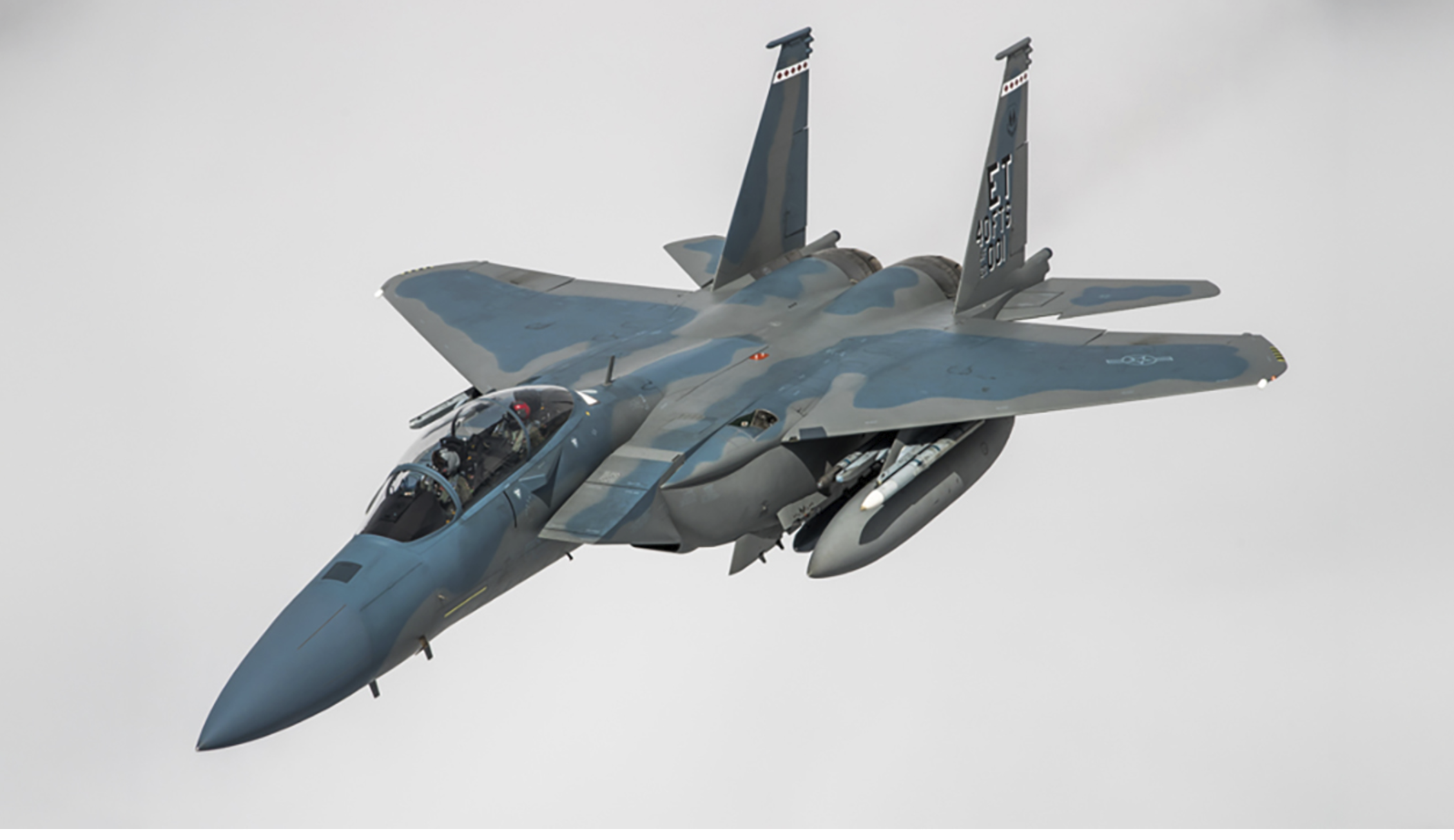
This space has consistently argued against the purchase of the Lockheed-Martin F-35 for the RCAF, and instead urged that the Boeing F-15EX be the fighter jet that Canada buy. The USAF sees some wisdom in this, as it is acquiring about 100 of these thoroughly modernized fighters from Boeing. The combination of factors for this purchase by the USAF include: delays in delivery of the F-35, the wearing out of the F-15C/D inventory, and the favorable economics of operating a mixed fleet of both F-35 and F-15EX.
The proponents of acquiring the F-15EX emphasize that it is a powerful complement to the F-35, with special emphasis on the “deep magazine” of the F-15EX as compared to the F-35. In stealth mode, the F-35 can only carry four missiles; whereas the loadout on the F-15EX is 12 missiles. Hence, if the enemy air defenses are suppressed, an F-15EX sortie can deliver as much firepower as three sorties of F-35s.
Another feature offered as reason for an F-15EX acquisition is lower operating cost. The fly-away cost of an F-35 is said to be US$82 million; that of an F-15EX is US$90 million, but the mission availability rate of the F-35 is only 67 percent, while that of the F-15EX is 83 percent. In addition, the maintenance costs of the F-35 are very high, and special hangers are required to maintain the radar absorbing coating which preserves its stealthiness. The F-15EX requires no special surface treatments or hanger conditions
Finally, there is a radical difference in performance. The top speed of an F-35 is Mach 1.6, and it has a service ceiling of 50,000 ft; the top speed of the F-15EX fully loaded is Mach 2.5, with a service ceiling of 60,000 ft., while stripped down (to deal with those pesky Chinese balloons) the F-15EX can reach 65,000 ft, and is rumoured to have a top speed of Mach 2.9. These, combined with a 9 g turning capability, make the F-15EX very hard to shoot down with a missile; and the new electronic suite in the F-15EX will give the pilot plenty of warning about incoming trouble. The F-15EX outranges the F-35 by several hundred miles, and has a 20,000 hr service life.
So, why should Canada purchase the F-15EX? The primary mission of the RCAF, now and always, is the air defence of North America. A vital secondary role is the demonstration of Canadian sovereignty over the High Arctic by flights of Canadian combat aircraft in Canadian air space in the far north. For the latter purpose, stealth is not a requirement, and in some ways, i.e. the demonstration of sovereignty, stealth is a detriment: you want to be seen demonstrating sovereignty. A fighter jet with long-range, high speed, and a deep magazine is the aircraft to deal with a flight of incoming Russian bombers. Being visible might well act as a deterrence, for there’s nothing on an adventurous Russian bomber that hurt an F-15EX.
Now, let’s talk acquisition. There are serious production delays that retard the acquisition of a fleet of 88 F-35s. The Boeing production line for F-15EXs is fully up and running and is filling orders at a rate of two aircraft per month. There’s plenty of room for increase to fill an urgent need from Canada. Boeing has previously indicated that money spent by Canada to acquire Super Hornets would be offset by Boeing running more business through its manufacturing facility in Winnipeg, so the industrial offsets are potentially there.
Thus, this proposal boils down to the acquisition of a smaller number of F-35s, and a larger number of F-15EXs, giving the RCAF the potential for SEAD that opens the way for the big puncher.
What about the Gripen E? Nothing wrong with it. I’ve likened it to Volvo’s take on the F-16, and we’ll see what it can do against Russia this spring in Ukraine. But how does the Gripen E fit in with the operational concepts elucidated above?
