Does Peacekeeping Put Canada On The Jihadi Radar?

“Mali is beset with a serious, almost existential, threat from jihadist violence, as is muchof the Sahel…”

“Mali is beset with a serious, almost existential, threat from jihadist violence, as is much
of the Sahel…”

By Phil Gurski

(Volume 25 issue 4)

Canada was long known as a nation of peacekeepers, of the multinational kind. We used to send lots of our men and women to conflict zones around the world to do our part in keeping warring parties from slaughtering each other in the hopes that the UN, under which we served, could cobble together some kind of arrangement that would lead to national or regional stability. Heck, we even erected a monument to peacekeeping right across from that hideous spider outside the National Art Gallery in Ottawa.

Our nation as a peacekeeping stalwart has long been in abeyance. As of February 2018 Canada, had a grand total of 41 soldiers on various missions, compared with over 7,000 from Bangladesh and almost 5,500 from Nepal. A country at the coalface of peacekeeping we clearly are not. Nonetheless, the Trudeau government just announced that we will send an unspecified number of helicopters and support troops to Mali, part of the PM’s promise last fall to commit up to 600 Canadian soldiers to UN missions. Woo-hoo! The world needs more Canada and we are delivering!

Our return to the world of peacekeeping may indeed be a good sign, but it is not clear that going to Mali is a good idea or has anything really to do with peacekeeping since it is not clear that there is a peace to keep. Mali is beset with a serious, almost existential, threat from jihadist violence, as is much of the Sahel (that area of North Africa just south of the Sahara) and parts of West Africa (i.e. Nigeria). A number of nasty Islamist extremist groups are very active in the region and some of Canada’s allies that have already sent troops to Mali and Niger have suffered casualties. In October 2017 four US Special Forces were killed in an ambush in Niger and two weeks ago two French soldiers were killed when their vehicle hit an IED in Mali. Canadians should prepare for the possibility of death: in August 2017 two Canadians were killed in a terrorist attack on a restaurant in neighbouring Burkina Faso, and that was on the heels of a similar attack on a hotel in Ougadougou that killed six members of a Quebec humanitarian group in January 2016.

Peacekeeping implies that there are parties that are open to the idea of peace and negotiations. Terrorist groups seldom hew to this notion: in fact, the ideologist behind Al Qaeda, Abdallah Azzam, once famously said “Jihad and the rifle alone; no negotiations, no conferences, and no dialogues.” Al Qaeda-linked terrorist organisations are active in the Sahel and there are other entities tied to Islamic State. This does not bode well.

The danger to our troops is real and I am sure that the Canadian Forces are all too aware of the peril. At the same time, we have to consider whether the presence of our military also raises the general threat level to Canada. Jihadi groups make a lot over the deployment of foreign forces in Muslim-dominant lands as it fits their narrative that the West (a broad term) is at war with the Islamic world. Regardless of their intent or their mandate, our men and women will be targets for terrorist violence and I would be very surprised if jihadi social media posts do not start listing Canada as a legitimate aim for attacks. Having your country and people named as the object of terrorism is seldom a good thing. We have seen plots and successful attacks on our soil by those inspired by jihadi groups abroad. It is not beyond belief that we will see more, perhaps tied to our Mali mission.

We are thus damned if we do and damned if we don’t. Mali and its neighbours need our help and we should do something. By doing something, however, we paint a bulls-eye on our torsos. Which is worse: stay out and let the region continue to suffer and perhaps descend into more jihadi hell on earth or send troops which may be killed and which at the end of their mission may not be able to point to real progress on the ground (just look at Afghanistan 16 years later)? I do not envy the Trudeau government for having to make this decision. I just hope that our men and women in uniform can help the locals and come back safely to their homes and families.


Future Air Combat

“…is it better to spend money on capabilities you might never use, or to keep it in your pocket for future contingencies?”

“…is it better to spend money on capabilities you might never use, or to keep it in your pocket for future contingencies?”

(Volume 25 Issue 4)

By Vincent J. Curtis

Canada’s Future Fighter Capability Project is proceeding without any agreed upon idea of the future of air combat.  Deciding which fighter to acquire, then, is like trying to decide which tool you are going to buy without having much knowledge of the job you need it to do.  Any discussion of the relative merits or capability of the tools will end up being a discussion about undeclared, underlying beliefs instead.

So it is worthwhile to spend some time thinking about what are the likely needs Canada will have for air power, and then decide what the best fit is.

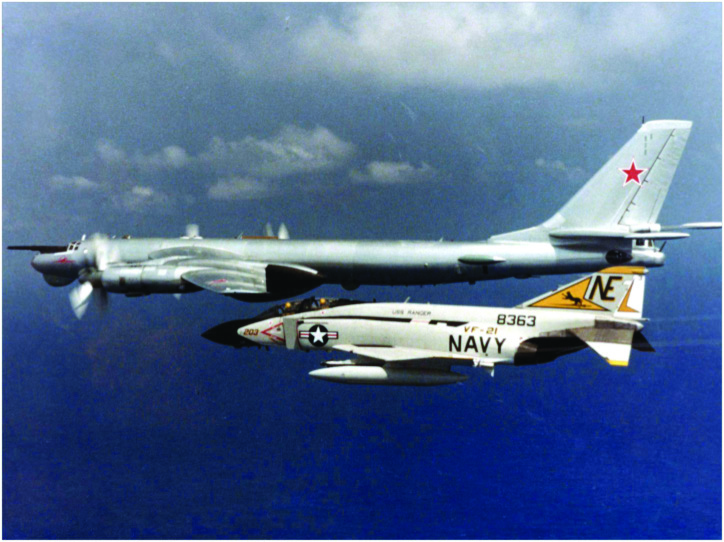
What we know for sure is that NORAD and NATO are not going to go away within the next thirty to forty years, because Russia isn’t going to go away.  Canada’s role within NORAD is the air defense of North America in cooperation with the United States.  Practically, this means that the RCAF needs a high flying and fast interceptor with long range.  The RCAF needs to be able to intercept Russian bombers flying over the high Arctic.

Canada’s air role in NATO has been to contribute to the gaining of air superiority against Russian-made fighters.  The air superiority role once placed a requirement on a fighter for tight turning or for speed in diving; but missile technology and the “platform” concept may be changing that.

A third demand upon fighter aircraft has been for surface to ground attack.  After air superiority has been gained, fighters don’t have much other practical use except to attack targets on the ground.  Any aircraft equipped with guns, bombs, or missiles is capable of attacking targets on the ground, though some are better adapted to it than others.

For example, in World War II, the P-47 Thunderbolt, because of its toughness, was better adapted to strafing ground targets than the similarly armed P-51 Mustang.  The Hawker Typhoon underperformed at high altitudes, but turned into an excellent ground attack fast mover. 

In South Vietnam, jet fighters were used exclusively for ground attack, while over North Vietnam most of the missions of jet aircraft were for attacking targets on the ground.  Some air combat did occur over the North, but a concentrated effort by the USAF eliminated the North Vietnamese Air Force and thereafter the North relied exclusively on surface to air missiles for its air defense.

It seems, then, that the question the RCAF needs to answer is whether or to what degree it wants to be able to engage in tactical air-to-ground combat. The RCAF has shied away from that role. In the last forty years, the only significant occasions when CF-18s were so employed was in Libya (2011) and in Iraq against ISIS (2014-2016). The electronic suites in the Hornets had to be changed and upgraded for this role because the original avionics of the Hornet was for air combat
only.

At this point it is useful to differentiate between real air power and special operations involving air assets. Real air power requires mass. Real air power means literally hundreds of aircraft and thousands of sorties.  Special operations involving air assets involves a small number of aircraft equipped for special missions. The Israeli attack on Iraq’s Osirak nuclear reactor was such a mission that involved F-15s and F-16s. A single CF-18 intercepting a Russian Tu-95 (Bear) bomber is another example of a special operation.

The F-35 seems to be an aircraft of the special operations category. One platform is supposed to be able to simultaneously track, scan, and attack multiple targets both in the air and on the ground and be invisible to radar. It can fly a long way on internal fuel and carry up to 18,000 pounds of ordinance. It is rather maneuverable.  One plane can do a lot. But you pay for all these capabilities, and that means that on a limited budget you can buy only a few of them.
In addition, all these capabilities make for a complicated aircraft, and so the operational up time may be less than for a cheaper, simpler aircraft due to the higher maintenance requirements and costs.  In choosing the F-35, Canada sacrifices mass.

The acquisition question comes down to this: Is it better to spend money on capabilities you might never use, or to keep it in your pocket against future contingencies? The F-16V and the Block III F/A-18 Super Hornet will be able to meet 98 to 100 percent of the operational requirements of the RCAF over the next twenty to thirty years. We can say this because the US Navy is purchasing new Super Hornets and the USAF is buying new F-15E Strike Eagles and refurbishing older F-16s for service into the 2040s. They are doing so because the “augmented reality” software, sensors, and networking that make the F-35 so
cutting-edge have not been completely de-bugged.  All the operational testing of the F-35 has been with small numbers of friendlies and targets; engineers do not know if network overload would occur when large numbers of aircraft flew together.  And we assume that stealth remains undefeatable over the next forty years.

Does RCAF see itself as a kind of special operations force stealthily taking on multiple targets in the air and on the ground simultaneously alone?  If so, then a force of F-35s makes sense.  But as a component of the total air power of NORAD, NATO, or a coalition with the United States, then the F-16V or Super Hornet makes more sense because Canada isn’t going to be the lead air power or conduct independent missions.  If stealth isn’t essential to the RCAF mission, and the more the mission profile is of a fast air-superiority fighter-interceptor, the more the F-16 is favored. W

Operation Nighthawk reveals Canadian Naïveté

“The fact that elements not under government control might access ordnance and expertise is indeed worrisome”

“The fact that elements not under government control might access ordnance and expertise is indeed worrisome”

(Volume 25-03)

By Joe Fernandez

On 16, January 2018, the CBC’s French-language 24-hour service RDI ran a story “Des soldats canadiens tissent des relations avec des motards criminalisés” (“Some Canadian soldiers are weaving links to criminalised bikers.”) The story reported that the “Canadian Armed Forces police” has been investigating links between soldiers and Veterans who form or join Motorcycle Clubs (MCs) since 2012 under Operation NIGHTHAWK, confirmed in English to be an investigation of the Canadian Forces National Investigation Service by the Canadian Forces Provost Marshal Report—January 1, 2012 to March 31, 2013.  The story quoted an “officer commanding of military information of the CAF” as saying that a) very few of the troops and Veterans who form and join an MC are actual causes for concern, and that b) the main concern is that “1%ers” MC’s (often referred to as “outlaw bikers/outlaw motorcycle clubs” by tabloid journalists and police desk jockeys) will exploit their friendly associations with these troops and veterans to gain access to ordnance and tactical expertise. The story further quotes a retired Colonel, a military lawyer who once commanded a unit in Germany during the Cold War, (though bereft of operational experience), as deploring this situation for allegedly bringing a bad name to the Canadian military.

The fact that elements not under government control might access ordnance and expertise is indeed worrisome because innocent civilians in Canada could die as a result. Nevertheless, the tone of the RDI story elucidates Canada’s and Canadians’ general naiveté when it comes to warfare-other-than-Fulda-Gap.

Many books have been written about the Allies’ conventional campaign in Italy during the Second World War, but very few of them highlight the centrality of FDR’s alliance with the Mafia to these Allied operations. Likewise, many books have been written about the French resistance during the war, but not all of them mention that prominent Résistants included the Guérini “family” of the Corsican underworld and North African gangster Jo Attia, who was deported  to Mauthausen by the Nazis. The Guérinis and Attia also figure prominently in François Audigier’s Histoire du SAC, about the Service d’action civique (SAC), the paramilitary arm of Charles de Gaulle’s Rassemblement du Peuple Français party in the 1950’s and 1960’s. As part of the SAC, the Guérinis worked with French foreign (SDECE) and domestic (DST) intelligence in combating FLN terrorists and militant OAS conservatives. Jo Attia kidnapped the OAS’ Antoine Argoud from his German sanctuary, as described by West German intelligence chief Reinhard Gehlen, and then took part in neutralising a Moroccan renegade on French soil.

If one looks at Canadian authors Yves Lavigne’s and Jerry Langton’s books on 1%ers (who got the name after the American Motorcycle Association said that “99% of motorcyclists are well-behaved” in response to the 1947 Hollister riot), two things stand out from a military point of view: a) these are organisations whose ability to precisely surveil and neutralise specific targets of interest is generally far more precise than that of an Unmanned Aerial Vehicle piloted from thousands of miles away, b) these are organisations that readily transcend borders undetected in ways that uniformed personnel, and personnel with diplomatic passports, do not. As well, Mr.Lavigne gives an explanation as to why, despite decades of effort, no law enforcement organisation and no prosecutor has been able to shut down any of the major international 1%er MC’s. Law enforcement personnel and prosecutors work for the government and have a government bureaucrat’s mentality, which means that they stop thinking about work at Close Of Buinsess (COB.) 1%ers, by contrast, are private sector entrepreneurs, which means that they think of business 24-7.

Succinctly, in wars where the enemy does not oblige us by wearing a uniform, 1%ers have the ability to effect substantial direct action in a manner that an infantry or armoured division, an artillery battery and an entire wing of bombers/Combat Air Support planes cannot. The experience of FDR with the Mafia in Italy during the Second World War, of the French Resistance, and then of Charles deGaulle and French foreign and domestic intelligence, with the Guérini “family” and Jo Attia demonstrates that using 1%ers does not constitute a threat to democracy.

After 9/11, the pedantic Robert Mueller told President Bush “We are going to get evidence to try them.” Attorney-General John Ashcroft said “No, the priority is to stop them from doing this again.”

Potty Training 101

“You acknowledge the problem, deal with it, learn from it, and move on…”

“You acknowledge the problem, deal with it, learn from it, and move on…”

(Volume 25-03)

By Michael Nickerson

So you’ve just dropped a boat on your neighbour’s house. Well not a boat per se, but an inflatable life raft. And since you’ve taken the time to lift said raft high in the air with a helicopter before starting your little misadventure, it punches a fairly sizable hole into their roof. What’s your next step? Now take a deep breath and think for a minute. Do you pretend it never happened? Do you admit your mistake, pay for the damages, and learn from it so your neighbourhood is henceforth safe from airborne flotation devices? Or do you ban the sale and usage of both life rafts and helicopters in their entirety for all eternity?

Tough call that one. Funnily enough the Royal Canadian Air Force was faced with just such a quandary. Seems they bombed an unsuspecting Florida resident with a dinghy while on a training exercise near Miami last month. And wouldn’t you know it, the RCAF fessed up; Miami-Dade Police spokesman Detective Lee Cowart was pleased to report they’ve been “really up front with us.” They’re assisting the unsuspecting (and mostly unscathed) resident, with an investigation already in progress. And in case you’re worried, they also recovered the raft (mostly unscathed).

A perfectly reasonable response that. You acknowledge the problem, deal with it, learn from it, and move on. Just like it was during those heady days of potty training years ago. You don’t ignore it because it’s eventually going to stink. And you certainly don’t ban it (feel free to ask your doctor for clarification on this).

Now as absurd as this all sounds, too many times have the options of willful ignorance or preemptive nullification been the go-to responses when it comes to how the military deals with its problems. A list involving the former could go on for pages, but the subject of sexual harassment and assault in the ranks will suffice. Up until recently it didn’t exist. Not in the forces I served with, no sir, as none other than General (ret.) Hillier opined not so long ago. It took a scathing report and no small amount of public shaming to get leadership to acknowledge the obvious. There was and is a problem. Only now are there encouraging signs that the issue is finally being addressed.

However, like any pendulum governed more by the laws of nature than reason, things have swung far to the other side of weird. No doubt stinging from myriad bad press and public relations missteps, the powers that be at National Defence have issued a general order that bans fraternizing with just about everyone short of puppy enthusiasts To wit, forces members are to avoid any group or association that promotes “racism, sexism, misogyny, violence, xenophobia, homophobia, ableism and discriminatory views with respect to particular religions or faiths.”

At first glance that all seems reasonable, particularly in this new century of understanding and empathy. But let’s parse this a little. Racism, violence and xenophobia are certainly hard to argue for in this day and age, but sexism, misogyny, and homophobia might keep military personnel from visiting their local church, mosque or synagogue. And given the military’s dogged adherence to the principle of universality of service, that ableism thing would logically keep just about everyone in the Canadian Armed Forces from showing up for work.

In short, it’s an asinine order born more out of fear of public embarrassment than concern that CAF members will be upholding a set of values in step with the society they are there to protect, particularly when said society has barely begun to sort things out itself. But there is a longstanding and frankly childish fear in the military of metaphorically soiling one’s diapers in public. And in a time of smart phones, social media, and 24/7 news coverage, it’s impossible to pretend ignorance. And irrational solutions will just look silly under such an unrelenting media glare.

So let’s just admit mistakes happen. Don’t hide them. Don’t be ashamed. Don’t overreact. Just deal with it, learn from it, and move forward. And before you know it? No more diapers.

KOSOVO TEN YEARS AFTER: Not Even A State, But Already "Failed" His Excellency Mihailo Papazoglu

Screenshot 2018-07-25 12.45.10.png

(Volume 25 Issue 3)

By His Excellency Mihailo Papazoglu

True, just above 100 countries recognised Kosovo Unilateral Declaration of Independence (UDI) ten years ago, but recently some three of those revoked it - Guinea Bissau, Surinam and Burundi. I am not saying this is a trend but it is a reality. Kosovo officials are denying it; explaining that recognition cannot be revoked. That is fake reality.

 Reality of “ten years after in Kosovo” is completely different - defined by the most recent “signature” killing of a prominent democratic Serbian leader. In such a clan-based society, a high profile political assassination could not happen without “somebody pushing the button”. We consider it as a terrorist act and as a message to the other 220,000 Serbian Internally Displaced Persons (IDP) expelled from Kosovo in 1999 that they will never return to their homes. First consequence of slaying Oliver Ivanovic is that his family moved to Belgrade for good.

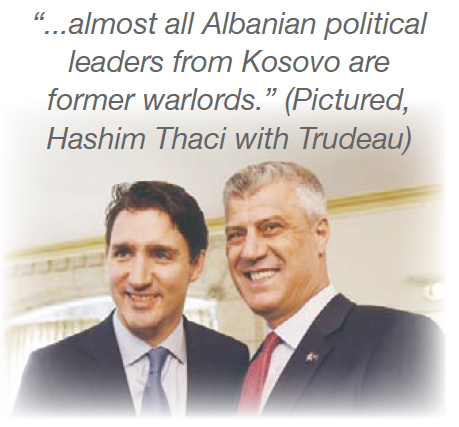
Part of the problem is that almost all Albanian political leaders from Kosovo are former warlords. There is no such example in Balkans!

 Their fear of prison is the main reason for the Albanian refusal to cooperate with International tribunal that is set up to bring justice for war crimes perpetuated by the UCK guerrilla over Serbs and non-Albanians. Hope that this is enough arguments for those who consider voting in favour of Kosovo joining Interpol.

 Unfortunately, the practice of copy-pasting reports from internationals organisations in Kosovo throughout last ten years was not helpful either. The reality is this, as well as unwarranted embellishments of the situation in Kosovo and Metohija, could not cover the stalemate.

 Another danger is Kosovo’s wish to create an army or “big Albania” by unifying Kosovo with Albania is an obvious casus belli. If there is no big Croatia or big Serbia, there should not be big or bigger Albania. Pretty much all the countries in the region are against it. Just recently, Kosovo’s PM Haradinaj obtained Albanian citizenship through an urgent procedure. Four high level Albania’s government officials are from Kosovo (ministerial level). A smoking gun? There is no such thing as good or bad nationalism - they should all be addressed with firm opposition.

 On the other hand, support of China and Russia over blocking Kosovo accession in the UN and other international organisation is often presented as a cliché of East-West cleavage here in Canada. But the reality is that another almost 100 countries did not recognise UDI: Argentina, Brazil, Paraguay and Chile. These are states far from our region and no Serbs live there, yet they opposed it.

Further, by intervention of five EU countries that did not recognise UDI: Greece, Cyprus, Romania, Slovakia and Spain, Kosovo is, if not set out, then set a side from EU WB Enlargement strategy. We see that not as a will to create another frozen conflict but as incentive for Albanian leaders in Kosovo to continue dialogue with Belgrade in a way to find solution together with us. As a frontrunner in EU enlargement for 2025, together with Montenegro, Serbia should not be punished for unwillingness or unpreparedness of Albanian leadership from Kosovo to strike a deal.

We expect Canada to encourage Albania to approach these negotiations in good faith but not by looking over its shoulders for others to put more pressure on Serbia. That is why we confirmed in writing our support for Canada’s candidacy for a UN Security Council (SC) non-permanent seat. We hoped if an agreement could be reached by that time, it could be supported by Canada within SC. International guarantees would be certainly part of the deal.

We are ready for a historical deal, not for a defeat of any of our two sides. That is why recognition of Kosovo’s UDI is not an option for us. For all politicians involved in this process there is an opportunity to become true statesman’s in the interest of better life for people of both nations. This rationale should not be easily discarded. In the Balkans, moments like this are too rare to be wasted.

Boeing, Airbus, And Bombardier

“Canada is not going to get into the business of supplying the world with fighter aircraft.”

“Canada is not going to get into the business of supplying the world with fighter aircraft.”

(Volume 25-03)

By Vincent J. Curtis

Besides announcing that the interim replacements for used-up Canadian CF-18s would be used-up Australian F/A-18s, the purpose of the DND press conference of Dec 11th, 2017, was for the Federal government to publicly invite bids on Canada’s Future Fighter Capability Project, or FFCP.  The deadline for submitting bids was Feb 9th, 2018, and the qualified bidders were, unsurprisingly, Boeing, Lockheed-Martin, Airbus, Dassault, and Saab.

These suppliers were invited to submit proposals for the replacement of Canada’s fleet of CF-18 aircraft with 88 new-builds.  In a “competition,” the Trudeau government, or its successor, will evaluate the proposals for “cost, technical requirements, and economic benefits to Canada.”  Apparently, the Trudeau government is ambivalent about the differing technical merits between Gen 4 and Gen 5 fighters, considering them both of them to be more or less the same.  Perhaps it will come up with an ad hoc cost/benefit ratio between the two types.

Boeing, while participating, remains wary of the Trudeau government’s intentions.  In a press statement, Boeing says it “will continue to evaluate our participation in the FFCP as the Government of Canada outlines the procurement approach, requirements, and evaluation criteria…” while maintaining “…the Super Hornet is the low-risk, low-cost approach and has all the advanced capabilities the Royal Canadian Air Force needs now and well into the future.”

Boeing is not looking to burn any bridges, saying also that it “values Canada as a customer and supplier-partner…”

Airbus is part of the consortium that makes the Eurofighter Typhoon.  Boeing fell afoul of the Trudeau government when it asked a U.S Trade disputes panel to slap tariffs in the amount of nearly 300 percent on C-Series commercial jets made by Liberal favorite, Bombardier.  Before the panel even had a chance to reject Boeing’s suit, which it quickly did, Bombardier slipped the rights to make the jet to Airbus.  Bombardier’s jets will be made by Airbus in the United States, thus bypassing the rules governing importation regardless of the trade panel’s decision.

An Airbus bid would seem to have an inside edge with the Trudeau government through Airbus’s friendly commercial relationship with Bombardier.  The “economic benefits to Canada” angle could be met in Airbus’s bid by subcontracting assembly to Bombardier in Canada, with the parts being shipped in from Europe.

Boeing already supports some 2,000 jobs in Canada. The “economic benefits to Canada” as a result of an FFCP contract could come about by placing an off-setting amount of work at its Winnipeg facility as the Block III Super Hornets rolled off the assembly line in St. Louis, as happened with the Boeing CC-177 Globemaster III transport and CH-147F Chinook helicopter purchases.

Because of Boeing’s suit against Bombardier, the Trudeau government went out of its way to publically embarrass Boeing executives, and cabinet members accused the company of being “harmful to Canada’s economic interests,” forgetting altogether the company’s longstanding workforce in western Canada. The prospective evaluation of proposals baldly states that bidders so accused will stand at a “distinct disadvantage.”

A major weakness of Airbus’s entry is cost.  The Eurofighter Typhoon is an expensive aircraft to build, to operate, and to maintain - more than the Super Hornet.  The flyaway cost of one, at the moment, runs in the range of € 100 million, making the cost of the acquisition at least $13.5 billion Canadian.  As with the F-35, so with the Eurofighter Typhoon, you pay for capabilities you don’t really need and can’t afford to use. Canada isn’t going to risk the loss of a $150 million aircraft to bust bunkers that cost little more than spadework and mud to build.  It would be foolhardy to do so, but you have to pay for that useless capability anyhow.

The “economic benefits to Canada” phrase can sometimes be a pleasant way of saying “graft.”  It is cheapest of all to build something on the production line presently operating.  To create an entirely new production line incurs capital costs over and above the cost of building the next 88 aircraft coming off the line.  Canada is not going to get into the business of supplying the world with fighter aircraft, and so the “economic benefit” of having Bombardier assemble Typhoons from parts is merely a way of having Canadian taxpayers shovel additional money into Bombardier and create some temporary jobs in Quebec.  The economic ‘benefit’ simply doesn’t last.

A Boeing proposal that incorporated offsetting work in Winnipeg has the inherent savings of avoiding unnecessary capital costs and the cost of teaching new workers a new job.

Because of Airbus’s links to Bombardier, a Eurofighter Typhoon assembled by Bombardier could have the edge in the “competition” due to its higher political visibility.  If the Trudeau government purchased new Super Hornets instead of refurbishing old Australian planes, it could either reduce the scale of the FFCP from 88 to 70, or saved itself the cost of refurbishment, which now is estimated to be between $500 million and $1.5 billion. It will take three years of analysis before we find out whether the Trudeau government has learned anything about technical merits, cost, and economics.

Be Honest Justin

“we have a self-declared feminist for a prime minister”

“we have a self-declared feminist for a prime minister”

(Volume 25-02)

By Michael Nickerson

You have to hand it to that Justin. No, not Justin Timberlake, though his Super Bowl halftime show kicked some entertainment butt. And certainly not Justin Bieber, unless of course we’re talking about a cease and desist order to never to play music again. No, I refer to that other Justin, he of the Trudeau persuasion. Fit, personable, eloquent, the man can truly work a room. Not necessarily honestly mind you, but he can work it.

Now the good prime minister would no doubt take issue with that assessment. An honest, straight-up guy our glorious leader is, and no more so than on his recent cross-Canada town hall tour where he made it clear that he was there to give honest answers to honest questions. When the ‘Trudeau Train’ made a whistle stop in Edmonton he suggested as much to a booing crowd. “You are asking for honest answers,” he said, the implication being that he was giving some.

In this case the crowd was responding to his earlier answer to Corporal (ret’d) Brock Blaszczyk, a veteran who came back from Afghanistan minus a leg from a roadside IED (improvised explosive device). He had asked Justin why the PM was going back on his election promise not to keep fighting veterans’ groups in court like his predecessor. His answer was thus: “Because they are asking for more than we are able to give right now.”

The “they” in question here is the Equitas Society, a veterans’ group who has been fighting the lump-sum payout plan under the New Veterans Charter since the glory days of The Harper Government™. They are asking for recognition of a “social covenant” between military personnel and their government, and a return to the lifetime pension arrangement for wounded veterans in place since WWI. Their fight is now going to the Supreme Court of Canada, with Team Justin™ kicking and screaming all the way.

Ah, but that’s not the only lawsuit putting paid to Trudeau’s platitudes. No sir. Another class action case by current and former members of the military suggests that there is a long history of sexual discrimination and assault in the military, and not a lot of effort to make amends for it. Sure, we have Operation Honour doing its best to change the current military culture and make things right, if only because of a damning report by former Supreme Court Justice Marie Deschamps in 2015. And gosh darn, we have a self-declared feminist for a prime minister. Yet the legal struggle continues.

To wit, lawyers working on behalf of Team Justin™ have put forward the argument that the federal government does not “owe a private law duty of care to individual members within the CAF to provide a safe and harassment-free work environment or to create policies to prevent sexual harassment or sexual assault.” In short, you got raped? Tough luck, you can’t sue us.

Well not so fast there my friends, because the PM is on the case. “Obviously the lawyers’ argument does not align with my beliefs or what this government believes,” Justin opined under the glare of cameras and scrutiny when the legal argument hit the public relations fan. He even asked Justice Minister Jody Wilson-Raybould to get busy making things right, or in alignment, or something like that. She says she can’t comment on the matter.

People are asking for honest answers, so here are a few: Justin Trudeau is full of it, and I’m not referring to sunshine and warm feelings. There is money to restore lifetime pensions along with the new supports being offered injured veterans, but the government chooses not to in favour of other priorities. The government could have not only settled lawsuits and grievances concerning sexual discrimination and assault in the military, but been proactive in heading off the lawsuit in the first place, and by doing so given more credibility to CDS Vance’s efforts with Operation Honour, but again chose not to. All the rhetoric in the world will not fix the damage already caused nor help bring military culture in line with the new century.

So let’s be honest Justin, shall we? Rhetoric is all you have to offer, isn’t it?

The Case For Defending The Baltics

“Why defend the Baltics and not Ukraine?”

“Why defend the Baltics and not Ukraine?”

(Volume 25-02)

By Joe Fernandez

Although I support a foreign policy that generally follows George Washington’s Farewell Address, which is to say avoiding foreign wars altogether, I argue that a case can be made for defending the Baltics.

In Between The Giants: The Battle For the Baltics In World War II, Dr. Prit Buttar details how the Germans in the Baltics, with only 146 tanks and 150 planes, and with “infantry divisions weak in terms of mobility and anti-tank firepower” fought against 650 Soviet tanks and 1,250 Soviet planes. The Germans not only managed to fight the Red Army in the region from January 1944 to May 1945, but to also attrite the Red Army so that, by September 1944, the Soviet divisions in the area only had 3,000 to 7,000 troops apiece instead of their nominal strengths of 12,000. This was at a time when the Red Army was 2 million strong.

In contrast, according to renowned Russia expert Dr. Mark Galeotti’s The Modern Russian Army 1992-2016, the Russian military in 2016 had only 766,000 troops, with the elite 4th Guards Kantemirovsk Tank Division and 2nd Guards Tamanskaya Motor Rifle Division of the First Tank Army of the Western Military District (which borders the Baltics) each only having 6,000–7,000 troops.

Galeotti’s report of his conversations with Russian flag rank officers in the January 19, 2018 Guardian article “Forget Britain’s Nuclear Deterrent: Here Is What Russia Is Really Afraid Of” is as important. One Russian officer told Galeotti, “Britain has always had the best light infantry in the world and the bastards get places faster than we would like.” A Russian naval officer told him that Britain’s new aircraft carrier, HMS Queen Elizabeth, “would make a great missile target,” which can be interpreted as a nuanced allusion to Russia’s access to China’s carrier-killing DF-21D missiles. Russian naval officers also told Galeotti that they were more concerned with the Royal Navy’s submarines and frigates and Britain’s ability to keep enough ships deployed at any one time. Lastly, another soldier told Galeotti, “these days, the Europeans have armies but no soldiers, while the British have always had warriors (‘boets’).”

The sum of the previous two paragraphs is that British and Canadian troops and ships in the Baltics could plausibly deter a Russia of only 144 million people (in contrast to America’s over 300 million) from getting bogged down in a drawn-out war for the region. The question then becomes, “Why defend the Baltics and not Ukraine?” My answer is that there are material Canadian interests in the Baltics and only a free trade treaty with Ukraine.

That specific material Canadian interest in the Baltics is Alimentation Couche-Tard, which operates 2,225 stores in Canada (each store employing multiple Canadian taxpayers), and which is also a leader in convenience store and road transportation fuel retail in the Baltics. Couche-Tard also has operations in Russia, which constitute another argument against the anti-Russian jingoism of habitual letter-writers. However, given Russia’s treatment of Anglo-American investor Bill Browder, it is in Canada’s interest that Alimentation Couche-Tard’s Baltic operations do not fall under Russian control as well.

Some would say that I am arguing for the exploitation of the Canadian Armed Forces as taxpayer-subsidised guarantors of a private multinational. This is based on the popular, and false, dichotomy of interests between “the rich” and the working class/“the poor.” If one looks at the holdings of the Ontario Teachers’ Pension Plan and of the Canada Pension Plan, one readily sees that union members and ordinary pensioners also benefit when corporations do well. The CPP also holds equity in Alimentation Couche-Tard, whose other shareholders include the Jarislowsky Fraser Canadian Equity Fund, Scotia Bank, TD Bank and the Bank of Montreal (BMO). In turn, Québec’s Desjardins Insurance is an investor in Jarislowsky Fraser, while Scotia Bank runs several funds, which can be used as retirement funds. BMO runs a Group Retirement Savings Plan and TD works with the Canada Pension Plan.

Furthermore, Alimentation Couche-Tard paid taxes in the amounts of $383 million in 2017, $398 million in 2016, and $306 million in 2015. Taxes pay for things like military salaries and veterans’ benefits.

I still personally oppose CAF deployment to the Baltics or anywhere else that would push Russia further into what Douglas Schoen and Melik Kaylan call The Russia-China Axis. That being said, I must acknowledge that there are tangible Canadian interests in the Baltics where there are none in Ukraine.

Kosovo Independence: Celebration Or Disaster

“[Kosovo is] by any standard a failed state”

“[Kosovo is] by any standard a failed state”

(Volume 25-02)

By James Bissett

On February 17 Kosovo celebrated the tenth anniversary of its unilateral declaration of independence. The United States-led NATO countries may want to join in the celebrations since it was NATO’s 78-day illegal bombing campaign of Serbia that forcibly separated Kosovo from Serbia and lead to the state’s independence.

Despite the refusal of some of its members — Greece, Cyprus, Spain and Slovakia — the remaining members of the alliance, including Canada, followed the lead of the United States and recognized Kosovo as an independent state. By doing so they were in direct violation of UN Resolution 1244, which had reaffirmed Serbia’s sovereignty over Kosovo.

After ten years and under heavy pressure from the United States, out of the 193 total membership of the United Nations, 111 members have recognized Kosovo independence. Those that have not done so have refused on the grounds that a simple declaration itself is not sufficient grounds for independence.

There must be evidence of long-term mistreatment and lack of representation in the government, as well as a referendum by the citizens of the country concerned. None of these conditions existed in Kosovo; in fact, the Albanians there enjoyed a high degree of autonomy within the Yugoslav federation.

A further consideration was the fear that recognition would set a dangerous precedent for all those minorities who might follow the example of the Albanians in Kosovo. The thought of several or more of these unilaterally declaring independence is seen to be a serious threat to global security.

The most vocal objection to the recognition of Kosovo independence came, naturally enough, from Russian President Vladimir Putin, who warned that recognition would open a Pandora’s Box and was a violation of the UN Charter and the Helsinki Final Accords relating to the sovereignty and territorial integrity of states. Russia, a traditional friend of Serbia, suspected there was more in the United States’ insistence of independence for Kosovo than humanitarian concerns.

After the fall of the Berlin wall and the collapse of the Soviet Union, the Socialist Republic of Yugoslavia was no longer seen as a useful buffer between the West and the Union of Soviet Socialist Republics (USSR). Berlin, and later Washington, saw geopolitical advantages in carving the country up into small independent states that would be dependent on their benefactors and easily managed.

The first to be granted independence was Croatia and Slovenia, to be followed by Macedonia, Bosnia, Montenegro and then Kosovo. Serbia, the largest of the Yugoslav republics, was made into a villain and accused of mistreating the large Albanian population in Kosovo. An armed uprising by the terrorist Kosovo Liberation Army (KLA) and subsequent clashes with Serbian security forces, which were accused of committing atrocities, resulted in NATO’s March 1999 military intervention and the bombing of Serbia.

Leading up to and during the bombing, the U.S.-led NATO forces waged a powerful media campaign designed to demonize the Serbian people and their controversial leader Slobodan Milosevic (the “Butcher of the Balkans”). It was falsely claimed that genocide and ruthless ethnic cleansing was taking place in Kosovo. In fact, the number of deaths in the conflict has now been estimated to be approximately 2,000 and the United Nations has agreed that the mass exodus from Kosovo of both Albanians and Serbs began after the bombing started.

The conflict ended and the bombing of Serbia stopped when a United Nations peace settlement was arranged with Milosevic. United Nations Resolution 1244 laid out the terms of the agreement, which among other things, reaffirmed Serbia’s sovereignty over Kosovo, called for the return of all those displaced by the conflict, the withdrawal of Serbian security forces from Kosovo, and for the territory to be placed under the control of a NATO-led protection force (KFOR).

Immediately after the withdrawal of Serbian forces began the pillaging and murder of the non-Albanians who had not already fled. Serbian and Roma houses and apartments were broken into and the inhabitants either killed or forced to flee. The rampage of killing and lawlessness continued and as late as 2004, when mobs of Albanians destroyed or damaged a further 200 Christian churches and monasteries, some of them heritage structures dating back to the 14th century. All of this horror took place under the watchful eyes of the NATO-led protection force.

Kosovo is a failed state with massive unemployment and crime; corruption is prevalent, with a leadership deeply involved in the drug trade, arms and human smuggling, not to mention allegations about the trafficking of human body parts. By any standard, this is a failed state. Its independence has been a disaster.

Kosovo has been the stepchild of the United States and has been used by NATO to advance the geopolitical aims of the U.S. It was not by accident that one of the first acts of the United States in Kosovo was to build the largest military base there since Vietnam. Furthermore, Kosovo was but one of the first steps to expand NATO eastward. It was during the bombing of Serbia that then U.S. President Bill Clinton announced the addition to NATO of Hungary, Poland and the Czech Republic. Since then, NATO has encircled Russia with NATO member states. As a member of the German Bundestag cynically observed, German Panzers are once again within reach of Leningrad.

U.S. foreign policy in the Balkans and Eastern Europe is driven by the strategic aim of controlling the oil, gas and uranium land routes from resource-rich Kazakhstan and other Central Asian countries at the expense of Russia. In doing so it is playing the game of realpolitik and has forsaken the basic principles of the founding fathers, as well as turning NATO into an aggressive military machine directed against Russia.

Like the disaster of Kosovo, this is a policy that can only end in catastrophe.

Going To Pot

“... Lamarre has the recruits and youth of Canada’s military at the forefront of his mind”

“... Lamarre has the recruits and youth of Canada’s military at the forefront of his mind”

(Volume 25-01)

By Michael Nickerson

Hang on to your hats and pass the Doritos. There’s a new threat on the horizon; a menace to morale, a danger to discipline, putting the military’s supply of Pringles in peril. This threat has been under intensive study by military planners and experts alike for almost a year now. If you haven’t guessed what I’m talking about, then you’ve had too many special brownies. I’m referring to the demon weed, the wacky tabacky, the reefer madness. Yes, marijuana is soon to be legal in Canada, and even the military isn’t safe.

Now before you spit that mouthful of Twinkies out of your mouth in a fit of giggles and laughter, let me remind you this is serious stuff we’re discussing. You won’t be laughing so hard when a soldier high on hashish and crazed with a case of severe munchies parks a Leopard 2A4 tank in the middle of your local Mini-Mart I can assure you, so pay attention.

Right, so thanks to our pot-puffing prime minister and his cadre of cannabis-addled ministers, Canadians will legally (I say legally!) be able to smoke whatever strain of sensimilla they might fancy come Canada Day. No end of insanity will most assuredly ensue, and the impact on the Canadian Armed Forces may be incalculable.

Thanks to the investigative reporting of CBC News, we now know senior officials are actively investigating this potent peril. As Commander, Military Personnel Command LGen Chuck Lamarre says, “We have to be able to protect the Canadian Armed Forces’ ability to be able to send men and women — at a moment’s notice — to operate in some very, very dangerous and demanding environments.” Being seriously stoned just won’t cut it people.

Lamarre’s worries don’t stop there. “We are concerned about folks who have the challenges of operating heavy equipment, weaponry, who are on call on a regular basis to go and do things, like our [search and rescue] technicians.” Indeed! And before all you acid-smoking hippy freaks start pointing out there isn’t a whole lot of functional equipment for people to be flying, driving, or sailing at the moment, never you mind. It’s coming after the next election, and our military needs to be THC-free before it happens!

But more to the point, there is a serious workplace safety issue to consider here, as many private companies and their senior management are also not just contemplating, but spending sleepless nights hiding under their beds with trepidation. Legions of the stoned arriving at work, getting themselves sucked into conveyor belts, sticking their heads in presses, or raiding the executive snack bar. Horrific when you think about it, but just picture a rifle in their hands and you’ll never sleep again.

Thankfully for current and future members of Canada’s military, workplace safety, physical and/or mental health has always been of primary consideration for the top brass. Be it exposure to toxic chemicals or depleted uranium, sleep deprivation, sexual assault or mental illness, the men and women in uniform have always known someone has had their back.

And make no mistake, Lamarre has the recruits and youth of Canada’s military at the forefront of his mind. He’s concerned “what the impact of marijuana can be on the developing brain.” As he pointed out, “we hire the 18-to-25 age group. We want to be aware of what the impact might be on the well-being of those folks who might be consuming this product.” Now, our military has always been concerned over the developing brain, particularly with its young recruits. To say those young brains have been nothing but precious goes without saying. But gosh, Lamarre is really going above and beyond the call. It warms the heart.

So perhaps this is a bit of hysteria on my part. It’s not all going to pot. The troops are well looked after, equipped, and ready. And we should all rest easy that LGen Lamarre and his team are on top of the important things, looking to keep those crazy changes going on in Canadian society separate from its military. Because there is one thing you never want to happen, and that’s to have the armed forces reflect the society it protects. Crazy talk that is; stoner talk.

This deserves a toast. Unfortunately, all I have is Doritos.

Crown Assets Disposal - Australian Division

“... LGen Michael John Hood was nowhere in sight. ADM (Mat) Patrick Finn was nowhere in sight”

“... LGen Michael John Hood was nowhere in sight. ADM (Mat) Patrick Finn was nowhere in sight”

(Volume 25-01)

By Vincent J. Curtis

Canada’s choice for interim fighter aircraft to replace our aging CF-188 Hornets has been announced: Australia’s aging F-18 Hornets. That’s right, the aircraft our pilots are going fly — perhaps into 2035 — are coming from Crown Assets Disposal, Australia Division.

The reason why Australia is surplussing its early 1980s vintage F-18s is that they are replacing them right now with brand new F-35s from Lockheed Martin. You know, the aircraft the Trudeau team won’t touch because it got the cooties from Team Harper? The Australians, apparently, weren’t bothered by that.

The Royal Canadian Air Force (RCAF) aren’t getting Super Hornets as interim replacements because Boeing had the temerity to take on domestic favourite, Bombardier.

Conspicuous by its absence has been noise favourable to the decision from the RCAF. The photo taken of the decision’s announcement team doesn’t have a single member of the RCAF at the table. Let’s apply a little Kremlinology to the photo and see what we can tease out of it.

The position of right marker is taken by Chief of Defence Staff General Jonathan Vance, and he is the one doing the talking. Next to him is Minister of National Defence (MND), Lieutenant-Colonel (ret’d) Harjit Sajjan, Vance’s nominal boss, with hands folded. Sajjan isn’t making the announcement perhaps because the government doesn’t want it to look like they are outright shafting the RCAF with the decision. With Vance ramrodding what the decision will be, it doesn’t look so bad.

Next to Sajjan is Carla Qualtrough, Minister of Public Services and Procurement Canada. She being where she is is the only logical component of the photograph. Next to Qualtrough sits Navdeep Bains, Minister of Innovation, Science, and Economic Development. What is he doing there? He is just filling space, because buying used has nothing to do with innovation, science, or economic development.

Finally, at the end of the table, is Minister of Transport Marc Garneau. Again, what is he doing there other than filling space?

Chief of the Air Staff and Commander of the RCAF, Lieutenant-General Michael John Hood was nowhere in sight. Assistant Deputy Minister (Materiel) Patrick Finn was nowhere in sight. Neither gentleman was quoted saying something favourable in any of the stories I’ve read commenting on the decision at all. Not a peep from anyone having to fly in these aging Australian crates, the service history of which RCAF maintenance has only second-hand information.

The political dodging started immediately. When challenged on the decision, MND Sajjan always turned to saying that the government was actually announcing that the replacement competition would start … in another three years, 2020! That a replacement competition was to be held to avoid taking the F-35 was an announcement made during the 2015 election, and repeated immediately after the election of the Trudeau government. The competition to start in 2020 is to reach a decision in 2023 with first acquisition starting in 2025, according to MND Sajjan.

What is significant about those dates is that no one in the photograph is going to be around then. The next federal election is in 2019, which means the Trudeau government is making pledges potentially on behalf of its successor, and the next election after 2019 would conceivably be 2023 — the year of the announcement of the winner of the competition.

Vance will be retired. Sajjan, if he is around in 2023, won’t be Minister of National Defence; Garneau will likely have retired. Young Navdeep Bains and Carla Qualtrough might still be in cabinet — assuming the Trudeau government itself survives into 2023, by no means a given.

Given the state of play in the fighter market, in 2023 the Super Hornet will be off the market. Other than the F-16, which will still be around, and the F-35, the only other source of Gen 4.5 or greater aircraft will be the Saab Gripen from Sweden, the Dassault Rafale from France, or the Eurofighter Typhoon from a European consortium. I can’t imagine that either Russia or China would sell us aircraft that would be any good. Not much else to choose from, off the shelf.

These Australian jets don’t come for free. The estimate being kicked around is $500 million to get them air-worthy again. When challenged on that point, MND Sajjan would dodge, meaning that the amount is at least that much, and probably more. Note that the fly-away cost for 18 newly built F-16s from Lockheed Martin is in the neighbourhood of $750 million. For a few dollars more, the RCAF could have had absolutely new and certifiably air-worthy aircraft capable of carrying the load for 20 years, and the F-16 is famously low maintenance. Forty-year-old F-18s, not so much. You have to wonder if the lower initial investment won’t be offset by higher routine maintenance within five years.

The RCAF got shafted with the decision to take old Australian F-18s. They’re going to get shafted again in 2023 if the Trudeau government is still around. The silence from the RCAF brass is deafening. Can we expect a resignation or an early retirement from that quarter soon?

Unique Opportunity At A Fraction Of The Cost

“If Embraer can develop a CAS plane from a crop duster, why can’t Bombardier do the same?”

“If Embraer can develop a CAS plane from a crop duster, why can’t Bombardier do the same?”

(Volume 25-01)

By Joe Fernandez

Much has been said about Boeing pressuring the U.S. Commerce Department to slam extraordinary tariffs on Bombardier’s C-Series aircraft and the Canadian government’s subsequent decision to purchase used Royal Australian Air Force F-18 Hornets instead of paying Boeing for new Super Hornets. None of this legion of jeremiads has noticed the unique opportunity this crisis affords the Canadian Armed Forces and Canada as a whole.

The January 2017 Smithsonian Air & Space Magazine article “Return of the Light Brigade: To meet the demands of 21st century warfare, militaries are reaching for a Vietnam-era weapon” by Tim Wright reports how the U.S. Air Force and U.S. Navy are looking at crop dusters converted into Combat Air Support (CAS) planes. The rationale behind these tests is that crop dusters converted to CAS are less expensive to build and maintain than are A-10 Warthogs or F/A-18 Hornets. The programme is called OA-X (Observation, Attack-Experimental).

There have been several entrants to the OA-X programme, including the Beechcraft AT-6 Wolverine and the Textron Scorpion. The progress of the OA-X programme has been reported on by The National Interest in a number of articles. As well, the October-November edition of the French journal RAIDS Aviation has an article on the OA-X programme, “Antiguérilla : Programme OA-X Quel futur avion d’attaque léger pour l’USAF?” (“Anti-guerilla: The OA-X Programme Which future light attack plane for the USAF?”) by Jean-Pascal Héraut, who notes that several companies had entrants that did not make the cut of the OA-X programme. One of the failed entrants was none other than Boeing’s OV-10X Super Bronco.

One successful entrant whose name comes up in Wright’s and Héraut’s respective articles, as well as in the National Interest articles, is the A-29 Super Tucano. This entrant is of interest because it is manufactured by Bombardier’s most direct weight class rival, Embraer of Brazil. The A-29 Super Tucano is already in use by the Royal Air Force and the USAF, and Wright’s article indicates that Lebanon, Nigeria and Mali are also purchasing the Super Tucano.

If Embraer can develop a CAS plane from a crop duster, why can’t Bombardier do the same? It is too late for Bombardier to develop its equivalent of the Super Tucano as an entrant for the US OA-X programme. Nevertheless, a Bombardier Super Tucano equivalent still offers an opportunity for the Canadian Armed Forces and Canada as a whole.

Were Bombardier to develop and produce its own Super Tucano equivalent, each Canadian Army infantry-armour mechanized brigade group could have its own integral RCAF CAS squadron composed of Bombardier-manufactured Super Tucano equivalents, under the control of CFB Gagetown-trained Royal Canadian Artillery Joint Terminal Attack Controllers. This would increase the independence of Canada’s mechanized brigades, in contrast to the situation described in U.S. Special Forces Major Rusty Bradley’s book Lions of Kandahar, wherein Canadian troops in Afghanistan had to rely on the Royal Netherlands Air Force for air support. Institutionally, this would strengthen the bonds between the Canadian Army and the RCAF to the extent that each service would be more inclined to regard the other service as an ally rather than a rival. For instance, the Rhodesian Air Force worked hand in hand with the Rhodesian Light Infantry and SAS to successfully pull off 1977’s Operation DINGO, which destroyed a ZANLA base in Mozambique, as described in Ian Pringle’s Dingo Firestorm.

A Bombardier-manufactured Super Tucano equivalent would also allow Canada to help its allies at a minimal human cost. Third World countries allied to the West, such as the constituent nations of the African Union Mission fighting Al-Shabab in Somalia (AMISOM), cannot afford A-10 Warthogs. A Super Tucano is less expensive to purchase and to maintain than is a Warthog. A Bombardier-manufactured Super Tucano equivalent could allow Canada to create a 21st century version of one of its most successful contributions to the Allied cause in the Second World War, the British Commonwealth Air Training Plan, with the RCAF training allied Third World pilots in Canadian-manufactured planes purchased by the pilots’ home nations. This would simultaneously free the F-18s for NORAD use.

Bombardier’s Class A shareholders render the board immune to common stockholder pressure. Bombardier has also received $372 million from Canadian taxpayers who can encourage the board in ways its common stockholders cannot.

The Final Hundred Days

“... the artillery fire of a thousand guns became a science ...”

“... the artillery fire of a thousand guns became a science ...”

(Volume 24-12)

By Vincent J. Curtis

Thoughts of winter puts one in mind of cold, dark, and wet. You know, World War I kind of miserable. In respect of misery, the recollection of others is better than personal experience. With Remembrance Day and the centenary of the Great War in mind, I got hold of a newly released history of a battalion of the Canadian Expeditionary Force (CEF) of World War I. It Can’t Last Forever is a history of the 19th Battalion, written by David Campbell, a professor of history who received his doctorate for his history of the 2nd Division of the Canadian Corps, of which the 19th was a part.

We remember the Canadian Corps of World War I for the mud of Passchendaele and for the brilliant victory at Vimy Ridge. Perhaps we dimly recall the Hundred Days campaign at the end; but when we think of World War I, we think of the mud of Flanders.

This is unfortunate. In doing so, we miss what the Canadian Corps developed into by the end, in virtue of Canadian talent and innovation. When we think of the Somme, we think of tens of thousands dying for hundreds of yards, while Vimy saw a dramatic gain of 4,500 yards in a morning.

What we might want to reflect upon is that relentless Canadian machine of the Hundred Days campaign — that drove the enemy before it at rates of 6,000 and 7,000 yards a day — using techniques that foreshadowed World War II.

Military theorists date the beginning of manoeuvre warfare with the German infiltration (or “Hutier”) tactics used in the Operation MICHAEL offensives that began on March 21, 1918. But the technique thought of today as manoeuvre warfare — blitzkrieg — with its coordinated application of ground strafing aircraft, tanks, advancing infantry, and supporting artillery, was first used against the Germans in the Hundred Day campaign. By the Canadians.

Yes, the aircraft of WWI were more of a nuisance than a force multiplier, and the tanks never could be relied upon. But they were there, and impressed the Germans.

By 1918, a platoon in a Canadian Corps battalion was organized into two sections of riflemen, one section of Lewis gunners, and one section of “bombers.” The bombers were those expert in throwing Mills bombs (which later became the 36 grenade) and in firing rifle grenades (predecessor of the 60-mm mortar). This latter section, supported or augmented by the Lewis gunners, took out the machine-gun nests that formed one of the principle features of the German defence. They coordinated fire and movement with the infantry sections to overcome pockets of resistance. By the end of the Hundred Days, tanks had become mechanically reliable enough to provide, at times, armoured cover for advancing infantry, and to destroy wire and some of those nasty machine-gun nests.

With its creeping and standing barrages, the artillery fire of a thousand guns became a science. Lacking wireless radios, detailed control was exerted by field telephone, whose wires were easily broken, and with signal rockets that called for protective fire. Artillery fire was supplemented by the Canadian Machine Gun Corps, equipped with armoured cars and Vickers heavy machine guns for neutralizing an area with indirect fire plunging vertically into trenches.

Trenches during this time were still dug; but with movement as large and as fast as occurred during the Hundred Days, field defences were quick and expedient and lacked the sophisticated depth of the Somme or the Hindenburg Line. By keeping up the pressure, the break in was not the bloodbath it was at the Somme.

During a forward thrust, Allied forces pushed as far as their artillery support could reach, and then tended to stall as German artillery began to dominate the field. Once the Allied guns were moved up, increasingly by mechanical transport, forward movement by the infantry would resume.

A striking feature of the Canadian Corps was as a learning institution. Starting with Arthur Currie, commander of 1st Division, and later Corps Commander, and British General Julien Byng, the Canadian leadership strove to learn, disseminate, and apply the lessons of war being fought around them. When not in immediate reserve, Canadian troops practiced their individual and collective skills. Every infanteer practiced his marksmanship, his use of the bayonet, throwing Mills bombs and shooting rifle grenades. He practiced with the Lewis gun, even if that wasn’t his formal job.

After polishing individual skills, section, platoon, and company tactics were practiced. The men were kept physically fit by long marches and sporting events. By the Hundred Days, it was understood that each man had to be able to fill in for someone else. The losses among platoon commanders was the highest proportionately of any rank, and so being able to take command of the platoon in battle was a secondary skill developed in the subordinate leaders.

The Canadian emphasis on patrolling emerged in the Canadian Corps early in the war. “No man’s land belongs to us” was one resolution of the Corps, and trench raids were a common feature of the war years, both as a means of protection and as a means of gathering intelligence. Sniping was another skill applied with vigour in the Corps. The procedure of “relief in place” was perfected in World War I. By the Hundred Days, the Canadian Corps were past masters of phase lines, passing through, and vertical and horizontal coordination.

Much bad has been written about the leadership of Sam Hughes, Minister of Militia. He had little use for British generals and for the alleged expertise of the regulars. He relied upon the genius of Canada’s civilian professionals to mobilize and to mould the CEF. He ensured that Canadians fought together in one recognized unit with an eye towards the recognition of Canada after the war as a power independent of Britain. The brilliant performance of the Canadian Corps at Vimy and the power the Corps demonstrated during the Hundred Days fulfilled that vision.

We're Looking Into It!

“But looking is so much easier than doing ...”

“But looking is so much easier than doing ...”

(Volume 24-11)

By Michael Nickerson

Bureaucracies everywhere have a favourite expression: We’re looking into it. Never has a better phrase been created. It buys time, saves face, makes one sound thoughtful if perhaps not quite intellectual, but more to the point, it conveys to one and all that the people involved are busy; doing things.

So let’s parse that. There’s the “we” aspect of the phrase, which can refer to any group or organization from your local cable provider to the Department of National Defence (as an example). There’s the “into it” which could involve diving and swimming pools, or possibly horse jumping and doing a face plant into manure. But it’s the “looking” that should get everyone’s spidey senses tingling. As verbs go, it’s one of the most useless.

Yet it should come as no surprise that it’s the verb of choice for Defence Minister Harjit Sajjan. In an interview on Remembrance Day with Omar Sachedina of CTV News, the well-spoken-if-somewhat-ineffectual minister responded to the thorny public relations problem concerning special duty allowance cuts and clawbacks for Canadian Armed Forces members injured for more than 180 days with that time-honoured “looking into it” response.

Just in case you missed it, the good folks at National Defence decided in September to change the rules concerning the special monthly allowance paid to those involved in high-risk operations, including special forces, submariners, search-and-rescue, and the like. In short, if you’re injured for more than 180 days, you lose your allowance. That you were injured doing your high-risk duty is neither here nor there. Thanks for your dedication, and for extra giggles, let’s make it retroactive!

Now, as reported by Mercedes Stephenson of CTV News (busy folks over there, round of applause) not only can this lead to a sudden decrease during recuperation of anywhere between $3,700 to $23,000 in a six-month period (depending on level of risk assessment), but personnel will understandably be compelled and expected to hide injuries, or return to service not fully ready. To add insult to injury (pun sadly intended), elite special forces are under a security gag order to prevent them from discussing this or any other issue.

This comes on the heels of another report concerning homeless veterans (never thought those last two words would sit together like that, but there you are). Specifically, some 770 veterans are homeless in this country (at least that’s the number who self-identify). And the current government’s response to the problem is to allocate $4-million over four years, starting in April 2018 after a good cold Canadian winter, assuming they don’t take another look at it first.

But looking is so much easier than doing, don’t cha think? Just ask the many First Nations in Canada who are waiting for the basic right to clean water. It was a cornerstone of the Team Justin™ election platform of 2015, yet today there are still over 100 boil-water advisories amongst First Nation communities after two years in government (down from 139). How much does it take to produce clean water? They’re looking into it, more to follow; keep that water boiling.

And keep those offshore bank accounts pouring in (or rather, out). That’s something else Team Justin™ has promised to look into: tax evasion. Yet when it comes to offshore tax havens, since 2009 $55-billion has been shipped off shore in legal tax avoidance measures that the Trudeau government has done nothing remotely substantial to deal with, Paradise Papers be damned.

Of course, they’re looking into it. So rest assured. It’s just that doing bit that’s a little shaky. Too many First Nations still do not have clean drinking water as one example. More close to the military home, too many veterans have been let down and looked over, and too many active members forced to face the fiscal constraints not of their own making. There have been promises made but not kept, while too many people seem to escape through loopholes and leave it to the rest to pay the price.

I dare say it’s time to start looking into that. I dare say it’s time to do more than just look.

Running Out Of Time

“the F-16 remains a front-line aircraft today in either role”

“the F-16 remains a front-line aircraft today in either role”

(Volume 24-10)

By Vincent J. Curtis

If there are common elements in the government’s acquisition of new equipment for the Canadian Armed Forces, they are tardiness, indecision, and a lack of imagination. All three elements are at play in the selection of interim replacements for the CF-18 fleet or, more precisely, a lack of replacements.

The Liberal government boxed itself into a mess. To spite the legacy of the Harper government, the Trudeau Liberals announced that the F-35 would be the last aircraft on Earth that the government would buy to replace the CF-18. Instead, a prolonged and detailed examination of potential replacements was ordered, postponing a final decision.

The time would be filled by requiring world-renowned aircraft manufacturers to prove to the satisfaction of the Canadian government their capabilities to produce a world-renowned fighter aircraft, and then to have them teach our experts in the RCAF the art of sucking eggs in precise and excruciating detail.

Trouble in paradise arose when it became clear that the existing fleet of CF-18s on NORAD deployment would not last long enough for the Trudeau temporizing to play itself out. An “interim replacement” needed to be found.

The obvious choice was to acquire more F/A-18s. However, Boeing had moved on and the closest new thing to the old aircraft was the F/A-18 E/F Super-Hornet, built on an airframe some 25 per cent larger than the original Hornet model.

No problem. The Super Hornet was being sold by Boeing as completely interoperable with the older Hornet, and training and transition disruption to the new model would be minimal. Then, the Trudeau government made very public its displeasure with Boeing’s demand that the U.S. government impose import duties against a Canadian government favourite, Bombardier. In October, trade sanctions were imposed, import duties being a crippling 220 per cent.

There is lots of hypocrisy to go around. Boeing is the largest client of the Export-Import Bank of the United States, and Boeing doesn’t make an aircraft that competes in the same marketplace as the Bombardier one. Boeing argues that it saw Airbus, its largest competitor worldwide, start in the same way Bombardier did: as a small, regional manufacturer supported by government subsidies. And Boeing is doing extremely well, so well in fact that it will still do well without an order for Super Hornets from Canada.

The Trudeau government would be eating a good deal of crow to have to purchase Super Hornets from Boeing, and has started to look around for something else. There is talk of buying used Hornets from Australia, and Lockheed Martin is devilishly offering F-35s as “interim replacements.”

The obvious solution that is being missed requires an entrepreneurial mind to see. This solution is to truly embrace the interim notion, and to buy new F-16s to replace the old CF-18s, committing to employing them in the NORAD role for the next 10 to 20 years, postponing a decision on fifth-generation fighter jets for, well, the next generation.

The F-16 is still being produced by Lockheed Martin, and is presently in its V for Viper model. Because the Fighting Falcon is made by Lockheed Martin, we are keeping alive the company that may yet deliver us the F-35 — in 20 years’ time. The F-16V is configurable as an air-superiority dogfighter, or as a ground-attack aircraft; and the F-16 remains a front-line aircraft today in either role. It will remain a first-line fighter aircraft for the next decade or two. As a fighter platform, it outclasses the Super Hornet and the F-35; neither aircraft would want to engage an F-16 in a dogfight. The F-35 would need to rely on its stealthiness and long-range missiles to defeat an F-16 in aerial combat (i.e., before the F-16 saw it).

The chief reason the RCAF chose the F/A-18 Hornet over the F-16 35 years ago was because the Hornet had two engines and the Viper one. The second engine was supposed to be a margin of safety when flying over the high Arctic. But these past 35 years of practical experience have demonstrated the perfect reliability of the engine of the F-16. Furthermore, the F-35, which possesses only one engine, did not find its singularity an obstacle to acceptance by today’s RCAF. Looking back, choosing the F/A-18 over the F-16 was a mistake.

The solution to the Liberal government’s fighter dilemma is to fully embrace the interim idea. Perfect shouldn’t become the enemy of the good. New off the production line F-16Vs can fill the same role as the Hornet, and still be a relevant aircraft anywhere else in the world.

The government could buy F-16s in blocks of 20 at a time, with the intention of converting the RCAF over to that aircraft as its mainline fighter as the Hornets age out. The project would have a timeline of 20 years, with the intention of reviewing the status of fighter aircraft technology at that time. Commitment to the interim idea addresses the issue of retraining and multiple parts lists. Interim, in this case, means 20 years and not five.

Canada's Veterans Deserve A Courageous Ombudsman

“In six years, Parent has held just two press conferences”

“In six years, Parent has held just two press conferences”

(Volume 24-10)

Sean Bruyea

Canada’s military veterans are suffering another condition of late: envy. They watch National Defence Ombudsman Gary Walbourne relentlessly petition the government to improve the lives of soldiers. Veterans long for their Ombudsman, Guy Parent, to have the same backbone.

In six years, Parent has held just two press conferences unlike most other oversight appointees. He prefers his personal blog and the occasional news release as the primary vehicle for informing the public. Parent’s news release titled Budget 2017 Addresses Veterans Ombudsman’s Recommendations was characteristically hasty to compliment government before he knew the details of new programs: “I am pleased that the Government is taking my recommendations seriously and is moving forward on several of them.

His ownership of these recommendations also demeans advisory groups and countless suffering veterans who bravely went public with their harrowing experiences dealing with the federal bureaucracy. Most if not all of the ombudsman’s recommendations were made, often years prior, by these groups and advocates.

Disturbingly, Parent has been completely silent on the issue of suicides, leaving DND Ombudsman Gary Walbourne to aggressively attack the bureaucracy even though these were veterans killing themselves and, in one tragic case, killing others. Earlier this year, Mr. Walbourne was the fifth DND ombudsman to call for his office to be enshrined in law, reporting to Parliament, as opposed to being handcuffed as a ministerial advisor.

Parent has never made this appeal, preferring a buddy-to-the-minister approach that has rarely sparked bureaucrats into action. Six years into Parent’s mandate, systemic problems still plague the bureaucracy while inadequate programs afflict veterans and their families.

My first published column 12 years ago called for a veterans’ ombudsman and was widely cited in the Conservative platform that resulted in the establishment of Parent’s office. In fact, along with trailblazing advocates like Louise Richard, we were the first to publicly call for the creation of an independent office, not one beholden to the very Department it is mandated to oversee.

Veterans might consider overlooking Parent’s crime of sleeping with the political and bureaucratic enemy. However, Parent audaciously claims he is the “voice of veterans” while perpetuating and deepening divisions in the fragmented and suffering community. He attacked veterans and opposition parties in the media, accusing some of “misleading” veterans and the public then telling Canadians they are confused about how veterans are treated. He made these comments while the non-renewable terms of his appointment were quietly changed by the outgoing Harper regime. Parent was coincidentally renewed six months before his original appointment ended.

Parent praised the Conservative government for making “great strides” in helping veterans. He publicly stood beside former Minister O’Toole at the announcement of new programs, enthusiastically endorsing government and those programs when no one, including the minister, knew the details of whether the programs were of benefit to veterans. This highly suspect act alone should have prompted Parent’s removal.

A sycophantic agenda is repugnant for an “impartial, arms-length and independent officer.” When asked to resign by the current Liberal government, he refused. Meanwhile, former Minister of Veterans Affairs Kent Hehr remained silent. Parent’s performance, not to mention potentially breaching his professional ethical code, should have been scrutinized by both veterans and Parliament.

His recommendations are often just as confusing and meandering as the bureaucracy he claims to oversee. Furthermore, he takes credit for changes that likely would have occurred faster and more substantially without his office’s existence. His repeated fawning of government of any stripe allows bureaucracy to continue at its snail’s pace without worrying whether an ombudsman might bite them publicly. Ministers can claim they are listening to the “voice of veterans.”

Parent turns 70 this year and has never worked outside the military or public service culture since he was 17. Such lifelong deference to authority creates lapdogs that dare not violate the taboo of pushing government beyond polite reports and mostly ignored and ineffectual blog postings. He is not unlike most federal oversight officers in this regard who are bureaucrats asked to police bureaucrats. Such practice perpetuates wrongdoing and mismanagement and has widely been condemned in the private and public sector.

Nevertheless, it is time for Guy Parent to find another public service job.

Hands up!

“Now, if I’m a veteran, I’m getting a little concerned about this put-up-my-hands-and-get-help thing”

“Now, if I’m a veteran, I’m getting a little concerned about this put-up-my-hands-and-get-help thing”

(Volume 24-09)

By Michael Nickerson

Who knew it was so simple? There you are, a veteran living on the street, or perhaps a veteran about to commit suicide. Maybe it hasn’t gotten that far. Maybe you’re just couch surfing, or borrowing from family while you wait for your benefits to finally come in. Or you’re still transitioning out of the service and wondering how it will all play out. Well, silly you. No need to worry. No need to fuss. And certainly no need to complain. Just put up your hand (assuming you still have one) and ask for help. For help my dear veteran, you shall receive.

But hey, don’t take my word for it. Take new (deep breath needed here) Minister of Veterans Affairs and Associate Minister of National Defence Seamus O’Regan’s word for it. In a recent interview with the CBC, the freshly minted minister with the 10-word, 62-character job title was like any new kid on the job: effusive, optimistic, with lots to learn but ready to roll up his sleeves and get to work. And he had a message for the military veterans for whom he is now responsible, one that he repeated twice for emphasis: “If you need help, put up your hand and we will get you help.”

Well that sure simplifies things, doesn’t it? No multiple applications, reviews, legal battles, embarrassing interviews or long trips to the nearest Veterans Affairs Canada (VAC) office somewhere in the next time zone. Wave a hand like you’re in grade school, and teacher O’Regan will give you a hall pass to the Promised Land.

Inspiring stuff that. And there is no shortage of people wanting to be inspired. Initial reaction to O’Regan’s promotion ranged from faith that a boy with some salt in his veins would understand the plight of veterans (who more often than not come from the east coast), to the simple fact that he’s buds with the prime minister. And let’s face it, he always seemed trustworthy on morning television, so how can things go anywhere but up?

As a quick refresher, Team Justin™ got itself elected, in part, on the promise that things would be different for Canada’s military veterans. The Harper Government™ used and abused you, but we will make things right, or so the narrative went.

First and foremost was a promise to restore lifetime pensions for wounded veterans instead of lump-sum payments instituted under the New Veterans Charter. That promise was made in 2015.

Fast forward two years and you would be hard-pressed to see which way is up, down, or just about anywhere worth planning on. Much has been made of the re-opening of nine VAC offices in the last year, though a year behind schedule. But the number of outstanding cases has risen and caseloads for overstretched front-line staff have not decreased.

A “strategy” to deal with veteran homelessness might be presented this fall (never mind actually doing something about it).

And the big promise, namely a return to lifetime pensions for injured veterans, is at best something that might be dealt with by the end of this year (though it’s not clear whether that’s the calendar year versus the fiscal year, the latter ending in March 2018).

Worrisome still is the fact that the new minister with the long job title but little experience has no idea what is happening with the single most important issue of his ministry. Asked if he knew whether the lump-sum policy would be replaced and what it would look like, he said he didn’t know but he’d be the one presenting the details by year’s end, or so he says he was told.

Now, if I’m a veteran, I’m getting a little concerned about this put-up-my-hands-and-get-help thing. New on the job or not, the new minister in charge has no idea  where things stand. He will wait to be told from on high what to say and do; all indications are he will be a mouthpiece, a seasoned emcee of some future presentation to be scheduled later.

Veterans are suffering. Veterans are dying. Veterans have been betrayed. So let’s have a show of hands … how many think there will be any change?

SAVING HMCS SACKVILLE: A Precious Piece Of RCN History

HMCS Sackville, the last surviving Flower-class corvette and  now serving as a museum ship in Halifax, Nova Scotia, is in dire need of urgent repairs or she will be lost forever. (andrew anderson)

HMCS Sackville, the last surviving Flower-class corvette and  now serving as a museum ship in Halifax, Nova Scotia, is in dire need of urgent repairs or she will be lost forever. (andrew anderson)

(Volume 24-09)

By Peter Stoffer

A few months ago I wrote an op-ed piece called Battle of the Atlantic Place. This article was about a plan to permanently house Canada’s naval memorial, HMCS Sackville (K181), the last of the Royal Canadian Navy’s 123 corvettes, in a significant facility worthy of her status.

Unfortunately, the Sackville is in dire need of urgent repairs to the tune of $3- to $3.5-million, and the Canadian Naval Memorial Trust, a group of dedicated volunteers working to keep her history alive, simply just does not have the funds to pay for this.

We have been advised that the Navy of today is not in the heritage and memorial business anymore, which to me is very surprising considering that all military branches pay deep respect to their symbols and people of the past. They have various mess dinners, parades, solemn ceremonies like Remembrance Day, etc.

They even travel overseas on a regular basis to pay the country’s respect to our brave fallen. And recently the Vimy Memorial and the National Memorial underwent extensive renovations and upgrades. [This, in my view, was money well spent.]

Even the Parliament Buildings in Ottawa are undergoing extensive renovations and upgrades to the tune of over possibly $5-billion when all is said and done [again, I believe that to preserve these historic buildings this will be taxpayer money that is well spent].

And yet the Royal Canadian Navy or the government of the day, which funds and directs the Navy, cannot or will not [at the time of writing] see fit to spend the appropriate funds to see that Canada’s naval memorial is repaired and safe for future generations to see and relish in her glorious past.


The RCN’s Vimy Ridge

I remind the government of the day of what the Sackville represents.

She took part in the most significant and longest continuous battle of the Second World War. The Battle of the Atlantic not only saved and freed the Western world, the battle had a transformative change on Canadian society. We are the country we are today because of that six-year-long battle that took the lives of more than 4,600 Canadian sailors, airmen and merchant mariners. She is the last corvette of her kind and was built along with the others right here in Canada. She is the Navy’s Vimy Ridge and she deserves to be treated with the utmost respect and dignity.

The Canadian Naval Memorial Trust [of which I am a trustee] has been doing an amazing job over 30 years to not only help maintain the Sackville, but also to share her and Canada’s story to thousands and thousands of people both here in Canada and worldwide as well. This dedicated group of esteemed volunteers has given thousands upon thousands of volunteer hours to tell her story and just as importantly to tell the story of those who sailed her.

Also, every year during the first week of May a very touching and solemn event occurs onboard the vessel during the Battle of Atlantic ceremonies, whereby some of the honoured sailors who recently crossed the bar have their ashes buried at sea while aboard the Sackville.

For the families of these deceased heroes of Canada it is a fitting tribute to their memories.

So the Sackville and those who sailed her have done their job and the trustees have done theirs. Canada, it is now time for you to do the right by Sackville and see she gets the funding and repairs so that she can sail on to a future she deserves.

Bravo Zulu to all our women and men in service to our country … now and in the past.

We're Spending $60-Billion For What???

“... the only conceivable submarine fleet that would oppose Canada is the Russian one”

“... the only conceivable submarine fleet that would oppose Canada is the Russian one”

(Volume 24-09)

By Vincent J. Curtis

As reported by David Pugliese in Volume 24 Issue 7 of this magazine (“CSC: Forging Ahead”), the Trudeau Liberal government is committed to spending up to $60-billion to rebuild Canada’s surface combatant fleet. This is up from the original $26-billion the Harper Conservative government believed was necessary for the project.

Minister of National Defence Harjit Sajjan confirmed that the existing surface combatant fleet of frigates and destroyers will be replaced by “Fifteen [CSCs]. Not ‘up to’ 15 and not 12. And definitely not six, which is a number the previous government’s plan would have paid for, as the Parliamentary Budget Officer reported.”

At $4-billion each, these Canadian CSCs must be the most expensive lightweight punchers in human history.

Let’s compare. What could $60-billion buy in terms of combat ships today?

For $60-billion, Canada could buy 6 of the 100,000-ton Nimitz-class aircraft carriers. The U.S. Navy only has 10 of them, and they are the backbone of their carrier fleet.

For $60-billion Canada could buy 30 of the 9,000-ton Arleigh Burke-class guided missile destroyers. The United States presently has 64 of these on active service. When in April Prime Minister Trudeau urged the world community to seek justice in the chemical attack that Bashar al-Assad made against his own citizens, President Donald Trump dispatched two of these to deal with issue. If the RCN were similarly equipped, Mr. Trudeau would not have to wave his arms fecklessly and call for others to act in fulfilment of his virtue signalling. He could order it done himself.

For $60-billion, Canada could buy 11 of the brand new 78,000-ton Queen Elizabeth-class aircraft carriers from the UK, which only plans to acquire two.

You get the idea. For $60-billion spent on naval construction, Canada could change the balance of naval power in the world.

But we won’t. For $60-billion Canada is going to acquire 15 5,000-ton CSCs, basically frigates, of limited combat power, speed, and range. These surface combatant ships are aptly designed to re-fight the Battle of the Atlantic, which pitted German U-boats against corvettes. Except the Germans are on our side now, and the only conceivable submarine fleet that would oppose Canada is the Russian one.

Russia is not well situated to interdict sea traffic across the North Atlantic and, besides, the United States submarine fleet has that problem addressed.

What our design program lacks is actual combat power. There is no doubt that frigates are necessary. But in today’s world, and for the next 20 to 30 years out, naval power is lacking in a hard-skinned fighting ship. For a middle power like Canada, this fighting ship takes the form of a 20,000- to 25,000-ton nuclear-powered battlecruiser carrying six 12-inch guns with plenty of deck space for Tomahawk cruise missiles, anti-ship missiles, and air-defence and missile-defence guns. Nuclear power gives the ship unlimited range and enables a speed of over 30 knots. A battlecruiser is preferred because it is less technically sophisticated to operate than a carrier.

One of these would cost no more than a Nimitz-class aircraft carrier, also nuclear powered. And one or two is all Canada would require.

Much as I love our East Coast shipbuilders, it is plainly cheaper for Canada to acquire its combatant ships abroad. The reason for placing orders for warships in Canadian shipyards is for domestic economic benefits, but in this case we need to look at a larger picture.

Canada is re-negotiating NAFTA with the Trump administration, and can expect a hard bargainer across the table. Sixty-billion dollars represents a huge bargaining chip on the Canadian side. In exchange for American concessions on the trade deal, Canada could place orders with American shipyards for Arleigh Burke-class guided missile destroyers — a proven modern design with all the costs of development fully depreciated. We get a lot more combat power for our defence money, Canadian exporters retain or get freer access to U.S. markets, our marketing boards are left alone, and the East Coast shipbuilders get put on welfare.

Those are the economics of it. Our East Coast shipbuilders are too pricy for the naval combat power the rest of us have a right to expect. We might like our neighbourhood grocer, but we think nothing of shopping at Walmart for the better prices.

For $60-billion in expenditure, Canadian taxpayers have a right to expect serious naval combat power, and we won’t get it with 15 surface combatants.

Frenetic Freeland

"So cute the Freeland freak out. We're on it: We're investigating it"

"So cute the Freeland freak out. We're on it: We're investigating it"

(Volume 24-08)

By Michael Nickerson

We’ve got our best people on it. They’re working overtime. Don’t worry. When you start hearing phrases like that you can be sure of a few things: the best people haven’t been on it, until now they’ve been doing anything but working, and you have great reason to not just worry but think about getting heavily sedated. Be it your mechanic, your doctor, your lawyer, your internet provider, or possibly your veterinarian whose just misplaced your cat, the jig is obviously up. Whatever it is they say they’re on top of, they aren’t. They were just hoping nobody would notice.

So when Foreign Affairs Minister Chrystia Freeland suddenly waxes eloquent about how “energetically” her staff is working on the Saudi file, specifically military arms sales to the House of Saud by Canadian manufacturers, one wonders just how “urgent” (to use another Freeland buzz word) the issue has really been. If you guessed not at all, then by gosh you’re getting the hang of this.

For those who missed it, here is the issue in a nutshell: Canada sells a lot of military equipment to Saudi Arabia, a country that accounted for some 20 per cent of Canadian military arms sales in 2016 alone. But thanks to a deal brokered by the Canadian Commercial Corporation (the “prime contractor” of record) for some $15-billion in light armoured (and weaponized) vehicles (or as Justin Trudeau flippantly called them in the 2015 election, “jeeps”) to be built and shipped off to Saudi, that percentage is about to go way up.

Now, in theory (and under Canadian law), the House of Saud isn’t supposed to use any of this weaponry to violate the human rights, or the basic vitality, of its citizens. One suspects they’re just supposed to drive them around for civic entertainment. But wouldn’t you know it, what in the age of smart phones and the internet, footage showed up of Saudi security forces doing just that: kicking serious citizenry ass with some fine, grade A Canadian made and approved equipment.

So cue the Freeland freak out. We’re on it; we’re investigating it; we’re getting all the facts; we’re voicing our concerns. We’re also negotiating a major trade agreement and are a little busy. But never you mind. As Freeland emphasized, “We are absolutely committed to the defence of human rights and we condemn all violations of human rights.”

Condemn perhaps; doing anything about it is another thing entirely. Since the day this deal was brokered, the rationalizing has been at best pathetic, at worst morally repugnant. From the idea that we have safeguards in place, that there are Canadian jobs at stake, and that we need to be on good terms with our Saudi friends, to the cynical creed that someone will sell it if we don’t, so let’s cash in, there has been a concerted effort to ignore the simple fact we are enabling a regime that is anathema to what Canadians supposedly stand for.

Whether it’s women’s rights (or lack thereof), a draconian legal system, suppression of  individual freedoms of expression, or a migrant worker system that borders on slavery, Saudi Arabia represents just about everything abhorrent to people in this country, yet has been a cash grab too hard for Canadian businesses and governments to ignore for decades. Even a Saudi proxy war in Yemen has failed to do more than generate mild rebuke, much less censure or economic sanctions and boycott.

That war has so far claimed ten thousand lives, displaced three million people, and lead to over 200,000 cholera cases and climbing, all since 2015, and much of that misery and devastation at the hands of our Saudi friends. Whether they use Canadian military equipment directly or indirectly in these atrocities should not matter. That we enable them in any way does.

Will a Trudeau government committed to human rights and overtures to peacekeeping finally just say no, and stop enabling and supporting a regime that has committed to anything but? Will our foreign affairs minister cancel the export permits of not just $15-billion in mobile armour, but all military sales to Saudi Arabia? I’m thinking there is going to be some energetic and urgent discussion on that subject. Probably some overtime too.