Wrong Weight Class

20_Commentary_Nickerson.jpg

(Volume 26-01)

By Michael Nickerson

Everyone loves an underdog. Think David beating Goliath, Rocky thrashing Apollo, you getting a tax refund from Canada Revenue. We all like to root for the horse with the long odds. Millions have been made promoting mismatches. But the trick is to make it believable. Mike Tyson versus your pet cat is just not going to sell. But if anyone actually managed to convince the paying public a duckling has a chance at savaging said cat on live pay-per-view, it’d be a license to print money.

Depending on how you play your cards, such a thing might also get you a seat on the UN Security Council, which seems to be the calculus going through the mind of Justin Trudeau these days. Let it never be said that Justin is not a promoter of the first order. Who else had Canadians believing First Nations would be drinking clean water, Canadians breathing clean air, and the middle class would be so busy and flush with money that they’d happily pay for it all. Admit it. He got you, didn’t he?

He also promoted the idea that Canada would be doffing a blue helmet and getting back to what it does best. I refer not to world championship cricket, because we’ve never been good at that. No sir, I speak of peacekeeping, good old Lester Pearson style UN peacekeeping that is, back when the cold war was young and the NHL still had six teams. We were the little country that could keep the peace, save the world, or as Justin himself recently promoted it at his surprise Christmas dinner for the troops in Mali, “punch above our weight class.”

Now, this is all well and good when you’re doing the promoting and not the punching, but still, it made for quite the show. There in the red corner wearing red and white trunks, weighing in with a small but newly equipped and mission ready force would be Canada, kicking butt, punching hard and high, taking prisoners and flashing peace signs. Let’s get ready to rumble!

Unfortunately for our men and women in uniform, that’s not special enough for Trudeau. No sir, let’s take that plucky middleweight of a force, tie its hands together, pull down its trunks, send the trainers home, and then ring the bell. In his zeal to please the UN, this is what he’s been doing. Our forces are under-equipped for any serious and lasting contribution to stabilizing efforts in Africa or elsewhere, and the foreign aid contributions and diplomatic effort is not commensurate with the hype.

The peacekeeping force in Mali is a fraction of what it was supposed to be, and will end after exactly one year and not a day longer, logistics and needs on the ground be damned. And we’ve done next to nothing toward helping other peacekeeping requests even when we had the resources to do so, most notably in providing police personnel for critical training (Trudeau promised 150 in the field, instead we sent 15). Not only that, the UN is desperate for female, francophone police personnel which would dovetail nicely with the Team Justin™ promise of more women involved in peacekeeping efforts. Now I know he wants to put on a show for the fans, but this is getting ridiculous.

So if you’re a member of the UN you have to start wondering if you’ve been taken for a ride. Looked good, sounded good, but something just doesn’t add up here; maybe best to put money on a contender with a little more meat on its bones for the big Security Council bout, like Ireland or Norway. People would pay to see that.

Of course the irony of all this is not about who is punching above their weight, but below it. There is no heavier weight class than being a majority government. There you can throw your weight around, do what you want, get things done, follow through on your promises. No, there’s nothing to stop you. Unless you put your guard down and never try. And then you’re just out classed.

Inglis Hi-Power 75 Years

Volume 26-1

By Vincent J. Curtis

As Esprit de Corps’ resident Colonel Blimp, an “old Cold War warhorse,” an archaic ‘death or glory type’, I’d like to put a good word for Canada’s old armaments makers. Specifically, John Inglis and Company.

You would be correct to associate John Inglis with Bren guns, of which it made some 186,000 examples during the Second World War. But it is also famous for the Inglis Hi-Power pistol, which the Canadian army adopted as its standard sidearm in 1944. These self-same handguns are now completing their 75th year of continuous service in the Canadian armament inventory.

The Inglis Hi-Power eclipses in duration of service the Colt M1911, which was the standard issue U.S. sidearm from 1911 to 1985, a total of 74 years. The M1911, another John Browning design, was manufactured for World War I, in the 1920s and 1930s, and then in another massive wave during World War II. None of the guns made in 1911 served all the way through to 1985. The handguns made by John Inglis and in service to this day were made between February 1944 and October 1945.

The Hi-Power was John Browning’s last design, and he did not live to complete it. Working with Fabrique Nationale, Browning sought to develop a pistol that would meet the requirements issued by the French military in the 1920s for a new pistol: a high capacity, semi-automatic in nine millimetre calibre and with a magazine disconnect safety device. Browning’s collaborator at FN was Dieudonné Saive who developed the double-stacked, single feed magazine that is now standard today in practically all modern high capacity pistols.
Browning looked to improve upon his M1911 design, and he had to get around the patents he had sold to Colt. The trigger mechanism in particular had to be changed, in part to incorporate the magazine disconnect mechanism.

Ultimately, the French didn’t buy, and it was the Belgian military that adopted the model in 1935. When the Nationalist Chinese government came to Canada shopping for Bren guns, they asked if Inglis could also make them the Browning Hi-Power which they bought directly from FN before 1940.  Canada’s lend-lease agency, the Mutual Aid Board, agreed to fund the purchase of 180,000, and Britain wanted an additional 50,000. With orders of this scale, Inglis set about to manufacture the Browning Hi-Power in Toronto. With the help of Saive, Inglis developed its own version built upon English measurements instead of metric.

Mass production began in February, 1944. The first allotment was sent to India for transshipment over “the Hump” but the logistical absurdity then became apparent. Besides this, at that point of the war, the Nationalist Chinese were more interested in fighting the Communists than the Japanese, and so the bulk of that Chinese order was cancelled. Canada had thousands of these handguns just sitting around and, with all this production capacity, the Canadian army decided to appropriate them for its own use The Inglis Hi-Power replaced the venerable Webley revolver in Canadian service in late 1944.

Eventually the Canadian army received nearly 60,000 Inglis Hi-Powers in the Chinese and No. 2 Mk 1 patterns. 

After the war, the Hi-Power became a de-facto military standard, and was adopted as a side-arm in about fifty countries. Most of these were made by FN in Belgium after the war. Today, the original Inglis Hi-Power remains in service in Canada and Taiwan. The Inglis tooling and dies were shipped to India’s Ishapore factory and were used to make side-arms for India.

After 75 years of continuous use in the Canadian military and with roughly 14,000 left in inventory, the Inglis Hi-Power is coming to the end of its useful life. FN ceased production in 2017. Fashions are changing. Given the newer materials of construction, it is unlikely that any of the possible replacements – “the plastic wonder 9s” – will serve as long as the all-steel Inglis Hi-Power.

Will the government surplus these old warhorses to the Canadian market place?

To Every Season Turn, Turn, Turn

14_Commentary_Jim.jpg

Volume 26-1

By Jim Scott

Suffering through new year’s prognostications is as irritating as those “fry-an-egg-on-the-sidewalk” stories that news editors can’t resist when it gets hot in the summer. Every year, valuable air time is exhausted on evening news broadcasts for Talking Head A to say ‘such’, and Talking Head B to say ‘so’. Even well-informed experts can only offer guesses as to where our economy, weather or political circus is going to land next. Within a day, some unforeseen ‘bozo eruption’ can end a career, or send a trade dispute spiralling into a full-blown recession. 

I think it’s safe to predict that of all the predictions some will come true and some not. Or some combination of the two.

As poet Robbie Burns said: “The best laid schemes o’ mice an’ men, gang aft agley.” From gas and mining companies that thought they had spoken with everyone concerned, to senior bureaucrats who assumed a computer payroll could not go wrong, someone’s year is going to end up less hopeful than where it started. The safest bets are only a matter of better odds than worse, but there are no guarantees.

Mind you, outside of calendar publishers, why should we attach undue importance to the cycle of hours that end on December 31st and pick up again January 1st? Did something peculiar happen the night of December 31st 2018, (or 2017, 2016 etc.), that suddenly gave everyone a re-set? If you were bad or good in 2018, were you better or worse after the ball dropped in Times Square? As Aristotle explained, good people are those who do good deeds consistently, not just once. Every day requires that we consciously pursue the noble goal of being generous, magnanimous, helpful and even-tempered. 

When we were in school, the cycle of the year included the anxiety and misery of September and the joy of June’s release. As an adult, the weekly cycle appoints Monday to be the day for glum resignation and Friday for downing tools and heading home for a break. We break our days into cycles of activity with a lull around noon for lunch and then renewed efforts to clear up files before heading home. Seems like an odd way to run a $2 trillion economy.

Of course, independent of our designations and our enemy the clock telling us what time it supposedly is, Earth has its own cycle of swinging slightly closer and slightly farther from the Sun as its axis points one hemisphere and then the other toward that vital heat source. Without our help, a year does go by as does each individual day, and we notice our daylight hours change in duration. We all know that a hundred years ago, concerned authorities came up with the notion that they could alter the face of the clock to say it was 6:00 a.m. one morning, but precisely 24 hours later it would not be 6:00 a.m. but 5:00 a.m. Voila! Daylight has been saved! Now farmworkers can use the “extra” hour of daylight to keep producing for the war effort. Since the dawn of the Industrial Age, the clock had come to master every person’s day, and now the government sought to master the clock!

On a recent episode of the comedy “Veep”, idiot congressmen Jonah Ryan and his “Jeffersons” congressional caucus, shut down the US government by voting against raising the debt ceiling. One of Jonah’s favorite whipping posts is Daylight Savings Time but his colleagues are bought off before he can use his imaginary leverage to get rid of the old relic. 

As we all know, much more serious issues are used to bring the US government to halt, but if any of the real-life buffoons over there are listening, I would encourage them to resolve their security issues quickly, and while they’re at it, join my friends in Saskatchewan and get rid of that damn DST!

Of Monstrous Hybrids

14_Trudeau.jpg

(Volume 25 Issue 9)

By Jim Scott

In her 1992 book Systems of Survival, Jane Jacobs described the opposing impulses that inform the activities of government and commerce. The warriors and bureaucrats who learn to lord over others, have a ‘Guardian’ class moral syndrome that includes “Respect hierarchy”, “Be obedient and disciplined”, “Dispense largesse” and “Deceive for the sake of the task”. Diametrically opposed are the moral imperatives of the ‘Commercial’ class: “Collaborate easily with strangers and aliens”, Use initiative and enterprise”, “Be efficient” and “Dissent for the sake of the task.” In a short column I cannot do justice to the depth of the philosophical cogitations that comprise the book, but it will serve to illustrate.

These are tendencies, not hard and fast rules, but if one were to pursue a career in business one would be expected to lean toward open, honest negotiation to the mutual benefit of parties to any agreement. In order for commerce to flourish, these parties, even having met two minutes prior, must have a reasonable expectation that a good or service will be exchanged as agreed upon. If politics or public service is the choice, then in short order our up-and-coming public servant will immediately begin to close ranks, hold information dear, connive and conspire and measure success based on what higher level of authority can be exercised over others.

Human activity is a messy business and all societies have elements from both. There are those who run businesses like fiefdoms and bureaucrats capable of reaching out to create worthy programmes. It is not that our pursuits should be hived off and kept ‘pure’, but that everyone has a stake in examining, questioning and demanding accountability from merchants and politicians. A wide variety of opinions and an open mind toward innovative approaches should be ingrained in public discourse.

On the contrary, we seem at present to be sliding into yet another period where the elected and electors alike cheer on the suggestion we can ‘get stuff done’ if we just trample over the process and shove the so-called solution down everybody’s throat. No political party has a corner on this. Trudeau, while “dispensing largesse”, insists everyone endorse abortion or be excluded from the taxpayer’s trough. Ontario’s Premier Ford, using his office as a hammer, will cut down Toronto’s bloated city council, a court’s ruling notwithstanding. The American president, supposedly business-oriented, pushes allies and enemies alike and uses uncertainty as a policy.
Like his predecessors, he uses executive orders in place of having Congress actually deal with issues. (Mind you, this is a Congress populated by millionaires who have closed ranks on their own self-interest).

These individuals do this because they believe they are right. At any given time, half the population agrees with them. Those that don’t resort to ever more shrill theatrics in order to halt anything from going forward.

There are innumerable examples of guardians interfering in commerce, and commercial giants hoping to impose their will on others. Citizen/taxpayers become so accustomed to being told what’s good for them they forget to ask: “Perhaps, but mightn’t such-and-such be better?” 

At least commerce continues to offer up solutions. Don’t like Canada Post? Ship UPS. No longer a fan of Molson-Coors? Yet another micro-brewery just opened up. It isn’t a ‘free market’ of course. Business proposes, (UBER, Amazon, Walmart), government disposes, (LCBO still rules Ontario’s booze industry. Why?). Slowly, and by no means certainly, people push the agenda toward more commerce and less guardianship. Or sadly, toward more tyranny and less choice and responsibility.

Madam Jacob’s central character concludes: “Some other civilising agent must therefore be necessary…the guardian-commercial symbiosis that combats force, fraud and unconscionable greed in commercial life – and simultaneously impels guardians to respect private plans, private property, and personal rights.” 

Beware the tyrant who asks you what you want. Regard the leader who asks you what you need.

Justin And His Jitters

20_Commentary_Saudi.jpg

(Volume 25-08)

By Michael Nickerson

I fear for Justin Trudeau. Well meaning, good looking, even has a few inspiring ideas, to say nothing of his pedigree. How can the man go wrong? The last few years he’s been like a rock star on an extended world tour, wowing the fans, making friends, posing for selfies. But the act seems to be growing a little thin. Stood up here, insulted there; the proverbial prom king is starting to look like an ineffectual nerd with a case of the yips. 

He’s had a bad run of late. There was the fashion trip to India, the presidential snub while hosting the G7, provincial backlash over his environmental endeavours with carbon taxes and pipeline purchases, and the decades-old revelation that his feminist credentials aren’t as impeccable as we all thought. Now thankfully for Justin and his team most of this is happening over the summer months when the electorate is about as engaged as a sun-soaked cat. But you’d think if you were gifted a winning hand on a silver platter you’d take it with both hands and run with it.

Well three cheers for Mohammed bin Salman! Whether you need airstrikes on children, or the kidnapping of a particularly troublesome prime minister, the Crown Prince of Saudi Arabia is there for you. Heck, he’ll even embargo a country if need be. Nothing’s too crazy or unpredictable for the young prince. He might even let you drive a car!

But for Justin Trudeau, he pulled out all the stops with a complete hissy fit over a rather mild rebuke about the arrest of two Saudi citizens who had the unmitigated gall to suggest all is not perfect with the House of Saud. The response has been quite breathtaking: The cancellation of all Saudi Arabian Airline flights to Canada, the recall of some 15,000 Saudi university students, and a ban on all new trade agreements. Take that!

Of course they’ll still sell us their oil, which accounts for some 10 percent of Canada’s imports, and presumably they will still want their $15 billion in light-armored (though not so lightly gunned) vehicles, because the House of Saud likes their toys, especially ones that go bang. Turning oil into weaponry continues to be a favourite pastime there.

Now, in theory, that shouldn’t be much of a pastime here, especially when it comes to a regime rather antithetical to the Canadian values Trudeau has been preaching since taking the helm of the good ship Canada. The latest images of bloodied children and corpses in an ongoing war that has killed thousands and displaced millions in Yemen have many Canadians scratching their heads about why we are helping a nation responsible for such atrocities.

Of course this has been an issue for some time for Team Justin™ and its dogged adherence to fulfilling a Harper era deal to sell the Saudi’s weapons while turning a rhetorical nose up at what they tend to do with them. A disconnect between words and action seems to be a growing theme with Justin and his government. The word hypocrisy comes to mind, but let’s not be harsh. Perhaps it’s just a case of the jitters.

Which makes the gift from the Crown Prince so timely! In this trade-war happy, tit-for-tat age it would be hard to blame Justin for finally ridding himself of this moral albatross bequeathed him by his good pal Stephen. Stand up to the bully and make those words count! Fight the power! Make Canada great again!

Well let’s not get carried away. But put simply, the LAV deal should have never been made and violates trade rules we supposedly hold dear. That the government has hummed and hawed over the deal and hoped people might stop caring is an embarrassment, and it’s also a trend. With little more than a year to the next election, it’s time for Trudeau to do more than espouse high minded ideals and act on them, and this issue would be a great place to start. Just be sure to thank the Crown Prince when
you do.

What Ulster Protestants Know About Terrorism

18_Commentary_Joe.jpg

(Volume 25-08)

By Joe Fernandez

Every July, the Protestants of Ulster celebrate the First Day of the Somme on 1 July, as well as the Glorious Twelfth in commemoration of their 1690 liberation from the tyrannical Catholic fanaticism of James II by William III, Prince of Orange. This year, the Protestant minority community in Londonderry was subjected to repeated petrol bomb attacks by Catholic fanatics who view them as apostates, just as ISIS does with Shia Muslims. The reaction of Ulster Protestants to these depredations can teach Canadians a lot about facing ongoing terrorist situations, such as Alek Minassian and the enhanced Toronto Police presence of 12 July 2018.

Some background is necessary. Until the dawn of the twentieth century, the island of Ireland was British. Just before the First World War, politicians cosseted at Westminster toyed with the idea of withdrawing from Ireland. The Protestants of Ulster, enjoying the freedom of religion guaranteed them by the Resettlement Act of 1690 (from which, incidentally, large portions of the US Bill of Rights are cribbed wholesale), did not want to live under the Vatican. Led by Sir Edward Carson
(a distant relation of mine, in the interests of disclosure), they rejected ‘home rule’. 

In the Ulster Crisis: Resistance to Home Rule 1912-14, A.T.Q. Stewart reported that Canada’s Minister of Militia and Defence, Sam Hughes, offered to raise a contingent to help Sir Edward fight Rome Rule. The First World War intervened and Sir Edward’s Ulster Volunteers put on khaki as the 36th (Ulster) Division, many dying at the Somme on 1, July 1916, while the Catholics stabbed Britain in the back that Easter when Sir Roger Casement and Erskine Childers colluded with Germany.

After 1922, two nations emerged on the island of Ireland, the Catholic Irish Free State—which, according to Padraig O’Malley’s The Uncivil Wars, swiftly ethnically cleansed its Protestant population from 10% to 2%—and Ulster, which, as part of the United Kingdom, preserved the right to religious liberty won by King William in 1690.

Then came the 1960’s. With no sense of irony, given how they had lynched blacks in the New York Draft riots of 1863, and given how their American leader Louise Day Hicks was calling for racial segregation in Boston, Irish Catholic irredentists exploited the image of Martin Luther King to push their Anschluss agenda under the guise of “civil rights.” Protestants and the police force, the Royal Ulster Constabulary (RUC), saw right through this and fought back. The result was the 1969-2004 Operation Banner wherein mainland British units, the RUC and the locally raised Ulster Defence Regiment fought Sinn Fein/IRA (SF/IRA) bombers as well as hardline loyalist paramilitaries.

By 1993-1994, the tide had conclusively turned against SF/IRA. In these years, they killed fewer people than did the combination of the security forces and the loyalist paramilitaries, leading to SF/IRA’s August 1994 “ceasefire,” the Good Friday Agreement of 1998 and the winding down of Operation Banner in 2004. Public elements of SF/IRA became elected officials in government, however, it did not mean they stopped being terrorists. They simply stopped operating outside of Ulster. In 2016, they murdered Prison Officer Adrian Ismay, taxi driver Michael McGibbon and deliveryman Dan Murray.

Ulster Protestants born after, or shortly before, 1969, in other words, have lived under the threat of terrorism all their lives. This did not stop them from living and did not convert them into Bill O’Reilly-style fanatics. Colonel Tim Collins’ Rules of Engagement, Captain Doug Beattie’s An Ordinary Soldier and Colour Sergeant Trevor Coult’s First Into Sangin detail how the Protestants of the Royal Irish Regiment (the successor of the Ulster Defence Regiment) fought in Afghanistan and Iraq after 9/11. But Ulster Protestants merely supported, as opposed to instigated Britain’s entry into Iraq. Many Ulster Protestants supporters’ social media feeds often condemning Tony Blair as a war criminal for Iraq, as well as for giving cover to SF/IRA the same way Donald Trump is friends with SF/IRA’s Gerry Adams.

Canada's Leadership In NATO

16_Commentary_Cabot.jpg

By Vincent J. Curtis

Before the July 10-11 NATO conference, Prime Minister Justine Trudeau let it be known that Canada planned to “extend its leadership” in Latvia for several more years. He would “deliver a strong message of solidarity” during a visit to that country.

Before the announcement, Canada was scheduled to end its commitment of 450 troops in Latvia in the spring of 2019. The new commitment will see a presence of 540 troops until at least 2023.

Presently, Canada spends 134 million dollars per year on the Latvian deployment. For that much dough, it is fair to ask: how many thousand medium- and heavy-machine guns have been sent to Latvia? How many thousand medium and heavy anti-tank weapons? How many hundreds of guns? What about air defence against helicopters and fast-movers? 

Has ammunition sufficient to sustain thirty days of heavy, continuous battle been stockpiled? How many battle positions have been surveyed, roughed in, and camouflaged? How much digging has been done to harden Latvia’s defenses from a surprise bolt from the blue?

Has serious war-gaming of a Russian invasion taken place?

Those are some of the measures that take the Russian imperial threat seriously. Instead we see Canada contributing half a battalion to a “battle group” that includes soldiers from Albania, Slovakia, Italy, Poland, Spain, and the Czech Republic. The best will in the world couldn’t hold together a “battle group” so composed that was under serious onslaught. 

We see press releases that speak of the creation of a ‘divisional’ headquarters for the three NATO “battle groups” operating in the three Baltic States. It is supposed to be established in Riga, the capital of Latvia; and Canada’s contribution would be of staff officers.

It’s great that NATO would deploy a forward divisional headquarters, except that it quickly will morph from a tactical entity to a political-bureaucratic assemblage, like NATO headquarters itself, or some UN peacekeeping mission HQ. Latvia would be crazy to subordinate its national defence to a NATO forward headquarters that would have to ask the permission of main NATO HQ to fire back. It is quite possible that in the midst of confusion, NATO will wait long enough for serious, tactically devastating, inroads to have occurred in Latvia before issuing the order to resist.

With the drive to bureaucratize NATO’s commitment to the Baltic States, the effort takes on the appearance of a UN peacekeeping mission, which tries to crush the problem under the weight of time and bureaucratic processes. This presents cobwebs against a real onslaught. Peacekeeping missions work when each antagonist lacks the strength to overwhelm the other, and both sides are looking for a face-saving way out of a trial of strength – like Sinai from 1956 to 1967, or Cyprus from 1964 to the present. In Afghanistan, the Taliban lack the power to overwhelm tiny ISAF, and they aren’t winning the endurance battle either.

Russia, however, is a powerful country, and it would be easy for her, at a time of her choosing, to project her military strength against the weak Baltic States. That she has not yet is due to the decisions made by President Vladimir Putin, who isn’t going to risk his prestige on anything less than a sure thing.

Building up NATO’s combat power generally is one form of deterrence against attack. Granting Russia and Putin the prestige he thinks they deserve could be another, indirect, form, and that explains why Trump met with Putin in Helsinki right after castigating NATO countries about inadequate spending.

The NATO effort in the Baltics cannot crush a problem under the weight of bureaucracy. Its purpose must be to decline battle – by turning the Baltic States into such tough and time-consuming nut to crack that their defences won’t be tested. A real sign of leadership by Canada in the Baltics would be to demand more firepower and less bureaucracy.

Home-Duty Conscription As A Tool To Battle Societal Malaise

14_Flanders.jpg

(Volume 25 Issue 7)

By Joe Fernandez

On 23, April 2018, ten people were killed by a man who ploughed through a Toronto crowd with a rental truck. The suspect, Alek Minassian, is reported to be a member of Incel, an online extremist group that promotes hatred of women and immigrants. 

On the surface, suspect Minassian more closely resembles the recently convicted Québec Mosque mass-murderer Alexandre Bissonette. That the causes and ideologies they acted in the name of are polar opposites is merely a difference in branding. Minassian and Bissonnette are young men who turned to the Internet because they felt unconnected to, and alienated from, mainstream society. In this regard, they resemble Anders Breivik and the Kouachi brothers who carried out the Charlie Hebdo massacres.

With the exception of suspect Minassian, there is one other thing all of these men have in common. Not a one of them did military service. Suspect Minassian volunteered for the Canadian Armed Forces, but did not make it past the selection phase. This suggests a tool to combat the isolation and social malaise that caused these men to do with they did.

That tool is to reintroduce conscription for home duty, a tool which can be multi-use, and can be implemented using infrastructure in place, as well as the examples of Ulster and France.

Canada already has the Royal Canadian Army, Sea and Air Cadets, which take on recruits at the age of 12 years. Making service in the Cadets mandatory, (the choice of branch being left to the individual), offers the possibility of drilling into Canadian teenagers a discipline that is not uniformly standardised across Canadian households. Such discipline would emphasise service to Country before self, thereby counteracting the impulse to indulge in self-pity and to run away to the Internet in the face of adversity. Such discipline would also assist the education process in encouraging conscripted Cadets to pay attention to their teachers just as they would to their NCO’s. This latter effect could counter drop-out rates, and would also be transferable to successful college and university experiences for Cadets, being conducive to them earning their diplomas and degrees, as opposed to allowing them to perceive higher education overwhelmingly as a vehicle for Spring Break. 

Teaching Canadian adolescents the concept of service to Country before self, and reinforcing this concept on a regular basis, would not only counteract the instinct to become self-indulgent, but also teach them they are part of the greater Canadian community; instilling in them a duty to protect and assist that community, rather than harm it because of their own personal frustrations.

Learning is a lifelong process, and if learning is based on membership within an institution, there is the risk that skills, such as discipline, will degrade once an individual leaves that institution. This is plausibly a reason why some Canadian Veterans have problems adjusting to the entirely undisciplined civilian world. Furthermore, Canadians cannot remain Cadets forever. 

Ulster and France offer answers to this stage of the problem. From 1969 to 1992, Ulster had the locally raised eleven battalion Ulster Defence Regiment to help protect the community from Sinn Fein/IRA. Since December 1944, France has had the Compagnies Républicaines de Sécurité as a reserve and back-up force for the French National Police. The UDR provided extra manpower to the Royal Ulster Constabulary and the British Army and carried out patrols in certain areas, as did and do the CRS. Unlike the regular British Army, the UDR was meant strictly for home use and never deployed on foreign adventures. While there are some CRS personnel who serve in France’s embassies, the vast majority of its 13,000 members and 60 companies serve within France herself.

Canada could easily repurpose some companies of its forty-nine Reserve infantry Regiments as entirely conscript Home-Service Companies tasked with continuing the discipline of the Cadets and with police backup along the UDR/CRS line, reinforcing the ethos of community over self-indulgence.

So, You Say You Want a Revolution?

14_Commentary.jpg

By Jim Scott

No. No you don’t. 

These days the relationship between the government and the governed is fraught with animosity and distrust. Not new, by any means, but taking on an intensity and immediacy with the advent of “social media”, or more properly: the anti-social media.

While the abuse of Twitter goes on apace, we witness the real-world implications of digital diarrhea in the current Saudi Spat that threatens trade relations between the Kingdom and the “Demented Dominion” (M. Steyn). By echoing the pronouncements of the UN on domestic issues in Saudi Arabia, our Global Affairs minister Chrystia Freeland has managed to upset Crown Prince Salman to the point of having him cancel flights to Toronto. Apparently, billions of dollars in oil exports and Canadian-built armoured vehicles will be unaffected. President Trump should consider dialling up his trade wars to such an intensity.

Closer to home Conservative gadfly Maxime “Mad Max” Bernier has managed to set tongues a-wagging on both sides of the aisle with tweets that question Canada’s sudden, and empty, embrace of ‘diversity’. Mr. Bernier had the temerity to point out that: “Something infinitely diverse has no core identity and ceases to exist.”

In a truly diverse world, Bernier would be entitled to his opinion, but of course, none of us live there. Instead we all live in Upside-Down World where the diversity of opinion has been narrowed down to the few paradigms endorsed by the Liberal Party of Canada and its paid agitators. University prof’s in the state-run education system, organisers in the state-endorsed public sector unions, advocates from state-funded NGO’s, all dutifully take their place on the virtual podium of the public square and take their turns heaving rotten fruit at the transgressor in the stocks. 

Rather than offer any support for a colleague, Conservative politicians pile on to pay homage at the gates of Virtue-Signalling Heaven. To be fair though, they are looking at the longer game than Bernier seems to be. They know that if you do not burn the straw-man (person?) down now, you will simply have to do it later in the midst of a vicious election campaign where daily sound bites take the place of any reasonable discussion of public policy. Campaign managers know that ‘whosoever grabs the headlines, grabs the votes’ and so strive to put clever quips in the mouths of fools. Those left to explain what they mean and who they agree or don’t agree with are left in the dust.

In Upside-Down world a virtue-signaller is allowed to say both that they love and cherish multiculturalism and that the culture of this particular country is offending them to the point where they cannot remain silent. Liberals were haughtily offended when the previous Conservative government considered the barbaric ritual of clitorectomy to be well, barbaric, but will mount the barricades to protect the sacred rights of all women. They are four-square in favour of abortion and strangely silent about countries where abortion is used to eliminate tiny little women.

Like the “refugees” pouring over the border with brand new luggage and Air Jordans, every cause de jour is stamped ‘untouchable’. Failing to cow-tow to the narrow, unquestionable virtue of the paradigm marks one as an apostate. You can’t just accept the paradigm; you must accept only on the terms offered. No opinions or variations on the theme are allowed. Pick-up trucks from Alberta are causing global warming. Try to introduce sunspot cycles or Jurassic-era climate and you will be marked out as a mentally-challenged individual threatening the electric car future of humanity.

So, we ask our politicians to stand up and show fortitude in the face of lunacy. When they do, and are set upon by the chattering classes, we disown them and block them from Twitter. According to polls the public doesn’t like unguarded borders or carbon taxes. Nonetheless we’ll get more of what we don’t want and like it.

“You say you got a real solution. Well, you know, we’d all love to see the plan.” (John Lennon) W

Crossing The Line

22_Commentary_USA_Canada.jpg

By Jim Scott

Everyone who has dabbled in politics has their favourite ‘rules-of-thumb’. One is: “if you’re explaining you’re losing your message.” Another: “If they’re making you angry, you’re losing your argument.”

Recently, PM Trudeau has found himself scrambling to explain what did or did not happen eighteen years ago while he was partying in British Columbia. His opponents are gleeful not so much because Trudeau has had to defend himself against charges that he “groped” a female reporter, but more so because he has since elevated himself to holier-than-thou status and now his feminist halo is slipping. Repeated attempts to downplay the female reporter’s version of events only highlight the conundrum facing celebrities and political figures recently. The #MeToo movement is trying to chastise all mankind, (not “personkind”), and “gee I didn’t know she wasn’t into my advances” isn’t going to cut it. The more ways the PM tries to slice this thing, the worse it sounds.

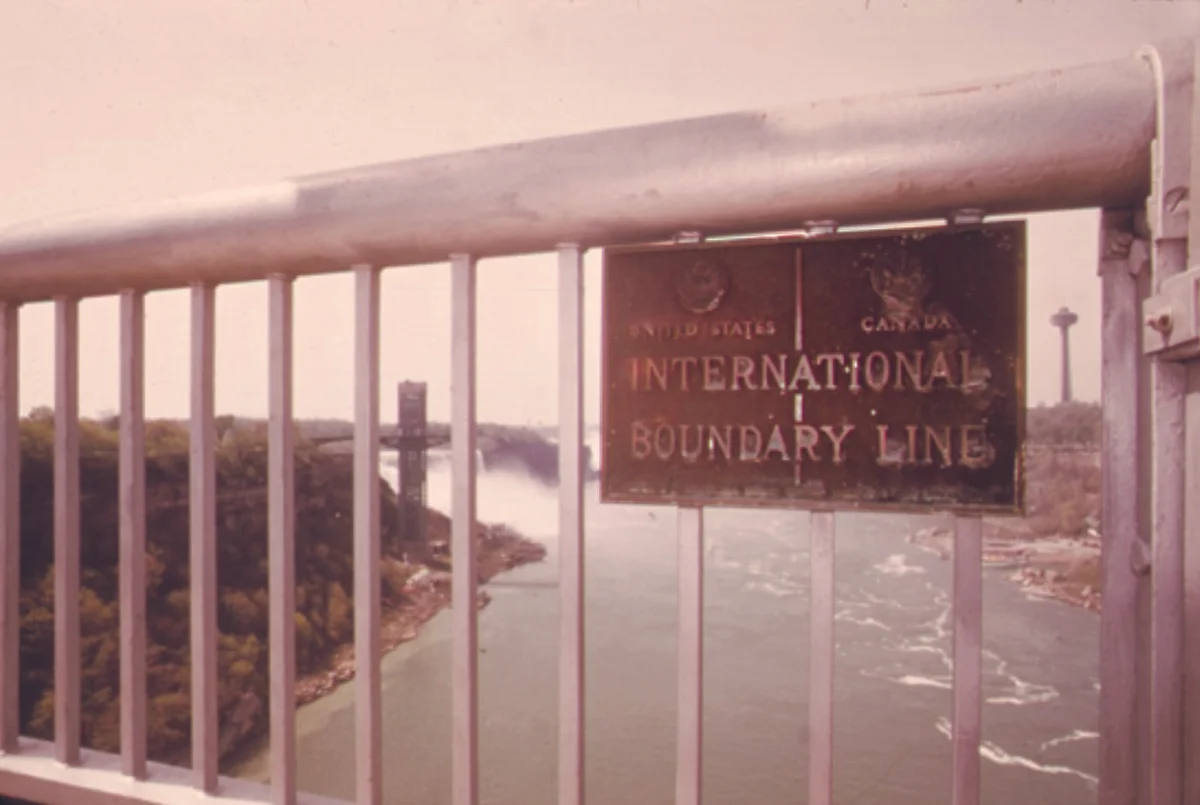
That’s not to say some explanations aren’t welcomed. It would be helpful for instance if Immigration Minister Ahmed Hussen explained what cities and provinces can expect from the federal government to handle the influx of border crossers who started to show up last year. Now numbering in the tens of thousands, they have been offered temporary housing and other considerations that have begun to pinch on certain budgets. It was recently pointed out that some of these folks have been placed in student dorms, but of course, students will need those soon and someone is going to have to move. The province of Quebec has apparently racked up extra costs in excess of $146 million and Toronto has incurred $64 million. Somebody better start explaining soon what the Liberal plan is for this looming crisis besides accusing Canadians of being “irresponsible, divisive, fearmongering” and “not Canadian.” 

This pattern of angrily slinging buzzwords at opponents in lieu of actually saying something helpful is becoming Liberal strategy. Minister Hussen might be frustrated that Canadians are not thrilled with people strolling over the border and claiming refugee status but it is an issue that rankles many. Technically speaking, one is allowed to cross anywhere along the border as long as one reports to Canadian authorities. The common assumption is that all these folks are taking advantage of a loophole under false pretenses but the loophole is there for a reason.
In a National Post article on July 11, 2018, (“Irregular of illegal?”), Tristan Hopper uses the example of Soviet chess champion Igor Ivanov who leapt from a plane onto the tarmac at Gander NL in 1980. Obviously, jumping out of a plane without using the stairs and running across a busy runway would be frowned upon under ordinary circumstances. Instead, Ivanov, representing a Cold War coup, was “never prosecuted after being given political asylum.”

Not analogous to our new friends wandering across cornfields in Manitoba and Quebec these days, but we have to be cautious about any conclusions. Clearly, they are not being driven from a war-torn country, so much as being driven by cab and calmly dropped off. They appear to be under no threat in the US except for being called out for over-staying their welcome there. (Haitians were given temporary asylum after the horrific earthquake that shattered their island home in 2010. Many no doubt settled down into better lives in America and have no wish to go back). Average Canadians are questioning the motives of people who carry their luggage out of a peaceful country and claim to be ‘refugees’. The law stipulates that their cases must be adjudicated based on this claim, not on whether other Canadians are simply sceptical. That however, is not a basis for angrily denouncing the sceptics. Surely, the present influx from the US, unaccompanied by any humanitarian crisis on the other side of the 49th, calls for our refugee response to be re-examined. Certainly, we need more adult communication from the government whose purpose is to serve us, rather than invective and lecturing about how morally righteous they see themselves.

No Free Lunch

(Volume 25 Issue 6)

By Jim Scott

The Baltimore journalist and professional cynic, H.L. Mencken, once wrote: “The aim of practical politics is to keep the populace alarmed, (and hence clamorous to be led to safety), by menacing it with an endless series of hobgoblins, all of them imaginary”. In Ontario’s recently concluded provincial election we saw this practice fully and regularly implemented.

Not that there’s anything new about trying to strike fear in voters by accusing your political opponent of having evil designs on cherished programmes. After all, Mencken was writing in the first decades of the last century when political communication consisted of a whistle-stop tour, the daily newspaper and perhaps a radio speech or two.

With today’s ubiquitous broadband blathering about politics we can, unless we deliberately tune it out, be subjected to spam, tweets, robocalls, 24-hour “news” channels, as well as talk radio and good old print media.

We are supposed to be a more sophisticated and informed populace, but I’m afraid we have, on the contrary, descended into a cocoon of propaganda and blinkered ignorance that we actually cultivate with great passion. Good luck trying to propose anything innovative or imaginative.

During the election opponents claimed Progressive Conservative candidate, (and eventual winner) Doug Ford was in favour of “privatising” health care, and if elected would cut billions of dollars and thousands of doctors and nurses. That this had no basis in fact was irrelevant. Also, that our health care system was long over due for an overhaul was conveniently ignored to focus on the emotional implication of the charge: elect Mr. Ford and fire and brimstone will rain down from the skies. And there won’t be any health care workers around to treat your burns.

Since pollsters had the NDP “neck and neck” with the front-running Tories, no-one had time to break down the silliness inherent in the campaign.

As they thrust this imaginary hobgoblin into Ontario’s politics, the Lib/NDP duumvirate also raised their favourite shiny objects: free ‘this-and that’. Like jangling keys in front of a baby, no politician has ever failed to attract voters to the idiot idea that they are giving you something without payment or consequence. “Free” health care is only safe if Liberals are elected. (Their years of cuts and budget strangulation notwithstanding). Needing to outpace their cousins, the NDP add “free” drug care, “free” post-secondary education, and most alarmingly, NDP leader Andrea Horwath claimed her party would buy back all the hydro assets of the province and turn it into a Worker’s Paradise of cheap electricity!

Rarely does the Canadian media, (a few pundits excepted), question the sanity of handing stuff out with no regard to what it costs, not just in dollars, but in forgone opportunity or future indebtedness. People tune out the conservative position that governments cannot give you anything you don’t already pay for. Governments eager to expand their control over our lives cleverly call taxes something else, (“carbon pricing”) and wrap them in patriotic sacrifice. Older Canadians worry that tax cuts are a byword for ‘service cuts’, while the youngsters are convinced government is the font of largesse when dad and mom cut off the credit card.

Government has no money except what it takes from its citizens.  We grudgingly give up some of our wealth with the understanding others will benefit as well as ourselves. We appreciate the fact we can contribute in small, regular amounts and derive the larger benefit when something bad happens; like any other insurance. But like every other human endeavour, no system is perfect. In order to improve it we must ask questions and have adult conversations about what can be done better. In the present super-charged atmosphere, fuelled by money paid to provocateurs and single-minded advocates, will it ever be possible to even raise an issue without being burned at the stake?

Shame On You Seamus

20_Commentary.jpg

(Volume 25 Issue 6)

By Michael Nickerson

Seamus O’Regan has a dream: an end to homelessness in our time. Of course not for everyone, as he’s just the minister for veterans affairs and not minister for universal housing. No, his mandate is limited and so is his budget. But gosh darn his words flow like water, his aspirations soar high and far; a limitless horizon of hope. If benevolence were bricks, homeless veterans would be moving into mansions as we speak.

The thing is, they’re not. By the federal government’s own estimates from 2014, almost 3000 veterans used shelters that year. But whether they’re in shelters, surfing couches, or living rough in back alleys, the fact is they’ve “fallen between the cracks” as Seamus likes to put it. Others might say they’ve been betrayed by the government and the country they served, but let’s not split hairs here. 

No, this is important stuff to Seamus, a problem he wants to “get rid of,” to “eliminate,” sounding more Mafioso than ministerial in his word choice, though passionate nonetheless. As he recently opined in St. John’s, “there should never be a veteran that’s homeless in Canada.”  Alleluia brother! Let’s go whack some homelessness!

For veterans looking for a roof over their head and some stability in their life, this should seem very encouraging news, perhaps even inspiring. As Seamus put it, “I think we’ve got the tools that we can do it, but we’ll do it together, a whole bunch of groups together.” And there are no shortage of groups and people who want to “do it,” most notably Veterans Emergency Transition Services (VETS). Founded in 2010 to provide aid and support to homeless and at risk veterans, they’ve been putting volunteers on the ground, in cities and towns, shelters and the street, reaching out to veterans with veterans. They’ve helped hundreds across Canada to get off the street, into housing, get the benefits and the resources they’re entitled to. They’ve made sure homeless veterans at least have a meal and an understanding ear. Not bad for an eight-year-old non-profit with limited resources but a lot of willing volunteers.

If nothing else they have a proven strategy - one Veterans Affairs Canada (VAC) has contracted with to some extent to help solve what VAC can’t - one that saw Seamus O’Regan waxing eloquent while seeing volunteers off to do outreach during VETS annual Tour of Duty national campaign in June. So a little more money and support should be able to “eliminate” the problem entirely, don’t cha think? Where there’s a will there’s a way and all that.

Perhaps you’ve noticed that when it comes to Team Justin™ there’s much in purported “will,” but not much in “way.” Consider if you will the recent news that the government has left some $2.3 billion dollars budgeted for military spending to sit idle over the last two years, even while the military asks its members to turn in their sleeping bags due to a shortfall in available kit. And what about the fact that the already delayed and scaled down peacekeeping contribution to Mali is still working on Justin Time™ and seems to be delayed indefinitely?

So, when it comes to VAC and its official plan on veteran homelessness, it might not be much of a surprise that the plan has a five-year rollout, after two years of planning and debating, and like everything else promised to the military and its veterans, it is well over the horizon, past the next election, past another mandate, another carrot to stick with the team.

Seamus recently suggested that the government might dip into its promised $40 billion national housing budget to help build housing specifically for veterans, but stated that “If we can get veterans off the streets now, then we’ll do it now. We’re not waiting on a strategy.” Well shame on you Seamus, because you are waiting. You’re waiting for another day, another time, another stalling tactic. The money, the resources, the people are there to fix the problem. For once all it needs is real will, not the lip service you’ve been giving the people you serve. 

But that isn’t going to happen, is it Seamus?

Solving The Problems Of Canadian Defence

18_Commentary.jpg

(Volume 25-06)

By Sean Henry

In the June issue, (Vol. 25, Issue 5), Colonel (Ret’d) Pat Stogran discusses Canadian defence policy in the context of peacekeeping operations in the new world of digitization, social media and asymmetrical threats. His analysis is valid, but it is suggested that larger issues are involved beyond peacekeeping, and they need to be addressed first.

Those who understand the evolution of Canadian defence policy, and the state of the Canadian Armed Forces, know that the situation has been unsatisfactory since the early 1970s. In fact it is a mess (too few people and equipment shortfalls). Only the sacrifices of serving members prevents major crises. Despite the optimistic outlook presented in the recent Strong/Secure/Engaged document the situation is unlikely to improve in the near future.

There are a number of negative forces impacting defence matters in Canada, and until they are removed   improvements will be sparse – thus corroding the security and well-being of the nation and its ability to advance in a world facing daunting change. The factors emerge from historic trends: anti-military sentiment embedded in the public consciousness; ongoing action to exploit that sentiment by pacifist interests; the “demilitarization” of the armed forces fostered by policies emerging from government reorganization initiatives in the 1970s.

Anti-military sentiment was unleashed in the aftermath of the horror of World War I. A movement known as “liberal internationalism” spread throughout the Western world. Its precepts are based on the concept that it is morally wrong and should be illegal to employ military force in the conduct of international relations. In Canada it was embraced by an emerging class of powerful federal civil servants. The “Ottawa Men.”

Anti-military tendencies were reinforced in the 1960s by fallout from the war in Vietnam. Canadian youth thought it was stylish to support their peers in the US, while draft dodgers from the latter joined Canadian universities, media outlets and arts organizations to give the movement a boost. Peace activists  joined the fray after the election  of  an apparent ally, Pierre Trudeau, as prime minister. They were funded and trained by the Soviets to exploit a perceived weak link in NATO.

In 1943 C.D. Howe, the Minister of Munitions and Supply had authorized the (then) three ministers of defence to bypass government regulations in order to win the war. Scandalized senior civil servants vowed to have the policy rescinded. It took them thirty years, but in 1973 they succeeded. From several government reorganization schemes a new policy defined DND as “just another government department” and classified members of the armed forces as civil servants in uniform. The policy was implemented through Treasury Board Directives and other Central Agency regulations.  

The policy denies that in spite of unlimited liability related to duty, including death, inherent in military service, it is not relevant in matters of government operations. This outlook is driven by self-interest in the realms of power and money on the part of the bureaucrats. Joined by the older factors of anti-military sentiment, it has been a dominant driver in the ongoing decay of the Canadian Armed Forces. It is at the heart of problems ranging from veterans benefits to stalled procurement projects. Most importantly, it is responsible for up to one quarter of the DND budget being spent on projects that have no military utility. 

Finally, these trends are linked to Canadian public reluctance to accept death in defence of national interests. Historically this tendency has been a symptom of the decline and fall of societies. It is so entrenched in Canadian government’s thinking that even peacekeeping is avoided or restricted if there is a risk of casualties.

The public must be convinced its vital interests are at stake, and political pressure needs to be applied to the prime minister to take strong action to rehabilitate the armed forces.
Unfortunately, Justin Trudeau and his ministers do not seem inclined to do this. Their original policy was to restructure the CAF to be “light and agile,” focused mainly on national and North American security issues. Overseas commitments would be limited to peacekeeping. Proposals for improved forces, that emerged in the Strong/Secure/Engaged document, are being diluted, and will likely disappear if President Trump fails to be re-elected.

Pro-defence actors need to close ranks and co-operate to produce public information programs (well beyond academic treatises) using all modern digital means (see Ford’s success in recent ON election) to convince the public that reasonably sufficient armed forces are critical to preserve and advance the well-being of Canadians. The focus needs to be upon defeating enemies, such as Islamist radicals and renegade powers determined to acquire nuclear capabilities. Canada has a special interest in removing threats to international stability since they weaken the process of international trade. Canadians live or die on the success of international trade.

Justin Trudeau has already demonstrated that he will not commit Canadian military forces to combat operations overseas. In this respect he follows his father’s example and thus weakens Canada’s ability to defend itself and influence international affairs. W

John Boyd And The F-35

16_Commentary.jpg

Vincent J. Curtis

After the development of guided missiles in the 1950’s, fighter aircraft came to be seen as a “platform” for carrying weapons systems.  The Avro Arrow was conceived as a weapons platform. Designed to carry missiles in a pod fitted at the bottom of the airframe, the Arrow would destroy an enemy aircraft by dropping a missile from the pod.  The modern F-35 is designed similar to the Arrow.

The F-4 Phantom was the first fighter jet to rely completely on a missile system of engagement - when it was first produced.  Experience in the air war over North Vietnam proved that a pure missile platform was ineffective.  MiG-17s, and -21s flown by the North Vietnamese were agile dogfighters.  If an American F-4 Phantom got close enough in a dogfight to fire a missile, it was often too close to arm, or it simply missed the agile Russian-built jets.  Eventually, the Phantoms were fitted with Vulcan M-61 20 mm rotary cannons to compensate for the failure of the missile technology of that age.

During that time, John Boyd became one of the most influential colonels of the USAF.  Boyd learned his trade as a fighter pilot during the Korean War flying F-86 Saber jets and engaging in dogfights against the better performing MiG-15s of that day.  Out of his experience, Boyd developed his famous OODA loop theory, (i.e. Observe, Orient, Decide and Act).  Boyd became an instructor, and head of the academic section, at the USAF Fighter Weapons School. He had a standing challenge for any of his students: meet him at 30,000 feet at a position of advantage, and if Boyd could not get gun-camera footage of his opponent’s tail within forty seconds, he would pay $40 to the student.  No one collected. 

Boyd also developed his famous Energy-Maneuverability theory which posited, mathematically, the combat performance possibilities of aircraft based upon their speed, thrust, drag, and weight.  Boyd was able to generate graphs and tables illustrating what fighter pilots ought to do in given situations. He accelerated his students’ OODA loops; and the results were seen in improvements in the air war over North Vietnam. His Aerial Attack Study showed that an agile fighter could out-maneuver missiles.

The fame of his success led him to the Pentagon to rescue the so-called F-X project, the jet that would succeed the F-4 Phantom.  Boyd tore the proposed F-X design apart, and restarted the project from scratch.  Boyd’s work led to the F-15 Eagle, and then, when he became disappointed with design bureaucrats adding bells and whistles, to the F-16.  Both these aircraft will perform front-line service into the 2040s.

Boyd grew disenchanted with the F-15 when it became, he thought, too complex, too expensive, too big, and too reliant on missile technology.  Boyd drew around him Pierre Sprey, and Everest Riccioni, who called themselves the “fighter mafia” to design an inexpensive, simple, lightweight fighter.  Boyd could see that the F-15 would be too costly to fully equip the USAF with them, and an inexpensive dogfighter would be necessary to fill the deficiency in combat aircraft.  Thus, the light-weight F-16, and also, indirectly, the F/A-18.

Even the F-16, embellished by the bureaucrats, became heavier than Boyd wanted it to be.  He wanted a stripped-down air-to-air specialist, not a multi-role fighter-bomber; and he wanted passive, rather than active radar.  Nevertheless, an inexpensive and reliable F-16 conducted most of the missions in the 1991 Gulf War.

Boyd died in 1997 when the F-35 was known as the Joint Strike Fighter, but his colleague Pierre Sprey became famous for his criticism of the F-35.  Based upon Boyd’s E-M theory, Sprey argues that the F-35 is a dud of an aircraft: it is too heavy, has too much drag, is too complex, has too high a wing load to be maneuverable, is utterly reliant on technology unproven in combat, and its stealth is defeatable.  Sprey holds the F-35 would be torn apart in a dogfight with a MiG-21.

Sprey believes that the USAF bureaucracy is so enamoured with expensive technology and with the “hi-lo” mixed force concept (F-15, F-16; F-22, F-35) that the F-35 program drops big money in pursuit of a false ideology. Sprey does not believe the “platform” concept and thinks that actual aerial combat will see the resumption of dogfighting, in which the F-35 would be overwhelmed.  He holds the original concept, light-weight F-16 with a more powerful engine than is currently in production is the best air-to-air fighter in future aerial combat.

Despite his vocal opposition, no one who favors the F-35 has come forward to refute Sprey’s argument. Boyd’s proven theories haven’t been repealed. And this should give budget makers pause. The Air Force bureaucracies of their own countries can be as bewitched by expensive technology as those of the USAF. There is no guarantee that ‘toys for the boys’ video game technology will work in actual combat, as was seen in Vietnam. Flying skill, E-M, and OODA loops may still
matter.

The case for a Canadian F-16 is that we have no reason to take a risk on an expensive dud whose capabilities we will never need or use - after a stripped-down air to air specialist met 99 + percent of the RCAF missions over the past fifty-five years, will meet them for the next thirty years, and can be had for a third of the price of the F-35. W

MISSION TO MALI: Inherent Vices And Overlooked Advantages

14_Commentary_Joe.jpg

(Volume 25 Issue 6)

By Joe Fernandez

Scott Taylor did well in his 26 March 2018 “On Target” column “Mission to Mali: What Is Canada’s Long-Term Objective?” Specifically, he points out that politicians are deploying Canadian troops abroad in harm’s way once again, not directly to protect tangible Canadian interests, but rather in the furtherance of intangible political ideals. That Trudeau is deploying Canadian air assets and 250 Canadian troops in the name of the UN differs from Paul Wolfowitz sending American troops to Iraq in exactly that manner in which Coke and Samsung respectively differ from Pepsi and Apple.

Once more, the armchair Rambos are flexing the definition of the word “combat” in a manner that even Gumby would tip his hat to in order to placate a Canadian public hostile to the prospect of Canadian casualties.  

As regards questioning Canada’s long-term objectives in Mali, which have yet to be specified, this cuts both ways. For one thing, the United Nations Multidimensional Integrated Stabilization Mission in Mali (MINUSMA) issued in February 2018 a document titled Human Rights And The Peace Process In Mali (January 2016-June 2017). This document notes that the Malian defence and security forces (MDSF), with which MINUSMA nominally cooperates, have been implicated in
human rights abuses in terms of illegal detentions and illegal treatment of detainees in the name of “counter-terrorism.” In this regard, Trudeau’s support for the MDSF-allied MINUSMA UN mission directly flies against his refusal to sell Filipino strongman Roderigo Duterte Mirabel Québec-manufactured helicopters on “human rights” grounds.

On the other hand, CAF participation in MINUSMA would be far from the first time a military engaged in operations which ended up looking nothing at all like what the objectives were going in. In 1914, the Germans had the Schlieffen Plan and the French had Plan XVII. Little in the ensuing four years resembled either plan. 

Furthermore, as Mr. Taylor alluded to, France has an operation distinct, but not entirely separate, from MINUSMA in Mali. This is France’s Operation BARKHANE, wherein France, since 1 August 2014, has cooperated with Mali, as well as Burkino Faso, Niger and Chad, against “Armed Terrorist Groups” in the region. As Jean-Marc Tanguy pointed out in his article “Au coeur de ‘Gorgonnes 2017’” (“At the Heart of ‘Gorgonnes 2017’”) in the December 2017 edition of the French military magazine RAIDS, key French units have a shortage of helicopters.
Having Canadian air assets and personnel in Mali, irrespective of what the official, political, objective may turn out to be, may at least have the effect of operating in one area and thereby liberating French assets and troops for use elsewhere in BARKHANE. 

Along the same line, the December 2017 French Ministry of the Armies Press Release “Dossier de Presse Opération BARKHANE” emphasises the word “partnership.” This press release speaks of partnership, not merely with the local countries, but also with MINUSMA, which has around twenty French soldiers under the command of French Général de Brigade (BGen) Marc Ollier. France is a NATO, and longstanding traditional, ally of Canada. In this sense, Canadian participation in MINUSMA, irrespective of official explanations as to why, could materially operationalise Paragraph 0606b of pages 6-2 and 6-3 of Canadian Forces Joint Publication (CFJP) 01: Canadian Military Doctrine which specifically gives the Canadian military the mandate to conduct Combined Operations with Allied and United Nations-mandated missions. While Trudeau’s political pronunciamentos certainly satisfy the “United Nations-mandated” aspect of Combined Operations in Canadian Military Doctrine, the fact that CAF participation in MINUSMA will also associate them, however tangentially, to the military efforts of Canada’s ally France additionally satisfies the “Allied” aspect of these Combined Operations. Furthermore, CAF MINUSMA participation would work in parallel with Operation FREQUENCE, wherein RCAF CC-177 Globemaster III’s are supporting France’s BARKHANE.

THE END OF CONFEDERATION? If Our So-Called Leaders Don't Care, All Bets Are Off

(Library and archives Canada 3624693)

(Library and archives Canada 3624693)

By Jim Scott

In recent weeks what passes for the ‘pillars of Confederation’ in Canada have been shaken to their foundations. A New Brunswick man’s Supreme Court challenge of our idiot booze laws has been struck down. On the ‘Left Coast’ British Columbia continues to obstruct the petroleum industry of Alberta and Saskatchewan while paying stratospheric gas prices.

Now you can be a fan of neither alcohol nor oil and still realise that when the political leaders of a country abandon any pretence of constitutionality, the people will be forced to shift for themselves. Confederation was meant to eliminate this ‘beggar-thy-neighbour’ stuff. What do we do when politicians throw the reason for having a country out the window?

It is a fact of history and geography the BC encompasses our western coast. It is also a fact in the 21st century Asia represents our best bet for future sales of oil sands products. Getting them across the Pacific is vital.

Rather than oppose BC’s qualms about oil shipments off their shores, I’m sure most Canadians sympathise with demands for best practices for pipeline construction and environmental monitoring. There are shared federal/provincial jurisdictional issues here that should have been resolved years ago. Petroleum corporations can and do accommodate a variety of such issues and only require that resolutions be reasonable and dependable. What they ask is that the adults at the political table make decisions and stick to them.

Grown-ups seem to be in short supply these days. Debate now consists of screaming matches and ad hominem insults. Facts are not just conveniently ignored but are deliberately excluded. They are replaced with hyperbole and horror stories meant to frighten flighty politicians. (Environmental group Greenpeace has admitted in open court to using these techniques as a matter of policy. Not surprising to followers of Saul Alinsky and his 1960’s radical agenda). British Columbians want their coast kept clean but ignore the existing tanker traffic carrying foreign oil now. They are willing to obstruct fellow Canadians while facilitating the trade of repressive regimes in other parts of the globe.

Our founding document, an act of British parliament, was a workable model. What was not enumerated in specific terms in the Act, (e.g. radio and TV) became residual powers to the federal government. When federal and provincial jurisdictions were in dispute, the federal statutes were to be supreme. Over 150 years disputes arose and mutually agreeable settlements were arrived at. Especially where the provinces could make out like bandits, they conspired to take over the jurisdiction. The federal government agreed to let each province run booze in the 1920’s and gambling in the 1970’s. Al Capone is spinning in his grave.

Thanks to Gerard Comeau we are now aware that the RCMP can be used to hunt down citizens who deign to look after their self-interest by trying to buy booze in cheaper jurisdictions. Mr. Comeau received a fine of $292 for carrying 14 cases of beer and 3 bottles of booze from Quebec to New Brunswick. Not sure what Mr. Comeau’s typical consumption is, but the ruling in the case endorsed each province’s ability to oppress its citizens. As a resident, you are bound like a medieval serf to the regime that distributes adult beverages in your province. As a citizen of Canada, you may buy such products of other citizens of Canada only at the sufferance of the self-appointed monitors of your booze intake. 

Rather than create a nation where the national economy can prosper as a whole, we have slowly descended into a nation of petty fiefdoms where narrow interests can be abused to put the screws to other narrow interests. This is not the great project that we set out to build. If BC makes the best wines, all Canadians should be able to purchase them. If Alberta needs a route to the coast, then, like the railroad so welcomed in its day, a pipeline should be built. We still have a chance to build a prosperous Canada. It seems we’ll have to take it back from the politicians first.

A Case For The Canadian Volunteer Service Medal

“Still, our Canadian youth continue to volunteer to serve and this says a lot about their courage and character.”

“Still, our Canadian youth continue to volunteer to serve and this says a lot about their courage and character.”

(Volume 25 Issue 5)

By Dave W. Palmer

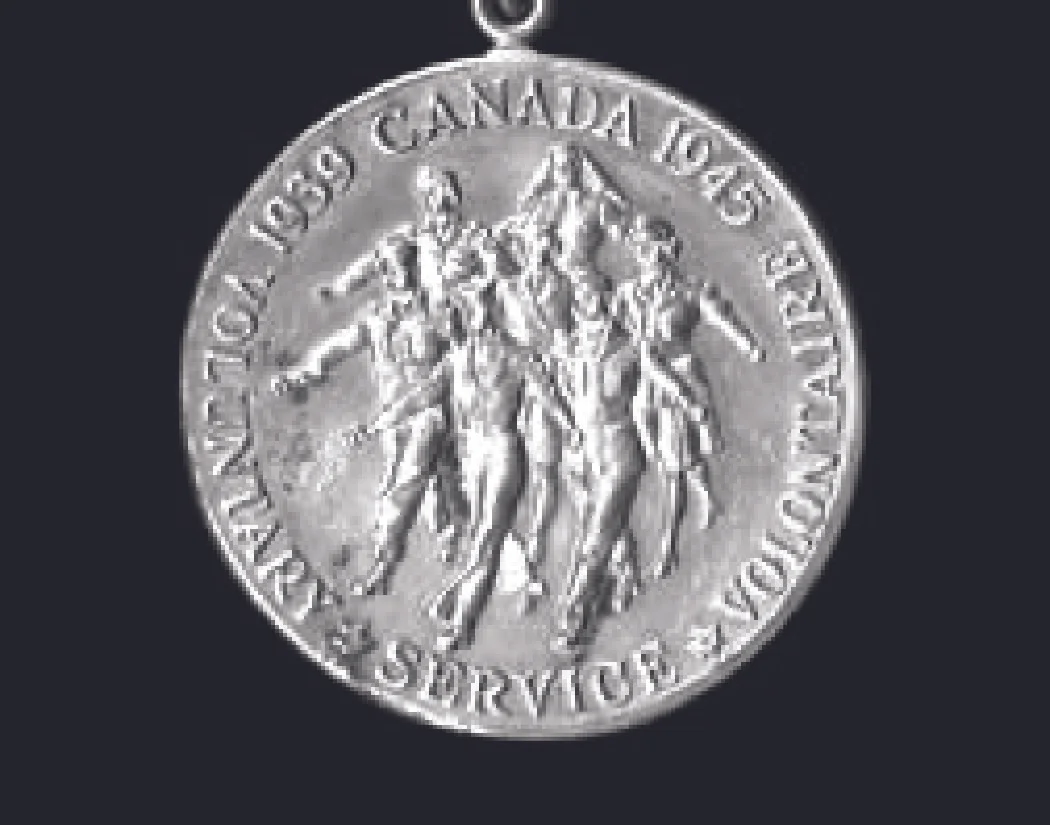
In reflection, I think of our ancestors, the many thousands of Canadians that in the spirit of service for their nation did what was needed when called upon to protect and defend our country our freedoms and the democratic principles that are far too often taken for granted. Our former sisters and brothers-in-arms who volunteered to serve were acknowledged and recognized by the Canadian Volunteer Service Medal (CVSM). Since that time thousands of young men and women did exactly the same thing as those that served before them and took up the torch of service and dedicated a portion of their lives to uphold the same rights and freedoms as those that served before. 

Sadly, on March 1st, 1947, they did away with the CVSM and the tradition of acknowledging and honouring volunteer service by our comrades. Our fellow veterans were no longer recognized. The tradition of honouring the act of volunteerism and treating new volunteers to serve in Canada’s Armed Forces was nixed by the government leaving a gaping hole in the heritage of those that did exactly the same thing as those serving in the past. Since March of 1947, our nation and our government has done little to recognize the loyalty and dedication to one’s country when Canadians elect to join our country’s armed forces. This leaves a huge void, an abyss of forgetfulness when it comes to Canadians that have done what most will never do, to volunteer to serve in the military. Why would we not honour our veterans in the same manner as their forefathers, foremothers and ancestors were honoured with a medal for volunteering?

Not a single person knew what might happen to them when they enlisted and prepared to dedicate a portion of their lives by service in the military. The world was on edge back in the 1940’s as the Manhattan Project created a working atom bomb. Not long after, the Americans used two of these nuclear bombs on Nagasaki and Hiroshima in Japan and that quickly brought an end to WW II. It was not long before Russia obtained this capability and the Cold War erupted. Nonetheless, with nuclear annihilation as a potential weapon, our youth, (now ageing veterans and many more of our comrades that passed away) still continued to volunteer to serve with pride, dignity and honour. For many, who served and did so honourably, they left the military in the pursuit of other interests, yet for their service, they were never once acknowledged or honoured in the same manner as those before them … with a medal.  

Our world seems at times to be going crazy with terrorism and renewed sabre rattling by the big nuclear powers. North Korea sends missiles over Japan and threatens the Americans with nuclear strikes. Sadly, the recent act of criminal outrage in Toronto showed our nation how insanely dangerous things can be. Still, our Canadian youth continue to volunteer to serve and this says a lot about their courage and character. Thousands of veterans have served since the cessation of the CVSM and have not a thing to show for that service. Nothing by way of having a family heirloom to leave their children as a testament to the legacy of having a family member who once served their nation.  

I truly believe that the same honour and dignity that was afforded to our ancestors is surely warranted to our veterans of the past century, yesterday, today and tomorrow. Veterans from the past and today and into the future will continue to volunteer and to serve our great nation so that we may continue to all stand together. In light of fairness and equality for their service and the acknowledgement by the CVSM, our veterans have served and should not be treated any different than their comrades that served before them.

Including The Canadian Public In The Defence Of Veterans

“Britain also offers a coherent model to act to protect Veteran’s interests.”

(Volume 25 Issue 5)

By Joe Fernandez

On 6, April 2018, Pierre-Karl Péladeau’s TVA Nouvelles, and a satellite newspaper, published a story “Le fédéral dépense 1,3M$ pour se defender contre les vétérans” (“The Federal government spends $1.3 million to defend itself against Veterans.”) The article then specifies “Despite a campaign promise to not oblige Veterans to fight in order to obtain indemnities, the Liberal government spent more than $1.3 million in legal fees since 2016 in order to contest Veterans’ requests for help.” It goes on to cite Sylvain Chartrand of Canadian Veterans’ Advocacy as commenting: “This is not normal.”

As per McGill University neuropsychologist Dr. Daniel J. Levitin’s book A Field Guide To Lies/Weaponised Lies, one must consider, not only a statement, but who is making that statement. Pierre-Karl Péladeau is a former Parti Québecois leader who will take, and geometrically amplify, any grain of salt to attack any Canadian government of the day.

Péladeau aside, M. Chartrand has been independently corroborated as being a member of Canadian Veterans’ Advocacy who testified before Parliament on 27 March 2014. This indicates that there is something to Péladeau’s story. The question becomes what to do.

Years ago, Jeff Martland-Rose penned a piece for Esprit de Corps wherein he correctly described and rightfully deplored the treatment of Veterans in this country. But he also unwisely spoke of the numbers of Veterans and former RCMP Constables in the context of their putative anger at being mistreated. This was unwise because there is already a wide gap of experience and of worldview between the veteran and the former constable on the one hand, and the majority of Canadians on the other, reinforcing a sense of isolation and alienation on the part of the former. Someone who is heavily disillusioned with the de jure government would tend to have little faith in elections. Reinforcing the sense of separation from the rest of society; the sense of isolation, among any group of survivors, additionally causes individual survivors to not trust other survivors and other groups of survivors, seeing them as rivals instead of allies. This is why there is an entire constellation of rival Veterans’ groups in Canada and America and, to a lesser extent, in Britain.

Britain also offers a coherent model to act to protect Veteran’s interests. On 31 January 2018, the Democrats and Veterans’ Party (DVP) was officially registered in the United Kingdom. The DVP was founded by Colour-Sergeant Trevor Coult, who won the Military Cross while serving with the Royal Irish Regiment in Iraq. The DVP website (https://dvparty.uk/ ) shows that this is not a single-issue/limited traction political party. On top of the Care of Veterans, and Defence of the Realm, the DVP also advocates for direct democracy, stating “Gone are the days when we sent an MP by horse for three days to Parliament.” The DVP also emphasises “Helping Those In Need,” under which rubric falls “the elderly, the disabled and those in genuine need.” The DVP proposes “mutual benefit programmes and other initiatives where Veterans can be employed to help.”

“We will always be a voice for the most vulnerable in our society, including those that work hard on low incomes.” On healthcare, the DVP emphasises a “focus on prevention rather than just cure. We will put to work our Veterans in helping the youth get fit, and will encourage a healthy, active society.” On education, the DVP, note that “around 50% of graduates work in jobs that do not require degrees,” and proposes “ensuring that every youth leaving education will be equipped to apply directly for a job or create one for themselves.”

Time and propitious circumstance will tell how far the DVP advances electorally. The mere model of the DVP, however, offers Canadian Veterans a concrete alternative to ribbons, stickers and demonstrations in terms of more fully aligning public support with their cause, for the ultimate benefit of wide segments of Canadian society. Militarily, the DVP model is consistent with the successful British civic affairs/anti-partisan model used to win over the civilian population in Malaya. As civic affairs/anti-partisan expert Bernard Fall said in Streets Without Joy: “A dead partisan is spontaneously replaced by his environment. A dead special forces sergeant is not.”

Of Sacrifice And Tragedy

“…the cruelty of random events taking from us worthy sons who should have enjoyed long lives and great achievements.”

“…the cruelty of random events taking from us worthy sons who should have enjoyed long lives and great achievements.”

(Volume 25 Issue 4)

By Jim Scott

Poet T.S. Eliot wrote that “April is the cruellest month,” and so far, he has not been wrong.

In the Ottawa area we were all informed on April 6th that a courageous young man, Jonathan Pitre, had died. Jonathan lived his nearly eighteen years with a severe case of epidermolysis bullosa, a painful skin disease that caused his entire body to break out in wounds at the slightest touch. Despite his constant pain, he was well known in the Ottawa area for his dream of playing hockey and his unyielding effort to find joy and some positive upside to his travails. His mother, Tina Boileau, gave everything, including her stem cells, to give her son a semblance of happiness and hope for the future. Heroic medical interventions were not enough to give Jonathan one more day of life, but his legacy of selflessness and courage will be eternal.

Within days a wider tragedy unfolded when the team bus of the Humboldt Broncos collided with a tractor trailer on a Saskatchewan highway. Young men, likewise in the prime of their lives, were killed and injured in numbers that shook the entire country. Sixteen players and team officials lost their lives. The families of whom they were a part were shattered, and so too were the hundreds of families who hosted them, and others like them, in their homes.

In this hockey-mad country, there are few who do not feel a personal perspective on the theme of tragic loss, opportunities cut short, and the cruelty of random events taking from us worthy sons who should have enjoyed long lives and great achievements. Hundreds of thousands of Canadian girls and boys play hockey and attempt to rise up its ranks to fulfill dreams of glory at premier levels.
(Older versions continue to fool themselves that their personal skill levels have simply gone unrecognised). It is a tie that binds our population, including newcomers from parts of the world where ice is only otherwise known to cool drinks.

As a military magazine Esprit de Corps has spent nearly thirty years making Canadians aware of the young men and women who work diligently to be the world’s best in the profession of arms. Like their sports counterparts, they enter voluntarily into a world where the physical and mental demands are beyond the scope of the average citizen’s daily life.
In the military world it is accepted that the risk of death and injury is not ancillary to their activities, but indeed is an ever-present corollary to training in the first place. Recruits are trained on vehicles and weapons whose purpose is to survive combat and deliver death and injury to others. Even peace-time missions ask more of vehicles, ships and aircraft, and the people who operate and maintain them, than the rest of us encounter on city streets and country highways ever.

I will say on behalf of all Esprit de Corps staffers past and present that our editorial mandate has never been to glorify military exploits. We are proud, of course, of our nation’s military achievements but the record is too redolent of family and personal loss to offer a solid grip on ‘glory.’ The hope instead is that the general reader is reminded of the daily minutiae and decades-long efforts that go into preparing a country and its people for the variety of contingencies that may befall it. We know the military is a tough business. We believe we shouldn’t wait until a plane crashes or a soldier is wounded for our recognition to be re-ignited.

As we watch millionaire hockey players contend again for Lord Stanley’s illustrious mug, we sometimes forget these young men are from small towns. They worked hard and suffered much and rode on buses like the one that was shattered in Saskatchewan. Many are called, says the bible, but few are chosen. Most only dream of what could be and carry on with the more mundane task of getting by. For those who get to don a uniform or a prized jersey, let us never forget the sacrifices made by the person within it.

Just A Cheerleader

“A military nerd would have passed out by half-time given all ordnance and aircraft in play.”

“A military nerd would have passed out by half-time given all ordnance and aircraft in play.”

(Volume 25-04)

By Michael Nickerson

Go team! Pass the beer! Let’s have ourselves a tail-gate party! Forget about football. That’s for wimps. We’re talking a full bore coalition attack on that evil monster of a dictator, Bashar al-Assad. One bad hombre, don’t cha know; a murderous tyrant by all reports. Plays fast and loose with his chemistry set, he does. Damn easy guy to root against, if you ask me. Feel free to boo.

I refer of course to the recent U.S.-led air strike on Syria in response to alleged chemical weapons use by al-Assad forces in the Syrian town of Douma. Serious stuff, presented with all the spin and analysis one would expect of an internationally televised grudge match. Experts and retired generals provided no end of stats, details and interactive game boarding to keep the fans interested: 105 missiles, including 57 Tomahawk cruise missiles and 19 JASSM-ER missiles (first time in combat!) all hitting the field (literally!) and taking it to that Syrian scum. A military nerd would have passed out by half-time given all ordnance and aircraft in play. What a game!

Of course no gaming spectacle would be truly complete without cheerleaders, those fit, good-looking sideshow attractions that keep the mind from wandering when there’s a break in the action. And gosh darn, count on Justin Trudeau to step right up and lead the squad. Give me a T, give me an R, give me an UMP…go TRUMP!

Not that Justin was waving literal pompoms, because in this game, that would be a bit unseemly (leave that to FOX news). What’s called for is somber, stately support of a difficult job well done. “Unfortunate but necessary” was how Justin put it while in Peru at the Summit of the Americas, getting a thank you handshake from U.S. Vice President Mike Pence before heading off for more NAFTA trade discussions and a plate of cassava.

So what is this game exactly? Over 500,000 dead, ten times that number refugees, even more displaced within their own country and nothing more than a wink from the rest of the world. But forty people die from a chemical weapons attack, and now it’s time to drop bombs and wax eloquent about the horrors of the First World War and how it should never happen again. Bit confusing that, even if you’ve been supplied the conventional weapons rulebook.

Ironically, one Canadian has been trying to understand this very question, if tangentially, charged with doing so at the behest of Justin Trudeau as his special envoy to Myanmar. Name’s Bob Rae. Odds are you’ve heard of him; had a bit of a controversial political career. But recently he was sent on a mission to actually figure out the game, or at least Canada’s role in it, specifically with regards to the plight of 671,000 displaced Rohingya now trying to find shelter in Bangladesh.

Now Bob is a smart man, and he came up with some excellent ideas for easing the refugee crisis in the short term and engaging with the Myanmar government in both “principled and practical” ways, as he describes it, to foster a long-term resolution. His recommendations could reasonably be applied to any number of international crises, including the one that has existed in Syria for some seven years now. It’s a good read. You should look it up.

Problem is, Bob not only got the game wrong, he didn’t seem to know he was merely a pawn. Arguing his findings on CBC Radio he opined that “if Canada wants to play a role we gotta up our game a bit.” Cheerleaders don’t get on the field and “play a role,” be it in Myanmar, Syria, Mali, or any number of humanitarian crises that churn on year in and year out. And as Team Justin™ has demonstrated, they don’t even do it at home, our First Nations’ continued suffering being a prime example.

No, cheerleaders come up with slogans, chants, and supportive words to the players on the field. They don’t have to actually play the game, nor even try to understand it. And they certainly don’t factor in the outcome. Go team!