
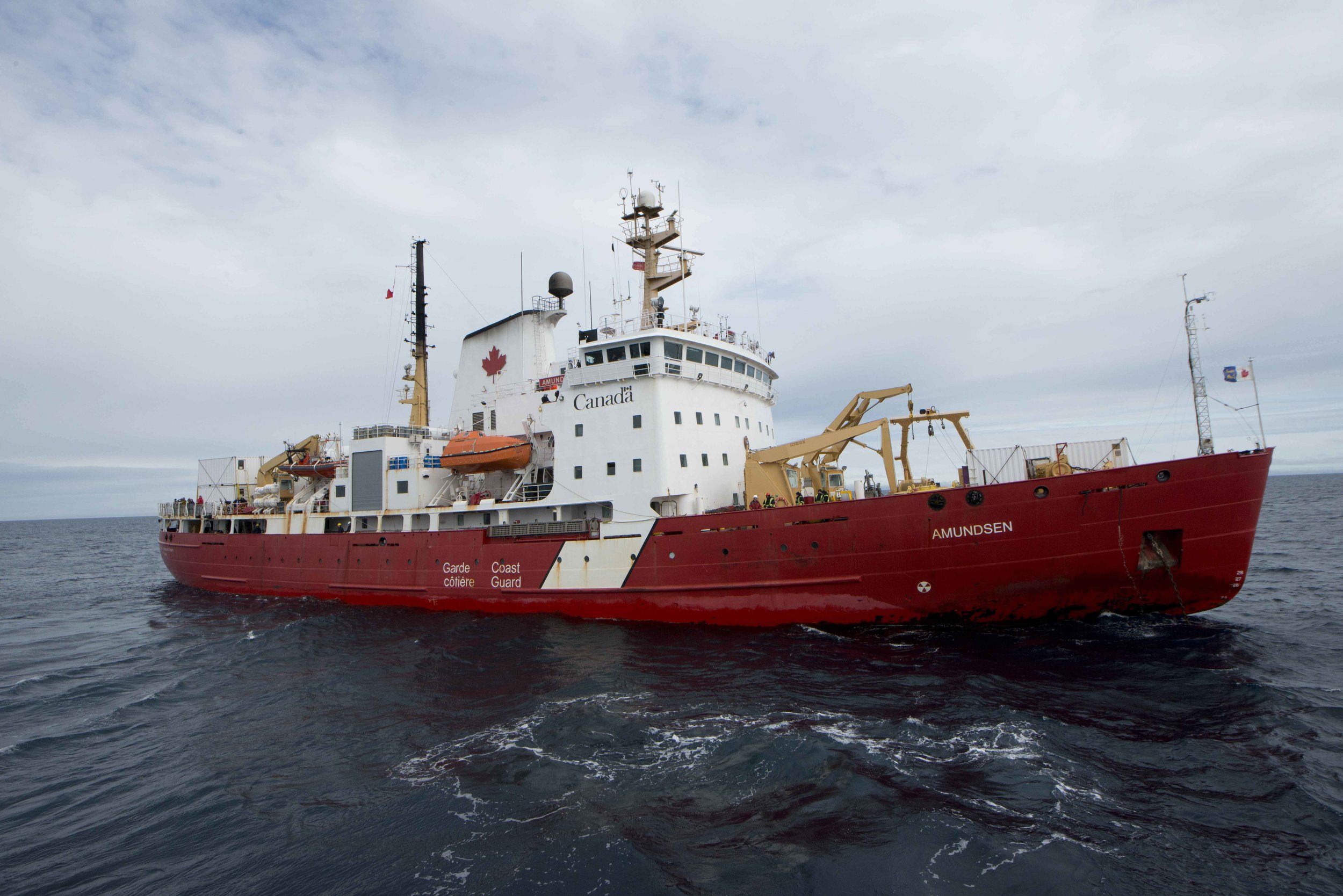
Should Canadian Coast Guard ships be armed? (U.S. Dept. of Defense photo)
By Tim Ryan
The CBC’s Murray Brewster had a report on Jan. 29, 2026 that sparked an interesting debate. He asked: “Should the Canadian Coast Guard be armed”?
https://www.cbc.ca/player/play/video/9.7066690
From the review of Brewster’s reporting on the subject it seems like official Ottawa is dead against such an idea. Natasha Kim, an associate deputy minister at the Department of National Defence, has said that there are “no plans to militarize the coast guard or assign it an enforcement role."
Brewster reported that in testimony before the Commons defence committee last fall, the commissioner of the coast guard, Mario Pelletier, said his ships and crews didn’t have a need to defend themselves because they were not looking for a fight. Pelletier said the expectation is that the coast guard would be defended by the Royal Canadian Navy if it came under attack.
Royal Canadian Navy commander Vice Admiral Angus Topshee told Brewster that arming the coast guard should only happen in wartime. Topshee’s view is that there’s no reason to currently arm the ships; and if there was a need then coast guard vessels could quickly be outfitted with weapons. "I don't see any real reason to go through fundamentally changing the character of the coast guard and arming it, unless there's a compelling reason to do so,” Topshee said.
But Topshee’s plan of quickly strapping on weapons on Canadian Coast Guard ships in the event of an emergency or in a wartime situation has more than a few flaws.
Firstly, in the case of an emergency or wartime, there will be so many more other tasks to do in the midst of potential chaos that arming the ships would just add yet another burden to what would be expected to be a stressed and stretched navy. So why not have the coast guard ships armed in the first place and save the extra effort that would be needed at a time of a national crisis?
Secondly – and more importantly – installing weapons at the last minute on to Canadian Coast Guard ships seems like a disaster in the making. The Royal Canadian Navy would be providing weapons to coast guard crews who had never trained on such systems before. Learning how to use weapon systems at the last minute in a crisis is not the best strategy or an effective one.
Why not arm the coast guard ships and train the crews in the use of weapons now? What’s Topshee so worried about? Is it that maybe that the Canadian Coast Guard might steal some of the limelight from the Navy? Or that some extra funding might be directed to a rival maritime service?
A significant number of countries have an armed coast guard including the U.S. Russia, China Japan, the Philippines, Sweden, Germany, Norway, Finland, Denmark, the Netherlands and France, among others. It makes sense for Canada.
And in other news….How low will the current U.S. administration go when it comes to Canada?
Pretty low it seems.
On Jan. 28, 2026 the CIA used social media platform X to tweet out an anniversary piece about the Iranian hostage crisis. “On this day in 1980, CIA rescued six Americans in hiding at the Canadian Embassy in Tehran, Iran,” the spy agency’s tweet noted.
That sparked anger on the social media platform and allegations the CIA was involved in “stolen valour.”
Readers on the X platform added their own correction: “The Canadian government and Canadian officials in Iran, rescued six Americans who had sought sanctuary at the Canadian Embassy in Tehran, Iran. The Canadians had protected the Americans for two months at great risk to themselves.”
Meanwhile, new questions are being asked in the aftermath of the U.S. attack on Venezuela - does the U.S. have a new secret weapon or is the Trump administration just pumping out more lies and disinformation?
President Donald Trump claims the U.S. used a weapon he referred to as a “discombobulator” to capture then-Venezuelan President Nicolás Maduro this month, CNN and other U.S news outlets have reported.
“The discombobulator, I’m not allowed to talk about it,” Trump told the New York Post in an interview. The U.S. president claimed that the so-called discombobulator “made [enemy] equipment not work” during the capture.
That sparked off speculation that the U.S. used some kind of secret sonic weapon during the raid.
Or not. CNN quoted a senior US official who pointed out that Trump was likely confusing various systems used by the US military. “The president may be conflating several capabilities into a single weapon that doesn’t exist,” the senior official told the news network. US forces did use cyber tools to disable early warning and other Venezuelan defence systems during the operation, it also utilized existing acoustic systems to disorient personnel on the ground, CNN added.
Days after the U.S. military attack on Venezuela, White House press secretary Karoline Leavitt reposted a tweet from Republican Mike Netter of comments supposedly from a Venezuelan security guard. The guard—or at least according to Netter -- claimed the US “launched something” during the operation that “was like a very intense sound wave.”
“Suddenly I felt like my head was exploding from the inside,” the security guard supposedly stated. “We all started bleeding from the nose. Some were vomiting blood. We fell to the ground, unable to move.”
But Netter gave no source for the transcript of the so-called “interview” and it wasn’t long before the post was denounced online as a fabrication and utter drivel.
But the Netter X post of the supposed interview transcript became the basis of a number of news articles from various outlets, despite the fact that there was no evidence to suggest the statements were even real.
Welcome to the world of official U.S. government disinformation.
(With files from David Pugliese)
