
By Military Woman
Question:
Should Canadians start discussing the evolving role of women in mandatory national service?
Answer:
Yes. Most Canadians do not spend much time thinking about military conscription. That is understandable, since Canada currently has no mandatory national registration system or military service requirement. Outside the First and Second World Wars, military service in Canada has been voluntary. But as global security becomes more unstable, a once-distant question feels more immediate: if a future crisis forced Canada into conscription, should women be included?
Around the world, the old assumption that compulsory national service obligations apply only to men is being challenged. While most countries still maintain male-only draft systems some are moving toward sex-neutral or “universal” conscription. Canada should begin thinking seriously about where it stands.
The Five Eyes Context: A Shared Volunteer Tradition
The United States, the United Kingdom, Australia, New Zealand, and Canada make up the Five Eyes alliance. These countries all share a long tradition of professional, all-volunteer forces. In these societies, the focus has historically been on expanding equality of opportunity by opening combat and operational roles to women, rather than on equality of obligation.
At present, the United States is the only Five Eyes member with a standing peacetime draft-registration system. Under the FY2026 National Defense Authorization Act, the U.S. is moving to automatic registration. By late 2026, the Selective Service System is expected to use federal records to register men aged 18 to 25 automatically. Despite years of debate, women are still not included in the registration mandate.
Registration Is Not the Same as Conscription
To navigate this debate, it is important to distinguish between identifying a population and drafting it. Registration identifies the people who could be called upon if needed, while conscription refers to actual compulsory service. The two concepts are related, but they are not interchangeable.
Other countries take a more targeted approach. Ukraine, for example, does not generally conscript women, but it does require military registration for women in medical and pharmaceutical fields. That allows the state to identify essential talent without triggering a broader call-up of the female population.
The Myth of the One-Size-Fits-All Model
When Canadians look at countries where women are already part of mandatory service systems, there is no single template. Israel is the example most often cited, but even there the system is not fully identical for women and men. Women generally serve for 24 months, while men serve 32 months. Although women’s participation in high-end operational roles has expanded significantly, about 10% of roles remain closed. However, that number may soon fall, as Israel’s High Court this month directed the Israeli Defence Forces to open Armored Corps trials to women by November 2026.
Nordic Normalization: A Shared National Obligation
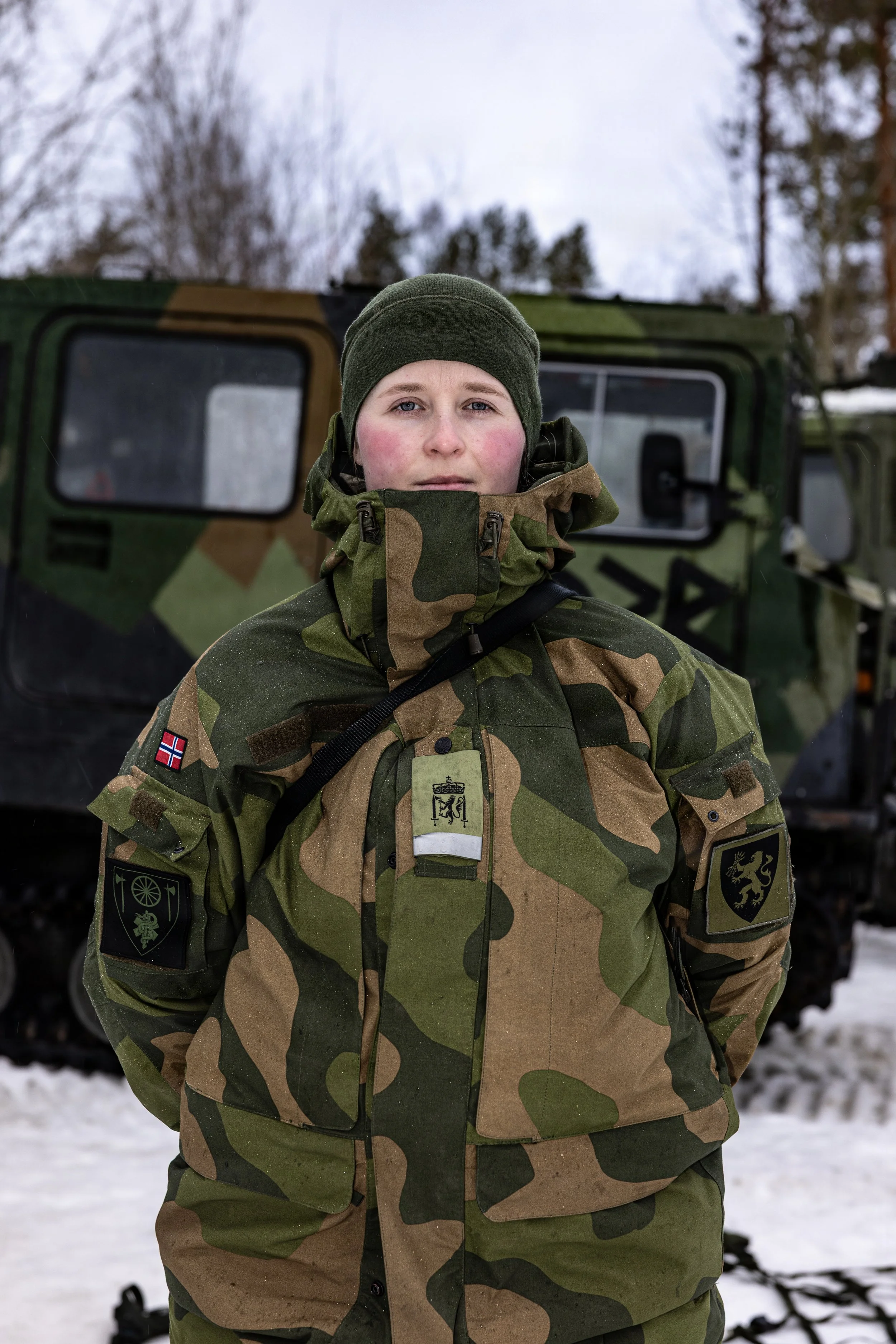
The clearest shift toward true equality of service obligations has come from the Nordic countries. Norway introduced sex-neutral or universal conscription in 2015, followed by Sweden in 2017. In Denmark, women turning 18 after July 1, 2025, are now brought into the same assessment and lottery framework as men, with selected citizens serving the same 11-month term. These Nordic nations are not treating women as optional add-ons for military service; they are treating women as equal citizens with the same civic obligations for national service as men. This reflects a "total-defence" approach where national resilience is understood as a shared civic responsibility.
Conclusion: Equality and Responsibility
Canada has largely avoided a debate about women and conscription because it has relied on an all-volunteer force. But if a serious national emergency ever overwhelmed the volunteer force, the question of who should be included in conscription would arrive quickly.
It is hard to see how Canada could credibly argue that women should have equal access to military careers and leadership, but not equal responsibility if national security were at stake.
If equality means anything, it cannot stop at opportunity. Equality must also include responsibility. Canada should start thinking through the implications of universal conscription now, while it still has the luxury of time.
