
By Scott Taylor
As a close follower of all things relating to the state of the Canadian Armed Forces, it would be an understatement to say I was shocked by a recent Ottawa Citizen Headline: "Canadian Military wants mobilization plan in place to boost reserves to 400,000 personnel".
The clarifying subhead helped to explain why I found this story so startling: "The Canadian Forces has established a “tiger team” to look at how such a massive influx can be achieved, as the current reserve strength stands at 28,000."
That would entail a whopping thirteen-fold increase in reservists from the current, woefully understrength military reserve force.
Should the regular force remain at its current authorized strength of 75,000 that would put nearly a half a million Canadians into a military uniform for the first time since the Second World War.
To put this in perspective, for the past decade the CAF have faced a personnel shortfall crisis wherein recruiting and training has failed to keep pace with the number of trained service members taking their release from the military. Out of a combined regular and reserve authorized strength of 105,000, there are currently an estimated 14,500 vacancies in the CAF. The reason the combined number is used is that many reservists have been called up to full time contracts to fill in crucial vacancies in the regular force.
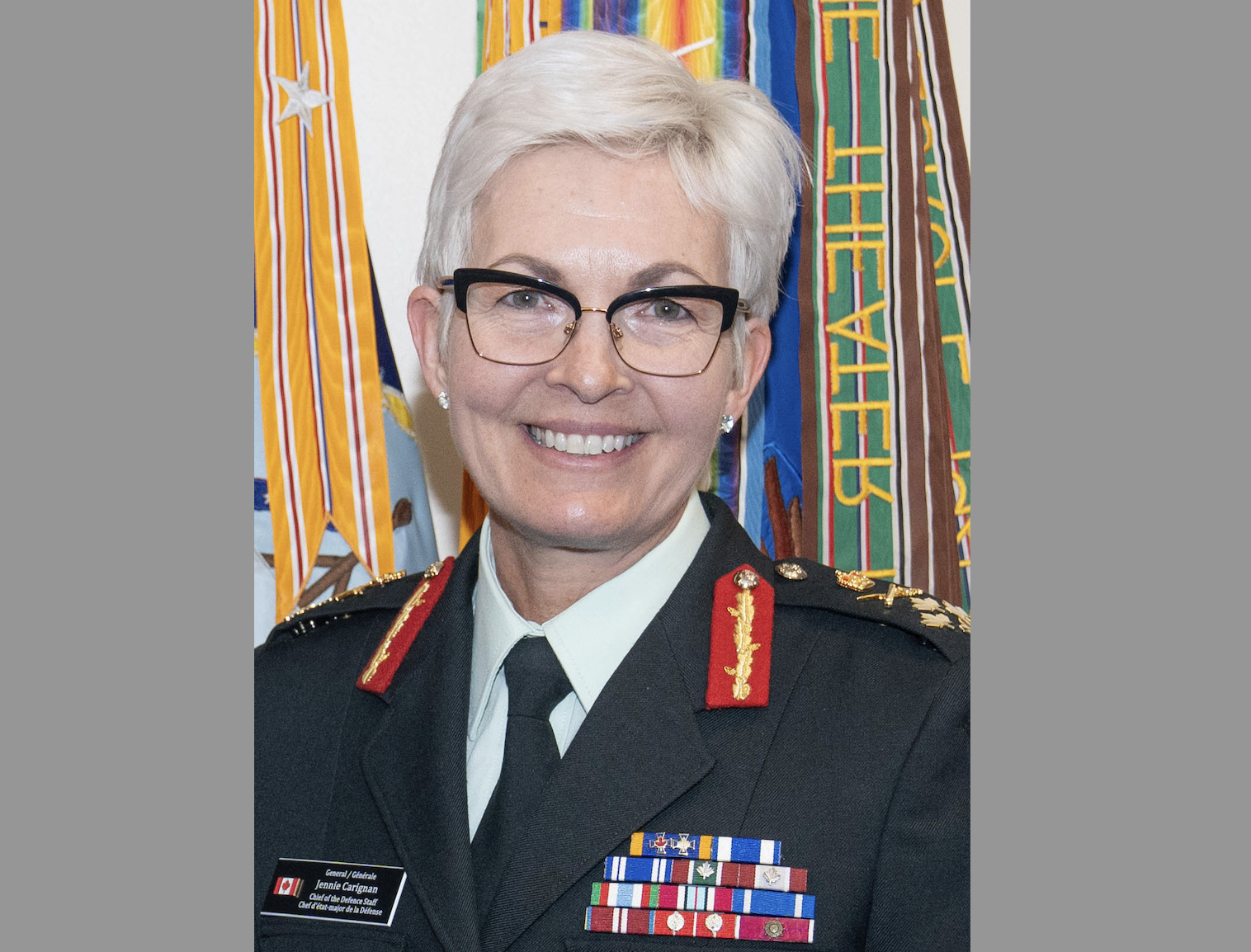
At a recent Parliamentary Committee hearing, Chief of Defence Staff General Jennie Carignan reported that the Canadian Armed Forces is on track to recruit and train 6,400 personnel this fiscal year. While that is a higher number of recruits processed than in recent years, it barely keeps pace with those taking their release.
It certainly will not address the gaping 14,500 vacancies in the short term.
In fact, it was not expected that the CAF could return to its current authorized strength until 2035. Now we learn that there is a plan afoot to balloon the reserves to 100,000 primary personnel and an additional 300,000 supplementary reservists.
For those not familiar with these terms, primary reserves would consist of part time soldiers who would report to their armouries for training on a regular basis. Historically the supplementary reserve was a list of former regular and reserve force personnel who signed up to voluntarily return to service in the time of a national crisis.
However, following the Cold War the Supplementary Reserve list withered on the vine. In 1995 there were roughly 47,000 personnel on the Supplementary Reserve list. But that number dropped appreciably in 2009 when contact letters went unanswered and only 23,000 names remained active.
By the end of March 2011 that number was down to 19,000, and dropping fast. Current estimates put the Supplementary Reserve list at roughly 4,400.
Thus it is puzzling that General Carignan and Department of National Defence deputy Minister Stephanie Beck would have hatched this ambitious plan to mobilize so many Canadians.
The question also begs where would you possibly find 300,000 veterans of the CAF that would be able and willing to return to service.
The initial directive to create a 'tiger team' to study this mobilization plan was first issued by Gen Carignan and DM Beck on May 30, 2025. Apparently that 'tiger team' for this Defence Mobilization Plan (DMP) was stood up at the National Defence Headquarters on Carling Campus on June 4, 2025.
No additional details were provided to the Ottawa Citizen, and no comments were provided as to the progress made to date.
However, Gen. Carignan and DM Beck pointed out that their initiative would require a 'Whole of Society' engagement which means that the Department of National Defence will not be acting alone to achieve this lofty goal.
One clue as to where they are headed with this is an acknowledgment that the CAF tiger team will be consulting allies such as Finland for their expertise in maintaining large standing military reserve forces. For the record, Finland's solution is the fact that military service is mandatory for all males and voluntary for females.
While I am personally in favour of mandatory national service, I'm not sure how such a measure would fly given the current political climate in Canada.
That said, if Gen Carignan and DM Beck's scheme does somehow come to fruition, the question then begs, where do they plan to house all these personnel. In a recent report by the Auditor General the Defence Department was slammed for not addressing the housing crisis for military personnel. Not only was the quantity insufficient - it is estimated that there is a shortfall of some 3,700 housing units, but the quality was also lacking.
Among the deficiencies noted by the Auditor General it was found that there were 227 high priority repairs required across 32 DND residential buildings, with only 5% of those repairs being addressed. There were also faults found like a lack of safe drinking water, lack of WiFi, and communal showers rather than individual stalls were all noted in the AG's report.
This is not a new development. The average age of DND accommodation infrastructure is 60 years and a lack of foresight and investment in maintenance has led to the present mess.
If there is a silver lining to the CAF's personnel shortfall crisis is that if the ranks were actually fully staffed, thousands more accommodation units would already be required.
Before looking to enlist hundreds of thousands more soldiers, the CAF needs to start taking proper care of those already in uniform.
