
By Scott Taylor
On Sunday July 28, while awaiting the start of Canada's World Cup soccer game against South Africa, I took in the CTV News weekend political show Question Period.
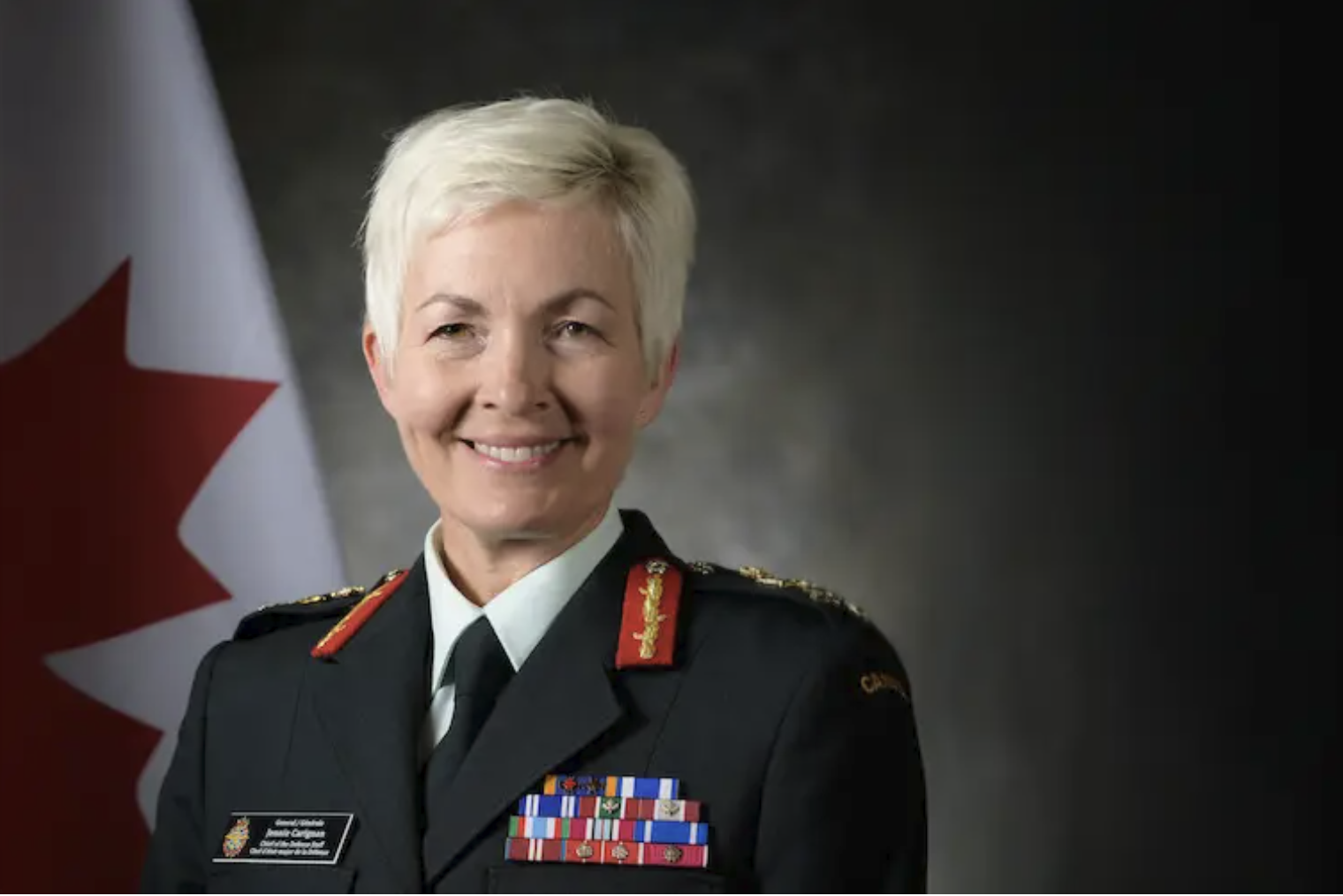
The segment I was most interested in was an exclusive one-on-one interview between host Vassy Kapelos and Canada's Chief of the Defence Staff, General Jennie Carignan.
I was hoping to get some valuable insights into Canada's evolving defence posture following Prime Minister Mark Carney's remarks that our relations with our US ally have been 'ruptured' in the wake of the annexation threats made towards Canada by President Donald Trump. I was hoping to hear clear and detailed plans for General Carignan's widely publicized expansion of the regular and reserve forces, plus her suggested creation of a 300,000 strong Supplementary reserve comprised of a core of civil servants with one week of military training and no uniforms.
General Carignan is also on the record recently to state that while Canada will not be a part of Donald Trump's military Operation EPIC FURY campaign against Iran, Canada is prepared to help defend our Gulf State allies in the region. The question to General Carignan stemming from that statement would be "with what?"
To be fair, host Kapelos did not ask General Carignan about any of those subjects.
Instead the CDS was able to bring up all the old favourites.
When asked what she believes is the primary threat facing Canada moving forward, the country’s top soldier pointed to missiles developed with new technology coming from Russia.
“The threat to our continent is mostly related to the new missile technologies and the new vehicles of delivery that Russia is developing,” the CDS stated.
For good measure she added a couple of the other 'usual suspects' in our threat assessments. “North Korea, and then we’ve even seen it with Iran, with the cruise missiles, long- and medium-range. Our adversaries have developed a lot in that technology over the past few years, so now it’s about protecting the continent against those potential threats.”
Just a quick reality check here folks. While there are rumours of Russia developing a nuclear powered cruise missile and building attack submarines with hypersonic torpedoes, the latest news from the war in Ukraine has Russia back on their heels. Recent long range strikes by Ukraine have targeted military and energy resources outside Moscow and beyond.
The Armed Forces of Ukraine's destruction of oil refineries has led to a critical shortage of gasoline across Russia and President Putin himself recently warned on state media that the Russian people they will be facing some difficult times. After more than 4 years of localized regional conflict the Russian military is no closer to victory over Ukraine than it was before the start of the invasion in February 2022.
The claim of North Korea and Iran possessing any long range missile threat to the North American continent is premature at best. The North Koreans can successfully target the Sea of Japan, while the recent conflict between the US and Iran has shown Iran to have merely a regional strike capability.
In part, General Carignan explained that this enhanced Russian missile threat has prompted a change in Canada's strategic course. According to General Carignan we are now moving away from preparing to fight counter-insurgencies in places like Afghanistan and gearing up to defend Canadian home territory.
“We were very much focused on defending Canada abroad, but with the current development in missile technologies, especially from Russia, now we have to make sure that we are well positioned in the Arctic, especially, and for the defence of Canada’s territory,” Carignan said, pointing specifically to capabilities such as “air defence systems, sensors from underwater, all the way up to space.”
The fact that we are only now switching from prepping for war in Afghanistan to that of home defence seems a little slow off the mark. Canada ended the combat mission in Afghanistan in 2011 and wrapped up all military training operations in 2014. That was 12 years ago.
The Russian aggression in Ukraine began in 2014 with Putin's annexation of the Crimea. Canada was one of the first NATO counties to come to Ukraine's assistance with the establishment of Operation Unifier in 2015. To date Canadian combat instructors have trained more than 30,000 Ukrainian recruits as part of that operation. In 2017 Canada stood up a Forward Based Battle Group ion Latvia as part of NATO's operation REASSURANCE to deter any Russian aggression in the Baltic.
How is it that General Carignan is only now referring to this shift to meet the Russian threat as her 'new structure'. Since the war in Ukraine began over 4 years ago, Canada should have been investing in the purchase of all the capabilities that were proving themselves on the modern battlefield. Namely; first-person-view (FPV) drones, lingering drones, counter drone measures, low-level air defence systems and armoured self propelled artillery pieces.
To date Canada has acquired only one Very -Low-Level (VLL) Air Defence System which is forward based in Latvia. That's it.
On the subject of the acquisition of the controversial F-35 fighter jets, Kapelos acknowledged that the ultimate decision on the purchase would be a political one and therefore she did not pressure the general.
However, only recently US Air Force General Gregory Guillot, the Commander of the joint Canada-US NORAD Alliance stated to a US Senate Armed Services committee that the sophisticated F-35 jets are not necessary for the defence of North American airspace.
“Frankly we don’t need fifth (generation) to defend our borders,” Guillot told U.S. lawmakers on March 19 at the hearing.
The NORAD commander said fifth-generation jets, considered the most advanced type of aircraft, had a role to play in attacking overseas targets. “Those capabilities are better used overseas where their stealth, air to ground weapons and penetration capability are needed.”
These comments were widely reported in the Ottawa Citizen as they ran in stark contrast to arguments used by both RCAF Commander Lt. General Jamie Speiser-Blanchet and CDS General Carignan. Both generals have repeatedly stated that the F-35, and only the F-35, are necessary in the RCAF arsenal to meet our interoperability requirements for NORAD.
According to General Guillot that is simply not true.
Pity that Kapelos did not get around to questioning General Carignan on that professional difference of opinion.
