ON TARGET: Canada’s Weaponization of Information

Screenshot 2019-01-28 11.32.42.png

By Scott Taylor

Last week Canadian Brigadier-General Jay Janzen gave a presentation at Mount Royal University in Calgary wherein he exhorted all Canadians to be wary of Russia’s disinformation campaign. Janzen’s official title is the Director General of Military Strategic Communications, so it is safe to say the he is dutifully spouting the party line.

According to Janzen, average Canadians need to be aware of the fact that Russian President Vladimir Putin has “weaponized” information and his trolls are actively targeting Canada’s upcoming Provincial and Federal elections. 

Ironically, it was Canada’s own Chief of Defence Staff, General Jonathan Vance who implemented a policy in 2015 wherein he called for the “weaponization” of the Canadian Armed Forces Public Affairs.

This effort is headed by none other than Brigadier-General Janzen, hence it would seem the pot is calling the kettle black.

Reading a transcript of Janzen’s Calgary presentation, I was startled to see just how far this strategic communicator was prepared to stretch the truth in order to dis-inform his audience. At one point, Janzen asks, “Does Russia have the right to invade Crimea and Ukraine? To seize terrain for the first time since the Second World War by force?”

That’s right folks, not only did Putin grab this land, but according to Janzen this is the first such occasion anyone has used military force since 1945.

In response to his own rhetorical question, Janzen shook his head and said, “We can’t let [Russia] destroy the rules we have set up.”

So, off the top, Janzen makes a ridiculously wrong overview of the past 74 years and then points to the west as the purveyors of peace and the ones who set up the rules for the world to follow.

On his first claim that Putin and the Russians are the first to use military force to seize terrain since the Second World War, how is it possible that this man rose to the rank of Brigadier and yet remained completely unaware of the multitude of wars which have taken place, not only in his own lifetime, but also while he served in uniform? Even if you want to stick with the ‘bash Russia’ theme, how could Janzen not remember the Soviet Union’s decade long occupation of Afghanistan from 1979-1989.

In 1982, Argentina invaded the Falkland Islands to seize terrain. Thanks to the martial prowess of the British military they didn’t get to keep it. In 1983, the U.S. invaded Grenada, which to this day remains a U.S. protectorate.

There was a series of bloody conflicts in the 1960’s between India and Pakistan, the result of which being that East Pakistan is now Bangladesh.

Saddam Hussein invaded Iran in 1980 and he invaded Kuwait in 1990. He didn’t get to keep it, but he did seize terrain with military forces.

The collapse of the Soviet Union and the breakup of Yugoslavia in 1991 led to the military seizure of a lot of terrain by a multitude of various factions. This resulted in widespread ethnic cleansing, and in many cases, ongoing instances of frozen conflicts and unrecognized breakaway separatist states.

As for Janzen’s assertion that we in the West set up the rules, let’s hope that Putin does not follow in our footsteps.

In 1999, NATO bombed the bejeezus out of Serbia in order to wrest away the sovereign territory of Kosovo. That entity declared independence in 2008, but remains a failed state awash in crime, corruption and poverty. 

In 2001, the U.S. invaded Afghanistan, toppled the Taliban and established the most corrupt regime on the planet. Canadian soldiers fought and died propping up those Afghan criminals from 2001-2014. The U.S. remains in Afghanistan; the Taliban is resurgent; the drug trade has flourished and the country remains embroiled in a bloody civil war. 

In 2003, the U.S. lied to the world by claiming Saddam Hussein possessed weapons of mass destruction in order to justify an invasion based on self-defence. That once progressive country has been reduced to a failed state awash in violent anarchy.

In, 2011, a Canadian-led NATO mission bombed the crap out of Moammar Gadhaffi in order to ensure a victory for the Libyan rebels. Then it turned out those rebels were a collection of criminals and Islamic extremists. To this day, Libya remains awash in violent anarchy.

According to Janzen, the way for Canadians to defeat the Russian campaign of disinformation is to get their news from credible sources. 

I second that motion.

ON TARGET: Canada needs to focus on who our troops are fighting for…and not simply demonize those who we are fighting against.

By Scott Taylor

Last Friday there was news out of Libya a top leader of al-Qaeda had been killed in a military operation in the southern city of Sabha. Known as Abu Talha al-Libi, this senior al-Qaeda terrorist was allegedly killed in a raid mounted by troops loyal to General Khalifa Haftar.

Haftar is just one of numerous ruthless warlords vying to control Libya which has been gripped by violent anarchy since Muammar Gaddafi was ousted and executed in October 2011.

On the surface, the elimination of Abu Talha must been seen as a good thing: One less nasty al-Qaeda sleazebag to walk the planet.

Unfortunately, his death also allows us to recall his career highlights as a terrorist. It turns out the Abu Talha was first apprehended by Libyan security forces in 1996 when he attempted to kill President Gaddafi.

He was safely behind bars until the NATO –backed Libyan rebels overthrew the Gaddafi regime and emptied all the Libyan jails.

Technically, Abu Talha was a political prisoner and his anti-Gaddafi street credit was solid since he had attempted to kill him.

The fact that he was also an avowed Islamic extremist matters not because at that juncture, Western media had so demonized Gaddafi and his loyalists that anyone opposed to him simply had to be a good guy.

Fast forward to 2013 and Abu Talha is somehow transported from war-ravaged Libya to Syria where Western backed rebels were attempting to overthrow President Bashar al-Assad.

Canada’s then Foreign Minister, Conservative John Baird was among the loudest of the international voices demanding, “Assad must go!”

Abu Talha and other members of al-Qaeda were quick to heed Baird’s call-to-arms. These extremists soon created a new fighting force known as the al-Nusra Front and they quickly became the most effective of all the anti-Assad factions on the Syrian battlefield.

Despite their known links to al-Qaeda, the Western media had so demonized Assad by this point, that it seemed to matter naught that his enemies were in fact Islamic extremists.

By 2014, certain elements of al-Qaeda and al-Nusra in Syria created an even nastier gang of evildoers known as Daesh (aka ISIS OR ISIL). Daesh fighters soon swarmed into Iraq and captured vast tracts of land in what is known as the Sunni Triangle, including the city of Mosul.

In response, Canadian fighter jets and Special Forces troops joined a U.S. led international coalition to contain and ultimately defeat the Daesh threat.

Abu Talha’s work was done in Syria however and in 2014, he returned to the still war-ravaged Libya. Coincidentally, it was at that juncture when Daesh emerged as a fighting force in Libya, Egypt and Afghanistan.

Now that Abu Talha has been killed he is once again categorized as a vile member of al-Qaeda, the Osama bin Laden led terror organization that attacked the Twin Towers on 9/11. Bad guy dead equals good news.

What it also exemplifies is the power of our propaganda to oversimplify conflicts into good versus evil scenarios.

We were told Gaddafi was bad, we needed to fight him, and since we know that we are intrinsically the good guys, by extension anyone else fighting him must be good too.

There was plenty of evidence at the time that the rag-tag forces fighting Gaddafi were comprised of unsavoury elements – Islamic extremists, criminals, etc – but everyone acted surprised when the war ended and this truth could no longer be hidden.

The numerous militias, which the West armed and supported with a Canadian-led NATO air armada – refused to disarm in the wake of Gaddafi’s murder. Instead, they immediately began fighting amongst themselves to establish personal fiefdoms and criminal empires.

Had the Western media been more diligent in their duty and questioned whom we were fighting for in Libya rather than simply regurgitating the demonizing press lines about what a bad guy Gaddafi was, Abu Talha would never have been released from his Libyan jail.

In Afghanistan, for more than a decade Canadian soldiers fought and died to prop up the most corrupt regime in the world. This was in part due to the media again focusing on demonizing those who we were fighting against – the Taliban, rather than providing an equally honest look at the scumbags we were fighting for.

This is in no way the fault of our military. As an institution, the Canadian Armed Forces are to obey authority without question. It is the media’s role in a democracy to question authority. In this they have failed.

ON TARGET: Ukraine Re-Writes History by Celebrating Nazi Collaborator

http://wikimapia.org/5634593/Stepan-Bandera-Monument

http://wikimapia.org/5634593/Stepan-Bandera-Monument

By Scott Taylor

For the approximately 200 Canadian military trainers currently deployed to Ukraine, it is likely that on the first of January they would have witnessed a torch lit procession. Throughout Kiev and numerous other towns in Western Ukraine, thousands of civilians took to the streets – not to usher in the New Year – but to celebrate the 110th anniversary of the birth of a man named Stepan Bandera.

This was not the first time Ukrainian nationalists marched with torches to celebrate Bandera’s birthday, but it was the first time such a spectacle was an officially sanctioned affair.

On December 28, 2018, Ukrainian Parliament passed Resolution 9234, which, among several other notable dates, made January 1 a formal holiday in Ukraine.

The city of Lviv, which was Bandera’s birthplace, went one step further by declaring 2019 to be the ‘Year of Stepan Bandera’.

Ukrainian Independent News Agency (UNIAN) described Bandera as “a Ukrainian politician, one of the ideologists and theorists of the Ukrainian nationalists movement in the 20th Century.”

Missing from this abbreviated resume is the fact that during World War II, Bandera was not only a Nazi collaborator, but also a direct participant in Hitler’s Holocaust.

Israel’s ambassador to Ukraine, Joel Lion published a statement announcing that he was “shocked” by this official honouring of a notorious Nazi. “I cannot understand how the glorification of those directly involved in horrible anti-Semitic crimes help fight anti-Semitism and xenophobia,” wrote Lion.

In June 1941, when Hitler invaded the Soviet Union, Bandera was the Chairman of the Organization of Ukrainian Nationalists (OUN). The Nazis saw Bandera and his fellow Ukrainian nationalists as natural allies in defeating the Soviets. In advance of the invasion, these ex-patriots were armed and equipped by the Germans and formed into a special unit called the Nachtigall battalion.

Roman Shukhevych was the commander of Nachtigall and he, like Bandera is currently revered as a Ukrainian nationalist hero. Unfortunately for their thousands of victims both Shukhevych and Bandera were bloodthirsty anti-Semites.

For several days at the end of June 1941, when Nachtigall had captured Lviv from the Soviets, a brutal extermination of Jews took place in the city. An estimated 4,000 - 6,000 Jews were slain in an orgy of bloodletting that shocked even the Nazi Germans.

Ambassador Lion noted that Bandera and Shukhevych are currently seen by many Ukrainians as “heroes who fought for Ukraine’s independence; whereas they were both historically a horror for the Jews."

When the fortunes of war turned against Hitler, both Bandera and Shukevych turned against the Germans, and then in turn resisted the Soviets.

After Ukraine gained its independence from the Soviet Union in 1991, their initial collaboration with the Nazis and participation in the slaughter of Ukrainian Jews prevented Bandera and Shukevych from being considered national role models. However, much to the consternation of the Jews, and the Poles – whom Bandera’s OUN also massacred in the thousands – over the past three decades history in Ukraine has been revised.

At the time of the Maidan uprising in 2014, the spirit of Bandera was revived by the right wing, ultra-nationalists, and, just five years later, his past crimes have been whitewashed to the point where his date of birth is a national holiday.

In Canada, we have been joining in exactly the opposite direction with regard to re-assessing our historical figures. Only last year, the City of Halifax removed a statue of Lord Cornwallis from a central park.

He is still recognized as the founder of Halifax, but his policy of putting a bounty on the Mi’kmaq tribe was deemed contemptible in retrospect. Therefore, his likeness is no longer afforded public reverence.

Canada is committing military resources to the government in Kiev. Surely this does not amount to a blank cheque wherein Canada’s Global Affairs refrain from criticizing such a questionable policy as that of glorifying a Nazi with an official holiday? A good friendship often requires a good dose of plain talk and bad manners.

In this case, Canada would be wise to side with the Israelis and the Poles in condemning torch-lit parades to commemorate the birthday of a man responsible for slaughtering Jews.

One of the justifications for our military trainers being in Ukraine is to defend and support Canadian values. Last time I checked, Canadians still reviled Nazis.

ON TARGET: Canadian Military Is In Way Over It's Head In Iraq

CTV photograph led the Canadian Military to rethink the wearing of Kurdish flags

CTV photograph led the Canadian Military to rethink the wearing of Kurdish flags

By Scott Taylor

It was reported last week that a weapons cache valued at over $10 million is sitting in limbo in a Montreal warehouse. This arsenal includes .50 caliber sniper rifles equipped with silencers, 60mm mortars, Carl Gustav anti-tank rocket launchers, pistols, carbines, thermal binoculars, cameras, scopes and medical supplies.

The intended recipients of this sophisticated, lethal hardware was the Kurdish militia in northern Iraq. At the time that Prime Minister Trudeau pledged to provide this weaponry – February 2016 – the Kurdish militia were battling Daesh (aka ISIS or ISIL) with assistance of Canadian Special Forces advisors.

So far, so good. Canadian troops were training Kurdish fighters, and to assist them in the fight, Canada scrounges up $10 million worth of high-tech weapons. The lethal aid package was assembled at the Canadian Forces’ supply depot in Montreal, but that was as far as it got. Before flights could be arranged to transport this arsenal to the Kurds, Canadian officials got a sudden lesson in the Middle East complexities. 

The Iraqi government in Baghdad got wind of the weapon shipment and ordered it halted. While Canadian trained Kurds were fighting the common enemy in Daesh, they were also openly fighting to establish an independent state of Kurdistan.

On Canadian maps, the city of Erbil is in northern Iraq, but when our military trainers arrived there, the sign at the airport boldly proclaimed “Welcome to Kurdistan”. The flags flying atop every official building and military outpost was the red, green and white stripes with a central yellow sunburst, aka the flag of Kurdistan.

This same symbol of Kurdistan was worn as a Velcro patch on the combat uniforms of all the Kurdish militia which the Canadians were training. Despite the fact that these very colourful patches defeat the concept of camouflage in a tactical situation, our Special Forces troops soon added the flag of Kurdistan patches to their own uniforms.

The decision to allow Canadian soldiers to adorn their uniforms with this symbol was taken at the highest level and clearly illustrates just how naïve our commanders were at the time.

Given the complexity of ethnic and religious divisions in northern Iraq, this would be akin to a law enforcement agency having its officials wear a biker gang’s colours in the middle of an urban turf war.

Even if our troops wanted to bond better with their Kurdish trainees, the wearing of a symbol depicting a non-recognized, separatist entity should have never been considered. 

More importantly, the official policy of Canada’s Global Affairs department was, and remains that of supporting a unified Iraq in a post-Daesh era.

Knowing that the Kurdish militia would eventually turn their guns on the Iraqi Army, the Baghdad regime said ‘no dice’ to Canada providing the Kurds with all of that sophisticated weaponry. That prediction became a reality in the fall of 2017, when Kurdish leader Masood Barzani announced his intention to declare independence. The Iraqi Army clashed briefly with the Canadian trained Kurds and successfully recaptured the oil-rich city of Kirkuk. 

Since that juncture, Canadian Special Forces operatives have remained in Iraq, but they have removed their Kurdistan patches and ceased their direct assistance to the Kurdish separatist forces.

It should be noted that Baghdad was not the only voice which objected to Canada providing weapons too the Kurds. Turkey – a vital NATO ally, also expressed concern due to the on-going three decade long, armed Kurdish separatist insurrection in their eastern provinces. Since 1978, this conflict has claimed the lives of over 30,000 people, including over 8,200 Turkish security personnel. 

At the time of the official announcement, the Trudeau government said they would exercise controls to prevent the Canadian- provided weapons from falling into the wrong hands. Anyone familiar with the ebb and flow of loyalties and alliances in this region knows such a claim of controlling weapons after delivery was also hopelessly naïve.

The good news is that but for a few fanatical holdouts, Daesh is defeated in both Iraq and Syria. This scourge of evil-doers temporarily brought together an unholy alliance that included Kurdish separatists, Iraqi Shiite militia, the Iranian Revolutionary Guard, Putin’s bad old Russians, Bashar al-Assad’s murderous henchmen, his Hezbollah allies, the U.S. and of course Canada.

Now that the unifier has been eliminated, Canada should follow Trump’s lead and get our troops out of there. We have no skin in the game, and we will definitely not have a seat at the big boy table when an eventual resolution is drawn up.

Our policy makers have already illustrated their ignorance of this complex conflict in authorizing our soldiers to wear the Kurdistan flag.

Thank goodness we did not actually compound that error by pouring in another $10 million of weaponry to add to the endless killing. Simply put, if you don’t know the players, you have no place being in the game. Bring our troops home.

ON TARGET: Looking Back Before Moving Forward

Canadian soldiers from India Company, enhanced Forward Presence Battle Group Latvia, move toward the woods during Exercise SABER STRIKE 2018, near Skrunda, Latvia on June 11, 2018. Photo: Cpl Jean-Roch Chabot, eFP BG LATVIA Public Affairs RP15-2018-…

Canadian soldiers from India Company, enhanced Forward Presence Battle Group Latvia, move toward the woods during Exercise SABER STRIKE 2018, near Skrunda, Latvia on June 11, 2018. Photo: Cpl Jean-Roch Chabot, eFP BG LATVIA Public Affairs RP15-2018-0140-059

By Scott Taylor

As we wind down 2018 and prepare to kick off the New Year, it is a good time to pause and take stock. This would be particularly true in the case of the Canadian Armed Forces. We have a sizable number of troops deployed on overseas missions, gobbling up a huge chunk of the defence budget and, sad to say, achieving comparatively little in return.

In fact, the one thing the military has failed to produce is a featured presence in the mainstream media. Long gone are the heady days of Canada’s 12-year military intervention in Afghanistan, when the coverage was so constant that in 2006 the Canadian Soldier was named “Newsmaker of the Year”.

We presently have over 1,500 service members deployed on seven major overseas missions, and yet in recent polls the vast majority of Canadians admitted to having little to nil knowledge of the Canadian Armed Forces’ activities.

From a soldier’s perspective, what is even worse is the fact that those missions to which we are committed either have no clear objective, no chance of success or are unnecessary in the first place.

For instance, we have 540 soldiers deployed in Latvia until at least the year 2023 as part of a larger NATO force aimed to deter a Russian invasion of the Baltic states. Having those Canadian soldiers endure six-month absences from their homes and families is completely unnecessary because Latvia, like Lithuania and Estonia, are all members of NATO.

That means that under the alliance’s charter all members, including Canada, are committed to the collective defence in the case of a third-party attack. In other words, if Russian President Vladimir Putin is crazy enough to invade the Baltic states and spark a nuclear armageddon it won’t matter where our 540 soldiers are stationed.

This deployment is costing Canadian taxpayers $400 million annually to keep those troops needlessly deployed in northern Europe. That $400 million could be better spent improving the infrastructure on bases we have in Canada for the benefit of our soldiers and their families.

We have also just extended the training mission in Ukraine where we have about 200 military instructors. Ukraine is not a member of NATO and is enmeshed in a simmering civil war. The western-backed regime in Kiev is battling pro-Russian separatists (mostly, in fact, ethnic Russians) in the eastern provinces. The West chastises — and rightly so — Putin’s support of the separatist rebels with weapons and instructors, while at the same time Canada prides itself in supporting our close ‘ally’ Ukraine with weapons and instructors. Total hypocrisy.

In a similar demonstration of martial deterrence, Canada has five CF-18 fighter aircraft operating out of an air base in Romania. On the one hand we have the Trudeau Liberal government telling Canadians that we have a capability gap in our fighter jet inventory, with too few aircraft to fulfil our commitment to NATO and NORAD. Then we have a recent auditor general report saying we have too few pilots and too few maintainers to keep even the fighter jets we have in operational service. Now we are to believe that we can spare five of those precious jets and aircrew to fly sorties over Romania?

Once again folks, no matter how much the tub-thumpers and warmongers want a new Cold War, if a conflict with Russia does erupt it will not be a flurry of aerial dogfights and glorious infantry charges. It will be a series of mushroom clouds.

We’re also committed to two separate missions in Iraq. One is a NATO initiative to train a new Iraqi army, while the second is a special forces mission, which remains somewhat in limbo. That is because of the Kurdish militia, which our special forces trainers were originally supporting. Once the alliance had successfully defeated their common enemy Daesh (aka ISIS, IS or ISIL), the Canadian-trained Kurds began fighting Iraqi government forces. These would be the same Iraqi government troops that our second mission is training and supporting. Whoops!

Canada has no stake on the Iraq equation now that Daesh is defeated. And if the U.S. could not create an effective Iraqi military in 15 years of occupation, I don’t believe a Canadian-led NATO team will be able to achieve success in one year.

As part of the Liberal party 2015 campaign promise to return to peacekeeping, this past July we began a one-year, $100 million deployment to the UN mission in Mali. The stated objective of that mission is for the 14,000 blue helmets to “help set conditions for durable peace, development and prosperity in Mali.” I’m no psychic but I will state with full certainty that by the time we bring home our 250 troops and helicopters next July, that objective will still be far from fulfilled.

Canadian soldiers are still the best in the world and they are our best ambassadors. However, because our combat resources are so limited in scope, they need to be sent on missions with achievable objectives, as opposed to the current series of fool’s errands.

ON TARGET: The Bizarre Case Of Admiral Mark Norman

0227_na_norman.jpg

By Scott Taylor

Last Tuesday, a witness at the pre-trial hearing of Vice Admiral Mark Norman dropped a bombshell when he told the court that senior DND officials had deliberately omitted Norman’s name from key documents in order to avoid a paper trail. In other words, an alleged cover-up in this case was pre-meditated and intentional.

This testimony certainly supports the assertion of Norman’s legal team that the government is deliberately stonewalling them from accessing documents which would be vital to the Vice Admiral’s defence.

The identity of the witness is protected by a court ordered publication ban, as the still-serving servicemember fears possible retribution career-wise from his Chain-of-Command.

On the plus side of this equation is the fact that this individual had the moral integrity to bring the truth forward, regardless of the damage this might do to his superiors and the institution.

The flip side of this is the depressing realization that there are still those in senior offices within the Defence Department that mistakenly think they can deliberately circumvent the access to information law, and then rely upon the loyalty of their subordinates to keep their subterfuge a secret.

This high-profile saga began almost two years ago when it was announced in January 2017 that VAdm Norman, then Vice Chief of the Defence Staff, was suspended with pay and under investigation.

At that time, DND offered no details as to why the number two officer in the Canadian Forces was so suddenly dismissed.

Without access to the facts, the media turned to speculation and within hours Norman was being branded guilty of everything from sexual misconduct to international espionage.

To dampen the feeding frenzy on Norman’s reputation, information was eventually provided that Norman’s alleged wrongdoing involved an information leak regarding a shipbuilding contract.

In March 2018, a full fifteen months after he was publicly fired, one charge of breach of trust was laid against Norman. It is alleged by the Crown prosecutors that Norman leaked classified government information regarding a $700-million contract to lease a supply ship for the Royal Canadian Navy. Norman has steadfastly denied the allegations.

To help prove their case, Norman’s defence team, headed by top notch lawyer Marie Henein, requested access to all of the pertinent emails, reports, memos, etc, which would have been generated at those top level DND offices in the two week window bracketing the admiral’s suspension.

Anyone familiar with DND bureaucracy will realize that something as touchy as public dismissal of a top officer would generate a flurry of correspondence between all of these very senior personnel who had to undertake this very sensitive task.

Thus it came as a bit of a shock to the officer assigned to collect all of these documents when his supervisor smiled and stated there was none.

In his testimony at the pre-trial hearing, the witness recounted his Commanding Officer’s reaction to the request which was filed under the access to information law, “He gives me a smile and says… Don’t worry, this isn’t our first rodeo. We made sure we never used his name. Send back nil return.”

Stunned not only by this blunt admission of premeditated obstruction by his Commanding Officer, and the fact that, “he seemed proud to provide that response,” the witness told the court that he felt compelled to do the right thing and come forward to testify in support of Norman.

Essentially this amounts to the witness’s unnamed Commanding officer telling a detective on a criminal case not to bother dusting for fingerprints because the culprits were smart enough to wear gloves when they committed the crime.

If true, and it must be kept in mind that the Commanding officer in question has yet to have his version heard in court – this would reveal a very dangerous culture of cover-up existing within the upper echelons of the Defence Department.

While the five-day pre-trial hearings were to have been wrapped up last Tuesday, there remain a number of unresolved issues concerning the defence team’s claim of obstruction on the part of the prosecution. Three days of additional pretrial hearings have been added and will be held in January.

The actual trial will not begin until next June.

In the meantime, the shipbuilding contract that sparked all of this intrigue and controversy has been completed, on time and on budget. From all accounts, the MV Asterix, converted at the Davie Shipbuilding in Quebec, and now leased to the RCN, is already providing our Navy with yeoman service.

That being the case, the leak allegedly made by Norman to the media is credited with thwarting an alleged 2015 attempt by Irving shipyard of Halifax, NS, to have the newly elected Liberal government scrap the contract which Harper’s Conservative’s had signed with Davie Shipbuilding.

If leaking info about Irving Shipyard allegedly trying to scuttle a project serves to keep that project on the rails, and in turn the MV Asterix project is an unqualified success, in the big scheme of things what actual harm was done?

ON TARGET: Before Casting Stones ... We Should Look Closer At Our Own Glass House

https://commons.wikimedia.org/wiki/File:Vladimir_Putin_(2017-01-17).jpg

https://commons.wikimedia.org/wiki/File:Vladimir_Putin_(2017-01-17).jpg

By Scott Taylor

Sometimes it is important to take a good look in the mirror and judge ourselves by the same yardstick by which we judge others.

We have determined that Russian President Vladimir Putin is bad and we have a long list of his recent evildoings to make that case.

For example: In 2014, he annexed the Crimea. Since that juncture Russia has also supported the separatist rebels in eastern Ukraine with weapons and trainers and Russian intelligence meddled in the U.S. elections, thereby making Donald Trump the President. All very bad things.

To add insult to injury, Putin also went ahead and constructed what is known as the Crimea Bridge to connect his annexed territory to the Russian mainland.

This 18.1km span across the Kerch Straight was completed in just three years – from May 2015 till May 2018 at a cost of approximately $5 billion (USD). In addition to four lanes of vehicle traffic, the Crimea Bridge also includes two railway tracks. While everyone agrees that this was a major feat of engineering, the problem is that Putin did not ask permission to build this from the regime in Kiev. As the world has not recognized Putin’s annexation of Crimea, he has technically built a bridge to Ukraine sovereign territory. Again, pretty bad stuff.

Russia’s stated objective for building this lengthy span was to bring increased commerce and trade to the traditionally impoverished Crimea. In 2014 the average annual income of a Crimean resident was just $3,000 (USD), which was roughly 14% lower than the rest of Ukraine. It is Putin’s stated objective to bring his Crimean subjects up to an annual income of $15,000 and put them on par with the rest of Russia.

This could explain, in part, why the Crimeans voted so overwhelmingly in favor of joining Russia in the 2014 referendum.

For Putin, the reason to seize the Crimea was considered to be a strategic one. Since the time of the Czars, Russia’s Black Sea fleet has been based in the Crimean port of Sevastopol.

Following the collapse of the Soviet Union, Crimea was an autonomous region within the Republic of Ukraine, so Russia negotiated a long-term lease for Sevastopol. In 2010, Russia had extended that lease to 2042 with another five year option after that.

However, when the pro-West regime took control in Kiev in 2014, Ukraine threatened to cancel the deal and evict the Russian fleet. Hence the Russians were able to almost bloodlessly take military control of a military base, which they were already leasing.

Putin was, nevertheless, roundly denounced for this move, drawing the ire of then U.S. Secretary of State Hillary Clinton who declared: “You can’t just redraw the map of Europe.”

This was ironic in the extreme coming from Clinton because in 1999 her husband, then President Bill, did just that. In support of Albanian separatists the U.S. led a NATO 78-day air campaign bombing against Serbia.

The defiant Serbs refused to submit, and NATO had no stomach for a ground offensive. As a result, UN Resolution 1244 was signed wherein it was recognized that the disputed province of Kosovo would remain sovereign Serbian territory. Serbian security forces were withdrawn to allow NATO forces to provide interim security. The U.S. never had any intention of honouring the agreement and they immediately began building a massive military base in Kosovo. By August of 1999, two months after the ceasefire was signed, Camp Bondsteel was in full operation, complete with a huge post exchange (PX), a hospital, two gyms, two recreation centers, a Burger King, Taco Bell and an Anthony’s Pizza.

Despite this being Serbian sovereign territory, nobody asked the Serbs for permission to build it. In February 2008, Kosovo – without any referendum – made a unilateral declaration of independence. The U.S. was the first to recognize Kosovo as a nation, but there is no plan to remove Camp Bondsteel. In fact it has become a controversial detention center for the U.S. to hold what it terms to be “illegal combatants”, similar to the infamous base in Guantanamo Bay, Cuba.

In other words you can redraw the map of Europe, and you can build infrastructure on foreign soil without permission, as long as you are the U.S.

As for interfering in the Ukrainian civil war, how can Putin be evil for assisting one side while we pride ourselves on doing the exact same thing on the other? Canada in particular could have assumed a greater role as a mediator in Ukraine given our own experience with minority rights and our substantial community of ethnic Ukrainians. Instead, we have taken sides.

As for meddling with elections, the West doesn’t even pretend to be subtle. In 2001, the U.S. invaded Afghanistan, toppled the Taliban and installed a puppet President of their choosing. In 2003, the U.S. invaded Iraq, killed Saddam Hussein, and then failed miserably to establish a democracy. In 2011, the U.S. led assault in Libya helped the rebels depose and murder President Muammar Gadhafi. We didn’t even bother to try and establish a replacement government. All three of those nations remain engulfed in violent anarchy with millions of people dead as a result.

Now that is meddling.

Those idiot Russians are playing about on Facebook with fake news, making U.S. voters choose Trump over Clinton?

Bad guys indeed.

ON TARGET: No Question About It: We Lost The War In Afghanistan

Ramp ceremony.jpg

By Scott Taylor

Last Tuesday, a senior U.S. military official gave some startling testimony before a Senate Armed Services Committee hearing. According to Lieutenant-General Kenneth McKenzie, the current rate of battlefield casualties among the Afghan security forces is “unsustainable” in the ongoing conflict with the Taliban.

While the Kabul regime no longer publishes exact casualty numbers, it is estimated that the Afghan Army is losing at least 500 soldiers killed and hundreds more wounded every month.

In an earlier statement, Afghan President Ashraf Ghani admitted that between 2015 and the present, over 28,000 Afghan troops have been killed in battle.

At present, the U.S. maintains a force of 14,000 – mostly elite Special Forces and aircrew – in Afghanistan. McKenzie told the Senate Committee that without this U.S. commitment the Afghan security forces would be crushed in no time. “If we left precipitously right now, I do not believe they would be able to successfully defend their country”, McKenzie testified.

This U.S. general believes that what is required is more training and more equipment for the Afghan security forces, and most importantly more time for these Afghans to become a self-sufficient military force. Unfortunately, McKenzie could not predict or even give a reasonable estimate as to how long this international commitment will be required.

To put a little perspective on this latest assessment we need to remind ourselves that seventeen years ago, in December 2001, the U.S. declared that they had defeated the Taliban.

A corrupt unelected regime of former warlords was then installed in Kabul and the Americans called on their allies to help rebuild a post-Taliban Afghanistan.

The NATO led International Security Assistance Force (ISAF), to which Canada contributed a sizeable contingent, was only ever meant to be an interim measure to maintain order until the Afghan security forces were trained and equipped to self-sufficiency.

Along the way, objectives got blurred, the Taliban re-emerged, the insurgency flared up, and ISAF troops – including Canadians – found themselves fighting and dying to prop up the most corrupt regime on the planet.

For some reason no one in our senior military leadership – not even U.S. LGen McKenzie – has figured out that what the Afghan security forces lack is not training or equipment. The missing ingredient is motivation.

There is no question that Afghans are fierce and determined fighters. The Taliban have been waging a bloody David versus Goliath campaign with a heroic determination that would be applauded were we not in Goliath’s camp. To date, a force of illiterate Afghan fighters with small arms and improvised explosive devices have been able to withstand the most technologically advanced military alliance ever deployed to a battlefield.

The one category in which the allied command structure has been consistent is there inability to correctly assess the true situation on the ground.

In December 2013, I interviewed Major-General Dean Milner at the ISAF base in Kabul. At that juncture, Canadian troops were winding down their three-year training mission, and Milner considered our work to be a success. “We have built that [Afghan security] force to those numbers and with the professional capability to beat the Taliban”, said Milner.

Whoops. Five years later that security force is taking unsustainable casualties at the hands of a Taliban that was pronounced defeated seventeen years ago.

Even with the benefit of hindsight, it would seem that Canadian generals and historians cannot grasp what has actually transpired. One prime example of this is a book written by Major-General David Fraser, which was released earlier this year. The title is Operation Medusa: The Furious Battle that Saved Afghanistan from the Taliban.

According to L Gen McKenzie’s testimony, that battle to save Afghanistan has yet to be fought and the Taliban remain a very clear and present danger.

Similarly delusional was a statement by historian David Bercuson in an article written in a recent Legion magazine. The gist of Bercuson’s op-ed was a comparison of Canada’s current policy of maintaining a series of penny packet military deployments – Mali, Latvia, Iraq, Ukraine and Romania, versus the good old days when we had all of our combat eggs in a basket called Kandahar.

Bercuson wrote of the Afghan mission; “It will be up to the historians and political scientists to show, over time, whether there was any merit to that approach.”

I personally do not think we need any more time to pass to conclude that we failed in Afghanistan. What we need is a full parliamentary inquiry into how it was that our political and military leadership could have gotten it so wrong for so long. The sacrifice of our soldiers to a cause that could not be ‘won’ demands answers in order to prevent a future fiasco.

Re-writing history will not change the truth. We lost the war.

ON TARGET: Russia Swallows Poroshenko's Dangling Bait

Photo from: https://www.rferl.org/a/ukraine-russian-ship-rams-navy-tugboat-off-crimea-azov/29619665.html

Photo from: https://www.rferl.org/a/ukraine-russian-ship-rams-navy-tugboat-off-crimea-azov/29619665.html

By Scott Taylor

Last Thursday, Ukrainian President Petro Poroshenko called upon NATO to dispatch warships to the Sea of Azov in order to ‘provide security’ in the wake of an incident involving Russian security forces.

On Sunday, November 24, three Ukrainian naval vessels – two small patrol craft and a tugboat – transited the Kerch Strait enroute to the Ukrainian port city Mariupol. Russian naval vessels ordered them to halt, then opened fire and eventually boarded the Ukrainian ships.

All three Ukrainian ships were captured along with their 24 crewmembers. Six of the Ukrainian sailors were reported wounded during this seizure by force in the Sea of Azov.

Russia has claimed that the incident was a deliberate provocation on the part of Ukraine in general, and President Poroshenko in particular. Poroshenko describes the capture of the three ships as an act of Russian aggression and he immediately declared a 30-day period of martial law in the 10 Ukrainian districts which border Russia.

Following the incident, Russia has allegedly barred all Ukrainian shipping from entering or exiting the Sea of Azov through the Kerch Straits. Hence the frantic call from Poroshenko to bring in the NATO armada to settle the issue by igniting World War Three.

This call to arms led to the usual chorus from the Colonel Blimp Brigade, thumping their tubs and urging NATO leaders to heed the call and have our ships blast open a corridor into the Sea of Azov. To heighten the tension, one war mongering pundit described the now temporarily closed Kerch Straits as a ‘strategic waterway’.

For those not exactly familiar with the Sea of Azov here are a few basic facts: It is essentially a small extension of the eastern most end of the Black Sea. The only access point is via the Kerch Straits, which sit between Russia’s Taman peninsula and the Russian annexed, autonomous region of the Crimea.

The only two countries that border this body of water are Ukraine and Russia. In addition to some fishing villages, Ukraine has the two small port cities of Mariupol and Berdyansk, through which passes approximately 20% of Ukraine’s steel exports and 5% of their grain and wheat exports.

The scale of shipping is extremely limited – not by the height of the bridge, which Russia recently constructed across the 15-kilometer span of the Kerch Straits, but by the fact that the Sea of Azov is the world’s shallowest sea.

The average depth is only 9 meters, with much of this tiny sea being barely a metre deep. In other words, this is not a major international trade conduit and it is certainly not a strategic waterway in league with the Suez and Panama canals or the Bosporus Strait.

For NATO to heed Poroshenko’s request and to escalate the tension by deploying warships to the region would be foolhardy.

That does not mean that Russia’s actions in this incident should be condoned or ignored. If, as the Russian’s claim, Poroshenko and his regime in Kiev sent the three small warships as a deliberate provocation, why were the Russians dumb enough to take the bait?

The two gunboats and a single tugboat, even if they were able to transit to Mariupol, would hardly tip the strategic scales in the Sea of Azov. By sitting astride the Kerch Straits, Russia controls all access, as they have now clearly demonstrated.

By opening fire and capturing the three Ukrainian vessels, Russia committed an act of war against the navy of a sovereign state, operating on a shared body of water.

The Russian state media are broadcasting apparent confessions from the captured Ukrainian sailors wherein they claim they had direct orders to provoke a Russian response.

The problem with this scenario is that the Russians did allow themselves to be provoked into escalating the hostilities – and in doing so, would have therefore played right into Poroshenko’s hand.

Following the Sea of Azov incident and Poroshenko’s subsequent call for NATO action, German Chancellor Angela Merkel offered a reassuring voice of reason: “There is no military solution to the problem … we must emphasize that.”, she told a Berlin forum.

As a first step in de-escalating the crisis, Russia needs to return the warships and the sailors and reopen the Kerch Straits to Ukrainian shipping.

ON TARGET: RCAF Is In Deep Trouble: Auditor General Report

188748_F18_HORNET_(15717509914).jpg

By Scott Taylor

There was a lot of buzz last week following the release of the auditor general’s report. Of particular note was his conclusion about the present state of the Royal Canadian Air Force, which noted; there is a chronic shortage of pilots and technicians, and the advanced age of our CF-18 combat planes will soon render the entire fleet obsolete.

The current shortage of personnel means that there are not enough pilots or mechanics to operate the 76 CF-18’s presently in Canadian service. The government’s answer to this shortfall in personnel was to seek the acquisition of additional fighter planes.

First it was the November, 2016 announcement of a sole-source purchase of 18 new Boeing Super Hornets. This deal fell apart over Boeing’s unrelated trade tribunal challenge against Bombardier, which led the Liberal government to claim Boeing was no longer a ‘trusted partner’.

To justify the sole sourcing of the Super Hornets, the government had to announce there was an urgent ‘capability gap’ within the RCAF which they needed to address pronto, hence there was no time to stage a competition for the new fighters.

Access to information searches have since failed to produce a single Air Force briefing note mentioning any ‘capability gap’ within the RCAF in the two years prior to the announcement of the Super Hornet deal.

However, once committed, the Liberals had to come up with an alternative solution to fill in the RCAF ‘capability gap’ which they had claimed they needed to fix ASAP.

Instead of buying 18 new, more capable Super Hornets, Canada has now negotiated a deal to acquire 25 used Australian Air force F-18’s of the same vintage as the ones currently in Canadian service.

Buying the mothballed Aussie fighters comes with a $500 million price tag, and that does not include the cost to upgrade them or to give them a life extension overhaul.

According to the auditor general, this half-billion dollar expenditure will do nothing to solve the current problems of the RCAF. The audit noted, “The department stated that it needed more qualified technicians and pilots, not more fighter aircraft.”

So, the government buys them 25 more, used fighter jets instead.

The root problem for the personnel shortage is retention. With commercial airlines paying lucrative salaries, not to mention well paid training positions with Middle Eastern air forces, Canadian pilots and technicians are leaving the service faster than new personnel can be trained.

On a frightening note, the auditor general concludes that “If CF-18 pilots continue to leave at the current rate, there will not be enough pilots to train the next generation of fighter pilots.”

Last December it was announced by the Liberal government that Canada would hold a competition to purchase 88 fighters to eventually replace the aging CF-18 fleet. However, given the timelines on that project, the new jets would not enter frontline service until around 2032.

One Canadian pundit keeps opining that Canada’s failure to quickly replace the old CF’18’s is a contributing factor in the RCAF’s failure to retain enough experienced pilots.

In a recent paper published by the Canadian Global Affairs Institute, Fellow Matt Fisher wrote “Some Canadian pilots have been considering whether to join the Royal Australian Air force because it would give them a chance to fly highly advanced F-35 fighter jets.”

From my experience those Canadian men and women who enlist in the RCAF share the same service-before-self patriotism as those in the Navy, and Army. While there may in fact be the odd individual who would rather wear an Australian uniform just so they could fly a different model of aircraft. I believe the vast majority of our pilots proudly wear the maple leaf on their flight suits.

It is also worth noting that the CF-18 has more than proved it’s worth over it’s three decades of service.

Since 1990, our Hornets have flown in four conflicts – the First Gulf War (1990-91), the 78-day bombing of Serbia and Kosovo (1999), the intervention in Libya (2011) and the campaign against Daesh (aka ISIS or ISIL) in Iraq and Syria (2014-2016).

In all of those thousands of combat sorties, which were flown in those four wars, our CF-18’s emerged without a single scratch.

The may be aging, but if we are employing them against semi-defenseless opponents they remain more than up to the task.

If we ever have to employ them against a first-rate, nuclear equipped enemy, then god help us all.

ON TARGET: Chanak Crisis 1922: When Canada Said ‘No’ to Britain is When Canada became a Nation

https://fr.wikipedia.org/wiki/William_Lyon_Mackenzie_King

https://fr.wikipedia.org/wiki/William_Lyon_Mackenzie_King

By Scott Taylor

Once again this year Remembrance Day ceremonies – now stretched into what is termed Remembrance Week – proved to be a lightening rod for the usual cabal of ‘death or glory’ historians to whinge to the media about how we don’t give enough gravitas to Canada’s Great War effort.

“I think the government of Canada botched commemoration of the First World War” complained Jack Granatstein, prolific author and full time cheerleader of war and destruction, to the Canadian Press. “Other than the Vimy Ridge [100th anniversary] celebration in 2017, I think they have done a very bad job”.

Echoing Granatstein’s sentiments was University of Calgary historian David Bercuson who lamented about Canada having missed an opportunity to herald the end of the war to end all wars. “When are we ever going to celebrate the 100th anniversary of the armistice again?” whined Bercuson.

That’s right folks, the word he chose to use was ‘celebrate’ not ‘reflect’ or ‘mourn’. The senseless slaughter and the horrors of trench warfare are not something to celebrate, and we need to clarify that our soldiers did not fight that war for democracy and human rights. No, they fought instead to advance the economic aims of the British Empire.

An initiative was founded in Canada in 1996 called the Vimy Foundation, and since that juncture they have been wildly successful in convincing Canadians that it was upon the bloody slopes of Vimy Ridge that Canada came of age as a nation on April 9, 1917.

Canadian school children and tourists make Vimy Ridge visits into a virtual pilgrimage, and as Granatstein mentioned, last year Canada staged a massive display of military pomp and ceremony at the battle site memorial in France, to ‘celebrate’ the 100th anniversary.

The rationale for declaring this Canada’s birthplace has always been a bit of a stretch for me. Yes, it was the first time Canadian troops fought together as a single corps, but they were still under British command of Sir Julian Byng. Yes, Canadians captured the ridge – after British and French troops had failed – but the entire attack was staged at Vimy Ridge as part of a diversion for a French offensive further south, which ultimately failed.

The First World War would continue its bloody stalemate for another 18 months before Germany finally capitulated.

Some Canadian historians have argued that the Battle of Hill 70 would be a more fitting birthplace of Canada. This engagement was fought in August 1917 by the Canadian Corps, then under command of Canadian General Sir Arthur Currie. They captured the objective and suffered fewer casualties than at Vimy. However, the same argument can be made that Canada was still part of a larger British formation, fighting in a war in which the original Canadian recruiting posters read “Britons: Your Empire Needs You”.

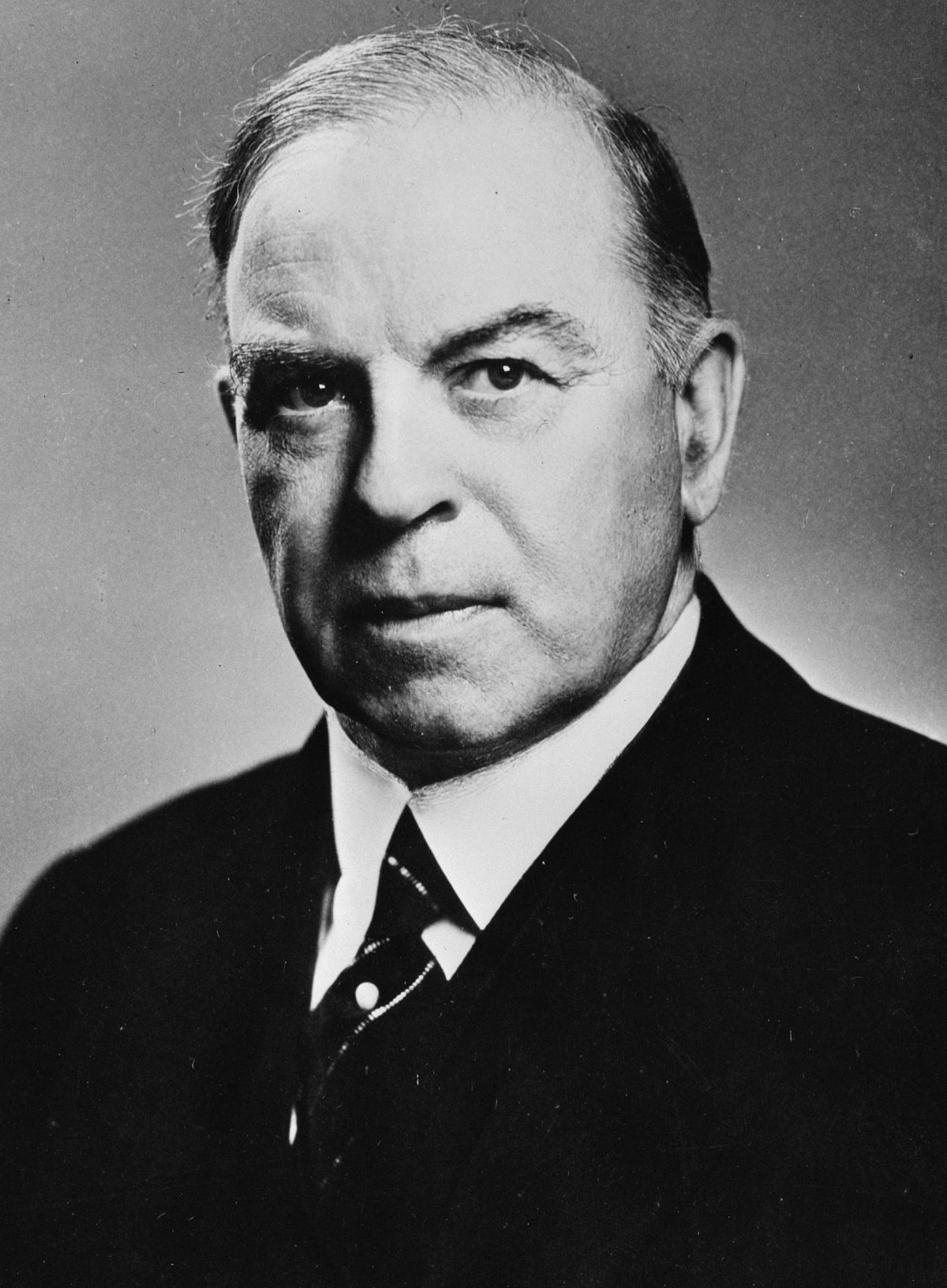
In my opinion, the defining moment when Canada emerged as an independent nation was in September 1922. This was when Prime Minister Mackenzie King said “no” to a British request to send Canadian troops to yet another senseless war.

It was known at the time as the Chanak Crisis and it resulted from Britain’s heavy-handed dismantling of the Ottoman Empire following the 1918 Armistice.

The British has initially supported a Greek military expedition into Anatolia. Taking advantage of the disorganized and defeated Ottoman forces, the Greeks had pushed forward all the way to Ankara. Here, the Turks regrouped under a dynamic General, Mustafa Kemal and the tables were soon turned.

The routed Greeks were soon bottled up in two desperate bridgeheads on the Anatolian mainland – Chanak and Smyrna.

Not wishing to abandon the Greeks, and not willing to put the onus of a military intervention only upon the war weary British public, the London War Office put the call out to the British Dominions to join in the fight.

New Zealand said ‘ready aye ready’ while Australia and South Africa delayed their response. Canada’s Mackenzie King said ‘no’ and this ended any indecision on the part of Australia and South Africa, as they too soon echoed our ‘no’.

Without allies, Britain signed the Treaty of Lausanne with the Turks, Allied troops withdrew from Anatolia and Turkey emerged as a modern nation under the most dynamic leader in their history – Mustafa Kemal Ataturk (Father of Turkey).

This Canadian decision to opt out of a military campaign therefore had an immediate consequence in world events. It tipped the balance for the other dominions, which forced Britain to conclude a peace.

That is far more than what can be said for the aftermath of Canadian troops, under British command, capturing a few hundred yards of trenches at Vimy Ridge.

ON TARGET: War is Never Glorious

kimmel.jpg

By Scott Taylor

We have just commemorated the 100th anniversary of the 1918 Armistice, which brought hostilities to a cessation on the Western Front of the conflict known alternatively as ‘World War One’, ‘the Great War’ and by those who fought and survived its horrors, as ‘the War to end all Wars’.

With the passage of time, those horrors of trench warfare have been all but forgotten, and the usual cabal of ‘Drums and Bugles’ historians would have us all believe that it was a glorious affair worthy of national celebration one century later.

True to form, last week Canada’s leading glorifier of all things military – historian Jack Granatstein penned an editorial chastising Prime Minister Trudeau for not bringing enough public attention to the battlefield exploits of the Canadian Corps during their offensive in the final ‘100 Days’ of the Great War.

According to Granatstein, all Canadians should reflect upon the sacrifice made by those brave warriors in that campaign – 30,000 dead another 210,000 wounded – as we attend our Remembrance Day ceremonies this year.

Personally, I fully support the notion that every November 11, Canadians mourn those who paid the ultimate price while serving Canada in foreign wars. However, rather than glorifying those conflicts, we should use this occasion to reflect upon the suffering and sacrifice made by those veterans.

While the guns may have gone silent in Flanders at the eleventh hour, on the eleventh day of the eleventh month, 1918, the truth is that this did not result in an instant euphoric homecoming for our troops.

According to the Official History of the Canadian Army, written by Colonel G.W.L. Nicholson, there were a total of thirteen instances of violent disturbances by Canadian troops in the U.K. awaiting repatriation between November 1918 and June 1919. The most serious of these was a two-day mutinous riot in Kinmel Park, Wales.

Four months after the end of the war, there were 15,000 Canadian troops still based at Kinmel Park. Due to a shortage of supply ships, they were existing on half-rations, there was no coal for their stoves to stave off the biting damp cold of a Welsh winter, they were crammed forty-two men per hut meant for only thirty and they had not been paid for over a month.

As a result of these deplorable conditions, riots broke out on March 4, 1919, and the authorities were compelled to allow the provost marshals to use lethal force in order to restore discipline.

When the dust settled, five Canadian soldiers were dead, 23 wounded and seventy-eight mutineers had been arrested. A total of twenty-five were tried and convicted of mutiny.

Then there was the little told tale of Canada’s Siberian Expeditionary Force, which first deployed to Vladivostok, Russia in August 1918.

At that juncture it was hoped that an allied-force – including 4,200 Canadians – could assist the White Russians to defeat the Bolsheviks in the Russian Civil War in order to bring Russia back into the war against Germany.

With Germany’s capitulation in November 1918, this exercise became nothing more than an international anti-communist intervention in Russia.

This point was not lost on two rifle companies of the 259th Battalion who were being embarked in Victoria, B.C. on December 21, 1918 enroute to Vladivostok.

The mostly French Canadian conscripts mutined in the streets of Victoria to express their extreme displeasure at being sent off to fight in a Russian Civil War.

Officers fired their pistols in the air to bring the mutineers into line and when that failed, other – still obedient - Canadian soldiers (mostly from Ontario) beat the French Canadians into submission with their canvas web belts.

Once aboard the SS Teesta and finally enroute to Vladivostok, a dozen of the Quebecois ringleaders were charged and convicted of mutiny.

These sentences were later overturned on the basis that the deployment to Russia did not meet the legal requirement under the Military Service Act of the soldiers’ conscripted service being necessary for the “defence of the realm”.

Nonetheless, a total of 17 Canadians paid the ultimate price during this failed intervention in Russia, before the last of our soldiers were repatriated in June 1919.

If more historical focus were directed at these admittedly less than glorious chapters in our history, it would be easier to understand the similar failures by current governments.

The veterans of our twelve year failed intervention in Afghanistan were not left starving and shivering in the mud of northern Wales, but they have been forced to take drastic measures to demand the resources and medical support they need in the aftermath of being deployed on a doomed expedition.

As the old saying goes, “It ain’t like the good old days – and it never was.”

ON TARGET: Canada Needs Answers About Failed Afghanistan Mission

2.jpeg

By Scott Taylor

For some time now, I have been suggesting a full-scale parliamentary inquiry into how Canada got involved in the failed mission in Afghanistan.

The British were brave enough to conduct such a reflective exercise on their joint venture, along with the U.S., to invade Iraq and topple Saddam Hussein in 2003.

The British inquiry laid blame squarely on the shoulders of former Prime Minister Tony Blair for helping former U.S. President George Bush convince their respective citizens that Saddam possessed weapons of mass destruction and they were simply invading a sovereign state as an act of self defence.

Saddam did not possess WMD’s and for the past fifteen years the Iraqi people have been subjected to an orgy of violence, anarchy and inter-factional civil strife as a result of that lie.

While no punishment or war crime charges were ever leveled against Blair or Bush, at least the Brits had the guts to probe their own guilt.

For our part, Canada spent the better part of twelve years in Afghanistan as a part of the NATO led International Security Assistance Force (ISAF). By the time the first Canadian combat boots were officially on the ground in 2002, the Taliban had been declared defeated and the mission was sold to Canadians as an effort to transition and rebuild Afghanistan into a thriving democracy.

The original timeline was to have the ISAF Commanders hand off their authority to a self-sufficient Afghan security force in 2005.

By the time we withdrew the last of our soldiers in 2014, Canada had lost 158 soldiers and 7 civilians killed, over 2,000 soldiers physically wounded or injured, untold thousands more of our warriors scarred by the invisible wounds of PTSD, and at a cost to Canadian taxpayers which is expected to top $22 billion, once we factor in the long-term care and treatment of our veterans.

So how could Canadian planners have gotten things so wrong?

A partial clue to this question was revealed recently in an article published in the October 22 edition of The Hill Times. In that article, former Conservative Member of Parliament Chris Alexander bemoaned the 2011 decision by Prime Minister Stephen Harper to – in Alexander’s words – “cut and run” from the Afghanistan mission.

In his interview with Hill Times, Alexander said that Harper’s decision to withdraw our troops made him “consider resigning as Parliamentary Secretary for National Defence and even as a Member of Parliament.”

In the end, Alexander’s ambition overcame his thoughts of resignation. He towed the party line of winding down the Afghan mission during his successful re-election in 2011 and then was ultimately retired from politics by the electorate in the 2015 campaign.

However, what remains to be probed is Alexander’s utter failure to gauge the situation in Afghanistan when he served there, first as Canada’s Ambassador from 2003-2005 and then as a deputy special representative for the UN Secretary General from 2005-2009.

Those were crucial years, particularly 2005 when Ambassador Alexander helped negotiate the redeployment of our battle group from the relatively quiet Kabul sector to the insurgent hotbed of Kandahar.

Alexander was young – Canada’s youngest Ambassador ever – ambitious, and as history clearly shows, naïve and well out of his depth. During his tenure in Afghanistan in both of his official capacities, Alexander would tell any journalist who would listen that the Afghan mission was on the verge of success… one schoolhouse being built away from victory… stay the course… more money… more time… more soldier’s lives.

During a reporting trip to Kabul in 2007 Alexander told me that I had wasted my time interviewing the notorious warlord Abdul Rashid Dostum because he was irrelevant in the new democratic Afghanistan. For the record, Dostum is currently still serving as that country’s Vice-President.

As for the present state of affairs in Afghanistan, the U.S. Special Inspector General for Afghanistan Reconstruction (SIGAR) issued yet another damning assessment last week. At present it is estimated that U.S. assisted Afghan security forces control just 55% of Afghanistan’s districts – that is 16% less than one year ago.

Violence levels are at the highest since the U.S. invasion in 2001. Despite spending over $1.5 million a day – every day – since 2002 to eradicate the illegal drug trade, production and sale of opium is up 400% since this effort began sixteen years ago.

Even the U.S. top Commander in Afghanistan, General Austin Miller – who narrowly avoided a brazen suicide attack last month in Kandahar – now admits there will be no military victory in this campaign.

In other words, things in Afghanistan have only gotten worse since Harper “cut and ran” in 2014. Yet Alexander still thinks we should be in that quagmire – mired in a futile intervention propping up the warlords that he himself declared irrelevant ten years ago.

Alexander’s continued failure to grasp even the basics about Afghanistan, and willingness to continue to commit resources to a failed cause is exactly why we need his role – and that of other Canadian planners at the time – to be thoroughly investigated.

Our soldiers’ valiant sacrifice in a hopeless cause deserves no less.

ON TARGET: Kill The Saudi Arms Deal

2.jpg

By Scott Taylor

In the bizarre world of international espionage it would seem that foreign spy agencies are more bungling than Hollywood comedy characters Austin Powers and Johnny English.

First it was the alleged Russian assassination attempt on a former double agent. According to the latest account from the UK authorities, President Vladimir Putin dispatched two of Russia’s top operatives to Salisbury, England to eliminate Sergei Skripal.

The cover story for the two Russian assassins was that they were interested in seeing some churches in this scenic town in southern England.

Rather than simply shooting or stabbing Skripal and making it appear to be a random robbery in order to deflect responsibility, the dynamic duo allegedly coated the door handle of Skripal’s house with the deadly nerve agent called Novichok. After leaving the Skripal residence, the two Russian agents went to a park several kilometers away and carelessly disposed of the remaining Novichok, which was allegedly transported in a perfume bottle.

The result of this elaborate plot was that though Sergei Skripal and his daughter Yulia got ill from their exposure to the deadly Novichok both of them survived.

Not so lucky was Dawn Sturgess, a lifetime drug addict who found the not-so-empty perfume bottle, exposed herself to the toxic substance, and died 8 days later.

To summarize;  the intended target survived, an innocent bystander died, and the use of Novichok directly implicates the Russian state.

Then we have the tragic death of Saudi Arabian columnist Jamal Khashoggi at the hands of a Saudi Intelligence death squad. The storyline on this one makes the keystone cops look like an elite SWAT unit.

According to official Turkish sources a team of eighteen Saudi operatives was dispatched to the Saudi Arabian consulate in Istanbul.

Khashoggi arrived at the consulate intending to tidy up some divorce paperwork in order to allow him to remarry. Khashoggi was filmed entering the consulate while his fiancé waited outside. When Khashoggi failed to exit the consulate, the fiancé cried foul and alarm bells started going off.

Initially the Saudis claimed that Khashoggi – a harsh critic of the Saudi regime in general, and even harsher critic of Crown Prince Mohammed bin Salman in particular – had left the consulate safe and sound.

The Turks weren’t buying that line and neither was the fiancé. It was alleged that the eighteen-man death squad had included a pathologist and a body double intended to fake Khashoggi’s exit from the consulate.

There is apparently audio recordings of Khashoggi being tortured and the Turks further allege that a bone saw was used to dismember the unfortunate columnist/dissident. The remains are purportedly scattered in some woods outside the sprawling suburbs of Istanbul.

The Saudis stuck to their story – that Khashoggi walked out upright – for about two weeks. Then they suddenly admitted that the journalist in question had indeed died inside the consulate, but that it was the result of an accident following a fistfight.

To believe the new Saudi version we would need to assume that deaths from fistfights are so commonplace that Khashoggi’s incident simply slipped the minds through fourteen days of repeated questions as to his whereabouts.

“Oh, you mean that Khashoggi? Yeah well maybe he was that guy who died in a fistfight, so we cut him up and threw his remains into the forest. Now it rings a bell.”

In response to this nonsense, Canada’s Foreign Ministry has called for more answers and is demanding an investigation into Khashoggi’s death, yet no one in Trudeau’s Liberal government wants to pull the plug on an arms deal worth a reported $15 billion.

Trudeau claims that cancelling the deal would cost Canada billions of dollars and he puts blame on the previous Harper government for having signed the contract in the first place.

Canada brazenly chastises the Saudis for their human rights abuses – Khashoggi’s murder being only the latest incident in a long list that includes the Saudi military intervention in Yemen that has left some 14,000 dead and a further 3 million displaced.

The continued sale of Canadian made Light Armoured Vehicles to the Saudi regime illustrates the hypocrisy of the Trudeau government.

These are not washing machines or medical devices – they are the very means of death and oppression for which we criticize the Saudis.

The cancellation will cost us dollars and jobs – the continued sale of weapons to the Saudis costs us our international credibility and integrity.

ON TARGET: Sometimes A Son Of A Gun, Is Just A Son Of A Gun

https://en.wikipedia.org/wiki/Abdul_Raziq_Achakzai

https://en.wikipedia.org/wiki/Abdul_Raziq_Achakzai

By Scott Taylor

Last Thursday there was a brazen attack in the southern Afghan city of Kandahar. Provincial police chief Lt.-Gen. Abdul Raziq Achakzai and local Afghan intelligence commander Abdul Mohmin were gunned down in cold blood by a Taliban extremist.

Kandahar Gov. Zalmay Wesa was also badly wounded in the attack, and U.S. Gen. Scott Miller, the top American commander in Afghanistan, survived unscathed.

The Taliban assailant had posed as a police official in order to gain access to a top-level meeting. He was subsequently killed by actual Afghan security officers.

In the immediate wake of his killing, accolades poured in for Gen. Raziq, who was proclaimed to be a fierce anti-Taliban fighter. Most importantly, he was viewed as a loyal American ally who had single-handedly secured the volatile province of Kandahar.

“Today I lost a great friend (Lt.-Gen.) Raziq. We had served together for many years,” wrote Gen. Scott Miller. “Afghanistan lost a patriot, my condolences to the people of Afghanistan. The good he did for Afghanistan and the people of Afghanistan cannot be undone.”

Those are powerful words and one hell of an epitaph; the only problem being that none of it is true.

What part about Raziq being gunned down in broad daylight offers you the first clue that he had by no means secured Kandahar province? Hell, his own guards could not protect him from the Taliban inside the governor’s heavily protected compound.

The present levels of violence in Afghanistan are the highest they have been since the U.S. invasion in 2001 and the Taliban now control more territory than at any point since then.

While no one can dispute that Raziq ran an effective campaign against the Taliban, many human rights groups have questioned his dubious methods.

It turns out that America’s golden boy had a penchant for detaining, torturing and disappearing his enemies. He was even dubbed the “Torturer-in-Chief” by the New York based Human Rights Watch, and in 2017 the United Nations committee on torture was intent on prosecuting Raziq on charges of torture and enforced disappearances.

According to the UN, Raziq was “operating secret detention centers,” where prisoners were tortured. Then there was an incident involving the discovery of mutilated corpses linked back to individuals who had been under Raziq’s detention.

None of this should have come as any surprise to U.S. authorities, as over a decade ago when Raziq was a junior officer with the border police, he was already considered to be both brutal and corrupt. Fast forward a decade and that same brutal, corrupt officer — still only 39 — had been promoted to lieutenant-general and left to rule Kandahar with an iron fist.

According to the Human Rights Watch report, Raziq’s stock in trade methods of torture included “suffocation, crushing testicles, water forcibly pumped into the stomach and electric shocks.”

To round out his resume, Raziq was also accused of hugely profiting from the illegal drug trade. These allegations were documented by Canadian journalist Matthieu Aikins in a 2009 piece published in Harper’s Magazineand the notion that Raziq was profiting from the opium and heroin trade was supported by then Brig.-Gen. Jonathan Vance.

At the time, Vance was NATO’s regional commander in southern Afghanistan, and he is currently Canada’s chief of defence staff.

Raziq took over his role as Kandahar’s police chief in 2011 when his predecessor — Khan Mahammad Mojayed — was killed in a suicide attack in April of that year.

That means that for more than eight months, Canadian soldiers were deployed in direct combat support of this ruthless, illiterate, drug-dealing, torturing murderer.

His death at the hands of the Taliban should not afford him some glorious legacy. He was a brutal thug, and it is too easy to shrug and simply say ‘he was a son of bitch, but he was our son of a bitch.’

We sold the Afghanistan mission as an altruistic endeavour to bring a better life to the Afghan people, not to subject them to the whims of a crazy warlord, no matter how loyal he was to the Americans.

ON TARGET: Canada’s Mission In Mali: Modern Colonialism

Canadian, Dutch and German forces exercise the aeromedical evacuation role at Camp Castor in Gao, Mali Operation PRESENCE - Mali on September 1, 2018.

Canadian, Dutch and German forces exercise the aeromedical evacuation role at Camp Castor in Gao, Mali Operation PRESENCE - Mali on September 1, 2018.

By Scott Taylor

There was a news story last week about Canada’s United Nations peacekeeping mission to Mali wherein an internal UN report noted that the violence level in that war-torn African nation has actually increased since Canadian troops first deployed in August.

Now probably even the most self-delusional of Canada’s defence pundits would have realized that the comparative handful of troops and equipment that we have committed — four Chinook heavy lift helicopters, four Griffon utility helicopters and about 250 personnel — were going to tip the balance in Mali as soon as they arrived on the ground.

This flareup of violence in Mali ignited in 2012 and the UN stood up the Multidimensional Integrated Stabilization Mission in Mali (MINUSMA) in 2013. There are 56 nations contributing nearly 15,500 personnel to this peacekeeping mission, which is considered the most dangerous of all current UN operations.

Given that Canada’s military role in this complex conflict — with its core issues of dispute dating back centuries — is simply to provide medical evacuations for the UN force, means that no one should expect our contribution to affect either the tactical or strategic outlook in Mali.

What Canada’s one-year, $400 million commitment to Mali does achieve is a high profile, relatively low risk demonstration of the Trudeau Liberal government’s promise to return our nation to the good old days of peacekeeping in blue helmets, under the UN flag.

On a more practical note, it could be said that Canada has a vested interest in protecting Canadian mining assets in Mali. There are over 70 Canadian companies currently involved in extracting Malian gold, the largest of which being a firm called Iamgold.

The revenue from Mali’s gold production represents roughly eight per cent of that country’s impoverished economy. The Malian government is partnered with the international mining companies and they receive about 18 per cent of the gross revenue. When you factor in infrastructure and labour costs disbursed in Mali and the actual extraction of this valuable commodity, about 40 per cent of all revenue remains in the country. That means that 60 per cent of Mali’s gold returns, or 4.8 per cent of that nation’s GDP, flow out as profit for the international mining companies and their investors. In the case of Iamgold, its two shared mine holdings produce roughly half of all Mali’s gold annually.

Coincidently, investors in Iamgold include both of Canada’s public pension funds.

This means that essentially every Canadian will benefit from maintaining the status quo in Mali, so long as it secures these lucrative mining interests.

The idea that Canada is sucking profits out of a struggling Third World country in Africa is certainly not how this mission is being billed.

On the contrary, we are being led to believe that this is part of some altruistic effort to bring peace and stability to a poor African nation that could use a helping hand.

On the domestic front, Trudeau and the Liberals can point to the 250 blue helmets shining under the Malian sun and proclaim their 2015 election promise of a ‘return to peacekeeping’ to have been fulfilled (just in time to enter the 2019 election campaign).

Sending troops to Africa with the purpose of securing mining profits from the exploitation of the nation’s natural resource (and to shore up our government coffers in the form of public pension funds) sounds so much more like modern colonialism.

ON TARGET: Missions A Massive Waste

Gao, Mali. July 18, 2018 – Photo has been digitally altered for operational security. Members of the CH-147 Chinook medical team practice exiting the helicopter under the watchful eye of the force protection team in support of Operation PRESENCE - M…

Gao, Mali. July 18, 2018 – Photo has been digitally altered for operational security. Members of the CH-147 Chinook medical team practice exiting the helicopter under the watchful eye of the force protection team in support of Operation PRESENCE - Mali around Gao, Mali. (Photo: MCpl Jennifer Kusche)

By Scott Taylor

The Canadian Armed Forces are currently committed and deployed on five oversees missions, none of which have a clear cut or achievable objective.

Of course, the old Cold War warhorses will claim that our battle group stationed in Latvia has been successfully deterring Russian aggression into the Baltic States. One could similarly argue that a tinfoil cap is proper protection against alien brain removal, proven by the fact that you still have your brain.

I would think that Latvia, Estonia and Lithuania’s membership in NATO, with that alliance’s pledge of collective defence, coupled with the nuclear arsenals of the U.S., U.K. and France would serve as ample deterrent to even the most ambitious of Russian dictators.

Canadian officers who have served in Latvia know that it was nothing like our decade-long experience in Afghanistan. There will be no letters to the next-of-kin to inform them of a soldier’s death in combat. If the Russians don’t attack, nobody gets killed, and if Russia does trigger nuclear conflagration with NATO in the Baltic, there will be no one left alive to write the letters.

Keeping a battalion of Canadian soldiers in Latvia is an unnecessary waste of $400 million per year, and an added strain on the family lives of those personnel deployed abroad, unaccompanied, for either six months or one year.

We also have about 200 Canadian soldiers deployed in Ukraine as trainers. This is a bit of a sticky wicket (as the cricketers say) in that Ukraine is not a NATO member. Since 2014 Ukraine has been embroiled in a simmering civil war between the Western-backed regime in Kiev and the largely ethnic Russian breakaway regions of Donetsk and Luhansk.

Russian President Vladimir Putin has been soundly demonized for supplying military personnel, weapons and equipment to the ethnic Russian separatists. If Putin is evil for interfering militarily in a civil war in a neighbouring country in support of rebels of Russian ethnicity, how can we paint ourselves as angels for training and equipping more young Ukrainian men to kill in that same civil war?

Then we have not one, but two separate missions committed to the mess that once was the nation of Iraq.

One group of special forces operatives and helicopters remain in support of the U.S.-led alliance to defeat Daesh (aka ISIS or ISIL) while the second mission will be a Canadian-led, NATO effort to train more young Iraqi men how to kill. These Iraqis will in turn prop the corrupt regime in Baghdad.

For the record, and to silence those who prattle on about how the West is democratizing Iraq, the last round of elections failed to produce a verifiable result. A recount was ordered, but before that could happen, somehow, the warehouse containing the ballots burned down. You could not make this stuff up. As a result, the next regime will be headed up by a Shiite cleric and warlord named Muqtada Al-Sadr.

In 2004, this guy was considered public enemy No. 1 by the U.S. when he mobilized his militia to combat the American occupation.

Canada has no seat at the big boy table that will eventually seek to resolve the multifaceted conflict that engulfs Syria, Iraq and eastern Turkey. It will probably require a redrawing of existing maps and perhaps even the creation of new states, but none of that will be concluded with any Canadian say in the matter. In the meantime, we somehow justify the fact that our elite soldiers are teaching more young Iraqi men to kill more effectively.

In Mali, we can at least boast that we are under the UN banner, wearing blue berets, and using our helicopters for medical evacuation missions.

Unfortunately there is also no end game objective in Mali. Canada’s present commitment of one year will expire long before the fundamental causes of the Malian conflict have been resolved. In other words, our Canadian troops are doing a lot all around the world but achieving very little.


ON TARGET: Facing Facts in the Modern World

20160218_CDAI_1-056-1024x683.jpg

By Scott Taylor

It was announced last week that the Canadian Armed Forces is going to relax the ban on beards and allow soldiers, sailors and airmen to grow facial hair. Under the terms of the previous regulations, only sailors assigned to shore duty and infantrymen serving in specialized Pioneer units were allowed to sport beards.

There were also exceptions made for those whose religious faith forbids shaving, and in Afghanistan and Iraq beards were increasingly common among both Canadian Special Forces and regular troops.

Of course this being the military, there are still a number of rules defining what can and cannot be grown on one’s face.

For instance, beards need to be neatly trimmed as opposed to having a full on hipster look. The beard must also be accompanied by a moustache. It is also noted that in circumstances where personnel are required to wear either fire-fighting gear or protective gas masks, the beards must be shaved off.

All in all, it is a very minor adjustment to the existing policy, but what grabbed my attention was the official rationale for making this change. According to Chief Warrant Officer Alain Guimond, the CAF’s senior non-commissioned officer, the decision to allow beards is aimed at improving morale and attracting more recruits.

I find it difficult to believe that someone considering joining the military would be prepared to conform to the strict discipline, meet the physical challenge and be willing to die for his country, but draws the line at shaving off his beard.

It is equally hard to envision that someone who has served in the military and is now prepared to transition to a civilian life, would suddenly reverse course and stay in uniform just because they can now grow a set of whiskers.

The military began sliding down the slippery slope of relaxed standards over a decade ago when they removed even the most basic of fitness tests for new recruits. In order to not eliminate a candidate who might indeed one day make a professional service member, recruits were enrolled even though they were obese and unfit. They were put into what is essentially a weight loss program to prepare them to begin basic training when and if they can get into shape.

At the same time, the Canadian military became increasingly lax at enforcing the ‘universality of service’ requirement of a minimum level of fitness for serving personnel.

On October 29, 2016, the Washington Post ran a story entitled “The Battle of the Bulge: Many of Canada’s Troops are Fat”, in which it was reported that 49 percent of all Regular Force personnel were considered overweight and 25 percent were considered obese.

These statistics were taken from a survey conducted by the Canadian military. That survey concluded that the continued increase in obesity – 6.1 percent were considered morbidly obese – was a result of too much sitting around and bad eating habits.

In other words, the obesity in the Canadian military is something easily remedied with fitness and self-discipline – two qualities one would expect military personnel to possess in abundance.

However, instead of enforcing the policy of demanding that personnel keep themselves fit enough to be deployable – in 2016, 17.4 percent of Canada’s soldiers were unable to meet that mark – the Canadian Forces initiated a program to provide weight loss surgery to the morbidly obese. It was estimated that DND spends over $200,000 a year doing stomach-stapling operations on an average of a dozen soldiers.

There is no corresponding evidence to suggest that the relaxing of fitness standards, or the accommodation of the excessively obese has in any way led to increased recruitment or any improvement in morale.

The allowance of facial hair is a minor step, but it is a step. Now, with the legalization of marijuana, I fear that the future Canadian military will be overweight, dope-smoking hairy-faced hipsters.

For the record, I have long maintained that the Canadian military is not ‘among’ the best in the world, they are the best in the world. Let’s hope they remain an institution all Canadians can take pride in.

ON TARGET: Time To Rethink Relationship With U.S.

https://www.flickr.com/photos/gageskidmore/27484886630

https://www.flickr.com/photos/gageskidmore/27484886630

By Scott Taylor

With the U.S.-Canada NAFTA trade talks currently at an impasse, maybe it is time that we as Canadians do a little rethinking as to how we appease our major trading partner. It has long been something of a given that Canada either supports or refrains from condemning U.S. military adventures around the globe, in the belief that this will garner us favours from our giant neighbour to the south.

We may have refrained from joining President George W. Bush and his tiny ‘coalition of the willing’ when America invaded Iraq in 2003. However, once it was abundantly clear that both the U.S, and UK intelligence agencies had lied about Saddam Hussein possessing weapons of mass destruction in order to justify their attack in the name of self-defence. Canada and the rest of the international community remained silent.

Our two biggest allies falsified a threat to invade a sovereign country, which subsequently was plunged into violent anarchy, which continues to this day, and we uttered not a single word of admonishment. President Bush and UK Prime Minister Tony Blair committed a blatant war crime, which given their subsequent failure to resolve the unchecked, ongoing violence continues to grow in magnitude.

As we held back from Iraq, Canada chose instead to double down on our efforts in Afghanistan. As part of the International Security Assistance Force (ISAF) under a NATO command structure, Canada had a relatively minor role in Kabul from 2002-2004. Then we made the move south to Kandahar and increased our contingent to a full battle group.

Canadian soldiers were fighting to prop up the corrupt Afghan regime, which Americans had installed in Kabul in the misguided pursuit of democratizing Afghanistan.

During our 11-year commitment to that fool’s errand, Canada lost 158 soldiers killed, over 2,000 wounded or physically injured and an untold number of veterans still suffering from the invisible wounds of PTSD.

For the Colonel Blimps and tub thumpers in Canadian defence circles it mattered not that we had no chance to win in Afghanistan – the eventual solution will not be a military one – it was simply the notion that Canada’s brave sons and daughters were fighting the good fight and dying alongside those troops of our greatest trading partner – the U.S.

That sort of sacrifice was bound to generate good will for us at the trade negotiation table, no?

Well, now we have two separate contingents deployed into Iraq, one as part of a NATO training mission, and the other a Special Forces led initiative to fight the bad guys (whoever they may be this week).

One of the ironies of this current situation is that we have our boots on the ground in Iraq, because Canadians would not accept us sending our soldiers back into Afghanistan.

It was in fact Afghanistan that NATO wanted Canada to recommit to, but we chose instead to lead a futile mission to train yet more Iraqi young men how to kill in order to end the now fifteen year ongoing cycle of violence.

In 2003 we chose Afghanistan because it was not Iraq, and now we are choosing Iraq because it is not Afghanistan.

However, as events unfold at the NAFTA table, Foreign Minister Chrystia Freeland is discovering that our soldiers’ sacrifice in the name of U.S.  military adventurism amounts to jack squat when it comes to trade.

Mexico has its own bilateral trade agreement with the U.S. and they sent exactly zero soldiers to either Iraq or Afghanistan. They have also steadily increased their trade with the U.S. over the past fifteen years, without spending the estimated  $20 billion that Canada will have spent on the Afghanistan mission alone, once you factor in the long-term health care costs of our veterans.

In 2015, it was China that elbowed Canada out of the pole-position as America’s number one trading partner, and they too, have committed not a single soldier to support U.S. military interventions.

As for Canada thinking we need to appease Donald Trump in his demand that NATO countries spend of 2% of their GDP on defence, let’s keep in mind that while Canada currently spends 1.32 on defence, Mexico spends only 0.7% of GDP on their military.

They have a signed trade deal. We don’t.

It is time to rethink the relationship.

ON TARGET: Cost-Cutting To Take Hold At DND

Screen Shot 2018-09-17 at 10.59.42 AM.png

By Scott Taylor

There was a recent National Post exclusive story that revealed how the military brass had been reined in by a cost conscious senior bureaucrat. Internal DND documents forwarded to reporter David Pugliese show that the original budget for a Change of Command ceremony for the head of the RCAF was pegged at $107,000.

Deputy Minister of National Defence Jody Thomas balked at the steep price tag and told the Air Force planners to sharpen their pencils. A second proposal was submitted with a revised cost of $80,000 and once again Thomas refused to authorize such an extravagant expense.

In the end, outgoing Commander Lieutenant-General Micheal Hood passed the torch to his successor, Lieutenant-General Al Meinzinger at a more modest event which set back the public purse roughly $24,000.

Many critics still thought this to be a lot of taxpayer dollars to watch two men switch position; the fact is that commanding a branch of the Armed Forces is not the same as simply occupying a similar level executive position within the public service. Pomp and ceremony are longstanding military traditions, and they don’t come cheap. That said, I offer kudos to Deputy Minister Thomas for cutting the cost by nearly 80%.

In his news story, Pugliese also referenced a 1996 incident wherein similar sage advice about public perception of costs for parades was ignored with dire results. On that occasion it was Major-General Archibald MacInnes who was retiring and handing over command of the Land Forces Atlantic Area to Major-General Ray Crabbe.

MacInnes wanted a lavish affair complete with a mock UN observation tower and a vehicle roll past of armoured vehicles.

At that juncture the military was hard pressed financially, training funds were stretched to the point that blank ammunition was almost non-existent, and cash strapped soldiers with frozen salaries were going to food banks and taking second jobs delivering pizza.

When MacInnes’ public affairs officer Major Brett Boudreau saw that the proposed parade budget was in excess of $100,000, he warned his commander that the taxpaying public and his own soldiers would be infuriated if they learned of such extravagance.

The response from MacInnes’ Chief of Staff to Boudreau regarding his concern for the public was a crude “F*ck them!” That email exchange was subsequently forwarded via brown envelope to the office of Esprit de Corps Magazine and the following day “F*ck them” was the headline in newspapers all across Canada.

Times have therefore changed to the point where bureaucrats can now curb the brass.

However, we need only go back to 2011 to revisit an increasingly embarrassing public expenditure on a public display of martial prowess. I refer to the November 24, 2011 Victory Parade held on Parliament Hill to commemorate Canada’s leading role in the allied victory over Libya.

Canadian Lieutenant-General Charles Bouchard had been commander of the allied forces, Canadian fighter jets were among the first to bomb Libya, and we were proud to boast that as a nation Canada had “punched above her weight”.

Prime Minister Stephen Harper wanted to mark this occasion with a suitable military spectacle, which included a fly-past of numerous aircraft, a detachment from the Canadian Special Operations Regiment (CSOR) and the ship’s company of HMCS Charlottetown. Essentially everyone who took part in the Libya conflict got to participate in the Victory Parade. The cost of the fly-past alone is estimated to have been $850,000. Harper’s statement that day proclaimed: “History show us this; that freedom seldom flowers in undisturbed ground. Our job in Libya has been done, and done well’”.

Unfortunately for Harper, it turns out that by deposing and murdering Libyan President           Moammar Gadhaffi, we brought anarchy and violence to Libya rather than freedom. Since we declared ‘victory’ in Libya that nation has devolved into a failed state rife with violent anarchy.

In 2012 the ‘victory’ in Libya spilled over into neighbouring Mali in the form of Tuareg separatists and al-Qaeda extremists armed from the unsecured arsenals in the wake of Gadhaffi’s death.

Canadian troops are now deployed to Mali to deal with that ongoing crisis, while no one even talks about a second intervention into Libya to restore law and order. Freedom is not flowering there, unless one considers anarchy freedom.