ON TARGET: War in Ukraine Highlights Canada’s Hypocrisy

By Scott Taylor

The war in Ukraine has certainly served to highlight the emotional hypocrisy that exists among Canadians.

Russia was wrong to invade Ukraine, Putin lied to the Russian people and the world by claiming that Ukrainians would greet his soldiers as liberators.

The Canadian government has soundly denounced Putin’s aggression through the provision of lethal aid to Ukraine, enforcing crippling sanctions on Russia and throwing open our doors to Ukrainian refugees fleeing from the war.

Canada is not officially in this war, as Ukraine is not a member of NATO, but in spirit the Canadian people are standing firmly with Ukraine.

We are told by exasperated pundits that Putin’s actions are ‘unprecedented’ and his military tactics of bombing civilians is “barbaric.”

Where  were these same experts in 2003 when U.S. President George W. Bush lied to the American people and the world before illegally invading Iraq.

Saddam Hussein never possessed the Weapons of Mass Destruction that served as Bush’s excuse for acting in self defence.

As the U.S. invaders soon discovered they too would not be greeted as liberators by a defiant Iraqi population.

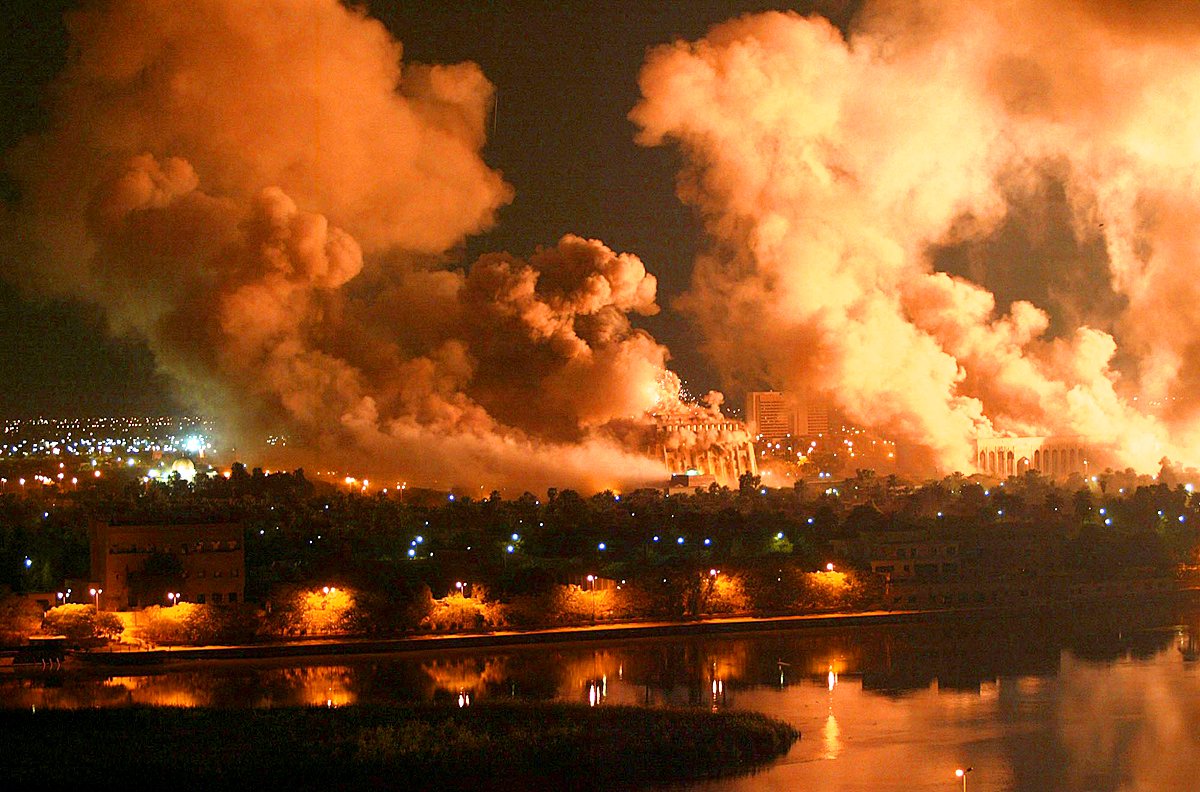
As for targeting civilians deliberately, the U.S. Secretary of Defence Donald Rumsfeld openly bragged about it. The initial mass bombing of Baghdad was described by Rumsfeld as his ‘Shock and Awe’ campaign to demoralize Iraqi civilians.

Did Canada denounce the U.S. blatant aggression, supply the Iraqi insurgents with lethal aid, sanction the U.S. economy and call for war crime charges against Bush and Rumsfeld? Hell no.

Did we offer to accommodate the thousands of Iraqi civilians who were displaced during the U.S. invasion and subsequent occupation? Hell no.

While officially refraining from joining the U.S. invasion in 2003, Canada covertly supported our American ally in their quest. Even after the WMD self defence claim was proven to be a big lie, there was no official chastising of the U.S. regime by the Canadian government. An estimated one million Iraqis have perished during the U.S. invasion and the violent unrest which ensued, and continues to this day. Yet no one dares to level the word ‘genocide’ at the American aggressors.

On the subject of Putin’s troops shelling Ukrainian cities, again pundits are quick to denounce such a heartless act as ‘demonic.’

Did no one take notice of the U.S. led coalition attack on Daesh (aka ISIS or ISIL) held Iraqi city of Mosul in 2017? There were Canadian troops and aircraft mashed in that operation which reduced a city of one million inhabitants to a smoking pile of rubble.

We defeated the evil Daesh, but what about the plight of those Iraqis who simply were in the wrong place at the wrong time?

What about the lack of collective outrage over U.S. President Donald Trump announcing he had used a mother-of-all-bombs (MOAB) against Afghan’s in 2017. The MOAB is described as the most powerful explosive short of a nuclear bomb. There is no way an explosion of that magnitude did not kill innocent civilians as well as Daesh fighters.

Instead of moral outrage, most Canadians viewed the use of MOAB as something of a scientific curiosity - “wow that really was a big explosion.” Did Canada open its door to those Afghans fleeing from the war? Hell no.

Even after the Taliban defeated the U.S. in the summer of 2021, the Canadian government was still reluctant to grant asylum to those Afghans who had worked with our soldiers during the occupation.

To this day, many of those former Afghan translators are waiting in other countries and watching as the Ukrainian refugees get fast-tracked access into Canada.

On the subject of bombing civilians it was Canadian Lieutenant-General Charles Bouchard who commanded the 10-month long NATO air campaign in Libya in 2011. The genesis for this operation was to enforce the UN approved ‘No-Fly-Zone’ over Libya to prevent President Moammar Gadhaffi from bombing the Libyan rebels. From the outset, the NATO leadership laughingly changed their authorized mandate to what they described as ‘No-Drive-Zone’ and promptly bombed the bejeezus out of Gadhaffi’s loyalists.

Unfortunately the NATO assisted overthrow of Gadhaffi resulted in widespread violent anarchy in Libya which continues to this day. Did Canada throw open the doors to Libyans freeing the chaos and bloodshed which we helped thrust upon them? Hell no.

We held a victory parade for ourselves on Parliament Hill.

Putin is wrong to invade Ukraine, but we do not have the moral authority to be righteous about barbarity.
ON TARGET: Defence Spending and the Numbers Game

By Scott Taylor

The Russian invasion of Ukraine has captured the imagination of the Canadian public in a manner which seems almost inexplicable. Even when Canadian soldiers were being killed on the ground in Afghanistan, or RCAF aircrew were blowing up 'bad guys' in Iraq, Syria, Libya and Kosovo, there was no general clamour by average citizens to drastically increase Canada’s defence budget. 

Yet with Ukraine battling the Russian military, suddenly it seems that every retired general, defence pundit and politician is convinced that we need to commit to significant increases in the annual defence budget. 

The magic solution that these individuals collectively propose is that of increasing our spending to equal “2% of Gross Domestic Product (aka GDP)”. Canada currently spends about $23 billion per year on defence and this is equivalent to 1.3% of our $1.7 trillion GDP. The Colonel Blimp brigade parrots former US president Donald Trump in proclaiming Canada to be a ’shirker’ for this failure to meet NATO’s stated goal of members spending 2% of their GDP on defence.

The problem with aiming to spend an arbitrary amount on the military just to spend a required percentage of GDP does not in any way guarantee an actual increase in our national security. In theory we could simply boost our military salaries threefold and tell NATO ‘mission accomplished’.

We also need to put some perspective on what these percentages and dollar totals mean on the global landscape. The USA has an annual defence budget of some $811 Billion (USD) which is almost equivalent to the rest of the world combined. 

China spends $252 billion (USD) to put it in a distant second place on the list of annual defence budgets. Every western strategic analyst will tell you that we need to be ‘very afraid’ of Chinese ‘militarism’ however by Trump’s own standards they are ‘shirkers’ by spending just 1.7% of their GDP on defence. If you compare the USA’s defence expenditure per capita ($3806) to China’s ($200) the myth of Chinese militancy evaporates.

Big bad Russia outspends the US in terms of percentage of GDP on defence by a factor of 4.3% (Russia) to 3.7% (USA). However as a result of Russia having a relatively puny $1.57 trillion GDP, that amounts to a total defence budget of only $61 billion (USD) per year. 

Based on defence dollars spent per capita, Canada’s $23 billion for 35 million citizens ranks 20th in the world, whereas big bad Russia’s $61 billion spent on its military and a population of 144 million places them a very distant 57th in world rankings. 

In terms of the military power that Russia fields based on their defence budget, they have an impressive total of 425,000 regular force personnel, 2800 Main Battle Tanks (MBT’s), over 11,000 infantry armoured combat vehicles, 1300 combat aircraft and a naval fleet of over 350 warships. That force seemed impressive until it was tested and failed in Ukraine.

The defence budget for Ukraine is just under $6 billion (USD) with which it is able to field some 200,000 regular troops and an additional 600,000 reservists equipped with over 1600 MBT's. They are also able to count on the motivation of their soldiers fighting to defend against the Russian invaders. Canada by comparison has just 80 MBT’s and about the same number of CF-18 Fighter jets.

Saudi Arabia spends a whopping 8.4% of their annual GDP on defence making it the 4th largest military spender in the world at $57 billion (USD). Despite that, Saudi Arabia has been unable to militarily subdue tiny Yemen which can afford a measly $1.4 billion (USD) to battle the Saudis. 

Poor old Afghanistan was spending 10.6% of their GDP on defence (not to mention the massive US aid on top of that) yet their 400,000 strong security force collapsed like a cardboard suitcase the minute the primitively equipped Taliban re-emerged last summer. 

If there is anything we can learn from these recent examples is that money, numbers of personnel or sophistication of weaponry are not guarantors of military proficiency on the battlefield.

Before Canada makes a knee-jerk reaction and promises to commit to a meaningless dollar figure of defence spending, let’s focus first on what our military actually needs and more importantly, the role that Canada wants it to play moving forward into an uncertain future.

For the record, meeting the 2% of GDP spent on defence objective would cost taxpayers an additional $15 billion per year. 

ON TARGET: Beware the Polarizing Power of Propaganda

 By Scott Taylor

With the war in Ukraine still raging it has been amazing to watch the success of the West’s propaganda machine.

Even though Canada is not directly involved in this conflict the term used to describe Ukraine is ‘ally’.

As such, the Liberal government can take full credit for contributing lethal military aid to Ukraine, and Canadian civilians are told they can legally volunteer to fight in the Ukrainian Foreign Legion.

More importantly, the Ukrainian side can simply do no wrong in the eyes of western media. When the Ukrainian defence force has posted videos of Russian prisoners of war, they have violated the Geneva Convention which prohibits the using of prisoners for propaganda purposes.

In further circulating the videos, the collective attitude of western media outlets has been that of ‘who cares?’

As for the Russians, they can do absolutely nothing positive. Across North America, Russian vodka has been pulled from the shelves of liquor stores and night clubs.

Late night TV hosts ridicule Russians as being simpletons who have only potatoes, turnips and borscht in their diet.

Lost in this dumbed down racist stereotyping is the fact that roughly 30 per cent of the brave Ukrainians citizens resisting Putin’s invasion are ethnic Russians.

Also openly mocked is the fact that Putin has ordered his state-controlled media to refrain from using the word ‘war’ – the invasion is instead to be deemed a ‘special military operation’ – and it is now illegal to spread negative disinformation about the conflict in Ukraine.

Yet despite this media blackout, ordinary Russian citizens have taken to the streets in the tens of thousands to protest Putin’s illegal aggression. At time of writing, some 14,000 Russians had been arrested and jailed for publicly opposing this war.

This should be comforting to know that this many Russians still have access to the truth and are willing to sacrifice their own personal liberties to challenge Putin’s regime.

What is troubling is the fact that when U.S. President George W. Bush illegally invaded Iraq in 2003 there was no such violent public backlash in the U.S.A. We find it gobsmacking that Putin would claim he is taking military action in Ukraine in order to protect Russia. However, when Bush claimed he was invading Iraq to protect America from Saddam’s weapons of mass destruction the vast majority of the U.S. population cheered him on.

In those heady days leading up to Bush’s illegal and unwarranted invasion if Iraq, the sentiment across the U.S. was that America was being abandoned by its allies at a time of peril. When France refused to join in the war effort, they were pilloried as ‘cheese-eating surrender monkeys.’ French wine and cheese imports were boycotted and accusing fingers were also pointed at Canada for opting out of the invasion.

When Iraq was occupied and Saddam deposed without the discovery of any weapons of mass destruction, the world should have sanctioned the U.S. and Bush should have been tried for war crimes.

In addition to the self defence justification in the days leading up to the invasion, the U.S. leadership had portrayed Saddam as a hated dictator and they predicted the U.S. soldiers would be greeted as ‘liberators.’ If that sounds familiar it is because that is what Putin told the Russian soldiers they could expect in Ukraine. When the Ukraine invasion bogged down against heavy resistance Putin ordered a media blackout.

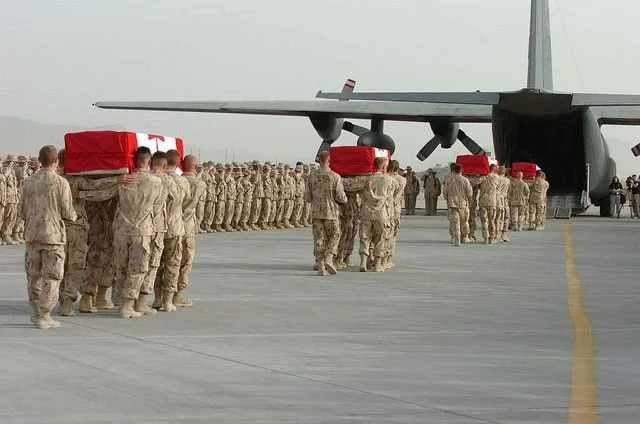
In Iraq, when the insurgency began in earnest, the Pentagon tried to prevent the media from publishing photos of the flag draped coffins of fallen soldiers being repatriated to U.S. soil.

On the subject of lionizing the Ukrainian resistance, Canadians, myself included, are saluting their bravery in combating the would-be Russian occupiers. Untrained civilians are using Molotov cocktails and improvised explosive devices to engage and kill the foreign soldiers trying to control their country. Many Hollywood aficionados have likened these brave Ukrainians to the mythical Wolverine U.S. resistance fighters in the Red Dawn movie series.

Employing that same yardstick, the Taliban and Afghan insurgents were the ‘wolverine’ freedom fighters in the war in Afghanistan.

Canadian soldiers, as part of the U.S. led occupation force were the hated foreigners trying to remake Afghan society in the western mold.

But we did not hail the Afghan mujahedeen as freedom fighting liberators when they chased the last of the American occupiers from their soil last summer. However we did salute the exact same Afghan Muslim extremists when they resisted the Soviet Union’s attempted and failed occupation in the 1980’s.

For the record, during Canada’s decade long combat contribution to the occupation of Afghanistan, the successive governments of the day tried to stifle any public debate by declaring that to question the war was to question the Canadian Armed Forces.

That argument is absurd, but it kept most critics silent.

ON TARGET: Putin’s Forces Foiled (For Now)

By Scott Taylor

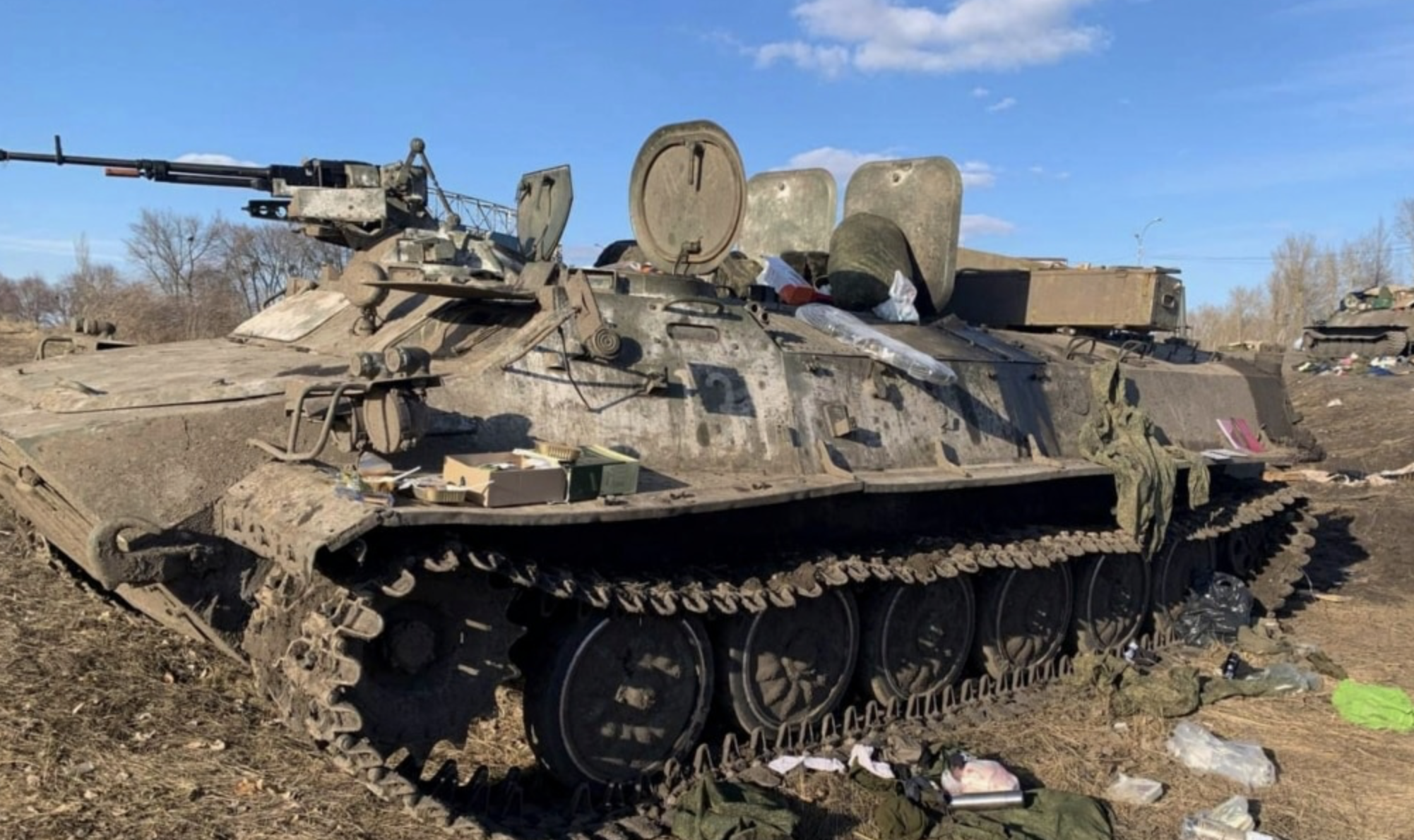
On 24 February, Russian President Vladimir Putin launched what is being called the “largest ground invasion of a European Country” since the Second World War.

The descriptors are carefully selected to make the current Russian breach of international law seem to be without precedent.

For those with short memories, it was in 2003 that the USA led an invasion of Iraq based upon the fabricated excuse that Iraqi President Saddam Hussein possessed weapons of mass destruction.

But Iraq is not in Europe. Ditto for Afghanistan which the U.S. invaded in 2001 under the pretext of a manhunt for al-Qaeda leader Osama Bin Laden in the wake of his 9-11 terror attack.

Bin Laden was killed by a U.S. Seal Team in Pakistan in 2011 but the U.S. led occupation continued until the Americans’ disastrous withdrawal from Afghanistan last August.

In 1999 NATO launched a devastating 78-day air bombardment against Serbia which resulted in the alliances occupation of the province of Kosovo.

Serbia is definitely within Europe, but since it was an air campaign which forced a peace settlement prior to ground troops moving in, Putin’s current invasion is still the biggest ground assault since WWII.

For the record, I wholeheartedly condemn Putin’s military violation of Ukraine’s sovereignty. However, unlike the hypocritical apologists for the Pentagon, I also vehemently opposed the illegal invasions of Afghanistan, Iraq and Kosovo at the time which they were occupied.

I can also admit that I wrongly predicted Putin was bluffing with the threat of invasion as I did not believe he would be mad enough to actually launch such an attack.

That said, I also questioned why my fellow pundits were so quick to dismiss the combat capabilities of the Ukrainian military.

Since 2014, Canada has been contributing some 200 service personnel to assist in a NATO-led effort to train the Ukrainians. Prior to the Russian invasion, Ukraine had approximately 260,000 regular force personnel, and after President Volodymyr Zelenskyy’s February 24 call-to-arms another 600,000 reservists were mobilized.

Equipped with modern sophisticated U.S. supplied weapon systems, the Ukrainian military has put up some stiff resistance in the early fighting.

They are, after all, fighting for their own territory.

Conversely, the Russian military machine has proven to be, so far, cumbersome, unwieldy and most importantly unmotivated.

The modern Russian soldier is not like the illiterate peasants that used to fill the ranks of the Czar’s army.

Despite the Kremlin’s best efforts to spin this as a “special military operation to demilitarize and de-nazify Ukraine,” these soldiers can easily communicate with the largely Russian speaking Ukrainian population. Nearly 35 per cent of Ukrainians are either ethnic Russians or Russian-speaking ethnic Ukrainians.

In fact, one would expect that those Russian soldiers currently deployed on Ukrainian soil are better informed of the international condemnation of their invasion than the misinformed Russian public at home.

Martial pride and professionalism will only go so far when soldiers are asked by their leaders to carry out questionable actions.

Between their unexpectedly flawed logistics and supply system and the demoralizing impact of being employed to subjugate defiant Ukrainian citizens, the mighty Russian bear may soon prove to be a toothless foe.

If Putin’s mighty army breaks itself apart on the Ukrainian resistance without any direct intervention from NATO, the Russian leader will have no justification to resort to his threat of nuclear weapons.

Far beyond the borders of besieged Ukraine, the now internationally heralded President Zelenskyy has been the major unifying figure to generate the global outpouring of support for Ukraine.

Early in the conflict, Zelenskyy called upon international volunteers to travel to Ukraine to fight the Russian invaders as part of a newly formed Foreign Legion.

This call from Zelenskyy has led to an instant wave of eager volunteers from the UK, U.S.A and even as far away as Thailand.

In Canada there have been a lot of stories in the media of average Canadian citizens heeding Zelenskyy’s call.

The problem is that while most of those volunteering are doing so out of a sense of moral obligation to freedom, they lack any form of military training.

The precedent of a Foreign Legion is not a new one, with France probably being the best example of historically employing foreigners to fight for their empire.

Spain also had a well-respected Foreign Legion to maintain order among its colonies.

It’s not enough to simply ask untrained individuals, or even military veterans to risk their lives to fight for Ukraine.

If these volunteers are to ever be anything more than simple cannon fodder, there needs to be a serious investment by Ukrainian authorities in equipping and training such a formation.

In preparation for a six month tour of Afghanistan, the Canadian military would take trained and formed regular units, augment them with trained reservists and still spend 12 months in intense preparation prior to deployment.

Bringing in an eager untrained civilian who does not speak Ukrainian and sending them to the frontline will not only endanger that volunteer, it will also hamper Ukraine’s military’s current war effort.

ON TARGET: Freedom Convoy was no Laughing Matter

Image credit: CTV NEWS

By Scott Taylor

Now that the self-proclaimed Freedom Convoy has been forcibly expulsed from the nation’s capital, it is perhaps a good time to start debunking the popular myths that sprung up in support of this protest movement.

The initial genesis for the convoy was to send a clear message to the Canadian government that cross-border truckers wanted an exemption on a mandatory vaccine mandate. Trucking associations were quick to point out that over 90% of Canadian truckers were already double-vaxxed, so this was protest, from the outset, was representative of only a tiny minority of drivers.

The second clue that this rolling protest had been hijacked was the composition of the organizers.

They were not hard-bitten teamsters with a career history of battling for truckers’ rights within the workplace. Not by a long shot.

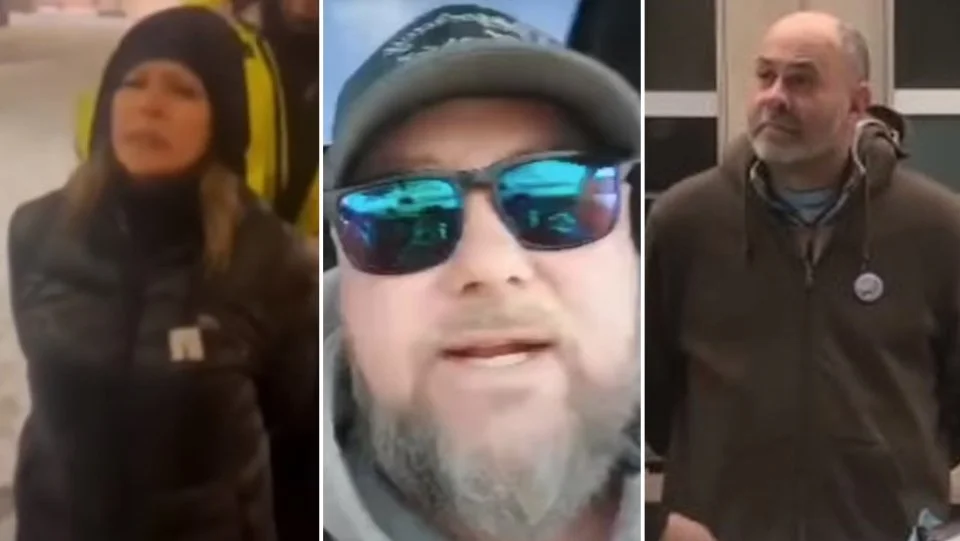
Now known by Freedom Convoy zealots as the ‘spark that lit the flame,’ Tamara Lich is an energy industry worker. She was active in the Western separatist movement known as ‘Wexit’ while living in Alberta, and after moving to Manitoba she joined the Maverick Party.

Lich is not a medical expert nor does she have a vested interest in the trucking industry. At time of writing she remains in custody awaiting a bail hearing on a charge of counselling to commit mischief.

Ditto for fellow convoy organizer Pat King. This chap is also not a medical expert or a trucking enthusiast. He too has long been a rebel looking for a cause whether that be in the form of Yellow Vests Canada or his own Roll with Pat movement. King has cultivated a following with his videos espousing racist sentiments. Alarmingly, King often films his rants seated in front of a Canadian Armed Forces ensign, despite the fact that he never served in uniform. At one point King had to apologize for having created the false impression that his leg amputation was the result of his service in Afghanistan. It was, in fact, due to a workplace mishap here in Canada.

That is not to say that a large number of military veterans didn’t support the Freedom Convoy initiative. It is in this regard, when coupled with alleged ties to white nationalist or far right groups that this takes a far more sinister turn.

One of those active in the occupation of Ottawa was none other than a chap named Jeremy MacKenzie.

Unlike King, MacKenzie did indeed serve as a combat solider with the CAF and he had at least one tour in Afghanistan.

What he is now better known for is his role as the figure head for a group known as the Plaid Army.

MacKenzie is also the creator of the concept of a fictional North American nation state that he has dubbed ‘Diagolon.’ According to MacKenzie, this state of Diagolon would stretch diagonally from Alaska to Florida and encompass what he describes as the ‘sane’ regions of Canada and the U.S.A.

MacKenzie has gone so far as to design a flag for this new nation of Diagolon. It is a white strip which cuts a black background diagonally and he has nicknamed it “ol-slashy.”

Those who follow MacKenzie and his Diagolon movement have adopted the phrase “ Gun or Rope” as their solution to any ideological enemies who oppose them.

This list would include the Liberal government and the mainstream media. “This is the media’s baby. They built and supported it and pushed for this race war, this civil war,” MacKenzie reportedly stated.

MacKenzie is facing charges in Nova Scotia for weapon possession violations, and the alleged careless use of a firearm during a drunken incident that was video taped and posted online. The charges have not been proven in court.

However, a far more concerning development involves the RCMP arrests in relation to the vehicle blockade that was established at Coutts, Alberta.

Following a police raid wherein a large cache of weapons and ammunition were seized, the RCMP announced charges against four suspects for conspiracy to commit murder. One of those charged in the incident is a fellow named Chris Lysak.

Coincidentally, Lysak is a friend of Jeremy MacKenzie who reportedly referred to Lysak on social media as the ‘head of Diagolon’s security.’ To further reinforce the connection, it was noted that a tactical vest seized in the Coutts police raid sported the black and white symbol of Diagolon that MacKenzie calls ‘ol-slashy.’

When asked about any possible involvement, MacKenzie claimed that the Diagolon patches are simply a “branding – like a hockey team or something.”

The last time I checked, no professional sports team uses the catch phrase “Gun or Rope,” nor do they make public statements about engaging media with violence.

For all of those who wish to portray the Ottawa occupation as a trucker supported freedom protest, you need to start taking a closer look at these organizers.

You got played.

ON TARGET: Military Has No Place in Play-Acting Revolution

The Freedom Convoy that has occupied downtown Ottawa since Jan. 28 has proven to be a lightning rod for the underlying pent up anger that has been building among Canadian citizens over the past two years of COVID-19 restrictions.

In the very early stages of the pandemic, Canadians took to the streets to bang pots-and-pans in salute of the efforts and sacrifice being made by our frontline health care professionals and essential workers.

Now we have a nationwide movement-of-protest blaring air-horns in support of a tiny minority of cross-border truck drivers who refuse to comply with a vaccine mandate.

At least that was the initial genesis that prompted the organizers of the Freedom Convoy to bring their road show to the gates of Parliament Hill.

However, it did not take long for that simple single demand to morph into a rejection of all COVID related mandates – vaccines, masks and passports.

It also did not take long for the message of the protestors to escalate from simply fornicating Prime Minister Justin Trudeau to the ridiculous objective of actually overthrowing Canada’s democratically elected Parliament.

Believe it or not, Freedom Convoy leaders publicly called upon Governor General Mary Simon to recognize a new coalition government based on opposition parties, and, um, the unelected representatives of the trucker protest.

Once again, in the interest of full disclosure, I reside with my family in the downtown Ottawa and as such, I have had a front row seat to the horn-blaring occupation since the outset.

It has been irritating and at times inconvenient but thankfully it was at no point to date, personally threatening or in any way violent.

That said, it has also been far too festive to be taken as a serious outpouring of collective anger by the Canadian public.

There were Canadian flags everywhere. Pickup trucks seemingly always sported two flags while pedestrian protestors almost all carried their flags attached to a hockey stick.

Crowds would mill around looking for a focal point which would often materialize in a form of anything from a musical busker to a fervent religious believer shouting biblical passages through a battery powered karaoke speaker.

Some people set up entire club-sized sound systems to invigorate impromptu, alcohol-fuelled dance parties.

Crowds dancing to the rhythms of ‘Ghostbusters’  or ‘Don’t worry, be happy’ would quickly be brought back into focus with shouts of ‘F*ck Trudeau’ or simply the Braveheart movie rally cry of “Freedom!”

To keep the protestors’ collective strength up there was no shortage of free provisions. Barbecues churned out steady streams of hamburgers, hot dogs and sausages, free to all protestors and onlookers. There were also caches of essential supplies like paper towels and even mattresses, all available at no cost thanks to generous supporters.

For the little tyke protestors in attendance, organizers brought in bouncy castles (yes, there was more than one) and hay bales, making this purportedly national political protest seem more like a small town, county fair.

For their adult protestor/occupiers, provisions were made to take away the stress after a long day shouting for the overthrow of the Liberal government.

At the logistics centre established in the parking lot at the Ottawa baseball stadium, Freedom Convoy organizers had set up both a portable sauna and a hot tub.

In other words, this has been a first-world collective wail of mild discomfort, rather than a truly angry mob bent on creating revolutionary change.
In March 1917, when starving Russians rioted in the streets of St. Petersburg their shouted demand was “bread!”. In the ensuring days of continued violent protests the Russian rioters’ slogan morphed into cries of “down with autocracy” which soon resulted in the successful overthrow of the Tsar.

Those angry Russians were motivated by hunger and they sure as hell did not bring their kids along, let alone ensure that they had bouncy castles to jump on while their parents overturned the Russian government.
On the subject of freedom of speech, I am a firm believer that this is a basic tenet of democracy. As a former soldier, I also recognize the fact that our military’s role is to protect our democracy, not to practice it.

As such, there are strict rules in place to prevent service members from making political statements of any kind.

Which brings us to the bizarre case of Major Stephen Chledowski, an artillery officer who posted a nine-minute video online, in which he accuses federal and provincial politicians of being traitors and suppressing the rights of Canadians.

“I am calling on my military and police comrades to now stand up and protect your loved ones against this government’s forced medical tyranny.” stated Major Chledowski on the video.

I will acknowledge that Chlewdoski can have his own personal opinion regarding vaccines and government mandates, however him making a public appeal - as a major in uniform no less – for fellow soldiers to follow his lead arguably constitutes sedition.

It is one thing for the Freedom Convoy participants to play act the role of revolutionaries, it is quite another for a serving officer to incite widespread disobedience in the ranks.

ON TARGET: Freedom Convoy’s Dubious Legacy

Credit: Centre for Israel and Jewish Affairs Twitter

By Scott Taylor

I will begin this column with the personal disclosure that I am a long-time downtown resident of Ottawa. As such, my family and I have been fully immersed in the noisy chaos of what is now widely known as the “freedom convoy.”

We are not participants in this protest. But given the reality that the parked trucks and crowds engulfed our home, this means that simply commuting to work puts us out on the same streets and in the middle of the action.

The incessant noise of truck air horns blaring was reminiscent of the 2010 world cup in South Africa wherein spectators across the globe learned to detest the steady hum caused by thousands of people blowing their vuvuzelas. We can now understand what it would be like to toil inside an active beehive for days on end.

It has also been abundantly apparent that this same crowd of anti-mandate, anti-vax protestors are also very pro-marijuana. The pungent clouds of second-hand pot smoke has noticeably increased our family’s craving for snack food, and even our cat has never been so ravenous.

Again, in the interest of full disclosure, I am double-vaxxed and boosted, I wear a mask in public, practice social distancing and I still sing ‘happy birthday’ twice when I wash my hands. That said, I am also a firm believer in freedom of speech and I endeavour to be tolerant of differing opinions.

The original genesis for the freedom convoy was to protest against the new imposed requirements cross-border for truck drivers to be vaccinated or face quarantines.

Many of the protest proponents argued that this mandate was adversely affecting the livelihood of many of those same drivers who had so selflessly ensured that vital necessities were delivered to us during the past two years of the pandemic.

However, it did not take long for truck drivers associations to point out that over 90 per cent of truckers are already vaccinated, and that the new mandate would only affect a small minority of their profession.

Worse was yet to come, as by the time the truck convoy began rolling into Ottawa, it was clearly evident that virtually every fringe element with a beef against the government was hitching their wagons to the so-called “freedom convoy.”

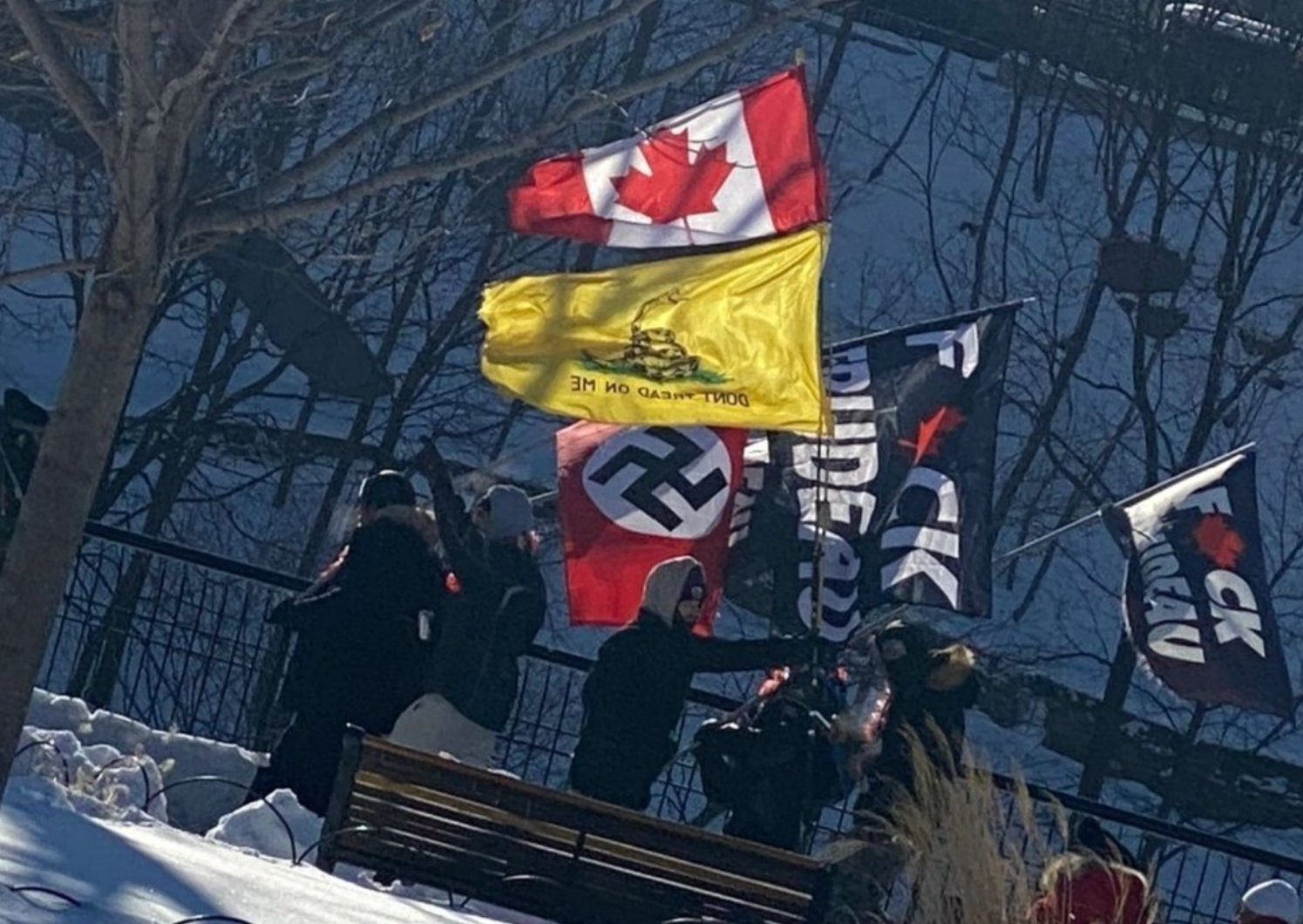
One of the first images to emerge from the burgeoning protest was of someone flying a Confederate flag from their pickup truck. This was soon followed with photos of protestors brandishing swastikas and one individual carrying a red-white-and-black maple-leaf flag meant to symbolize a Nazi-Canada.

Once the crowd had fully assembled, we had ignorant drivers parking their vehicles at the National War Memorial, protestors dancing atop the Tomb of the Unknown Soldier, while others urinated at the very same sacred space honouring those soldiers who fought for our country’s freedom.

The media reports focussed on these disrespectful misdeeds and the presence of fringe minority groups caused the “freedom convoy” organizers to offer up hollow-sounding explanations that these individuals and isolated acts “did not reflect the true nature of the protest.”

One of the lame excuses offered by convoy organizers for the visible presence of swastika flags was that the individual’s carrying these symbols wanted to illustrate the fact that the Trudeau government’s vaccination mandate is equitable to Hitler’s policy of mass genocide in World War II.

Not only is such a comparison ludicrous in the extreme – and insulting to those who suffered the horrors of the Holocaust – it also fails to recognize what the swastika has come to symbolize.

The fact that someone would have one in their personal possession is one thing. That they would think they could brazenly display such a vulgar flag in the midst of a large crowd without recrimination is another level of offensive altogether.

Ditto for the knucklehead who attached a Confederate flag to their pickup truck and drove horn-a-blazing through the downtown Ottawa core.

There is no ‘interpretative’ wiggle room for a flag that symbolizes the ultimate white supremacist policy of historic Black enslavement.

The problem for the freedom convoy organizers and participants is not that some fringe loonies attempted to hijack the media attention generated by this mass gathering of big-rig trucks.

What the gathered mob failed to do was to self-police their own event to ensure these crazies understood that swastikas, Confederate flags and public urination on war memorials would not be tolerated.

On the fifth day of the protest, my friend – a veteran of the Canadian Armed Forces and an affected resident of Ottawa – took it upon himself to photograph the various license plates of the protest trucks parked in front of the Canadian War Museum.

Within minutes, an angry protestor had confronted my friend, demanded he surrender his phone and then revised this demand to that of a deletion of photographs.

When this request was also refused, the protestor, now backed up with fellow truck drivers, menacingly reminded my friend that he was “all alone” and might wish to reconsider their demand.

Thankfully that incident ended without violence, but it also stopped short any further recording of license plates.

I suggest that had the majority of Freedom Convoy participants taken an appropriate amount of offence to the swastikas and Confederate flags, they too would have quickly disappeared from the crowd.

Freedom is not anarchy and freedom of speech does not include hate speech.

ON TARGET: Putin is Playing NATO like a Fiddle

By Scott Taylor

The NATO narrative is very simple and very concise: Russian President Vladimir Putin has massed his troops along the Ukraine border and is poised to invade. 

The early intelligence reports predicted that this inevitable military incursion would take place in December and then was revised to January 2022. Satellite images provided by US intelligence sources clearly depict parade squares full of Russian armoured and logistics vehicles parked bumper to bumper in locations we are told are ’near’ the Ukrainian border. 

Estimates of the Russian troop build-up ranges from 70,000 to 135,000 soldiers pre-deployed along Ukraine’s eastern boundary (or the ‘Front’ as many hysterical western media reports now describe it).

This is all very frightening stuff if taken at face value and I must admit that many friends, neighbours and relatives have written to me expressing their fears that we are on the brink of a planet -destroying nuclear conflagration.

These fears are of course being deliberately mongered by the brain trust at NATO high command who are playing to the masses in order to pour fuel on the current unlit powder keg. 

The problem with the public affairs zealots at NATO HQ is that they cannot keep their fear-du-jours’ in order. To wit: We have been told for nearly eight years now that Russian aggression and Putin’s desire to restore Russia to the Soviet Union’s previous glory days has put the three Baltic States - Latvia, Estonia and Lithuania - in imminent danger of invasion. 

To counter this, Canada along with numerous other NATO countries have deployed thousands of troops into the Baltic states as a deterrent to Putin’s allegedly insatiable lust for land. There are presently approximately 650 Canadian combat soldiers forward deployed to Latvia as part of Operation Reassurance. 

Which is why it was somewhat surprising that last week Latvia, Estonia and Lithuania all announced that they were shipping a vast arsenal of US supplied anti-tank and anti-aircraft missiles to Ukraine in advance of the expected Russian invasion. If we were to believe at face value the NATO hype, once Putin gobbles up Ukraine he will be polishing off the Baltic States, which is why we have so many Canadian soldiers pre-deployed to re-assure the locals of our NATO commitment to a collective defence. 

So, how is it that these same threatened Baltic States can suddenly divest themselves of their US-suppled defensive hardware? Which brings us to the question of why everyone is so quick to simply discount the Ukrainian military as its own standing deterrent to Putin’s forces. 

Most pundits seem to assume that once the Russians start to roll in, the Ukrainians will offer little to no resistance and that the capital Kiev will fall in a matter of hours. To reinforce this theory, Canada along with the UK, US, Germany and Australia have already engaged in a bit of pre-emptory theatre by withdrawing most diplomats and their families from Kiev in advance of the supposed big Russian push. 

Again, why is everyone so quick to dismiss the capabilities of the Ukrainian fighters? There are presently about 280,000 soldiers in the Ukrainian regular forces which could be mobilized to close to one million personnel if you include the newly constituted territorial volunteer units. Bolstering this force, the Ukrainian army possesses some 2400 Main Battle Tanks. 

While many of those tanks could be considered obsolete, it should be remembered that the Taliban in Afghanistan never numbered more than 30,000 fighters and they had no armour whatsoever. Yet NATO deployed over 150,000 of the best equipped soldiers the world has ever seen and could not win that two-decade long war.

Surely Putin’s 135,000 troops would fare no better against a determined million-strong Ukrainian military and hostile population of roughly 44 million?

In recent days, the UK and US have pumped into Ukraine an estimated $600 million (US) worth of sophisticated weaponry and munitions. Add to that the fact that NATO instructors, including Canadian military personnel, have been actively training Ukrainian troops since 2014. 

Surely all that training and equipment provides one hell of a deterrent to Putin, let alone the threat of increased sanctions or, worst case scenario, NATO intervention in support of Ukraine. 

Another thing we should all keep in mind is that Russia has produced some of the world’s best chess players and their military generalship is historically renowned for its strategic deception operations, or ‘maskirovka’ as the Russians call it. The sight of all those Russian vehicles parked near the Ukraine border may look ominous. That is because they are meant to. 

There is an old Siberian saying that ‘when the tiger prowls you cannot see him, or smell him’. At the moment we can see the Russian military build-up and it all smells rather fishy to me.

Meanwhile, our NATO leadership is still playing checkers when the game being played by Putin is chess.

ON TARGET: Canada Must denounce the Glorification of Nazis

By Scott Taylor

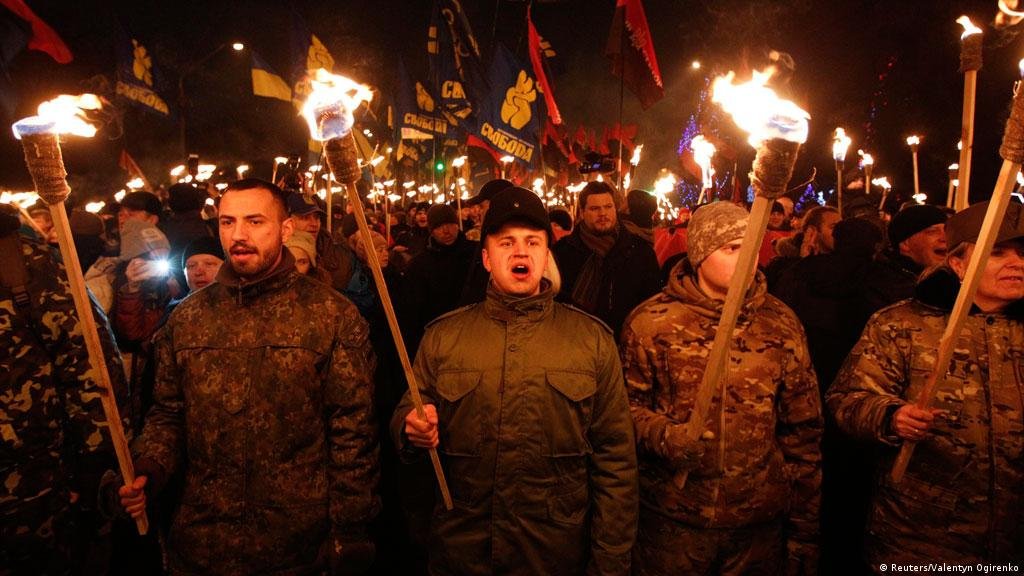
On January 1, 2022 hundreds of jubilant revellers gathered in Kiev, Lviv and numerous other Ukrainian cities and towns. They were not celebrating the arrival of the New Year but rather they were commemorating the birthdate of Ukrainian ultra-nationalist Stepan Bandera.


To those unfamiliar with World War II history, such celebrations may seem innocuous enough on the surface. These were patriotic Ukrainians honouring a man who spent his life dedicated to the creation of an independent Ukraine.


It would seem natural enough that in the face of current Russian posturing along the Ukraine border and clandestine support for the pro-Russian separatists in eastern Ukraine that young Ukrainians would herald the efforts of men like Bandera who once fought for Ukraine’s independence.
Unfortunately history reveals a far more sinister legacy of Bandera.


In order to achieve his objective of an independent Ukraine, Bandera made a deal with the devil – namely Adolf Hitler.


When Nazi Germany invaded the Soviet Union in June 1941, Bandera and his ultranationalist supporters were openly allied with Hitler’s legions. They were also willing participants in the early phases of the Holocaust which involved the mass liquidation of Ukrainian Jews and Poles.


This murderous entry in Bandera’s biography was not forgotten by the Israeli embassy tweeting in response to the January 1 Bandera celebrations that, “The glorification of those who supported Nazi ideology tarnishes the memory of Holocaust victims in Ukraine.”


To their discredit, the Canadian Embassy in Ukraine remained silent rather than issue a similar denunciation regarding the glorification of a man who once participated in the wholesale extermination of human beings in the name of Hitler’s ‘Final Solution.’


Canada actually has significant leverage over the current Ukrainian regime as we have been perhaps the staunchest NATO member pushing for the alliance to stand in solidarity with Ukraine against possible Russian aggression.


Since 2014, Canada has deployed 200 military trainers and a wealth of non-lethal military hardware to bolster the Ukrainian Army.


With an estimated 70,000 Russian troops massed along Ukraine’s eastern border, one would think that the Kiev regime would be doing all they can to appease those western nations that are pledging them military support.


Canada risked nothing diplomatically had we condemned the Bandera glorification.
We can proudly state that our WW2 veteran’s fought against Nazi Germany and that the allied victory ended the Holocaust – one of the most evil chapters in human history.
We need also remind ourselves that Bandera’s Organization of Ukrainian Nationalists (OUN) also slaughtered tens of thousands of Poles.


Given that it is Ukraine’s potential admission into NATO which is at the crux of the current crisis with Russia, and that Poland is already a member of NATO, allowing the public glorification of Bandera further illustrates a lack of sensitivity on the part of the Ukrainian government.
As a good friend, in good standing with Ukraine, Canada has an obligation to provide the Kiev regime with some plain talk and bad manners. Our Ambassador should have soundly denounced the glorification of Bandera.


The failure of the Canadian government to do so drew a backlash from B’nai Brith Canada’s President Michael Mostyn. “We cannot allow political leaders to be pushing these politically charged agendas and distorting units that collaborated with the Nazis and individuals who collaborated with the Nazis” Mostyn recently told the Hill Times. “It is time now to take a more aggressive approach when it comes to Holocaust distortion.”
In 2020 the Canadian government created the post of a special envoy to protect Holocaust Remembrance. In announcing this post, Prime Minister Justin Trudeau committed to confront the rise of anti-Semitism in Canada and abroad.


Despite those strong words, little to no actual actions have been undertaken.
Canada maintains a 600 strong battle group in Latvia to deter any potential Russian aggression against this former Soviet Baltic state.


Despite the presence of our soldiers, the Latvian authorities allow an annual parade in the streets of Riga to commemorate the WW2 SS Latvian Legion. Latvia is the only country in Europe that still stages a public glorification of SS soldiers who had pledged their alliance to Adolf Hitler.


In 2019, for the first time, Canada officially denounced these parades but one has to believe that as a good friend to Latvia we could exert more pressure on the Riga regime to stop this public glorification of Nazis.
Maybe in 2022, we could start by cleaning house domestically. By this I mean we could start removing those statues which glorify Nazi collaborators such as the Roman Shukhevych monument in Edmonton.
Perhaps we could instead erect a tribute to the approximately 40,000 brave Ukrainian-Canadians who fought in Canadian uniforms to defeat Hitler.


Just a thought.

ON TARGET: Putin is Not The Strongman He Would Have us Believe

By Scott Taylor

As the sabre-rattling between NATO and Russia intensifies over the sovereignty of Ukraine, so too has the hypocrisy increased on the part of those cheerleading for the North Atlantic Treaty Organization.

These tub-thumpers feign moral outrage that Russian President Vladimir Putin would even attempt to exert influence over his neighbouring states.

For Russia the stakes are high. Putin views this potential admittance of Ukraine into the NATO alliance as a reckless provocation. Since 2014 the eastern provinces of Ukraine have been under the control of pro-Russian, Ukrainian rebels.

The enclaves of Donetsk and Luhansk have remained an often not-so-frozen conflict between Ukrainian government forces – many of whom are trained by Canadian military personnel – and the Russian-backed Ukrainian rebels.

Should Ukraine opt to accept the invitation from the NATO alliance that was first extended to them in 2008, and never revoked, this would commit all 30 NATO member states to the collective defence of Ukraine.

Given that Ukraine authorities describe the eastern breakaway territories as “Russian occupied,” and that they do not accept Putin’s 2014 formal annexation of the Crimea, it means that upon admission to NATO, the alliance would essentially be at war with Russia.

One can understand how that might be a little intimidating for Putin.

Those few conflict analysts who dare challenge the pro-west narrative often point out that the U.S. responded with similar indignation back in 1962.

At that juncture the Soviet Union had signed a deal with Cuban President Fidel Castro to forward deploy nuclear missiles in Cuba. The rationale for this was two-fold.

For the Soviet Union it was seen as a strategic counter to the U.S. having recently deployed nuclear missiles in both Turkey and Italy.

For Castro and the Cubans it was hoped that these Soviet missiles would deter the U.S. from attempting to repeat their 1961 failed Bay of Pigs invasion of Cuba.

Having Soviet nuclear warheads based just 120km off the coast of Florida was a red line for the U.S.A.

President John F. Kennedy over-ruled his Pentagon advisors who advocated a pre-emptive strike on the Cuban based Soviet missiles.

Instead, Kennedy ordered a full scale naval ‘quarantine’ of Cuba to prevent any further Soviet military support being delivered. Kennedy was careful to avoid using the word ‘blockade,’ as that would have been an act of war.

After taking the world to the mutual destruction nuclear precipice, both the Soviets and the Americans blinked and backed down. The Cuban missile crisis ended with the Soviets withdrawing their missiles from Cuba, and the U.S. removed their warheads from Turkey.

In October 1983, in response to internal political strife and the increased influence of Cuban and Soviet communists, the U.S. led a coalition to invade the Caribbean Island of Grenada. This attack was denounced by the United Nations General Assembly as a “flagrant violation of International Law.”

This  denouncement by the U.N mattered not a whit to U.S. President Ronald Reagan who was prepared to dismiss the ‘rules-based international order’ moniker in order to demonstrate that America polices its own back yard.

This approach was repeated in December 1989 by President George H.W. Bush when he ordered the U.S. invasion of Panama.

The primary objective of the attack was to depose Panamanian ruler Manuel Noriega and replace him with a more pro-American puppet.

Militarily this conflict was about as one-sided as you could get with the U.S. already having troops and bases in the country as part of their Canal Zone defence force. It was not a case of David versus Goliath, it was more like Mickey Mouse versus Goliath on steroids.

This time around both the U.S General Assembly and the Organization of American States (OAS) condemned the U.S. invasion of a sovereign state as a ‘violation of international law.’

Again, the U.S. leadership could not give a rat’s behind what the world thought about their invasion.

In an iconic twist that proved the Pentagon planners have a self-awareness and a sense of humour, the invasion of Panama and the subsequent arrest of Noriega was code-named “Operation Just Cause.”

Putin might wish to mimic his U.S. counterparts with an equally cavalier disregard for international law, justified by the nearness of the threat to Russia itself. However, Russia of 2022 is not the Soviet Union at the height of the Cold War.

Putin can make threats of unleashing nuclear Armageddon should he feel further threatened. However he does not have the military means to defy NATO, even in his own neighbourhood.

In that, Putin can only envy the U.S.A.

ON TARGET: KICKING SEXUAL MISCONDUCT “TO THE MOON”

By Scott Taylor

We have now passed the threshold into 2022 and the New Year is always a good time to reflect on the events that transpired over the previous 12 months.

For the Canadian Armed Forces those reflections reveal some depressingly similar circumstances to those which face our military and political leadership moving forward into 2022.

At the end of 2020 major military procurement projects such as the replacement of the CF-18 fighter jets and the building of the RCN’s future fleet were facing problematic delays, indecisions and cost escalations. Ditto 2021.

COVID-19 restrictions posed a serious challenge for units to train, parade and operate effectively. Ditto 2021.

In terms of deployments, Canada had a 650 member battlegroup stationed as a deterrent to Russian aggression in Latvia, and a Parliament-authorized contingent in Iraq and the Middle East with a strength of up to 850 personnel. Ditto 2021.

One of the major headaches plaguing the senior military leadership was that of dealing with sexual misconduct in late 2020.

On Oct. 28 of that year, Gen. Jonathan Vance had announced a plan called The Path Towards Dignity and Respect. This was to be a long term plan to refocus the 2015 Operation Honour – the CAF’s campaign against sexual misconduct in the ranks – on changing the underlying culture of misconduct and setting up the program to be a permanent fixture of DND.

Now readers need to remember that Op Honour was implemented after a damaging series of media reports in 2013/2014 revealed widespread sexual misconduct throughout the CAF.

This led to an independent review by former Supreme Court Justice Marie Deschamps which confirmed everyone’s worst fears and detailed what she called a military steeped in a highly masculine, sexualized culture where leaders turn a blind eye to misconduct.

Unfortunately for all involved, the Path Towards Dignity and Respect turned out to be laden with landmines that devastated the military senior command tasked with navigating it.

The first to fall was outgoing Chief of Defence Staff, Gen. Vance, when Global News reported on February 2, 2021 that he had allegedly committed two acts of sexual misconduct.

After a months long military police investigation, Vance has been charged with a single count of obstruction and is scheduled to appear in court in March 2023.

The Vance story set in motion a flurry of allegations against top Admirals and Generals including Vance’s successor as CDS, Admiral Art McDonald.

At time of writing, no fewer than nine senior General Officers or Flag officers were suspended or ‘retired’ from their posts pending investigations or court cases.

On the surface it would seem that the Canadian military is closing out 2021 just as embattled on the sexual misconduct front as they were in 2020.

However, as an eternal optimist, I have to believe that as we move forward into the new year, the changes put in place in recent months will allow our military to actually make real headway in effecting cultural change.

Up until now it has seemed like that running Peanuts comic gag where Lucy promises to hold the football while Charlie Brown kicks it. Invariably Charlie Brown mistakenly puts his faith in Lucy, promises he is going to kick that ball “to the moon” and every time Lucy reverts to character, swipes the ball away and Charlie Brown ends up flat on his back. 

Long time observers of the Canadian military will recall that the first major sexual misconduct revelations came to light in 1998 when Macleans magazine ran an unprecedented four consecutive cover stories on the topic. Public outrage sparked the creation of the office of the Canadian Forces Ombudsman.

However that post was proven to be incapable of changing the culture when Macleans revisited the subject in their 2013 reports.

Then it was the Deschamps’ report, followed by Op Honour, refocused as Paths towards Dignity and Respect and then, as a result of the current crisis, yet another independent review by former Supreme Court Justice Louise Arbour.

That is a lot of announced solutions without success to make one sceptical that this time around things will be different.

However, there has also been a major changing of the guard at virtually every top job in the military environment.

We now have a female Minister of National Defence, Deputy Minister, Vice Chief of Defence Staff and Lt-Gen Jennie Carignan assigned to a new position designed to focus on reforming the military culture.

In recent media interviews, Carignan has predicted it will take up to five years to obtain the desired results.

Given the team in place, I think this time there will indeed be contact with that ‘football’.

They might not kick it “to the moon” but they will boot it downfield. I hope.

ON TARGET: Putin is more of a Cornered Rat than a Bullish Aggressor

By Scott Taylor

Last Thursday there was a meeting in Brussels between Ukrainian President Volodymyr Zelensky and senior officials at NATO Headquarters.

Zelensky was there to plead Ukraine’s case for NATO’s military support in advance of any Russian incursion into eastern Ukraine.

In recent weeks Ukrainian, U.S. and NATO intelligence sources have reported a large Russian military build up along the Ukrainian border.

The estimated timeframe for this feared invasion is within the next few weeks or perhaps a few months.

Instead of simply pledging the requested support to Zelensky, NATO Secretary General Jen Stoltenberg cunningly stated instead that NATO’s 2008 invitation for Ukraine to join the alliance remains open.

Having Ukraine join NATO, rather than remain a neutral sovereign state is a publically declared ‘red line’ for Russian President Vladimir Putin.

Thus Stoltenberg is using the alleged immediate threat of a Russian invasion to secure Ukraine’s permanent membership in the alliance – which in turn could push Putin over the edge into taking military measures.

It is being played out like some sort of geo-political chess game, but saner heads need to remember that at the end of the day we are talking about nuclear-armed opponents, not chess players.

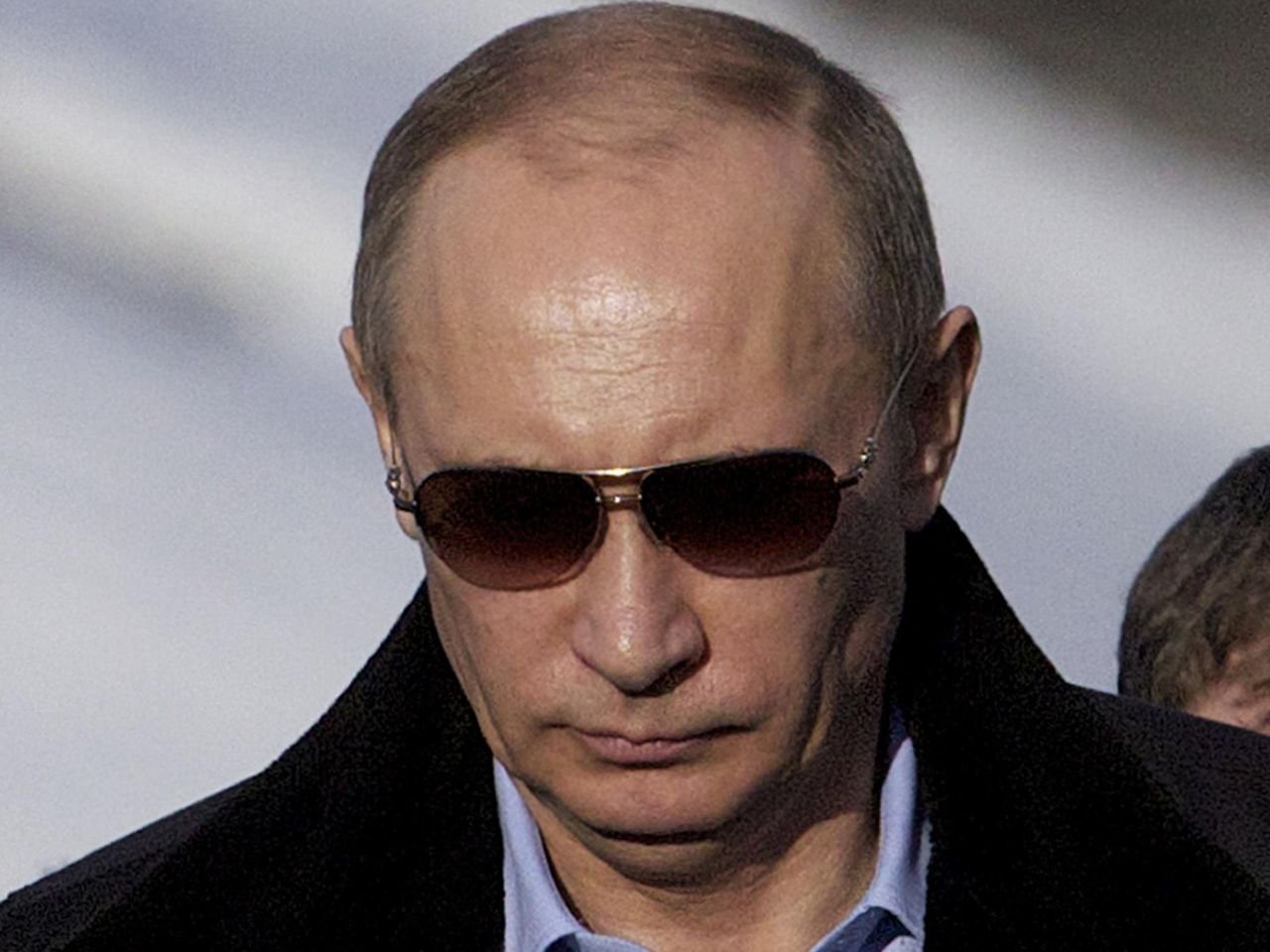
The NATO spin-doctors paint Russia as the aggressor in all of this and point to Putin’s 2014 annexation of the Crimea as proof positive that the muscle bound dictator is bent on world domination.

The standard depiction of Putin is that this former KGB agent longs for the good old days when the Soviet Union had the western world trembling in fear.

During my military service in the 1980’s I served with 4 Canadian Mechanized Brigade Group in West Germany. To this day I’m proud to wear my NATO medal.

However the Cold War is long over and the 30-member NATO of today is not the 16-member alliance that formed a collective defence against the expansion of communism.

Canada was a founding member when the North Atlantic Treaty was signed in 1949. When West Germany joined NATO in 1955, the Soviet reaction was to create their own collective defence alliance known as the Warsaw Pact.

At the height of the Cold War there were seven member states in the Warsaw Pact in addition to the Soviet Union.

In 1989 the dissolution of communist Europe began and by 1991 even the Soviet Union had broken up into 15 separate republics.

Since that historic juncture, NATO has added 14 new members which include all the former Warsaw Pact countries along with the three former Soviet Baltic republics; Latvia, Lithuania and Estonia.

At their summit meeting in 1990, U.S. President Ronald Regan promised Soviet leader Mikhail Gorbachev that there would be no eastward expansion of the NATO alliance. Yet in the subsequent three decades NATO has grown in numbers and capability and now borders Russia itself, in Poland and the Baltic.

Putin flexed his might in annexing the Crimea in 2014, but in the grander scheme of things he is strategically more of a cornered rat than a formidable aggressor.

The official Russian response to Ukraine’s possible admission into NATO was to threaten the deployment of medium range nuclear missiles.

While the NATO spin machine would have us believe that this is Putin threatening Western Europe, it seems more like a desperate defensive threat.

The senior Russian military leadership are not so delusional as to think they could defeat the massive NATO alliance in a conventional conflict.

So they issue a reminder that they still possess the means to deliver on the old Cold War premise of nuclear ‘Mutual Assured Destruction’ (MAD).

Prior to the meeting between Stoltenberg and Zelensky, U.S. President Joe Biden had a chat with Putin to warn Russia that any military incursion into Ukraine would be met with severe economic sanctions.

One of the targets of such measures would be the recently completed, but not yet functioning, Nord Stream 2 oil and gas pipelines.

These pipelines run across the Baltic Sea and directly connect Russian oil and gas exports to Western Europe. By doubling the capacity with the second pipeline, the U.S. fears that this only further increase the Kremlin’s leverage over industrialized Western Europe.

It also further diminishes Russia’s need to rely upon the existing over land pipelines to Europe, which run through Ukraine.

It is a complex chess game indeed, and we should not be playing chicken with a nuclear-armed opponent under the dumbed down pretext that Putin simply wants to rule the world.

ON TARGET: Afghanistan Inquiry Should Examine How Canada got Into the War, Not How We Ended it

By Scott Taylor

Last week the House of Commons passed a Conservative motion to establish a committee to investigate Canada’s handling of what has been dubbed the ‘Afghanistan Crisis.’

While the Trudeau minority government opposed the creation of this committee, the motion was supported by the Bloc Quebecois and the NDP.

Unfortunately the scope of this investigation is limited to the events surrounding the Taliban takeover last August, and how Canada failed to prepare for that eventuality.

One focus of the parliamentary probe will be Canada’s failure to have a plan in place to evacuate those Afghans who had assisted Canadian troops during their decade long participation in that conflict.

One of the most strident and vocal critics of Canada’s handling of the ‘Afghanistan Crisis’ is none other than Maj-Gen (ret’d) David Fraser.

This former combat commander welcomes the establishment of the committee, but Fraser remains frustrated at the slow pace at which Canada is fulfilling its promise to bring 40,000 Afghans to Canada.

What makes Fraser’s current public stance so ironic is that he was one of the most fervent cheerleaders of Canada’s Afghan mission and the claim that all was going smoothly during that operation.

In 2018, Fraser released his book which was misleadingly entitled ‘Operation Medusa: The Furious Battle that saved Afghanistan from the Taliban.’

One can forgive the Trudeau government for not making emergency plans for a mass evacuation of Afghans when our own Canadian combat general proclaimed the Taliban was defeated in a battle back in 2006.

At the height of Canada’s commitment to the war in Afghanistan, Canada did indeed contribute a disproportionate share of the ISAF alliance’s troops and resources. However it must be remembered that we withdrew from the combat mission in 2011, and we wrapped up our far smaller training mission in 2014.

On the diplomatic front, at one point the Canadian embassy in Kabul was second in size only to our embassy in Washington, DC.

By the time that Ashraf Ghani fled the Presidential palace and left Kabul to the mercy of the triumphant Taliban, Canada barely had a skeleton crew of diplomats left on the ground.

Without our own military resources, Canada would have had to rely largely upon U.S. intelligence reports to assess the ongoing situation.

We now know that our American leadership long knew that this war was unwinnable, but lied to the American public in order to retain support for the ongoing expenditure of blood and gold.

To be fair, it must have been difficult for the Pentagon officials to watch the 350,000 strong Afghan security forces that they armed, trained and paid, simply evaporate without a fight. If history were to have repeated itself, the U.S. backed Afghan government forces would have been able to hold major cities such as Kabul, for at least a few years.

When the Soviets withdrew in 1989, the Afghan communist army they had created was able to resist the warlords until 1991. It only fell then because Uzbek warlord Abdul Rashid Dostum switched sides and turned on embattled President Mohammed Najibullah.

For the record, despite a lifetime career laced with treachery, deceit and war crime allegations, Dostum remains a powerful force in Afghanistan even after this latest Taliban victory.

Such is the complexity of the Afghan political landscape. Our Canadian leadership never understood the equation even during our military deployment and certainly had no clue when they embarked on this fool’s errand back in 2002.

The focus of this parliamentary inquiry should not be on how the current government screwed up the exit from Afghanistan in the summer of 2021. It should instead focus on how Canada got itself into such a botched mess in the first place.

It is important that we also investigate how the messaging could have been so misleading during the duration of our military commitment to that conflict.

Stephen Harper’s Conservative government subdued any criticism by claiming that to question the mission was to criticize our soldiers.

Nothing could be further from the truth. They did their duty. The leadership did not do theirs.

ON TARGET: CAF Is Not Immune From Historical Scrutiny

By Scott Taylor

As Canadians become more ‘woke’, we are seeing a growing trend to rename streets and buildings along with the removal of statues dedicated to individuals associated with historical discriminatory racial policies.

There are of course a large number of self-proclaimed traditionalists who loudly object to any revisionist review of our nation’s history.

There is no institution more steeped in its own traditions and ceremony than that of the Canadian Armed Forces.

That being said many of the former battlefield glories may not seem as honourable when viewed through the prism of today’s values.

One case in point would be the 1885 Northwest Rebellion which included the battles of Cut Knife Hill and Batoche.

Those battles and campaigns are still cited as honours on the Regimental Colours of the Queen’s Own Rifles, the Governor General’s Foot Guards and the Royal Canadian Artillery.

Those units were part of the military force dispatched to crush an uprising by the Cree and Assiniboine tribes, allied with Metis leader Louis Riel.

There is no denying that these were battles but to consider it an honour to suppress Indigenous people through military force may no longer appear to be glorious.

I have no doubt that pressure will be applied to have these citations removed from those colours.

Which then brings us to the British-led Nile Expedition 1884 – 1885 in which Canadian volunteers operated rafts to enable Lord Kitchener to invade the Sudan.

To this day the Sudanese view that military assault and subsequent slaughter of their military forces and execution of their Mahdi (leader) as a war crime.

In Ottawa there is a plaque dedicated to the seventeen Canadians who died on that expedition. Yet some might question whether that enterprise is something we should still herald in 2021.

Ditto for the Canadian participation in South Africa from 1899-1902 to assist the British in subduing the Boer settlers. This was the first conflict wherein the concept of concentration camps was used to quell the populace.

Canadian troops were involved in the burning of Boer homes and farms and an estimated 28,000 Boer civilians died in the filthy conditions of those concentration camps.

Yet to this day South Africa along with Paardeberg and Leliefontein are listed proudly as battle honours by the Royal Canadian Dragoons, Royal Canadian Regiment and Lord Strathcona’s Horse.

One way for the military of today to shed any links to these historical actions – and this will sound like heresy to the Colonel Blimp Brigade – would be to thoroughly restructure and rename all of our current military units.

Many of the names currently used are so long out of date as to be laughable and arguably misleading.

Our armoured units have tanks or reconnaissance vehicles, they do not ride horses, yet they bear the names Dragoons, Horse or Hussars. A number of our militia regiments include the term Rifles dating back to an era when the majority of regular army units carried smooth-bore muskets.

As all our infantry and support personnel carry rifles the term Rifles is redundant.

Likewise for those units still bearing the moniker fusiliers. The fusil was a light musket that has not been used since before the turn of the last century.

Of the 49 Regiments in the Primary Reserve, fifteen of those include the title Highlander or Scottish and then there is the Irish Regiment of Canada. While those names may have reflected the general composition of those units when they were founded – many as local militias – but that is hardly the case in 2021.

While we are at it, we could also remove the title ‘Light’ from Princess Patricia’s Canadian Infantry.

The truth is that since being founded at Lansdowne Park in 1914 they have always been infantry. The word ‘Light’ was added as a nod to Hamilton Gault who funded its creation because he thought it sounded cool.

Switching to numbered units may actually make the militia seem more inclusive to those new Canadians who don’t see themselves as Highlanders or Irishmen.

It would also freeze those regimental honours and histories in a time capsule which would insulate them from the current wave of historical scrutiny.

ON TARGET: CAF Top Heavy with Brass: Still

By Scott Taylor

Last Thursday the Trudeau government put their best spin on a very delicate situation by officially announcing that General Wayne Eyre is Canada’s new Chief of the Defence Staff. Eyre had been the acting-CDS since Admiral Art McDonald temporarily stepped aside from the job last March to allow for a police investigation into alleged sexual misconduct.

That investigation was concluded in August with the military police stating there was insufficient evidence to lay criminal or service charges against Admiral McDonald.

Armed with this outcome, McDonald announced that given his vindication, he was prepared to resume his duties as Canada’s top commander.

The Trudeau government rationalized that a ‘lack of evidence’ does not equate to the accused being ‘innocent’ and in the interim left Eyre as the acting-CDS and McDonald in limbo.

Any doubt as to who was going to lead the Canadian Armed Forces forward out of this sexual misconduct crisis was put to rest with the Governor General signing the order to terminate McDonald’s contract last Thursday.

Contrary to many misleading headlines, McDonald was not fired from his job. The CDS and all generals and flag officers serve at the discretion of the federal government.

Which brings us to a question which was raised in another news item last week - that is why does Canada have so many generals and admirals?

The Ottawa Citizen reported that over the past several decades the CAF’s rank and file has shrunk while the ratio of generals to soldiers has steadily increased.

Documents obtained under the Access to Information Act revealed that as of March 31 2021, the regular force had dropped to 65,644 and was commanded by 129 generals and admirals. By contrast, in 1991 there were a total of 85,977 personnel in uniform commanded by 127 generals and admirals.

In rough terms that means that 30 years ago there were approximately 677 personnel for every officer of general rank. Today that ratio is down to just 500 per general.

There was a concerted effort in the mid-1990’s to reduce the rank creep within the CAF and the Liberal government vowed to bring that ratio down to one general per 1,000 personnel.

At that juncture it would have meant reducing the serving 99 generals, through attrition to roughly 70 generals and admirals.

Somewhere along the way that goal was abandoned and slowly but surely the numbers have crept back to the current top heavy bloated state.

In comparison to other military formations the Citizen pointed out that the U.S. Marine Corps has a firm cap of 62 generals for a force that numbers over 180,000 active personnel. That is an impressive ratio of 3,000 marines per general.

Even looking at Canadian military history, we used to have a far better ‘teeth to tail’ composition of our armed forces.

At its zenith in World War 2, the First Canadian Army numbered 251,000 personnel. This was broken down into two corps consisting of five divisions and two independent brigades.

This force was commanded by a total of 72 generals. Admittedly those 72 were Major-General, Lieutenant-Generals and Generals as Brigadiers were not counted as generals during WW2.

However, even if you factor brigadiers into the mix it is at least five times the current ratio and they were actually fighting a war.

Unlike many civilian titles and positions, military rank is normally commensurate with a formation. For instance a Lieutenant-General (three-star) would be a corps commander. A Major-General (two stars) would be divisional commander and a Brigadier-General (one star) would command you guessed it, a brigade.

However in the relatively tiny Canadian military we have no such thing as a Corps formation we have notional divisions and our actual Brigades are commanded by Colonels.

Our allies are not fooled by the amount of maple leafs on our generals shoulders. They care about the military competency that we can bring to the alliance.

In fact having fewer generals would increase the esteem of those senior officers. Creating more of them is equivalent to simply printing more money in that it will only devalue the currency.

ON TARGET: The Roots of Racism in the CAF Run Deep

By Scott Taylor

The Canadian military’s changing policies, regulations and culture are reflective of the shift in our societal values. For instance the current explosion of sexual misconduct scandals within the senior ranks of the Canadian Armed Forces include many allegations of incidents that date back ten, twenty and even thirty years ago.

Up until 1987 women were not allowed to serve in combat arms units or serve aboard warships.

Fast forward to 2021 and we now have women serving at the highest levels of command, with many of those individuals having actual combat experience.

That is an incredible transition within the military culture in a relatively short span of time.

As for the sexual orientation of CAF members, up until 1992 it was illegal to be a homosexual and serve in uniform. Closeted service members were routinely interrogated and summarily dismissed from the forces.

Although a court ruling overturned that military policy in 1992, it was not until 2017 that Prime Minister Justin Trudeau issued a formal apology to all those personnel who had been purged by those discriminatory rules.

It took the Department of National Defence another two years before they issued personal letters of apology to 432 individuals who had been released from service due to their sexual orientation.

The military’s record of racial discrimination has also not been stellar.

During the First World War the enlistment of Black recruits was vehemently opposed by Canada’s top soldier. In April 1916 at the height of the Great War recruiting crisis, General W.G. Gwatkin, Chief of the General Staff issued an official memo that stated, “The civilized negro is vain and imitative; in Canada he is not impelled to enlist by a high sense of duty; in the trenches he is not likely to make a good fighter.”

The problem with Gwatkin’s assessment, besides its outright racism, was that many Black Canadians did wish to enlist and serve in uniform.

While they were not explicitly forbidden to join, Blacks were often rebuffed by the individual commanding officers who had the authority to reject volunteers using their own discretion.

Despite the discrimination and racism, several hundred Black males did manage to enlist.

This created a problem for the military and the solution came about in 1916 when the decision was made to create a segregated unit. The Number 2 Construction Battalion consisted of Black enlisted men with white officers.

As the name implies, they were not to be employed as combat soldiers, but rather as labourers digging trenches and cutting down trees to provide revetment and shelter for the rest of the Canadian Expeditionary Force in Flanders.

Between General Gwatkin’s comments and the creation of a segregated, Black -only labour battalion, it clearly illustrates the prevailing official racism of the times in Canada.

However, in recent years there has been a deliberate effort to celebrate No. 2 Construction Battalion’s contribution to the war efforts as some sort of success story.

This unit’s history was the central theme of the CAF’s annual recognition of Black History month and I even had the occasion to attend a special concert dedicated to this very unique unit.

Like most of the Canadian Expeditionary force, Number 2 Construction Battalion returned to Canada in early 1919 following the November 11th 1918 armistice. The unit was subsequently disbanded in September 1920.

Since that juncture, members of the Black community have persistently lobbied the Canadian government for some sort of formal acknowledgement for No. 2 Construction Battalion.

On March 28 of this year, the Liberal government bowed to that pressure and announced their intention of issuing a formal apology to the descendants of the members of this unit for the racism and discrimination which these Great War veterans faced.

It took all this time, but the powers that be in the Canadian military have finally realized that it was wrong to segregate Black volunteers and make them do menial tasks.

What was until recently something the military celebrated as inclusion is now being apologized for because it is finally being recognized as racism.

The formal apology to descendants is scheduled to take place in Halifax on July 9, 2022.

ON TARGET: Remembrance Day Ceremonies Even More Solemn

Beechwood Cemetery, Remembrance Day Ceremony

Photo Credit: DND: Private Jonathan King

By Scott Taylor

This year’s Remembrance Day ceremonies took on a slightly more somber tone than in years past. It is always a sorrowful occasion, particularly for veterans and their families who reflect upon those loved ones who fell in the service of Canada.

However, with all the martial pomp and ceremony surrounding these ceremonies they were also unwittingly a glorification of war itself.

In the three major wars fought in the previous century, Canadian soldiers had; helped the British empire defeat the Kaiser in 1918, assisted the allies in defeating Hitler’s Nazis and the Japanese in 1945, and fought as part of a U.N coalition that was able to battle the North Korean communists to a standstill in 1953.

We essentially had a record of two wins and a tie and in each of these conflicts our soldiers’ sacrifices had not been in vain.

One could justify the loss of those loved ones with the fact that in victory they had made the world a better place.

The same cannot be said for the conflicts in which Canada has engaged in the current century.

This past summer, Canadian veterans of the war in Afghanistan had to watch with stunned impotence as the Taliban roared back to power in Afghanistan virtually unopposed by the U.S. trained Afghan government forces.

From 2002 until 2014 nearly 40,000 Canadian soldiers were committed to propping up the U.S. installed puppet Afghan government in Kabul.

During that 12-year span of commitment, 158 Canadians were killed, 2,000 were wounded or suffered physical injuries and thousands more suffer the invisible wounds of PTSD.

From a financial perspective it is estimated that Canada will eventually spend $21 billion on that war when one factors in the long-term health care costs for our wounded.

As long as the U.S. and remaining NATO allies continued to prop up the Afghan regime and fund the Afghan security forces, our veterans could hold out hope that their sacrifice could still yield a positive result.

Those hopes were dashed when the Taliban seized control of Afghanistan several months ago and we all witnessed those horrific scenes of terrified Afghans clinging to American air force transport planes in their attempt to flee.

The U.S., NATO and by extension Canada lost the war in Afghanistan. With an expenditure of $2 trillion (U.S) over a 20-year occupation, the most powerful military alliance in the world was defeated by a ragtag bunch of illiterate Islamic extremists.

That is a tough pill for the rah-rah Colonel Blimps who refused to recognize there would never be a victory in Afghanistan and as such continued to take to the airwaves to help convince the Canadian public that we were one new schoolhouse short of success.

Unlike the wars in the previous century where Canadian troops were viewed as defenders and liberators, in Afghanistan we were seen by the local population as unwelcome foreign occupiers.

Thus, this year’s Remembrance ceremonies mark the first time that Canadians have had to mourn fallen soldiers who died in the service of Canada, but because NATO lost the war and the Taliban prevailed, those lives were lost in vain.

Canada has been a direct participant in three other NATO-led conflicts since 1999. That year the RCAF participated in the 78- day bombing campaign against Serbia and Kosovo. Mercifully, there were no casualties among Canadians.

In 2011 Canada was at the forefront of a NATO-led, 10-month campaign to oust Libyan President Muammar Gadaffi. Canada suffered no casualties once again.

After Daesh (aka ISIS or ISIL) swept into Iraq in 2014, Canada deployed fighter jets, trainers and Special Forces to Iraq to counter the threat.

Following the defeat of Daesh in 2017 Canadian troops remain deployed in the region as part of a NATO training initiative. To date Canada has suffered only one fatality and three wounded in a 2015 friendly fire incident in Northern Iraq.

While reflecting on the sacrifice of our soldiers we should also examine closely the results of our military actions.

Kosovo declared independence in 2008 but remains to date a failed state. President Hashim Thaci recently had to step down to face charges of war crimes, including murder and human organ trafficking, which he is alleged to have committed while NATO supported his separatists with an air force which included the RCAF.

Libya descended into violent anarchy as soon as NATO helped the rebels achieve victory. In the lawless violent vacuum created by NATO airpower, Libya is now a failed state.

Under the mandate of Operation Impact, Canada remains committed in Iraq through March 2022.

No one can even define what ‘victory’ will look like in Iraq, but it will not be delivered at NATO gunpoint.

Instead of simply mourning fallen soldiers Canada needs to closer examine how we employ our still serving soldiers.

ON TARGET: Libya Recognition Is Absurd

By Scott Taylor

Last week, seemingly in advance of Remembrance Day commemorations, the Embassy of Canada in Egypt tweeted a Veterans Affairs Canada message, which depicted Canadian sailors aboard HMCS Charlottetown during the war in Libya.

The Embassy’s tweet read “10 years ago [Canadian flag] was one of the first countries to respond to the Libyan people’s demand for democracy. CAF members served in the air and sea, helping to enforce a no-fly zone, evacuate people and patrolling the waters.”

To anyone completely unaware of the current state of affairs in Libya this message would appear to be a salute to the Canadian Armed Forces for a job well done.

To correct this false narrative we need to first look at the fact that it was sent by our embassy in Egypt, not Libya.

The reason for that is that Canada does not staff the embassy in Tripoli because after the fall of Libyan leader Muammar Gaddafi in October 2011, violent anarchy has continued unabated throughout Libya.

There are two main factions, each claiming to be the legitimate government of Libya, propped up by hundreds of warlords with their private militias.

There may have indeed been Libyan voices calling for democracy and Canada may have thought that was the goal when we joined in the fray early on. However by the time the rag-tag assortment of rebels defeated the Gadaffi loyalists it was clear that a Liberal democracy was not going to be the result.

We promised democracy but delivered anarchy to the Libyans.

Contrary to the Embassy’s tweet, Canadian military personnel did not simply enforce a no-fly zone over Libya.

The original U.N mandate was to have an allied NATO led air force authorized to prevent Gadaffi from using his warplanes to inflict revenge bombings on the rebels. Instead the very NATO force that was to prevent Libyans from being bombed then proceeded to bomb those Libyans who were loyal to Gadaffi.

Led by Canadian Lieutenant-General Charles Bouchard, the NATO forces bombed military targets, vital infrastructure and despite their best intentions, inflicted casualties on the very civilians that they were to protect.

Once Gadaffi was brutally executed by jubilant rebels, it was clearly evident that the thugs to whom NATO assisted to win victory were not of the rules based international order.

Predictably chaos ensured, with these heavily armed civilians empowered and unwilling to surrender that power to a civilian authority. Between the unsecured arsenal abandoned by the defeated Gadaffi loyalists and the vast amount of weapons supplied by NATO forces to the rebels, post Gadaffi Libya was awash with weapons and munitions.

This directly led to the Tuareg and al Qaeda of the Islamic Maghreb seizing territory in neighbouring Mali. That conflict continues to the present despite the presence of large French and U.N peacekeeping contingent.

Libya also was the staging area for large number of foreign fighters making their way to fight against the forces of Syrian President Bashar al-Assad.

It was a two way street however as Daesh (aka ISIS or ISIL) soon found their way back into Libya.

What was a thriving north African, oil-exporting nation just ten years ago is now a failed state, gripped by violent anarchy and lawlessness. One of the darkest elements to this present power-vacuum in Libya are the slave traders who prey upon those migrants trying to make their way to a better life in Europe.

Had Canada contributed to actually bringing democracy, stability and prosperity to Libya one could point to the collateral damage suffered by the population during Gadaffi’s ouster as having to break some eggs in order to make an omelet. Instead, we failed to deliver on democracy and in doing so removed the pre-existing stability and prosperity from the Libyan people. Essentially we broke a lot of eggs and left them to rot.

This is no way the fault of the members of the CAF who participated in this war. They did what their government ordered them to do. It is the government of Canada along with our willing allies who failed to deliver in Libya.

To have the Canadian embassy salute the anniversary of this catastrophe is disturbing in the extreme.

ON TARGET: Trudeau’s Choice of New Defence Minister Sends Message

By Scott Taylor

In naming his new cabinet, Prime Minister Trudeau has finally relieved long serving Minister of National Defence Harjit Sajjan of his embattled portfolio.

Since February the Canadian Armed Forces senior command have been immersed in a still raging string of military sexual misconduct scandals. Despite the fact that Sajjan had announced yet another external review of the military’s sexualized culture last April, critics felt that his handling of this crisis was weak and ineffective.

Taking the helm from Sajjan will be Anita Anand.

She is new to federal politics as she was first elected to parliament in 2019. However, she is seen as a rising star within the Liberal party and was gained kudos for her handling of the COVID-19 vaccination acquisition as Canada’s procurement minister.

The fact that Anand is a woman, potentially sends out the signal to CAF survivors and victims of sexual misconduct that the government is finally serious about tackling the current crisis.

At her swearing in ceremony, Anand told reporters she plans to bring herself up to speed on her new department as quickly as possible.

Here’s a piece of free advice for the new Minister: What you are inheriting from Sajjan is not a mere dumpster fire, this is a towering inferno of sexual misconduct and it is burning from the top down. There were nine top military commanders involved in some level of a sexual misconduct scandal.

Without stability and continuity among the senior CAF leadership, Anand will have her hands full just trying to build a solid foundation from which to staff any sort of cultural reform within the ranks.

At present, the CAF is facing both a recruitment and a retention problem among their membership due to the almost continuous stream of sexual misconduct revelations that have been brought to the forefront by the media.

Many of the allegations being brought against the senior commanders are of a historic nature, dating back ten, twenty and in a couple of cases, thirty years, when these officers were young men.

In no way does the passage of time diminish or negate these allegations.

However, when one turns back the hands of time and looks at the military culture that existed three decades ago, it is actually encouraging to realize how far the CAF has evolved in just a short period of time.

Up until 1987 women were not allowed to serve in combat units and they were not allowed to sail on warships.

We currently have Lt-Gen Frances Allen serving as Canada’s first female Vice Chief of Defence Staff. There is also Lt-Gen Jennie Carignan serving as Chief of Professional Conduct and Culture.

Carignan not only served as a combat officer, she most recently commanded Canada’s battle group in Iraq.

At the Royal Military College, the new commandant is Commodore Josee Kurtz, the institution’s first ever female to head the college. Her last operational post was as Commodore of the NATO Standing Squadron serving in the Mediterranean.

Up until 1992 when a court challenge overturned the CAF policy, it wa illegal to be gay and serve in uniform.

The military had no choice but to accept the ruling, which overturned their discriminatory practices. However it was not until 2017 that the federal government issued a formal apology to all of those who had been purged from the ranks as a result of their sexual orientation.

Service members are now authorized to wear their uniforms in pride parades.

Anand should be encouraged by the fact the military has belatedly and slowly changed over the decades.

But that it can change should give her hope of possible success.

ON TARGET: Military Sexual Misconduct: The Beat Goes on…and on

By Scott Taylor

On February 7, 1981 a Soviet Navy Tupolev-104 passenger plane crashed immediately after taking off from the Pushkin airbase near St. Petersburg. All 50 passengers aboard were killed including the Commander of the Soviet Pacific fleet and 27 other top ranking naval officers.

This decapitation of the entire senior leadership of the Pacific Fleet was first suspected to be an act of war precipitating an actual U.S. attack. Once a thorough investigation of the wreckage had been conducted the Soviet authorities were able to conclude that the crash was in fact caused by the plane being grossly overloaded.

These top officers had used their time in St. Petersburg to stock up on luxury items that were at that time unavailable in the far east of the Soviet Union. They then used their rank to over-rule the aircraft’s pilot into attempting a takeoff with an unsafe load.

In other words, the Soviet Pacific fleet decapitated themselves.

Those of us who closely monitor the activities of the Canadian Armed Forces have been watching a similar circumstance unfold amongst our military’s senior leadership. And, like those Soviet commanders, the damage being done is self-inflicted.

At time of writing Canada has had a total of nine of this country’s top military officers under investigation; on a paid leave while suspended, retired early, or a combination of the above, because of allegations of sexual misconduct.

There are numerous other stories of more junior commanders facing similar circumstances for the same reason, but there is not enough space to list them all.

So to recap just the top nine and the rapid succession in which they entered the public spotlight for their alleged sexual misconduct, here goes.

First up it was just retired Chief of Defence Staff General Jonathan Vance. He had barely stepped aside as CDS, when Global National News alleged he had had a 20-year extramarital affair with a subordinate, and that he had sent another subordinate an email invitation in 2012 to accompany him to a clothing optional beach resort.

Following a military investigation Vance now faces a single count of obstruction for allegedly asking the subordinate to lie to investigators about the affair.

Twenty two days after the Vance story broke, it was announced that his successor, Admiral Art McDonald was stepping aside to allow a sexual misconduct claim against him to be investigated. We now know that McDonald’s alleged misconduct occurred during a drunken party aboard a frigate in 2010.

It is alleged that McDonald pushed the face of another male officer into a female sailor’s breasts after one of her blouse buttons came loose.

The military investigators found insufficient evidence to lay a charge. McDonald has recently claimed he has been ‘exonerated’ and wants his job back. The military police have subsequently said that not laying a charge is not an exoneration; they simply didn’t have enough credible witnesses who were sober enough to testify with clarity.

Odds are that McDonald ain’t coming back. 

Shortly after McDonald was placed under investigation, it was learned that air force Lt-Gen Chris Coates’ extra-marital affair while at NORAD precluded him from a post at NATO HQ. He retired early.

Then we had allegations that Chief of Military Personnel (CMP), Vice Admiral Haydn Edmundson had committed sexual assault against a shipmate in 1991. That allegation is still under investigation.

Maj-Gen Dany Fortin was the face of the federal vaccine roll-out until he was relieved of that post accused of a 1989 incident while he was a cadet at military college. He has since been charged in civilian court on one count of sexual assault.

Maj-Gen Pete Dawe was sent on paid leave on May 2 due to the public backlash over him writing a character reference for an officer who was convicted of sexually assaulting a fellow officer’s wife.

Dawe was quietly brought back to active duty until the media reported his new job was to help on reforms to the way the military handles sexual misconduct.  He is back on paid leave.

Vice Chief of Defence staff, Lt.-Gen. Mike Rouleau took early retirement after it was learned he had the poor judgment to play golf with Gen. Vance while the former CDS was under investigation.

The most recent two suspensions came in rapid succession when it was revealed that Lt-Gen Trevor Cadieu and Lt-Gen Steve Whelan are both facing investigations into alleged sexual misconducts. Cadieu was to take command of the Canadian Army and Whelan had replaced the ousted Edmundson as the CMP.

Like the Soviets in 1981, it must seem to those at National Defence Headquarters that our military leadership is under attack. It is, but like the Soviet plane crash, this from within.