
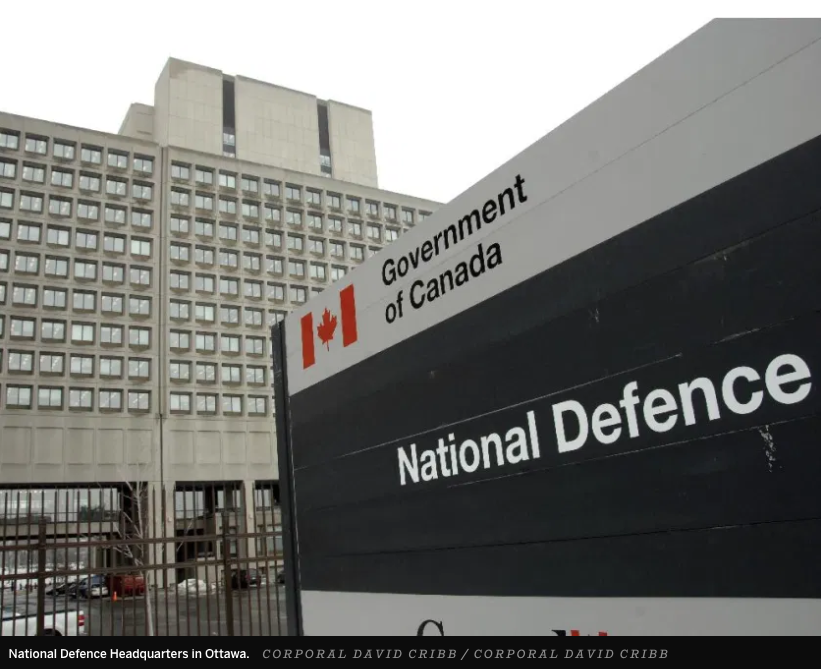
Editor’s note: Canada’s Access to Information law is under attack by federal bureaucrats and the Liberal government. This has significant implications for Canadian Armed Forces personnel and veterans who rely heavily on the law to get access to their own military service records, medical files and information about their benefits and grievances.
It also has significant implications in efforts to inform the public about one of the largest defence spending initiatives since the Second World War. Transparency advocate Ken Rubin writes in a recent issue of The Hill Times about the Department of National Defence’s efforts to shut down the Access to Information process. Those efforts include targeting access users such as lawyer and retired colonel Michel Drapeau and Ottawa Citizen journalist David Pugliese. DND sees Drapeau as the enemy. In Pugliese’s case, DND weaponized the Access law to illegally release his private information to multiple individuals- that information was later used to threaten Pugliese’s family. The Privacy Commissioner confirmed the law was broken but no DND or CAF staff ever faced any consequences. Civilian police had to be called because of the threats.
Here is Rubin’s column about DND’s secrecy push from June 17, 2026 issue of The Hill Times. It is reprinted here with permission:
By Ken Rubin
These are tough days for freedom of information (FOI) legislation.
Leading the pack is Doug Ford’s Ontario government whose freedom of information amendments exclude ministerial and parliamentary assistance records, and double intake time to 60 calendar days. It also allows for second-time extensions, and forces users into staged access plans with the alternative being the government declaring such unsatisfactory applications abandoned.
British Columbia, too, by recently passing Bill 9, now allows the government more discretion to determine what constitutes “reasonable amount of time” to identify records sought by “reasonable amount of time” to identify records sought by users. At the same time, the legislation expands the grounds for booting requesters out as “abusive” and “malicious” with the ability to disregard requests if they would unreasonably interfere with departmental operations.
Meanwhile, FOI changes in Nova Scotia broaden what they see as trivial requests, pointedly telling applicants to make “reasonable efforts” to detail their information requests.
The Northwest Territories wants to extend time limits for consultations and introduce more exemptions.
And Alberta has, like Ontario, excluded politicians and political staffs from access coverage while broadening its exemptions and maintaining its high fees to intimidate and delay responses to applicants.
Even Newfoundland and Labrador has failed to make public over 1,000 of some 1,700 requests it received in the 2024-25 period, a failure some say is intentional.
Back in 2019, federal authorities – in advancing Bill C-58 – tried to force requesters to be more “specific” (or else) in their requests.
There was a public outcry that ended this, but this will likely come back as a key part of Treasury Board of Canada’s package of regressive changes.
A series of access-to-information requests to Treasury Board help show such backsliding.
One response - four years late - on time extensions showed they formed a temporary interdepartmental committee in 2022, but more to air the need for more time extensions than doing anything to restrict times taken.
Another reply revealed that some departments complained that it is too onerous to proactively post all contracts over $10,000, and that such disclosure should be done only for contracts over $100,000. This would put many contracts back into the secrecy category.
Another reply referenced the “Blackbox effect” pilot effort to use artificial intelligence to encode access-to-information restrictions, that could remind departments to apply the suite of exemptions and exclusions to requests.
One other Treasury Board note indicated that, with inflation, the very weak penalties for record destruction and alterations - at a maximum $10,000 fine -is insignificant, but not recommend it greatly increase the fine amount.
So, with all these moves to downgrade FOI, is the future for FOI users as bleak as it already is with the on-going systematic abuse at the Department of National Defence(DND)?
The Information Commissioner of Canada has twice issued special damming reports about DND’s deliberate lapses in providing prompt replies to requests, making it look like a master of indifference, manipulation and delay.
DND has responded in kind by ignoring the commissioner orders to take action to upright its less-than transparent ship.
Recently, I tried to penetrate DND’s dismal handling of my 23 outstanding requests by appealing to the newly minted Deputy Minister Christiane Fox.
I noted to Fox that my past 2019 to 2025 requests were largely being ignored, with half of them not even having an access officer assigned to them.
Fox wrote back that she would look into this state of affairs, later having her assistant deputy minister of public affairs reply on her behalf to say that 15 of my request cases were still slowly having branches collect records.
Then, further down the line, a senior access operational chef officer informed me that the other eight requests were in limbo, but that I could always contact six deputy director access team leaders for “updates”.
The final charm offensive was a DND access consultant calling me to ask which requests I wanted dropped as that would assist them.
Alas, this bureaucratic blaze of inaction and reconnection means facing a one to several years wait for severed records. But I should feel good, knowing that the requests were in the obscure hands of the “backlog” team.
At least my requests on matters like thefts in the military and combatant vessels cost overruns are being treated with impersonal indifference, or maybe annoyance, or maybe now with deference, whereas those of lawyer and author and retired colonel Michael Drapeau and information-seeker Ottawa Citizen journalist David Pugliese are met with outright hostility.
A military justice advocate, Drapeau, with his many requests and complaints, is their sworn enemy.
But their hostility and venom is reserved especially for Pugliese with all his embarrassing stories gotten more from sources and from having a good analytical knack.
Pugliese’s stories on DND’s Public Affairs’ high jinxes and generals ‘missteps - along with his highlighting their inside extremist elements and sexual abusers within the department’s ranks and expensive but useless armaments - anger them.
What has since followed are spin junk and harmful rumours about Pugliese.
Le’s hope the current race to the FOI bottom by authorities does not end up as terrible as the DND shameless shifty shop has been.
While claiming they remain tools for accountability and not cover ups, authorities surely know their regressive FOI actions are dragging Canada into a daily state of secrecy warfare and abuse.
Time to fess up, and stop the transparency pretenses and transgressions.
(Ken Rubin writes on transparency matters and is reachable via kenrubin.ca )
