
Question:
The June 2026 Evaluation of Defence Team Culture finds that progress remains uneven and fragile. What can each of us do in our everyday interactions to help change that?
Answer:
Check your own privilege before judging others.
Before judging someone in the military community as weak, undeserving, or unfit for service, consider the support, advantages, and luck that may have helped you succeed. Your success reflects your efforts, but it may also reflect protections you had that others did not.
What the evaluation tells us
The Department of National Defence’s June 2026 Evaluation of Defence Team Culture, conducted by the Assistant Deputy Minister (Review Services), examines the period from 2015 to 2025. It identifies greater awareness of professional conduct expectations and reduced tolerance for overt misconduct.
The evaluation identifies leadership behaviour and middle management engagement as key drivers of culture change. Subtle behaviours can still undermine psychological safety in the workplace. Confidence in accountability remains low.
These findings bring culture change directly into our individual workplaces. Policies matter, but so does what happens when someone asks for help. Do colleagues listen and offer support, dismiss the concern, or close ranks to protect the person whose behaviour is causing harm?
Individual actions can never replace institutional accountability. They can, however, help determine whether harmful behaviour in the workplace is challenged or quietly accepted.
The trap of “I got over it”
“I went through something similar. I got over it. Why can’t you?”
Coming from another person in uniform, those words can leave the listener feeling judged and ashamed, even when intended as encouragement.
Similar traumatic experiences can have different effects on different people. What happens afterward matters too: support can help recovery, while isolation or retaliation can compound the harm.
One person reports workplace harassment or assault and receives support from peers and supervisors. Another reports similar inappropriate conduct but becomes isolated and loses friendships and career opportunities. Their different outcomes alone do not establish who was stronger or better qualified to remain in service. Those outcomes may reflect differences in who was believed, protected, and supported.
Acknowledging individual advantages does not diminish anyone’s hard work. Recognizing unequal barriers does not mean lowering standards; it means questioning whether everyone has a fair chance to meet them. Differences in support and circumstances may help explain why one person “got over it” while another continues to struggle.
The illusion of an equal footrace
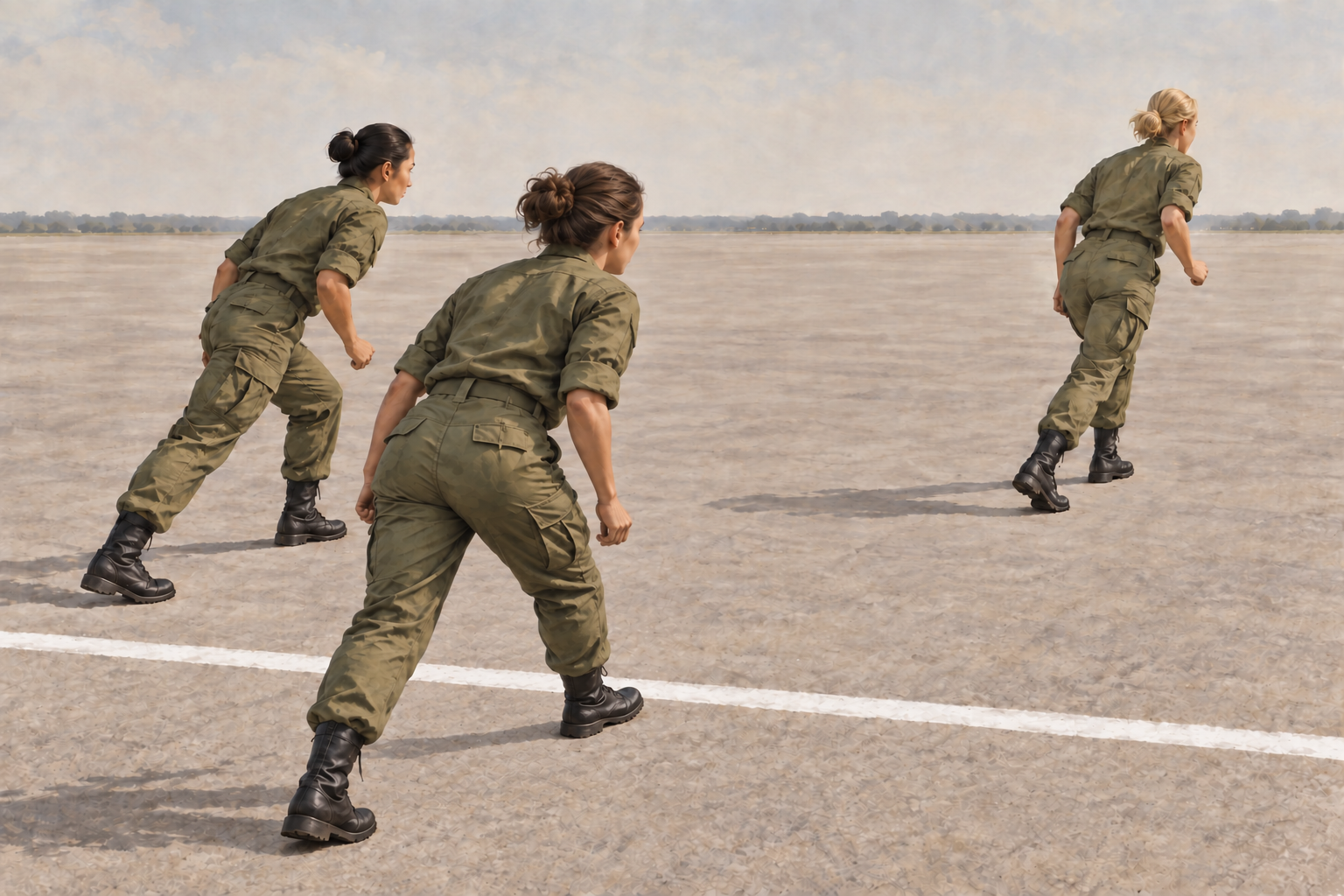
Imagine three equally determined women running a race. Is it a fair race if some start farther ahead, some face additional hurdles, and others carry heavier loads?
Before judging the results of the race, we should consider the conditions each runner faced.
· Did cadets or military family members teach you the unwritten rules before you joined?
· Did equipment and uniforms fit your body, and did facilities meet your needs?
· Could you feel that you belonged in your unit without having to defend your identity or your right to be there?
· Did military college, sporting, or regimental networks connect you with influential people?
· Could you attend networking events because someone else handled responsibilities at home?
· When something went wrong for you, did you have an advocate to explain your options to you or help you to challenge unfair treatment?
These questions invite reflection, not guilt. An unearned privilege can seem ordinary to someone who has always had it, while remaining out of reach for someone else. A person can face discrimination in one part of life and have protection in another.
Changing the conversation.
Before saying, “I managed, so why can’t they?” ask: “Who believed me? Who helped me? What options did I have that they might lack?”
Then put that reflection into practice. Challenge dismissive comments. Share information and opportunities. Respect confidentiality.
We all can challenge unfair cultural norms, or we can reinforce them. If you have authority or influence, use it to address harmful behaviour and remove barriers.
Our own experiences should never dictate what another person should endure or how quickly they should recover. But they can help us offer support.
“I went through it too” becomes more useful when followed by: “What support do you need, and how can I help?”
