
By Scott Taylor
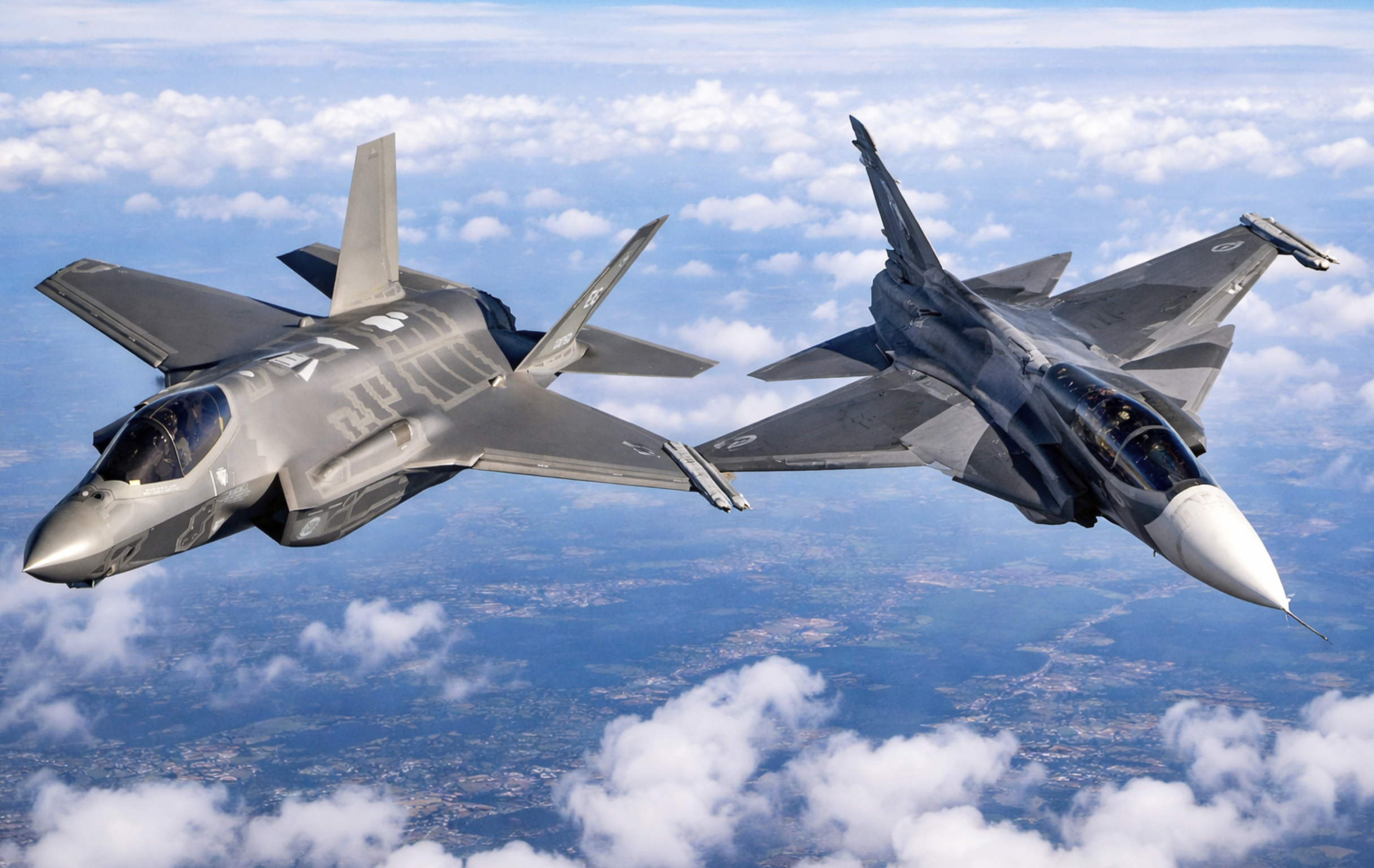
It has long been clear that the senior brass of the Royal Canadian Air Force want to replace their aged out fleet of CF-18 Hornet fighter jets with Lockheed Martin F-35 Lightning fighters and only the F-35.
This desire is not new. It dates back to 1997 when the F-35 was no more than a concept on the drawing board and Canada signed on as one of the original international partners. It was seen as an opportunity for Canadian aviation companies to get in on the ground floor of a project that seemingly had limitless potential.
In 2010 the Harper Conservatives announced their intention to purchase 65 F-35's for a cost of $9 billion, with the first aircraft being delivered to the RCAF in 2016. However, by 2012, the F-35 had run into a number of delays, cost overruns and mechanical teething troubles. Amidst a barrage of negative media coverage, the Harper government pushed the 'reset' button on the entire F-35 purchase.
During the 2015 federal election the Trudeau Liberals campaigned on a platform that if elected they would purchase any fighter jet except the F-35. Trudeau did sweep into power in that election and the RCAF brass rightfully feared for their pet F-35 fighter project.
However, following relentless lobbying by Lockheed Martin and the US State Department, the Trudeau liberals reluctantly relented and allowed the F-35 to compete in a competition to replace the now even older CF-18 Hornet fleet.
In 2022 the results of that RCAF competition were released and lo and behold the F-35 was deemed to be the best fighter, and the only fighter for the RCAF.
In March 2022, the Liberals announced they were entering negotiations to purchase 88 F-35 fighters. In January 2023 Canada signed a contract worth $7 billion to acquire the first batch of 16 F-35s.
In April 2024, the National Post ran a detailed report on how that RCAF competition had been rigged from the outset to favour the F-35 and only the F-35.
Fast forward to March 2025 and a newly elected Prime Minister Mark Carney finds himself defending Canadian interests from US President Donald Trump's threats of annexation and the imposition of punishing tariffs on our trade.
While promising to increase spending on defence and security, Carney also vowed to shift Canada's near total dependency on the US for our military hardware. To add gravitas to that threat Carney ordered the RCAF to conduct a review of the F-35 purchase.
Sure we are contracted for the initial 16 with the first aircraft to be delivered later this year. However, the remaining 72 F-35's with their purchase cost valued at over $12 billion, remain un-contracted on the Lockheed Martin order books.
At this juncture Swedish aviation company Saab entered the equation. The Saab Gripen fighter jet had come in second during the RCAF's competition against the desired F-35.
Sensing the 'elbows up' mood across Canada in response to Trump demanding that we spend more on US weapon systems, Saab made a very attractive proposal. Their package deal involves the purchase of 72 Gripen fighters which will be assembled in Canada along with 6 Global Eye surveillance aircraft. The platform for the Global eye is already built by Bombardier in Quebec.
In total Saab is promising to deliver 12,000 high tech jobs in Canada's aviation sector.
People were suddenly debating the RCAF operating a mixed fleet of fighter aircraft and realizing that nearly every one off our near-peer allies does just that. The Gripens are far less costly to operate and they boast a far higher availability rate than the technologically complex F-35's.
To under-cut the public debate and put some ammunition in the camp of those fighting to keep the F-35, and only the F-35 on the RCAF's order book, the confidential results of the earlier RCAF competition were leaked to Radio Canada.
While that chart may have indicated that the F-35 clearly dominated the Saab Gripen in terms of military capabilities, it was also clearly a security breach.
It was also not as convincing an argument as those promoting the F-35 would have Canadians believe. Those Gripen advocates point out that since that RCAF competition in 2021, the Saab fighter has evolved with a number of substantial advancements made to the design.
The passage of time has also revealed several new weaknesses in the F-35 project. According to the US Accountability Office, the Block 4 version of the F-35 --the one which Canada is buying-- is currently $6 billion over budget and five years behind schedule.
Despite all of these developments the RCAF senior brass remain incalcitrant in their determination to buy the F-35 and only the F-35. On Feb. 10 the CBC revealed that the RCAF paid for long lead items for an additional 14 F-35's from Lockheed Martin.
The claim is that these long lead time elements need to be purchased now or we will lose our place in the delivery queue. It seems more like the RCAF brass are signalling that they intend to proceed on the F-35 and only the F-35 even as our Prime Minister tries to use this deal to leverage trade negotiations with Trump's regime.
Another indicator of how tone deaf the RCAF brass are to the sensitivity of this file came in the form of a Feb. 2 photo op in Fort Worth, Texas. Lt-Gen Jamie Speiser Blanchet, the commander of the RCAF, and her entourage made the trek to the Lockheed Martin assembly plant in the Lone State to sign the fuselage of the first Canadian F-35.
Obviously the optics of the RCAF commander happily receiving the first F-35 undermines any gravitas that Carney is hoping to leverage with his review of that purchase.
The good news is that somebody wised up and neither Lockheed Martin nor the RCAF released any images of the photo op which both parties now label as a 'behind closed doors event'.
Other good news is that the military police have confirmed they are investigating the source of the leak to Radio Canada.
I wish them Godspeed in deducing the culprit from what must be a very short list of potential suspects.
