
By Scott Taylor
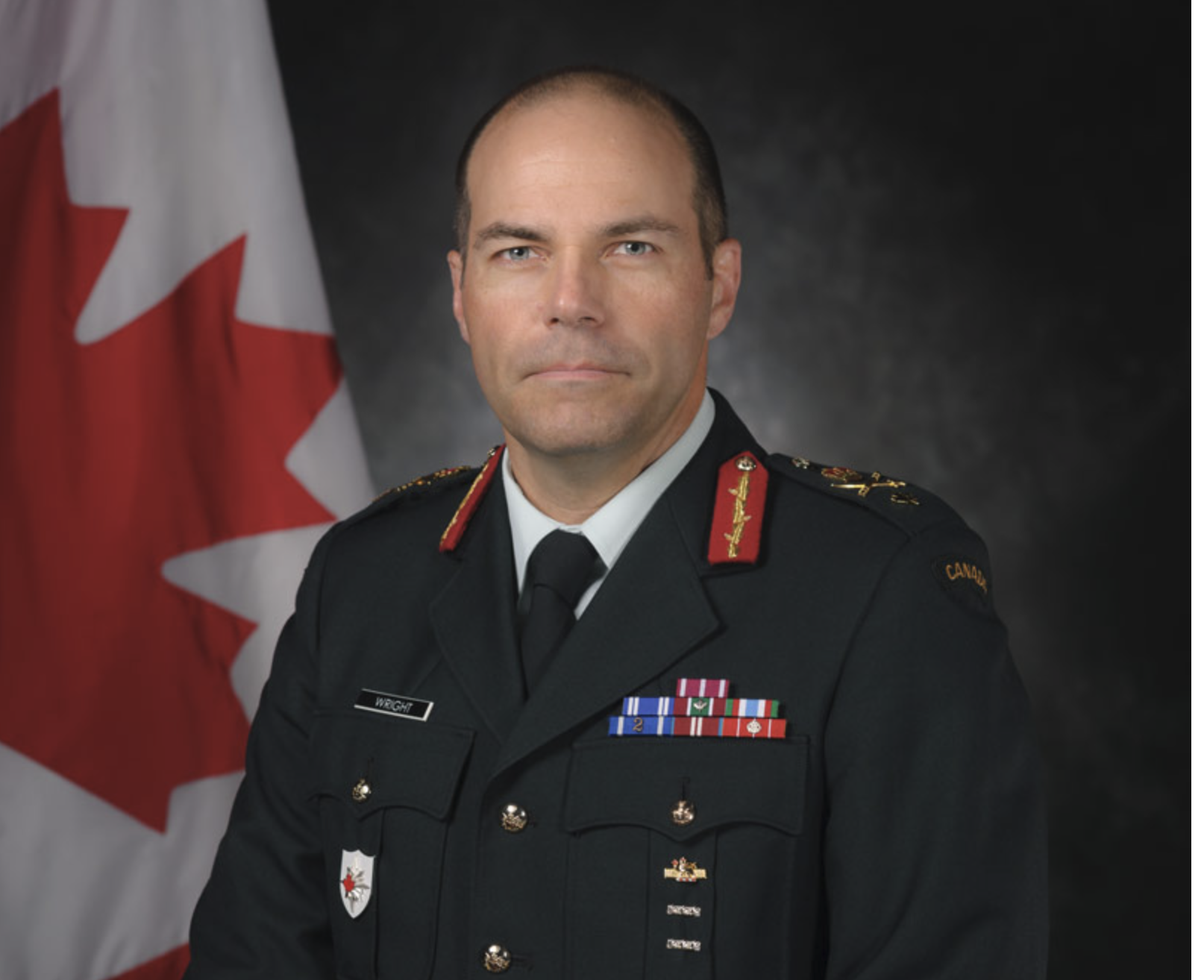
Last October, Canadian Army Commander Lt. Gen Michael Wright released a new directive entitled 'Inflection Point 2025' aimed at completely re-structuring Canada's ground forces.
A key rationale for this transformation was Lt. Gen Wright's observation that "The Army we have is not the Army we need."
Those familiar with the current woefully understrength and dangerously ill equipped state of the Canadian Army will be forgiven if that statement could be attributed to Captain Obvious rather than the current commander.
The timing of the re-structuring impetus is a little puzzling. According to Inflection Point 2025, "The modernization effort is driven by the increasing risk of high-intensity conflict, rapid evolution of warfare technologies, and the impact of climate change."
For those keeping track, Canada first deployed a forward based Battle Group into Latvia in 2017 as part of NATO's Operation REASSURANCE to deter Russian aggression. That was nine years ago.
Russia did invade Ukraine in February 2022. That was four years ago. Yet it was not until late 2025 that an 'increasing risk of high-intensity conflict' prompted the start of a modernization plan? Better late than never I suppose.
The basis of Lt. Gen Wright's blueprint for a new army is to re-organize existing units and sub-units into four integrated formations. This will include the Defence of Canada Division which will be dedicated to homeland defence and constitute the backbone of any national mobilization plan.
The Manoeuvre Division which would essentially be the core of an expeditionary force such as the current battle group in Latvia.
Then there is the Support Division which is described as "The foundation of Canadian Army base and institutional support with direct links to the national supply chain."
Finally there will be a Training Formation which is to deliver individual and collective soldier training, plus the preparation of leaders through professional education.
According to Lt. Gen Wright's statistics there are roughly 22,000 soldiers in the regular army and an additional 20,000 army reservists plus another 5,000 in the Canadian Rangers, a militia comprised of mostly indigenous volunteers located in Northern and coastal regions. That amounts to 47,000 personnel in what Lt. Gen Wright now calls the One Army Concept, or Total Force.
Numbers wise, dividing that amount of soldiers into four divisional formations would make sense: A modern Army division typically has between 10,000 - 20,000 personnel.
However, despite having an entity known as the 1st Canadian Division Headquarters in Kingston since 2010, Canada has not fielded an actual division sized formation since the Second World War. It will be interesting to see if this current restructure will result in the creation of additional headquarters and attendant senior brass without adding any actual front line combat troops.
In terms of equipment and capabilities, Inflection Point 2025 itemizes the following on the order books; Within two years, soldiers will be equipped with new modular assault rifles, night vision devices, drones, as well as operational clothing and personal equipment designed for comfort and performance.
In terms of major combat systems the Army will acquire; Enhanced command and control, integrating computers, communications, cyber, intelligence, surveillance, reconnaissance, and targeting (C5ISRT), Long-Range Precision Strike (LRPS) capabilities, Ground-Based Air Defence (GBAD) systems, Domestic Arctic Mobility Enhancement (DAME) platforms, and Indirect Fires Modernization (IFM). All of these capabilities are long overdue and will greatly enhance the future Canadian Army as envisioned by Lt. Gen Wright.
However, in terms of modernizing the culture of the Canadian Army I think that a major opportunity is being missed. The Canadian Army prides itself on its traditions and rightfully so.
However, blasphemous this may sound to the Colonel Blimp brigade, it is high time to re-name our Army units -regular and reserve- to reflect their actual modern roles. For instance our Armoured Regiments are named after Cavalry regiments - The Royal Canadian Dragoons and the Lord Strathcona's Horse. The last time any Canadian rode a horse into battle was 1918 at the end of the First World War. Re-naming them to a numbered Tank regiment in a Canadian Tank Brigade could carry forward an Asterisked subtitle of their former Cavalry predecessors along with all battle honours on their Guidons.
Ditto for those 40% of militia units which have the title 'Scottish,' 'Highland' or 'Irish' in their regimental name. Those names reflect the original composition of the regiments, but that is hardly the case presently. In fact it may be inhibiting for many new Canadians to enlist in say, the Toronto Scottish knowing they are not of Scottish descent.
Again the numbered infantry regiment could have the asterisked subtitle of their predecessors and carry forward the battle honours on their Colours. Just some food for thought.
