
By Scott Taylor
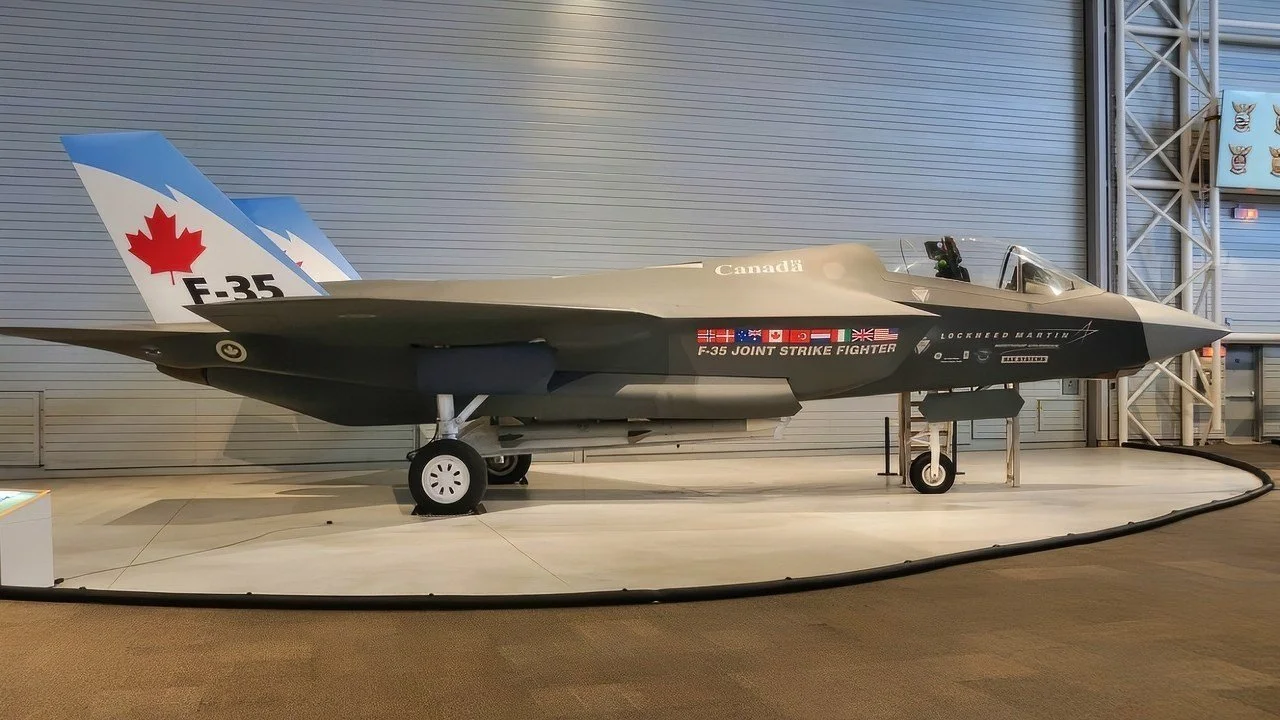
In recent weeks, social media platforms have been abuzz with defence and aviation enthusiasts weighing in on the advantages of the RCAF purchasing either the Lockheed Martin F-35, or the SAAB Gripen fighter jet to replace the air force’s aging fleet of CF-18 Hornets.
The crazy part about all of this ongoing discussion, is that if the Canadian defence procurement system actually worked, according to the original program timeline, the RCAF would have been flying the F-35 since 2016.
However, the politics of procurement in Canada ensured that successive Conservative and Liberal governments kept kicking the can down the road rather than investing in new aircraft.
Which brings us to the present dilemma. When US President Donald Trump initiated his tariff war, Prime Minister Mark Carney declared that the US was no longer a trusted partner and vowed to reduce Canada's near total dependency on US weapon systems for the Canadian Armed Forces. In March, to add some gravitas to his words of defiance, Carney ordered the RCAF to review the ongoing F-35 purchase.
In January 2023 the Trudeau Liberals had signed a contract to purchase the first 16 of an eventual 88 F-35's. These first 16 aircraft cost $7 billion of an eventual projected cost of $29 billion to purchase all 88 F-35's on the order book. While the first delivery of an F-35 is to be in 2026, the remaining 62 F-35's are on the order books but have not actually been contracted as of yet.
Hence there appears to be some wiggle room for Canada to back out of the full program.
Politically the idea is popular among patriotic Canadians who want to see Canada truly get our 'elbow's up' and hit back at President Trump's punitive tariffs and rhetoric.
Recognizing that an opportunity was presenting itself, the Swedish government and SAAB have launched an all-out charm offensive to sell Canadians on the benefits of buying their Gripen fighter jets as part of a new bilateral defence initiative.
That joint initiative was announced during a royal visit of Sweden's King to Ottawa in November. To sweeten the pot further, SAAB has committed to assembling and maintaining a future RCAF Gripen fleet in Canada, thereby adding some 6,000 jobs to the aviation sector over the next four decades.
Taking a different tack, US Ambassador to Canada Pete Hoekstra has been attempting to bully the Carney government into sticking with the original full purchase or face consequences as a result. In very undiplomatic tones, the bombastic Hoekstra has suggested a trade deal will be off the table, and the Canada-US NORAD alliance would be in peril if Canada decides against buying the remaining 62 F-35's.
Patriotic Canadians are not impressed by US Ambassadors who act as Imperial consuls. So Hoekstra's comments have only served to strengthen the resolve of those not wishing to reward the Trump administration with a huge defence windfall, if there is any other feasible option available to the RCAF.
Unfortunately for those with their 'elbows up' the RCAF senior leadership have made it clear from the outset that they want the F-35 and only the F-35.
Last year, long before the current review was requested by Carney, a National Post columnist wrote an article based on leaked documents, which outlined how the RCAF brass had rigged all competitive processes to ensure that the F-35 would be selected.
Close followers of Canadian defence news will recall that despite the F-35's initial cost overruns and mechanical teething troubles the RCAF remained steadfast in their support of this aircraft. The Harper Conservative government had originally announced the purchase of 65 F-35's in 2010 at a cost of $9 billion, but had to push the reset button on the project just months later due to escalating costs and ongoing technical problems with the aircraft.
The Trudeau Liberals ran in 2015 on the campaign promise that they would replace the CF-18 fleet with any fighter jet but the F-35.
Yet once again the RCAF brass successfully navigated the F-35 to the front of the list during a 2021 competition.
For those who are following the current media coverage of the Gripen versus F-35 debate, you will know that somehow the results of that 2021 RCAF competition were leaked to the CBC last week. To those lobbyists and proponents of the F-35 purchase these 'results' are the smoking gun as to why the Gripen is not a real contender.
According to the leaked data, the F-35 scored an impressive 95% suitability rating while the Gripen managed only 33%. For those who know how determined the RCAF are to get the F-35 and only the F-35 this comes as no surprise. They ran the competition and they set the parameters for an aircraft's suitability.
The review that Carney ordered last March was to be released 'by the end of summer', yet remains under wraps. I have no doubt that the RCAF brass have long since filed their review with Carney's office and it will only restate the position that the F-35 is the only choice for Canada.
However, what the RCAF brass cannot control is public awareness. The longer this Gripen versus F-35 debate continues the more people become aware of the pros and cons of both aircraft types.
The Swedish Gripen is a highly capable interceptor, easily maintained and operated in cold weather climate and designed to defend Arctic airspace.
The F-35 is far more expensive to operate and due to its technological complexity requires specialized hangars and has a much lower availability rate compared to the Gripen. In my opinion Canada should plan on operating a mixed fleet of fighters. We can take delivery of the first 16 F-35's and, with Saab's investment we can build and maintain 62 Gripens in Canada. The real plus is the thought of Ambassador Hoekstra having to tell President Trump that their bully tactics didn't work and we walked away from the rest of the F-35 deal.
