
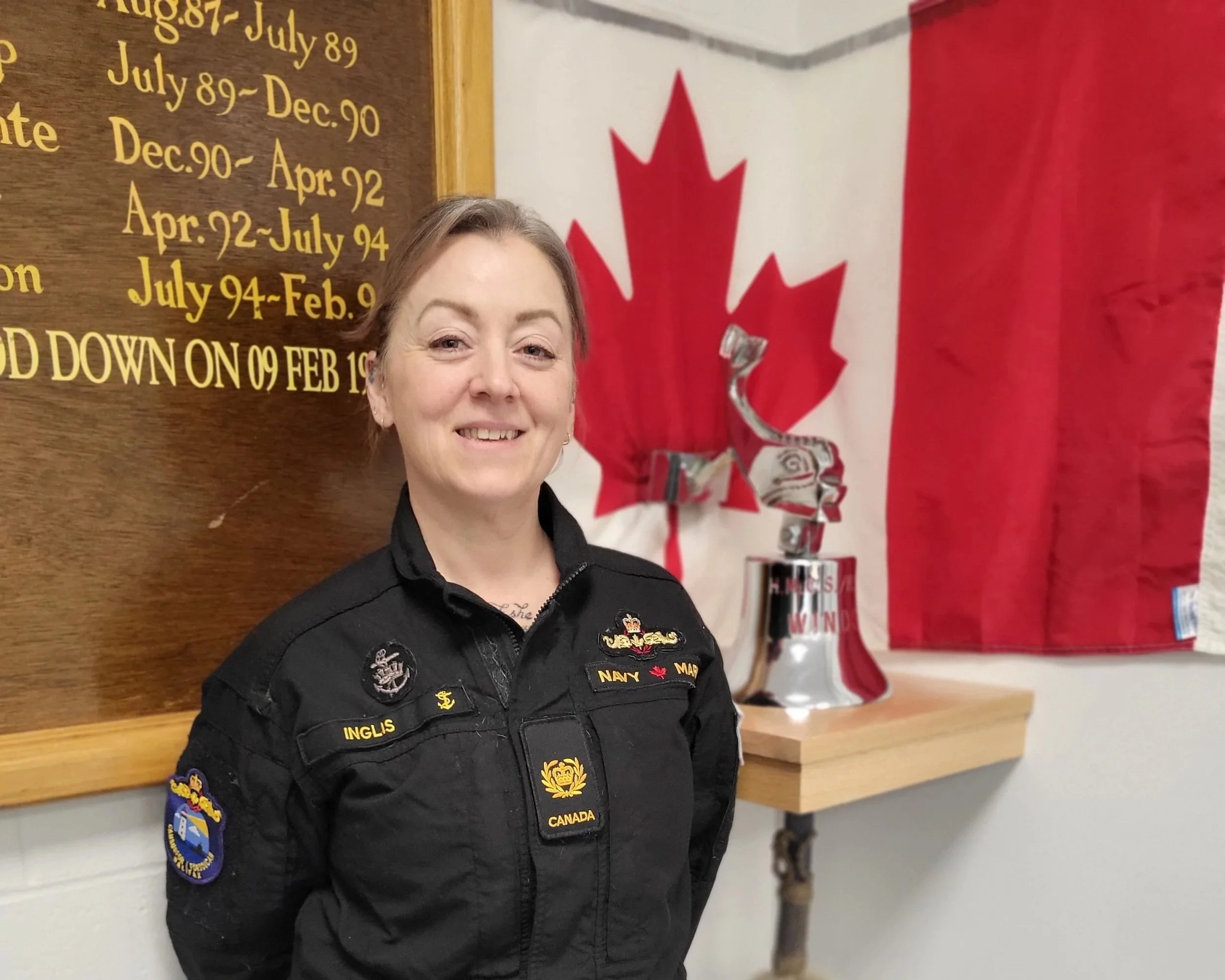
Chief Petty Officer 2nd Class Patricia Inglis serves in one of the most demanding environments in the Canadian Armed Forces (CAF) as Coxswain of HMCS Windsor. In doing so, she became the first woman in CAF history to serve as the senior non-commissioned member of a submarine command team — a milestone within a community long defined by tradition, close living quarters, and intense operational pressure.
Raised in a military family in Atlantic Canada, Inglis was familiar with service life early but initially chose a different path, spending a decade working in international tourism.
By age 30 she sought greater purpose and enlisted in the Royal Canadian Navy, beginning her career as a Naval Combat Information Operator aboard a frigate.
While she valued surface fleet experience, the submarine service appealed to her sense of accountability and teamwork. Submarines operate with small crews where every member’s competence directly affects safety. Berthing arrangements based on rank rather than gender meant professional credibility carried immediate importance. She completed submarine qualification — earning her ‘dolphins’ — and later advanced through increasingly senior leadership roles.
Her appointment as Coxswain marked not only personal achievement but cultural change within the submarine community. The role places her at the centre of discipline, morale, and daily functioning of the ship. Inglis emphasizes professionalism and consistency, setting expectations that operational standards and mutual respect are inseparable.
Throughout her career she recognized the additional scrutiny often placed on those who are the first in a role. Rather than addressing it directly, she relied on preparation and steady performance to normalize women’s presence in submarine leadership. Feedback from junior sailors who saw new possibilities in their own careers became one of her most meaningful professional moments.
She describes leadership as maintaining trust within confined environments where small issues can quickly affect operational effectiveness. Mentorship and clear communication, she believes, are operational necessities rather than optional leadership qualities.
Her advice to junior members is straightforward: know your worth, keep your head high, and let your work speak for itself. Change in established institutions, she notes, occurs gradually but reliably through consistent example.
Looking ahead, Inglis remains focused on maintaining operational readiness and preparing sailors for the transition to Canada’s future submarine fleet, ensuring experience and culture carry forward.
Inglis was jointly nominated by Master Sailor C.W. Assuncao, Lieutenant-Commander Kai Imai, and Major (Retired) Eva Martinez, Esprit de Corps Women in Defence Award recipient (2016).
