
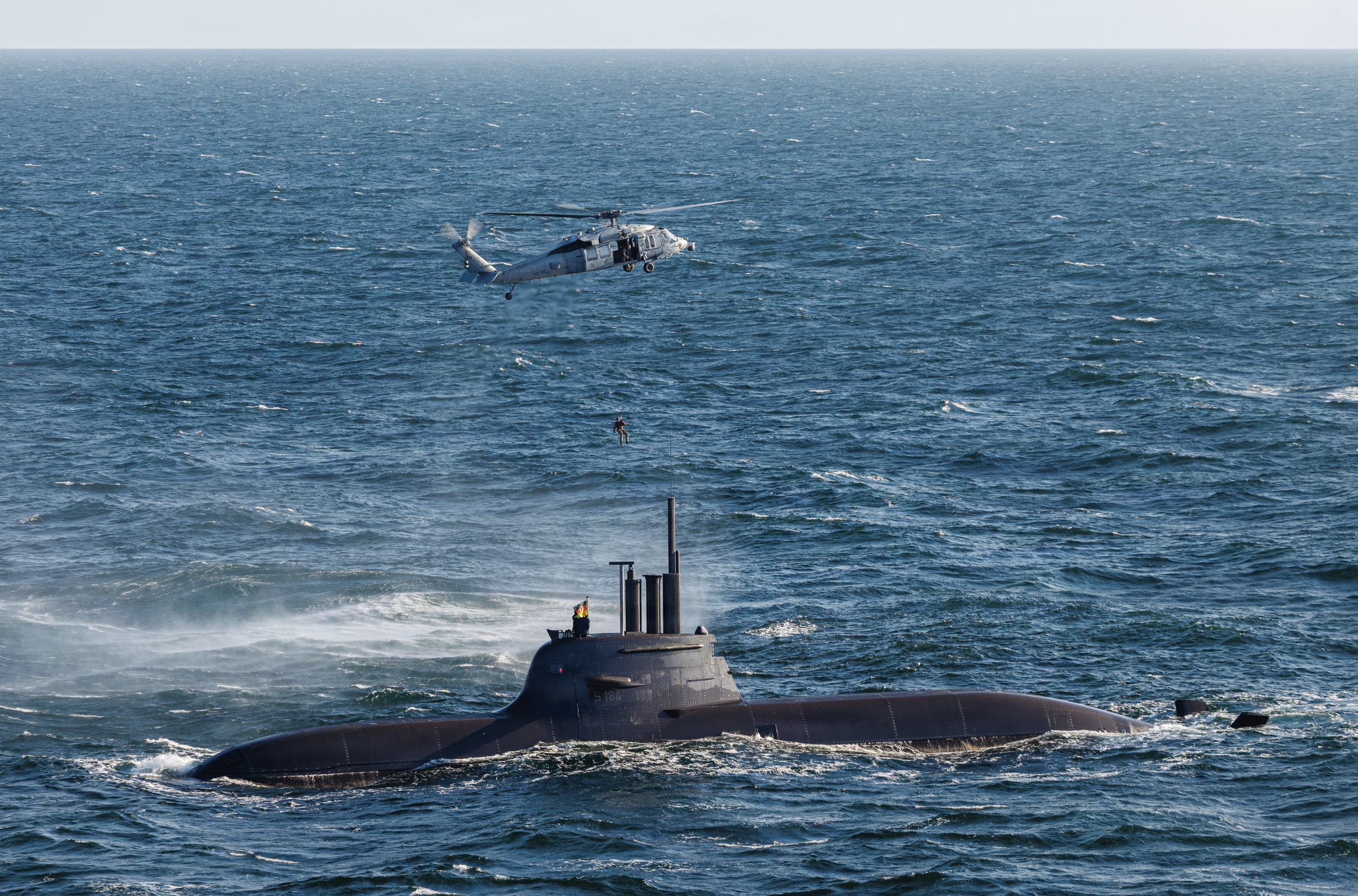
Canada’s purchase of new submarines based on the TKMS Type 212 is expected to generate significant work in maintaining and sustaining the boats. (US DoD photo)
By Tim Ryan
Now that TKMS has emerged as the winner in what is being called the largest defence procurement in Canadian history, all eyes will be on the firm and how it proceeds to align with domestic companies.
Prime Minister Mark Carney announced July 6 that thyssenKrupp Marine Systems (TKMS) was selected as the winner of the heated competition to provide the Royal Canadian Navy with up to 12 submarines. It offered the RCN its Type 212CD which is being built for both Germany and Norway.
The German-Norwegian sub beat out a bid from South Korea’s Hanwha Ocean Co., Ltd which was offering its KSS-III submarine. The new submarines will replace the RCN’s fleet of Victoria-class boats. The first Type 212CD is expected to be delivered to Canada in 2033-2034.
TKMS recognized that for Canada, the decision represented a significant long-term investment in maritime security and sovereign capability. Oliver Burkhard, CEO of TKMS, said in a statement that the company is ready to provide Canada with significant economic benefits. "We stand ready to work alongside the government of Canada, Canadian industry and our partners in Germany and Norway to deliver a world-class submarine capability that will strengthen security, create economic opportunity and generate lasting benefits for future generations," Burkhard said.
Carney said the purchase of the submarines will strengthen Canada’s defence industrial base and “will deepen our partnerships with trusted allies, and they will open new opportunities for Canadian businesses in European supply chains.”
“TKMS is the best choice for Canadian workers,” he added. “It will directly create and sustain an ecosystem of well over a hundred thousand well-paying jobs across Canada.”
The actual submarine purchase is estimated to cost $24 billion but with long-term maintenance and various other factors the project is expected to cost $100 billion over the life of the boats. Some estimates are putting long-term maintenance at around $60 billion over the decades.
TKMS said in a statement that the project will generate $167 billion in total economic activity in Canada, deliver over $86 billion in economic impact and more than 650,000 job years over the entire lifespan of the project. The expected timeframe for such industrial benefits is over the next 30 to 50 years.
“Investments that impact every region of the country,” Carney pointed out. “Investment across key defence and industrial domains, including space, munitions, autonomous technology, critical minerals, and R&D.”
So now the pressure will be on for TKMS to deliver those industrial benefits and one of the sure-fire ways is to select a partner for long-term sustainment and maintenance for the new fleet.
Arcfield Canada appears to be positioning itself for such a role. It issued a congratulatory message for TKMS on selection as the preferred bidder for Canada's Canadian Patrol Submarine Project. But it also pointed out it is standing by to contribute.
The company noted that as the submarine program “advances toward contract award and fleet delivery, the focus will increasingly shift toward ensuring the submarines remain operationally ready throughout their service life.”
“As a leading provider of sovereign sustainment and mission-support services to Canada's defence enterprise, Arcfield Canada looks forward to continued discussions with TKMS to deliver a proven, low-risk, and integrated sustainment solution that ensures long-term operational readiness and aligns with Canada's defence and economic priorities,” the company added in its statement.
A sovereign sustainment capability, Arcfield Canada pointed out, would support Canada’s national security by creating high-value jobs, advancing technical expertise and strengthening Canada’s defence capacity for decades to come.
Arcfield Canada already has the lock on CF-18 fighter jet sustainment, having supported that fleet for over 35 years.
The RCN’s current Victoria-class submarine fleet will remain operational into the mid-to- late 2030s until the new TKMS subs can be delivered. That means that capabilities need to continue to be in place to keep those boats operating for at least another decade.
So it wasn’t surprising that on July 20, it was announced that Babcock Canada, Prime Contractor of the Victoria In-Service Support Contract (VISSC), had been awarded a six‐year extension to continue leading and delivering in-service support for the Victoria-class fleet.
The multi- year contract includes the potential to extend the contract up to the fleet’s end of life, enabling uninterrupted, continuous service, as Canada transitions to its new fleet of submarines.
Babcock pointed out it has been the Canadian government’s submarine sustainment partner for more than 18 years. “Supporting the men and women of the Royal Canadian Navy with a safe and capable submarine fleet is something Babcock is hugely proud of, and this contract extension continues our longstanding partnership and delivery of this important sovereign and strategic capability,” said Tony March, CEO of Babcock Canada.
Babcock has indicated its interest on being selected for the sustainment program for the Type 21CD submarines. It has highlighted how its work on Babcock’s work on the VISSC has contributed over $3.2B in GDP impact to Canada since 2008, maintained more than 1,500 jobs annually, and has built a robust Canadian supply chain with over 450 suppliers. Babcock has also strengthened Canada’s industrial base by working closely with Canadian universities, colleges, Indigenous communities, and small and medium-sized businesses to support skills development, training, and innovation.
As Canada looks toward the Canadian Patrol Submarine Project, Babcock says it stands ready to deliver an all-encompassing, purpose built, and sovereign sustainment solution that will meet our nation’s defence and economic needs for generations to come. “If selected as Canada’s sustainment partner for the CPSP, Babcock’s leadership on the VISSC will ensure our specialized workforce and unique supply chain is prepared, equipped, and trained for the expanded fleet’s arrival in the 2030s,” it added.
