
By Scott Taylor
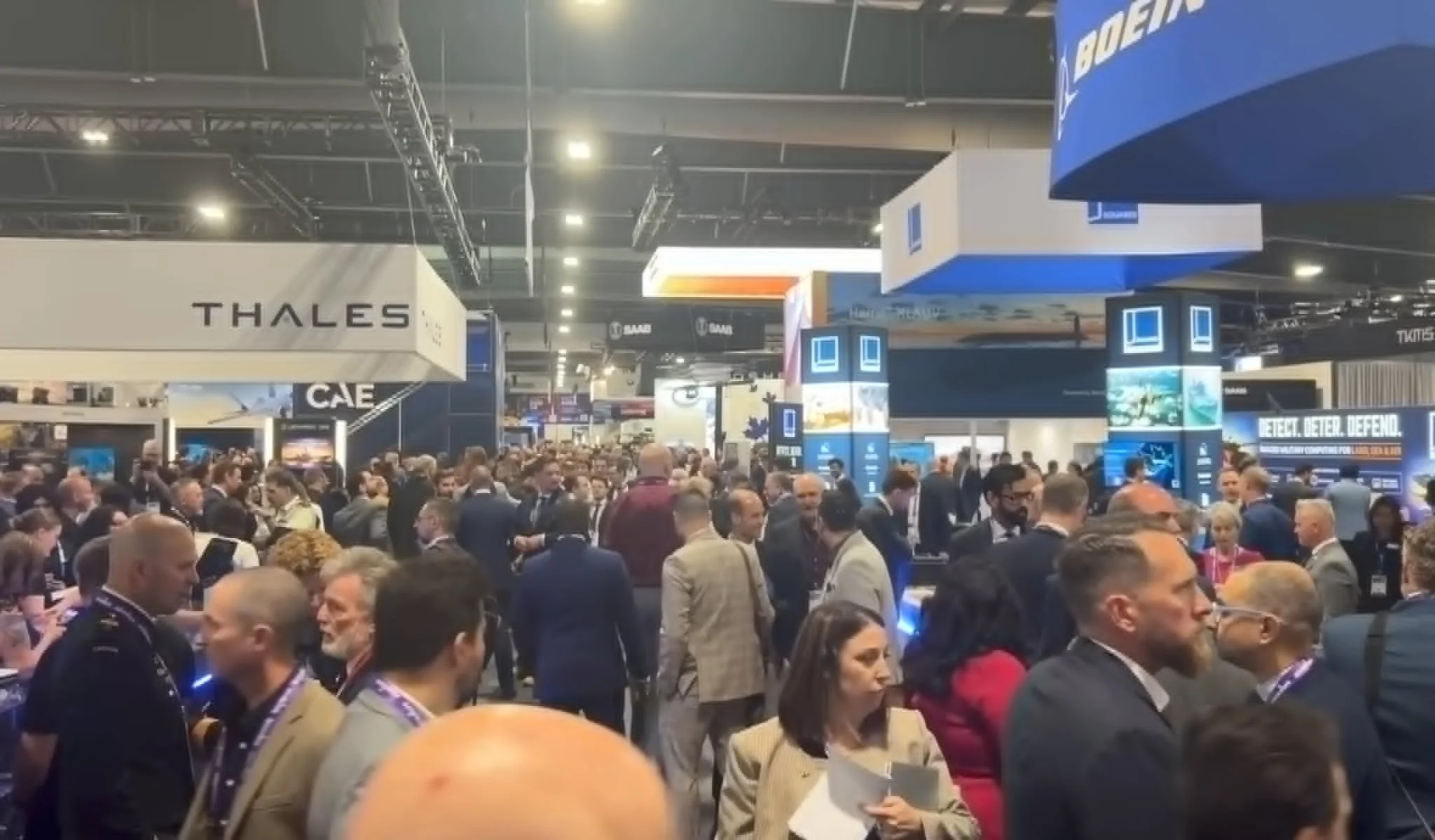
Last week I attended the CANSEC defence trade show in Ottawa. Organized by the Canadian Defence and Security Industries(CADSI) association this annual event is by far the largest arms expo in Canada.
In the interest of full disclosure, this was my 29th CANSEC show saying back to the original trade show in 1998. Over the course of those three decades, I have seen the CANSEC enterprise grow from a tiny regional event with an almost comically small, single exhibition room inside a downtown Ottawa convention centre, to the current iteration which overflowed the sprawling Cohere (formerly EY) Centre near the Ottawa airport.
To get an idea of the scale and scope of this year's event, there were over 212,000 square feet of display space including indoor and outdoor exhibits. A total of 320 defence firms were exhibiting their products with an additional 250 companies on a waitlist for space in 2027. To accommodate so many exhibitors, the CADSI organizers simply utilized the front parking lot of the Cohere centre creating a slightly longer hike for attendees who had to park at the airport as a result.
The estimates on attendance vary between 15,000 and 20,000, which for those of us in attendance is a moot detail as there was simply too many people crammed into a limited space.
While this was certainly a record setting number of attendees, there was also a heightened level of interest from the 60 international delegations to the nearly 600 VIP guests which included General Officers & Flag Officers, Ambassadors, senior bureaucrats, cabinet ministers, Members of Parliament and senators. The feather in the cap for the CADSI organizers was the Wednesday morning 'surprise' address by Prime Minister Mark Carney.
This was the first time that a sitting Prime Minister has ever attended a CANSEC show. More significantly, Carney actually used his appearance to announce the acquisition of the Global Eye aircraft which is a joint venture between Saab of Sweden and Canada's own Bombardier.
This was the first time in 29 years that an actual major purchase was announced during a CANSEC show. Carney also repeated his government's commitment to reaching the NATO spending goal of 5% of Gross Domestic Product (GDP) by 2035.
All of this was of course music to the ears of the defence industry executives in attendance. For these executives, many of them being former senior military officers, they have lived through the past few 'decades of darkness' in terms of a military procurement drought.
One cannot help but understand their sense of optimism at the promise of such massive spending on the horizon. However, for those of us old enough to remember, the Canadian military has been at this juncture before. I refer to the Progressive Conservative government's stunning White Paper on Defence in 1987.
At that juncture Canada was being denounced as a laggard in terms of defence spending within the NATO alliance and US President Ronald Reagan had vowed to outspend the Soviet Union in a bid to end the Cold War.
Prime Minister Brian Mulroney was keen to get in lock step with the Reagan administration so the 1987 White Paper was tabled and it was a doozy.
Among the items on the wish list was a fleet of 12 nuclear powered submarines that would be fully under-ice Arctic capable, 400 main battle tanks and a fleet of 850 Northern Terrain Vehicles to equip all of Canada's militia regiments.
In those days the big defence trade show was called ARMX and it was held at the Lansdowne complex astride the Rideau Canal in Ottawa. I recall the same level of optimism at the 1987 ARMX show as there was at this year's CANSEC. It was heady days for the Canadian military and their partners in the defence industry.
Alas, spoiler alert that optimism was to prove premature. Reagan's plan worked and by 1989 the communist bloc of Eastern Europe was in full decline. Unable to match the arms race, the Soviet Union would be fully dissolved by 1991.
As a result, Canada never got those submarines, nor the tanks and Northern Terrain vehicles. At that juncture the CAF had 120,000 regular personnel in uniform, which was deemed excessive in a post Cold War environment.
To drive that number down to 90,000, members were offered buyouts called the Force Reduction Program. That's right folks, there was a time that Canada paid out cash incentives for people to leave the military.
The present CAF is well below their authorized strength of 68,000 and is desperately paying signing bonuses to attract recruits and retention bonuses to keep key tradespersons in uniform.
For now we can only enjoy the sense of optimism created by Carney's promises for the future. It just somehow feels like deja vu...all over again.
