ON TARGET: DND Procurement is Spiralling Out of Control

By Scott Taylor


There has been a lot of recent news about defence procurement in Canada, and sadly, none of it has been positive.

Last week the Ottawa Citizen reported that Canada’s Parliamentary Budget Officer Yves Giroux is warning that taxpayers will face a $300 billion price tag for 15 new warships.

To be fair, that figure includes the cost of maintaining and upgrading the Canadian Surface Combatant (CSC) ships over its life cycle. Giroux’s numbers cover the 65-year process, right from designing the new ships to the eventual disposal of the vessels.

However, Giroux did peg the cost of developing and building these 15 frigates at $84.5 billion which amounts to $5.6 billion per ship.

To put this in context, the UK has recently built two 65,000 ton aircraft carriers at a cost of roughly $4.5 billion each.

Those apologists for Canadian shipyards who claim this is an “unfair comparison” are simply earning their paycheques.

It is inexplicable that Canada would pay such an astronomical sum of money for so comparatively little actual naval capability in return. 

In terms of timelines, it should be pointed out that Irving Shipyard was first selected to build the 15 new CSC’s back in 2011. At that juncture the acquisition cost was pegged at just $26 billion.

To date no steel has been cut and the hoped for construction start date on these ships is not until 2024. In his latest report, Giroux noted that a one-year delay in the project added $7 billion to the total cost.

While the CSC project represents the largest procurement in Canadian history, it is not alone when it comes to cost overruns and delivery delays.

In the saga of acquiring two new Joint Supply Ships (JSS) for the RCN, the current projection is for the first to be delivered by Seaspan Shipyard in 2025 with the second vessel complete by 2027.

For those who follow these things closely, it will be remembered that the original timeline for this project was to have the first new JSS in service by 2012.

This was then pushed to a 2018 delivery and then 2019. Now we wait. As for the cost, the original budget was set at $2.3 billion for two ships. That price tag is now at $4.1 billion.

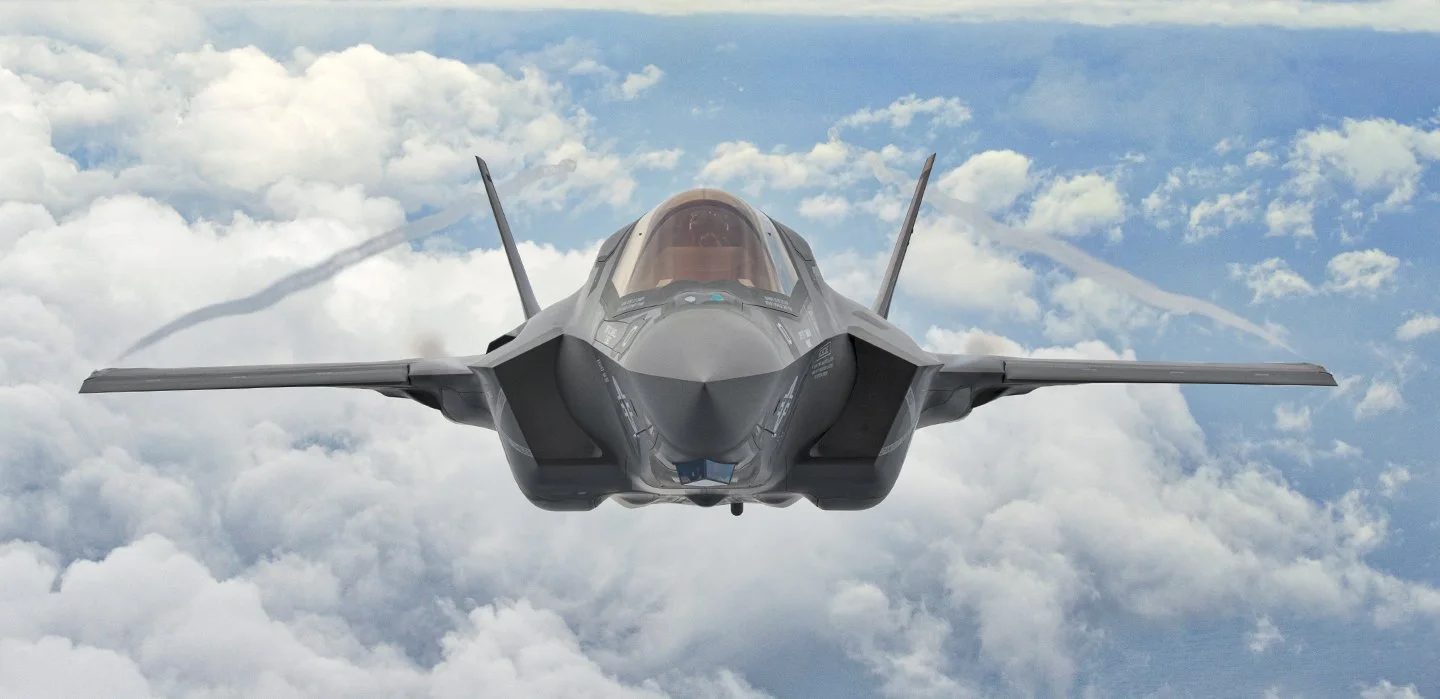
The $20 billion (and climbing) project to replace the RCAF’s fleet of aging CF-18 fighter jets is a saga in itself, which has yet to be fully played out.

At present, the Lockheed Martin F-35 is the aircraft which won the competition to replace the CF-18. The Liberal government has entered negotiations to acquire 88 F-35’s with the first delivery to be in 2025. However, to date no contract has been signed with Lockheed Martin.

While the CF-18 replacement remains a long drawn out series of dramas, the Fixed Wing Search and Rescue (FWSAR) acquisition must rank as one of the Canadian military’s most ill-fated procurements.

Originally ‘fast tracked’ in 2004, the Liberal government of the day authorized DND to purchase 17 aircraft to replace the well-aged fleet of Buffalo airplanes that were serving Canada’s FWSAR needs. The original price tag was $1.1 billion and the first delivery was to be in 2006. 

However, it was not until December 8, 2016 that a contract was finally signed for Airbus to provide 15 aircraft at a cost of $2.2 billion. While deliveries of the C295W have begun, they have yet to be successfully certified.

This means that with the old Buffalo’s finally retired from service, Canada is presently deficient in this vital FWSAR capability, particularly off the BC coast.

As the war in Ukraine has served to illustrate, sophisticated modern weapon systems cannot be swiftly replaced. In a modern war scenario, if Canada were to engage in combat with a ‘near-peer’ such as Russia or China, we would be forced to utilize what we have in our existing arsenal.

Given that we have given away armoured vehicles, artillery and much of our ammo to Ukraine already, we would be in a sorry state.

With the current lead times, delays and cost overruns of virtually all of our recently major procurements, maybe we need to completely overhaul our sense of urgency when it comes to equipping our military with what they actually need.

If one closely follows the combat trends in Ukraine, this would mean buying loads of aerial drones, anti-armour missiles and ground-air defence systems. Not manned fighter jets and anti-submarine ships.
ON TARGET: Should Canada Ramp up for War?

By Scott Taylor

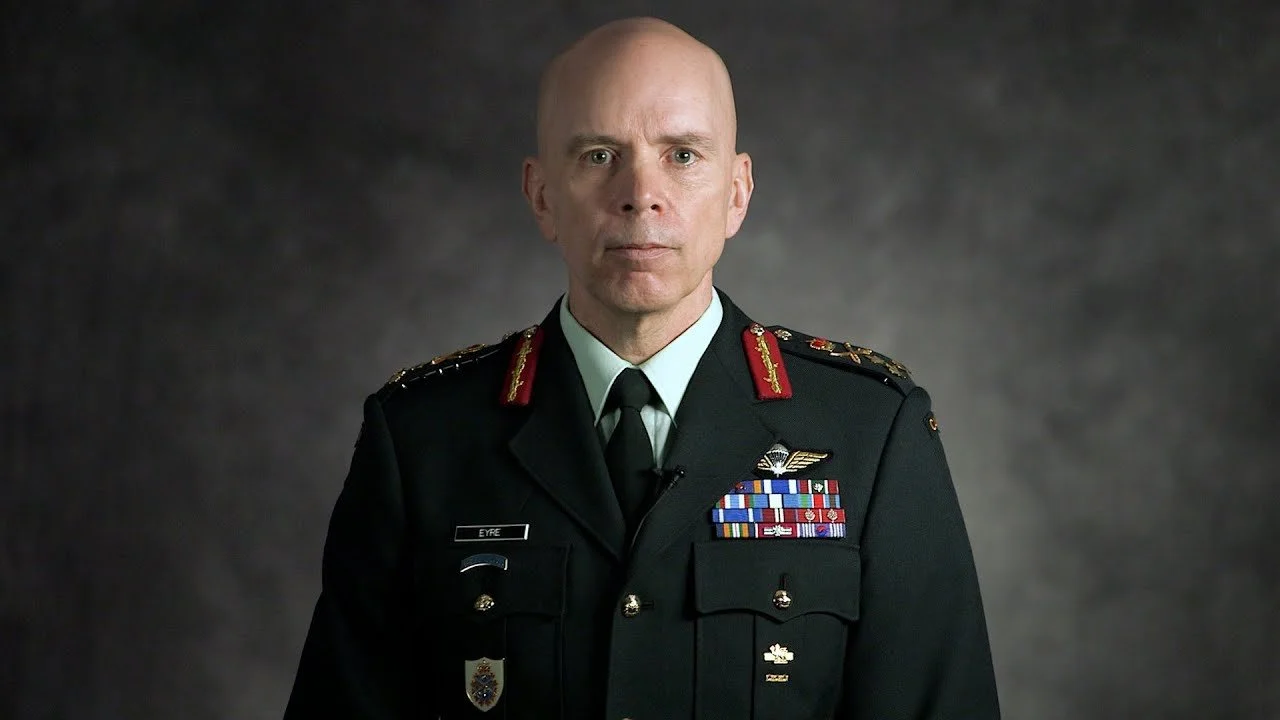
In recent weeks, Canada’s Chief of the Defence Staff, General Wayne Eyre has been publicly urging the Defence Industry to ramp up production to what he terms a ‘war footing’. It is Eyre’s professional opinion that an increase in domestic military hardware will make it easier for Canada to continue supplying weapons and munitions to Ukraine.

It would also better enable Canada to replace all of the lethal and non-lethal aid, which has already been drained from the Canadian Armed Forces arsenal in order to keep Ukraine in the fight against Russia.

The crux of Eyre’s argument is that the current Russia versus Ukraine conflict provides the catalyst for boosting military equipment production.

In an interview with CBC last May, Eyre told Canadians “I think what this [Russian Ukrainian conflict] has shown, though, is the need for us to increase the capacity of the defence industry. Given the deteriorating world situation, we need the defence industry to go into a wartime footing and increase this production liner to be able to support the requirements that are out there, whether it is ammunition, artillery rockets … you name it. There is a huge demand out there” said Eyre.

All of this may be music to the ears of those executives toiling in the military industrial complex but I think it will be harder to sell the Canadian public on the concept of increased defence spending being the answer to global security.

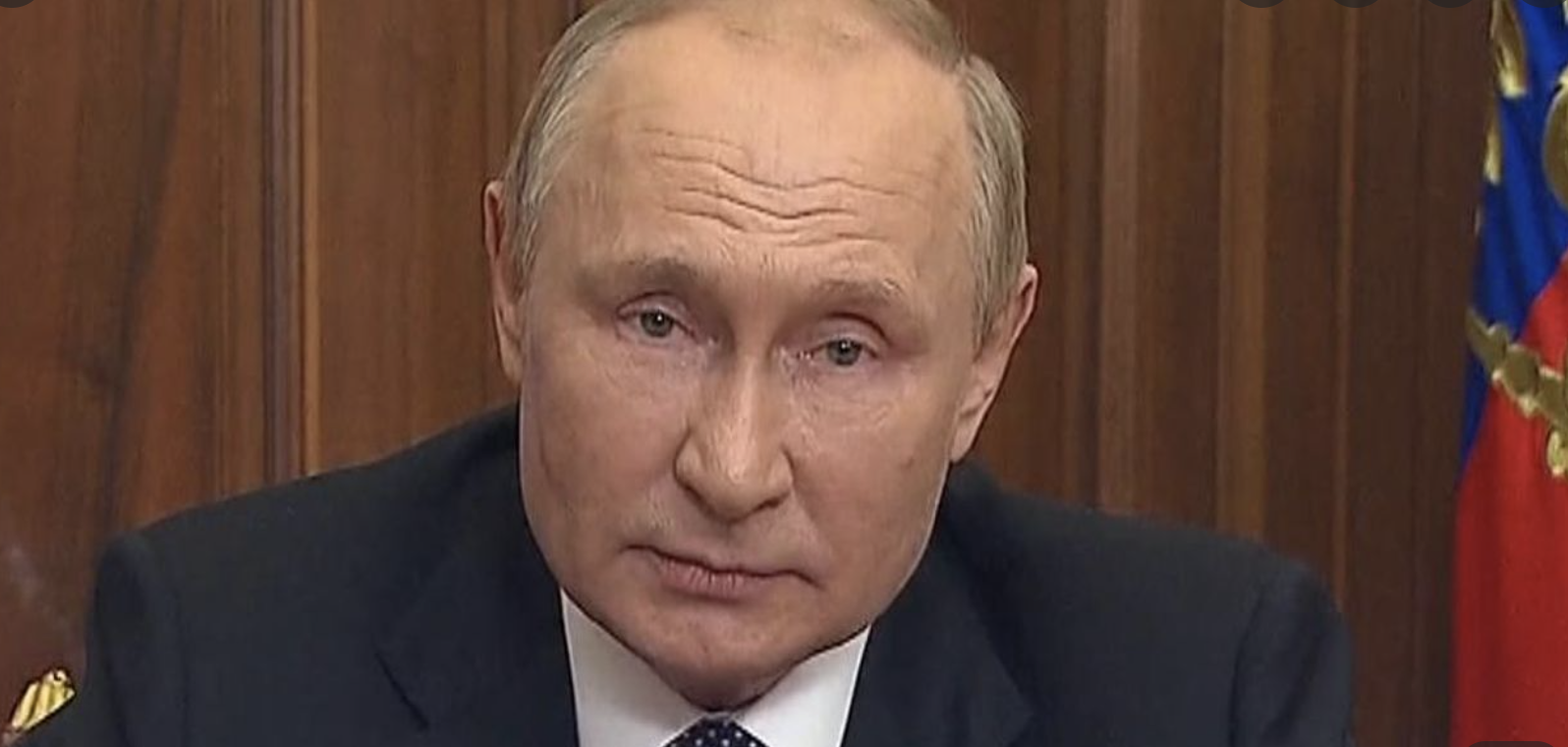
For decades the fearmongering NATO pundits all warned us of Russia’s incredible martial power. During that campaign of deliberate disinformation, Putin used these over-hyped capabilities to inflate his own political status.

Perhaps Putin actually began to believe the NATO propaganda himself. However, the minute Putin ordered the invasion of Ukraine on Feb. 24, the myth of Russian military invincibility began to unravel.

The NATO spinmeisters did their level best to keep frightening the world by writing off Ukraine’s military and speculating on which western European countries Putin would gobble up next.

The proposed Russian ‘Special Military Operation’ was to last just 72 hours and result in the establishment of a pro-Kremlin regime in Kyiv.

The initial armoured thrusts by the Russians were thwarted by a determined and proficient Ukraine military. The opening act of the war also drew back the curtain on a Russian military hobbled by corruption and incompetence.

As the Russians were driven from the battlefield, analysts began to admit what they had known for years: The Russian military is woefully unprepared to support itself logistically outside of their own territory.

The subsequent months of fighting have also proven that the NATO- supported Ukraine military is superior to the Russian invaders in terms of sophisticated weaponry, training, tactics and above all morale.

The Pentagon estimates that as of Oct. 13, the Russians have suffered a total of 80,000 casualties, which includes over 20,000 deaths.

In terms of military hardware, the Russian losses have been extreme, with literally thousands of tanks, artillery, armoured vehicles and supply trucks having been destroyed or captured to date.

The prolonged conflict has also seen Russia expend the majority of its guided weapon systems such as cruise missiles.

To address this shortfall, Russia has resorted to using Iranian supplied low-tech suicide drones to attack Ukraine’s power grid.

As a quick aside, I would like to issue a quick reminder to those NATO cheerleaders who are currently denouncing Putin’s targeting of civilian infrastructure as a ‘war crime.’ Back in the spring of 1999, NATO air forces – including Canada – spent 78 days deliberately bombing Serbia’s power grid – and we bragged about the new graphite bomb technology which we employed while committing what we now call a ‘war crime.’ But I digress.

Russia has also expended so much artillery ammunition that if NATO intelligence is correct, Putin has had to beg North Korea for resupply.

As one gloating pundit commented, for Russia to seek assistance from North Korea is “scraping the bottom of the barrel.”

It is impossible to predict just how long Putin will continue to reinforce the failure of his Ukraine invasion.

His recent draft of 300,000 reservists would indicate that, for the time being, Putin is prepared to keep the meat grinder rolling in the form of conventional combat – with the ever present threat of nuclear escalation held in reserve.

Whatever the outcome, we now realize that the Russian military capability was never what our NATO cheerleaders claimed it was, and after this Ukraine conflict it will be decades before they can ever again be considered a credible threat to European security.

With Canadians focused on emerging from a pandemic, rampant inflation and climate-change related natural disasters, General Eyre will have a tough sell on convincing the public that we need to spend billions of dollars to make more weapons.

ON TARGET: Ukraine Drain Takes Toll on the Canadian Military

Photo credit: Tech. Sgt. Jack Sanders

Last week, Minister of National Defence Anita Anand announced that Canada would be providing an additional $15.2 million worth of military aid to Ukraine. Anand’s announcement came shortly after the June 26-28, G-7 meeting wherein all member states pledged to continue supporting Ukraine’s war effort for the duration of the conflict.

The simple truth is that no analyst forecast that Russia’s invasion would drag on this long – with still no end in sight.

Many observers, myself included, did not think Russian President Vladimir Putin would actually launch an invasion. I thought that the troop build-up along Ukraine’s border was an elaborate bluff to force negotiated concessions from Ukraine.

I will admit that I was proven wrong when Russian troops actually crossed the border. However, no pundit predicted that in the David versus Goliath struggle between a diminutive Ukraine and the mighty Russia, that David could prevail.

With Ukraine President Zelenskyy’s pre-invasion approval rating sitting at just 27 per cent both Putin and the U.S. State Department believed that very few Ukrainians would fight for his regime.

In the early hours of the Russian invasion, the U.S. did not urge Zelenskyy to fight to the death, but rather they offered him a safe passage out of Kyiv.

Famously, Zelenskyy replied, “I need ammunition, not a lift.”

However, by this point it was becoming readily apparent that Ukraine’s army was indeed willing to fight and die for their country if not for Zelenskyy’s corrupt regime in Kyiv.

Unsurprisingly Zelenskyy’s approval rating soon soared due to his daily televised addresses wherein he embodied brave defiance.

As for the ‘ammunition’ he requested, the U.S., Canada and several European countries did indeed heed the call.

As sophisticated modern weaponry cannot be produced overnight, this meant that these donor nations had to deplete their own war stocks and arsenals.

Canada provided numerous 84mm Carl Gustav anti-tank systems, four M-777 155mm howitzers and 39 Light Armoured Vehicles.

As part of our announced $500 million commitment to the Ukraine defence effort, Canada also purchased some 20,000 rounds of 155mm artillery shells at a cost of $98 million.

This sounds like a substantial donation until one realizes that in the current conflict, Ukraine is firing nearly 6,000 rounds of artillery every day. It is estimated that the Russians fire up to ten times that volume.

The fact is that Canada’s armoury has been practically depleted.

There are no more weapons or munitions for us to send which explains why Anand’s recent pledge of support was for winter clothing.

Included in Canada’s $15.2 million donation is some 400,000 items of cold weather military kit, which include; jackets, pants, boots, gloves and parkas.

A further 100,000 items of cold weather clothing are to be drawn from the existing Canadian Armed Forces inventory. Given that the entire CAF is comprised of about 60,000 regular force members (estimated to be 10 per cent below authorized strength) and of that number less than 20,000 are in the army, taking 100,000 cold weather-clothing items out of the inventory is bound to create a shortage for the foreseeable future.

With munitions stocks already drained and the priority being to get newly purchased shells to Ukraine as fast as possible, one has to surmise that there is a moratorium on live fire combat exercises for the purpose of training Canadian soldiers.

Add to this the frequent training cycle interruptions as CAF combat troops are deployed in aid-to-the-civil-power operations such as the recent clean up from Hurricane Fiona’s devastation of the Maritimes.

If it has not occurred already it will only be a matter of time before the shortages of weapons, uniforms and training seriously erodes the combat proficiency of our Army.

Recruitment and retention are already a serious concern for the CAF, and I daresay watching the Defence Minister repeatedly handing over Canadian equipment to Ukraine will have a serious impact on morale.

If professional hockey players were told to hand over their skates, sticks and pads to another team because they were already playing in the “big game,” they would rightfully realize that this donation would preclude them from ever participating.

Add to this the scenario that they are sent out to chainsaw downed trees rather than scrimmage on the ice, and you will have them questioning what exactly still makes them hockey players.

That might actually explain why the CAF’s morale is low and retention and recruitment are fast reaching crisis levels.

ON TARGET: Putin's Miscalculation in Ukraine: Why Russia Cannot Win this War

By Scott Taylor

There is now absolutely no denying that Russian President Vladimir Putin made a major miscalculation when he invaded Ukraine.

Following a series of successful counter-offensives by Ukraine in early September, the Kremlin had no alternative but to order a partial mobilization if they wish to continue exercising Putin’s “Special Military Operation.”

The Russian military continues to under-report their battlefield casualties suffered to date – but the announced mobilization of 300,000 reservists acknowledges that Putin’s initial invasion force of 200,000 has been decimated.

Western media have been quick to highlight the unpopularity of the widening war among Russian citizens.

As long as the war was being waged by volunteer soldiers and mercenaries like the infamous Wagner group, the average Russian civilian was content to accept the state-controlled message as to Putin’s stated war arms.

However, now that reservists and former military personnel are being called up for frontline service, suddenly Putin’s rationale for the invasion no longer stands up to scrutiny.

Luckily for the U.S., and to a lesser degree Canada, the decades-long military occupation of Iraq and Afghanistan did not result in us having to resort to a partial mobilization or a lottery draft.

Canadians were blissfully content to display ‘support the troops’ bumper stickers as long as they themselves never had to face the prospect of being drafted and sent to fight an unwinnable war on foreign soil.

The Americans avoided drafting civilians by implementing a policy known as ‘stop loss’ wherein soldiers could not leave the military even after their term of service was fulfilled.

As was revealed by reporter Craig Whittock in what is now dubbed the Afghanistan Papers, the December 2019 Washington Post expose clearly illustrated that senior Pentagon officials, and presumably Canadian officials, knew from the outset that victory in Afghanistan was unattainable.

But I digress.

The conundrum facing Putin and his generals now is very similar to that which confronted the Pentagon and NATO commanders in Afghanistan. The Russian generals must realize they cannot win in Ukraine, but at the same time Putin feels that politically he cannot concede defeat.

The Russians will by now have realized that the NATO supplied weaponry is far superior to their own in Ukraine.

Given Canada’s current struggle to find the training resources for new recruits, one can only imagine the challenge of mentoring the freshly mobilized 300,000 Russian reservists into capable combat soldiers.

Added to the battlefield losses in the first several months of the war – estimated to be more than 80,000 killed, wounded, captured and deserted – the Russian military is still heavily engaged in full scale conflict in the Donbas region.

We have also witnessed the failures of the Russian Army’s logistics and their command and control capabilities.

In the short term Russia will need to rely on these same defeated and demoralized veterans to train the newly mobilized troops to utilize the same inferior weapon systems and employ those same tactics which have proven so disastrous thus far.

It will be akin to Dr. Frankenstein’s monster trying to put together the next version of his flawed self – while still engaged in an epic bloody struggle with Ukraine.

On the flip side, the recent success of the Ukraine Army proves that the NATO’s investment of weaponry and advanced training is paying out serious dividends.

Entire Ukrainian military units are presently withdrawn to the UK, where the best and brightest NATO combat trainers – including 250 Canadians – prep them to return to the battlefield.

If these parameters remain unchanged, the current advantage enjoyed by Ukraine in terms of weaponry and tactical competence will only increase over time.

Putin will be forced to mobilize more and more troops and his inability to quickly produce or procure advanced guided munitions will steadily erode his Army’s already deficient battlefield competency.

To recap the war to date, it has mostly been a series of embarrassing setbacks for Russia.

The initial armoured columns launched to capture Kyiv were defeated with serious losses. Ditto the Russian airborne assault aimed at capturing the Antonov airport.

Russian naval forces were able to capture Snake Island, but then Ukraine sank the missile cruiser Moskva – flagship of Russia’s Black Sea fleet. After months of bombardment, Russia abandoned Snake Island.

In the air, Russia’s supposedly superior air force has been unable to achieve complete superiority over the battlefield due to the preponderance of NATO supplied portable air defence systems (MANPADS).

As witnessed during the September counter-offensives, the Ukraine air force remains a potent adversary.

It is still somewhat of a mystery but Ukraine was also able to strike a Russian military airfield in the Crimea – either with precision munitions or special forces operations – to destroy a number of Russian warplanes on the ground.

During the second stage of the war, Russia’s methodical advance in the Donbas, it was apparent that Ukraine was lacking in artillery and ammunition.

However, even that Russian advantage has been countered with NATO’s large scale provision of long-range weapon systems.

When combined with U.S. and NATO intelligence, Ukraine is able to pinpoint and target Russian ammunition dumps and command centres well back from the frontlines.

All told, things do not bode well for the 300,000 Russian civilians who were just drafted to prolong Putin’s misadventure in Ukraine.

ON TARGET: Turning Tide of War in Ukraine

By Scott Taylor

Over the past few weeks there have been a number of significant developments in the ongoing war in Ukraine.

While it remains the case that the widely divergent claims from each side makes it difficult to get a clear picture of what is transpiring, one thing that is crystal clear is that the Russian invaders have suffered a major defeat near the city of Kharkiv.

With the war entering its seventh month we had been told that the Ukraine military – bolstered with the latest in NATO weaponry – was preparing to launch a counter attack.

In early September, a major attack was launched by Ukraine in the south, with the objective of liberating the Russian occupied city of Kherson.

Prior to the start of their counter-offensive, Ukraine successfully utilized long range, NATO supplied artillery and rockets to destroy three major bridges across the Dnieper river.

The destruction of these vital spans essentially cut off nearly 20,000 Russian troops on the western bank of Dnieper.

However, after some initial success the Ukrainian attacks were blunted, and the overwhelming Russian artillery inflicted heavy casualties.

Then came the lightning-speed master-stroke by Ukraine in the region of Kharkiv. As all of Russia’s strategic focus was on the south, Ukraine burst through their main lines of defence in the east.

Again, Ukraine was able to employ long-range artillery – in this case the M-777 howitzers, equipped with the precision guided Excalibur munitions.

As an aside, the Canadian Army donated four of these M-777’s plus $100 million worth of conventional shells to Ukraine as part of our lend lease military assistance package. 

But I digress.

To keep the Russian commanders in the dark, Ukraine also employed the sophisticated AGM-88 HARM (anti-radar) munitions.

With the superior technology, weaponry, training and motivation the Ukrainian attackers soon turned a Russian defeat into an embarrassing rout.

Panicked Russians reportedly abandoned their armoured vehicles and ammunition stockpiles and fled in terror.

Armchair strategists were quick to identify that the key to this sudden success near Kharkiv was that Ukraine had successfully duped the Russians into believing the main thrust was to be against Kherson in the south.

With nearly 20,000 troops in danger of encirclement on the west bank of the Dnieper, Russia had taken the bait and reinforced the Kherson bridgehead with some of their best battle groups.

As a result, those defenders left on the ‘quiet’ Kharkiv front were actually militiamen from the Luhansk and Donetsk People’s Republics.

That means that this fighting in the east sector was actually a clash between Ukrainians.

Since Putin launched his invasion forces into Ukraine on February 24, 2022, the western media re-set the clock and dumbed down the war into a simplistic ‘Russian invader versus Ukraine defender.’

Lost in any western analysis was the eight years of combat and conflict between Ukraine’s pro-Russian separatists and the NATO-trained Ukraine government forces.

In 2014, in the wake of the regime change in Kyiv, the Russian-speaking and ethnic Russian majority residing in the eastern Donbass oblasts took up arms to declare their independence from the newly installed Ukraine administration.

Both Donetsk and Luhansk declared themselves to be independent republics.

Until the eve of Putin’s invasion, not even Russia officially recognized these republics. Canada still recognizes these separatist territories to be an indivisible part of sovereign Ukraine territory.

This means that those residing in Donetsk and Luhansk are still considered to be citizens of Ukraine.

Up until Putin’s February 24 invasion, residents of these disputed territories were considered to be pro-Russian separatists. However, once the Ukraine military began liberating these regions, they are now being dubbed as “collaborators” which has a far more ominous tone.

Also disconcerting is the fact that both the Russian, and pro-Russian Ukraine forces weren’t just beaten in battle – they were humiliated.

For the past eight years, NATO trainers including a large Canadian contingent, have been forging the Ukraine military into an extremely proficient fighting force.

We witnessed that in the early days when Ukraine destroyed the Russian invasion force outside of Kyiv. Since then, Canada and NATO have resumed their training role with Ukraine forces that are rotated out of the frontline for mentorship at safe bases in the U.K.

Canada, the U.S. and other NATO allies have poured weapons and munitions into Ukraine, and the superiority of those weapons over Russia’s arsenal was witnessed in the recent counter-offensive.

Russia is receiving no such outside assistance or mentorship.

Their corruption and lack of capability was exposed months ago and it seemed they were struggling to somehow still force a face-saving negotiated peace.

However, now that the very notion of Russia being a conventional military power is laughable, that leaves Putin with just his nuclear deterrent.

Let’s hope that Ukraine’s success remains measured in that it can in no way be construed by Russia as the ‘existential threat’ which they could use to justify employing a nuclear warhead.

ON TARGET: Beloved Queen's Passing Opens the Door for a New Canada

ON TARGET

The death of Queen Elizabeth II at the age of 96 after 70 years as the Commonwealth’s reigning monarch was certainly not an unexpected shock. Nobody can live forever.

However much her eventual demise may have been anticipated, the reality of her passing makes one realize just how deeply the Queen was woven into Canadian culture. For most of us, Elizabeth II has been the only monarch we have ever known.

Through all of the societal changes and political upheaval over the past seven decades, she served as a singular symbol of continuity. 

Prime Ministers and Governor-Generals came and went, but our head of state remained constant.

As Elizabeth retained her popularity, Canadians by and large took it for granted that the Queen of Canada was in fact a British monarch.

It had been that way prior to and beyond confederation so the attitude became ‘well if it ain’t broke, don’t fit it.’

We simply accepted the fact that the Queen’s image adorned our currency and our postage stamps. For the military, Royal affiliation runs deep and is a huge part of our national martial tradition.

Rightfully so, Canada will mourn the loss of our long-reigning Queen. However, the pain of Elizabeth’s passing will not be felt evenly across Canada’s diverse multi-cultural divide nor across the generational gaps.

Over the past 70 years, Canada had steadily emerged from its roots as a British colony.

That said, while many will mourn the death of the Queen, there is less than luke warm willingness to accept Prince Charles as Canada’s new King.

Nearly 67 per cent of Canadians are disapproving of Charles, and 76 per cent would disapprove of Camilla being named the Royal Consort.

In a March 2022 poll by Research Company, only 21 per cent of Canadians supported a continued constitutional monarchy, while 49 per cent of survey respondents preferred an elected head of state.

During this period of mourning leading up to the Royal funeral and Charles’ ascension ceremony, perhaps it is time for Canada to seriously consider what sort of nation we want to be, moving into this post-Elizabeth era.

Before our mint starts rolling out coins with King Charles’ image on the reverse, perhaps the Trudeau Liberals could conduct a referendum on whether we should simply stick to the old formula “the Queen is dead. Long live the King.”

Now before I get a backlash from those accusing me of being some sort of anti-monarchist, I wish to clarify that I had nothing but respect and admiration for Queen Elizabeth II.

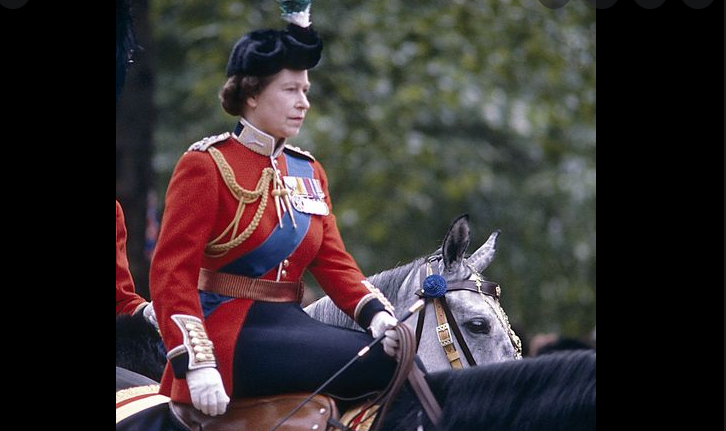
As an impressionable seven-year old schoolboy living in London in 1968, I had the occasion to witness Queen Elizabeth’s trooping-of-the-colours in honour of her birthday.

This ceremony involved thousands of British Guardsmen in their bearskin hats and scarlet tunics, along with columns of Household cavalry troopers resplendent in their shining breast-plates.

I am fairly certain it was that experience which convinced me to include soldiering among my list of lifelong ambitions.

When I did enlist in the Canadian Army in 1982, it was to Queen Elizabeth’s II that I took my oath of loyalty.

I’m not sure that Canada is ready to become a Republic or to begin electing a head-of-state. However, this historic juncture should spark debate about who we want to be as Canadians in the future.

The unpopularity of Charles and Camilla should make this an easy point of discussion.

For the Canadian military, this might provide the catalyst to retire the unit names and traditions associated with the Royal family and Canada’s colonial past.

This might sound like blasphemy to our historians and monarchists, but it might make things less confusing for average civilians wishing to enlist.

One example would be The Princess Louise Fusiliers – a storied reserve infantry Regiment in Halifax. The Princess is long dead and no Canadian soldier has fired a fusil (a type of musket) in over one hundred years.

Canada’s armoured units are all still named after cavalry regiments, yet no Canadian has ridden into battle since 1918.

We still call them the Royal Canadian Horse Artillery, despite them becoming mechanized prior to the Second World War.

New, numbered units could still carry the battle honours of all these fine regiments, but the new monikers could at least reflect the modern day role that they currently perform.

Rest in Peace Queen Elizabeth II. Long did you indeed reign over us.

ON TARGET: The RCAF's Call Sign Caper

By Scott Taylor

Last Monday the Royal Canadian Air Force issued a brief and bizarre press release. The official missive advised the media that a Change of Command ceremony scheduled for the following day at CFB Bagotville was being delayed.

The statement from RCAF Commander Lt-Gen Eric Kenny specified that military investigators were looking into comments that were allegedly made during a meeting wherein attendees were choosing the call-signs (aka nicknames) for fighter pilots.

“On June 22, at 4 Wing Cold Lake, a call-sign review board, where call-signs are assigned to members associated with the fighter community, took place in a small group social setting” Kenny stated. “An investigation was launched into statements made during this activity and remains ongoing. The investigation will examine actions of those involved during the call-sign review board.”

The DND later confirmed that there had been multiple RCAF officers present at the call-sign review board. What is still not clear is what remarks or offending statements were allegedly uttered.

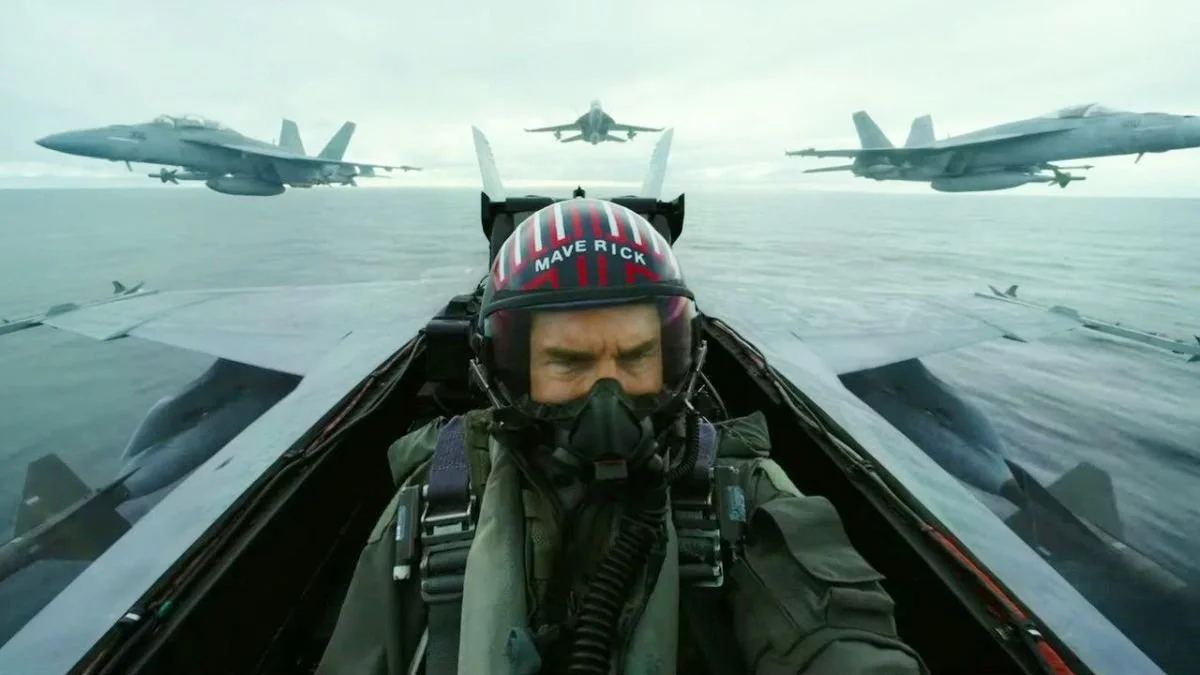
Given the enormous popularity of the recently released Top Gun movie sequel, many young Canadians are now well aware of the importance of call-signs within the elite fighter pilot community.

For those of my generation, we were taught that same lesson when Tom Cruise starred in the original Top Gun release back in 1986.

Even back in those far less politically-correct times, when females were not allowed to fly fighters, the call-signs seemed rather innocuous, such as Maverick, Goose and Ice Man.

Ditto for the Top Gun sequel, which pointedly includes a female as one of the best pilots in the movie, with the call-sign “Phoenix”.

The concept of fighter pilot call-signs was adapted by the RCAF many years ago.

Again as with the Top Gun characters, most of these monikers are rooted in light humoured camaraderie.

For instance I can recall asking former Chief of Defence Staff General Tom Lawson how he came to acquire his call-sign “Shadow.” It turned out that this had nothing to do with his piloting skills allowing him to closely follow an intended target. Instead, it reflected the fact he had an unusually rapid growth rate of facial hair. But I digress.

The process of choosing the call-sign attributed to each fighter pilot takes place at unit social gatherings. The individual’s peers relate anecdotes and then provide suggested suitable call-signs. The other pilots then vote on the call-sign and it becomes ‘official.’ One presumes the consumption of alcohol occurs during these events.

Given that no clarifying details have been released regarding the Cold Lake incident, we can only speculate that whatever was said must have been incredibly offensive.

So much so, that on the eve of a Change of Command ceremony, the RCAF would publicly put the promotion of a senior officer on hold.

What is truly stunning is that whoever made the alleged offending remarks or failed to call them into question, did so in the current socially aware climate.

By this I mean how could this individual not have been aware of the fact that the Canadian Armed Forces have been embroiled in a continuous crap-storm of sexual misconduct scandals for the past 19 months?

We cannot know that the alleged statements made at the call-sign review board were sexual in nature, but it has been the entire culture of the CAF that has been thrust under the media microscope.

Many of those senior leaders that have been embroiled in these scandals are facing allegations that date back ten, twenty and even thirty years ago.

That said, it is almost beyond comprehension that under the present glaring media spotlight, that any senior officer would not be fully cognizant of possible consequences.

One would think that most of our senior military commanders would be afraid to utter even a compliment to a colleague if it could possibly be misconstrued as sexist.

Yet somehow, at a meeting involving multiple RCAF officers, comments were made that, by their nature have sparked a police investigation.

Let’s hope that the results of this investigation shed some light on the matter.

ON TARGET: Ukraine War: No End in Sight

By Scott Taylor

On Aug. 24, Ukrainians celebrated their 31st Independence Day against the backdrop of it also marking the six-month milestone of Russia’s ongoing invasion.

Vladimir Putin gambled on a lightning victory, which would have toppled Ukraine President Volodymyr Zelenskyy’s government. A pro-Russian installed puppet interim Ukraine-leader could then recognize the separatist regions of Donetsk and Luhansk as independent or autonomous states and Putin could declare a victorious ‘Special Military Operation.’ That was the plan.

What Putin’s advisors had failed to grasp was that while the majority of Ukrainians are indeed fed up with their corrupt politicians, they still love their country. That willingness to fight for their own land, coupled with eight years of NATO having provided training and sophisticated weaponry made the Ukraine military a tenacious adversary.

In the days leading up to Russia’s Feb. 24 invasion, western military pundits advised us that Putin had amassed an attacking force of 190,000 troops.

Without context, this appeared to be a David vs Goliath clash with the massive Russian military machine poised to crush tiny Ukraine.

However, at the war’s outset, Ukraine had 200,000 NATO trained regular troops with an additional 900,000 enlisted in the reserves.

Thus it was actually a case of a Russian David foolishly attacking the Ukraine Goliath on their own territory.

Therefore, it should not have been so surprising that the initial Russian onslaught was blunted and repelled.

What did come as a shock was just how poorly the Russian military performed both tactically and logistically.

In the initial drive to capture Kyiv, kilometres-long Russian armoured columns were stalled for want of fuel. Short of rations, invading Russians resorted to looting grocery stores.

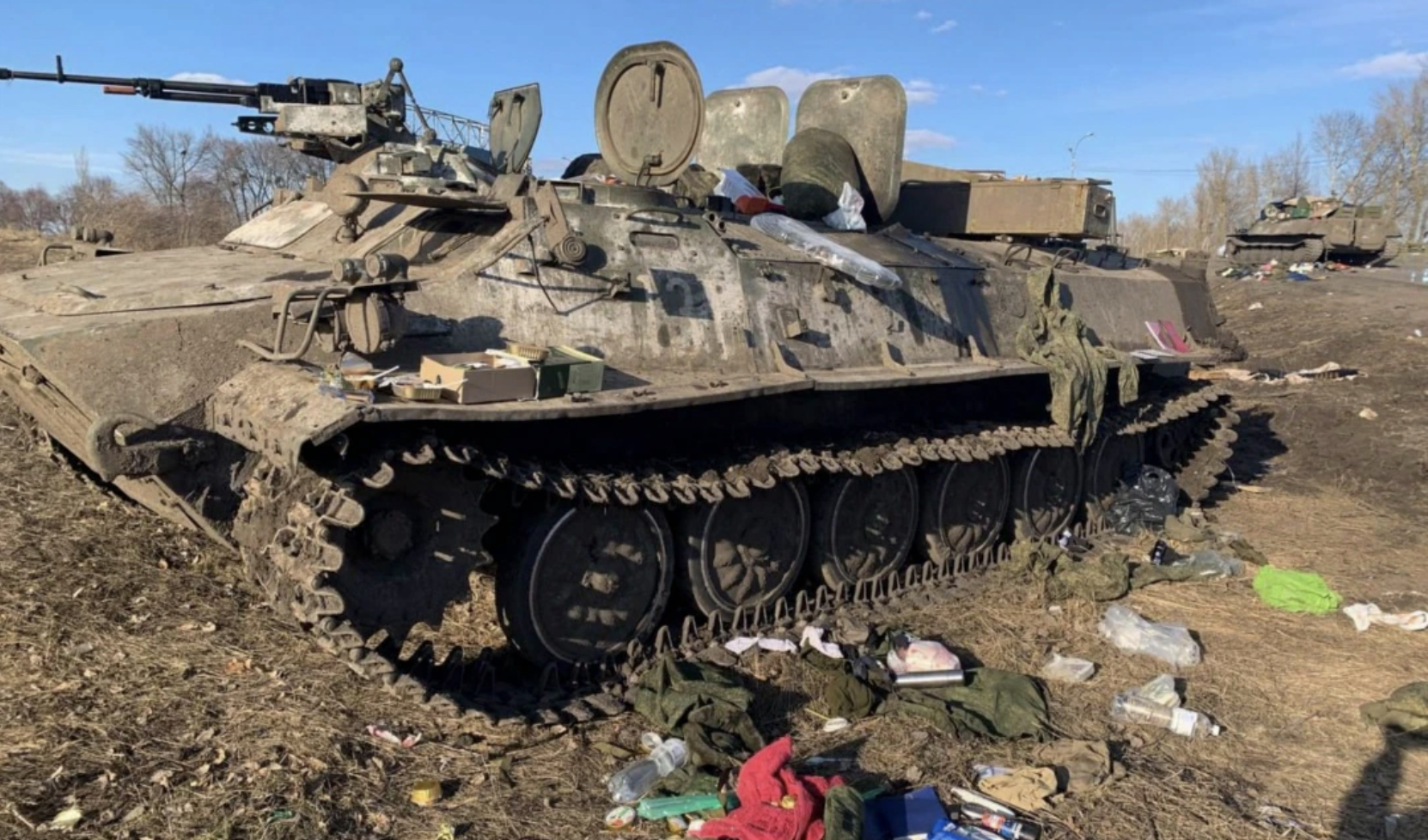
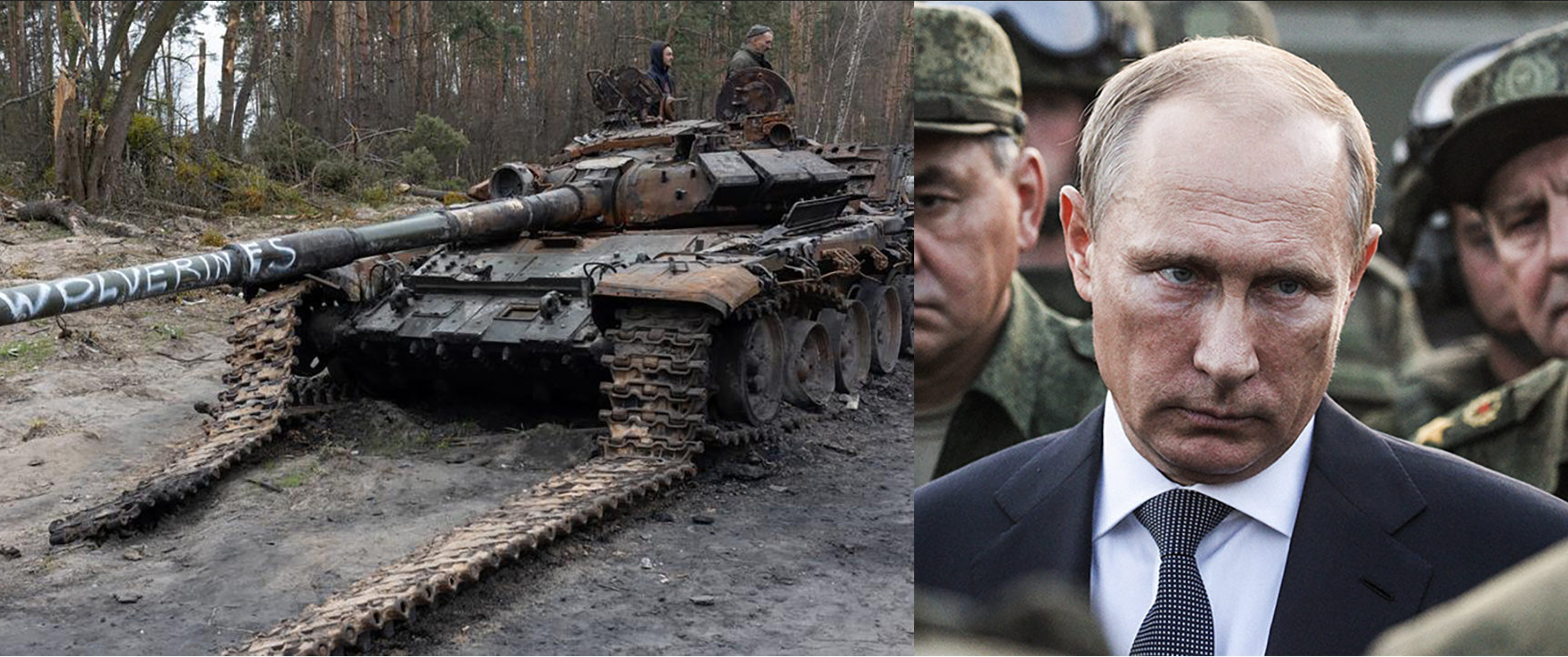
As the Ukraine defence intensified, the demoralized Russians withdrew from their push on Kyiv leaving the battlefield littered with thousands of abandoned and destroyed armoured fighting vehicles.

When the fighting shifted focus to the eastern Donbass region, the casualties on both sides continue to mount at an appalling rate.

At the end of July, UK intelligence sources estimated that the Russians had suffered over 80,000 casualties, which includes killed, wounded, captured and missing.

If that figure is anywhere near accurate, that would mean that Putin’s initial invasion force has suffered nearly 50 per cent combat casualties.

Given that U.S. military doctrine states that a 10% casualty rate renders a combat unit ineffective, it is a wonder the Russian’s can still function at all.

Due to the preponderance of Russian artillery, in particular ammunition supplies, it is believed that Ukraine’s battlefield casualties are even higher.

While Russia does not release casualty figures, last week Putin passed legislation to recruit and train an additional 137,000 soldiers before the end of 2022.

Last month, Defence Minister Anita Anand committed 225 Canadian troops to resume training Ukrainian recruits at military bases in the U.K.

Canada had been providing combat instructors to the Ukraine military since 2015 as part of NATO’s Operation UNIFIER. That training was suspended and our military personnel withdrawn from Ukraine at the outset of the invasion.

However, now that the plan involves bringing Ukrainian recruits to the U.K, it would seem as though we too are planning for this war to drag on well into the foreseeable future.

Like two punch-drunk heavyweight boxers, under the current pattern of battlefield attrition, neither Russia nor Ukraine have the capacity to land a knockout blow on their opponent.

Russia can pummel Ukrainian positions with artillery, inflicting heavy casualties and forcing a withdrawal. Lacking sufficient infantry, the Russians can capture ground but are hard pressed to hold it against Ukrainian counterattacks.

For their part, Ukraine has the manpower – they presently outnumber the Russian invaders by a ratio of 4:1 – but they are not trained to mount large scale coordinated all-arms offensives.

During the past eight years of NATO training, the Ukraine forces honed their skills in small unit tactics. Thus they excel in ambush and defence.

However, to dislodge the entrenched Russian forces will require large scale combined air-power, artillery, armour and infantry assaults.

Neither side is likely to overcome their current shortcomings any time soon, so they will continue to indefinitely slug it out in a battle of attrition.

ON TARGET: Afghanistan Fiasco Must Not be Forgotten

By Scott Taylor

We are now into the seventh month of Russia’s invasion of Ukraine and that conflict has devolved into a bloody stalemate.

The preponderance of Russia artillery is now being countered by Ukraine’s new found capability to strike strategic targets well behind the frontlines.

Over the past several weeks, there has been very little in the way of territorial gains by either side. However, the casualty figures continue to climb at a staggering rate.

Ukraine President, Volodymyr Zelenskyy, has admitted that his armed forces are losing between 500 and 600 troops killed, wounded or missing every day.

U. S. Intelligence sources claim that Russian has suffered between 70,000 to 80,000 killed and wounded since the invasion began on Feb. 24.

What has been the most shocking element in this conflict is the embarrassing incompetence of Putin’s war machine.

During the initial 72 hours of the invasion, western military analysts were writing off the Ukraine Army and the topic of discussion had already shifted to which country Putin would invade next.

Then, through a combination of tenacious Ukraine defence and woefully inept Russian military logistics, Putin’s vaunted armoured columns ground to a halt.

The strategic objective of seizing Kyiv in a lightning strike failed miserably and the Russians were forced to retreat.

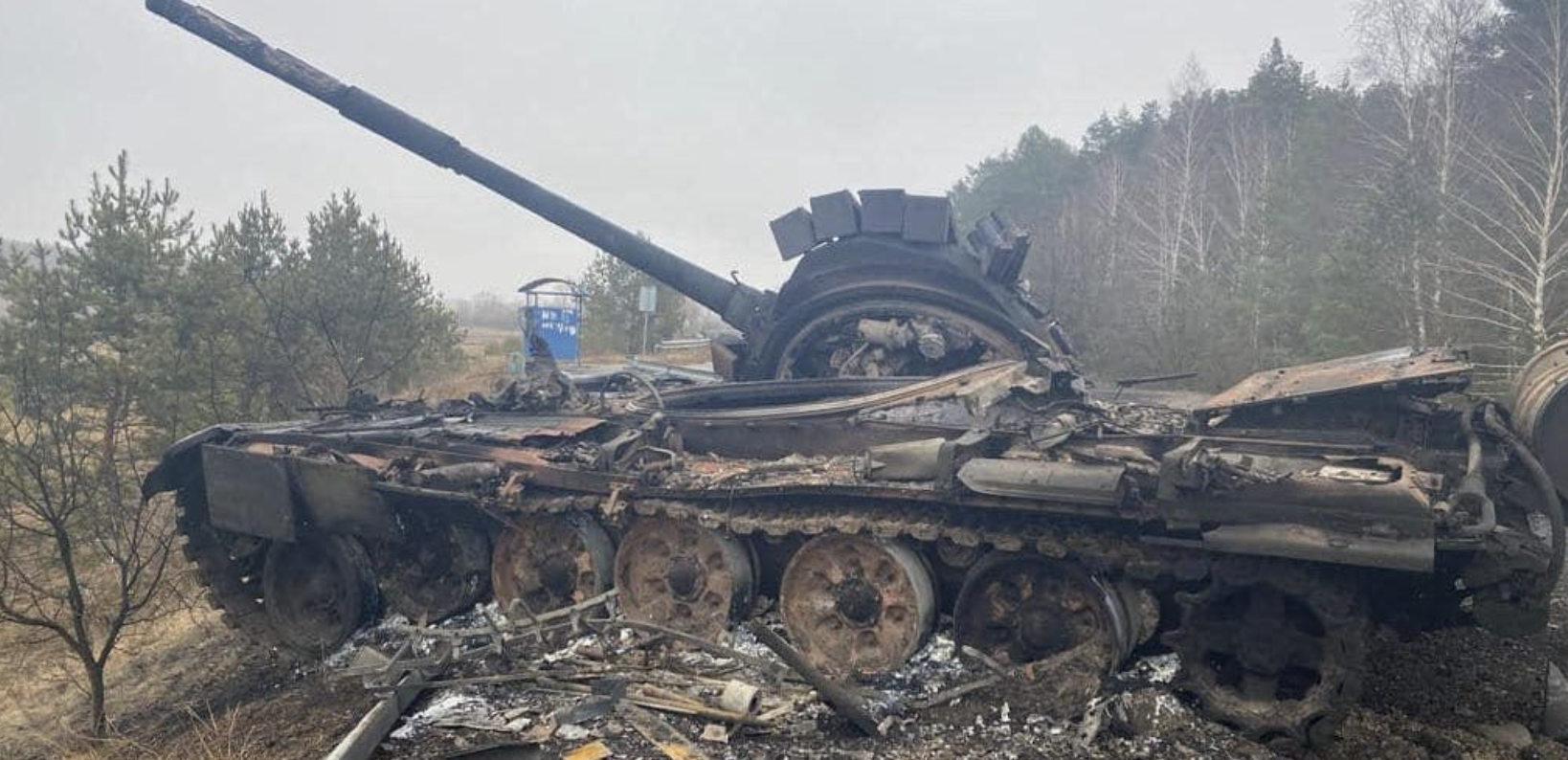
There was a graveyard of knocked out Russian tanks left behind and humiliating scenes of Ukraine civilians driving around on abandoned Russian armoured vehicles.

In less than a week of fighting the world saw that the long-feared Russian military might was in fact a myth.

Even Putin must have been shocked at how poorly his formations performed in actual combat compared to their annual displays of martial prowess held on parades in Moscow’s Red Square.

No one in their right mind would think that after the drubbing they have received at the hands of Ukraine that the Russian military is contemplating widening this war into a full conflagration with NATO.

Hell, we now know that Putin’s objective has been reduced to simply ‘liberating the Donbas’ region of eastern Ukraine. Even that remains an unsure bet as more sophisticated long-range artillery becomes available to Ukraine’s force.

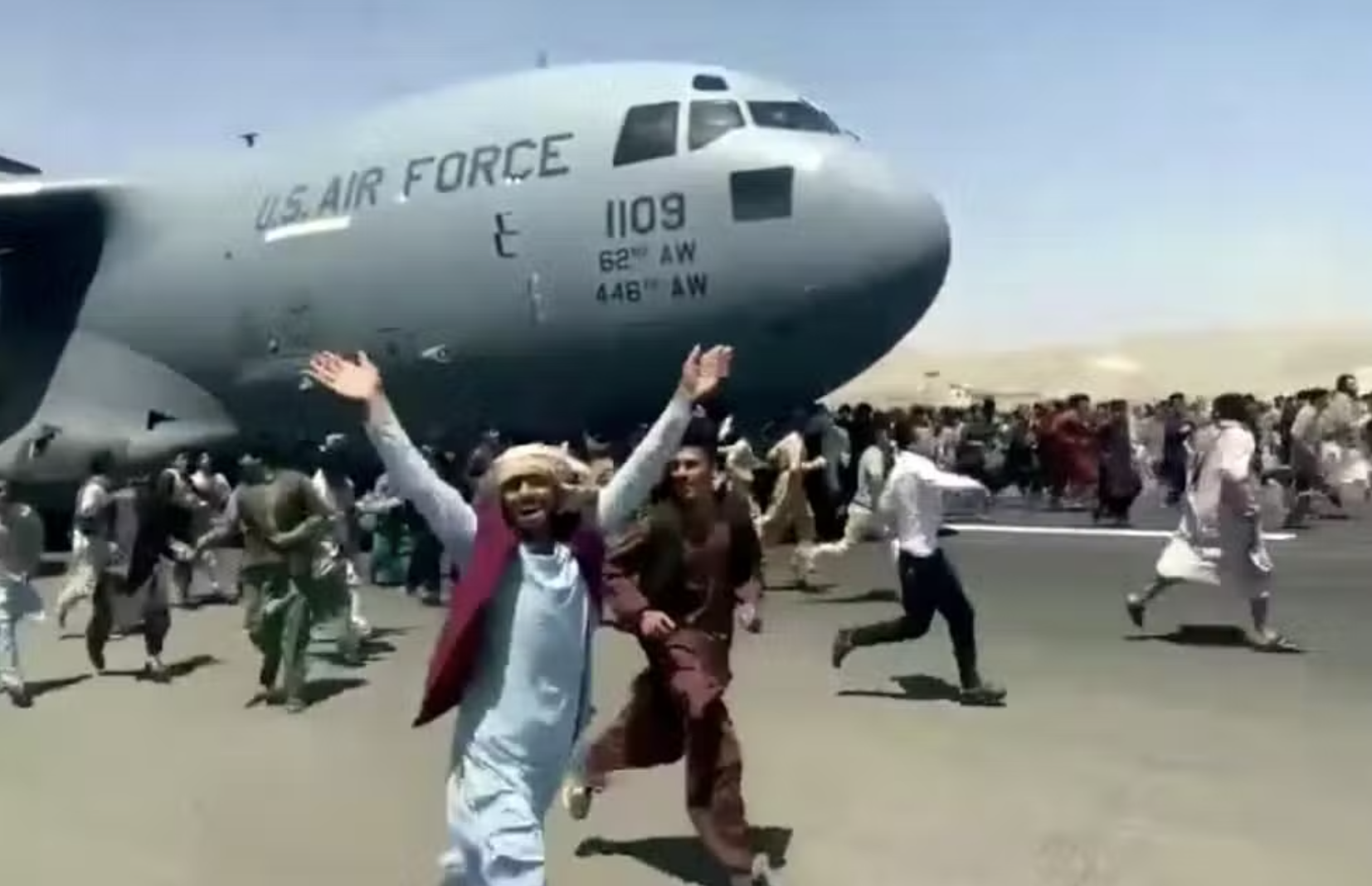
That said, last week marked the dubious one-year anniversary of another humiliating military defeat of a failed invader. In August 2021, the Taliban rolled to victory in Kabul as the U.S military hastily evacuated Afghanistan after nearly twenty years of occupation.

The world’s greatest military superpower supported by the NATO alliance had failed to defeat the Taliban. Perhaps more accurately, the 300,000 strong, U.S trained, U.S equipped and U.S paid Afghan National Security Force had failed to even fight the roughly 50,000 rag tag Taliban insurgents.

However, during the initial stages of the U.S occupation, it was American and NATO soldiers that led the fight against those Afghans who took up arms to resist the illegal invaders.

From 2002, until 2014, Canada committed some 40,000 troops to this conflict. During that time, 159 Canadian soldiers were killed, another 2,000 suffered physical wounds and countless thousands continue to suffer from the unseen scars of PTSD.

While the Canadian government made the decision to cut bait and entirely withdraw from the mission in 2014, no one was so delusional at that time as to believe that the U.S. and remaining NATO allies would ever defeat the Taliban.

The best result the U.S. could hope for was to emulate the Soviet Union’s withdrawal from Afghanistan in 1989. After a ten-year failed occupation of Afghanistan,  Soviet troops handed over control to the Afghan communist army that they had trained and equipped. Although the Afghan warlords soon captured the countryside, the Soviet equipped Afghan army was able to hold Kabul until 1992.

By that time this was an inter-Afghan war and the Soviet Union had already collapsed, so there was no direct humiliation to their armed forces.

This time around the Afghan security forces saw the writing on the wall, and they had no intention of dying for a lost cause. As the U.S. began to pull out, the Afghan security forces either melted away or actually joined the Taliban.

This is perhaps best illustrated during a recent military display in Kabul when Taliban pilots flew a flypast in formation with formerly U.S. Blackhawk helicopters. There is no way the illiterate Taliban fighters learned to fly helicopters on their own.

The worst part of the whole two decade long U.S. occupation of Afghanistan was that the American planners knew from the outset that the war was unwinnable.

Thanks to the intrepid reporting of the Washington Post, in 2019 the so called Afghanistan Papers were published wherein it revealed the “explicit and sustained efforts by the U.S. government to deliberately mislead the public.”

So either the U.S. government also lied to NATO allies such as Canada about the winnability of the Afghan war, or they shared the truth and our own government chose to keep misleading the Canadian public.

Neither option should bring much comfort to those brave Canadian soldiers who were sent to fight a war the Pentagon knew we could not win.

ON TARGET: Putin Does Not Have a Monopoly On Disinformation

By Scott Taylor

With regards to the war in Ukraine, the Canadian public is being warned repeatedly to be wary of Russian disinformation. This is solid advice and there is ample evidence that the Kremlin spreads falsehoods at an alarming rate.

On the flip side, it appears that western media accepts and disseminates Ukraine’s version of events at face value, regardless of how illogical it may in fact seem.

From the outset of this war, the vastly divergent versions of events and overwhelming abundance of visual images has made it all but impossible for impartial analysts to predict the future course of events.

For instance, last Thursday media reports showed a series of explosions at a Russian airbase in the Crimea. This was followed by images from a satellite purporting to show as many as 10 frontline Russian fighter planes damaged beyond repair.

Initially Ukraine officials gleefully claimed responsibility for the destruction.

This prompted President Volodymyr Zelenskyy to chastise his government officials for discussing military matters with the media. Such remarks were “frankly irresponsible” according to Zelenskyy.

The Russian airbase is over 150 kilometres from the front lines in eastern Ukraine and well out of artillery range of the Ukraine military. There was no evidence of an airstrike, leading many to speculate this may have been an act of sabotage by Ukraine special forces.

The Russian defence ministry claims that the explosions were caused by faulty ammunition storage and that no planes were damaged.

Close followers of this conflict will recall a similar pattern of counter claims when the Russian missile cruiser Moskva was damaged and sunk in the Black Sea last April.

Ukraine claimed to have fired a sophisticated anti-ship missile to sink the Russian flagship, whereas the Russians claimed it was some sort of accidental explosion aboard the vessel due to crew negligence.

I’m not sure what school of public affairs the Russians subscribe to, but I truly do not understand how it is somehow preferable to destroy your own military equipment through professional incompetence.

Perhaps it is a cultural trait wherein they think a self-inflicted blow denies their adversary the bragging rights of having landed a solid hit.

Either way, the Moskva is at the bottom of the Black Sea and there appears to be 9 or 10 jumbled masses of crumbled metal at a Crimea airbase.

On July 29 a camp in Donetsk housing Ukraine prisoners of war was shelled by artillery.

The barrage left at least 50 dead and another 70 wounded. The casualties were mostly Ukraine prisoners, but it also included guards from the pro-Russian Donetsk People’s Republic (DPR) militia.

Russia claimed that Ukraine had fired the deadly munitions using U.S. provided HIMARS long-range missile launchers.

Ukraine vehemently counter claimed that Russia had deliberately shelled their own prisoner-of-war camp in order to then blame Ukraine for the resultant carnage.

For most western media, this twisted logic was enough for them to assess this as a ‘he said, she said’ impasse.

However, the question begs, if these Ukraine prisoners were already in captivity and Russia wanted them dead, why would they not simply shoot them? Why use an area weapon like artillery to destroy infrastructure within your own territory and inflict casualties on your own soldiers?

Simple logic gives the Russians the benefit of the doubt in this case.

Ditto for the recent disputed claims as to which side is responsible for the artillery shelling in the vicinity of the Zaporizhzhia nuclear power plant.

To recap events, Russian troops captured the Zaporizhzhia facility in March shortly after the initial invasion of Ukraine.

During that fighting, it was being reported that the nuclear reactors were in danger from Russian artillery fire.

This eventuality sparked memories of the Chernobyl meltdown disaster in 1986. As a result, for a couple of days this spring, the world held its breath and all eyes were on the Ukraine conflict.

In the end, Russian forces secured the nuclear plant undamaged and they have been operating it ever since.

Now that the fighting has returned to the vicinity, Ukraine’s nuclear agency Enerhoatom claims “Russian invaders again shelled the Zaporizhzhia plant and territories near the nuclear facility.”

For their part, Russia says it was Ukraine that fired the estimated 10 artillery shells that recently landed near the reactors.

Again we are to believe it is a case of ‘he said, she said’ and we know how those Russians love to misinform. Except that it makes no sense that Russia would shell a nuclear plant that they control and are presently operating.

On the other hand, Ukraine needs to keep the attention of the world focussed on the war in order to keep securing the donations of money and weapons.

Nothing grabs headlines like the possibility of a world ending nuclear meltdown.

Propaganda and misinformation are not the sole purview of the Russians. We need to be wary of all sources from this conflict. Even those we support.

ON TARGET: No, Canada Did Not Call Putin's Bluff!

By Scott Taylor

Last Thursday, Minister of National Defence Anita Anand held a press conference in Toronto wherein she announced that the Canadian military would resume training Ukrainian soldiers.

Since September 2015, Canada deployed Combat instructors to Ukraine as part of Operation UNIFIER. During that period it is estimated that Canada trained over 33,000 Ukraine soldiers to a NATO standard of proficiency.

When Russia invaded Ukraine on Feb. 24, Canada suspended the training mission and withdrew our military personnel. However, it did not take long for the world to see just how effectively the NATO trainers had reformed the Ukraine combat forces.

In a stunning series of clashes in the opening weeks of the war, the Ukraine defenders clobbered the Russian invaders to the point that Putin’s war machine seemed cartoonishly inept.

Yet as weeks turned into months and the war devolved into an artillery duel, the casualty meat grinder is chewing up both sides.

Thus, Canada will resume their training, only this time they will be assisting the Ukraine recruits at a base in southeast England.

Anand announced that the 225 personnel deployed will be drawn from the Edmonton-based 3rd Battalion, Princess Patricia’s Canadian Light Infantry. The training is to begin as of Aug. 25.

I’m not sure what level of training these Canadians mentors will provide, but to adequately prepare a soldier for a combat deployment takes at least 16 weeks.

That said, if we are bringing recruits from Ukraine to England for extensive training it would seem that no one expects the fighting to end anytime soon.

Which brings us back to the current battlefield, which is blasting through artillery ammunition at a prodigious rate. And those shells are not cheap.

As part of the $626 million worth of weapons and other military aid that Canada has provided to Ukraine were a number of M777 155mm howitzers.

We also provided 20,000 rounds of 155mm ammunition that was purchased from a U.S. manufacturer and shipped directly to Ukraine.

The cost of that deal was $98 million, which means that each artillery shell costs roughly $5,000. The Ukraine military is firing between 5,000-6,000 shells a day while the Russians are firing between 20,000-60,000 rounds daily.

Russia has access to vast weapon stockpiles from Soviet-era Cold War arsenals. Ukraine on the other hand is now entirely dependent on foreign countries donating munitions from their own reserves.

European allies are wary that if the current war should widen beyond Ukraine’s borders, they will need such munitions for themselves.

Canada has been negotiating with South Korea to acquire 100,000 rounds of 155mm artillery ammunition, which we would then donate to Ukraine.

That plan was first reported in late May by the Ottawa Citizen, but to date it has not been finalized.

Ironically, as Defence Minister Anand was trying to convince Canadians that we are doing everything possible to keep Ukraine in the fight, back in Ottawa Ukraine’s ambassador as well as Conservative MPs were arguing that Canada is in fact fuelling Putin’s war machine.

The focus of their criticism was the Liberal government’s decision to waive their own sanctions regime against Russia in order to return a turbine that is essential for the export of Russian gas to western Europe.

It has been an ironic reality that from the outset of Russia’s invasion, many of those European countries most vocally denouncing Putin’s aggression are also his most dependant consumers of oil and gas.

With the war inflated increase in fossil fuel prices, western Europe has paid Russia over $100 billion during the first five months of the war.

Germany relies heavily upon Russian oil and gas and any curtailment of those imports would collapse their economy.

Hence, the Liberal government bowed to German pressure and agreed to ship the vital turbine in order to keep the Russian gas flowing.

This decision prompted a heated backlash from Ukraine President Volodymyr Zelenskyy which was echoed at a parliamentary committee last Thursday in Ottawa by Yulia Kovaliv, Ukraine’s Ambassador to Canada.

The bizarre response from Global Affairs Minister Melanie Joly was to claim that Canada was calling Putin’s bluff. According to Joly, Canada returning the turbine would not allow Russia to claim that any interruption in gas exports would be due to Canada’s interference.

In reality, I believe the vast majority of Canadians would be happy to bask in Putin’s condemnation if it resulted in shutting off the money that is fuelling his war machine.

We will train Ukraine soldiers, scour the world market for munitions to send them, and fly the blue and yellow flag in solidarity with Ukrainians. But when we had a chance to cripple the Russian economy, we chose not to.

In the end, Germany’s dependency on Russian fuel trumped our emotional support for Ukraine.

ON TARGET: Untracked Weapon Deliveries to Ukraine Could Have Dire Results: INTERPOL

By Scott Taylor

As the war in Ukraine continues to rage, the west has been scrambling to fulfil embattled President Volodimir Zelenskyy’s insatiable demands for more heavy weaponry and ammunition.

Canada has heeded Zelenskyy’s call, promising an additional $500 million in both lethal and non-lethal military aid to Ukraine in addition to the support we provided prior to Putin’s February 24 illegal invasion.

The Canadian military arsenal has been severely depleted in order to equip the Ukraine defenders with anti-tank systems, howitzers and even Light Armoured Vehicles (LAV).

It will take years to replace those munitions and weapons drawn from active duty Canadian combat units.

However as Ukraine struggles valiantly to defend itself from the Russian invaders, providing this weaponry to Zelenskyy has given Canadians some pride in the fact we were contributing to the greater good.

Then, last month Jurgen Stock the head of Interpol released a disturbing report wherein he expressed the Agency’s concerns that these untracked weapon deliveries to Ukraine could end up in the hands of criminals or terrorists. “The wide availability of weapons during the current conflict will lead to the proliferation of illicit weapons in the post conflict phase” Stock told reporters.

Interpol fears that pilfered arms and armaments could end up on the European Union’s black market.

Stock’s warning echoed an earlier report from the European Union Agency for Law Enforcement Cooperation. As early as April 2022, this agency noted that weapons were already being trafficked from Ukraine to organized crime groups.

The warnings from these two law enforcement agencies have prompted several NATO donor nations to discuss better ways to monitor these arms and armaments after they are delivered to Ukraine.

The Department of National Defence confirmed to the Ottawa Citizen that Canadian officials are not included in those discussions.

There is presently no way for Canada to track the $500 million worth of weaponry that we have shipped into the Ukraine conflict zone.

To reassure any uneasy Canadians, National Defence spokesman Dan le Bouthillier told the Citizen that Canada is alert to the danger. “We are monitoring these developments with interest and will leave no stone unturned in our work to ensure the safe delivery and use of military aid” said Bouthillier.

Privately, military sources advised the Citizen that once our weapons cross the Ukraine border there is no way to track them.

The Captain Obvious cabal will be quick to point out that fears of donated weapons to Ukraine being sold to criminals will only aid the Kremlin’s propaganda machine.

That it will.

However we would be moronic to attempt to view this war through a simplistic prism wherein, everything Russian is bad and ergo, everything Ukraine must be good.

These warnings come from both Interpol and the European Union Agency for Law Enforcement Cooperation – not from Russian trolls on social media.

No one is suggesting that the west stop shipments of heavy weapons into Ukraine.

Given the desperate need the Ukraine military has for such sophisticated munitions one would think that Zelenskyy’s government would readily agree to outside oversight to track this weaponry.

It is not like we don’t know how stockpiles of weapons can easily fall into the wrong hands if not secured.

In August 2021, as the Taliban rampaged to an almost bloodless victory over the U.S. trained and equipped Afghan government forces, American troops had to abandon an estimated $18 billion worth of weapons, munitions and equipment.

As a result, the Taliban has acquired the most powerful arsenal in Central Asia.

Without a treasury to maintain a massive Afghan standing forces of nearly 400,000 which the U.S. had established, the Taliban found themselves in possession of a tremendous surplus of sophisticated arms and armaments.

One can only surmise that the sale of these weapons to third parties of dubious intent are now supplementing the Taliban’s income from the sale of illegal narcotics.

The collapse of the Afghan army in 2021 was not unprecedented. In 2014, the American trained and equipped Iraqi Security Forces fled in the face of the Daesh (aka ISIS or ISIL), offensive. Rather than fight, the Iraqi army melted away leaving their vast arsenal of weapons and combat vehicles in the hands of the Islamic extremists.

In 2010, the NATO supported insurgency in Libya led to the eventual overthrow of President Moammar Gadhaffi.

When NATO failed to secure the vast arsenal which they had supplied to the Libyan rebels, that country degenerated into violent anarchy which persists to today.

The unsecured weapons of Libya also found there way into the hands of rebels in neighbouring Mali. That conflict also continues to this day.

The moral of the story is that we must heed the current warnings of Interpol and the European Union Agency for Law Enforcement Corporation.

Otherwise it won’t end well, and this time the fallout will be felt in Europe.

ON TARGET: The Demise of Soldiering in Canada?

By Scott Taylor

Last week the Canadian Armed Forces made the official announcement that henceforth there will no longer be any gender restrictions on uniform clothing items. Service members can now order and wear whichever uniform they feel best suits their individual identity.

It was also announced that all restrictions on military haircuts are being lifted as of this September.

Making the announcement in a video on social media was the awkward looking pair comprised of Chief of Defence Staff, General Wayne Eyre and Canadian Forces Chief Warrant Officer Gilles Gregoire.

Watching two completely bald, Caucasian, career-military men talk about the importance of one’s hairstyle being an indicator of the CAF’s new policy of inclusivity was almost farcical.

Needless to say, in the wake of this announced policy change the Internet exploded with the outrage of veterans.

To follow their collective argument, this is the end of soldiering in Canada and yet another reason that they wish Prime Minister Justin Trudeau would – to gently paraphrase – “exit and make love to himself.”

My initial reaction was to question whether or not this latest development would in fact successfully address the CAF’s current problem with both retention and recruitment of personnel.

It is hard to envision someone in uniform thinking “if only they would let me grow my hair long and dye it blue, then I would happily continue serving.”

Likewise, not many long blue-haired folks are seen outside recruiting centres contemplating their martial-trade options.

However, while this is yet another significant milestone in the CAF’s evolution, I am pretty confident that with the passage of time it will become the accepted norm.

When I joined the CAF in 1982, the military was still fighting against accepting the newly adopted Canadian Charter of Rights and Freedoms.

My platoon was the last to graduate before the Charter was implemented and our instructors loudly bemoaned the fact that this would be the end of soldiering in Canada.

Prior to the protections of the Charter, NCO’s could verbally and physically abuse recruits, and it was felt this was the only way to properly forge a real soldier. Turns out those instructors were wrong.

Fast forward to 1987 when the decision was made to allow females to serve in combat trades and aboard warships.

Those serving in these heretofore male-only trades loudly protested that mixed gender units would be the death of soldiering in Canada. Turns out they too, were wrong.

Up until 1992 it was illegal to be homosexual and serve in the CAF.

As a result of these strictly enforced regulations the military was undoubtedly the most homophobic institution in Canada.

When it was announced that homosexuals could serve legally, the old guard once again hailed that this was the end of soldiering in Canada as we know it.

That was in the pre-Internet era, so these sentiments were circulated via tub-thumping in the messes, and vitriolic letters to the editor.

That was of course 30 years ago and contrary to the naysayers’ predictions, the Canadian military continued to soldier on in impressive style.

From 2001 until 2014 Canada deployed some 40,000 troops to Afghanistan.

That force included Canadians of diverse ethnic backgrounds, genders and sexual preferences and they fought side-by-side under a single identity – that of being a Canadian soldier.

Throughout history, the Canadian military has indeed reflected the values of society at large.

When viewed through the prism of 2022 hindsight, those values do not always stand the test of time.

During the First World War, Blacks wishing to serve in the military found it extremely challenging.

To accommodate these Black volunteers and to alleviate the manpower shortage at the frontlines in Europe, Canada established a segregated unit known as the Number 2 Construction Battalion.

These Black soldiers had white officers and were relegated to non-combat, labour tasks.

Until recently, the heritage of No. 2 Construction Battalion was trumpeted by the Department of National Defence during Black history month each year.

Finally someone realized that segregating these volunteers by race and having them perform menial tasks was not such a glorious martial history after all.

This past Saturday, the CAF made an official apology to the descendants of No. 2 Construction Battalion at a ceremony in Halifax.

One day in the not so distant future we may come to realize that someone with long hair, face paint and a skirt can still make a hell of a warrior.

Wait a minute, I just described Braveheart.

Freedom!

ON TARGET: Countering Disinformation with Disinformation

By Scott Taylor

Last Wednesday at the NATO Summit in Madrid, Melanie Joly, Minister of Global Affairs announced that Canada would be opening five new embassies in the Baltic, Central Europe and the Caucasus.

According to Joly “we need to have more ears and eyes on the ground” as a counter to the current onslaught of Russian disinformation.

The original spin made it sound like Canada would be adding a diplomatic presence in five new countries.

However upon a closer examination, Joly’s plan includes an increase to full embassy status for existing consulates in Estonia, Lithuania and Slovakia. In Riga, Latvia the current embassy will see only an increase in staff numbers. The only ‘new’ embassy to be opened will be in Yerevan, Armenia.

Now to be clear from the outset, I fully agree with Joly’s premise that Canada needs to expand its diplomatic footprint in the Caucasus.

This is an incredibly complex and strategically vital corner of the world that remains largely unknown to the majority of Canadians.

I also want to be clear that I applaud the Armenian-Canadian lobby for finally convincing Canada to commit to opening a reciprocal diplomatic mission in Yerevan.

Armenia has maintained a full embassy in Ottawa since shortly after attaining independence from the Soviet Union in 1991. However, the reason that Joly gave for expanding, and in the case of Yerevan opening a new embassy, makes one question the competence of her Global Affairs advisors.

According to Joly, the five countries involved in this expansion are on the ‘front lines’ and are ‘threatened’ by Russia.

In a tweet, Jolly proclaimed “since Russia’s invasion of Ukraine the world has experienced a geopolitical shift. Canada must act to promote its interests, protect democracy and push back on Russia’s influence.”

Given that the entire premise of Joly’s initiative is to help stop the spread of disinformation, perhaps we should counsel Global Affairs to stop spreading it themselves.

This may come as a shock to many Canadians, and I'm sure Joly is among that crowd, but Armenia is actually a military ally of Russia.

Like a mini-NATO, Russia created something called the Collective Security Treaty Organization (CSTO) in 1994 in the wake of the Soviet Union’s collapse. The members of this alliance are Armenia, Belarus, Kazakhstan, Kyrgyzstan and Tajikistan. 

Under it’s mandate the CSTO can deploy peacekeepers to member states without requiring a U.N resolution.

Keen news junkies may recall that this past January, during violent unrest in Kazakhstan, the CSTO deployed peacekeepers to restore order in that CSTO country. Most western media reported it as a strictly Russian intervention but the other member states did participate.

In the case of Armenia. Russia maintains a full brigade group on Armenian territory as a standing deterrent to any aggression from Turkiye.

Which brings us to the 2020 war in Nagorno-Karabakh. The roots of this conflict date back to the bloody inter-ethnic conflict between Armenia and Azerbaijan that ravaged the Caucasus between 1988 and 1994.

The victorious Armenians secured Nagorno-Karabakh, known to Armenians as Artsakh, and they successfully captured an additional 20 per cent of Azeri sovereign territory. A ceasefire was signed in 1994 but without a peace agreement this remained a frozen conflict.

In September 2020, a giant Azeri offensive shattered the ceasefire. The conflict played out much like the early fighting to date in the Ukraine conflict.

Azerbaijan had received NATO standard training and weapons from their close ally Turkiye. Using sophisticated drones and superior tactics, Azerbaijan enjoyed battlefield dominance over the Armenian and the self-proclaimed Republic of Artsakh forces.

The Azeris were very careful not to attack any targets inside Armenia itself so as not to invoke Russia’s collective security obligations.

In fact the CSTO was criticized by Armenian politicians for their decision to call the 2020 war a ‘border conflict’ of a third state (Artsakh) and not an invasion of Armenian territory proper.

In the end, it was Putin that brokered the 2020 peace deal which is presently being enforced by some 2,000 Russian peacekeepers.

Contrary to Joly’s assertion, Armenia is not being ‘threatened’ by Russia, Armenia is instead almost wholly dependant on the presence of Russia’s military for their national security.

To date, Canada has remotely maintained diplomatic relations with Armenia via Moscow.

Given the complex divisions in the Caucasus, Canada monitors relations with the other two Caucasus nations, Georgia and Azerbaijan, from Ankara, Turkey.

A word to the wise would be for Canada’s future Ambassador to Armenia to drop the Russia-bashing when setting up shop in Yerevan.

ON TARGET: What The Heck Is Rick Hillier Thinking

By Scott Taylor

Last week, former Chief of Defence Staff, General (ret’d) Rick Hillier went on a one-man charm offensive to harness the Canadian publics’ support for Ukraine. 

The genesis of the mini-media storm was the official announcement that Hillier has been appointed to chair a new strategic council advising Ukraine’s territorial defence forces. 

This new council has been established by the Ukrainian World Congress (UWC), a non-profit consortium of organizations affiliated with the global Ukraine diaspora. 

Hillier will lead a team of other former military commanders to offer support, advice and advocacy for Ukraine’s 100,000 member homeland defence militia.

So far, so good.

Canada has been an ardent supporter of Ukraine’s defence forces since the establishment of Op Unifier in September 2015. Since that juncture, Canadian military trainers have mentored over 33,000 Ukrainian soldiers, providing them with advanced military skills.

The U.S. and other NATO allies trained an additional 60,000 Ukrainian combatants to a level of competence that shocked the Russian invaders. As this nucleus of highly proficient Ukraine defenders blunted the initial Russian offensives, Canada continued to support Ukraine with the provision of lethal aid including Carl Gustav anti-tank systems and rockets. 

As the conflict devolved into a stalemate in the eastern Donbass region, Canada committed to providing M777 howitzers from our own military arsenal. 

In the latest federal budget, finance minister Chrystia Freeland announced an additional $500 million in lethal aid to be shipped to Ukraine. 

Again, Canadians can take heart from the fact that on a per capita basis, no country has done, or is doing more to aid Ukraine in this war.

This is also reflected in the fact that among those foreign volunteers who flocked to Ukraine to fight the Russians, Canada contributed the second highest contingent. We were only edged out by neighbouring Poland, which has a large Ukrainian minority. 

Despite this overwhelming popular and logistic support for Ukraine, Hillier is telling Canadians that we should be doing more.

One of the objectives of Hillier’s new council is to raise money in order to purchase protective gear for the 100,000 strong Ukraine volunteer militia. “These are civilians called into service with a miniscule amount of training and almost no equipment,” said Hillier in an interview with National Post. “But they were called into service to defend their families, their villages, their towns and their country.”

Hillier pointed out that it costs about $2500 to properly equip a modern soldier with a helmet and body armour. Basic math puts that as a cost of $1.24 million for each 400 strong battalion, or $5 million to equip a four brigade group of 1600 soldiers. “We are not raising money for weapons. We are raising money for personal protection,” insisted Hillier.

I’m sure those dollar figures would give Canadian military procurement officials some concern given how if you do the math, they make no sense and it is a pittance compared to how much we budget to equip our own army brigades. But I digress.

It was what Hillier proposed next that was truly shocking. “Why don’t we in Canada step up and help? Take 250 of our LAV III’s, 50 Leopard tanks, recce (reconnaissance) vehicles and engineer vehicles, a spare parts package and ammunition,” said Hillier. “Move it to western Ukraine and bring in a team to train up a brigade of their defence force to be that counterattack reserve.”

For those familiar with the current fleet strength of Canada’s armoured vehicles, what Hillier is proposing would gut our Army for decades to come.

The total Light Armoured Vehicle fleet is less than 650 and we possess just 82 Leopard tanks – some of which are dedicated for training purposes. 

Even if the Canadian government had the will to purchase and replace these vehicles as soon as possible it would take years for them to be built. Without the ability to train at a brigade level with an all arms capability, the professionalism of our army would diminish. Not to mention the morale among our combat units. 

On the flip side of this is the crazy notion that Hillier’s volunteer militia of civilians “with miniscule training” could somehow acquire the capability to form an armoured brigade almost overnight.

As present, it takes the Canadian Army roughly 26 weeks to train a tank crew to simply operate the vehicle efficiently. 

When you throw in the training at a troop, squadron and then all arms brigade levels, you are looking at months of preparation.

During the Afghanistan conflict, Canadian rotations would undergo six months of intense mission specific training. That was in addition to the fact they were already fully trained soldiers serving in professional units with a high level of readiness.

God bless Rick Hillier, as this old soldier’s heart is in the right place. However, for the sake of our own army’s future, I hope nobody takes his plan seriously.

ON TARGET: The True Cost of the War in Ukraine

By Scott Taylor

In the dumbed down version of the war in Ukraine an awkward truth that is simply overlooked is that many of those fighting alongside the Russian invaders are themselves citizens of Ukraine.

The ethnic Russians and Russian-speaking separatists in the Donbas region still reside in what Canada recognizes as Ukraine’s sovereignty territory which means despite their ethnicity they are still Ukrainian citizens.

When the Maidan protesters overthrew the regime of Viktor Yanukovych in 2014, one of the first acts of the new Ukraine administration was to severely curtail Russian language rights. This in turn prompted the territories of Donetsk and Luhansk to break from the new Kiev regime and declare themselves independent republics.

Just prior to his Feb. 24 invasion, Russian President Vladimir Putin formally recognized these two Republics, but to date the rest of the world still considers these territories to be part of Ukraine.

To be clear, no one can justify Putin’s illegal invasion of Ukraine.

Given the disastrous results this far with Ukraine military forces clobbering a surprisingly inept and demoralized Russian war machine, even Putin must question his decision to start this conflict.

However, with all hopes of Russia winning a lightning victory shattered like the columns of destroyed Russian armoured vehicles on the road to Kiev, the war has devolved into a protracted battle of attrition.

It is no longer about tactical movement but it has become a stalemate dominated by the artillery. Sadly, this current situation heavily favours the Russians as they possess a massive arsenal of ammunition.

It has been widely reported by the Ukraine military that they are running out of artillery shells faster than the west can possibly resupply them.

This is a desperate admission to make while your troops are still heavily engaged in combat.

One would think it would only hearten the Russian attackers to know that their enemies are running out of shells. However, Ukraine President Volodymyr Zelenskyy has few options left as he begs the U.S. and European countries for additional ammunition.

Canada made the announcement last month that we will spend $98 million to purchase 20,000 155mm artillery shells from a U.S. manufacturer to ship directly to Ukraine.

While that sounds like a generous donation from Canadian taxpayers to the war effort, it should be realized that at present the Ukraine military are firing 5,000-6,000 artillery shells per day in the Donbas battles.

By contrast, the Russians are firing an estimated 60,000 artillery shells and rockets every day, with no sign of running short any time soon.

In the early stages of the fighting the Ukraine military used up the majority of its stockpiled Soviet era munitions. The NATO calibre artillery now being rushed to Ukraine are not yet on the ground in sufficient numbers to turn the tide.

There is also the issue of having to train the Ukraine gunners on how to operate the more modern and sophisticated NATO heavy artillery pieces.

The Pentagon admits they have “condensed sharply” the training time for these crews, but one fears that a partially trained gunner may prove to be a liability in terms of minimizing collateral damage on the battlefield.

It is also true that artillery shells are neither cheap nor quick to produce. As a result, many European countries who eagerly shipped up to 30 per cent of their own stockpile to Ukraine are now anxious about replacing their own arsenal should this war widen in scope in the near future.

There is no question that Putin failed to achieve his original objectives. It is also true that the once feared Russian war machine turned out to be an incompetent dud.

However, now that Putin has reduced his strategic goal to consolidating control over eastern and southern Ukraine, the courageous Ukraine defenders will be hard pressed to recapture lost ground. This will be extremely challenging if the current imbalance in heavy artillery continues unreversed.

Inside Russia, despite the enormous cost of the war in lives and money, Putin retains an approval rating of over 80 per cent - and climbing. Despite sanctions the Russian rouble remains strong and with elevated oil prices, Russia’s Gazprom is still raking in huge dough from Western European clients.

Even the McDonalds outlets across Russia, which closed in protest of the invasion, have re-opened under a new name. For our part, with the U.S. and NATO defence companies are producing and shipping munitions as fast as they can to Ukraine, the west is artificially stimulating their defence sectors.

The only ones losing in this extended conflict are the Ukrainians themselves. And sadly, there is no end in sight.

ON TARGET: All War Crimes Are Not Equal

By Scott Taylor

The western media coverage of one of the most recent developments in the war in Ukraine once again serves to illustrate a total lack of objectivity and balance in their reporting.

Two Britons and a Moroccan were captured by the Russian forces, tried as mercenaries, convicted and sentenced to death.

All three had been captured in the city of Mariupol while fighting in Ukrainian Marine uniforms.

Both the UK and Ukrainian government were quick to condemn the death sentences for violating international laws that protect prisoners of war.

The Russian’s cite the same international laws which do not extend prisoner of war status to foreign mercenaries.

The families of the two Britons claim their brethren are both Ukrainian citizens – not mercenaries.

The fact that both Britons had previously volunteered and fought against Daesh (aka ISIS or ISIL) in Syria would lend some credibility to Russia’s claim that they are indeed soldiers of fortune.

In the west, we justifiably regard Putin’s invasion of Ukraine as an illegal aggression against a sovereign state.

As such we empathize with those volunteers who heeded Ukraine President Volodymyr Zelenskyy’s appeal for foreign fighters to help repel the Russian invaders.

Scores of Canadians are among those now enlisted in the Ukraine Foreign Legion, and they have the Trudeau government’s assurance that they will not be prosecuted under Canadian law which prohibits citizens from fighting in foreign wars.

However illegal Russia’s invasion may be, you can bet that Putin’s loyal henchmen have a different perspective. To them, these foreigners coming to Ukraine to kill Russians would be viewed as a threat to their national security.

When the U.S. illegally invaded and occupied Afghanistan and Iraq, there were indeed waves of foreign fighters – Islamic fundamentalists who heeded the call for Jihadists to combat the American infidels.

For those foreign volunteers captured by the U.S. forces there was no question about offering them prisoner-of-war status. They were deemed to be “Illegal combatants.”

The same was true of local Iraqis and Afghans who resisted the U.S. occupiers.

Neither the Taliban nor Saddam ever signed a surrender agreement with the U.S. invaders so technically those Iraqis and Afghans who continued to resist were still fighting for their sovereign country.

For those thousands of Afghans held at Bagram airbase and Iraqis at Abu Ghraib, their only crime was to resist a foreign occupier.

None of these prisoners were afforded the prisoners of war rights as stipulated under the Geneva Convention.

As we now know, U.S. officials authorized state sanctioned torture of many of these inmates and they were held in conditions so inhumane that they would violate U.S. livestock laws.

If the Putin spin doctors were clever, they would simply copy-cat the U.S, by labelling captured foreign fighters “illegal combatants,” clothe them in orange jumpsuits and ship them to some island off the coast of Russia.

Of course while the western pundits were busy denouncing this latest Russian ‘show trial’ for politicizing prisoners of war, there was no such condemnation for Ukraine doing exactly the same thing just a few weeks earlier.

A tribunal in Kyiv found Russian Sergeant Vadim Shishimarin guilty of a war crime for the deliberate murder of 62 year old Oleksander Shelipov, a Ukrainian civilian.

After pleading guilty, the court sentenced Shishimarin to life in prison.

In his defence, Shishimarin claimed he was ordered to shoot the Ukrainian civilian by his superior as he suspected Shelipov was giving away the Russians position to the Ukraine military.

Given that members of the Russian unit, including Shishimarin, were subsequently captured shortly thereafter, it would seem to support the motion that they felt they were in imminent danger.

I would agree with the Ukrainian judges finding that deliberately killing a civilian “violates the rules and customs of war.”

However one does not have to look too far back in Canadian military history to realize that the fog of war often blows thick in the heat of battle.

In July 2008, Canadian soldiers manning a checkpoint in Kandahar, Afghanistan fired at an Afghan civilian vehicle when it failed to heed their signal to halt. The Canadians then resorted to firing a 25mm cannon shell into the vehicle, killing two children.

There was no weapons found and the vehicle driver was not an enemy combatant. He was the father of the two children.

At the time of the shooting Canadians were part of the U.S. led occupation of Afghanistan.

The reason that there were no charges laid against the Canadian soldiers involved was because a Canadian military investigation concluded that they had followed proper procedures.

When they felt they were in danger, they opened fire deliberately on a civilian vehicle containing children. This was not considered to be a war crime. Hell, it was not even deemed a military offence.

We need to remember, war is a crime.

ON TARGET: Western Europe is Bankrolling Russia’s Invasion of Ukraine

By Scott Taylor

In the seesaw wave of information and disinformation emanating from the conflict in Ukraine it has been extremely difficult to accurately assess what is actually happening on the ground – let along predict the eventual outcome.

The early expectations by western military analysts was that Vladimir Putin’s mighty war machine would crush the diminutive Ukrainian forces with ease and capture Kyiv within 72 hours.

The U.S. State Department had so little faith in the capabilities of the Ukraine military they initially offered safe passage to President Volodymyr Zelenskyy. The defiant Zelenskyy then famously quipped “I need ammunition, not a lift” and vowed to remain in Kyiv.

Then the tide quickly turned as the Russian invasion force ground to a halt.

Once Putin’s armoured columns were blunted and stalled by the tenacious Ukrainian defence forces, the myth of Russian military invincibility was quickly and thoroughly shattered.

Through a wealth of aerial drone footage, western observers could watch in real time as Ukraine forces destroyed Russian armoured vehicles and killed demoralized Russian combat troops.

We were told by intelligence agencies that the Russian invaders had run out of food, trucks, tanks and missiles. Last month British intelligence estimated that Putin had lost nearly one third of his original invasion force of 190,000 troops. That casualty figure includes killed, wounded, captured and deserted.

According to U.S. military doctrine, combat units losing 10 per cent of their strength are no longer considered effective, so if the intelligence reports are accurate, the Russian invaders were essentially defeated.

With Ukrainian troops counter-attacking outside Kyiv and Kharkiv, it seemed that Putin’s gamble had failed and that it only remained to be seen how badly the Russians would be defeated. However, that was over a month ago and still somehow the food-less, truck-less, tank-less and missile-less depleted Russian forces continue to mount offensive operations in the eastern Ukraine region of Donbas.

The now omnipresent Zelenskyy continues to beg the West for additional sophisticated weaponry but in his latest address he admitted that Ukraine’s battlefield tenacity is not without an exorbitant human cost.

With the current battles raging in Donbas, Zelenskyy stated the Ukraine forces are losing an average of 60-100 soldiers killed daily, with another 500 suffering wounds. Both sides are being bled white in what has devolved into a higher tech version of first world war trench warfare.

In response to Zelenskyy’s appeal for more lethal aid, U.S. President Joe Biden has authorized a $40 billion lend-lease program to get more U.S. made weaponry and other aid into the hands of the Ukrainians.

American taxpayers can be mollified by the fact that this enormous sum of money is actually being spent to stimulate the U.S. arms industry and that the expenditure will benefit Americans.

The Ukrainian recipients are expected to use this ‘gift’ to fight and die while simultaneously fulfilling the U.S. objective of weakening Putin’s war machine.

On the flip side of this, the Russian war effort continues to be paid for by the very same European countries that publicly denounce the invasion and openly supply Ukraine with arms.

To put this in a nutshell, western Europe is wholly dependent on Russian oil and gas imports. When Putin launched his invasion of Ukraine on Feb. 24, all of these oil and gas dependant nations were quick to denounce Russia’s aggression and all of them announced sanctions against Russia.

However, the seizing of some Russian oligarch’s mega-yacht and the shuttering of McDonald’s outlets throughout Russia are meaningless gestures coming from the same nations that in turn purchase $900 million (USD) worth of Russian oil and gas every day.

Prior to the threat of war in Ukraine, oil was trading at just $70 (USD) per barrel.

At the time of writing that price had skyrocketed to $120 (USD) a barrel.

Not only has the price gone up, according to the latest reports, Russia’s oil production rose five per cent during the month of May.

The real kicker is that in response to the sanctions levelled against Russia by these western European nations, Putin demanded that future oil and gas purchases would need to be in Russian roubles.

In a public relations fantasy exercise, European gas companies claim they will refuse to comply with Putin’s demand, but instead buy his oil using Euros.

The reality is they pay Euros to Russian exporter Gazprom wherein Gazprom then promptly converts the currency to roubles prior to finalizing the sale.

In this way both sides claim they are keeping their promise, but the reality is that Putin’s regime is raking in the Euros and using them to bolster the Russian rouble.

I truly pity the Ukraine people upon whom this ongoing tragedy has been thrust. They are fighting and dying on their own soil, meanwhile the U.S. arms industry enjoys huge profits and western Europe pays hard currency to the Russian invader in order to avoid a potential recession in their own countries.

Given that equation, I do not foresee a quick conclusion to this bloody war.

ON TARGET: Something is Terribly Wrong with the Russian Army

By Scott Taylor

The big news last week was that Finland has requested membership into the NATO alliance, and that Sweden is leaning heavily towards taking the same measure.

These developments were heralded by the NATO Association of Canada with a lot of chest thumping and fist pumping.

Finally, NATO can add these two, long neutral Scandinavian nations to the 30-member alliance bonded by an agreement to collective defence.

We were informed that the reason Finland and Sweden are seeking sanctuary in a military alliance with NATO is Russia’s invasion of Ukraine.

I could understand that logic if this was requested during the first few hours after Putin launched his military into Ukraine on Feb. 24.

In those early days, analysts predicted that the Russians would capture Kyiv and topple the regime of President Volodymyr Zelenskyy in three days. The speculation was that at the end of one week Putin would be master of all Ukraine and his blood-thirsty troops would be poised to annex the rest of Europe.

The most logical second target was considered to be the Baltic countries of Lithuania, Estonia and Latvia. All three are NATO member states and since 2004, all three have had sizeable multi-national forward deployed battle groups stationed along their borders with Russia.

Canada commands the battle group in Latvia and maintains a rotating force of about 600 combat troops at camp Adzai.

As Russian tank convoys rolled towards Kyiv, these NATO troops in the Baltic were reinforced and put on enhanced alert.

It appeared that WW3 was an imminent reality.

However, within days, even obscured by the fog of war, it became apparent that there was something terribly wrong with the Russian military.

Putin’s intended rapid military advance stalled and more and more imagery emerged of destroyed Russian armoured vehicles and dead soldiers.

The armchair generals who predicted a swift Russian victory can be partially forgiven, because during the military build-up prior to the invasion, all the focus was on Russian martial strength.

We were told that Putin had assembled a force of 190,000 troops along with thousands of armoured vehicles and artillery.

It is true that this represents only a portion of the entire Russian Armed Forces but it also amounts to the majority of Putin’s actual combat capability in terms of ground forces.

On the flip side, the Ukrainian military at the time of invasion stood at a strength of 246,445 personnel with an additional 900,000 enrolled in the reserves.

These troops have been receiving top notch training from NATO instructors – including Canadian soldiers – since 2014.

During that eight-year period, Ukrainian combat units also had the opportunity to rotate in and out of the front lines in the contested breakaway eastern districts of Donesk and Luhansk.

This provided Ukraine’s military the opportunity to gain experience with NATO provided weaponry and to test their training under battle conditions in a low intensity conflict. Bullets are still bullets.

Thus Putin’s invaders soon found themselves outmatched by the Ukrainian defenders in terms of tactical skills, logistics, weaponry, discipline and morale.

In early media coverage of the invasion, reporters filmed Ukraine civilians bravely making Molotov cocktails from empty bottles.

These images captured the defiant spirit of the Ukrainian people but to date I have not heard of a single engagement wherein Ukraine civilians stopped a Russian tank with a homemade firebomb.

Instead, what we have seen over the first three months of this war, is Ukraine’s superiority in weaponry.

The U.S. and NATO countries - including Canada - have provided a modern arsenal that allows Ukrainian soldiers to explode $8 million Russian tanks with $200,000 Javelin anti-tank rockets.

The west has also provided Ukraine with shared intelligence in the form of drones and satellite imagery. The U.S. refers to this as the “unblinking eye” which makes it impossible for the Russian troops to hide from observation.

Last week the Ukraine army used a combination of pinpoint intelligence and massed long range firepower to obliterate an attempted Russian river crossing at Siverskyi Donets. It is estimated that during this battle the Russians suffered the loss of 1,500 soldiers, 56 armoured vehicles, pontoon bridge sections and even a tugboat.

British intelligence estimates that to date Russia has lost 15,000 soldiers killed with two to three times that number having suffered ‘life altering wounds.’

When you subtract that number from the original invasion force of 190,000, the Russians have suffered almost a complete loss of fighting capability.

Putin’s justification for invading Ukraine was to eliminate a threat on his border before it became militarily stronger and joined the NATO alliance as a full member.

Give the results so far, it would seem he waited too long, and Ukraine did not need to be a member of NATO to garner the alliances’ assistance.

Finland and Sweden should take note.

ON TARGET: NATO Countries Are Funding Putin's War

By Scott Taylor 

We are now well into the third month of Russia’s war in Ukraine and it appears that there is little hope of the conflict ending anytime soon.

The Ukrainian military has proven itself to be better trained, equipped and motivated than the surprisingly inept Russian armed forces.

On land, at sea and in the air, Ukraine has put to good use the NATO- supplied sophisticated weaponry and proven the effectiveness of the eight years of martial mentoring supplied by NATO trainers – including Canadian soldiers.

However, now that Putin’s ‘Special Military Operation’ in Ukraine has bogged down into a bloody stalemate, a new question has emerged - how can Russia extricate their forces and somehow still save face?

In Canada the initial mood of collective sympathy for what we thought was a doomed Ukrainian population has morphed into that of joyous celebration of their resolve, defiance and battlefield success.

Canadians with absolutely no Ukrainian heritage adorn their houses or vehicles with the now omnipresent yellow and blue national colours of Ukraine.

President Volodymyr Zelenskyy would poll far higher in terms of approval among Canadians than any of our own political leaders.

Given the dire situation following Russia’s invasion, nobody in Canada blinked, let alone objected when it was announced we would be giving Ukraine an additional $500 million in military aid.

On the flip side, Canada has been one of the most vocal international voices calling for punitive sanctions against Putin and his regime. We gloat over other nations seizing the multi-million dollar yachts of Russian oligarchs with political ties to Putin.

In the early days of the conflict, we heard reports of how the Russian ruble was plummeting in value, and the speculation was that once the financial impact hit home, the Russian people would seek to end Putin’s foray into Ukraine.

While we all want to believe that is the case, the reality is that Russia is actually benefitting from the war financially.

The reason for this is Europe’s dependency on Russian oil and gas exports.

Prior to the threat of war in Ukraine, a barrel of oil was trading at roughly $70 (USD).When Putin massed his troops along the Ukraine border, that price per barrel rose to nearly $100 (USD). Since the actual invasion began on February 24th, the price of oil has steadily climbed to over $110 (USD) a barrel.

This will not come as news to anyone who owns a motor vehicle in Canada.

However, what might come as a bit of a shock to those observing all the international snubbing of Russia, is the fact that every day Europe is still paying Putin’s regime over $850 million (USD) for oil and gas.

What is even crazier is that some of those European countries, which so defiantly chastise Russia for its invasion of Ukraine, are paying for that oil and gas in Russian rubles which they purchase with Euros through Swiss banks.

As a result of this arrangement, the Russian ruble is now trading at levels higher than at any time prior to the COVID pandemic which began in March 2020.

While NATO countries are providing Ukraine with billions of dollars’ worth of high-tech weaponry to fight off Russia, many of those same NATO member states are among those giving Putin $850 million (USD) a day and bolstering his currency at the same time, thus allowing him the ability to afford his ongoing war in Ukraine.

There are plans for Europe to wean themselves off Russian oil and gas imports, but even the most optimistic timeline to secure alternate sources of supply would be at least six months from now.

A sudden shut down of Russian oil and gas would cause a recession throughout Western Europe.

If the west is serious about bringing Putin’s war machine to a halt, we need to bite the bullet and stop purchasing Russian oil and gas.

Governments could do this through introducing strict policies to drastically reduce consumption. During World War II gasoline was rationed as everyone understood the necessity of prioritizing the war effort.

The banning of all non-essential travel and work from home incentives should be easy enough to enforce in a world just starting to emerge from the COVID-19 pandemic.

Canada did announce a ban on Russian oil at the beginning of the conflict, but such purchases were negligible, at best. However, by Canadians cutting back on consumption, we could increase exports to Europe to help lessen their shortfall.

If people understood that these measures were to deprive Putin of his war funding, they could feel real pride in their support for the brave Ukrainians.

Flying a blue and yellow flag won’t stop Russian tanks. Parking your car and cycling to work will be good for the environment and will hit Putin where it hurts. Win. Win.